-
-
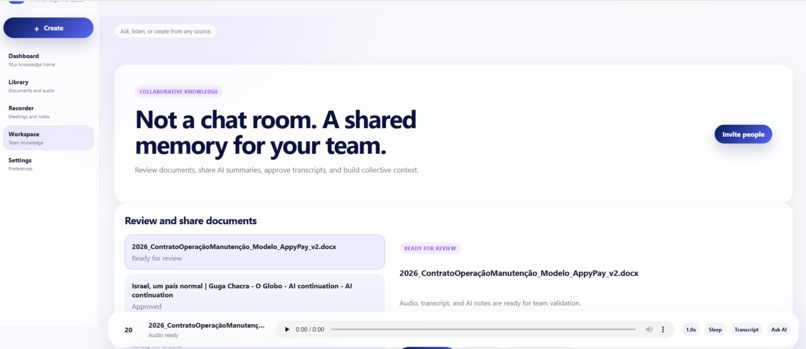
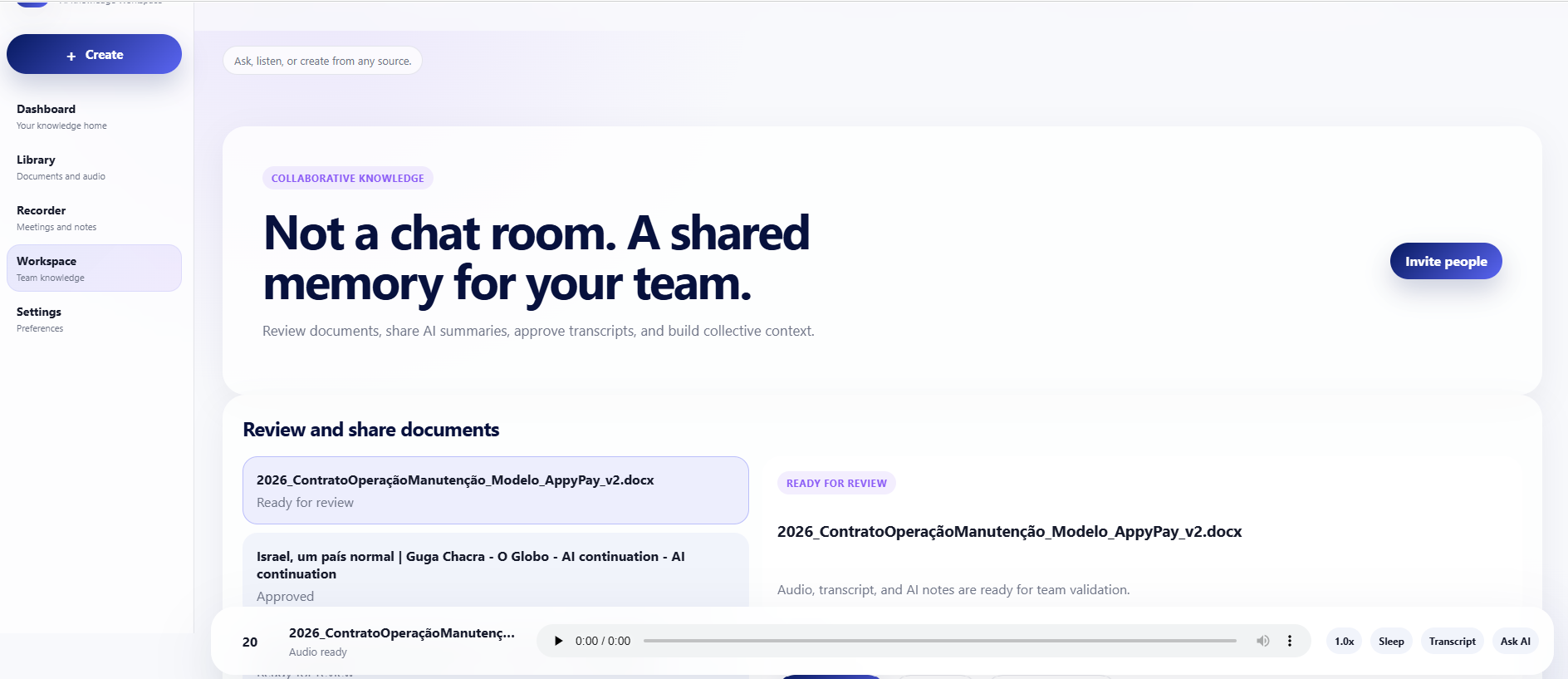
Workspace
-
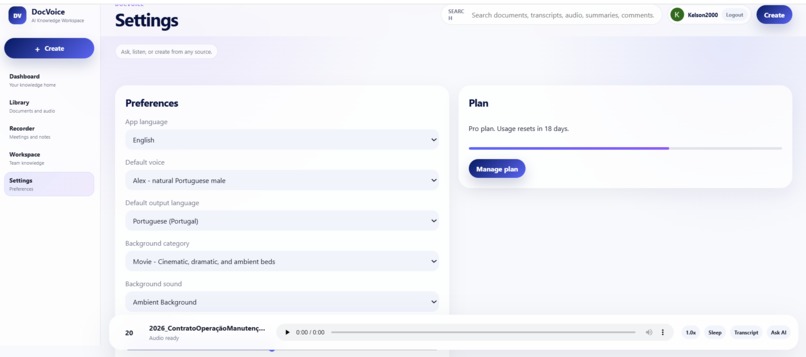
Settings
-
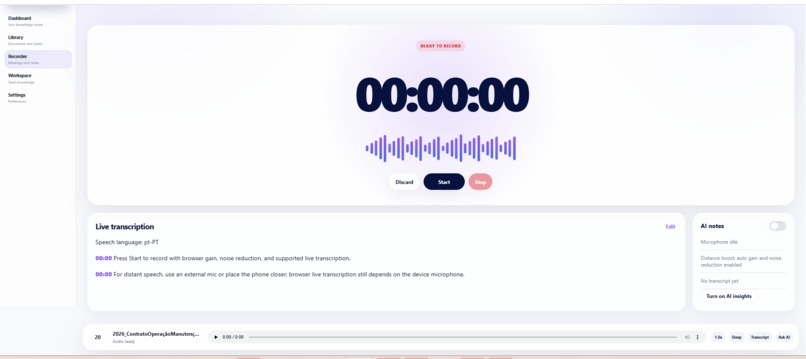
Record Audio
-
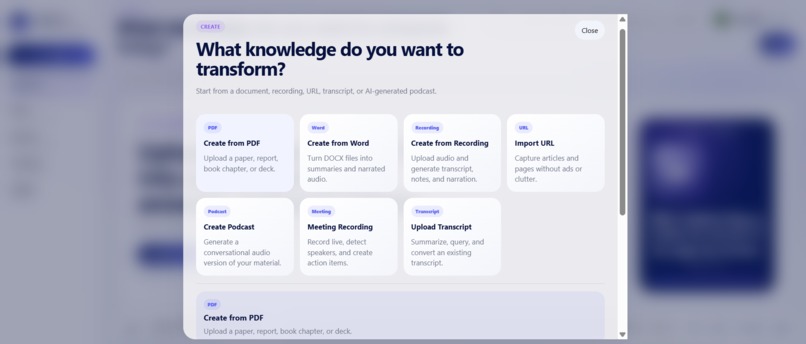
Create/Transform Knowledge
-
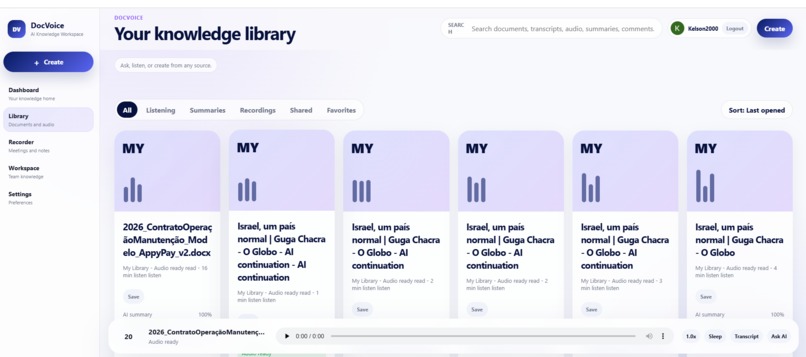
Library
-
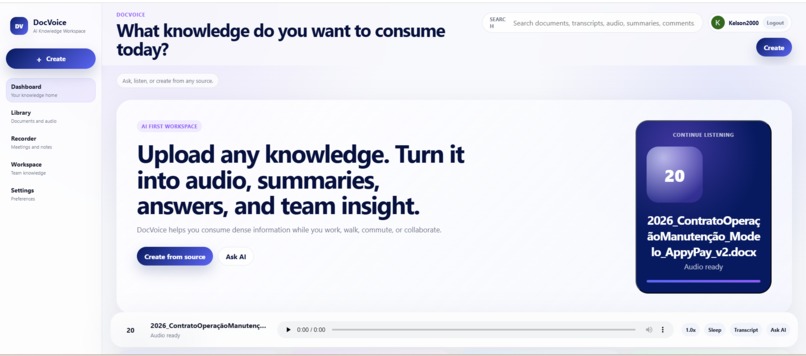
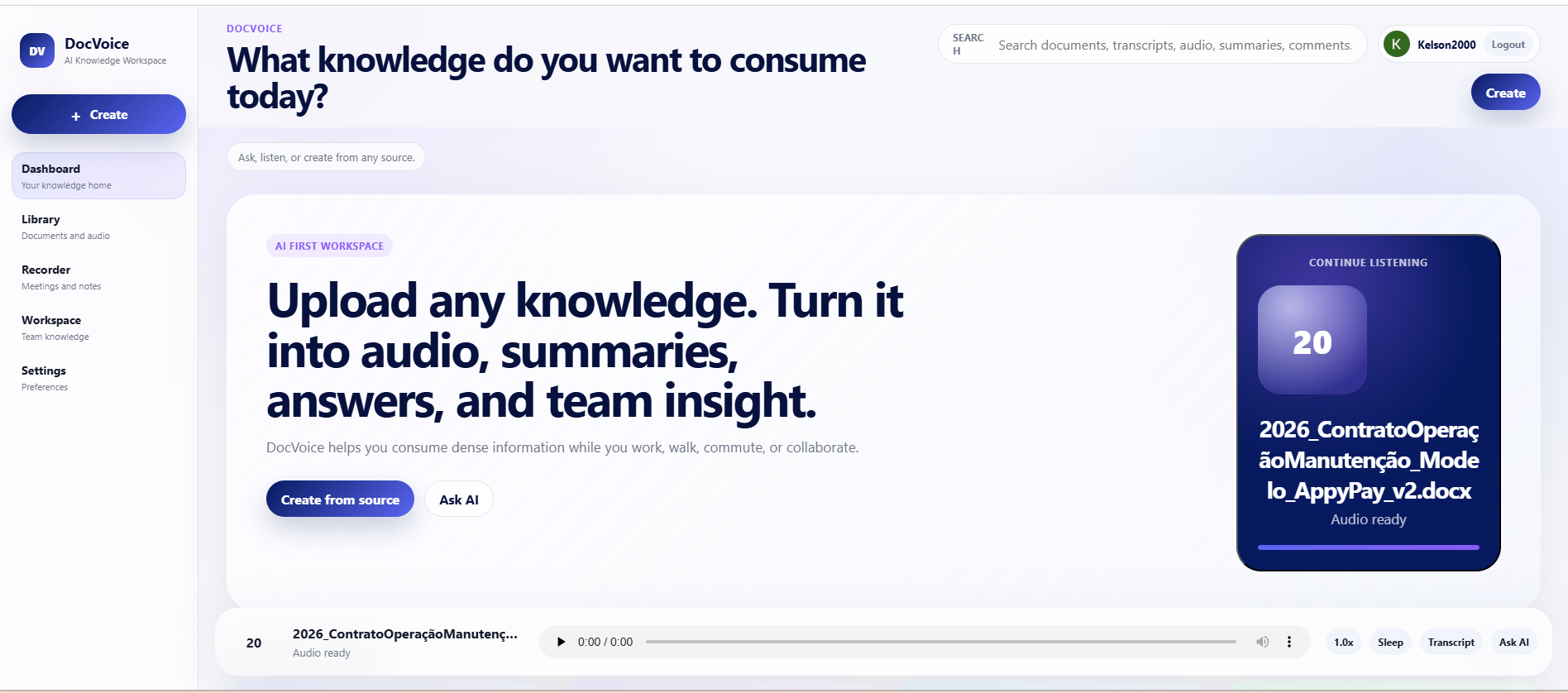
Dashboard
-
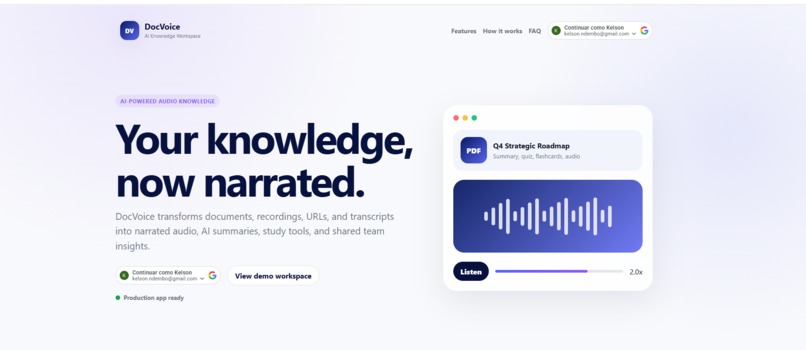
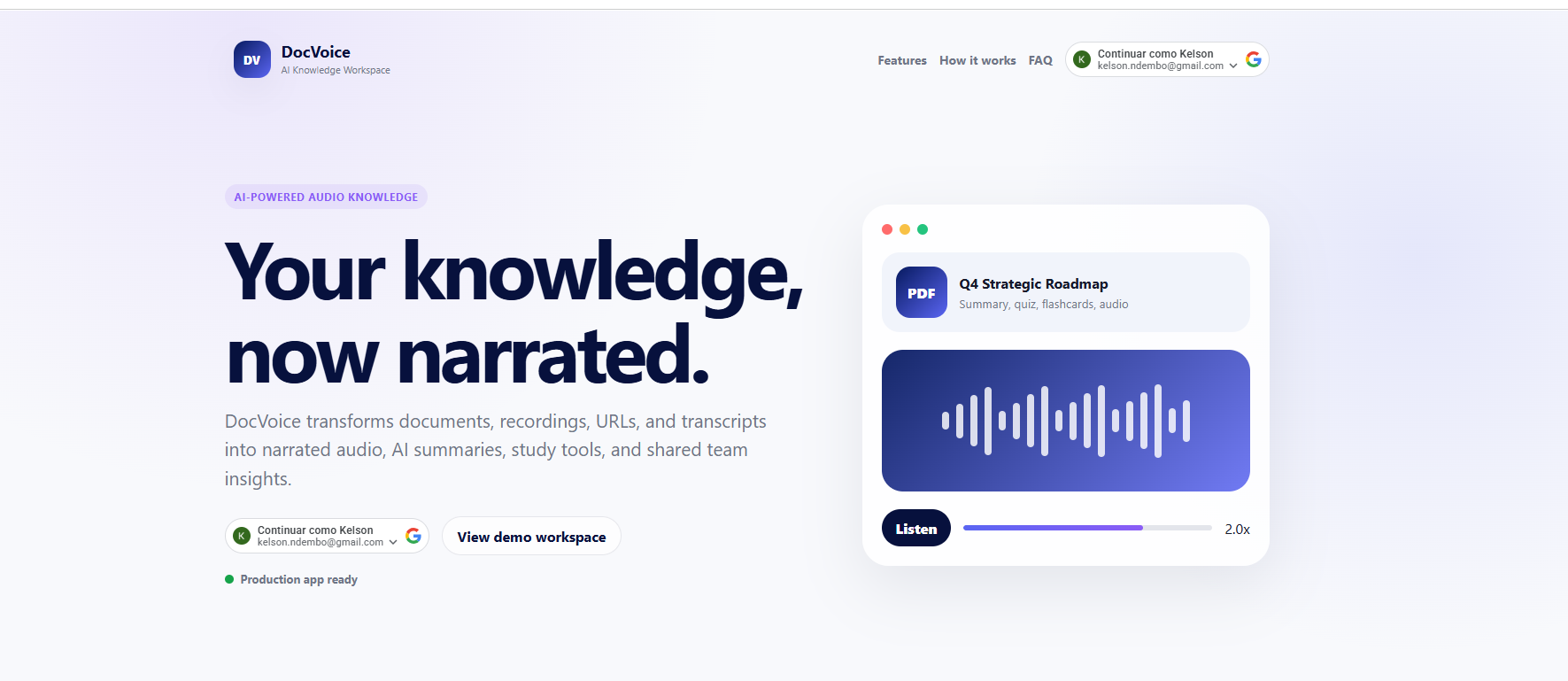
Landing Page
Inspiration
DocVoice was inspired by a simple problem: people have too much useful knowledge trapped inside PDFs, reports, articles, recordings, meeting notes, and transcripts. Reading everything on a screen is slow, tiring, and not always possible when someone is commuting, working, studying, or collaborating with a team.
I wanted to build a tool that turns dense information into something people can listen to, understand, review, and share.
What it does
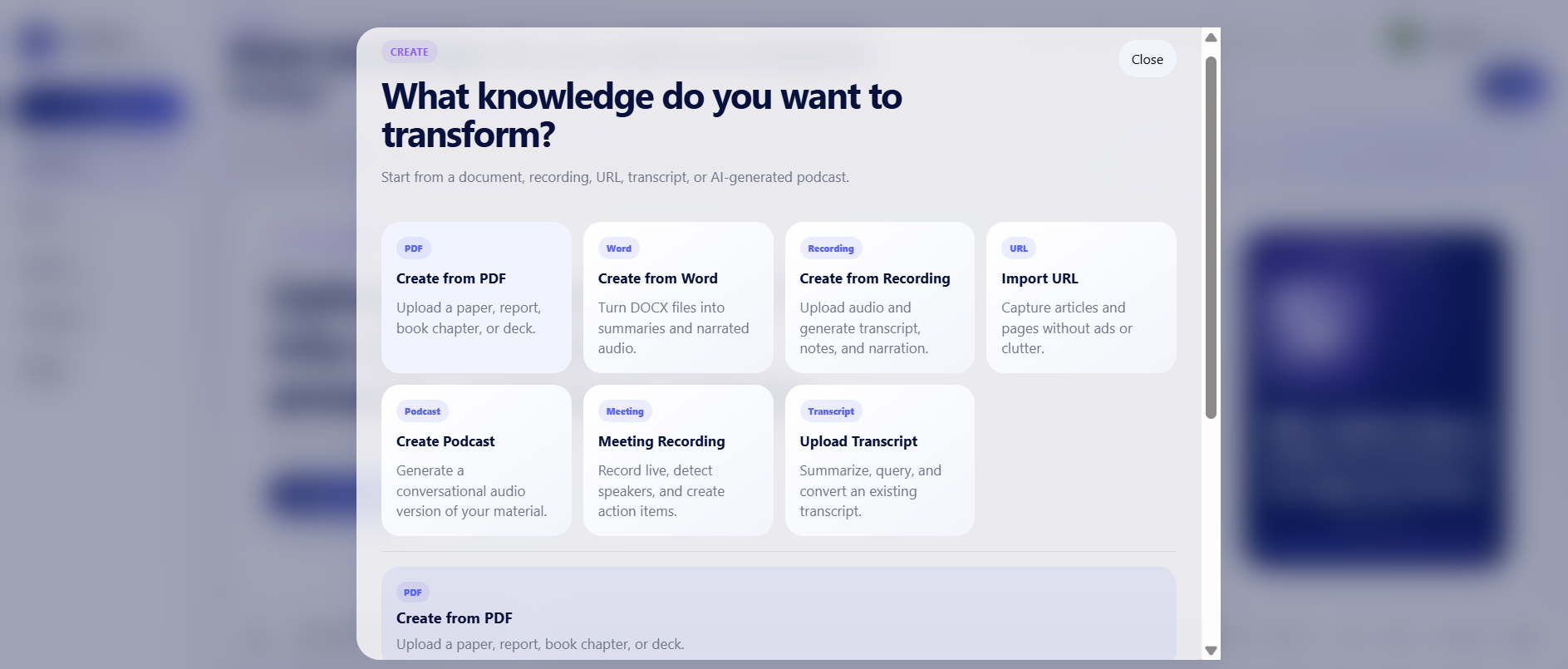
DocVoice transforms PDFs, DOCX files, URLs, recordings, transcripts, and pasted text into narrated audio and structured knowledge.
Users can:
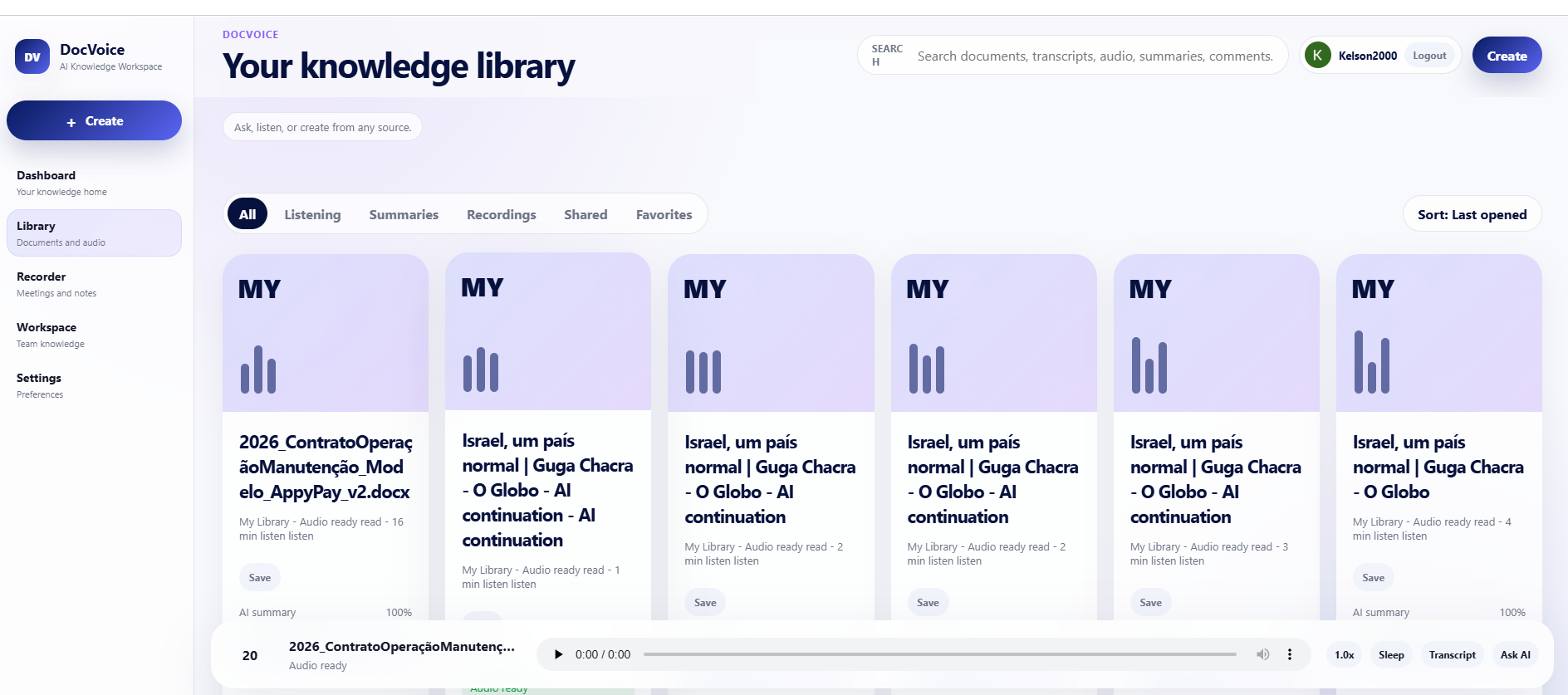
- Convert documents into natural-sounding audio
- Generate summaries, flashcards, quizzes, chapters, mind maps, and activity notes
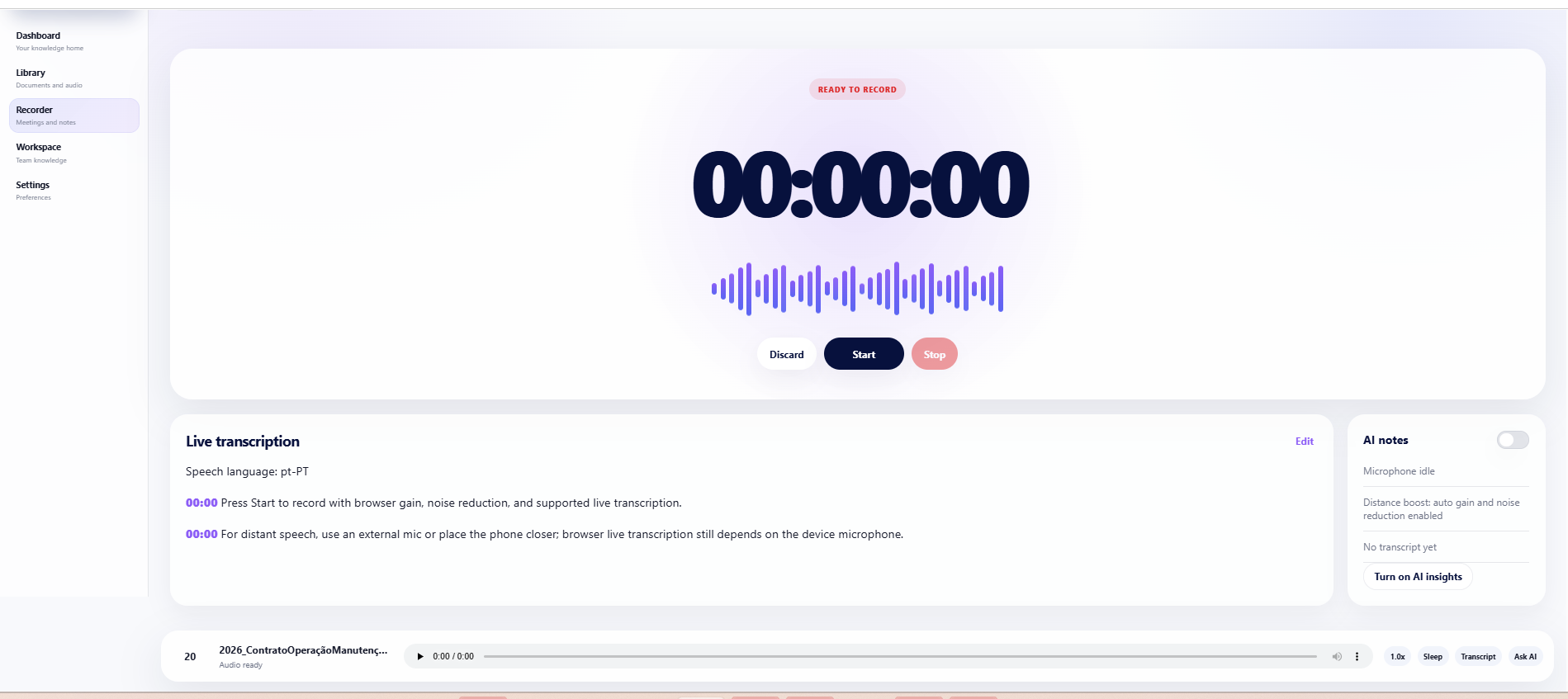
- Record meetings with live transcription
- Ask AI questions about a document
- Share documents and insights with a team
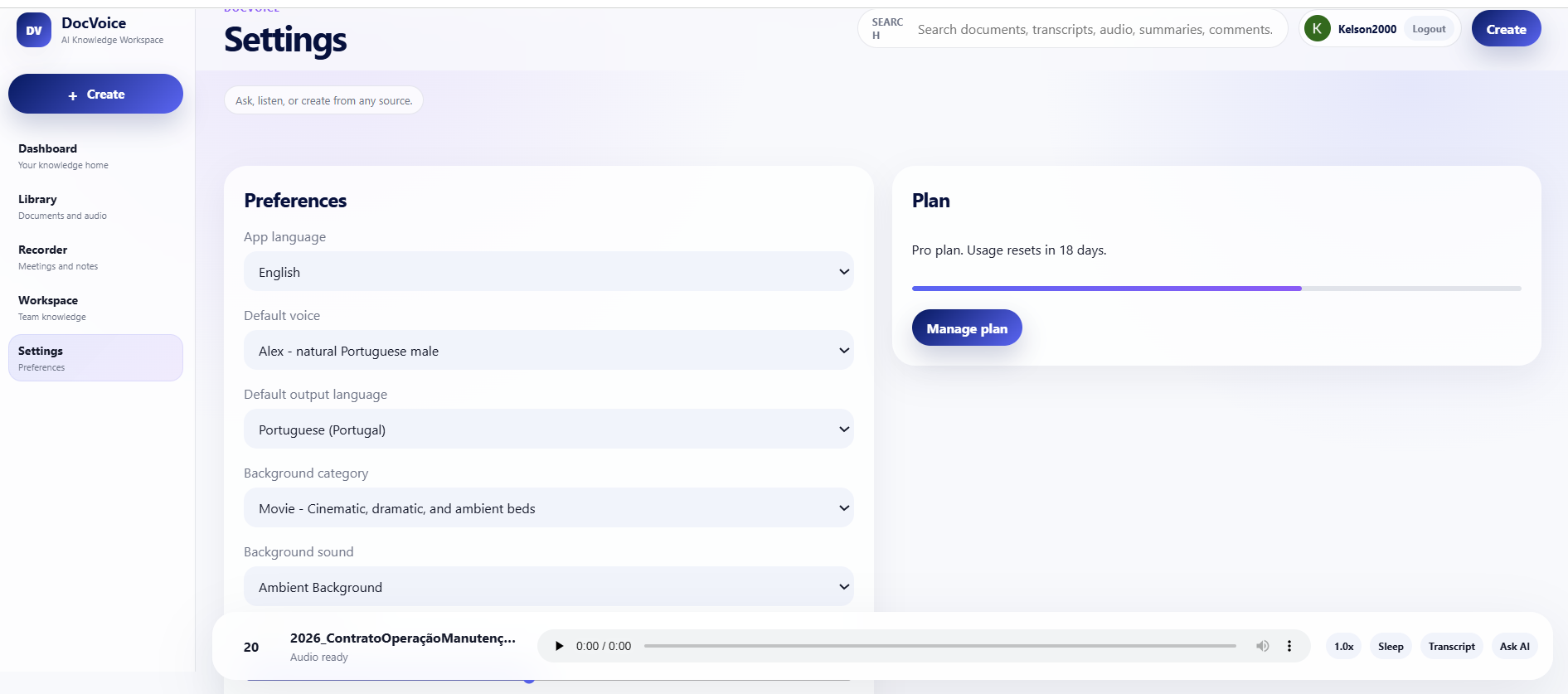
- Choose audio language, voice, speed, and background sound
- Use the app across web and mobile screens
The goal is to make knowledge easier to consume, study, and collaborate on.
How we built it
DocVoice was built as a full-stack web application with a Next.js frontend and a Python/FastAPI backend.
The frontend handles the user experience: authentication, document upload, recording, library views, settings, team collaboration flows, responsive layouts, and audio playback.
The backend handles document processing, text extraction, AI transformation, audio generation, background sound mixing, job tracking, and storage. The app supports multiple input types including PDFs, DOCX documents, URLs, recordings, transcripts, and web-discovered PDF sources.
We also added Google login, multilingual app settings, audio voice configuration, live recording support, and team review flows.
Challenges we ran into
One major challenge was making the app feel complete instead of just a demo. Many flows needed to actually work: upload, convert, listen, ask AI, share, approve, record, and review.
Another challenge was supporting different content types. PDFs, DOCX files, pasted text, recordings, URLs, and transcripts all behave differently, so the app needed flexible processing flows.
Responsive design was also important. The app needed to work well after login on both desktop and mobile, without content overflowing off the screen.
Live transcription was another challenge because browser speech recognition depends heavily on the device microphone and browser support.
Accomplishments that we're proud of
I am proud that DocVoice became more than a simple PDF-to-audio tool. It now feels like an AI knowledge workspace.
The app supports document conversion, audio listening, AI study tools, team collaboration, recording, multilingual settings, and a polished responsive interface.
I am also proud of making the onboarding and creation flow more actionable, so users can start from a document, recording, URL, transcript, or Word file without needing to understand the technical details.
What we learned
This project showed how important it is to build for real user behavior, not only for the developer’s mental model.
Users need clear actions, fast feedback, working buttons, understandable settings, and confidence that the app is doing something useful.
We also learned that audio is not just an output format. It can become a new way to study, review, collaborate, and keep knowledge moving.
What's next for DocVoice
Next, DocVoice will improve real-time collaboration, team permissions, and deeper AI workflows.
Planned improvements include:
- Better real-time transcription and speaker detection
- More natural multilingual voices
- Stronger document search and discovery
- Better AI-generated quizzes, flashcards, and mind maps
- Shared team workspaces with comments and approvals
- Mobile-first listening and offline playback
- More integrations for students, teams, and professionals
The long-term vision is for DocVoice to become the easiest way to turn any source of knowledge into audio, insights, and collaborative understanding.
Built With
- ai
- api
- audio
- celery
- custom
- fastapi
- gemini
- machine
- next.js
- oauth
- postgresql
- python
- railway
- react
- recognition
- redis
- search
- speech
- text-to-speech
- typescript
- vercel
- web

Log in or sign up for Devpost to join the conversation.