-
-
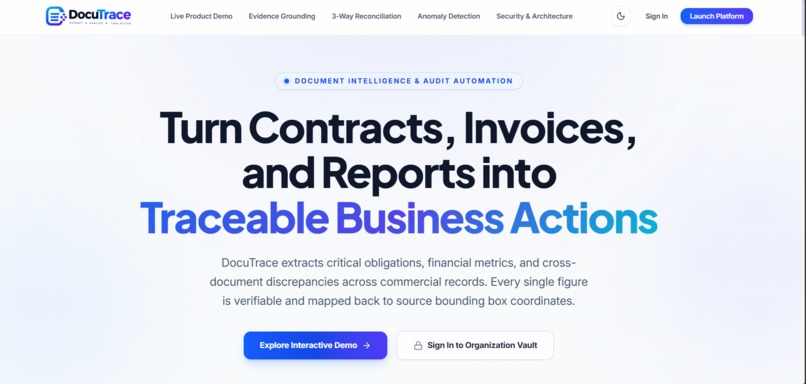
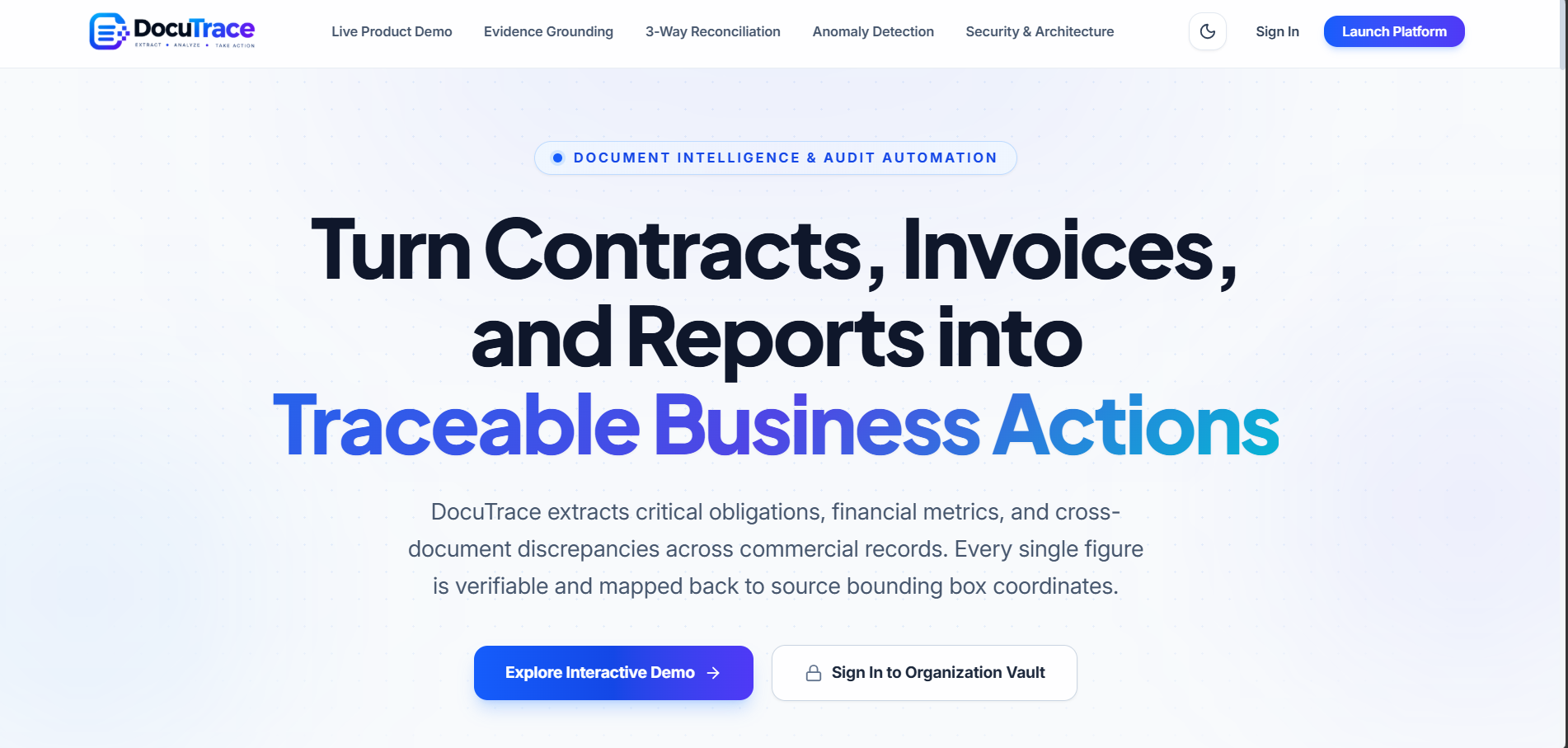
landing page
-
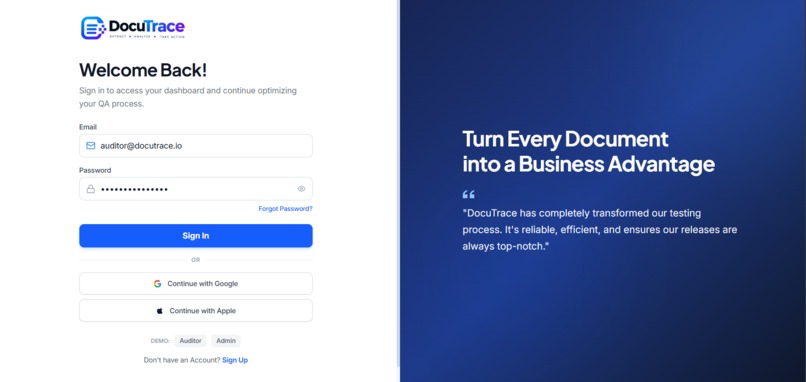
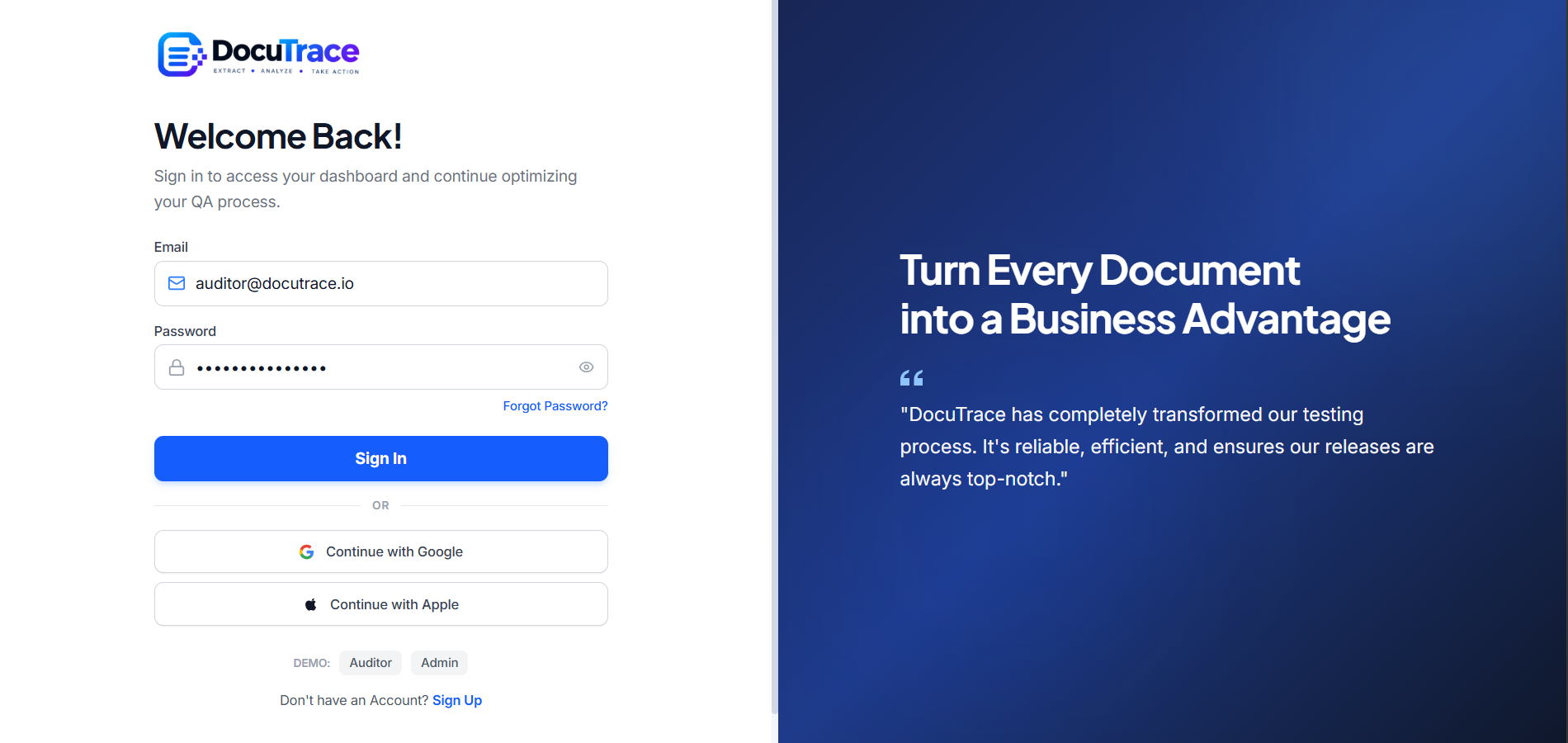
login page
-
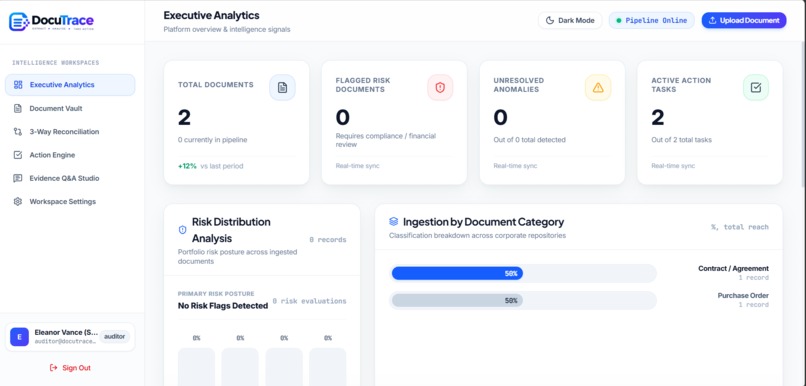
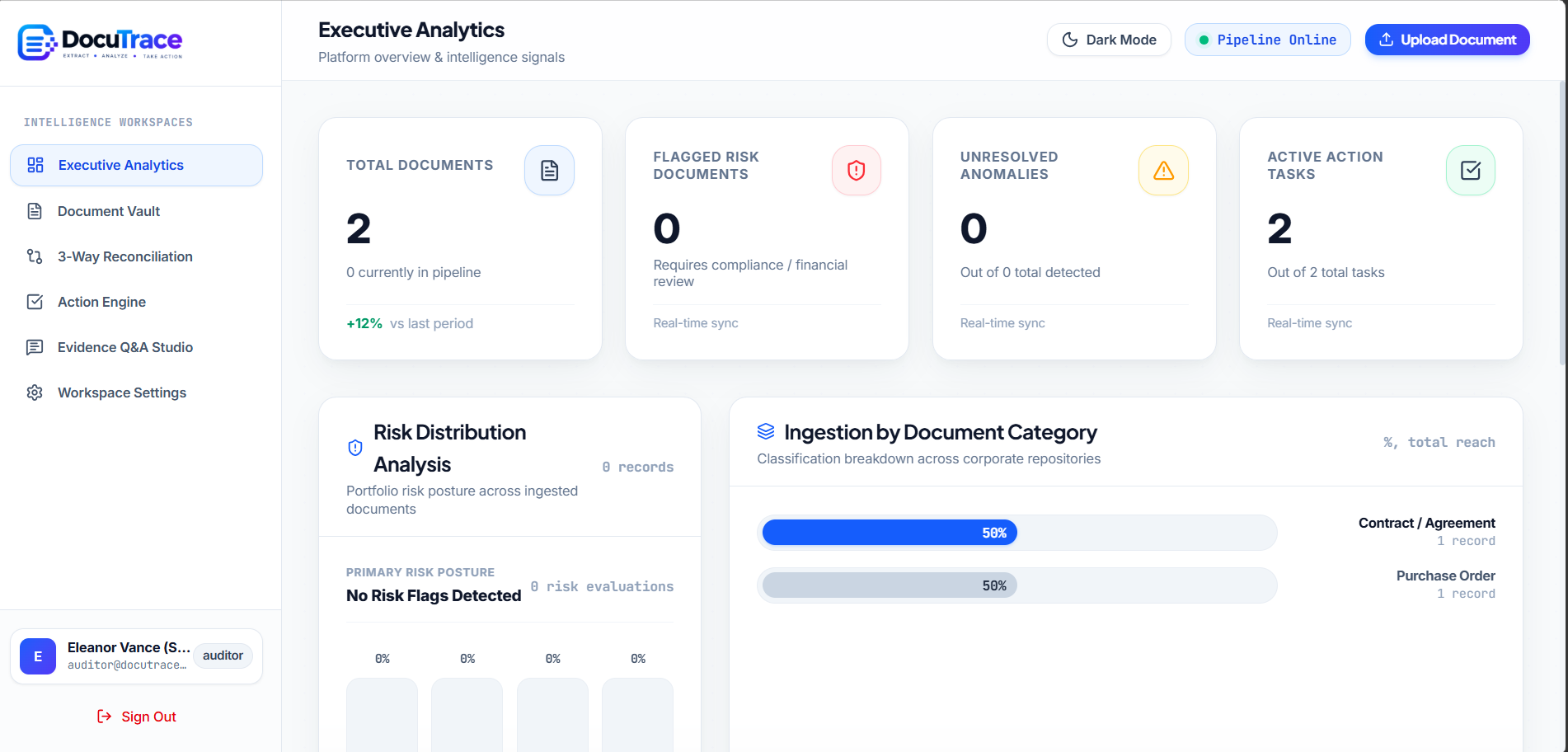
main page
-
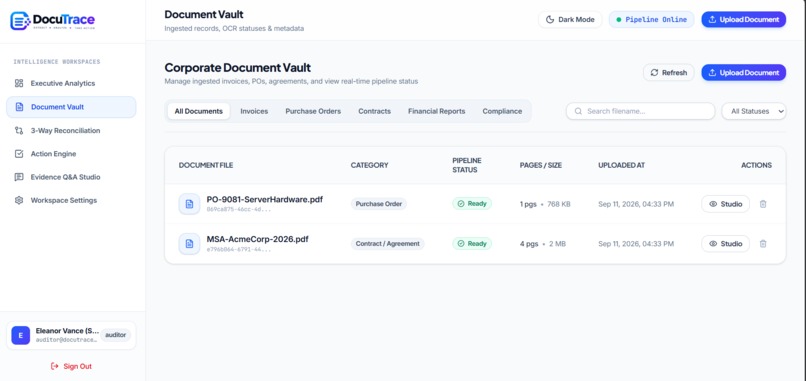
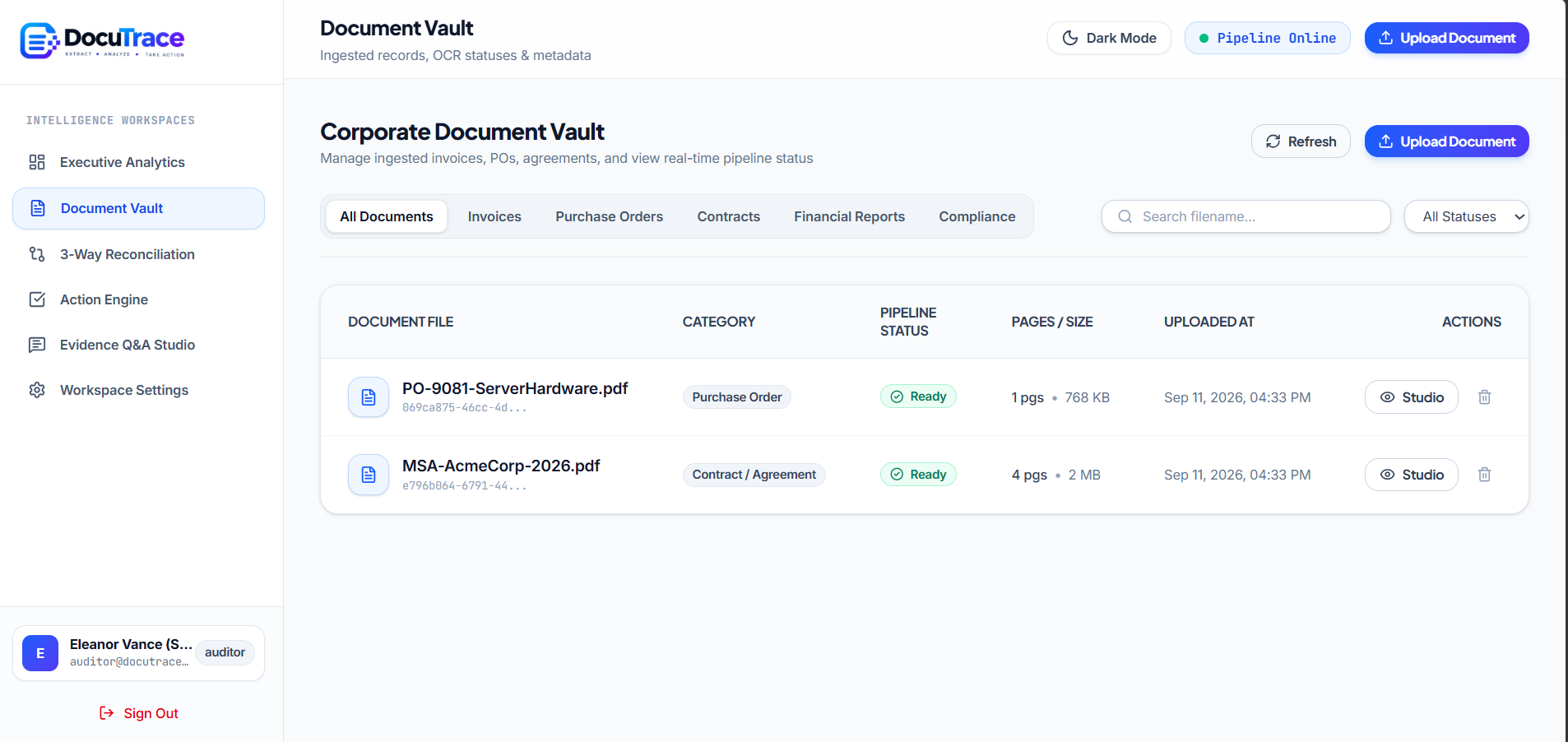
Document Vault
-
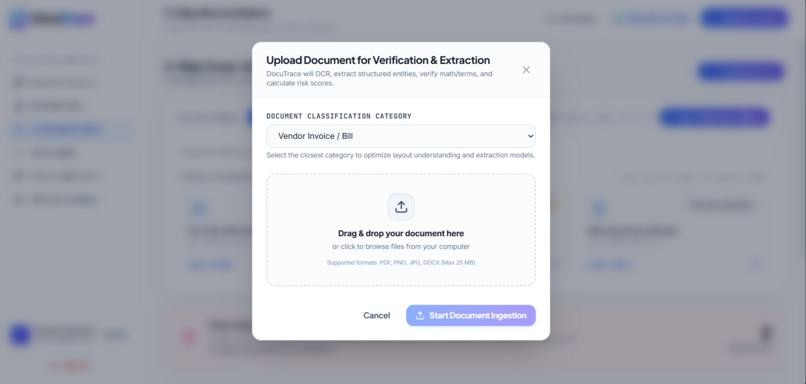
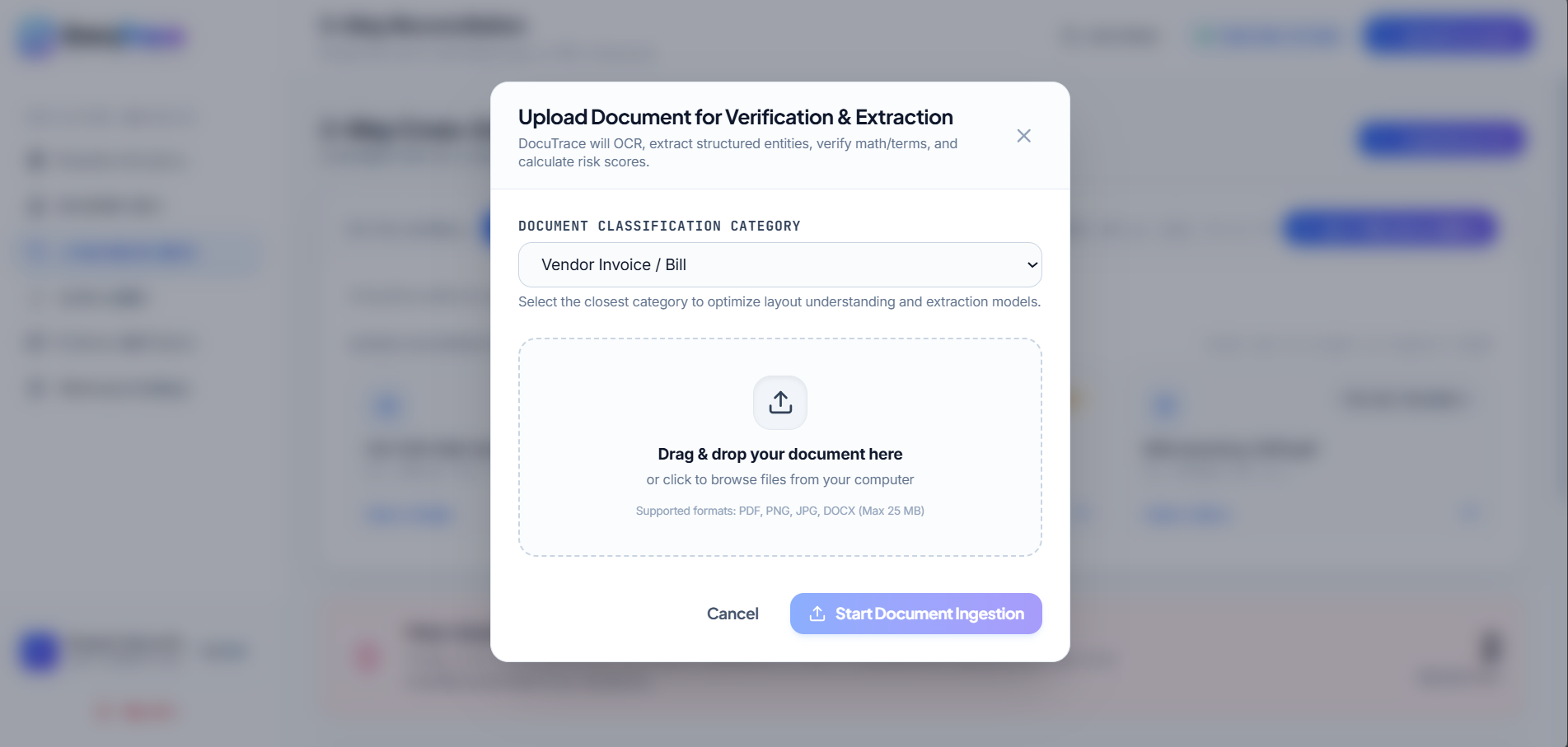
uploading document page
-
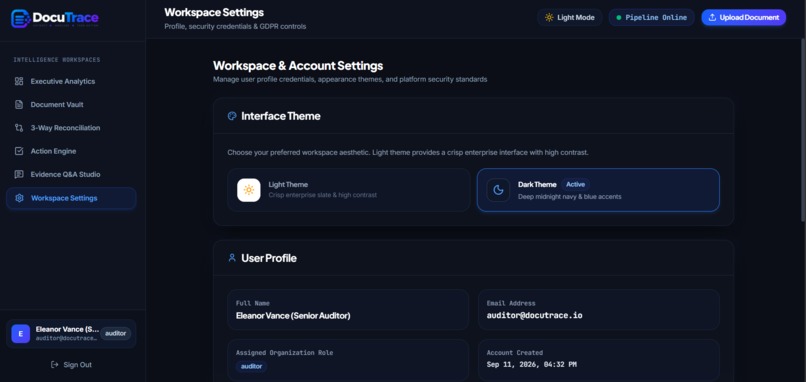
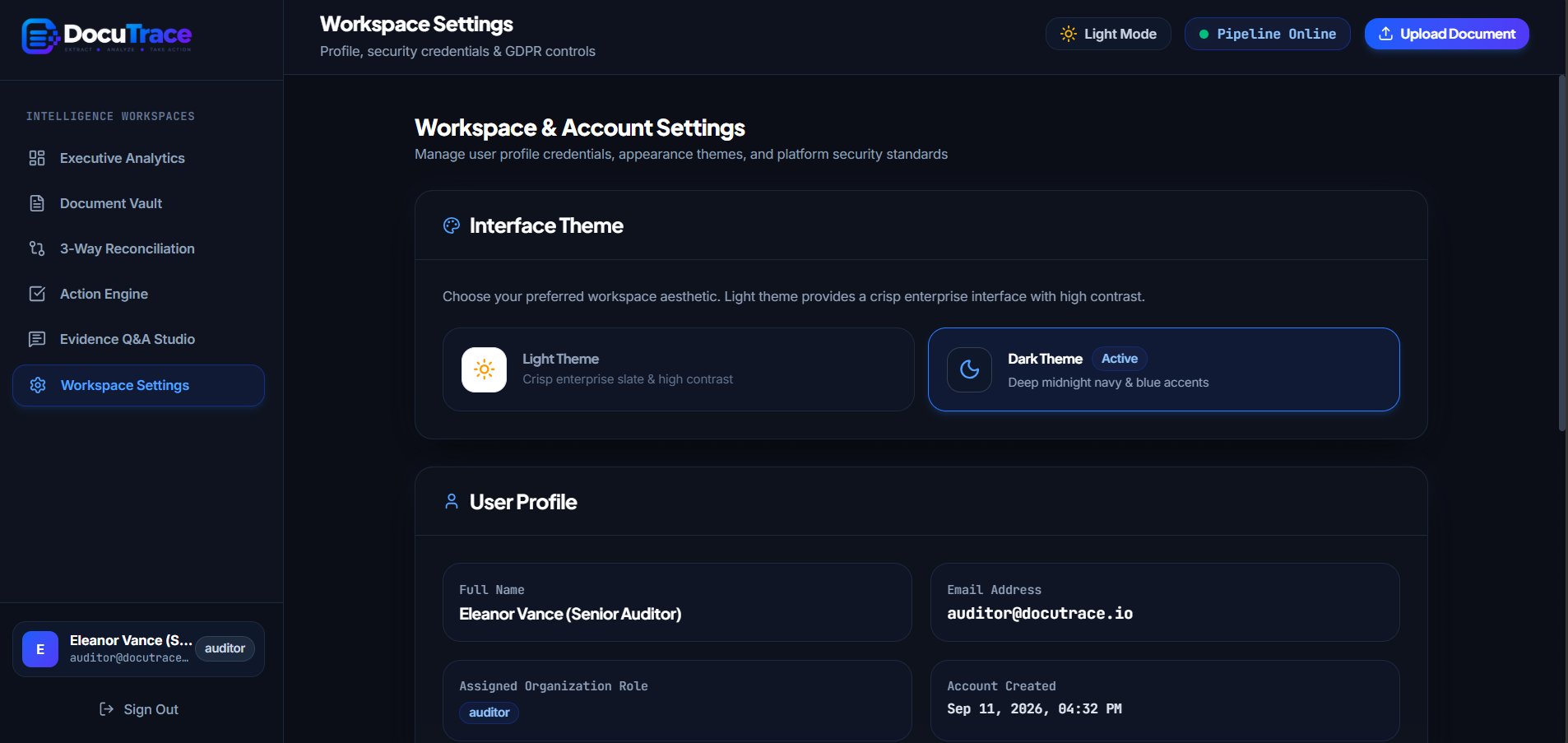
dark theme
Inspiration
Businesses deal with thousands of invoices, purchase orders, contracts, financial reports, and compliance documents. Important information such as deadlines, obligations, missing fields, financial discrepancies, and mismatched references can easily get buried inside these documents.
We wanted to solve a simple problem: How can we help people understand what actually matters in a document without manually reading everything?
That idea led us to build DocuTrace — a document intelligence platform designed to extract insights, detect potential issues, and connect every important finding back to its source.
What it does
DocuTrace analyzes business documents and converts unstructured information into actionable insights.
It can:
- Classify different types of business documents
- Extract important fields such as dates, amounts, vendors, taxes, and references
- Detect missing information
- Identify financial anomalies and inconsistencies
- Extract obligations, deadlines, and important events
- Compare related documents such as Invoices, Purchase Orders, and Contracts
- Highlight potential risks
- Provide evidence from the original document so users can verify findings
- Convert detected obligations into actionable tasks
Our core workflow is:
Upload → Extract → Analyze → Verify → Prioritize → Act
The goal isn't just to generate an answer, but to make the answer traceable and verifiable.
How we built it
We built DocuTrace as a full-stack application combining modern web technologies, backend services, databases, and machine learning.
Frontend
- React
- TypeScript
- Vite
- HTML/CSS
Backend
- FastAPI
- Flask
- REST APIs
- Python
Data & Machine Learning
- PostgreSQL
- MongoDB
- TF-IDF for text feature extraction
- Machine-learning classification models
- Rule-based validation and anomaly detection
We designed the system as a modular pipeline where documents move through extraction, classification, analysis, validation, and prioritization stages.
For example, an invoice can be compared against its corresponding purchase order to identify differences in amount, vendor, tax, quantity, or reference information.
We also focused heavily on traceability so that important insights can be connected back to the relevant source content instead of appearing as unexplained AI outputs.
Challenges we ran into
One of our biggest challenges was dealing with the variety and inconsistency of business documents.
Invoices, contracts, purchase orders, and compliance reports all have different structures, terminology, and formats.
Some of the challenges we faced were:
- Handling different document structures
- Extracting reliable information from unstructured text
- Detecting meaningful anomalies without generating too many false positives
- Comparing information across multiple documents
- Handling missing or ambiguous fields
- Designing realistic datasets for testing our ML pipeline
- Making model predictions understandable and verifiable
- Balancing automation with reliability
We learned that building a document intelligence system isn't just about extracting information — it is also about knowing how confident the system should be and how users can verify its findings.
Accomplishments that we're proud of
We're proud that DocuTrace goes beyond basic document summarization.
Our system brings together document classification, information extraction, anomaly detection, cross-document verification, risk analysis, and evidence-based insights in one workflow.
We are especially proud of the idea of traceability.
Instead of simply saying:
“There is an anomaly.”
DocuTrace is designed to help answer:
What is the anomaly? Where was it detected? Which documents are involved? And what evidence supports it?
We also built the project with a modular architecture so that additional document types, models, and analysis capabilities can be added without redesigning the entire system.
What we learned
Building DocuTrace taught us that real-world AI systems require much more than a model.
We learned about:
- Building end-to-end ML pipelines
- Preparing realistic training and testing data
- NLP-based document classification
- Backend API architecture
- Database design
- Cross-document data relationships
- Anomaly detection
- Model evaluation and confidence
- Designing explainable AI workflows
- Turning AI predictions into useful product features
Most importantly, we learned that trust is critical when AI is used for business decisions. Users need to understand not only what the system found, but also why it found it.
What's next for DocuTrace
We want to take DocuTrace from a document analysis tool into a more complete business intelligence and workflow platform.
Our next steps include:
- Supporting more document formats
- Improving multimodal document understanding
- More advanced cross-document verification
- Better anomaly detection models
- Knowledge graphs for connecting entities and documents
- Automated obligation-to-action workflows
- More powerful semantic search
- Human-in-the-loop verification
- Improved model evaluation and robustness testing
- Integrations with business tools and document management systems
Our long-term vision is simple:
DocuTrace should help businesses move from simply storing documents to actually understanding, verifying, and acting on them.
Built With
- analysis
- anomaly
- artificial
- detection
- document
- fastapi
- flask
- information
- intelligence
- learning
- machine
- mongodb
- natural-language-processing
- postgresql
- python
- react
- scikit-learn
- tf-idf
- typescript


Log in or sign up for Devpost to join the conversation.