Inspiration
In today's fast-paced world, professionals and students are drowning in massive PDFs, research papers, and reports. I wanted to build a highly reliable, AI-driven tool that cuts through the noise and extracts exactly what you need, saving hours of manual reading while maintaining strict accuracy.
What it does
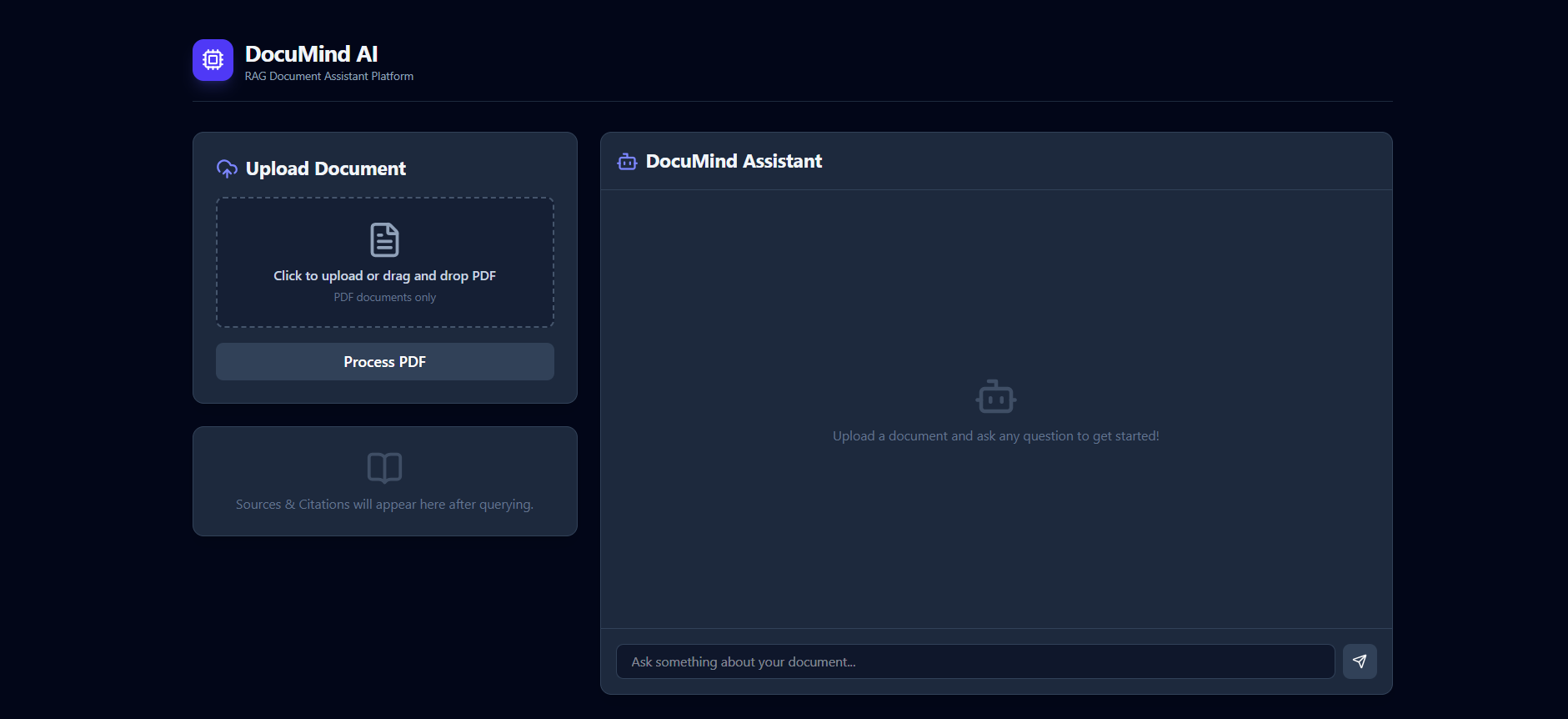
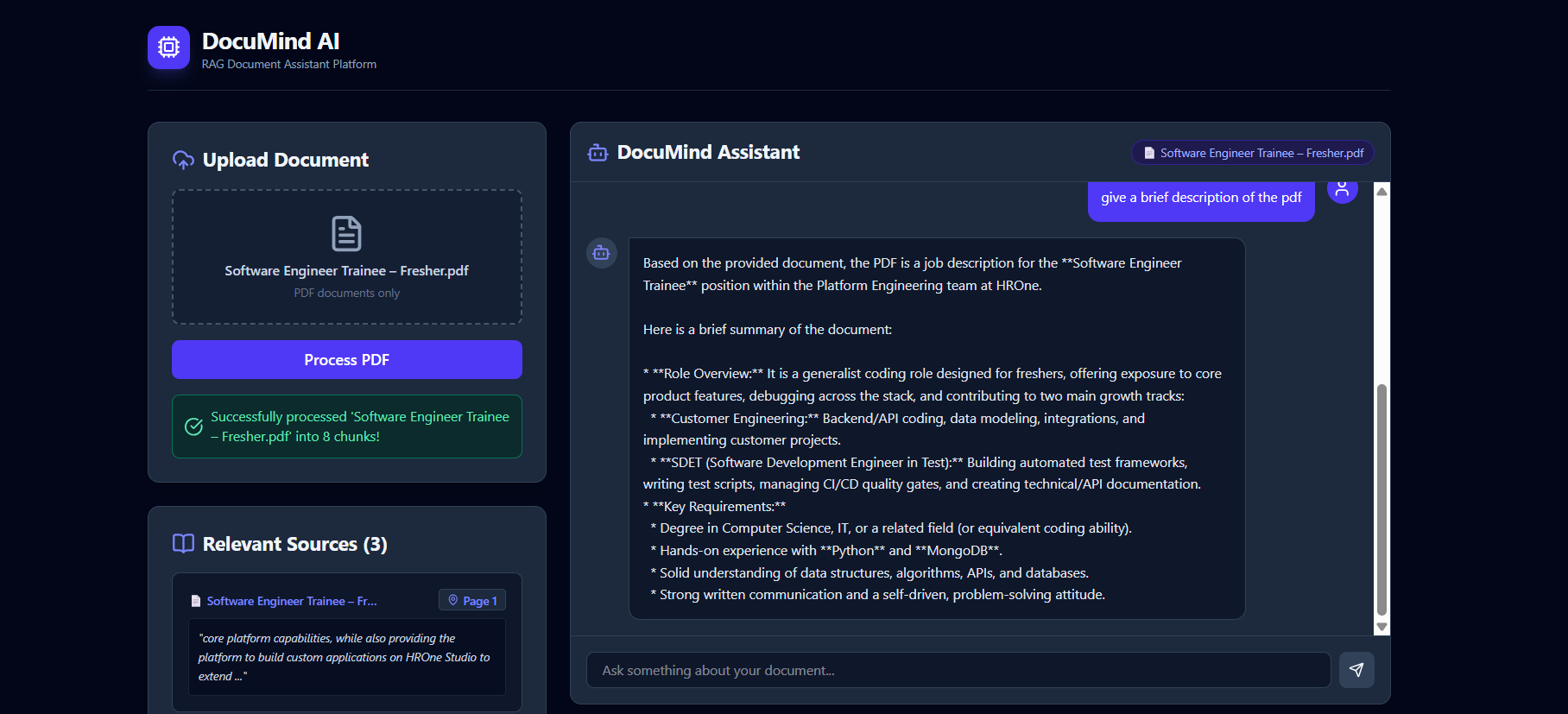
DocuMind AI is a Retrieval-Augmented Generation (RAG) assistant. Users can upload any PDF document and instantly chat with it in real-time. The system provides precise, context-grounded answers based strictly on the uploaded document's contents.
How I built it
I engineered a modular backend using FastAPI (structuring it cleanly into app/core, app/models, and app/services). I utilized PyPDF and RecursiveCharacterTextSplitter to dynamically chunk the documents, and LangChain to orchestrate the retrieval pipeline. The core generative AI capabilities are powered by the Google Gemini API. The application uses Pydantic-typed schemas, is served asynchronously via Uvicorn, and is deployed live on an AWS EC2 instance.
Challenges I ran into
One of the biggest hurdles was ensuring the document text chunks didn't lose semantic meaning during processing, which required fine-tuning the text splitters. Additionally, configuring the AWS EC2 instance, networking, and security groups to securely expose the FastAPI endpoints for a live public deployment was a rigorous but incredibly rewarding learning curve.
Accomplishments that I'm proud of
I am incredibly proud of independently architecting and deploying a full RAG pipeline to a live public IP on AWS. Seeing the Gemini API flawlessly return grounded, accurate answers from my own custom FastAPI backend was a massive win for my cloud and AI skillset.
What's next for DocuMind AI
I plan to scale the application by adding multi-document cross-querying, user authentication with JWT, and persistent chat history using PostgreSQL.
Built With
- amazon-ec2
- amazon-web-services
- chromadb
- fastapi
- google-gemini
- langchain
- pydantic
- python
- ubuntu
- uvicorn

Log in or sign up for Devpost to join the conversation.