-
-
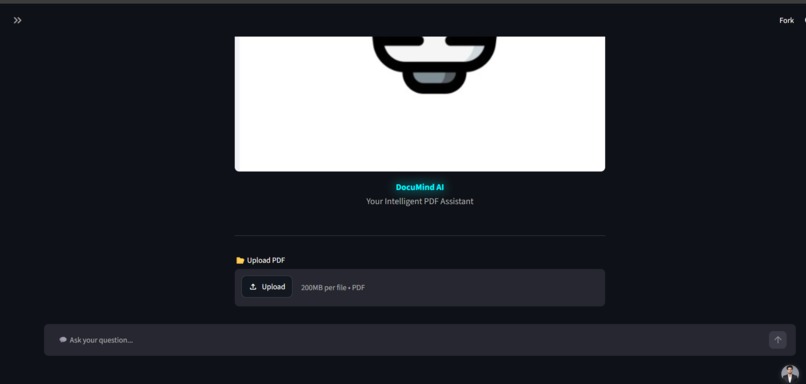
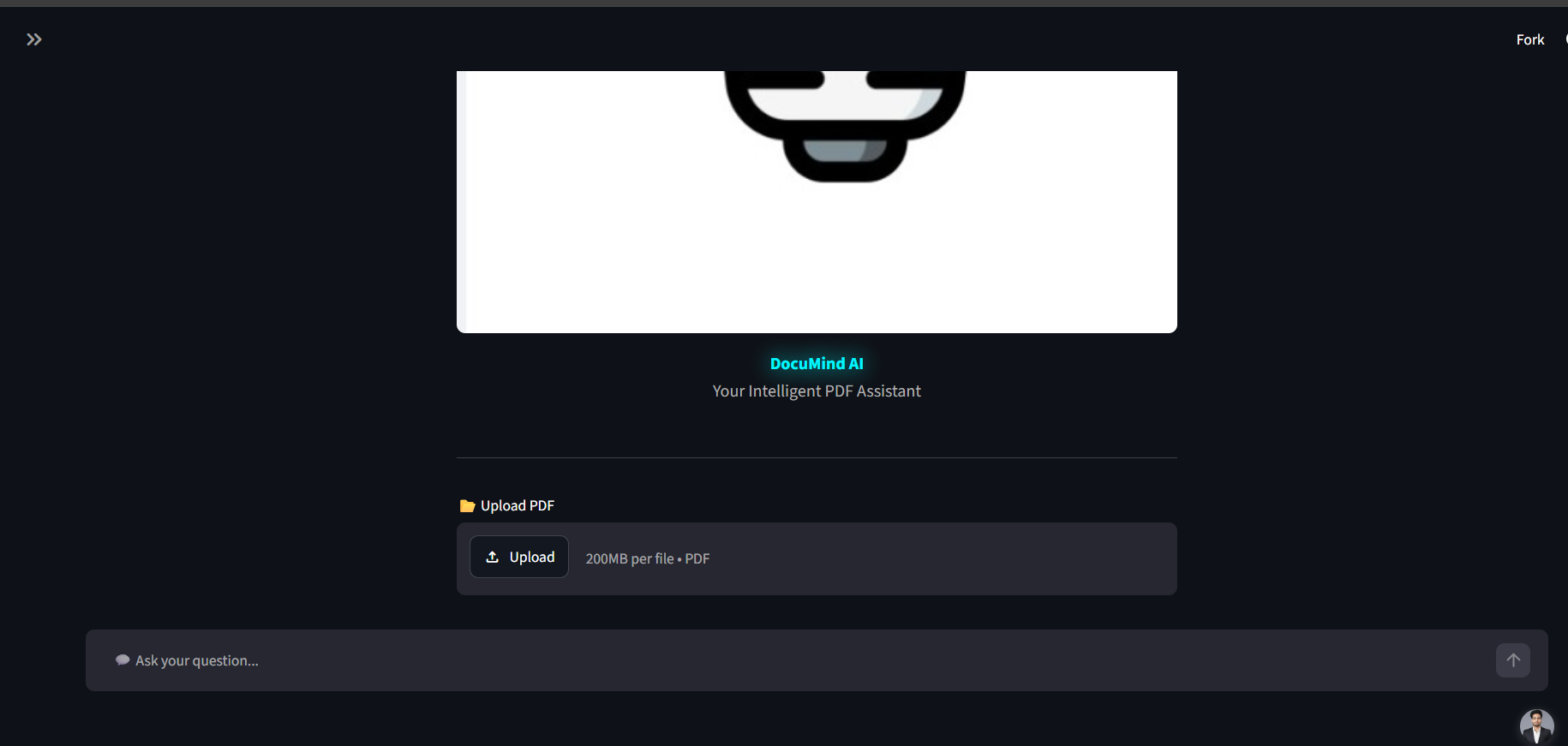
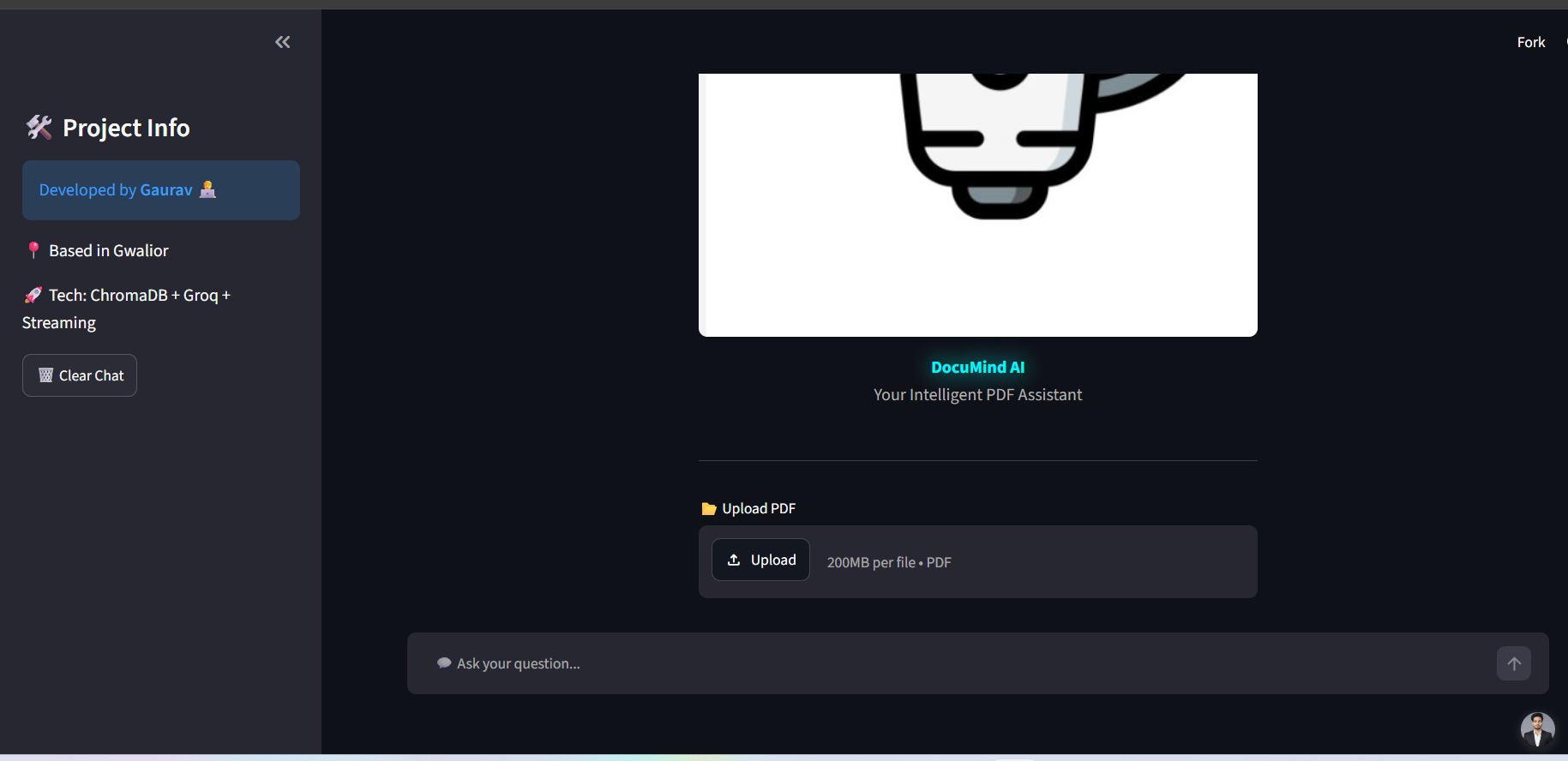
Intuitive PDF document upload section supporting files up to 200MB.
-
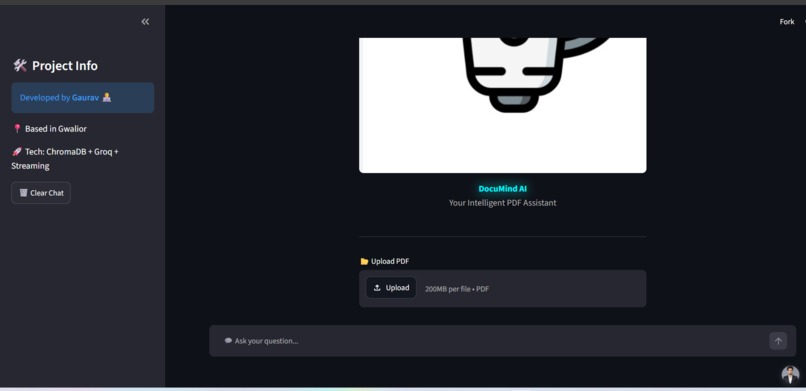
Project sidebar displaying tech stack, developer details, and configuration options.
-
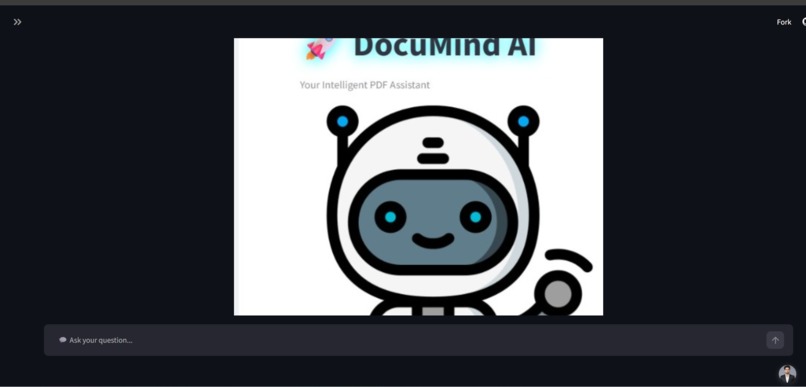
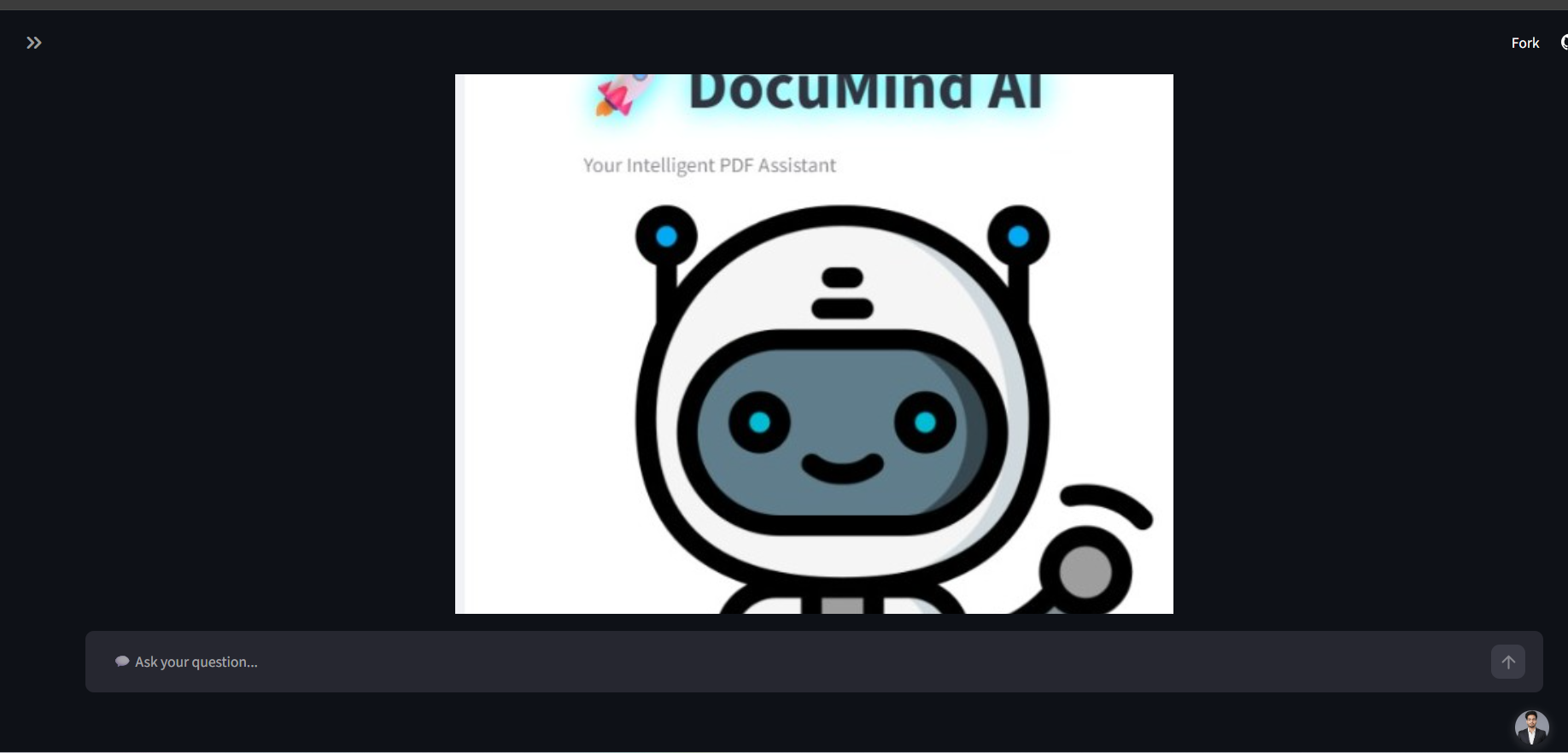
DocuMind AI clean chat interface and landing view.
Inspiration
Sifting through long PDFs, research papers, and heavy technical manuals is honestly a massive headache. I wanted to build something practical—an assistant that lets you chat directly with your docs, pulls out exact answers instantly, and actually understands the context.
What it does
DocuMind AI is a production-grade RAG (Retrieval-Augmented Generation) application built to handle multi-page documents smoothly and accurately[cite: 2]. It gives you real-time streaming responses, automatic summaries of your docs, smart retry logic using tenacity so it doesn't break, and lets you export your chat history whenever you want[cite: 2].
How I built it
- Frontend: Put together using Streamlit[cite: 2] to keep the UI clean, interactive, and super easy for uploading and chatting on the fly.
- Backend & RAG Flow: Powered by Python and LangChain[cite: 2] to slice up documents, manage embeddings, and run the retrieval smoothly.
- Vector Database: Hooked up ChromaDB[cite: 2] for persistent vector storage, which makes semantic search super fast.
- Embeddings: Using Hugging Face Embeddings[cite: 2] to get solid vector representations of the text.
- DevOps: Set up GitHub Actions[cite: 2] for automated CI/CD so every push checks for syntax issues and keeps the codebase clean.
Challenges I faced
- Tunning things so that retrieval latency stays low and accuracy stays high, especially when dealing with massive multi-page PDFs.
- Handling edge cases with API calls during heavy embedding and generation phases by writing proper retry logic.
- Getting the GitHub Actions pipeline to run smoothly without failing on minor linting issues.
What I learned
Working on this gave me a much clearer picture of how production-ready RAG architectures actually tick, how to manage vector data cleanly with ChromaDB, and why automating CI/CD pipelines makes development way less stressful[cite: 2].


Log in or sign up for Devpost to join the conversation.