Inspiration
Researchers often struggle with fragmented workflows and a lack of a unified platform. The core problems Documate aims to solve are:
- Scattered Information: No single place to maintain citations, inspirations, and overall project progress.
- Loss of Context: Difficulty in tracking past research work, understanding its evolution, and recalling the "why" behind pivots.
- Inefficient Collaboration: Challenges in conducting and managing group research seamlessly.
What Documate Does
Documate is a productivity tool designed to provide researchers with a centralized platform to manage their entire research lifecycle. Key features include:
- Unified Research Hub:
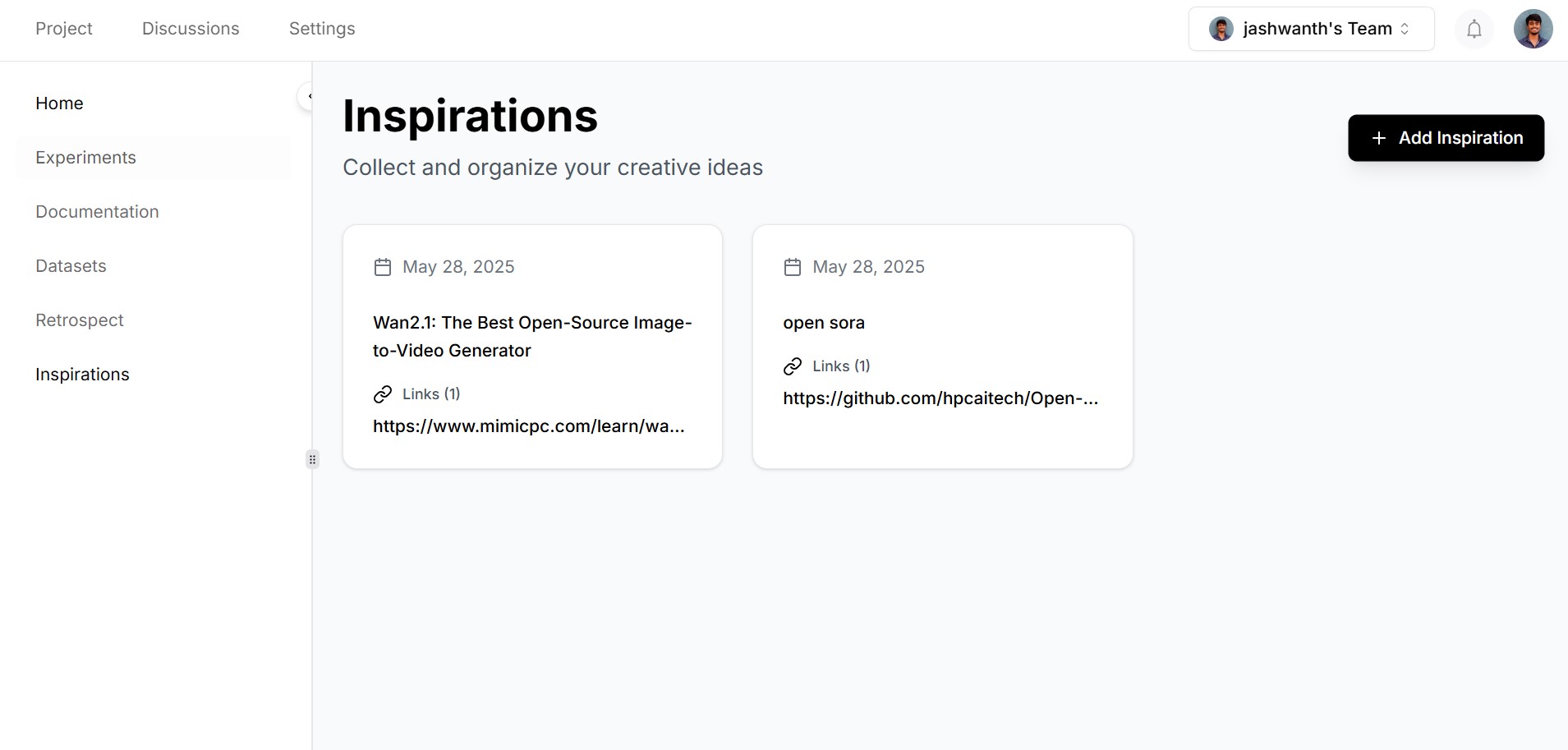
- Maintains all citations, inspirations, and project progress in one place.
- Tracks the entire research journey, preventing loss of previous work.
- Collaborative Workspace:
- Facilitates team creation and management for seamless group research.
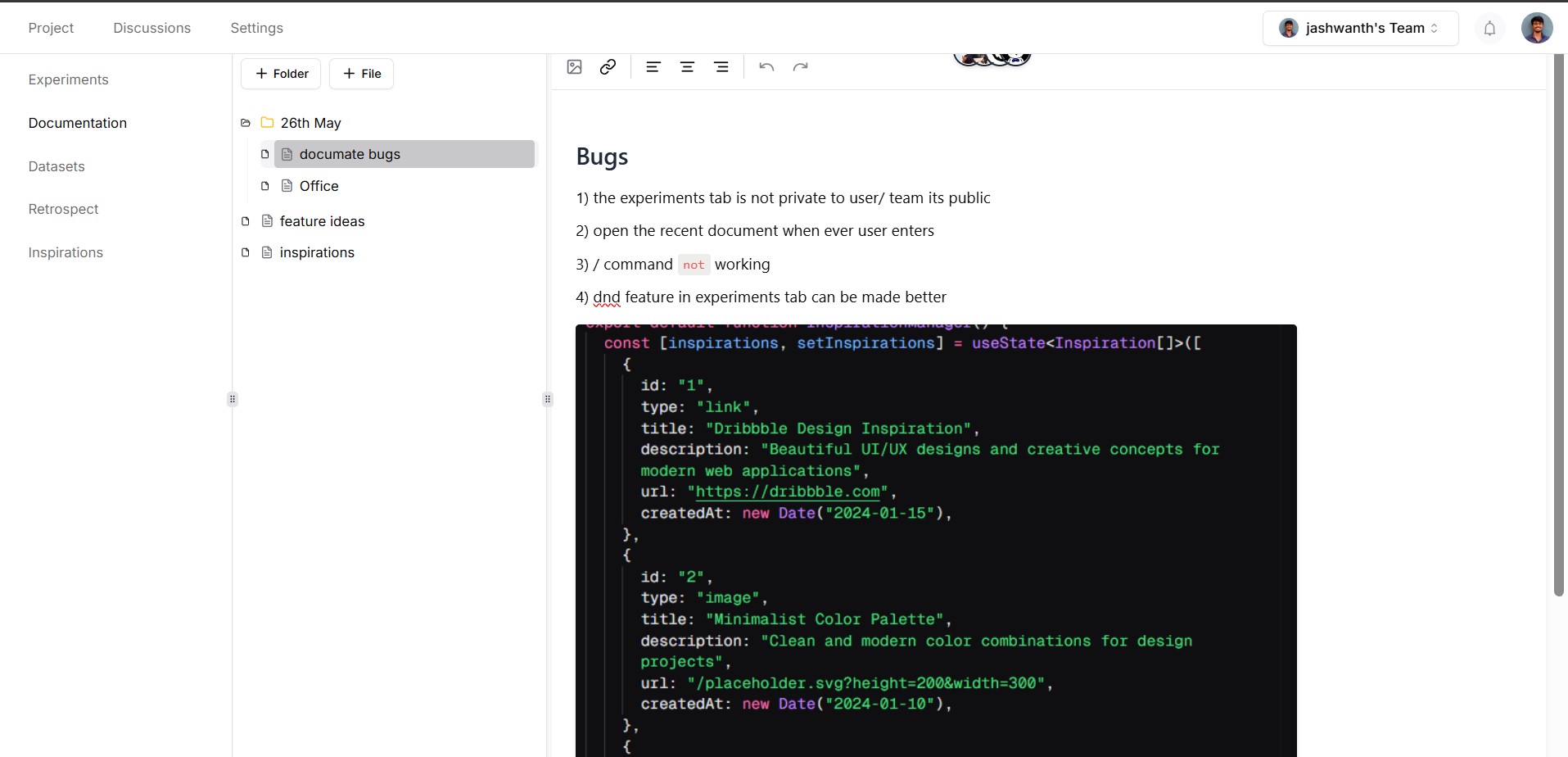
- Allows collaborative sharing of documents (text, images, videos, PDFs) among team members.
- Includes a collaborative chat interface for team discussions and idea sharing.
- Experiment & Progress Management:
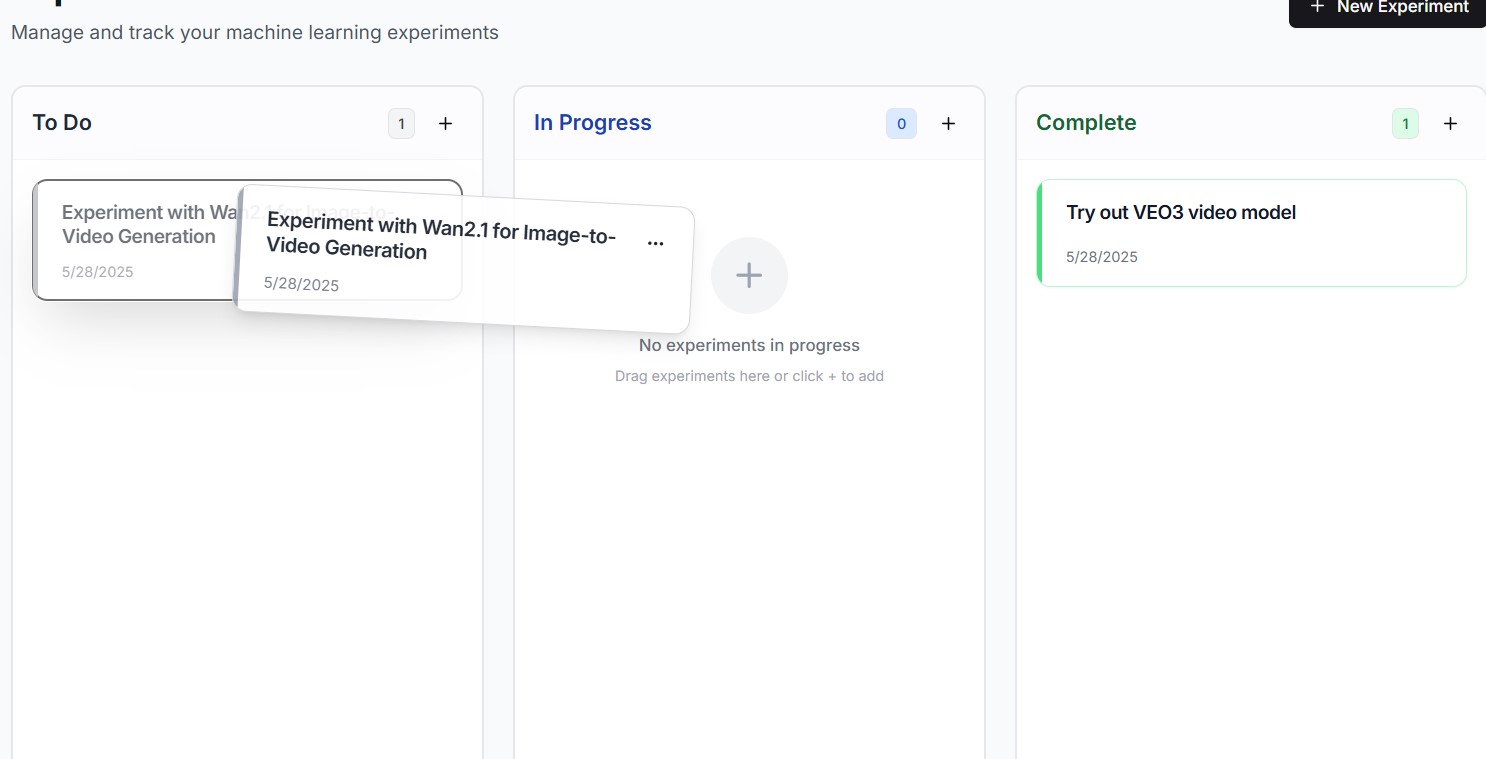
- Enables logging of multiple experiments and their different results.
- Documents all research progress comprehensively.
- Retrospective View & Insights:
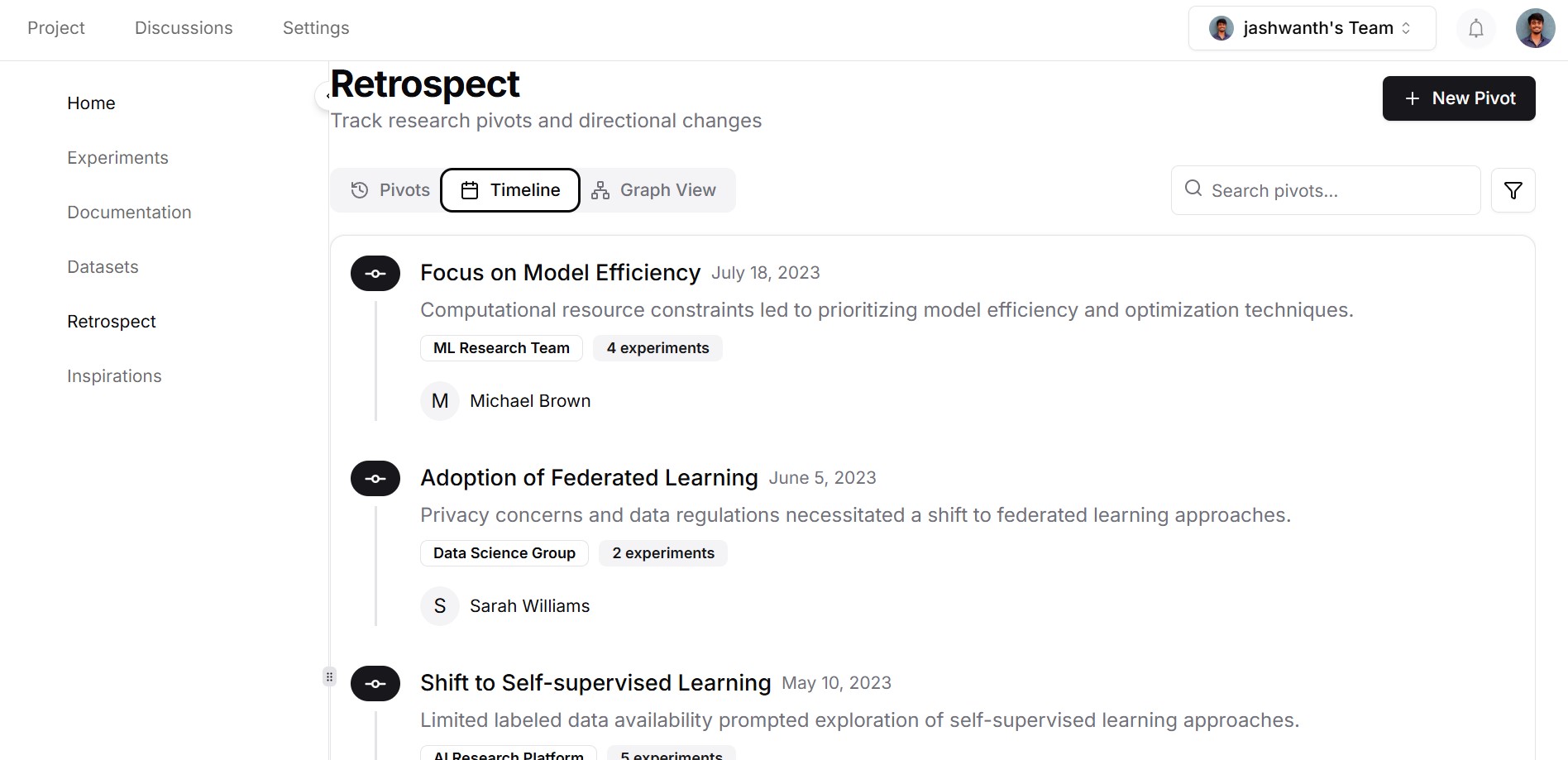
- Offers a "retrospective view" to visualize the research journey, including pivots and their rationale, helping maintain a mental "mind map."
- AI-Powered Assistant:
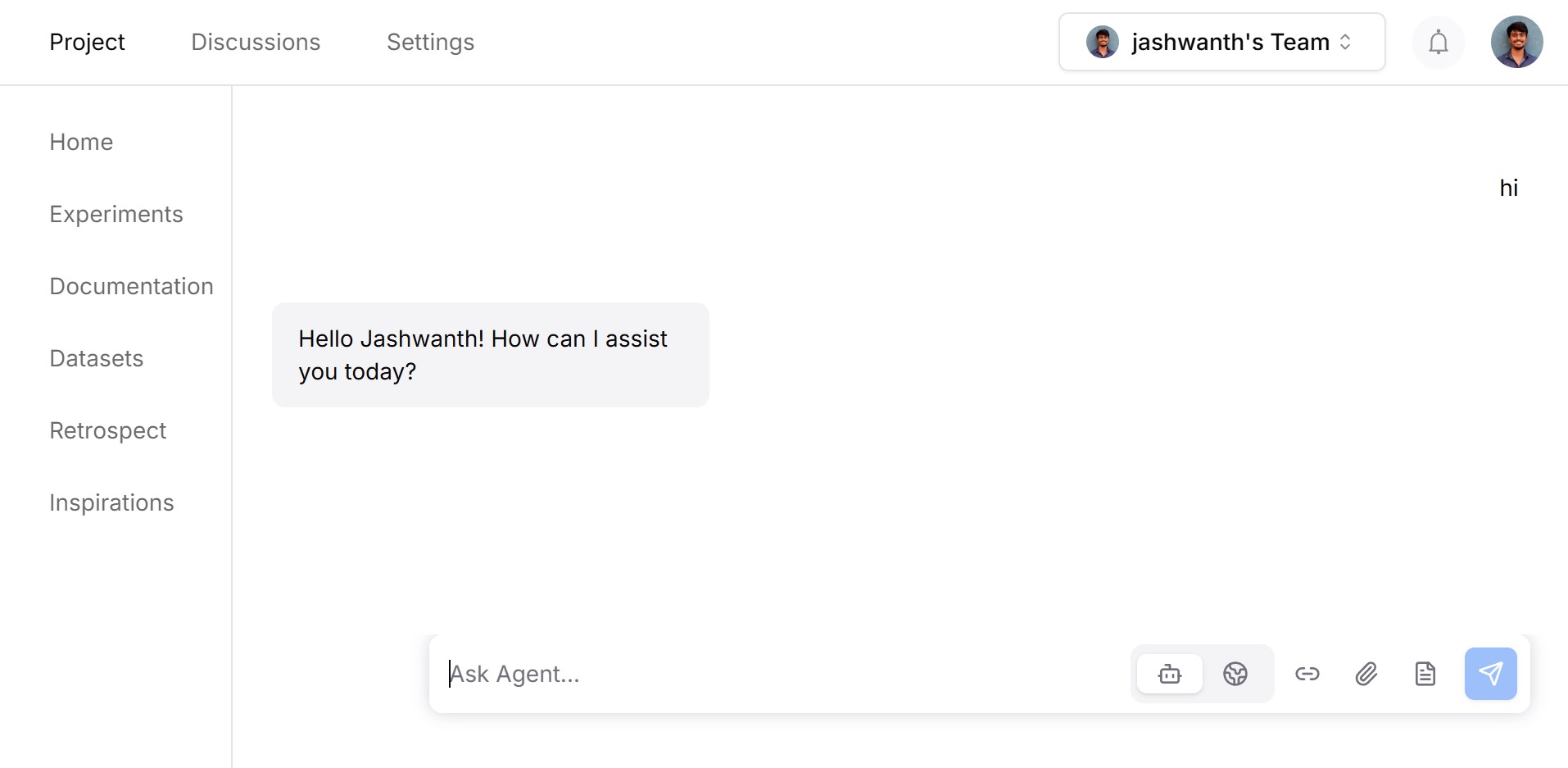
- Conversational Interaction: An integrated AI agent allows users to interact with their research data (documentation, experiments) conversationally.
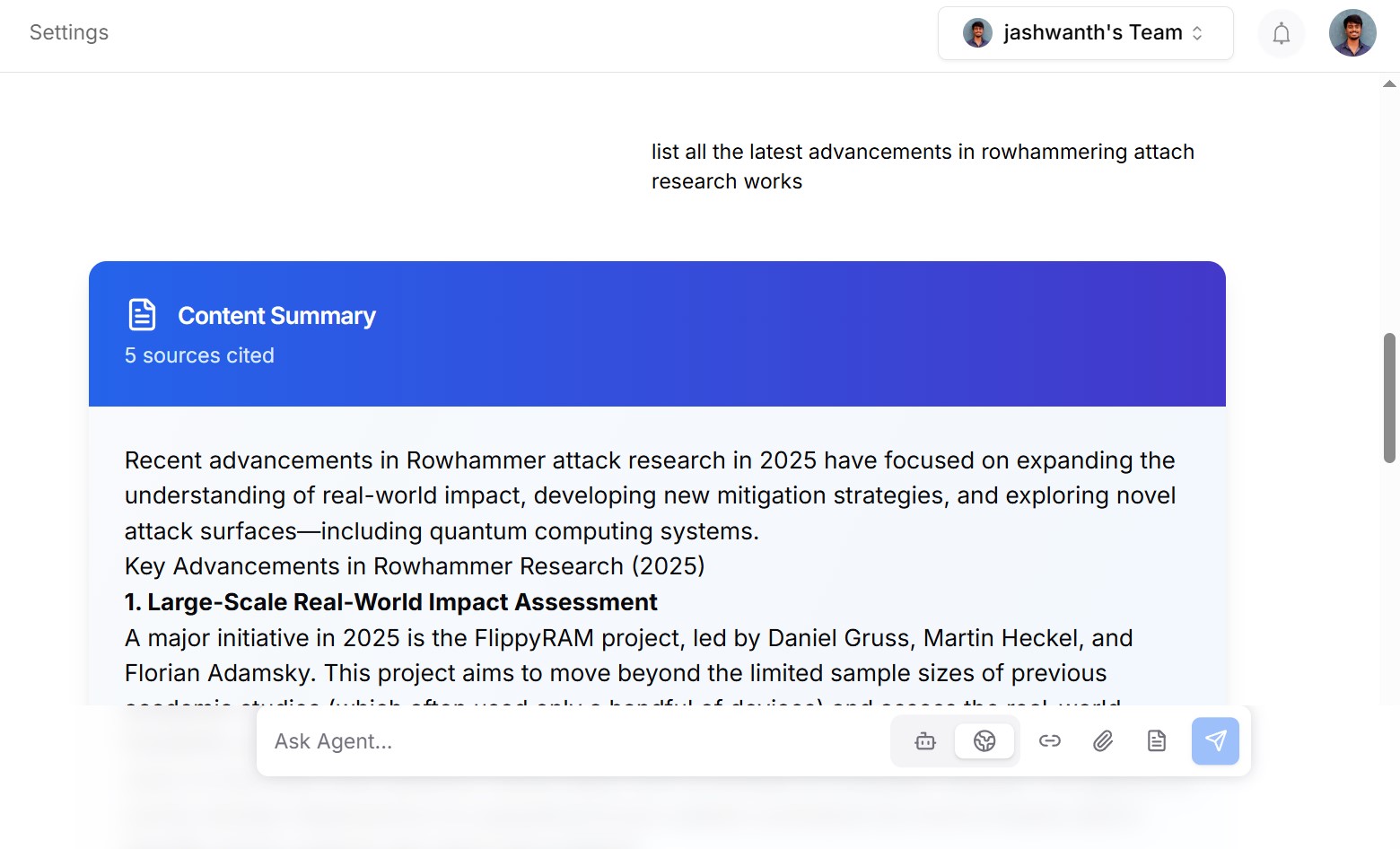
- Real-time Information Retrieval: Leverages tools like Perplexity to fetch and organize live information (e.g., latest advancements, sources, code repositories) from the internet.
- Actionable Insights: Allows users to directly add discovered insights to their documentation or create to-do tasks within experiment tabs.
- Intelligent Task Management: The AI agent can understand conversational commands to update task statuses (e.g., moving a task to "completed").
How we built it
- we have used Nextjs to manage both the frontend and backend
- Ai SDK as a framework to use ai models
- perplexity to fetch realtime internet data
- shadcn for the ui
- convex for the database
- clerk for authentication
- tiptap for text editor
Challenges we ran into
- absence of tool calling from the perplexity api we found quick work around by hot reloading the models based on the context , requirements and had the perplexity as a tool call inside the main agent to make it work seemlessly
- excess numbering in the citations recieved than the number of source urls
Accomplishments that we're proud of
- ive built an agent that can do crud operations !
What we learned
- interacting with LLM
- agentic flows
- uiux with ai
What's next for Documate
- making the agent more robust
- adding more features into retrospective
- integrations with github , asana , jira
Built With
- next
- perplexity


Log in or sign up for Devpost to join the conversation.