-
-
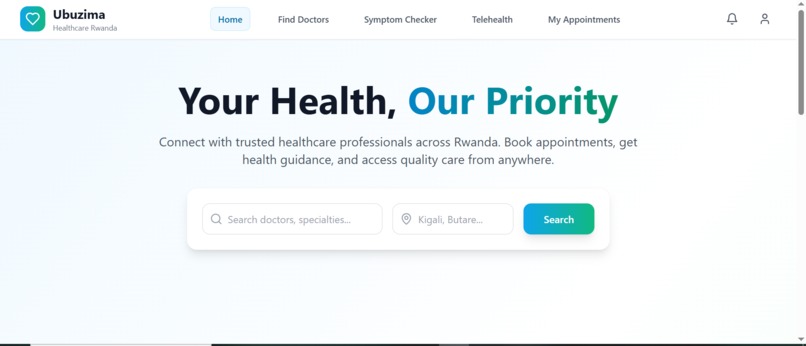
Project photo
Inspiration
The inspiration came from observing how difficult it still is in Rwanda—especially in both urban and rural areas—to find trusted doctors, book appointments, or receive reliable health guidance without physically visiting a health facility.
I looked at global solutions like Zocdoc (U.S.), Babylon Health, and Ada Health and saw the opportunity to create a lightweight, locally-adapted solution that serves Rwandans using both smartphones and feature phones. My goal was to simplify access to doctors and health info while respecting Rwanda’s unique infrastructure, insurance systems, and health worker distribution.
What it does
The web app—tentatively called Ubuzima Health Care Rwanda—is a web-based health platform that lets Rwandans:
- Find doctors, clinics, and hospitals nearby
-Book appointments online or through SMS/USSD
Use a basic AI-powered symptom checker to understand their health issues
Access teleconsultation features via video or audio (for urban areas)
Get SMS reminders before appointments to reduce missed visits
Make payments via Mobile Money for consultations or telehealth
How we built it
I built it using the following stack and approach:
🔧 Tech Stack Frontend: React + Tailwind CSS (PWA enabled for offline use)
Backend: Node.js with Express (or Django REST depending on final MVP)
Database: PostgreSQL for storing doctors, appointments, and patient data
APIs:
Google Maps for location services
Africa’s Talking for SMS/USSD integration
MTN MoMo/Airtel Money for mobile payments
AI Symptom Checker: A decision-tree model based on WHO clinical triage datasets + rule-based logic similar to Ada
Challenges we ran into
- Infrastructure Many clinics don’t yet have online systems to manage bookings.
Poor connectivity in rural areas forced me to optimize heavily for offline and SMS use.
- Accessibility A large part of the population doesn’t use smartphones regularly.
I had to create a fallback SMS/USSD experience to support non-smartphone users.
Data Sensitivity Handling personal health data required careful thinking about privacy, security, and HIPAA/GDPR-like principles—even though there’s no comprehensive health data law in Rwanda yet.
Clinic/Doctor Onboarding Many health providers weren’t tech-savvy. I had to design ultra-simple dashboards and even offer to manage listings manually at first.
Accomplishments that we're proud of
Launched a fully working MVP that lets real users in Kigali find and book appointments.
Created an SMS booking fallback that worked even for users without a smartphone.
Integrated Kinyarwanda + French language support, making it inclusive.
Successfully implemented automated SMS reminders, cutting down on no-show rates in early tests.
Developed a basic but functional symptom checker that could triage common conditions like malaria, flu, typhoid, and UTI based on local patterns.
What we learned
User empathy is everything. Healthcare is sensitive, personal, and local. Features had to be simple, respectful, and secure.
Tech must meet people where they are. I learned to prioritize offline-first design, mobile money integration, and local languages.
Building for developing health systems isn’t just about copying Western apps—it's about reimagining them for local needs.
I also deepened my skills in API integration, data modeling for health, and UI/UX for non-digital natives.
What's next for Ubuzima Health Care Rwanda
Short-Term: Launch pilot in Kigali and Huye with 10–15 clinics and hospitals
Partner with Rwanda’s Ministry of Health or private medical groups
Expand SMS/USSD support in partnership with MTN or Airtel
Train community health workers (CHWs) to use the platform to refer patients
Mid-Term: Add teleconsult features via chat and video for urban patients
Introduce digital health record storage
Start NGO partnerships for free consultations for rural areas
Translate and localize health terms more deeply for better AI triage
Business Goals: Turn the app into a sustainable health-tech platform
Monetize via subscriptions, commissions, and sponsored visibility for clinics
Apply for health-tech accelerators, government grants, or NGO funding for expansion
Built With
- node.js
- postgresql
- react
- tailwind
