-
-
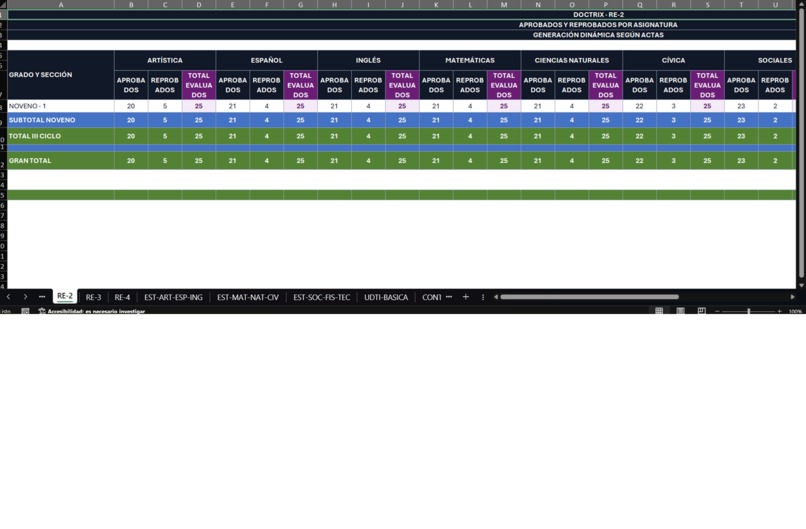
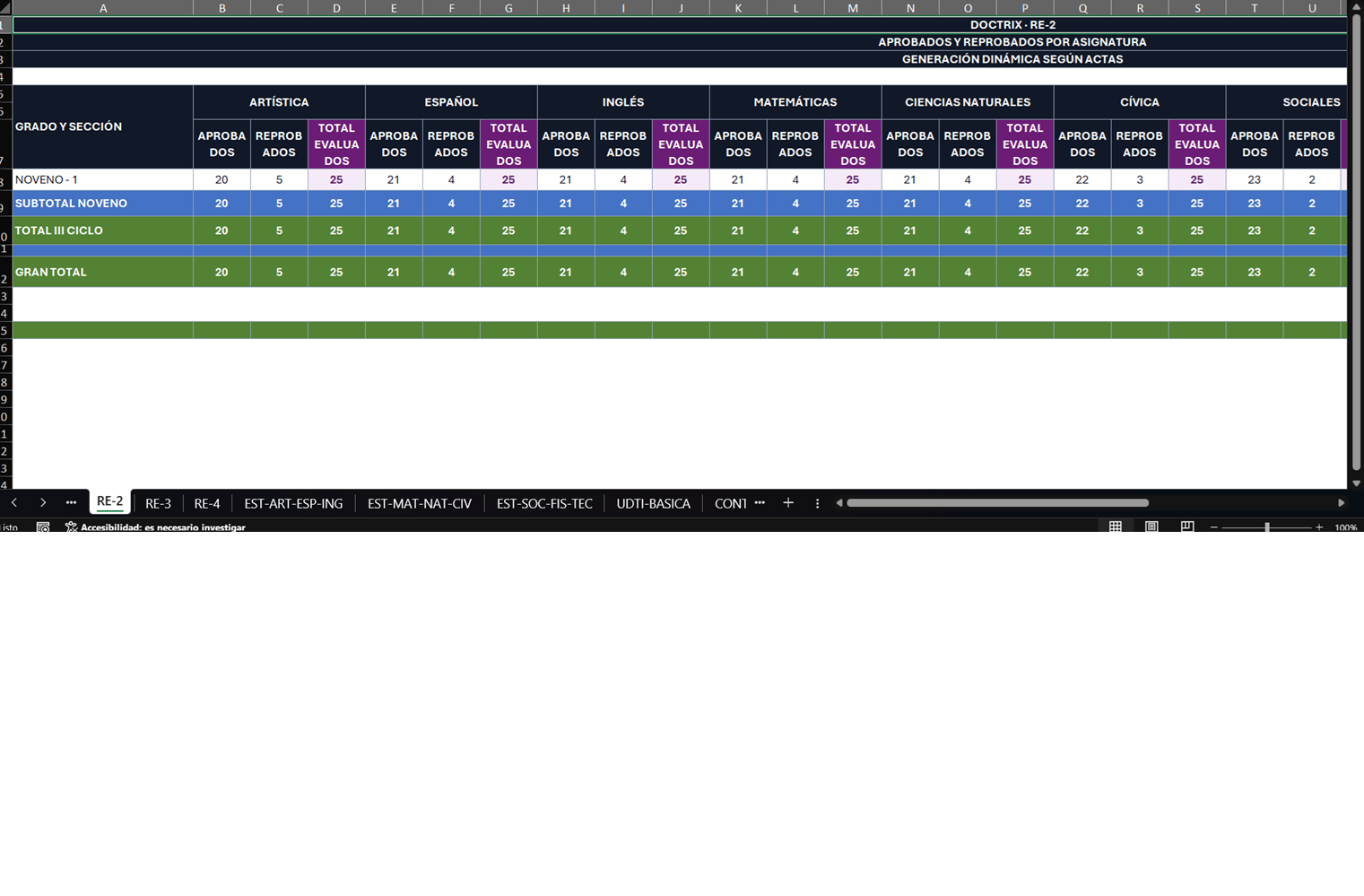
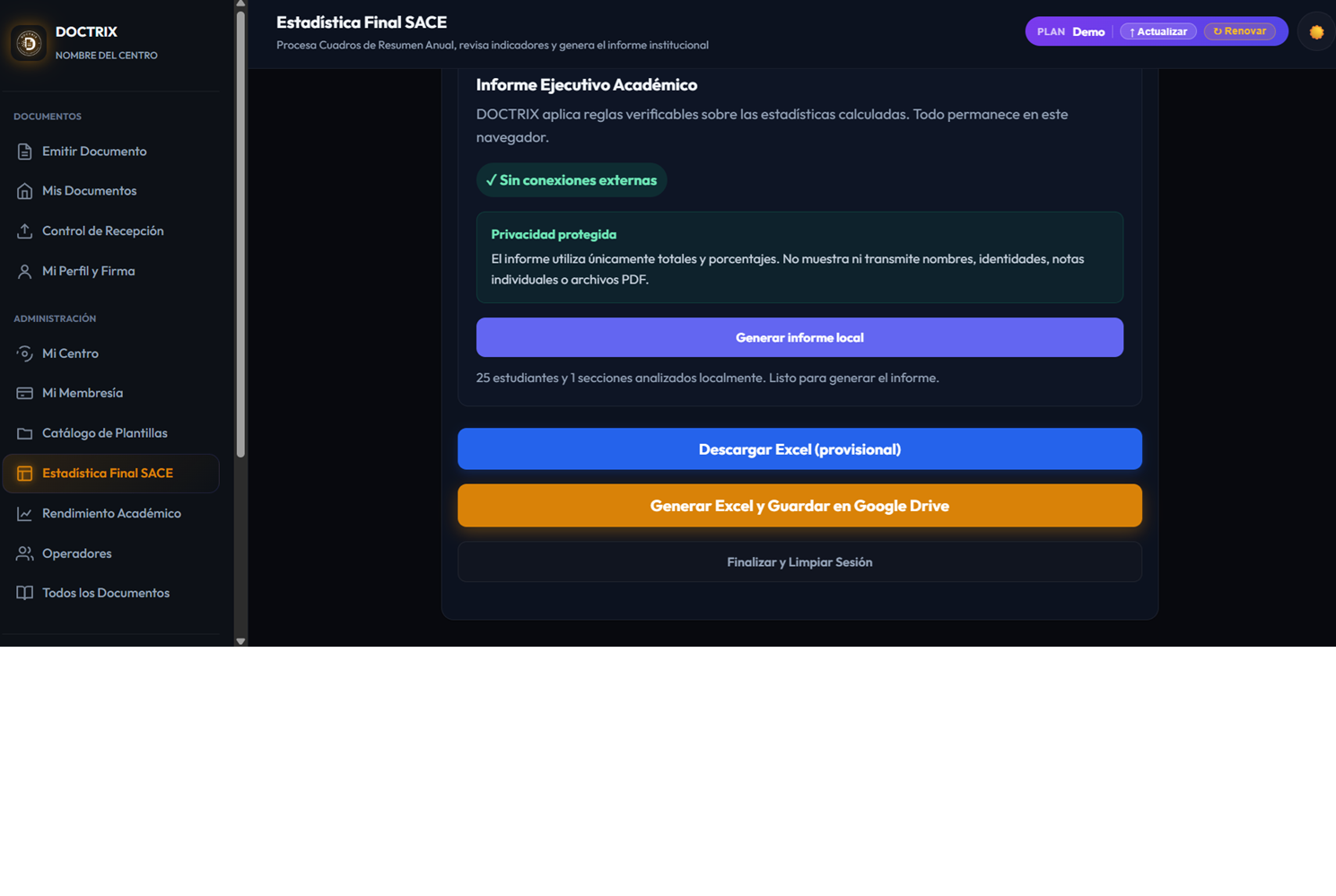
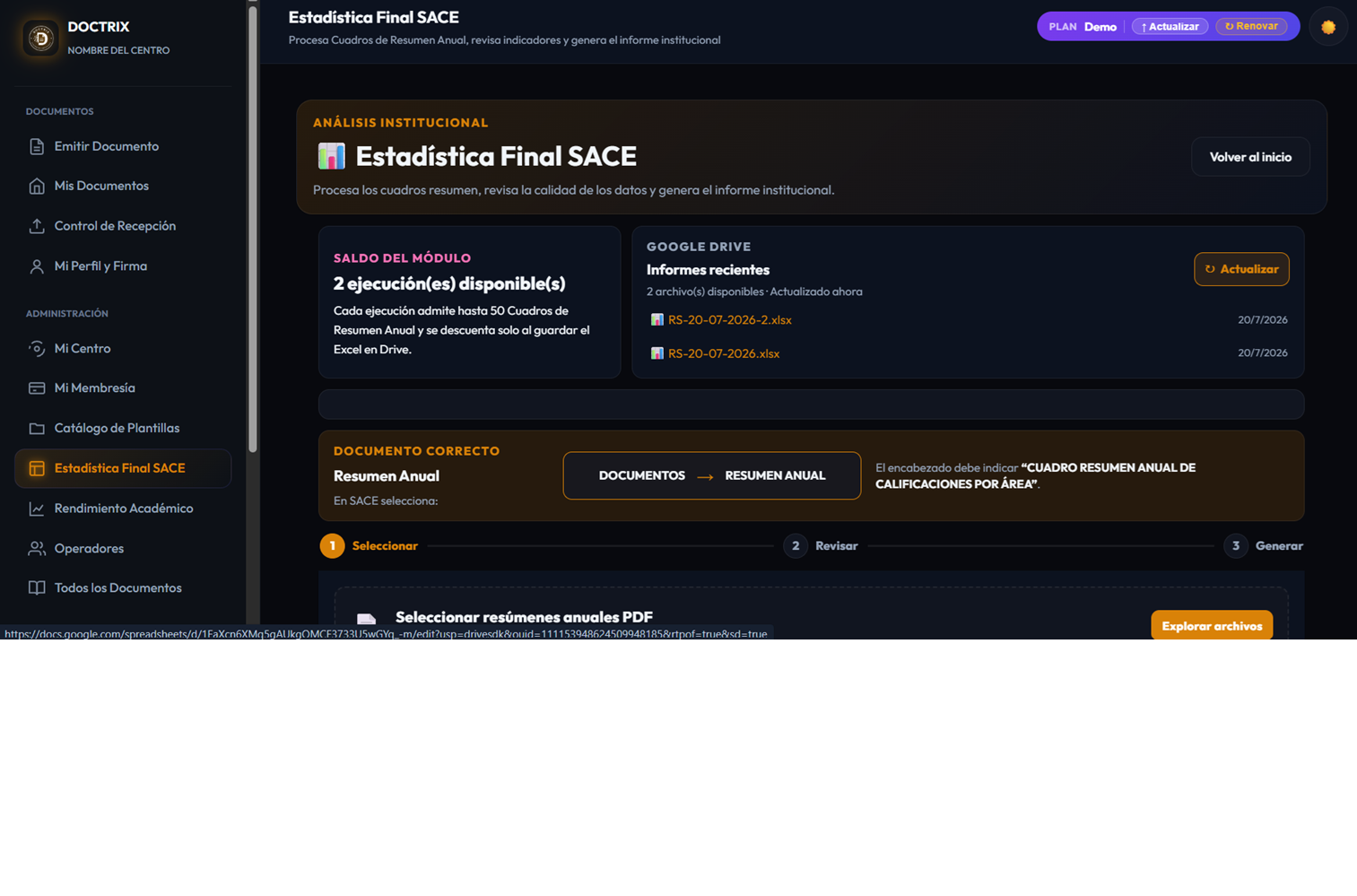
REPORT EXCEL
-
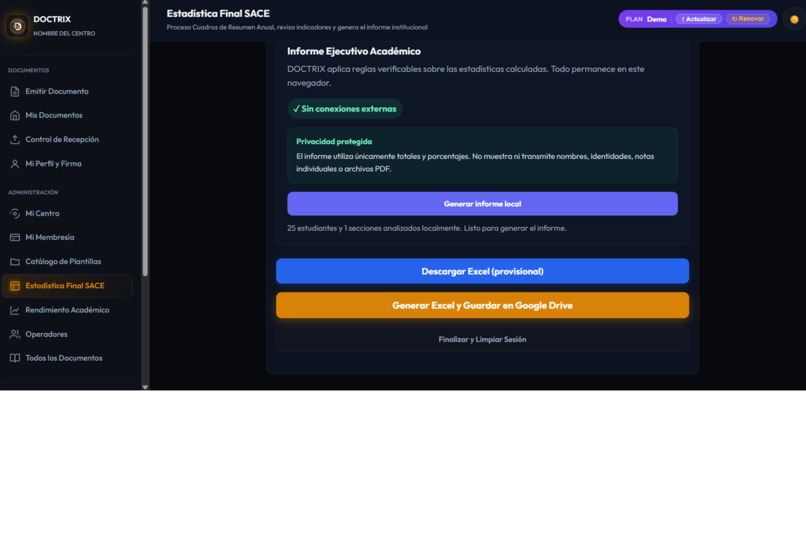
Generate Excel and upload to Drive
-
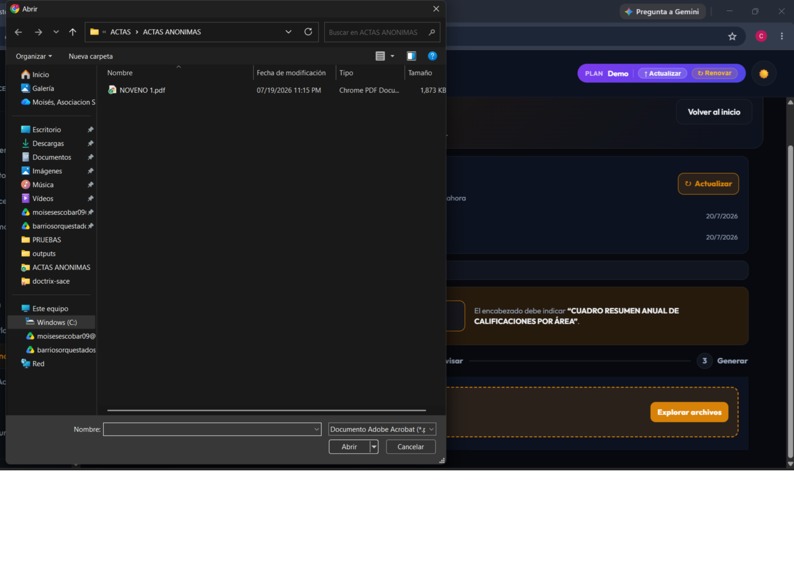
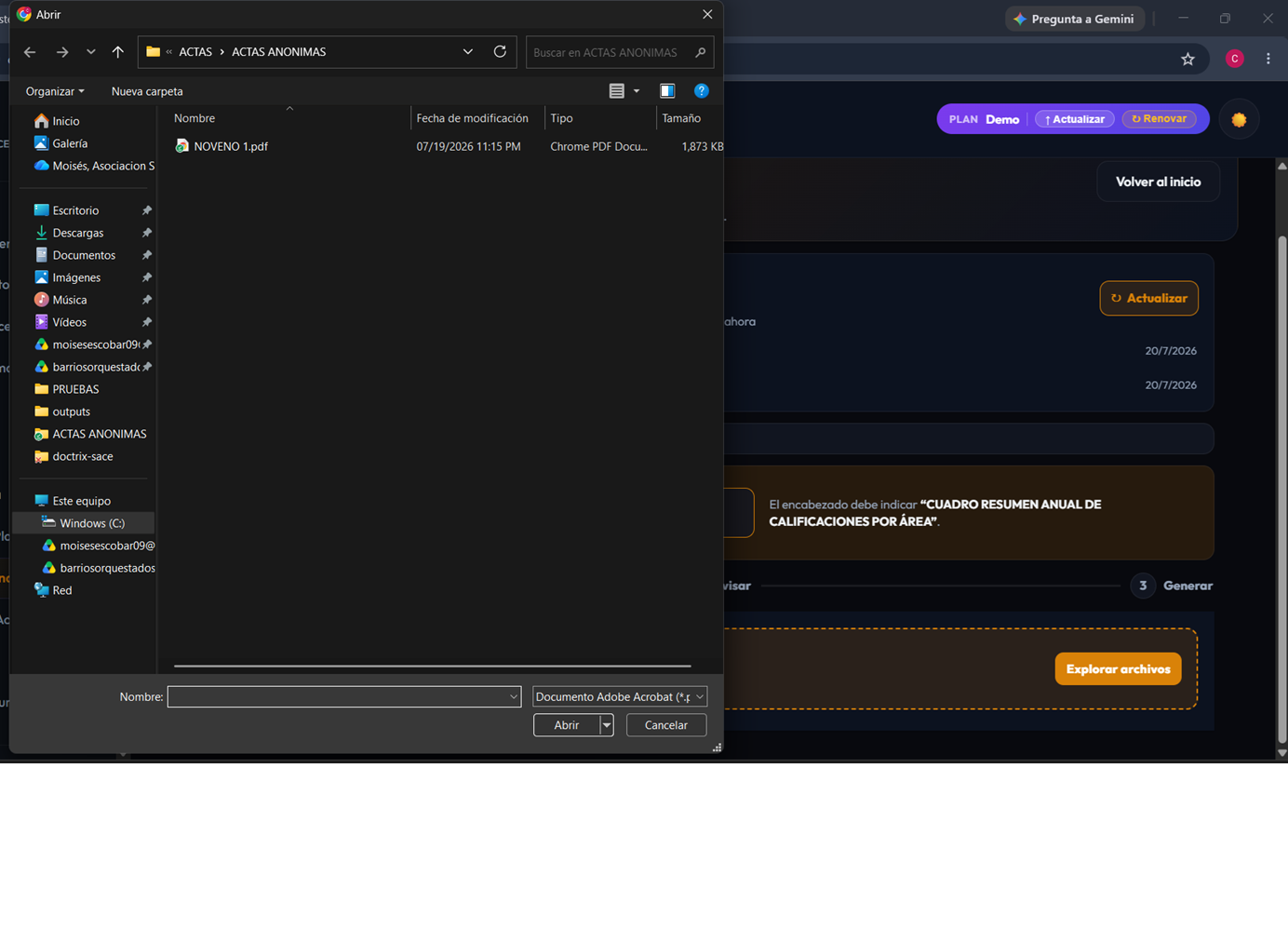
FILE EXPLORER
-
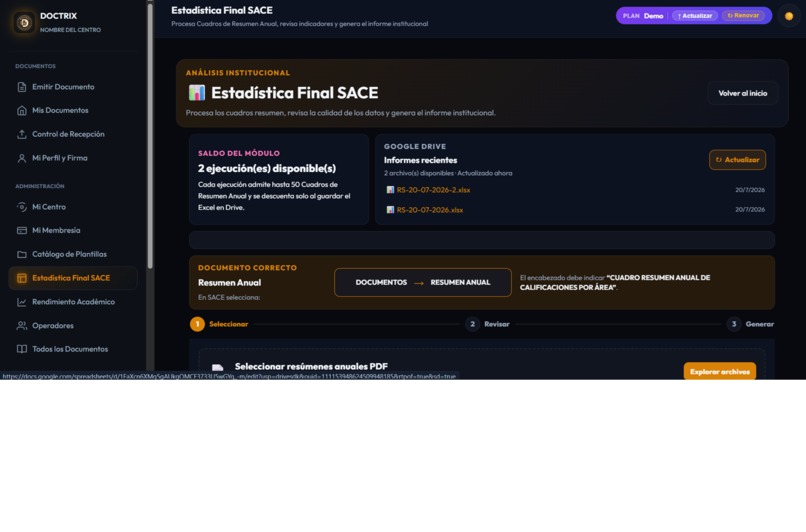
ACCESS TO THE MODULE
-
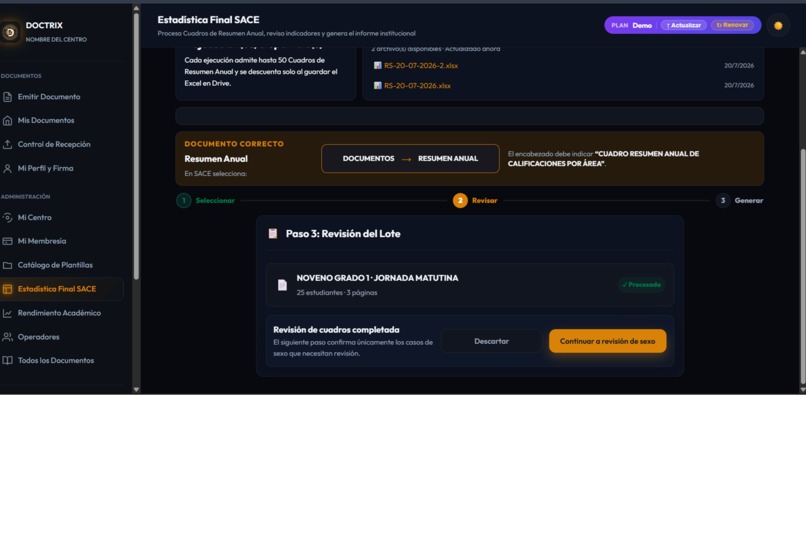
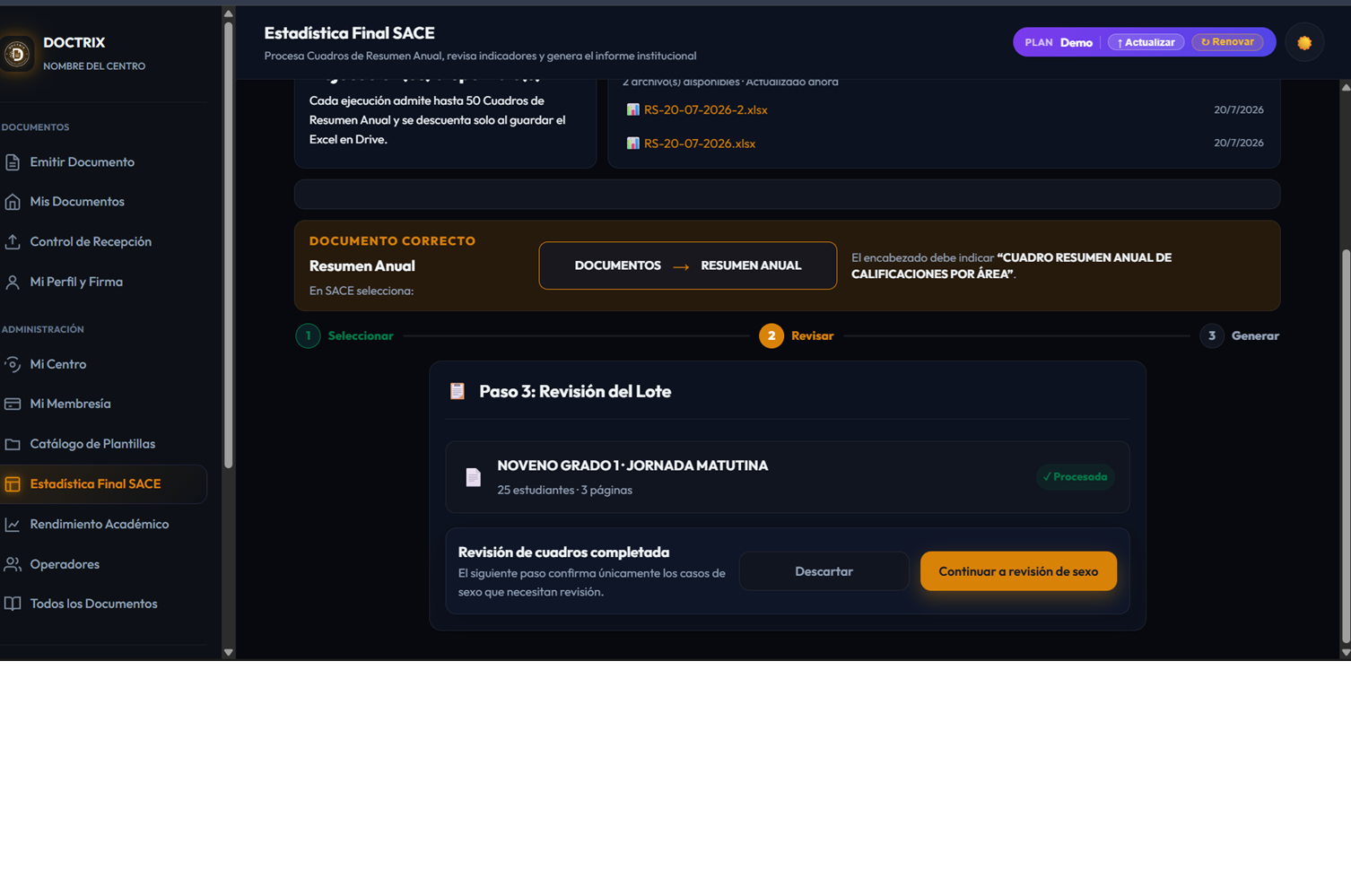
MINUTES PDF PROCESSING
Inspiration
I am not a software engineer. I am an educational administrator who has spent years participating in one of the most demanding administrative processes in public schools.
Every academic year, school directors organize internal review committees made up of administrators and teachers to validate the final academic statistics before they become official. These committees work morning and afternoon reviewing every section, every teacher's report, every certificate, and every institutional statistic.
In large schools, this process may involve up to 100 sections, each represented by a four-page official PDF report. Reviewers must manually verify grades, missing records (ND), ungraded subjects (NS), promotion status, withdrawals, certificates, and ensure that every official document matches the final institutional statistics.
This process can take several weeks, requires multiple people working together, and even then transcription and consolidation errors are still common because thousands of individual values must be checked manually.
I experienced this problem firsthand and realized that the real challenge was not replacing people—it was eliminating repetitive manual work while preserving human judgment where it truly matters.
That is why I created DOCTRIX SACE: a privacy-first system that processes official academic reports locally in the browser, reconstructs academic data, identifies ambiguous cases for human review, and generates reliable institutional statistics and Excel reports without exposing student information to external AI services.
What it does
DOCTRIX SACE processes batches of official academic-report PDFs, reconstructs students and dynamic subjects from PDF geometry, detects ambiguous cases for human review, calculates institutional statistics, generates Excel workbooks, and produces a deterministic executive report.
The complete processing pipeline runs locally in the browser. Student records are never sent to the OpenAI API or any external AI service during document processing.
For large schools, a process that may require several people and weeks of manual work can be reduced to a guided digital workflow completed in minutes while preserving human review whenever the extracted data is ambiguous.
How we built it
During OpenAI Build Week, I used Codex with GPT-5.6 to significantly extend the project with new capabilities, including:
- A geometry-aware PDF extraction engine.
- Browser-based batch processing using Web Workers.
- IndexedDB session management for large document batches.
- Human validation for ambiguous classifications.
- Deterministic academic statistics generation.
- Local executive report generation.
- Dynamic Excel workbook generation.
- Integration improvements across the complete SACE workflow.
Codex accelerated repository exploration, debugging, architecture decisions, implementation across multiple browser modules, and repeated validation using numerous anonymized academic reports.
Challenges we ran into
The most difficult challenge was accurately reconstructing structured academic data from official PDF reports without relying on OCR or cloud processing.
Official reports contain variable layouts, dynamic subjects, inconsistent spacing, and different structures between schools. Building a deterministic extraction engine that remained reliable across many official reports required extensive testing and refinement.
Another challenge was preserving the legal and administrative reliability of official academic records. The system never guesses ambiguous information. Instead, it requires human validation before generating the final institutional statistics.
Accomplishments that we're proud of
- Complete browser-based PDF processing.
- Privacy-first architecture.
- Geometry-based academic record reconstruction.
- Human validation before report generation.
- Automatic Excel workbook generation.
- Deterministic executive reports.
- A production-ready solution designed for real educational institutions.
What we learned
This project reinforced that AI-assisted software development can dramatically accelerate engineering without replacing careful design decisions.
Codex significantly improved development speed, but successful results still depended on deterministic algorithms, repeated validation, and keeping humans involved wherever ambiguity exists.
What's next for DOCTRIX SACE
Future work includes supporting additional official report formats, expanding academic dashboards, adding longitudinal performance analysis, and making the platform available to more educational institutions while maintaining its privacy-first architecture.
Built With
- api
- cloudflare
- codex
- css
- docs
- drive
- exceljs
- gpt-5.6
- html
- indexeddb
- javascript
- oauth
- openai
- pdf.js
- postgresql
- supabase
- web
- workers

Log in or sign up for Devpost to join the conversation.