Inspiration
Important information is often buried inside lengthy and complicated documents. Finding deadlines, payment details, obligations, and other critical information can be time-consuming and difficult, especially when users need to verify where that information came from.
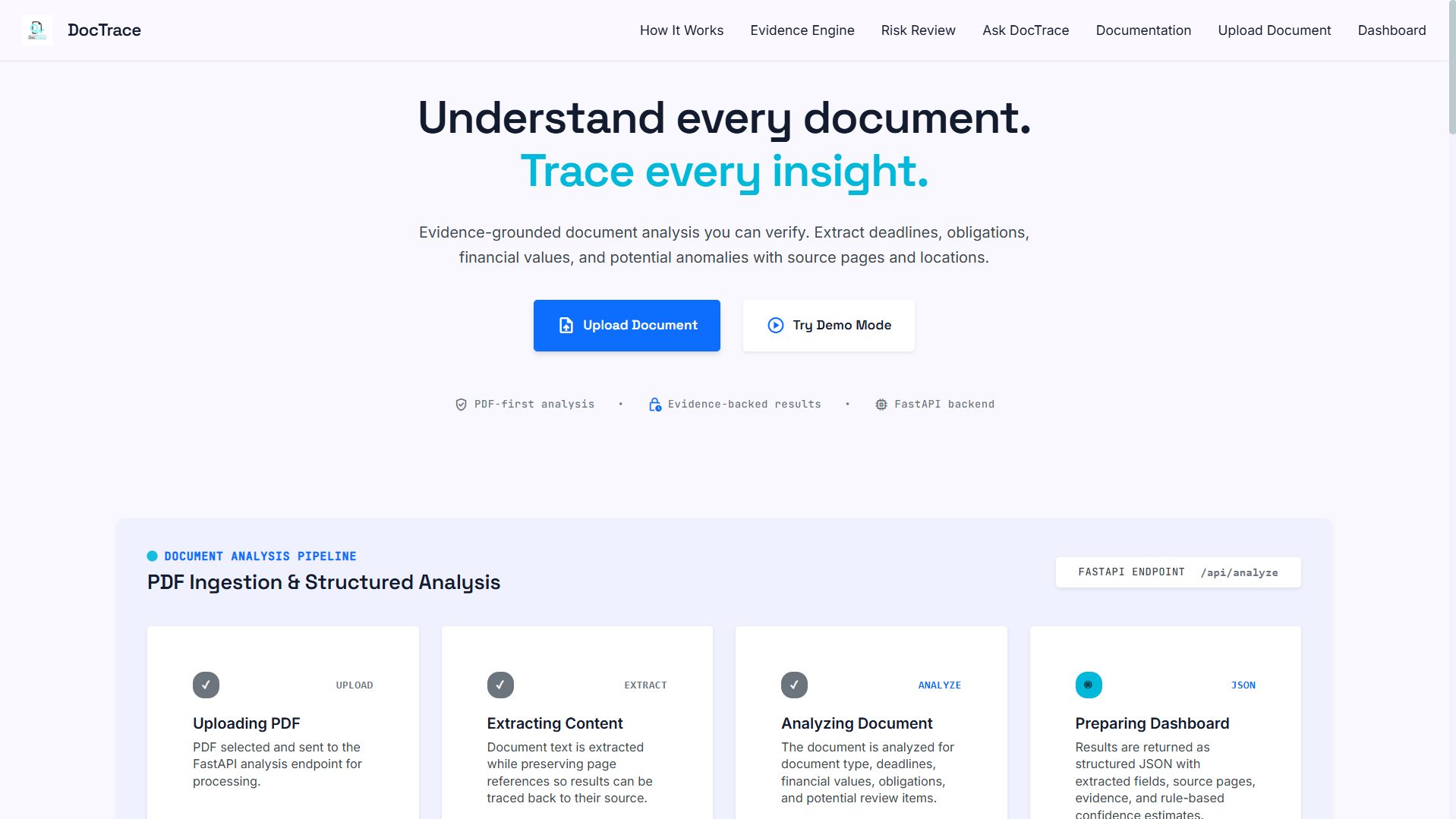
We built DocTrace to make document understanding more transparent and accessible. The idea was simple: instead of only extracting information, every insight should remain connected to its original source.
What it does
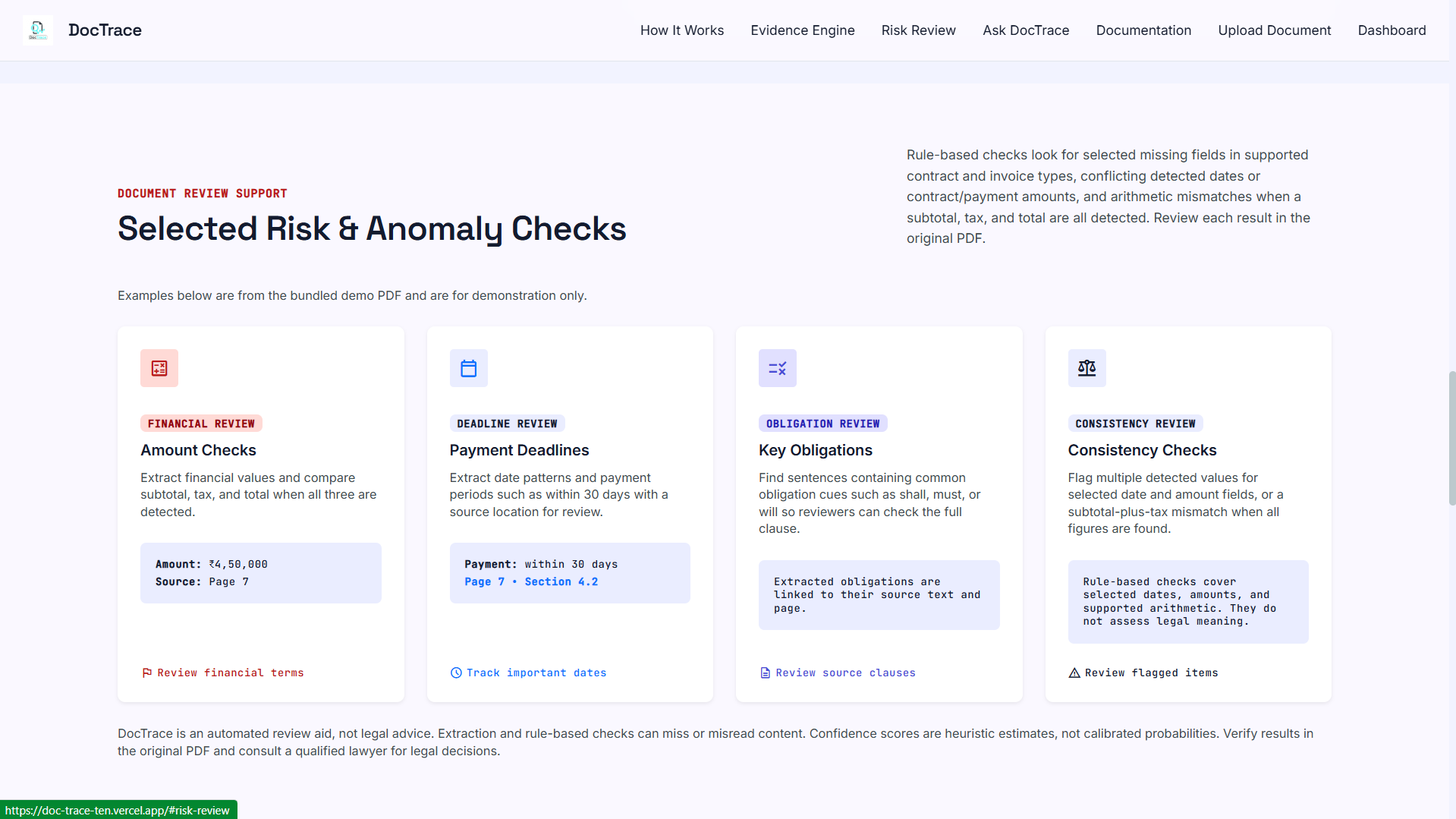
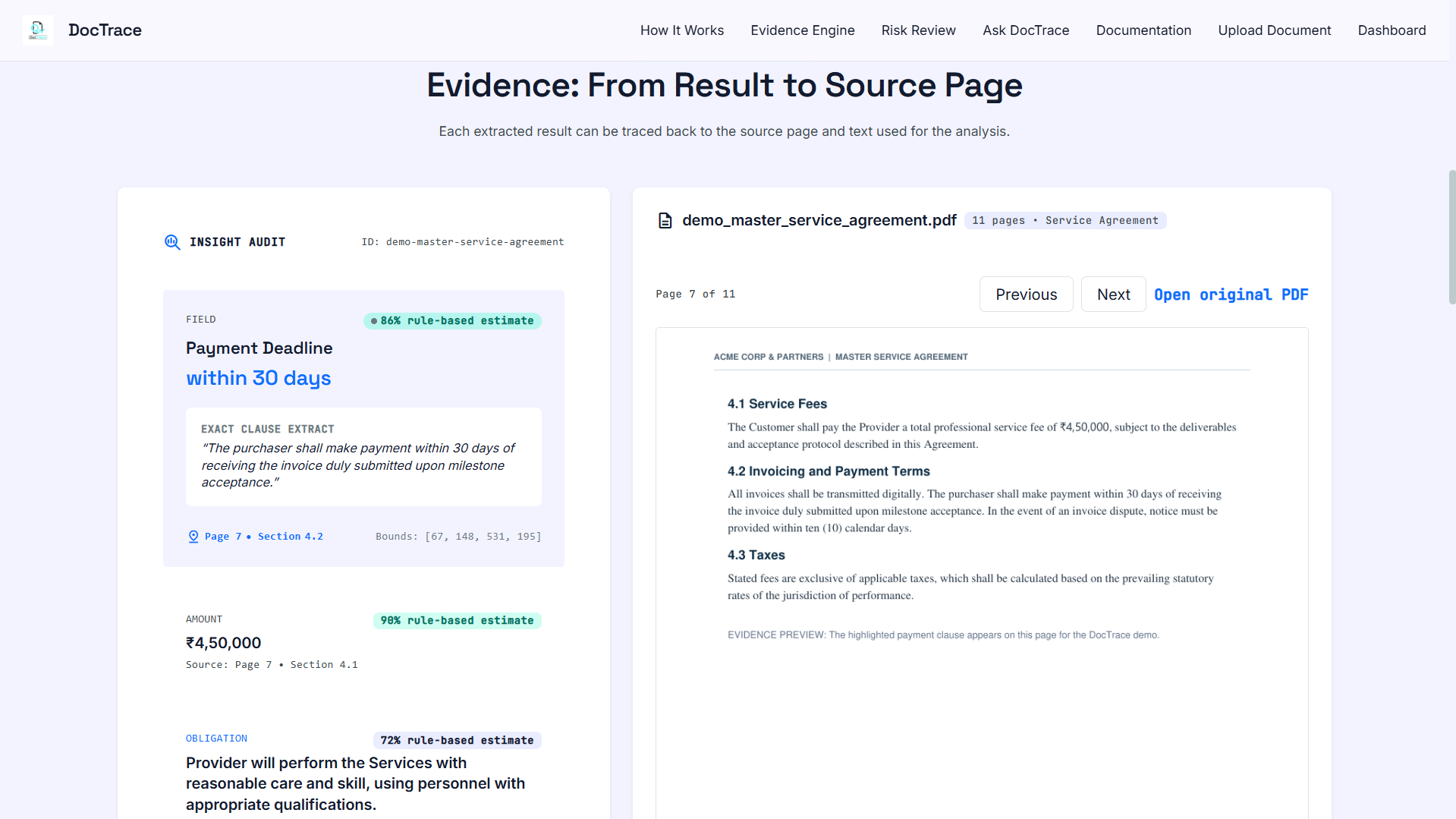
DocTrace analyzes PDF documents and extracts important information such as:
- Key dates and payment periods
- Financial values
- Obligations and important clauses
- Potential anomalies or unusual information
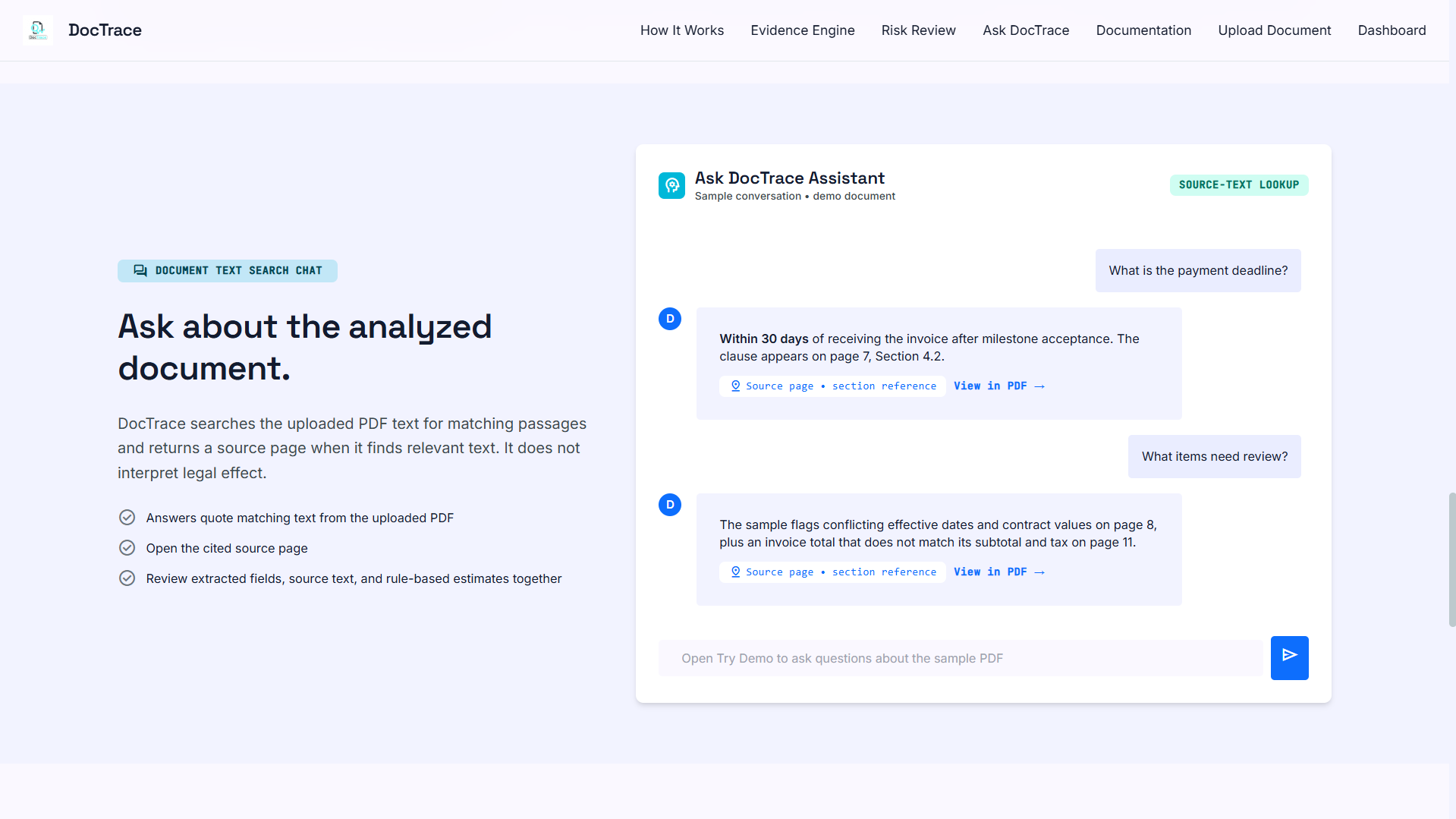
- Source-page references for extracted insights
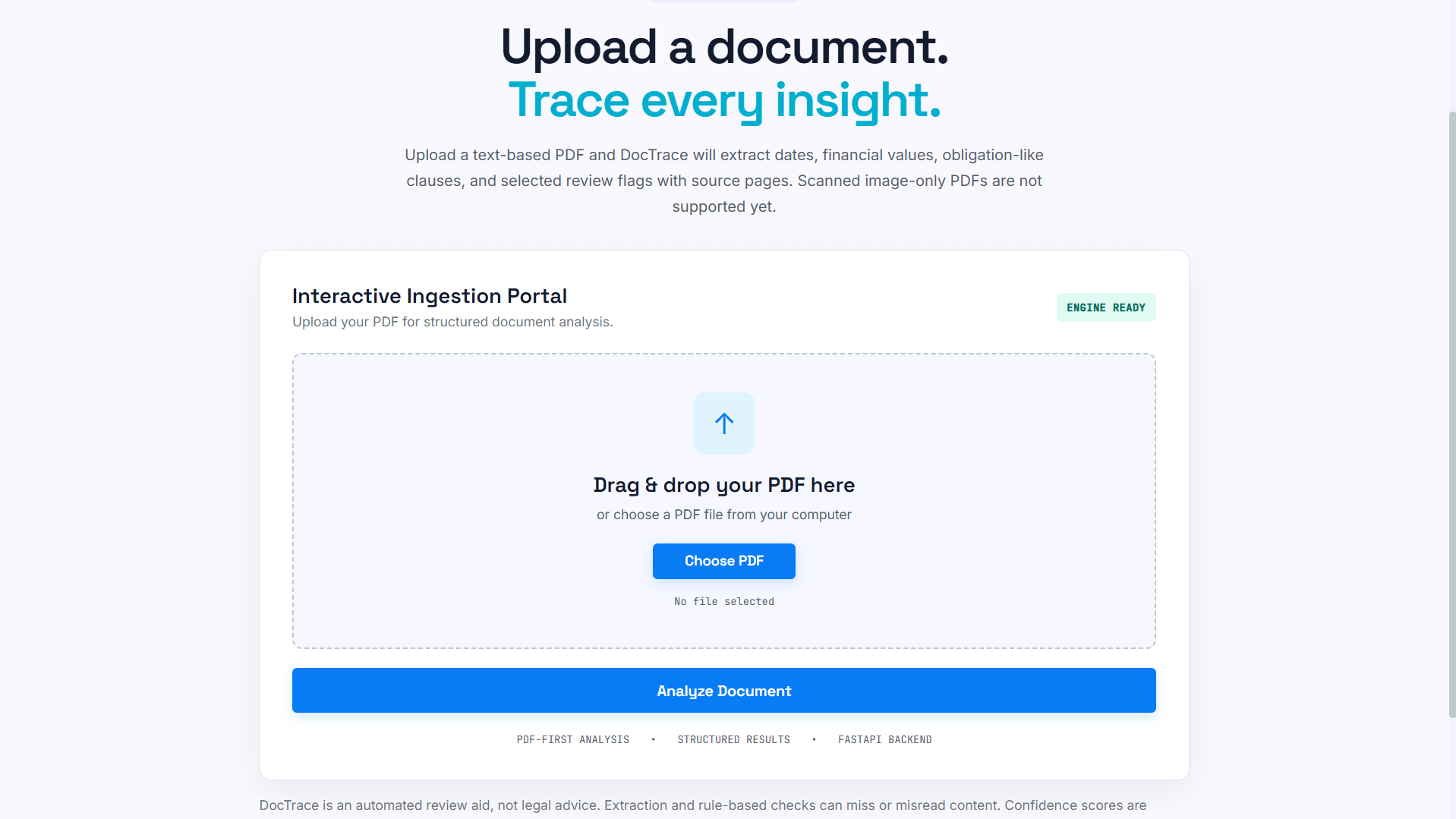
Users can upload a document, review the extracted information through a dashboard, and trace each insight back to the relevant page of the original PDF.
This makes document analysis easier to understand, verify, and act upon.
DocTrace aligns with UN Sustainable Development Goal 16 — Peace, Justice and Strong Institutions by supporting transparency, accountability, and access to understandable and verifiable information.
How we built it
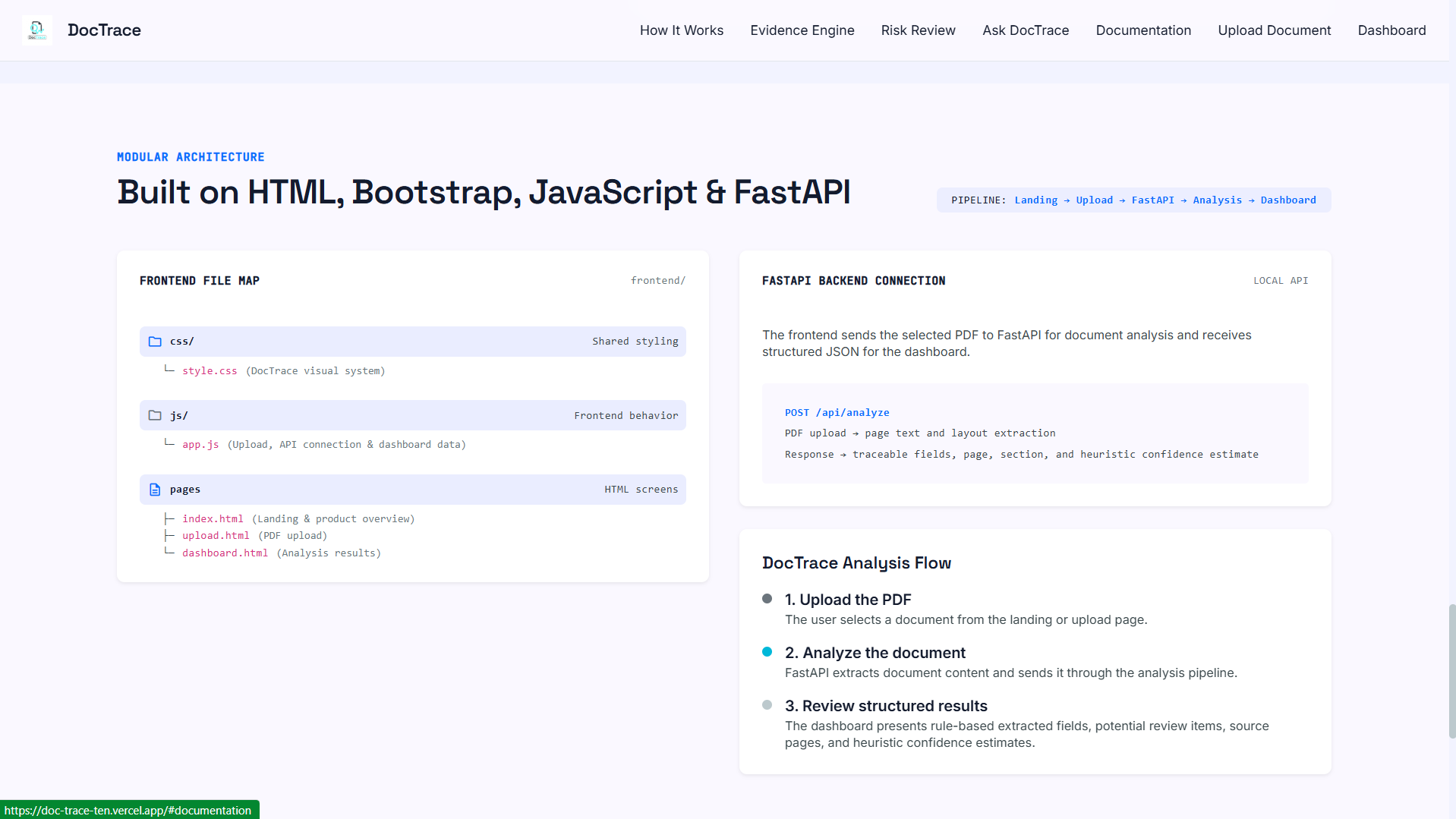
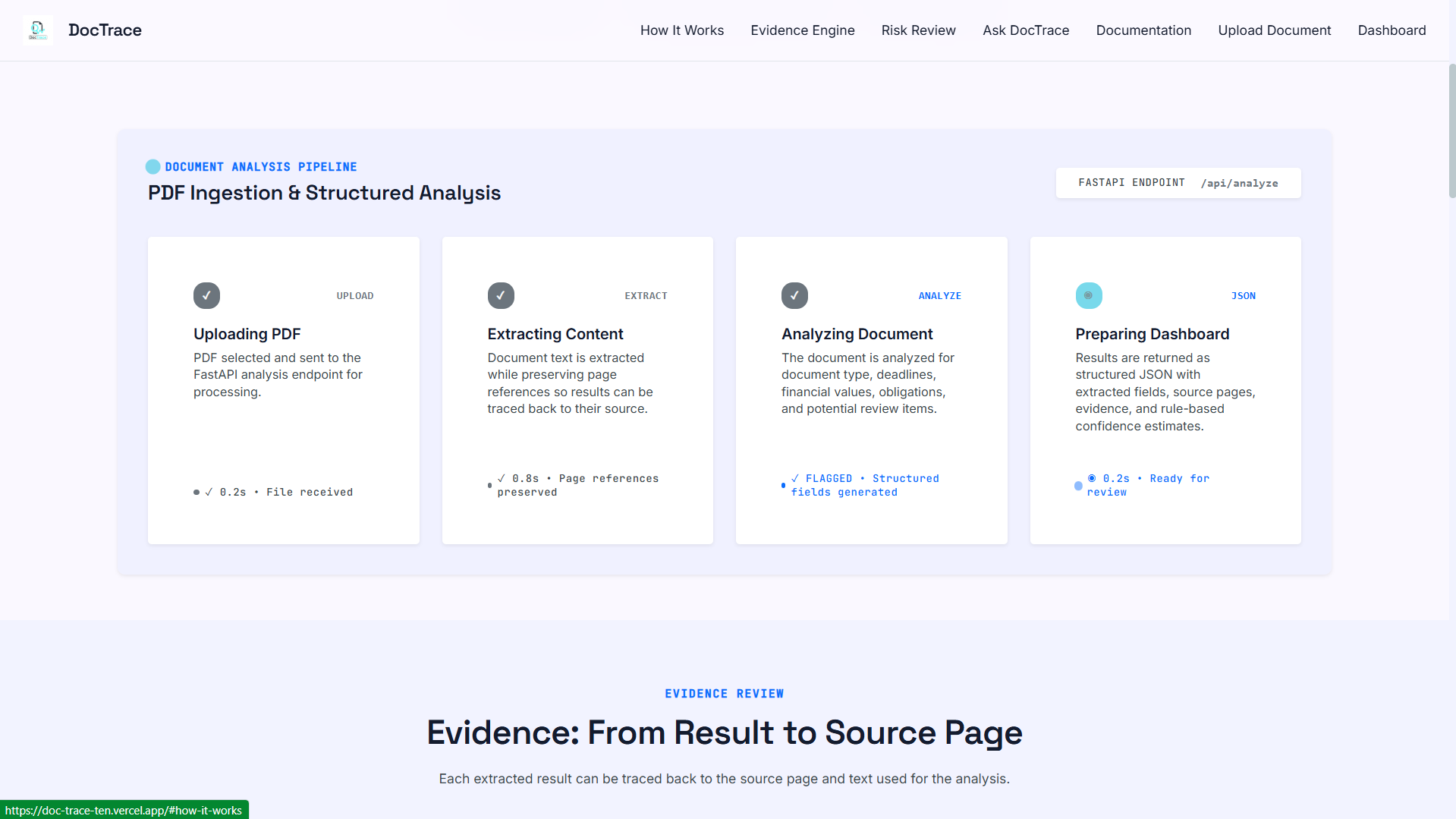
DocTrace was built as a web-based application with a frontend and backend architecture.
Technologies used:
- Python
- FastAPI
- HTML, CSS, JavaScript
- PDF processing
- Rule-based document analysis
- Vercel for frontend deployment
- Render for backend deployment
The backend processes uploaded PDF documents, extracts relevant information, identifies potential anomalies, and returns structured results to the frontend. The dashboard then presents these results alongside the original document so users can verify the information themselves.
Challenges we ran into
One of our biggest challenges was making document analysis reliable while keeping the extracted information connected to its original context.
We also faced challenges with PDF processing, backend deployment, frontend-backend integration, and ensuring that the application remained usable while processing documents.
Another challenge was designing the system so that users could quickly understand the results instead of being overwhelmed by large amounts of extracted information.
Accomplishments that we're proud of
We are proud that we turned our idea into a working end-to-end application rather than just a concept.
We successfully built a workflow where users can upload a document, analyze it, view structured insights, and trace those insights back to the original document.
We are also proud of creating a solution that connects a practical technical problem with a real-world goal: making important information easier to understand and verify.
What we learned
We learned that building a useful solution is not only about adding more technical features. The way information is presented and verified is equally important.
We also learned more about PDF processing, API development, frontend-backend integration, deployment, and designing technology around a real-world problem and its potential social impact.
Most importantly, we learned to think beyond "Can we build it?" and ask "How can what we build actually help people?"
What's next for DocTrace
We want to make DocTrace more intelligent, scalable, and useful for real-world document workflows.
Future improvements include:
- Support for more document formats
- More advanced anomaly and obligation detection
- Improved multilingual document support
- Stronger document comparison capabilities
- Better accessibility features
- More detailed audit trails
- Integration with organizations' existing document workflows
Our long-term goal is to make important documents easier to understand while keeping every insight transparent, verifiable, and traceable.
DocTrace — Understand every document. Trace every insight.
Built With
- css
- fastapi
- html
- javascript
- pdf-processing
- python
- render
- rule-based-analysis
- vercel

Log in or sign up for Devpost to join the conversation.