Inspiration
Documents such as contracts, agreements, and business reports often contain critical information buried across multiple pages. Finding payment terms, deadlines, financial amounts, obligations, and important clauses manually can be time-consuming.
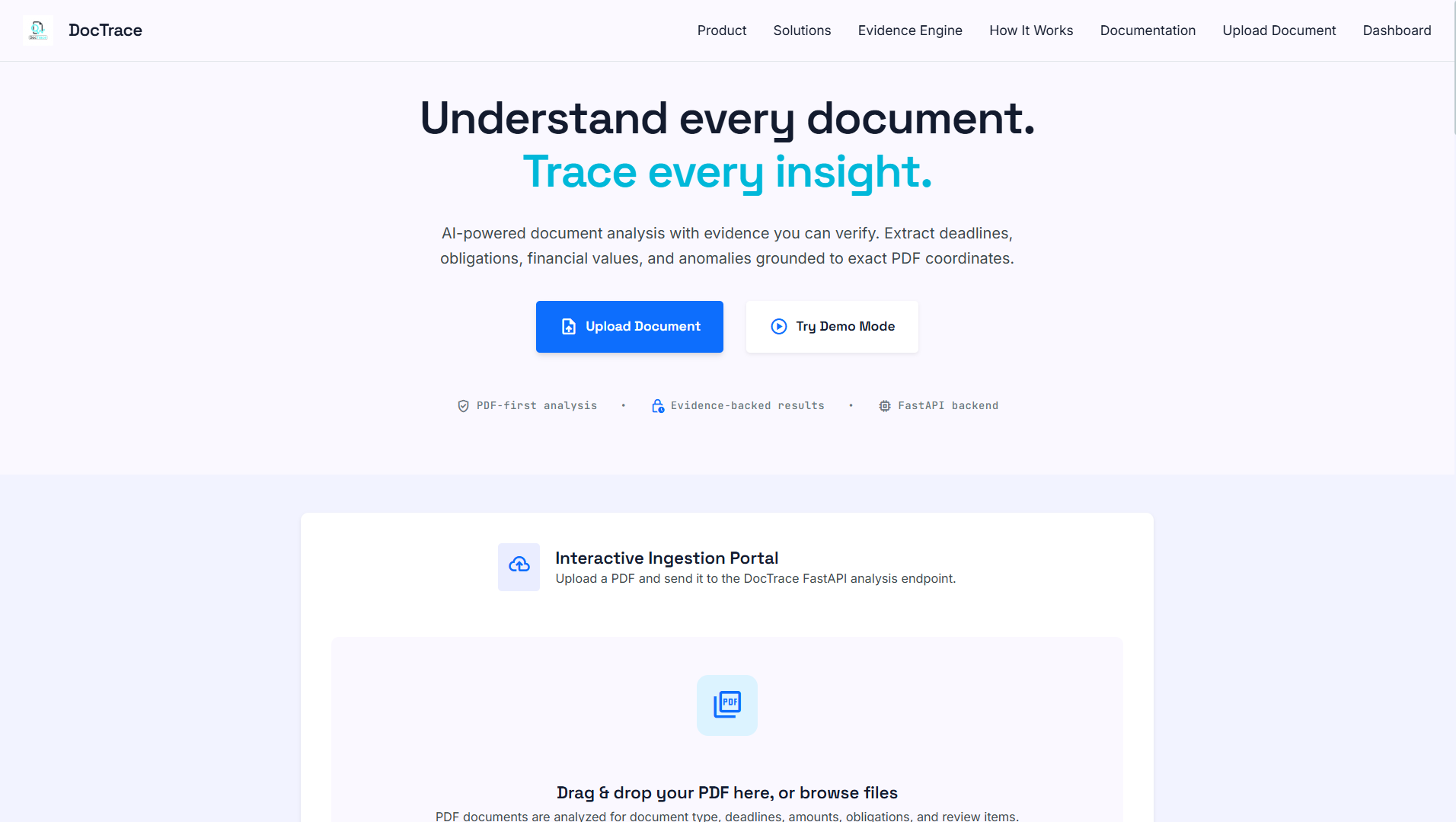
We wanted to create a solution that goes beyond simply summarizing a document. This inspired us to build DocTrace, an AI-powered document intelligence system that not only extracts important insights but also shows where each insight came from.
Our core idea was simple:
Don't just tell users what was found — show them the evidence behind it.
What it does
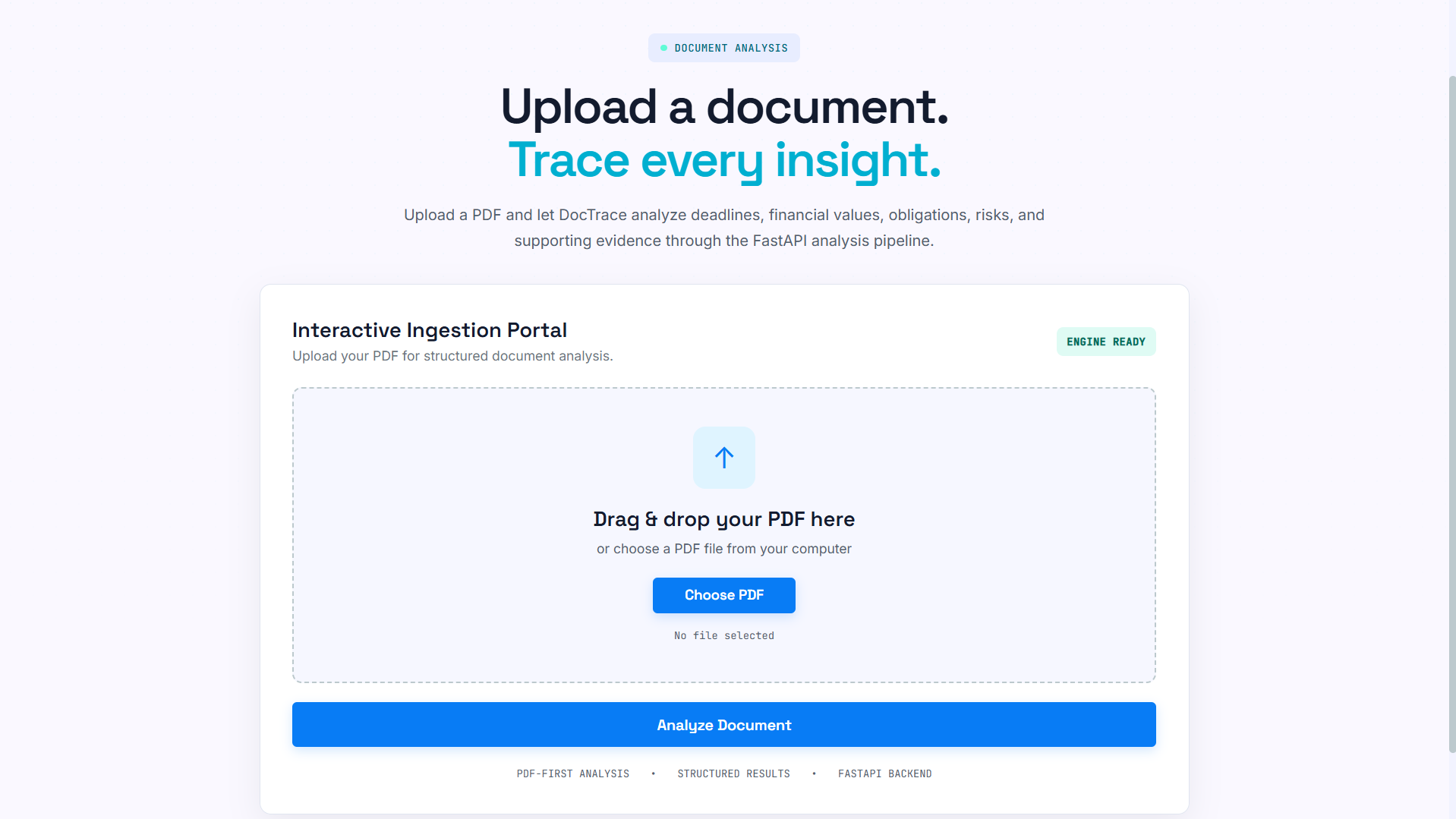
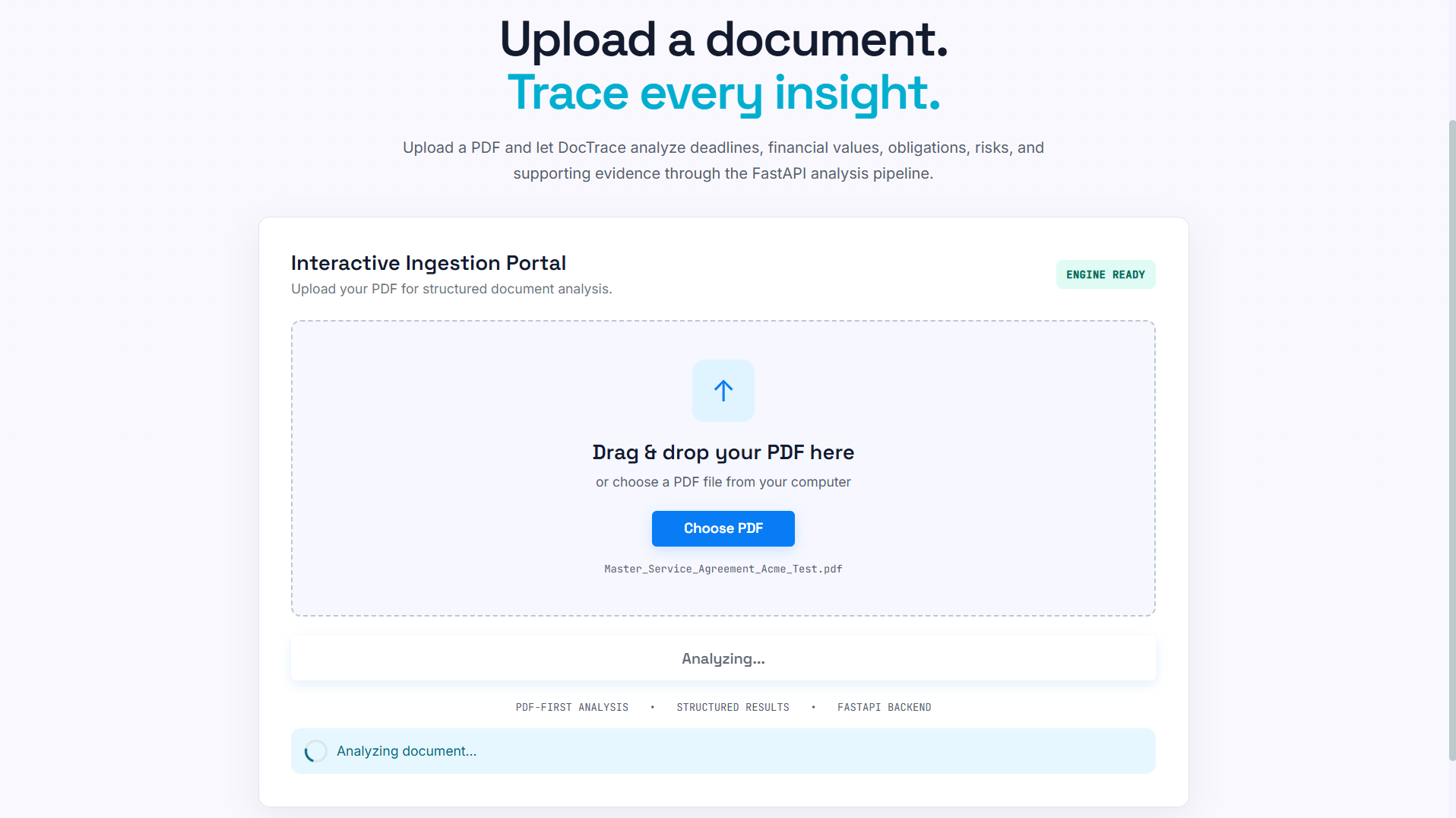
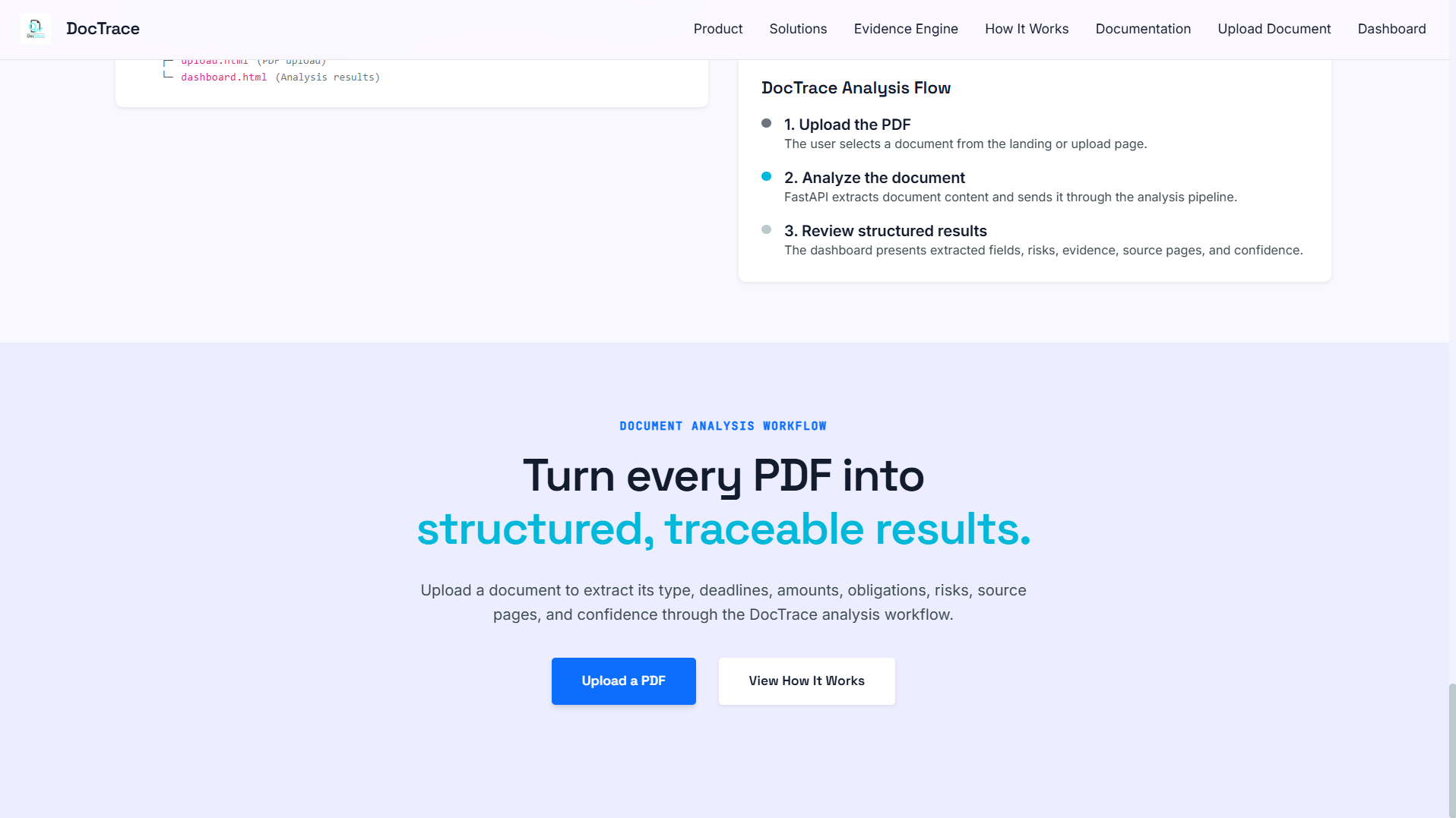
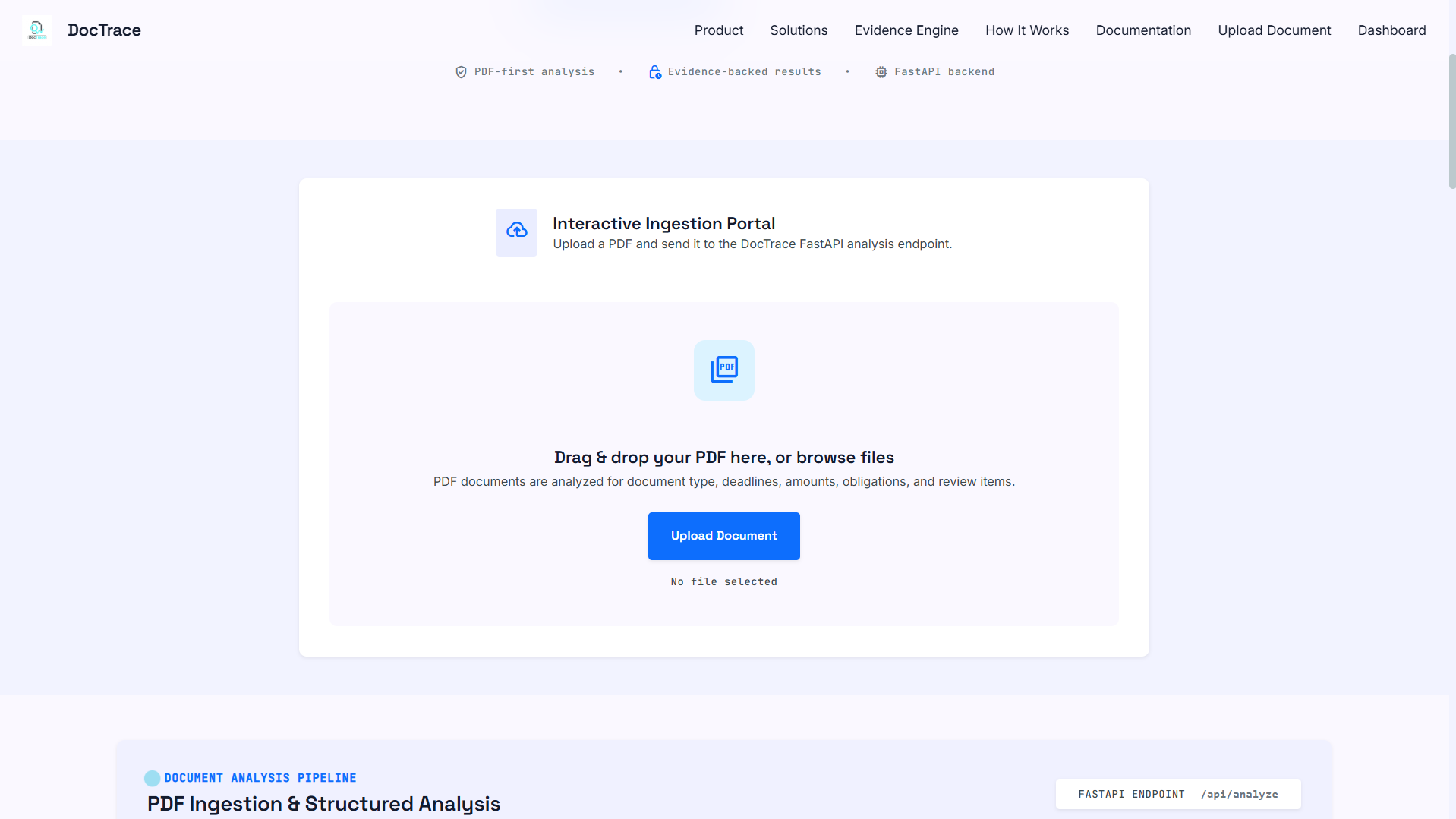
DocTrace allows users to upload a PDF and automatically analyze its contents.
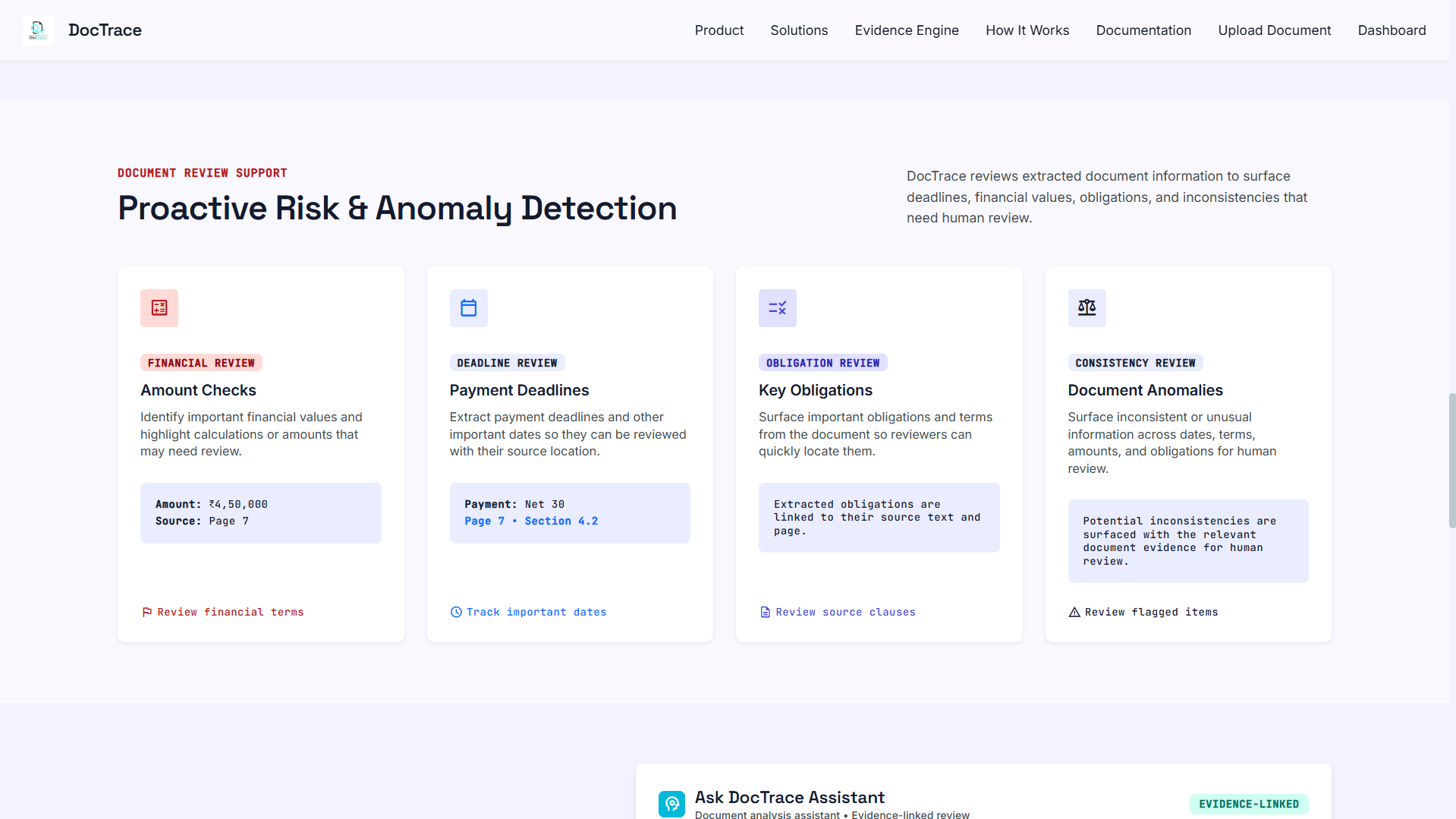
It extracts and presents:
- Document type
- Financial amounts
- Payment deadlines
- Key obligations
- Potential risks and items for review
- Confidence scores
- Source pages and sections
- Supporting evidence from the document
The analysis is presented through an interactive dashboard where users can review extracted information alongside the relevant document evidence.
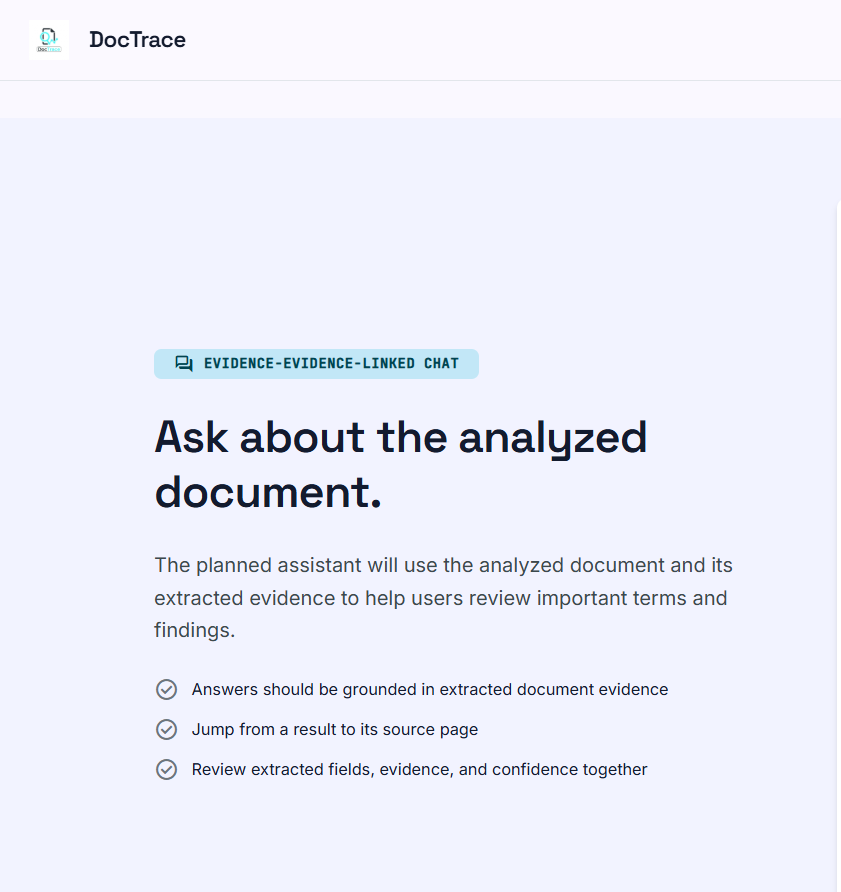
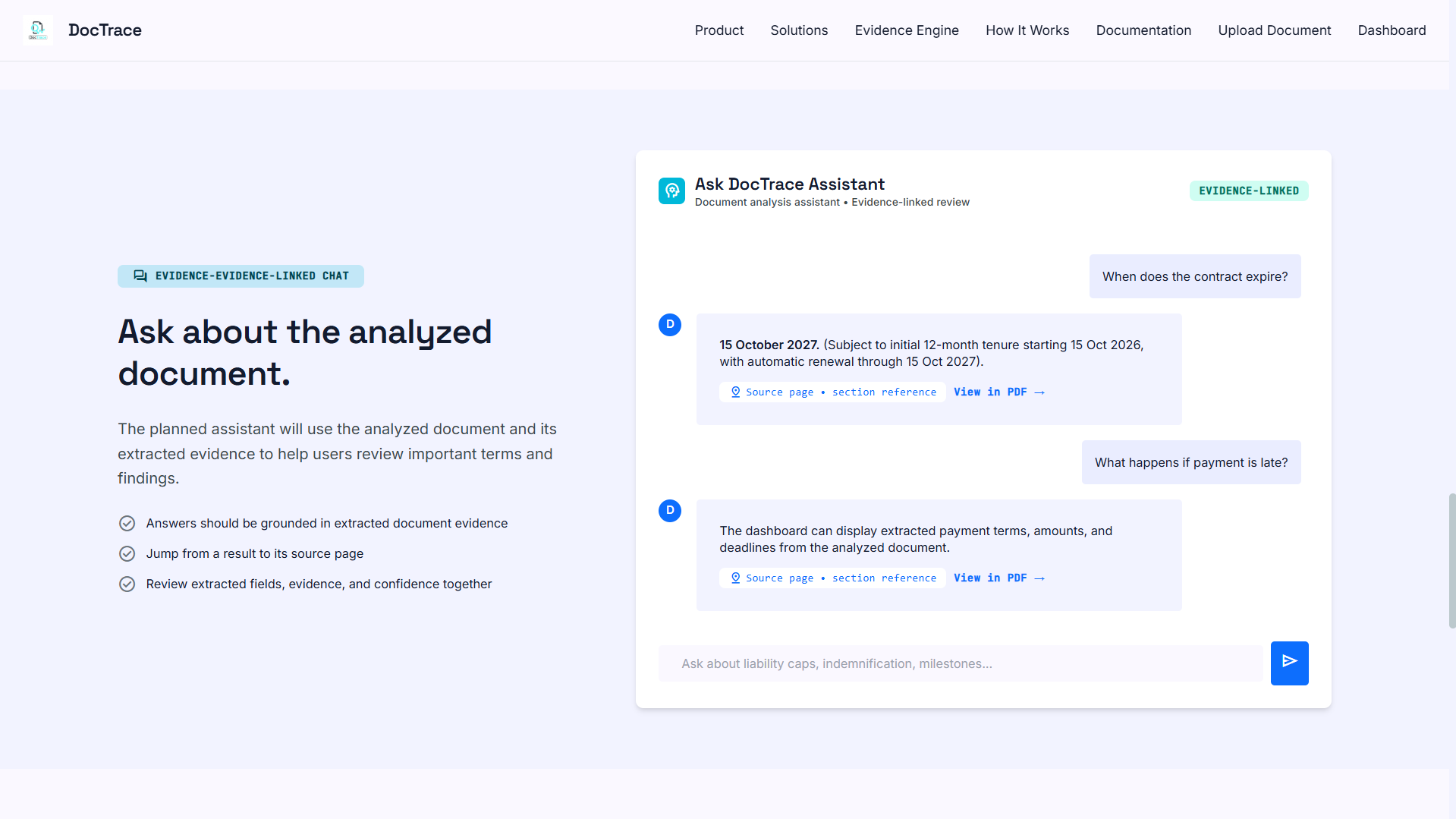
DocTrace also includes Ask DocTrace, an AI-powered document Q&A interface that allows users to ask questions such as:
- What is the payment deadline?
- What financial amount was identified?
- What are the key obligations?
- What should I review?
- Explain the highlighted clause.
This makes the document easier to understand without losing the connection to its original source.
How we built it
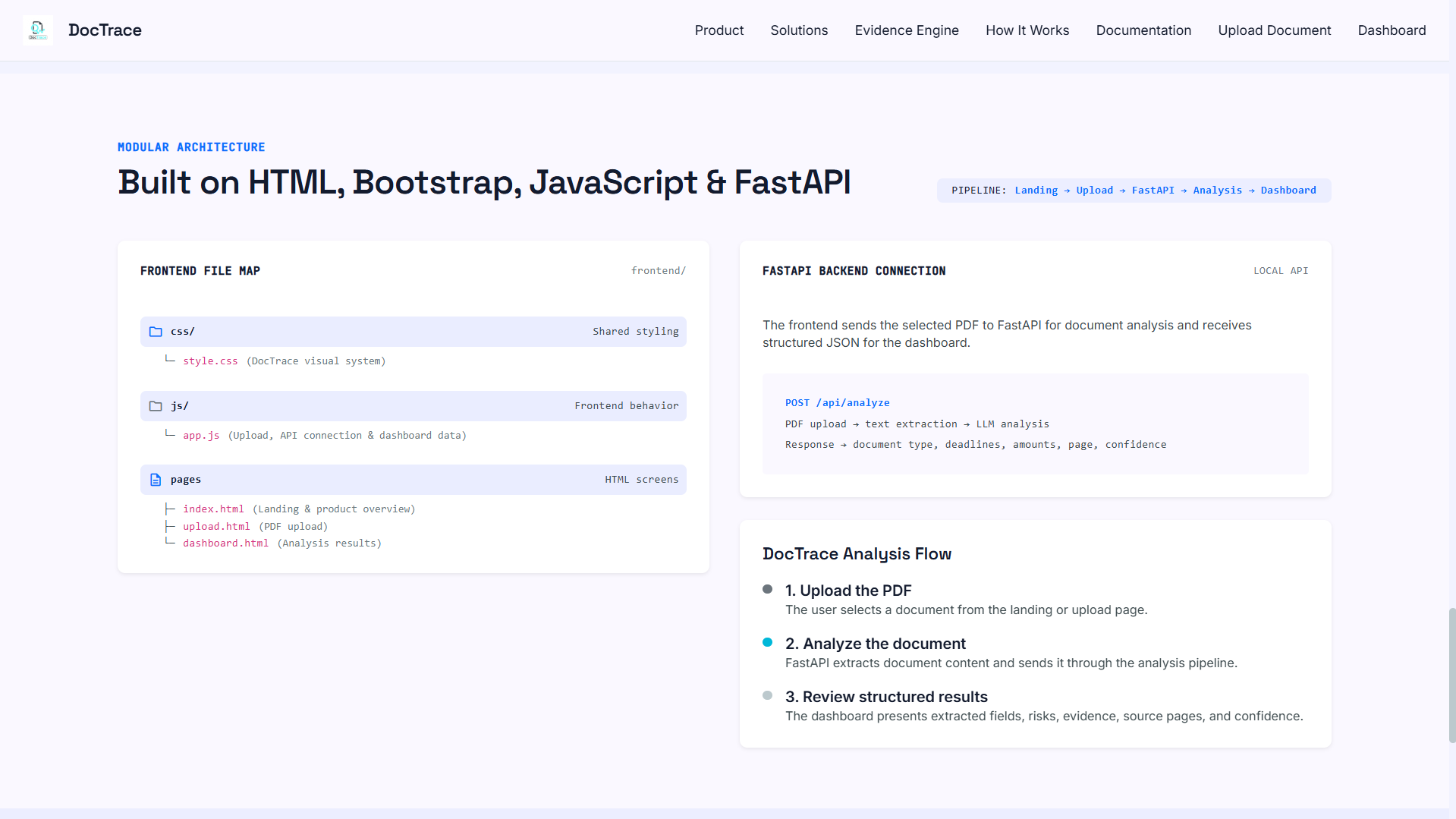
We built DocTrace using a lightweight web architecture.
Frontend
- HTML
- CSS
- Bootstrap
- JavaScript
Backend
- Python
- FastAPI
- PDF text extraction
- LLM-based document analysis
- Structured JSON responses
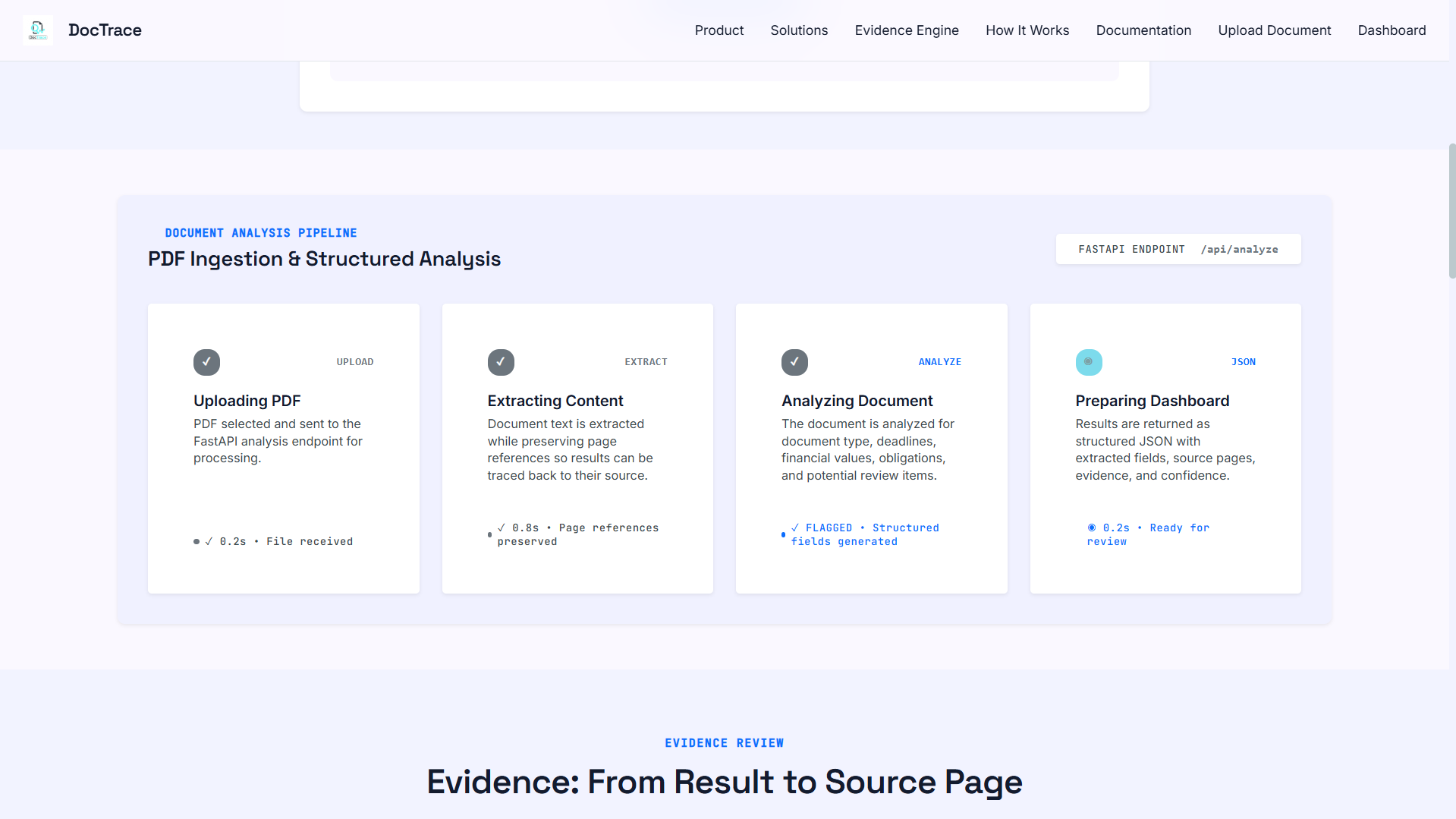
The overall pipeline is:
PDF Upload → FastAPI → Text Extraction + Page References → LLM Analysis → Structured JSON → Evidence Dashboard
The backend analyzes the extracted document content and returns structured information. The frontend then transforms that information into an interactive evidence-focused dashboard.
We also designed the system with separate Demo Mode and Live Analysis Mode, allowing us to demonstrate the complete experience using a sample document while keeping the same dashboard ready for real uploaded documents.
Challenges we ran into
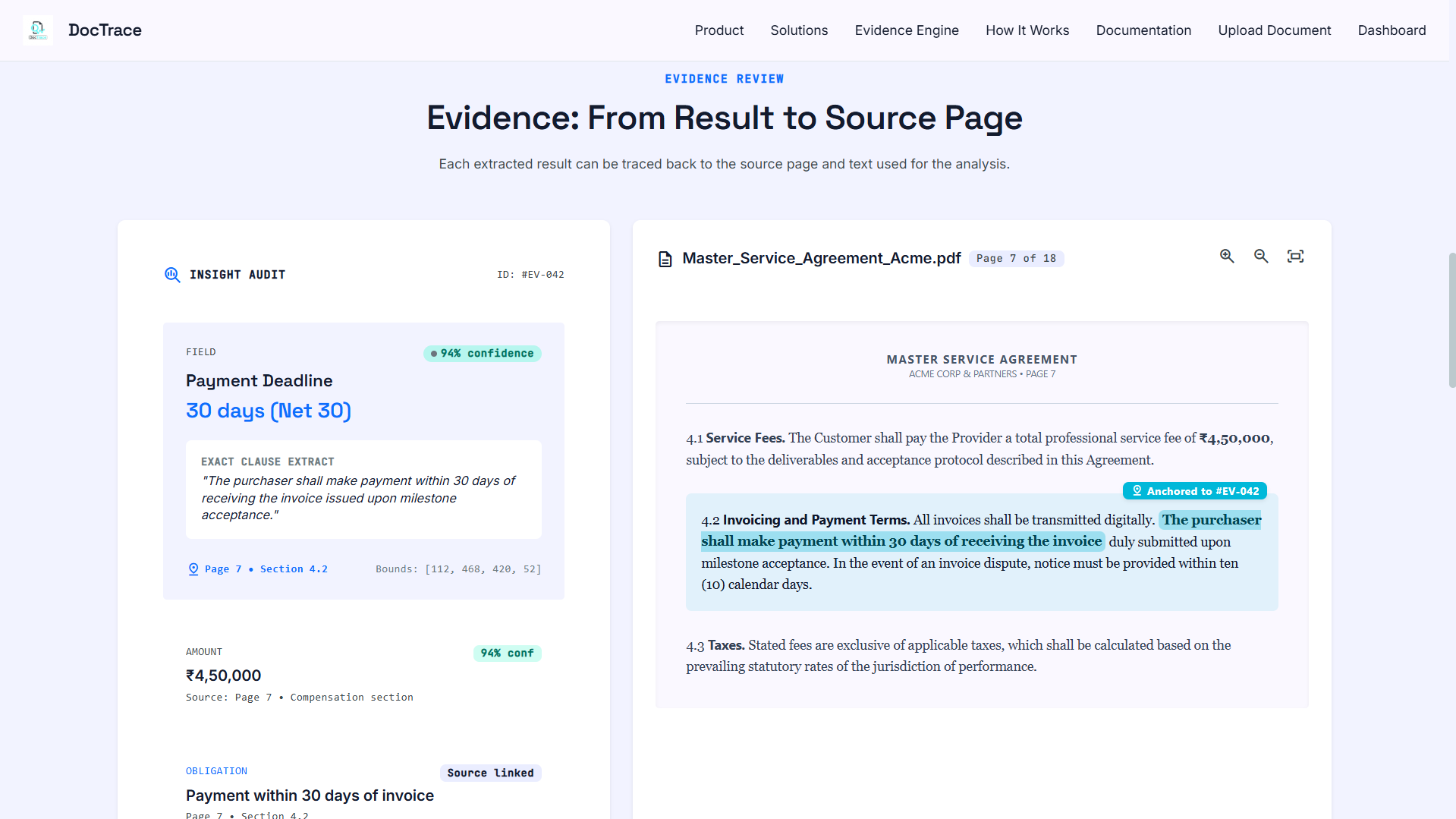
One of our biggest challenges was maintaining traceability between an AI-generated insight and the original document.
For example, extracting:
"Payment deadline: 30 days"
is useful, but it becomes much more meaningful when the user can immediately see the page, section, and supporting clause behind that result.
Another challenge was designing the application to work smoothly in both demo and live environments. We wanted the demo experience to be functional rather than just a static mockup, while also keeping the architecture ready for real backend analysis.
We also had to think carefully about how to present AI-generated information without making it feel like a black box. This led us to emphasize evidence, source references, and confidence throughout the interface.
Accomplishments that we're proud of
We are proud of building a complete document intelligence workflow rather than just an isolated AI feature.
Some of our key accomplishments include:
- Building a functional PDF upload workflow
- Connecting the frontend with a FastAPI backend
- Creating structured document analysis results
- Designing an evidence-focused analysis dashboard
- Linking extracted insights to document pages and sections
- Adding highlighted source evidence
- Implementing interactive document zoom controls
- Building the Ask DocTrace document Q&A interface
- Supporting both Demo Mode and Live Analysis Mode
- Designing the frontend so that real backend results can populate the same dashboard
Most importantly, we built DocTrace around evidence and traceability, rather than treating AI-generated answers as the final result.
What we learned
Building DocTrace taught us that effective document AI is not only about extracting information.
We learned the importance of:
- Designing reliable communication between frontend and backend
- Handling PDF uploads and API responses
- Structuring LLM outputs into predictable JSON
- Preserving page-level references during document processing
- Connecting extracted insights to supporting evidence
- Designing interfaces for reviewing AI-generated information
- Building applications that can transition from demo data to real backend data
- Creating document-aware conversational interfaces
We also learned that explainability and usability are just as important as the AI itself when building applications around real-world documents.
What's next for DocTrace – AI Document Intelligence
We want to continue developing DocTrace into a more capable document intelligence platform.
Future improvements could include:
- Support for more document types beyond contracts
- More advanced cross-page consistency detection
- Improved anomaly and risk identification
- More precise evidence highlighting
- Advanced document comparison
- Multi-document analysis
- More capable document-based conversations
- Improved extraction accuracy and confidence handling
Our long-term goal is to make document analysis faster, more transparent, and easier to verify, while keeping the human reviewer in control.
DocTrace — AI-powered document intelligence with evidence you can trace.
Built With
- ai
- bootstrap
- css
- fastapi
- html
- javascript
- llama-3.2
- natural-language-processing
- ollama
- pymupdf
- python
- rest-api

Log in or sign up for Devpost to join the conversation.