Inspiration
Millions of people struggle to access reliable healthcare information in their native language. Most AI healthcare tools primarily support English, making them difficult to use for multilingual communities. We wanted to create an AI assistant that understands both native scripts and romanized text like “mujhe bukhar hai” or “naku jwaram undi,” making healthcare guidance more accessible and inclusive.
What it does
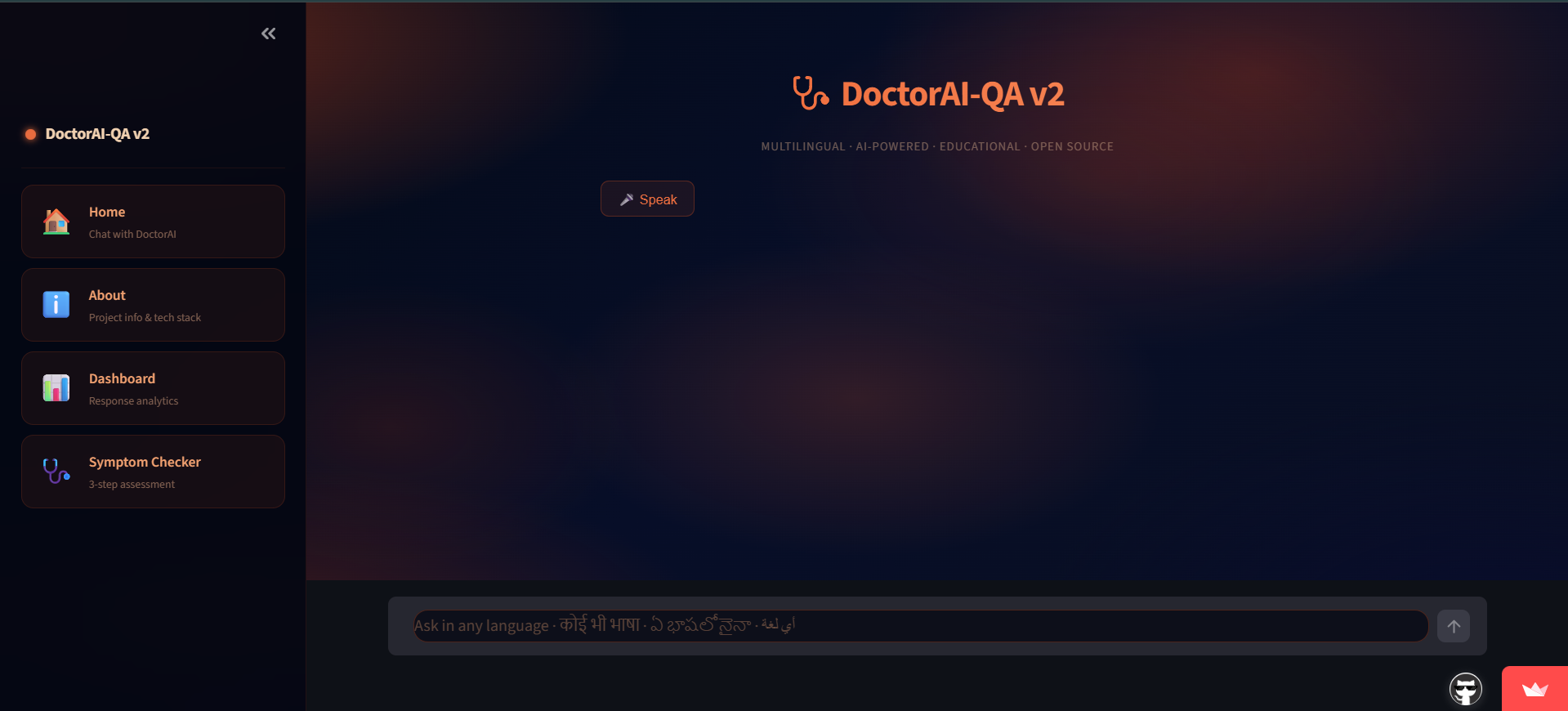
DoctorAI-QA v2 is an AI-powered multilingual healthcare assistant that allows users to ask health-related questions in multiple languages through text or voice. The system automatically detects the language, generates responses in the same language, provides voice output, assesses symptom severity, and guides users through a structured symptom-checking flow.
Key features include:
- Multilingual AI chat
- Romanized language understanding
- Voice input and text-to-speech
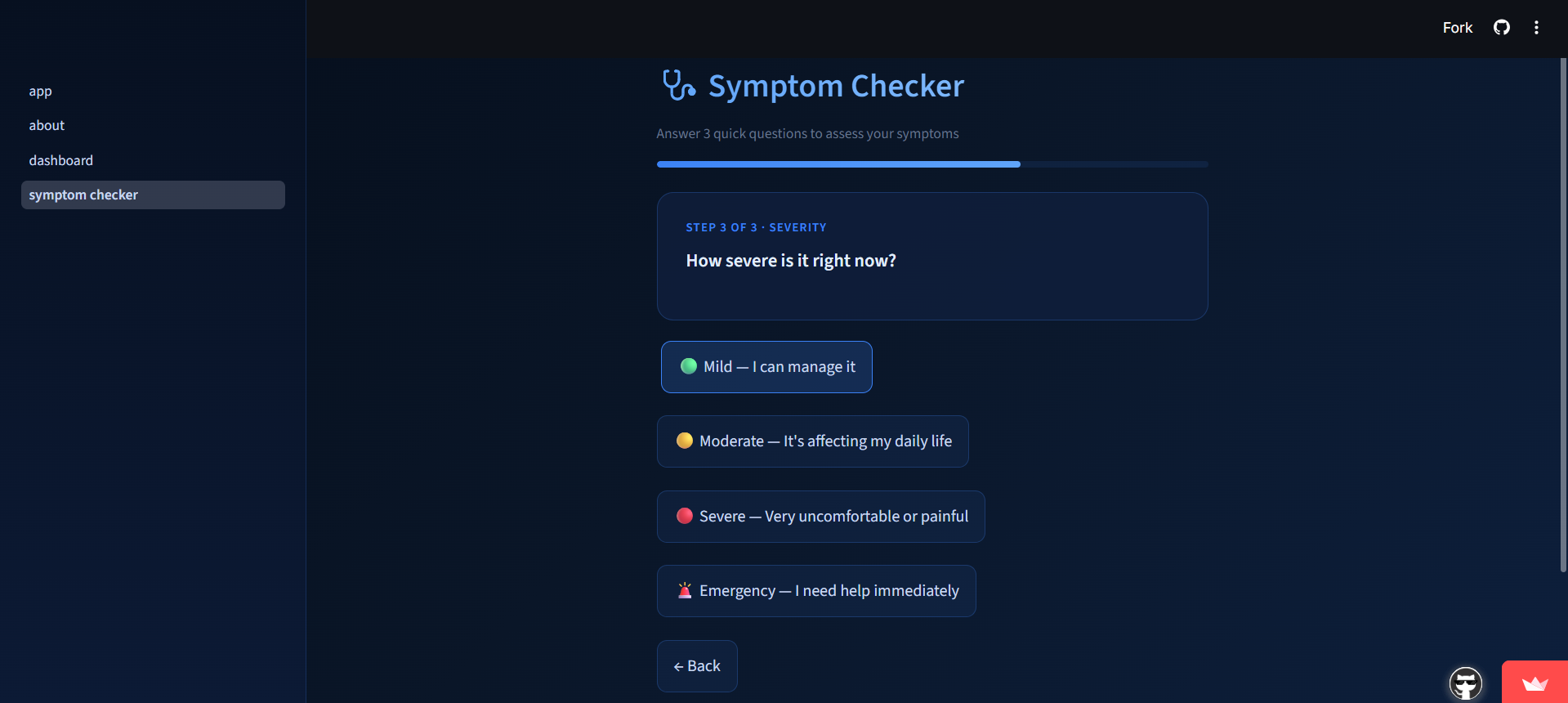
- Symptom checker with urgency detection
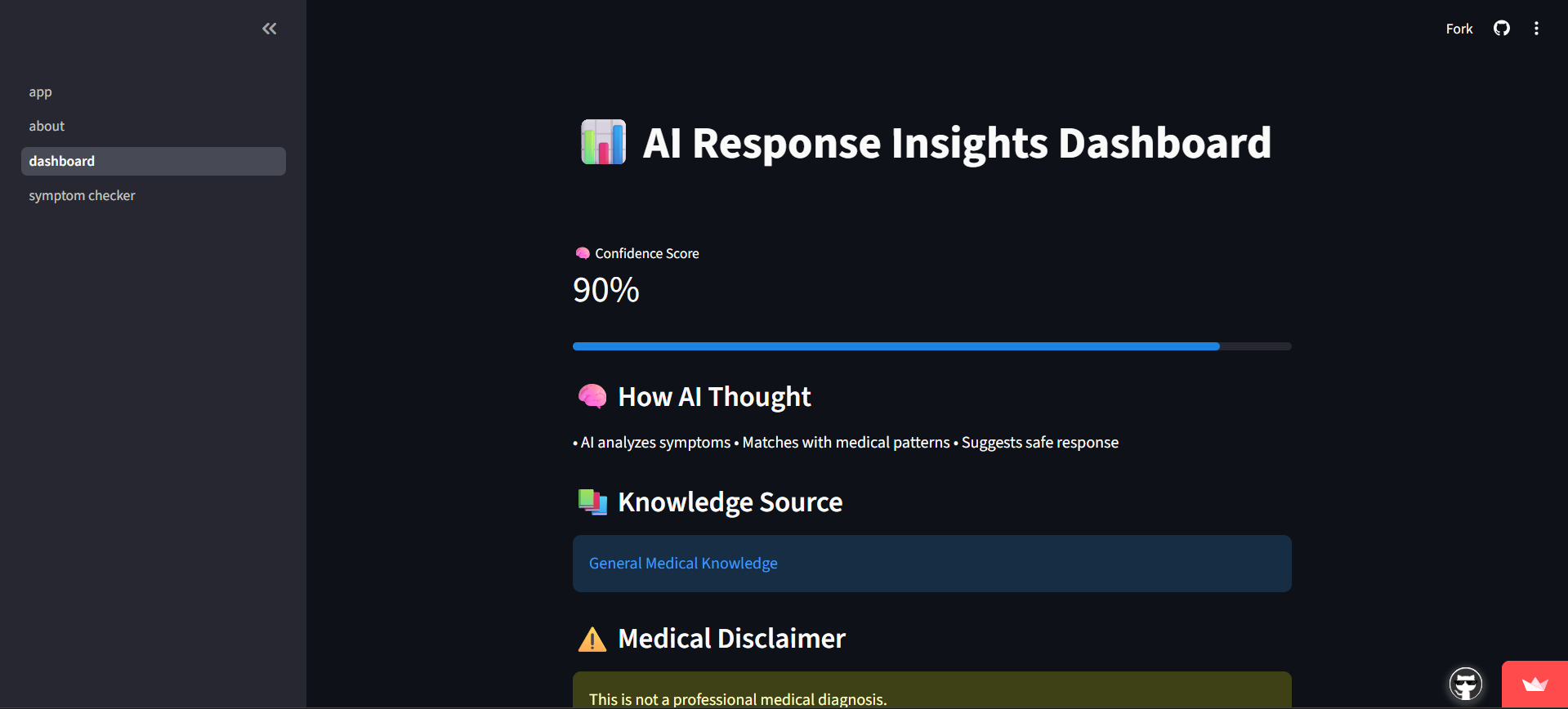
- Analytics dashboard
- Safety-focused healthcare responses
How we built it
We built DoctorAI-QA v2 using Python and Streamlit for the frontend experience. The AI responses are powered through OpenRouter using LLaMA 3 models, while multilingual processing combines Unicode script detection and romanized keyword matching.
The project includes:
- Streamlit for the interactive UI
- Hugging Face + Unsloth LoRA fine-tuning workflow
- OpenRouter API for inference
- gTTS for multilingual voice output
- SpeechRecognition for voice input
- Custom CSS for the animated glassmorphism interface
We structured the app into multiple modules including chat, dashboard analytics, symptom checker, and an about section for scalability and maintainability.
Challenges we ran into
One of the biggest challenges was handling romanized multilingual text because users often type native languages using English characters. Detecting intent accurately across multiple languages required experimenting with keyword mapping and language detection logic.
We also faced challenges integrating voice features, maintaining smooth UI performance in Streamlit, and ensuring healthcare responses remained safe, responsible, and easy to understand.
Another challenge was designing an interface that balanced advanced AI functionality with simplicity for non-technical users.
Accomplishments that we're proud of
We are proud of building a healthcare assistant that supports multilingual accessibility beyond just translation. The ability to understand romanized language input makes the project more practical for real-world users.
We are also proud of:
- Building an end-to-end functional AI healthcare platform
- Integrating voice input and multilingual TTS
- Creating a guided symptom checker with urgency detection
- Designing a polished animated UI
- Making healthcare AI more inclusive and accessible
What we learned
Through this project, we learned how to integrate large language models into real-world applications while balancing usability, accessibility, and safety.
We also gained experience in:
- Multilingual NLP workflows
- AI inference APIs
- Streamlit application architecture
- Voice processing integration
- UI/UX design for AI applications
- Responsible AI practices in healthcare-related systems
What's next for DoctorAI-QA v2
We plan to expand DoctorAI-QA v2 with:
- More supported languages
- Improved medical fine-tuning datasets
- Personalized health tracking
- Doctor consultation integration
- OCR support for prescriptions and reports
- Mobile app deployment
- Better emergency response recommendations
- Offline support for low-connectivity regions
Our long-term goal is to make healthcare guidance more accessible for multilingual communities worldwide through AI.

Log in or sign up for Devpost to join the conversation.