
Inspiration
Healthcare is evolving, and technology is at the forefront of this transformation. With AI-driven insights and real-time EHR integration, we have the power to make proactive, informed decisions that improve patient outcomes. DoctorAI: Health AI Web App was born from the vision of bridging the gap between medical expertise and accessible, intelligent healthcare solutions. By empowering both patients and providers with predictive analytics and personalized guidance, we are not just reacting to health concerns—we are anticipating them. This is more than an app; it’s a step toward a future where AI and medicine work hand in hand to create a smarter, safer, and healthier world.
What it does
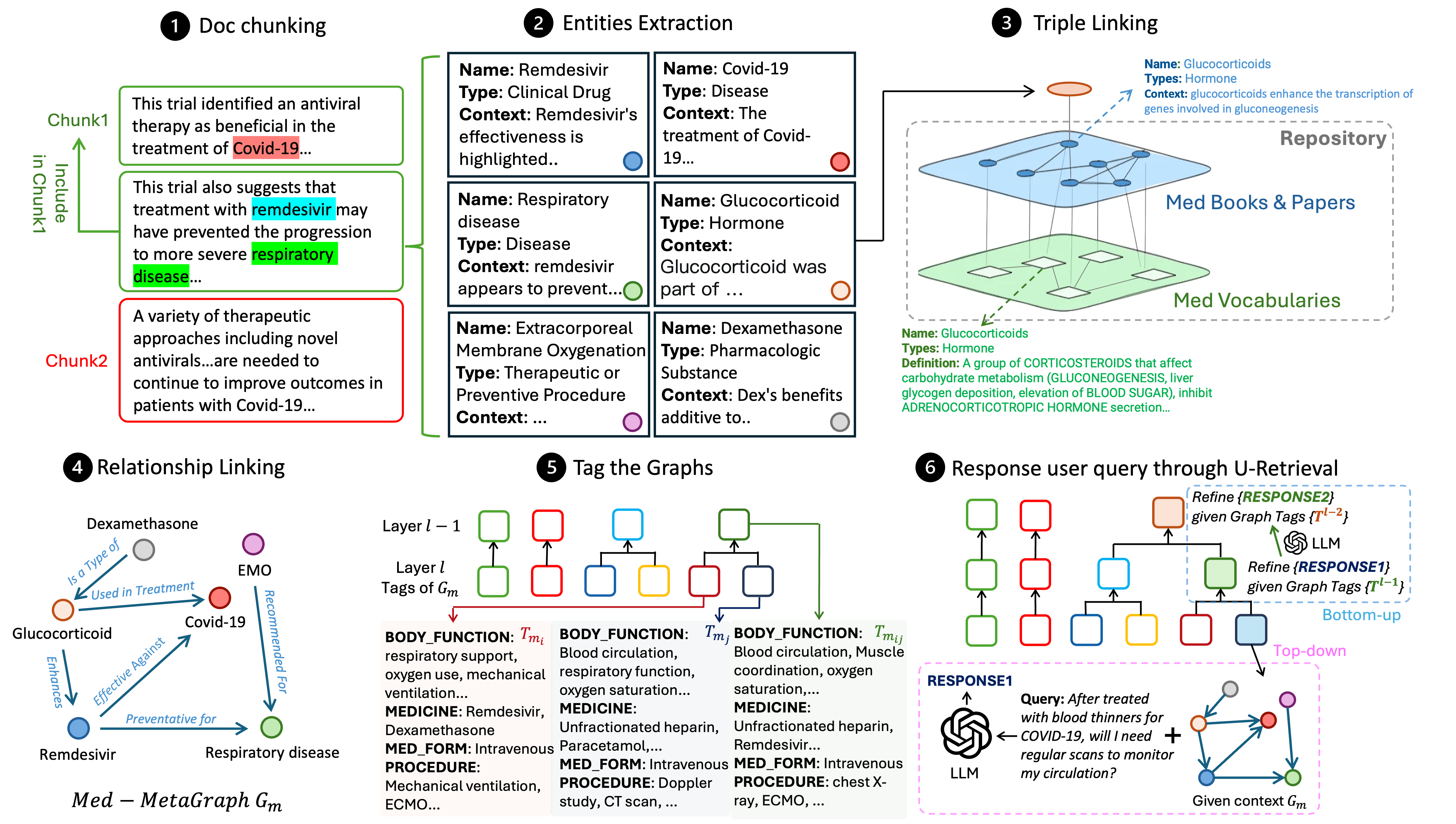
- AI MedGraph-RAG: Provides AI-driven pre- and post-surgical care advice using ChatGPT or DeepSeek.
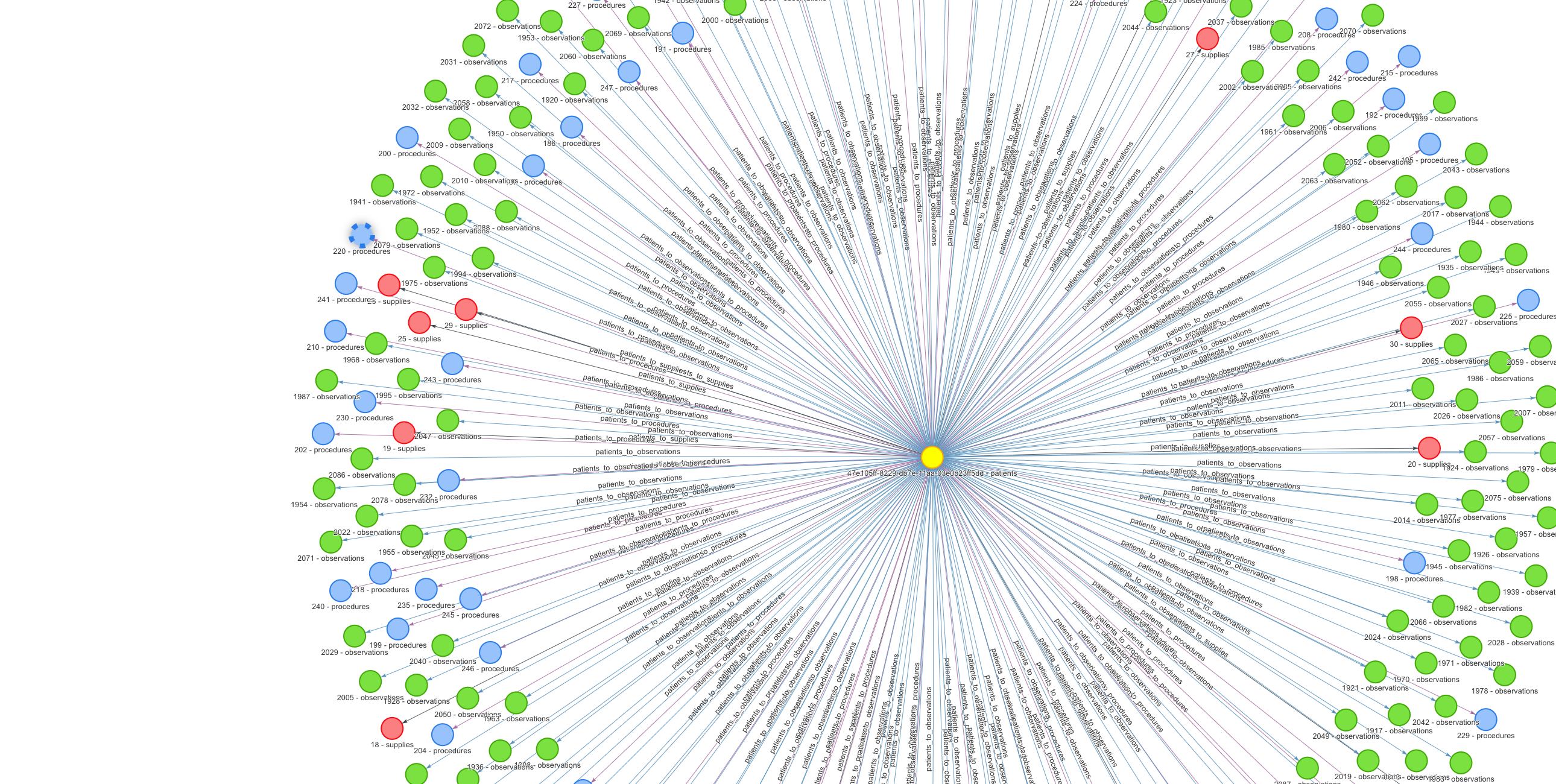
- Graph Representation
- Nodes: Patients, diseases, medications, procedures, encounters.
- Edges: Relationships (e.g., "patient has condition", "medication treats condition").
- cuGraph Algorithm: PageRank on Disease Nodes
- Compute disease importance scores based on patient connections.
- Identify highly connected comorbidities to predict risk escalation.
- Predictive Analytics
- Run personalized patient similarity matching to find patients with similar disease trajectories.
- Suggest preventive care for at-risk patients.
- Graph Representation
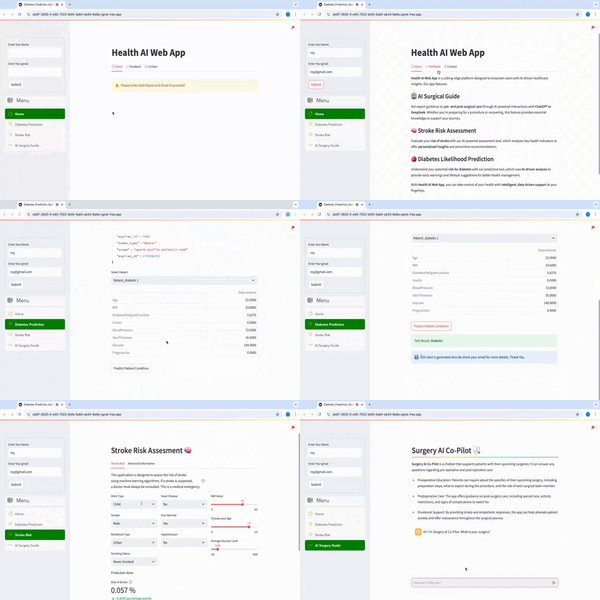
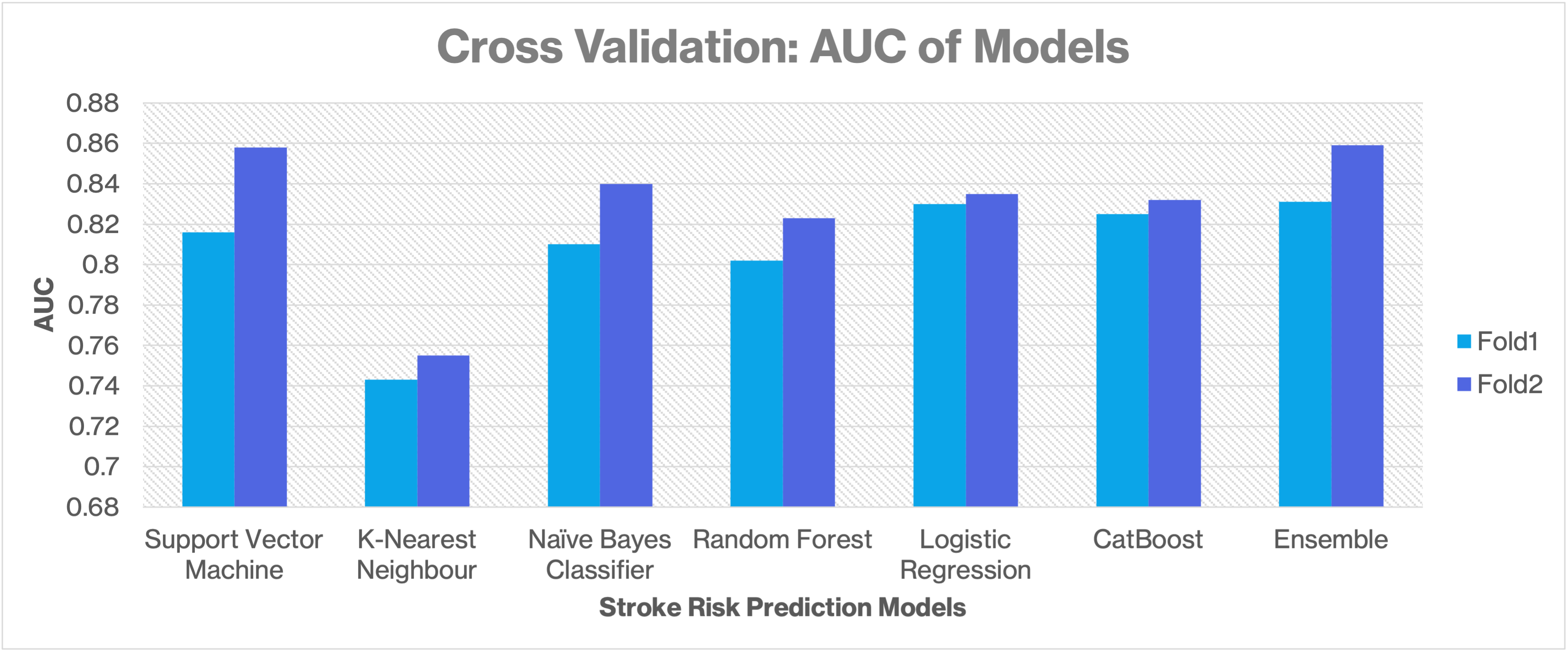
Stroke Risk Assessment: Uses predictive modeling to evaluate an individual’s stroke risk and offer preventive recommendations. The following analysis deals with the risk probability of a stroke. It can be shown that such predictions are possible and can be a suitable tool for physicians, e.g. to be able to make a more reliable statement about possible risks when advising patients. Several techniques from the field of statistical learning are applied. Due to limited size of the dataset (5k+ patients) two fold cross validation used and AUC performance shown:
Diabetes Likelihood Prediction: Analyzes patient data to determine the risk of developing diabetes and suggests lifestyle interventions.
The Diabetes prediction dataset used is a collection of medical and demographic data from patients, along with their diabetes status (positive or negative). The data includes features such as age, gender, body mass index (BMI), hypertension, heart disease, smoking history, HbA1c level, and blood glucose level. This can be useful for healthcare professionals in identifying patients who may be at risk of developing diabetes and in developing personalized treatment plans.
| Class | Precision | Recall | F1-Score | Support |
|---|---|---|---|---|
| Not Diabetic | 0.96 | 0.99 | 0.98 | 17,559 |
| Diabetic | 0.84 | 0.62 | 0.71 | 1,671 |
| Accuracy | 0.96 | 19,230 | ||
| Macro Avg | 0.90 | 0.80 | 0.84 | 19,230 |
| Weighted Avg | 0.95 | 0.96 | 0.95 | 19,230 |
- Heart Condition Checker: Analyzes patient data to determine the risk of developing diabetes and suggests lifestyle interventions. Logistic regression was used to predict person's heart health condition expressed as a dichotomous variable (heart disease: yes/no). The model was trained on approximately 350k data from a survey "2022 annual CDC survey data of 400k+ adults related to their health status". The dataset is publicly available at the following link: Kaggle link.
| Class | Precision | Recall | F1-Score | Support |
|---|---|---|---|---|
| No | 0.96 | 0.99 | 0.98 | 33,082 |
| Yes | 0.50 | 0.19 | 0.27 | 1,502 |
| Accuracy | 0.96 | 34,584 | ||
| Macro Avg | 0.73 | 0.59 | 0.63 | 34,584 |
| Weighted Avg | 0.94 | 0.96 | 0.95 | 34,584 |
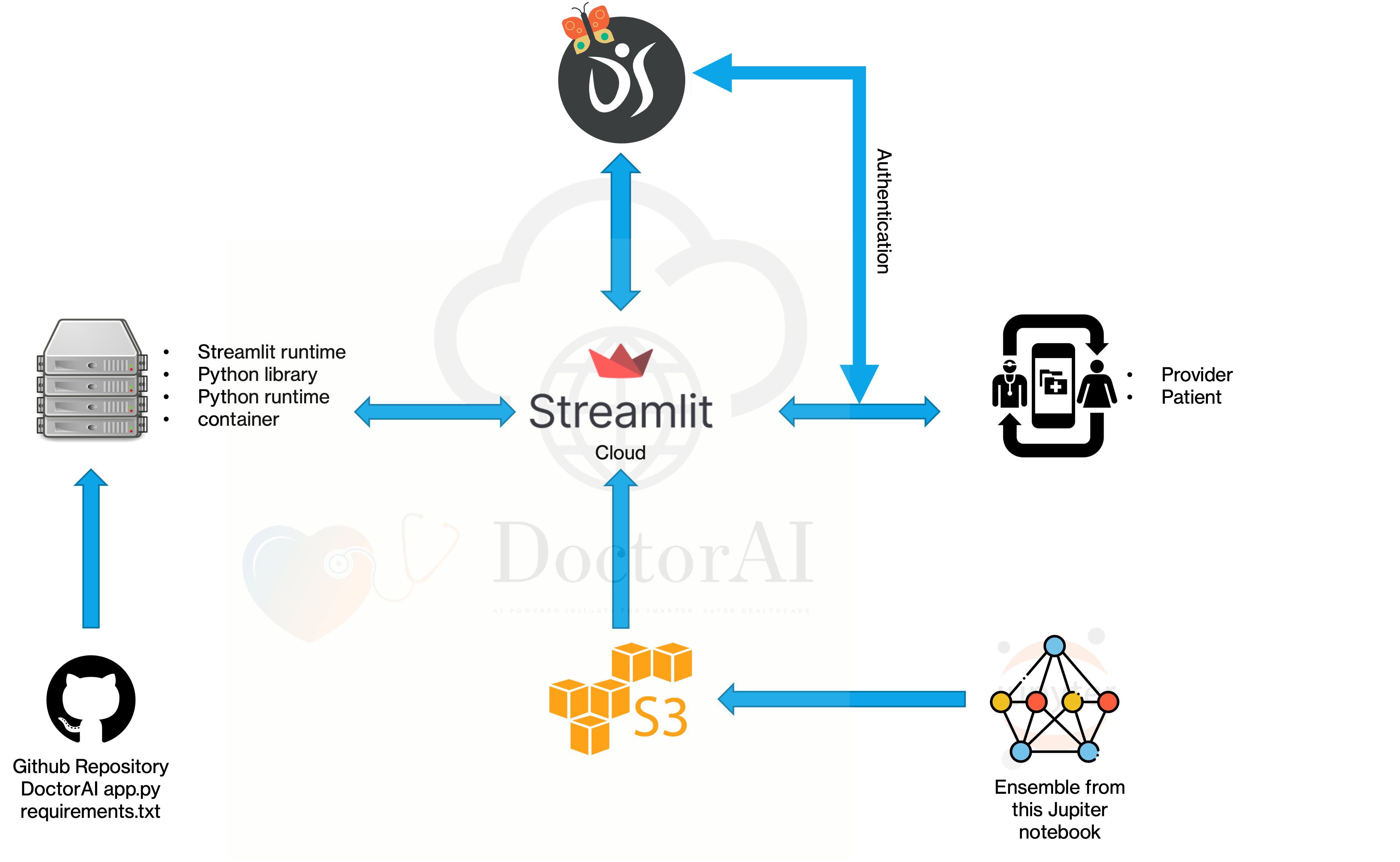
- EHR Launch Integration: Seamlessly connects with MeldRx, retrieving real-time patient data via FHIR for personalized insights.
How we built it
- Developed using Python and Streamlit for the AI-driven user interface.
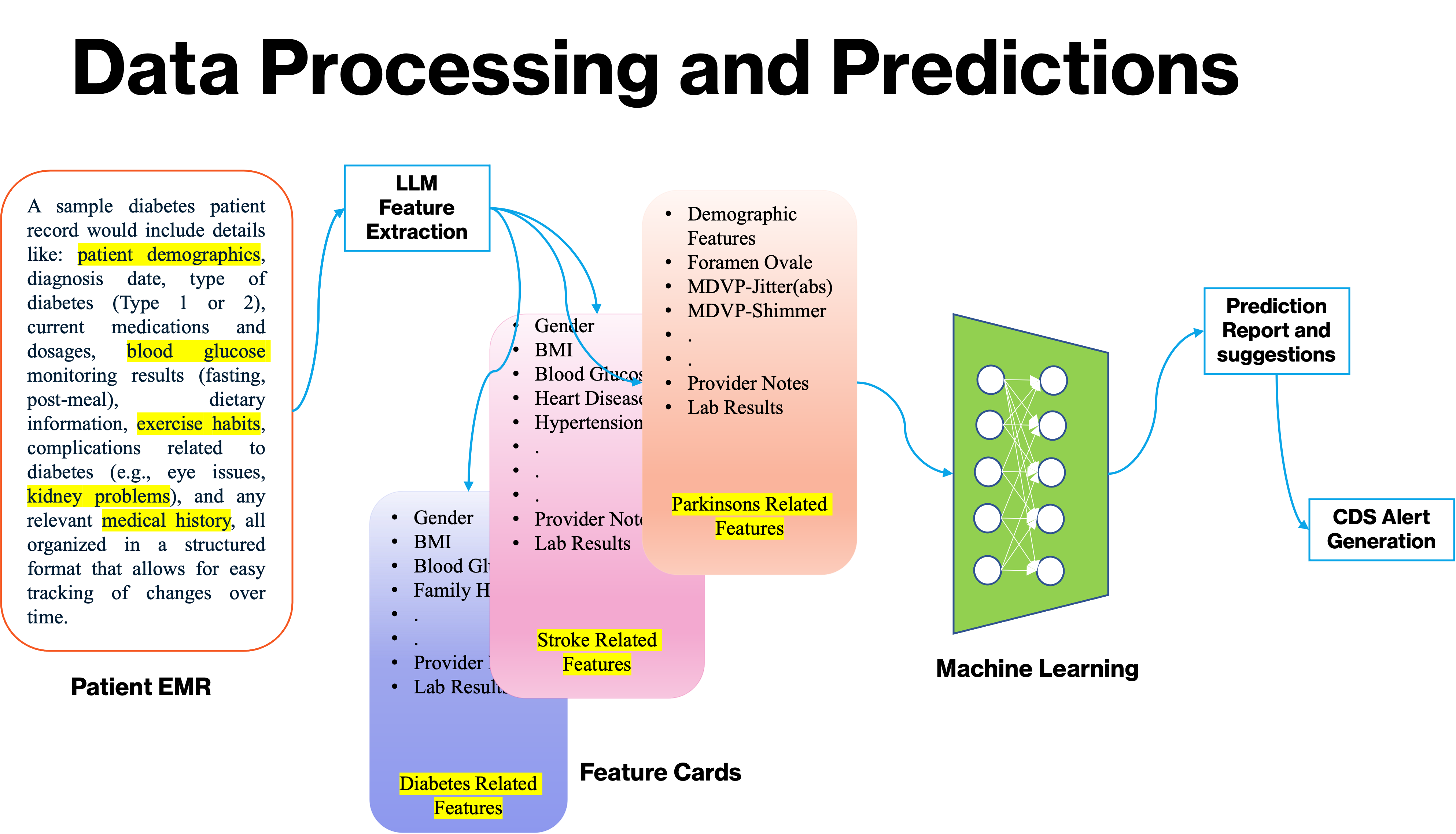
- Integrated machine learning models trained on medical datasets for predictive insights.
- Used FHIR R4 API for secure patient data exchange within MeldRx.
- Deployed via MeldRx EHR Launch for seamless real-time healthcare decision support.
Challenges we ran into
- Ensuring FHIR compatibility and smooth EHR integration within MeldRx.
We encountered significant challenges while transforming and loading our CSV dataset into the FHIR JSON standard server. The dataset contained structured medical records, but mapping them to FHIR resources required extensive preprocessing. Issues included inconsistent column naming, missing values, and differences in data types. Additionally, handling patient identifiers and linking related resources such as Patient, Observation, and MedicationRequest demanded a structured approach. Ensuring compliance with HL7 FHIR standards while maintaining data integrity added another layer of complexity. Finally, the process of bulk uploading JSON-converted records to the FHIR server required careful validation to avoid errors and data loss.
AI-Powered FHIR CSV to JSON Converter
Pseudo Algorithm
Upload CSV
- Extract column names.
- Extract column names.
AI-Powered Mapping
- Use an AI model to suggest LOINC codes for each column.
- Rank suggestions based on confidence scores.
- Use an AI model to suggest LOINC codes for each column.
User Confirmation
- Display AI-suggested mappings.
- Allow manual corrections.
- Display AI-suggested mappings.
Convert to FHIR JSON
- Generate
PatientandObservationresources. - Use
urn:uuidfor internal references.
- Generate
Download JSON
- Provide a button to save the converted FHIR JSON.
- Provide a button to save the converted FHIR JSON.
Input
CSV Example
| Patient_ID | Blood Sugar | BP (Systolic) | Heart Rate |
|---|---|---|---|
| 001 | 120 | 130 | 75 |
| 002 | 125 | 140 | 85 |
Output
FHIR JSON (Excerpt)
{
  "resourceType": "Bundle",
  "type": "transaction",
  "entry": [
    {
      "fullUrl": "urn:uuid:12345",
      "resource": {
        "resourceType": "Patient",
        "id": "12345"
      },
      "request": {
        "method": "POST",
        "url": "Patient"
      }
    },
    {
      "fullUrl": "urn:uuid:67890",
      "resource": {
        "resourceType": "Observation",
        "id": "67890",
        "code": {
          "coding": [
            {
              "system": "http://loinc.org",
              "code": "2345-7",
              "display": "Blood Sugar"
            }
          ]
        },
        "subject": {
          "reference": "urn:uuid:12345"
        },
        "valueQuantity": {
          "value": 120,
          "unit": "mg/dL"
        }
      },
      "request": {
        "method": "POST",
        "url": "Observation"
      }
    }
  ]
}
- Optimizing AI models for high predictive accuracy while maintaining efficiency.
- Addressing data privacy concerns and adhering to healthcare compliance standards.
- Creating an intuitive user experience that is accessible to both patients and healthcare professionals.
Accomplishments that we're proud of
- Successfully implemented EHR Launch activation, making real-time patient data accessible for AI predictions.
- Developed an intuitive AI-powered surgical guide that assists users with pre- and post-care.
- Built reliable predictive models for stroke and diabetes risk assessments.
- Designed an app that could make a meaningful impact in clinical decision-making.
What we learned
- The importance of FHIR standardization for seamless health data integration.
- How to fine-tune AI models for medical predictions while ensuring explainability.
- The challenges of real-world healthcare implementation, from privacy concerns to clinical adoption.
- The potential of AI in preventive care, especially in early disease detection and patient education.
What's next for DoctorAI: Health AI Web App
- Expanding AI capabilities to cover more chronic conditions such as hypertension and heart disease.
- Enhancing natural language understanding for more interactive AI conversations.
- Integrating patient-generated health data (e.g., from wearables) for even more personalized insights.
- Collaborating with healthcare providers to validate and improve predictive accuracy.
- Exploring regulatory approvals to make the app clinically viable in real-world settings.
Built With
- fhir
- health-care
- machine-learning
- meldrx
- python
- scikit-learn
- streamlit

Log in or sign up for Devpost to join the conversation.