Inspiration
Digital documents are increasingly used for education, employment, business, and financial processes. However, detecting manipulated or suspicious documents manually can be time-consuming and difficult. This inspired us to build DocShield AI, an intelligent system that helps users analyze documents and identify potential fraud indicators.
What it does
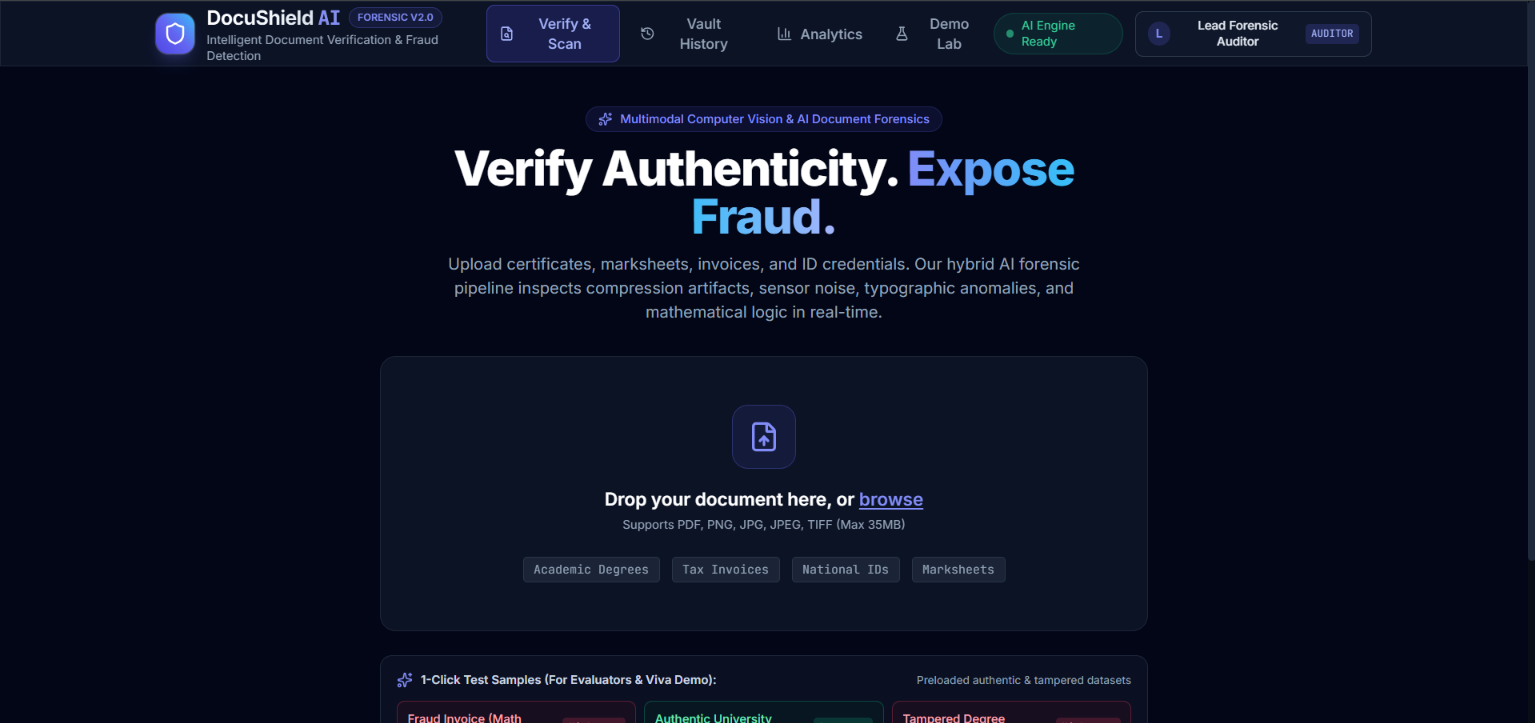
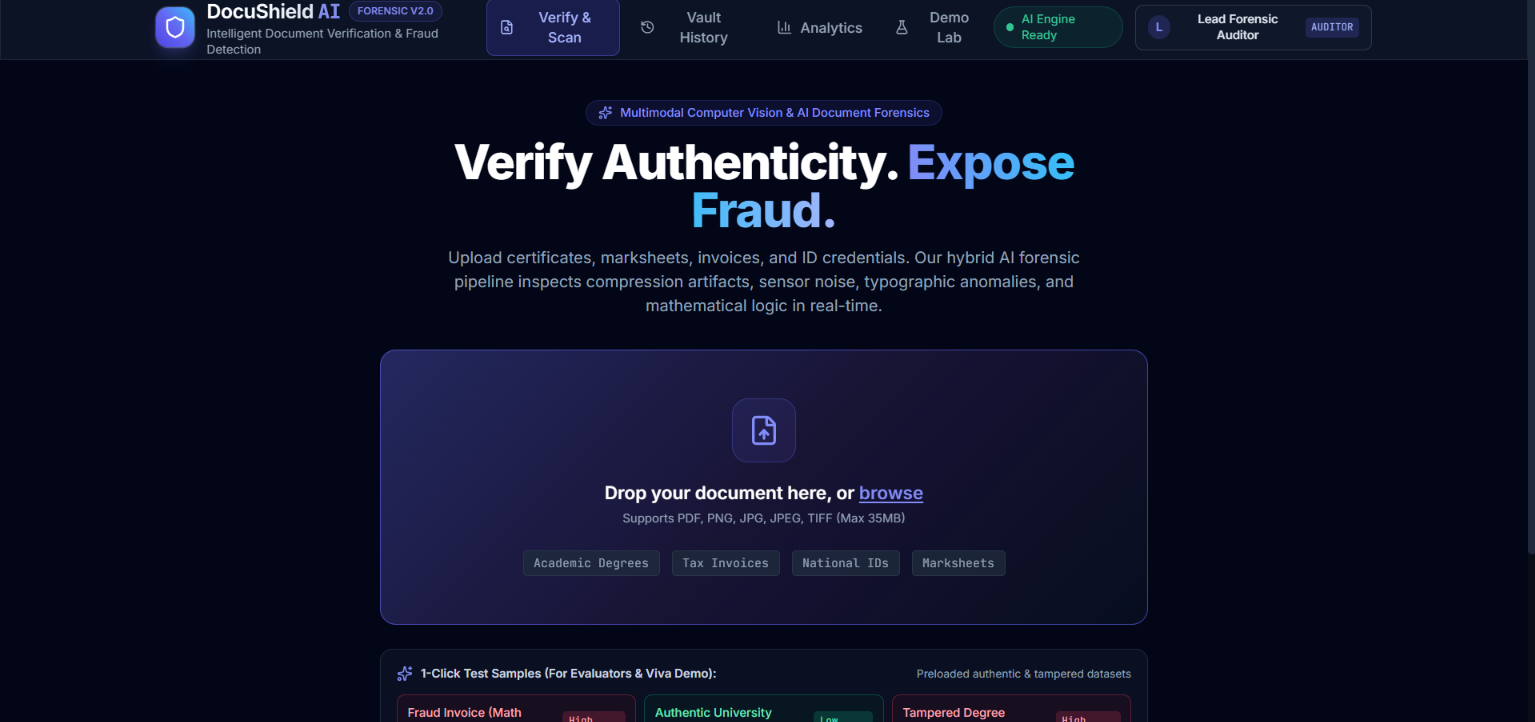
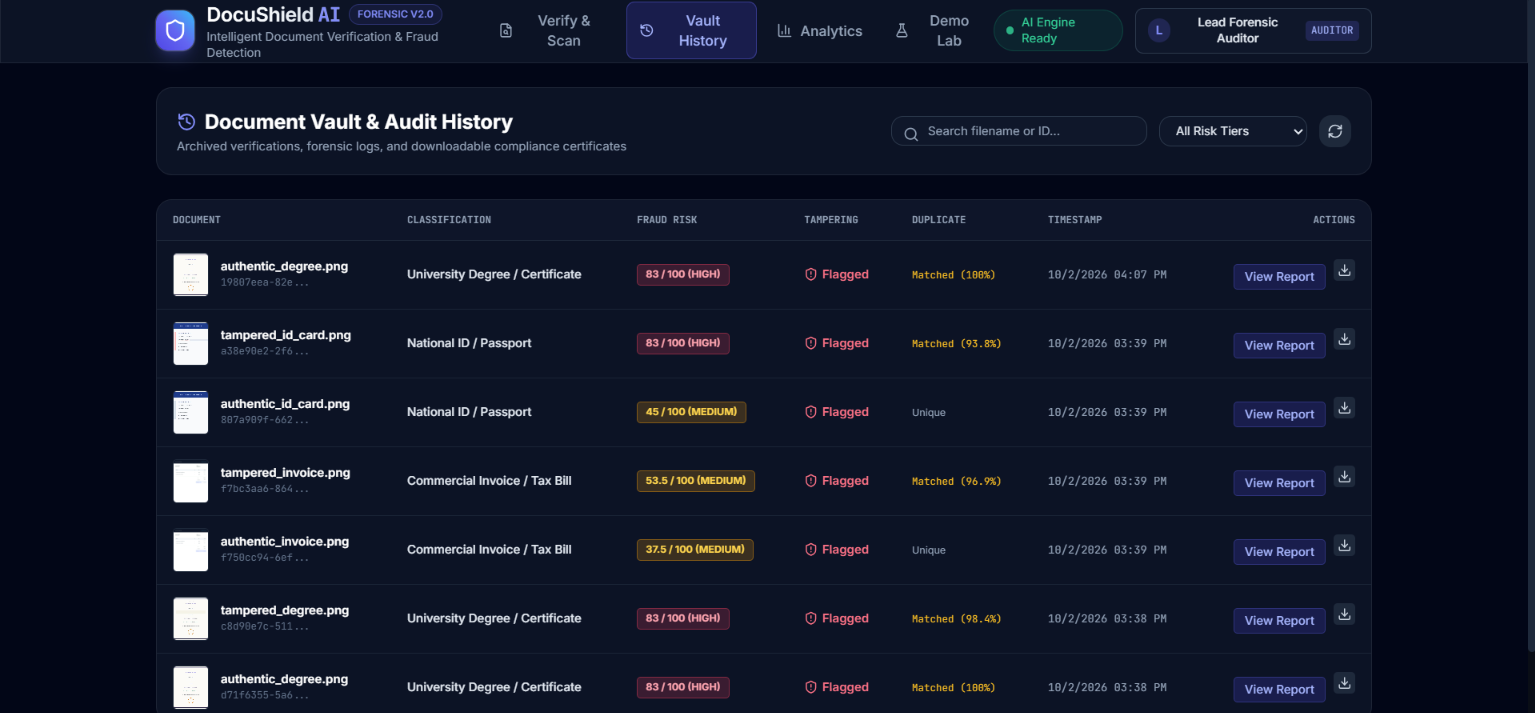
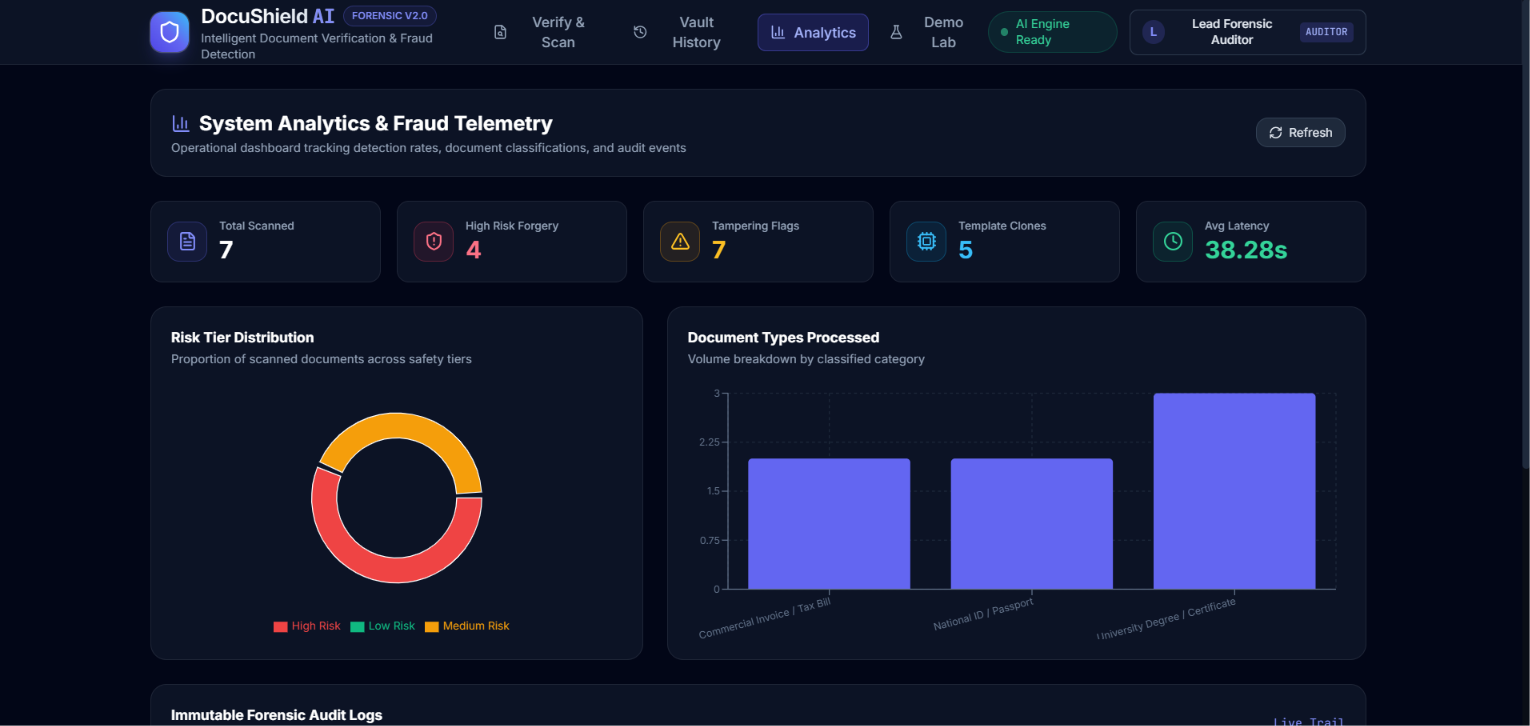
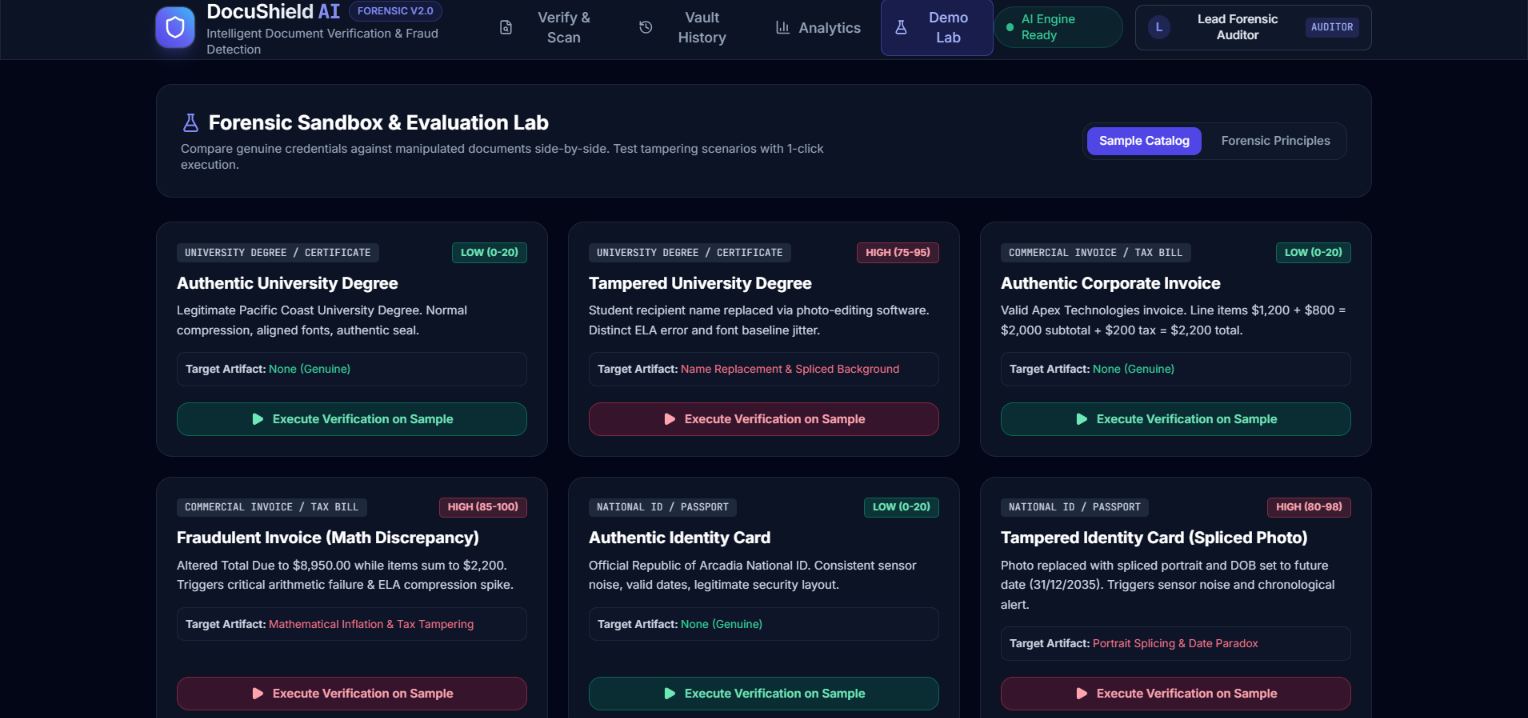
DocShield AI allows users to upload documents such as certificates, marksheets, invoices, and receipts. It uses OCR, computer vision, and AI-based analysis to extract information, detect anomalies and possible tampering, identify duplicate documents, and generate an explainable risk score. Suspicious regions and detected issues are highlighted to help users review the document.
How we built it
We built DocShield AI using Python, FastAPI, React, Tailwind CSS, OpenCV, OCR, Machine Learning, and Deep Learning. The system follows an AI pipeline: Document Upload → OCR → Information Extraction → Document Analysis → Anomaly Detection → Risk Assessment → Verification Report. A database stores document and verification history securely.
Challenges we ran into
The biggest challenge was distinguishing genuine document variations from actual manipulation. Different scans can have different fonts, layouts, image quality, and compression artifacts. OCR errors and limited real-world forensic datasets also made detection challenging. We addressed this by combining multiple verification signals instead of relying on a single technique.
Accomplishments that we're proud of
We are proud of creating an end-to-end AI solution rather than a standalone detection model. DocShield AI combines OCR, computer vision, anomaly detection, duplicate detection, risk scoring, and explainable results into one platform. The system also focuses on showing why a document was flagged instead of simply labeling it as fake.
What we learned
We learned how to integrate different AI techniques into a practical real-world application. We gained hands-on experience with OCR, computer vision, machine learning, API development, database integration, document processing, and explainable AI. Most importantly, we learned that building a reliable AI product requires combining multiple signals and handling uncertainty carefully.
What's next for DocShield AI
We plan to make DocShield AI more accurate, scalable, and useful for real-world document verification. Our next steps include:
Integrating advanced multimodal AI models for deeper document analysis. Improving tampering and forgery detection using larger real-world datasets. Adding support for more document types and languages. Building secure organization-to-organization verification APIs. Adding digital credential and blockchain-based verification. Improving explainable AI so users can clearly understand every detected risk. Deploying DocShield AI as a scalable cloud-based verification platform.
Our long-term goal is to make document verification faster, transparent, and accessible while keeping human review in the loop for important decisions.
Built With
- computer
- css
- deep
- fastapi
- javascript
- learning
- machine
- ocr
- opencv
- python
- react
- scikit-learn
- sqlalchemy
- sqlite
- tailwind
- tensorflow
- vision


Log in or sign up for Devpost to join the conversation.