
Inspiration
According to the World Bank, over 4.5 billion people lack access to essential health services. This staggering number isn't just a statistic—it’s a call to action. Inspired by stories from remote African communities and underserved populations, we built Docomax to close this gap.
My goal was to create a fully functional healthcare assistant that works online or offline, on mobile or desktop, and can still be useful whether you’re in a city or a rural village.
How we built it
Docomax is a lightweight, offline-first health companion that provides:
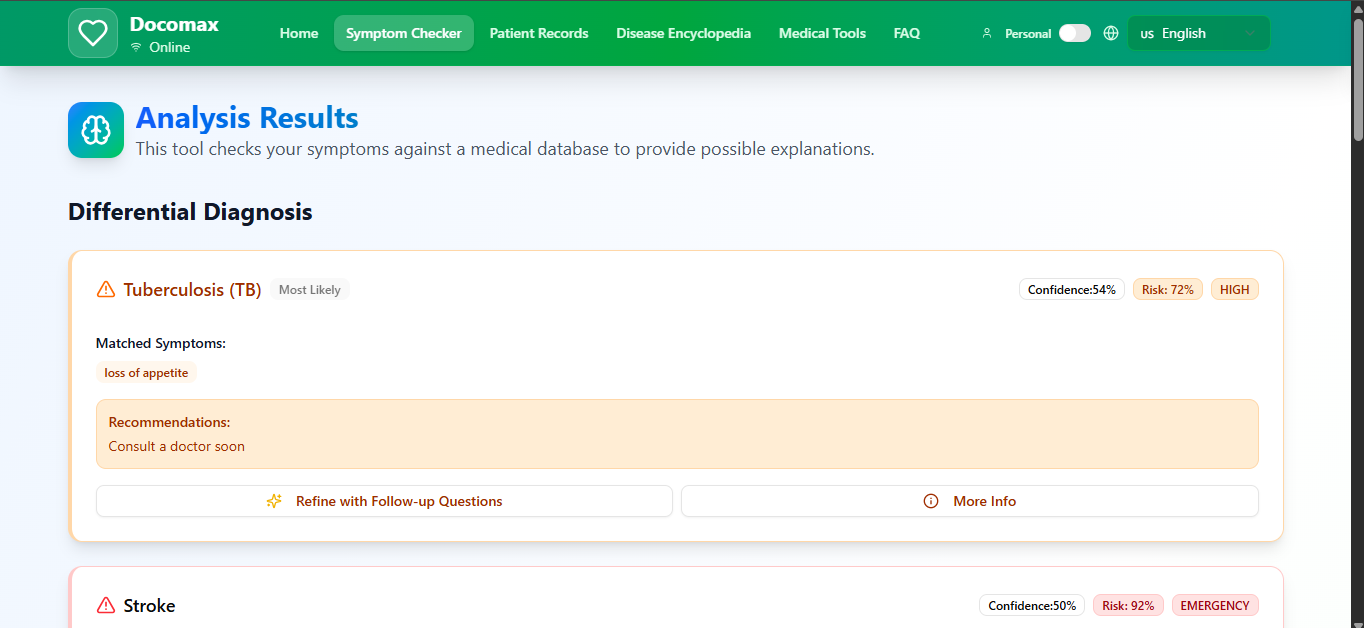
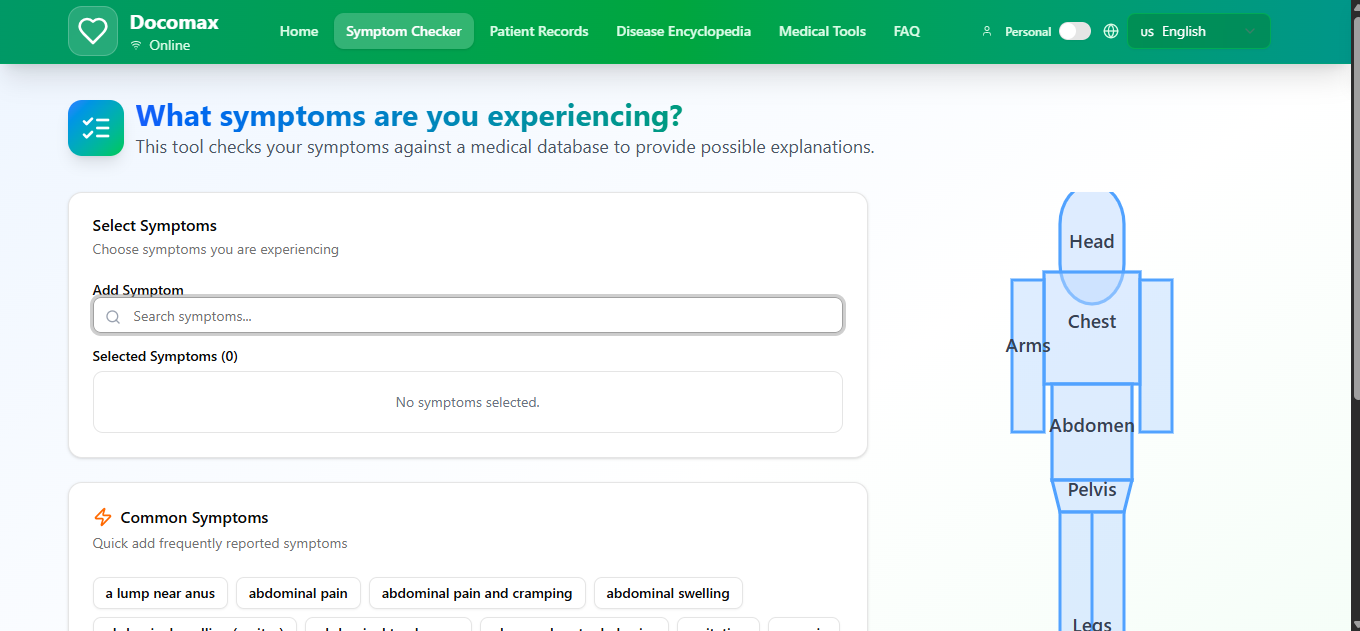
Symptom checker powered by probabilistic logic
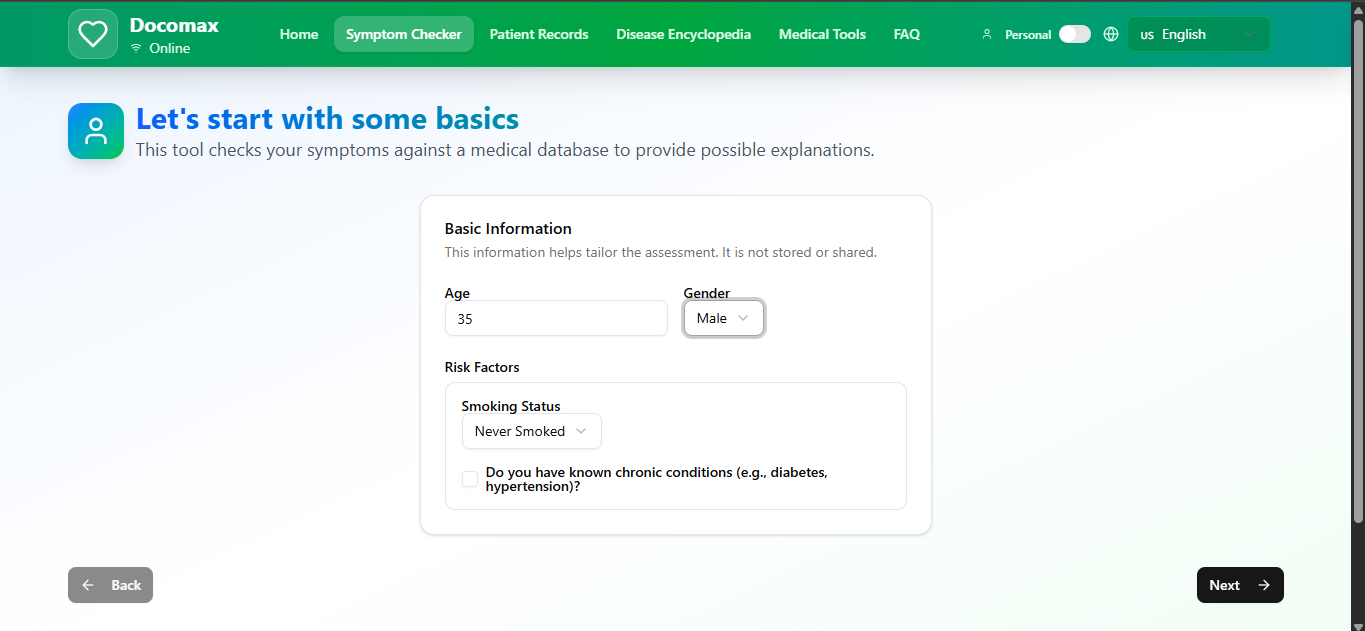
Personal medical profile with exportable emergency PDFs
Appointment scheduler
Medication and vaccination record keeper
Smart lab results manager
Comprehensive disease encyclopedia in multiple languages
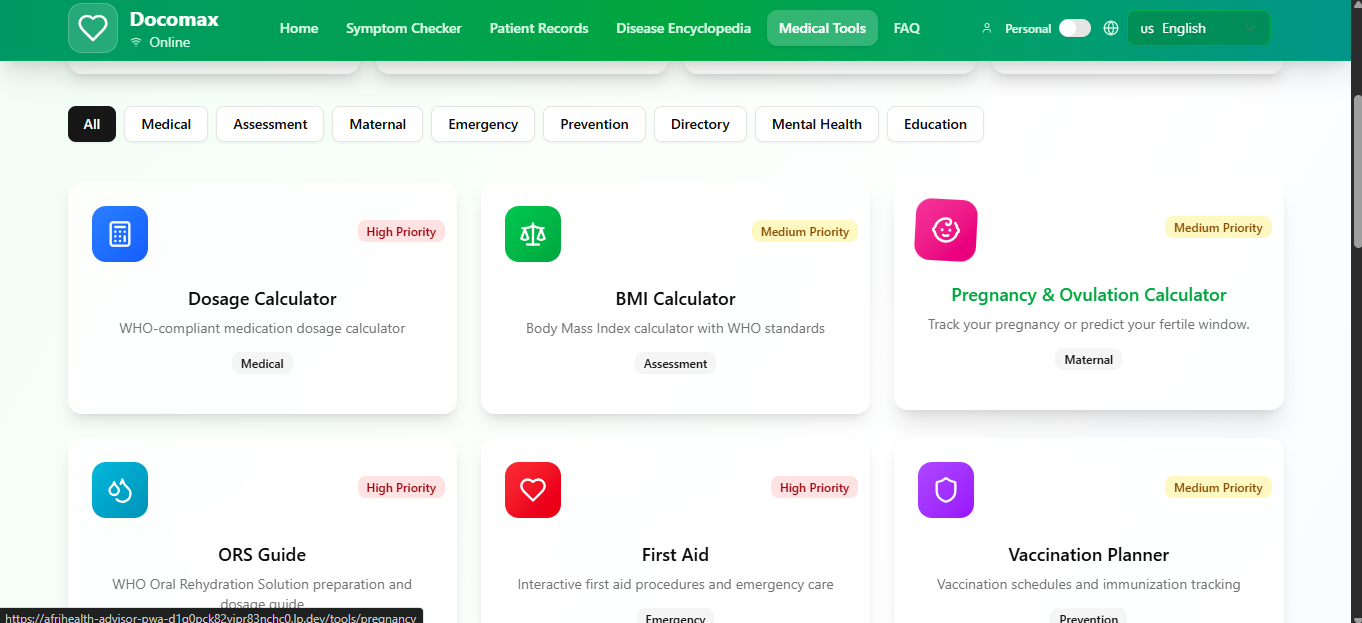
Built-in medical calculators (BMI, IV rate, ovulation tracker, etc.)
Directory of healthcare facilities across Africa
First aid and emergency guides
Two modes: Personal and Professional (for healthcare workers)
It’s not just an app—it’s a lifesaver in your pocket.
Challenges we ran into
Some of the challenges we faced:
Ensuring full offline usability without compromising functionality
Managing multiple languages across structured datasets
Balancing simplicity for patients and depth for professionals
Designing a UI that’s both beautiful and usable on any screen
What we learned
We learned the importance of building for offline-first environments, designing intuitive interfaces for low-tech users, and prioritizing critical information access. We also saw how much value multilingual content adds in diverse communities.
iMPACT
Docomax empowers patients, supports doctors, and helps families prepare for emergencies. It’s already being tested in regions with limited infrastructure and showing promising adoption.
What's next for Docomax
Converting to real downloadable app for mobile and computer
Built With
- react
- ts

Log in or sign up for Devpost to join the conversation.