-
-
Topic of our Project
-
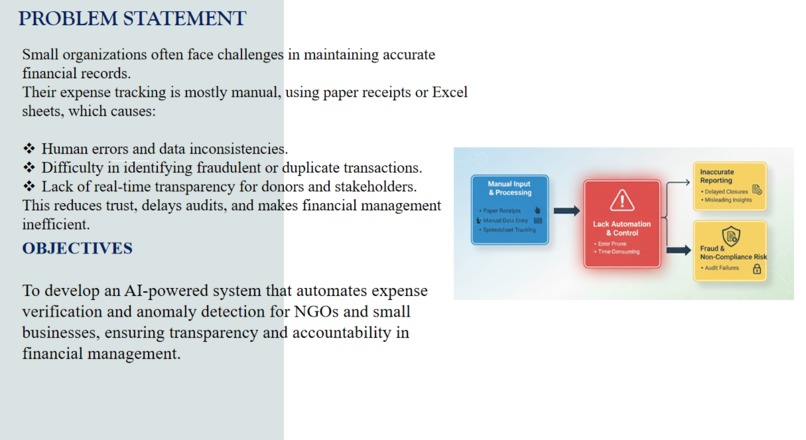
Problem description
-
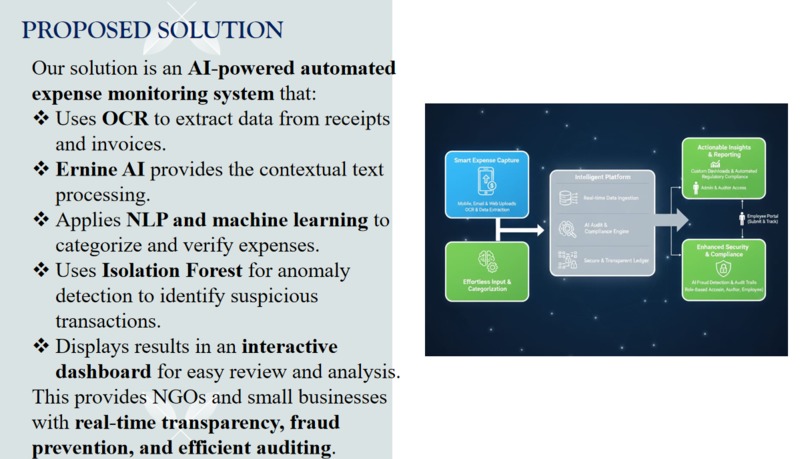
Solution
-
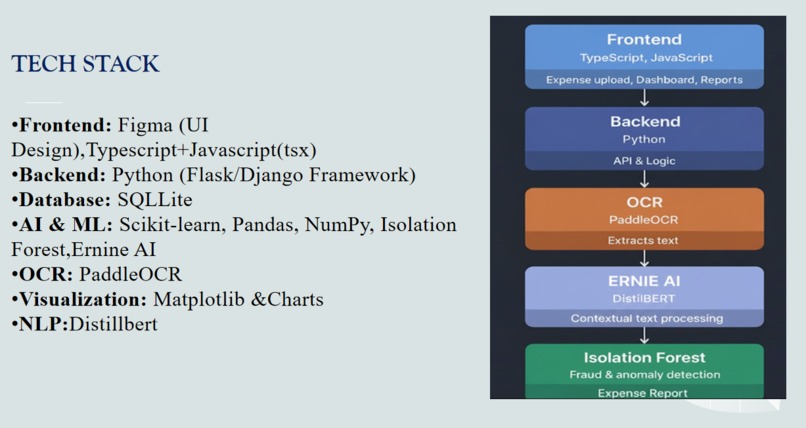
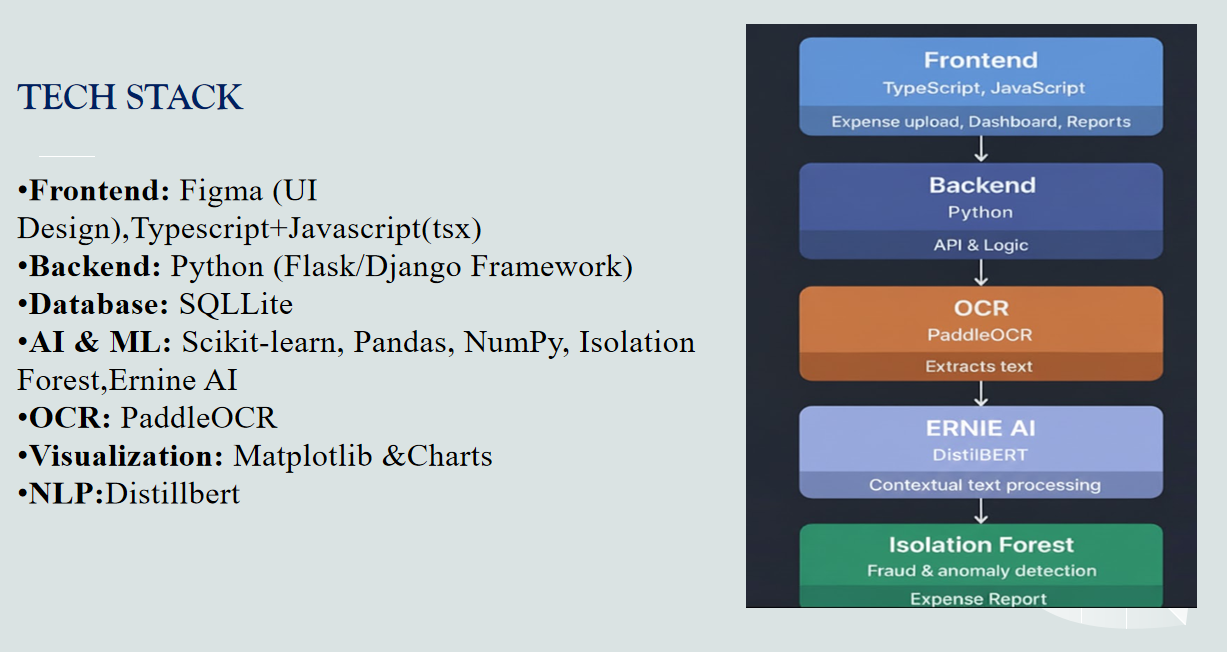
Tech Stack Used
-
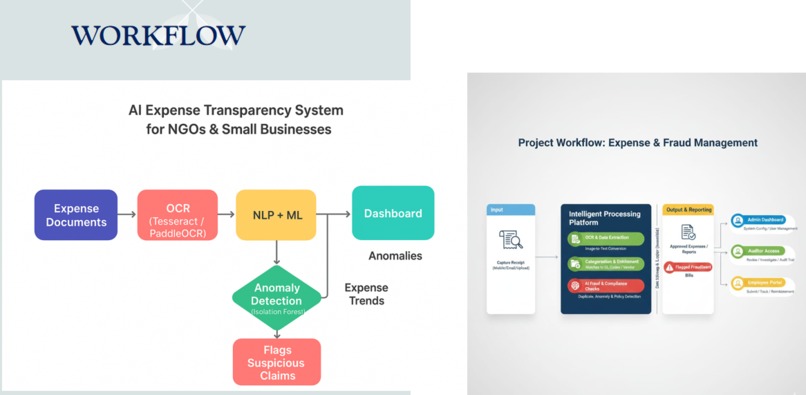
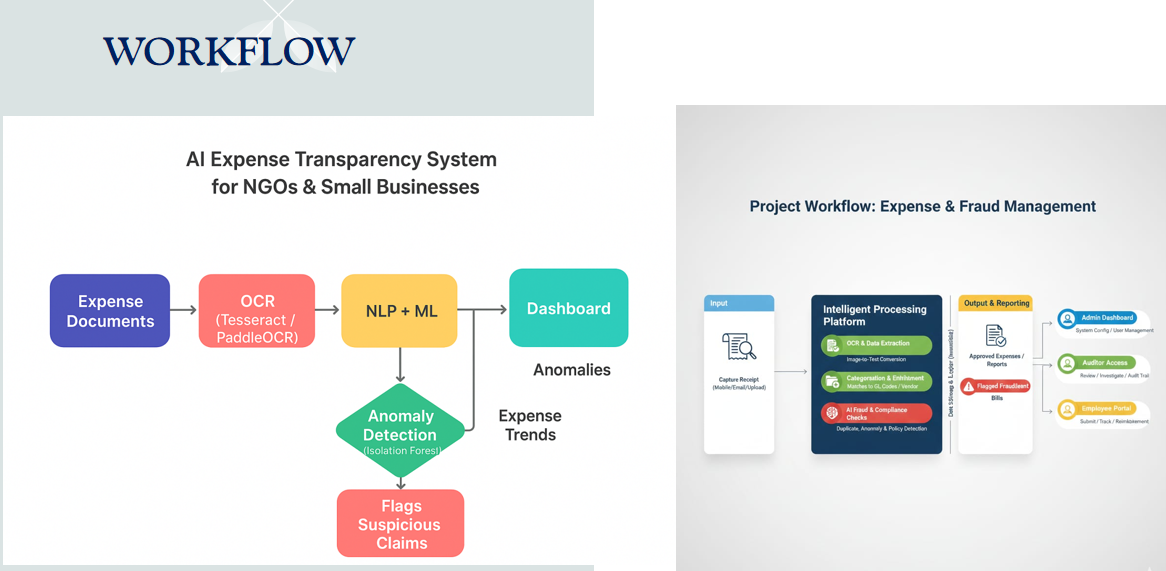
Workflow of our project
-
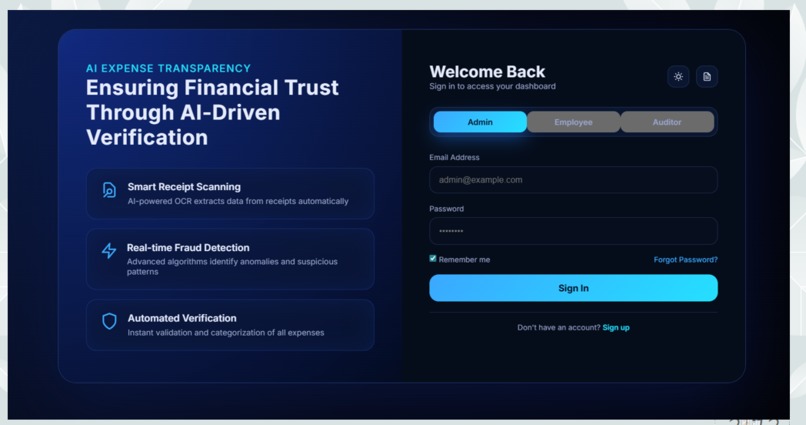
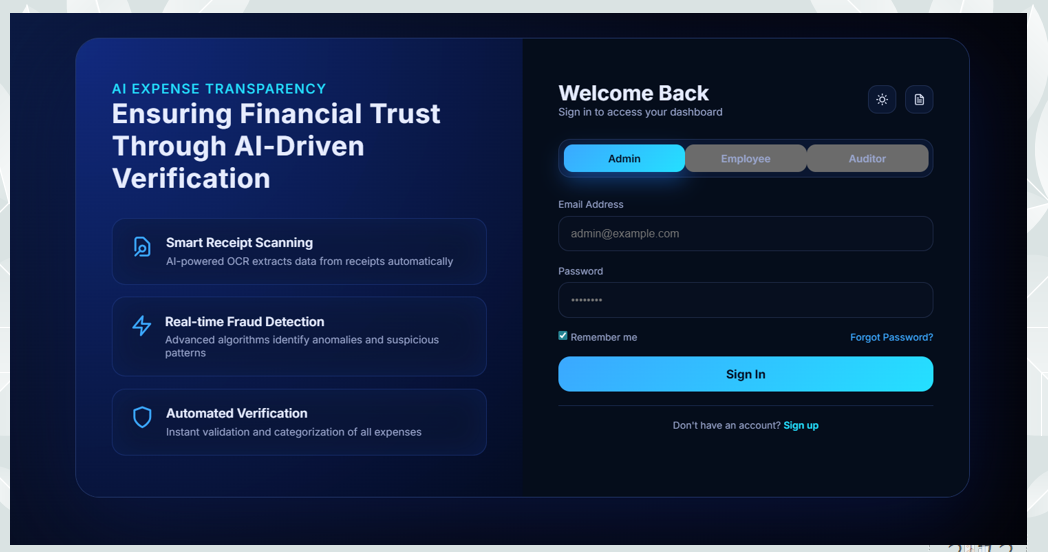
Login based Users
-
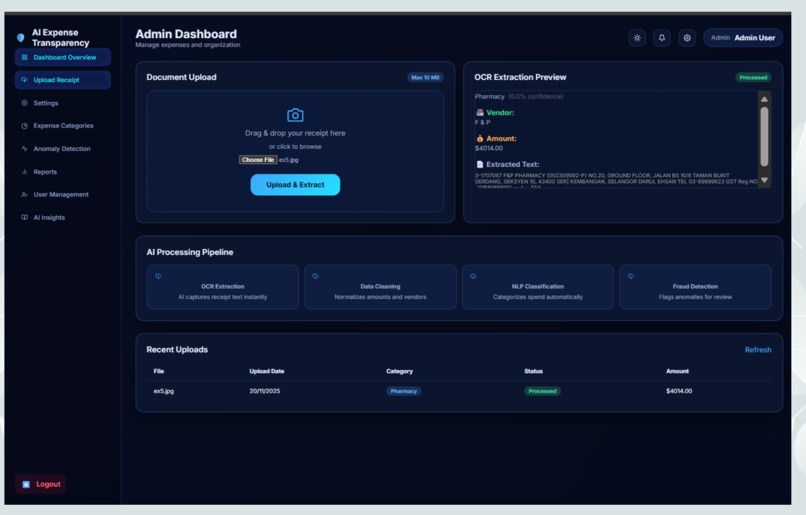
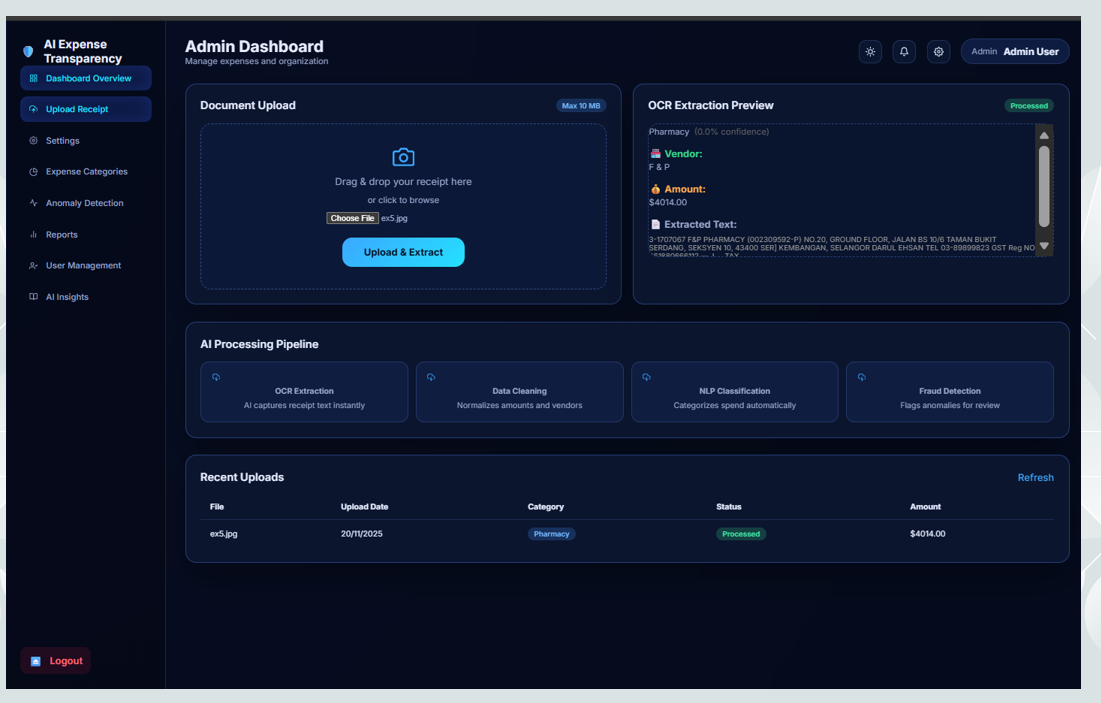
Admin Overview
-
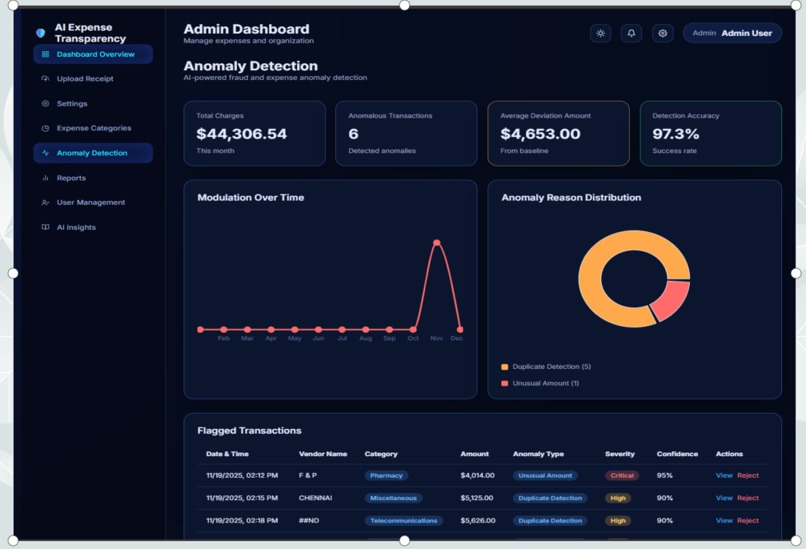
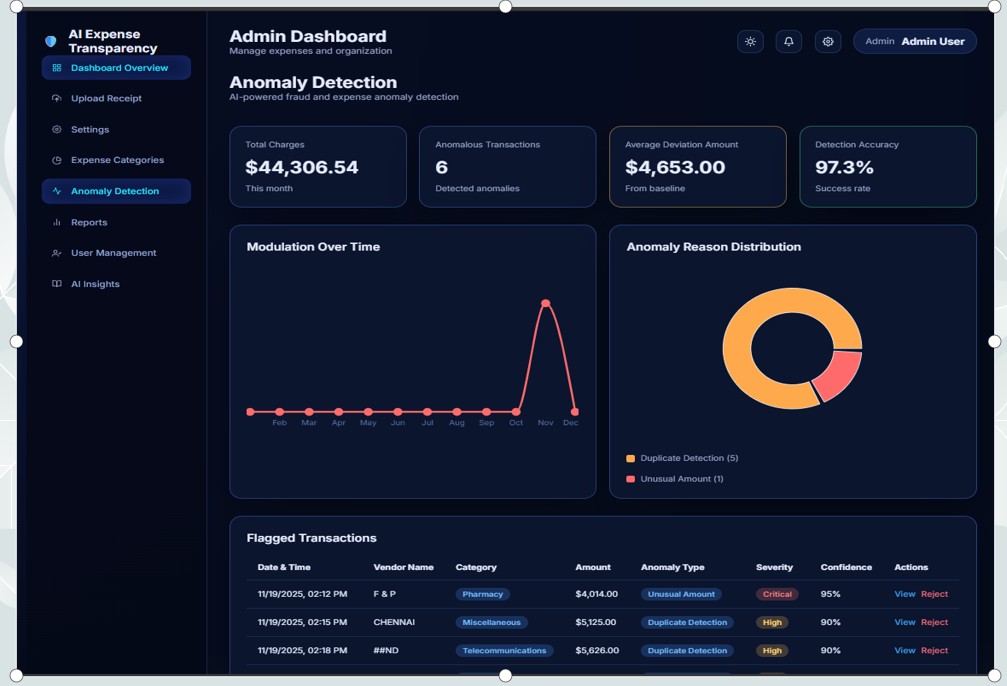
Anomaly Detection
-
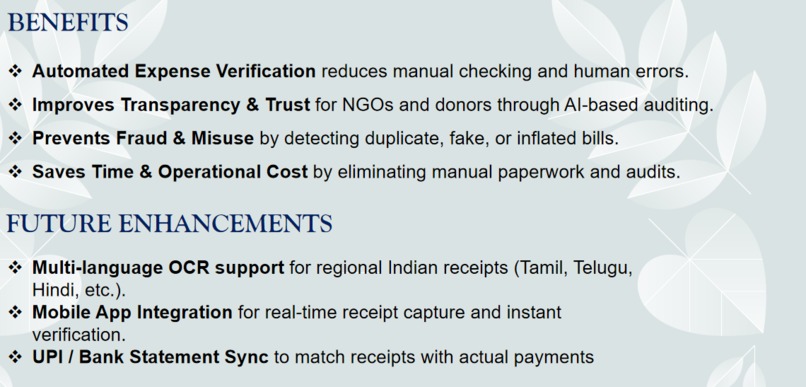
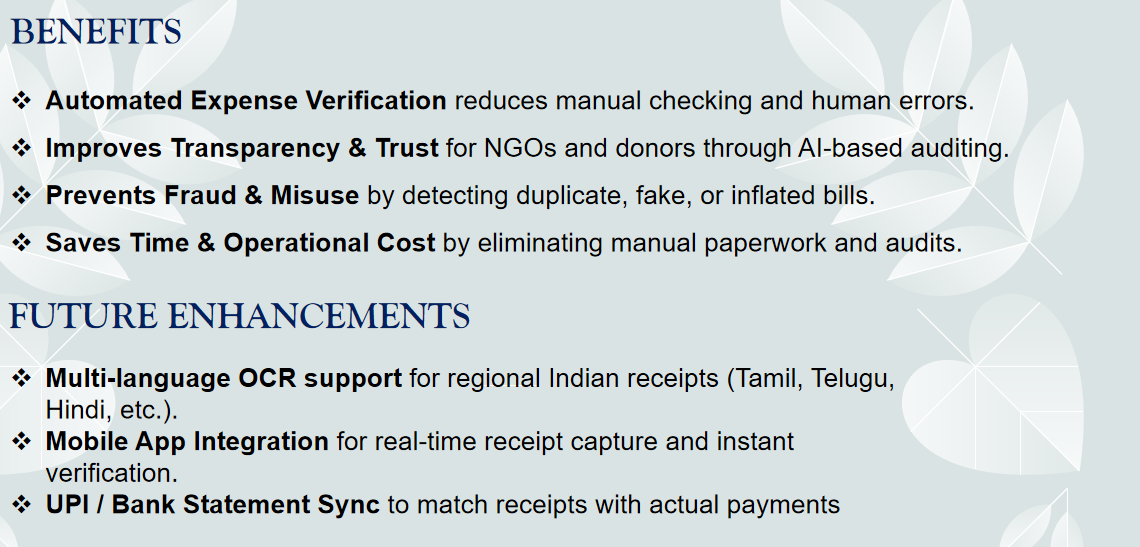
Benefits and Future Enhancements
Inspiration
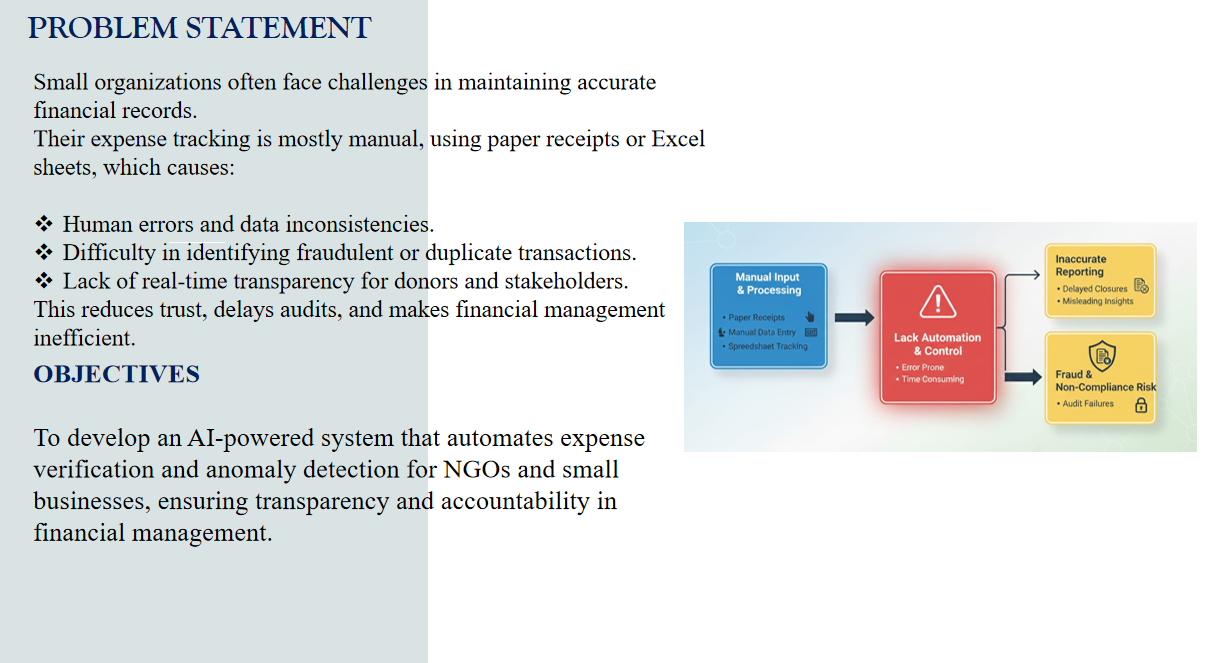
Many NGOs and small organizations still rely on manual expense tracking using paper receipts and spreadsheets
Manual processes lead to human errors, duplicate claims, delayed audits, and lack of transparency
Donors and stakeholders expect accountability, but affordable audit tools are often unavailable
We wanted to use AI to reduce manual effort and support transparent, trustworthy financial management
DocMindAI was inspired by the need for an explainable AI system that assists audits rather than replacing human judgment
What it does
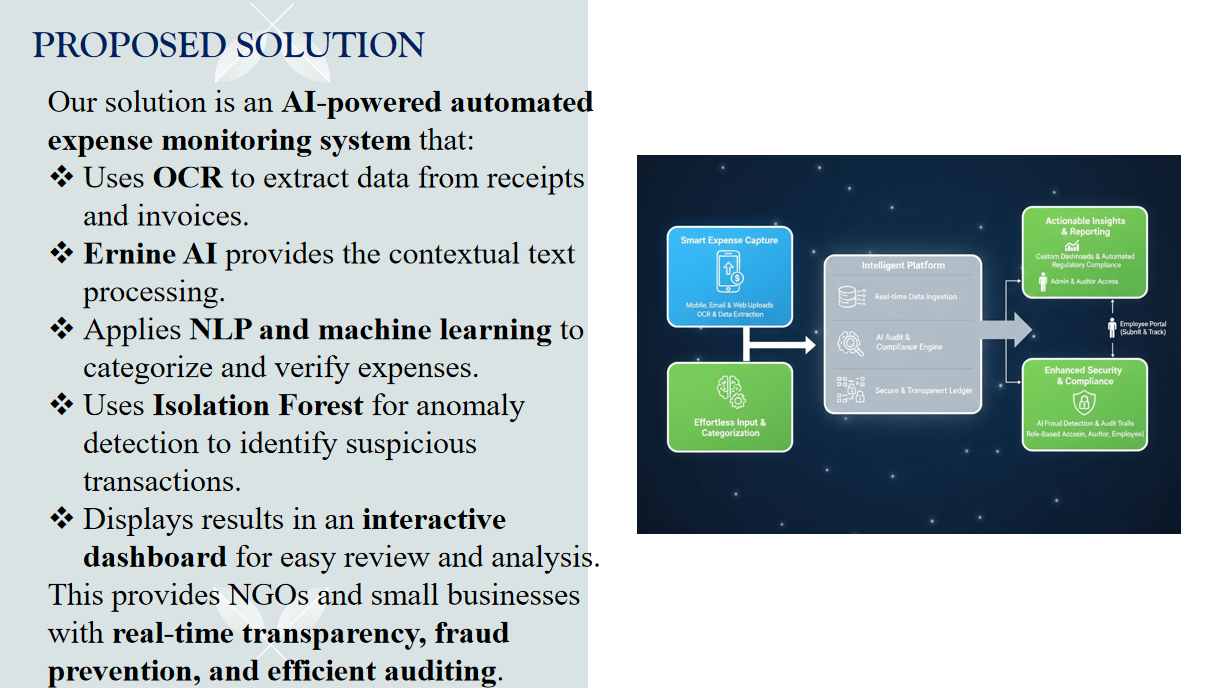
Automatically extracts information from receipts and invoices
Understands expense context such as vendor, amount, date, and category
Verifies expenses by checking for duplicates, inconsistencies, and abnormal spending
Detects suspicious transactions using anomaly detection
Provides clear, human-readable explanations for every audit decision
Displays results in an easy-to-use dashboard for quick review
How we built it
Used PaddleOCR-VL to extract text and layout information from receipt images
Built a multi-agent system powered by ERNIE 4.5 for semantic reasoning
Assigned each agent a clear role:
Document understanding
Expense categorization
Fraud and consistency checking
Audit explanation generation
Integrated Isolation Forest to statistically detect anomalous spending patterns
Implemented the backend in Python and connected it to a visualization dashboard
Challenges we ran into
Handling diverse receipt formats with varying quality and layouts
Extracting accurate totals from noisy or poorly scanned documents
Designing agent responsibilities without overlap
Balancing accuracy, explainability, and performance within a hackathon timeline
Ensuring outputs were understandable for non-technical users
Accomplishments that we're proud of
Built a complete end-to-end AI expense auditing system
Successfully integrated PaddleOCR-VL with ERNIE in a multi-agent architecture
Created an explainable system that shows why an expense is flagged
Demonstrated real-world applicability for NGOs and small organizations
Aligned the project with transparency, accountability, and social impact
What we learned
Real-world financial documents are messy and inconsistent
Deep-learning OCR performs much better than traditional OCR methods
Multi-agent systems improve modularity and explainability
Combining statistical models with LLM reasoning leads to more reliable decisions
Explainability is essential for trust in financial AI systems
What's next for DocMindAI
Fine-tune PaddleOCR-VL for handwritten and multilingual receipts
Further fine-tune ERNIE for financial auditing and compliance reasoning
Add real-time alerts for suspicious transactions
Generate automated audit and donor-ready reports
Enable offline and edge deployment for low-connectivity environments
Built With
- camel-ai
- ernie
- paddleocr-vl
- pandas
- python
- scikit-learn


Log in or sign up for Devpost to join the conversation.