-
-
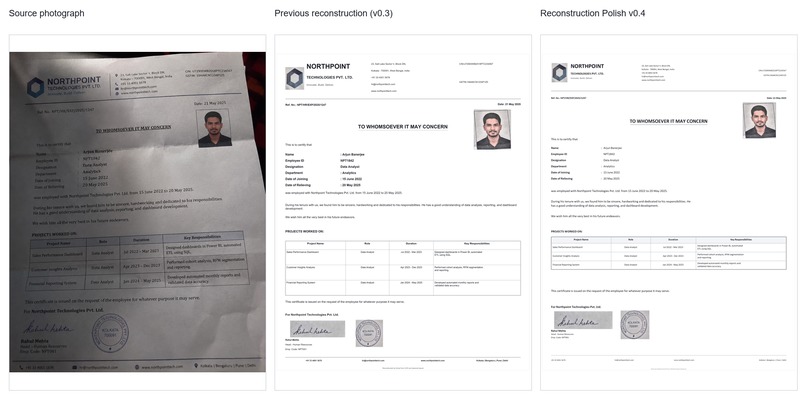
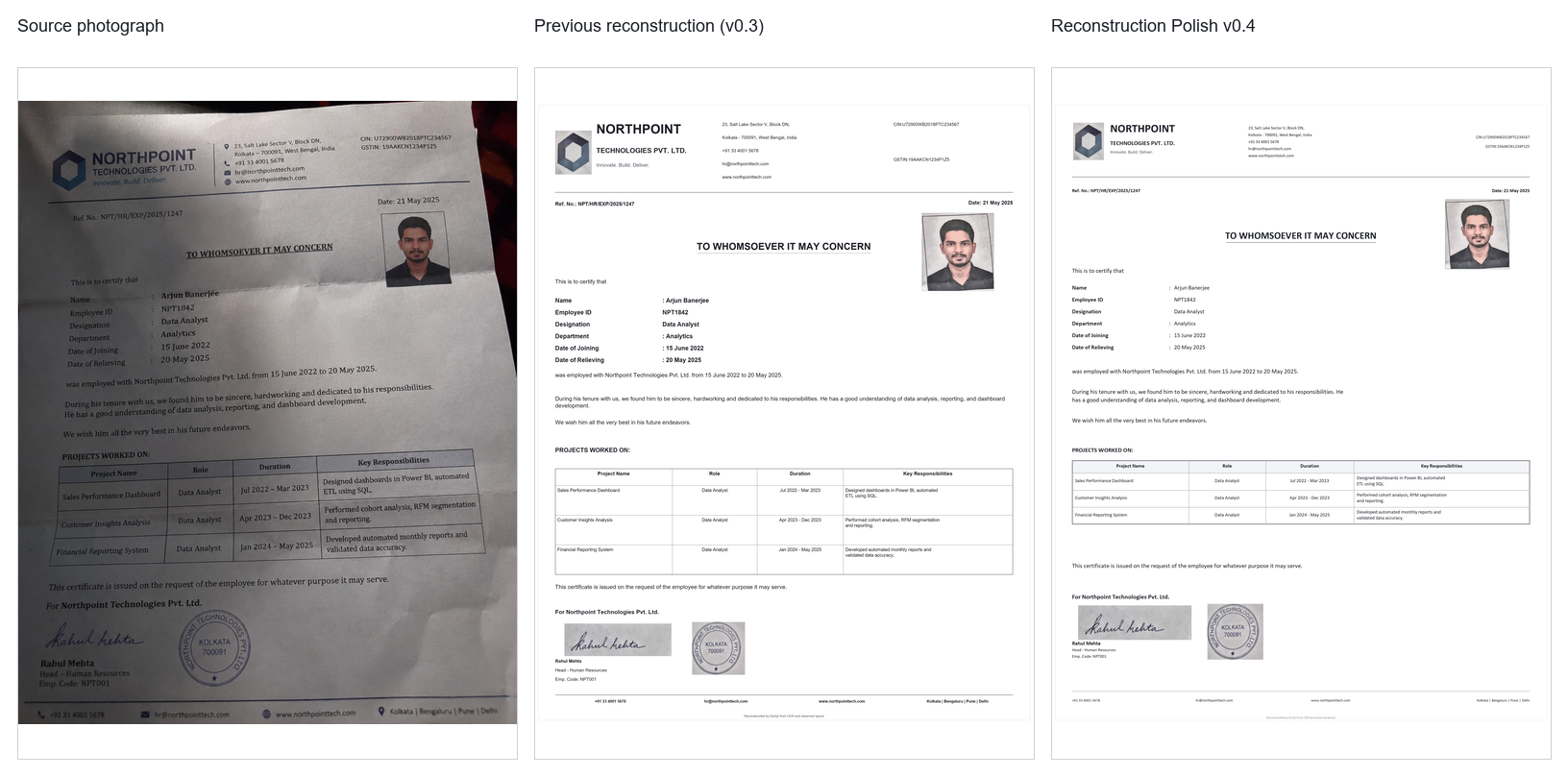
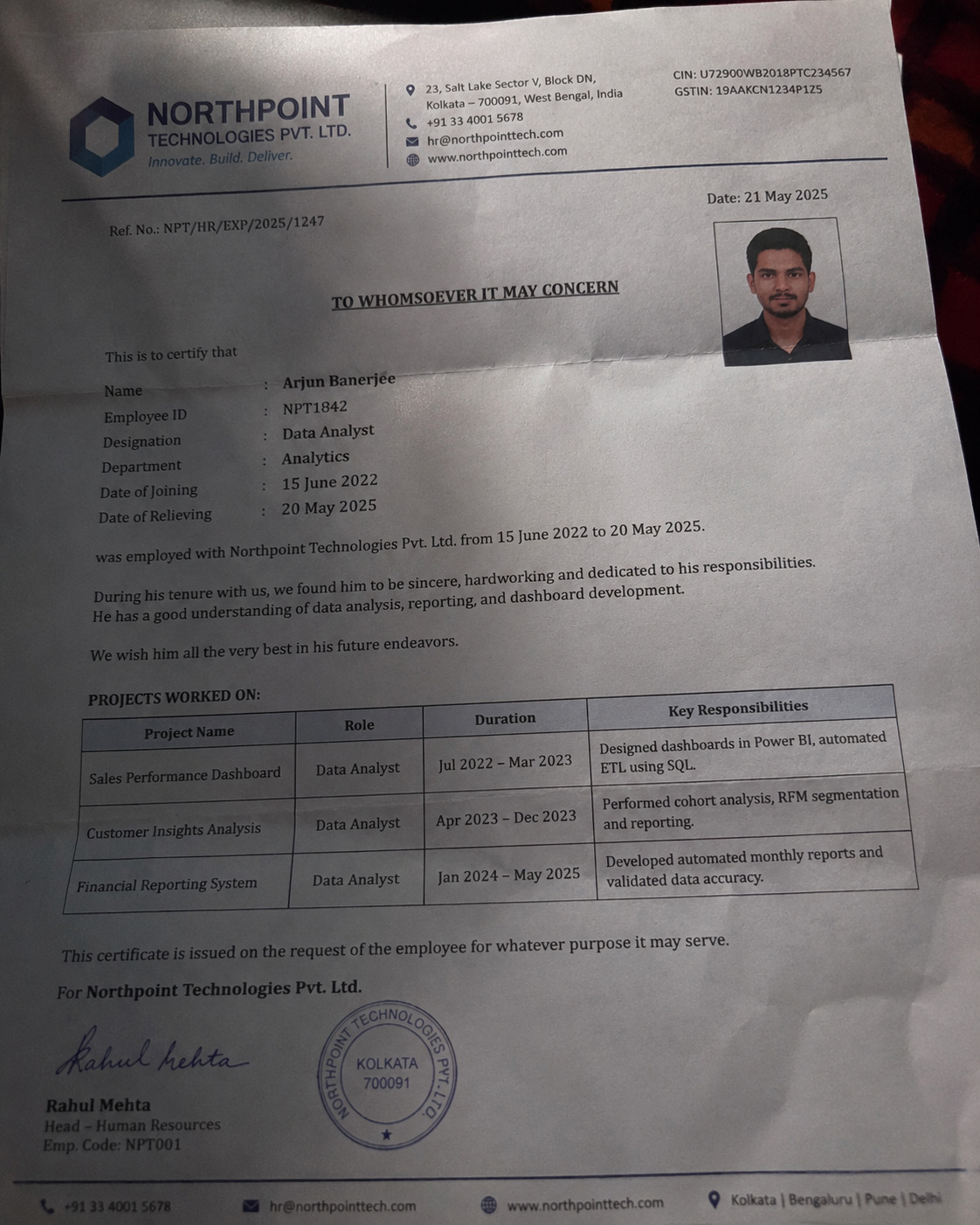
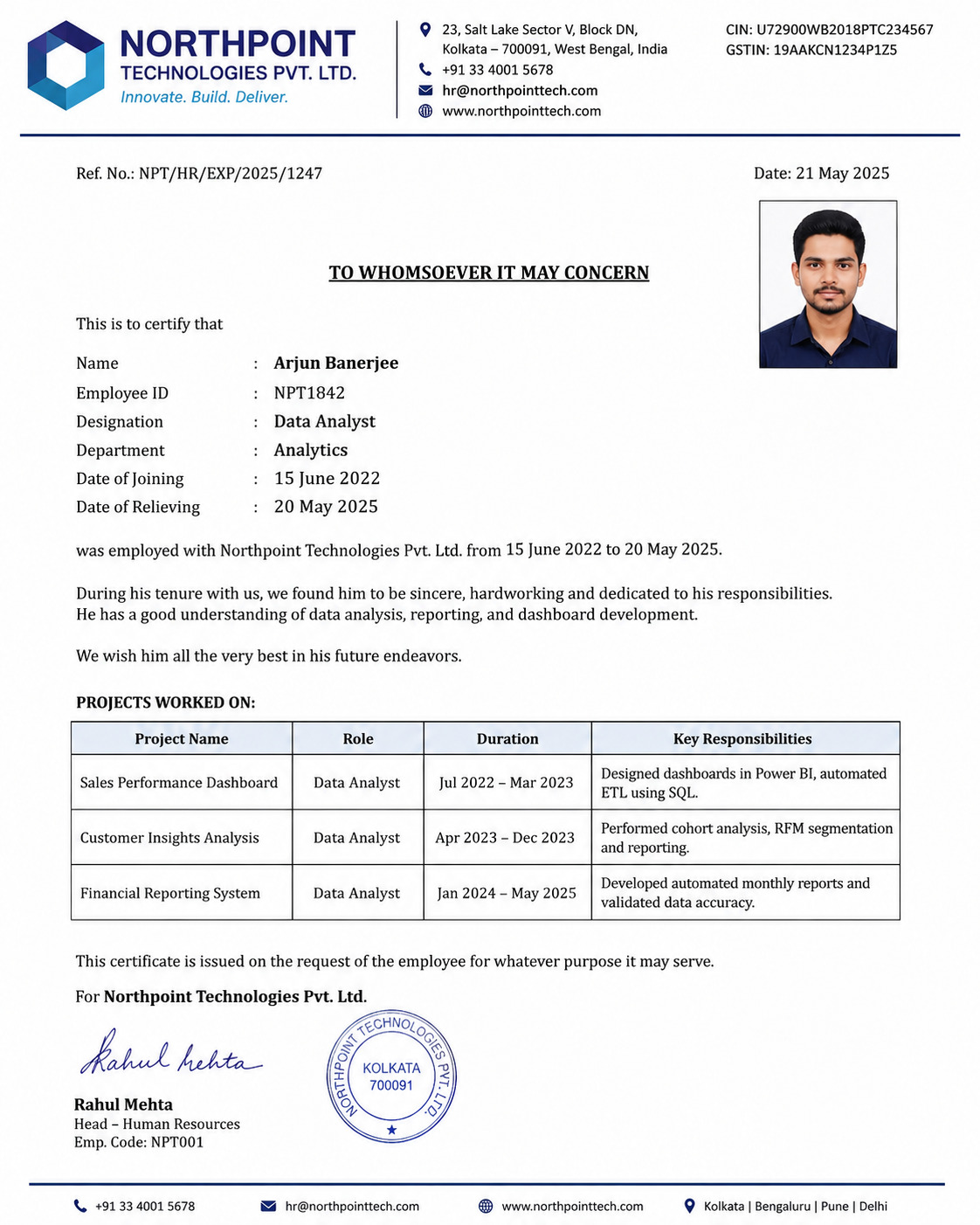
Original Phone Photo ←→ Final Reconstruction
-
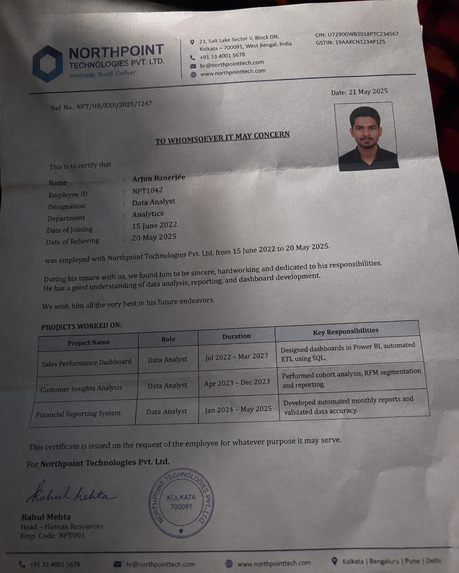
This is a intended input which the engine is expected to fully reconstruct
-
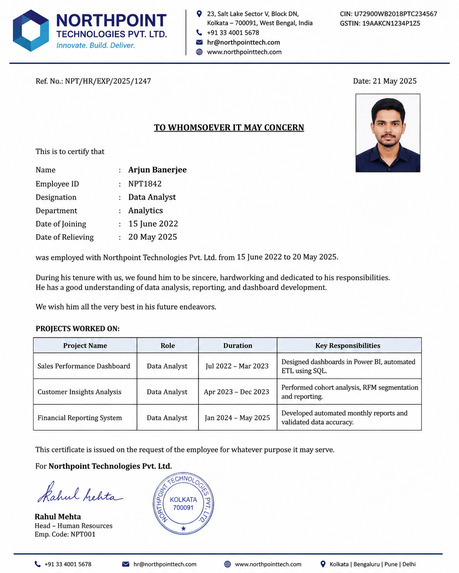
This is our ideal output which we are aiming to achieve
-
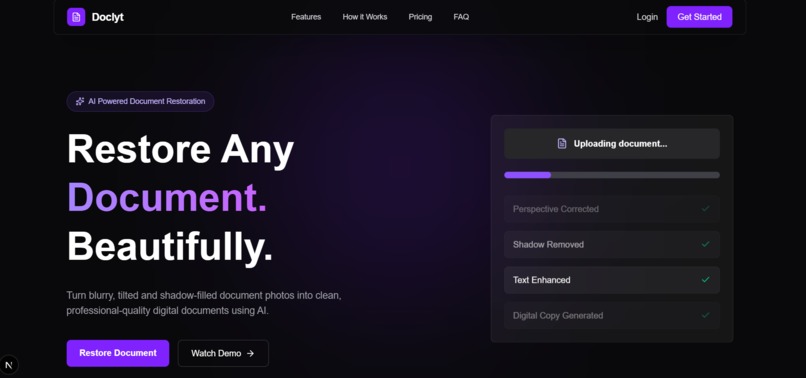
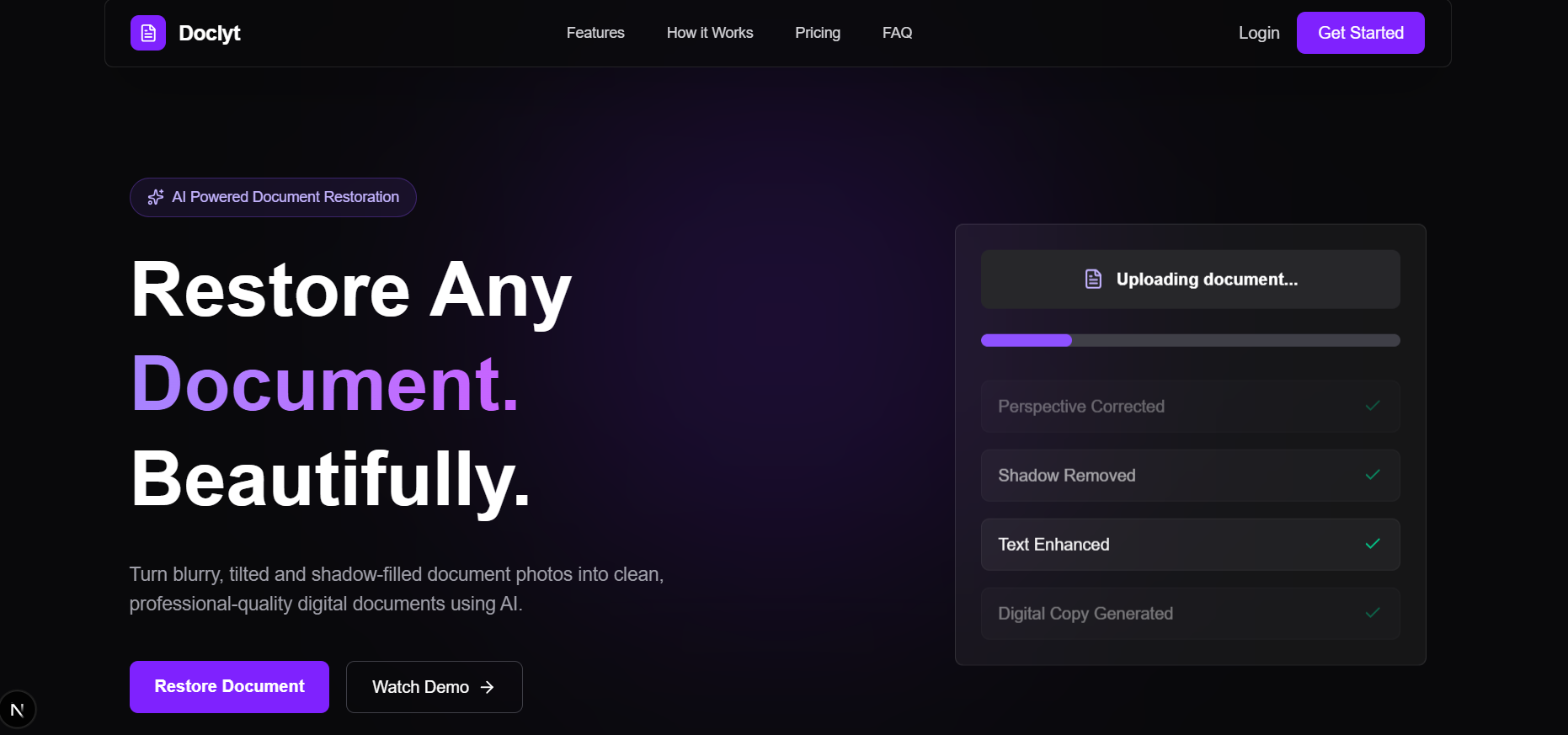
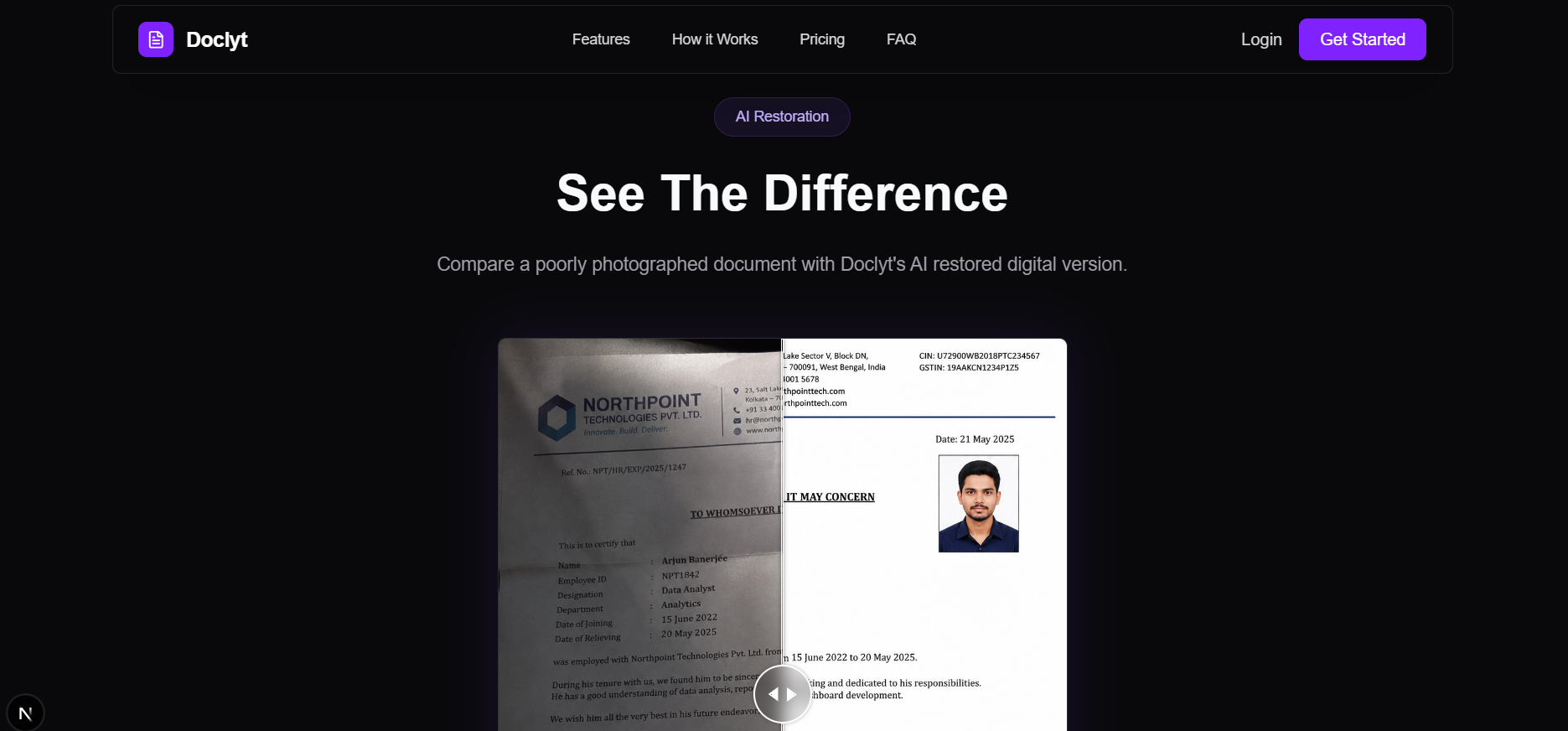
Home Page, that conveys our product
-
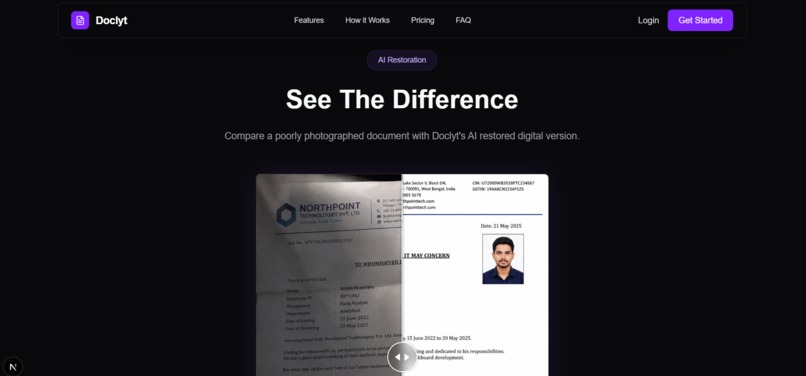
Our Intended End Product comparison
-
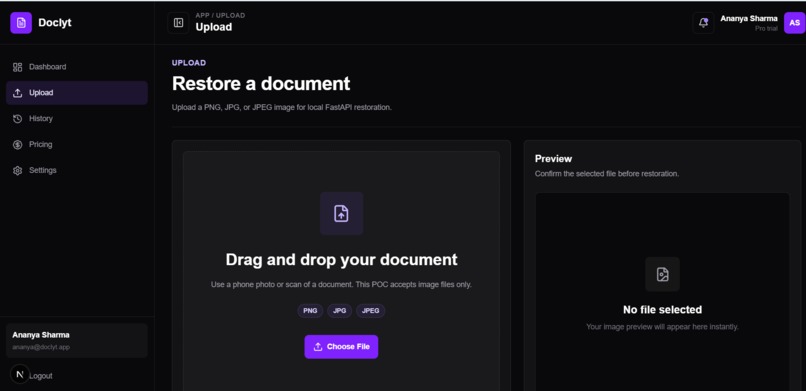
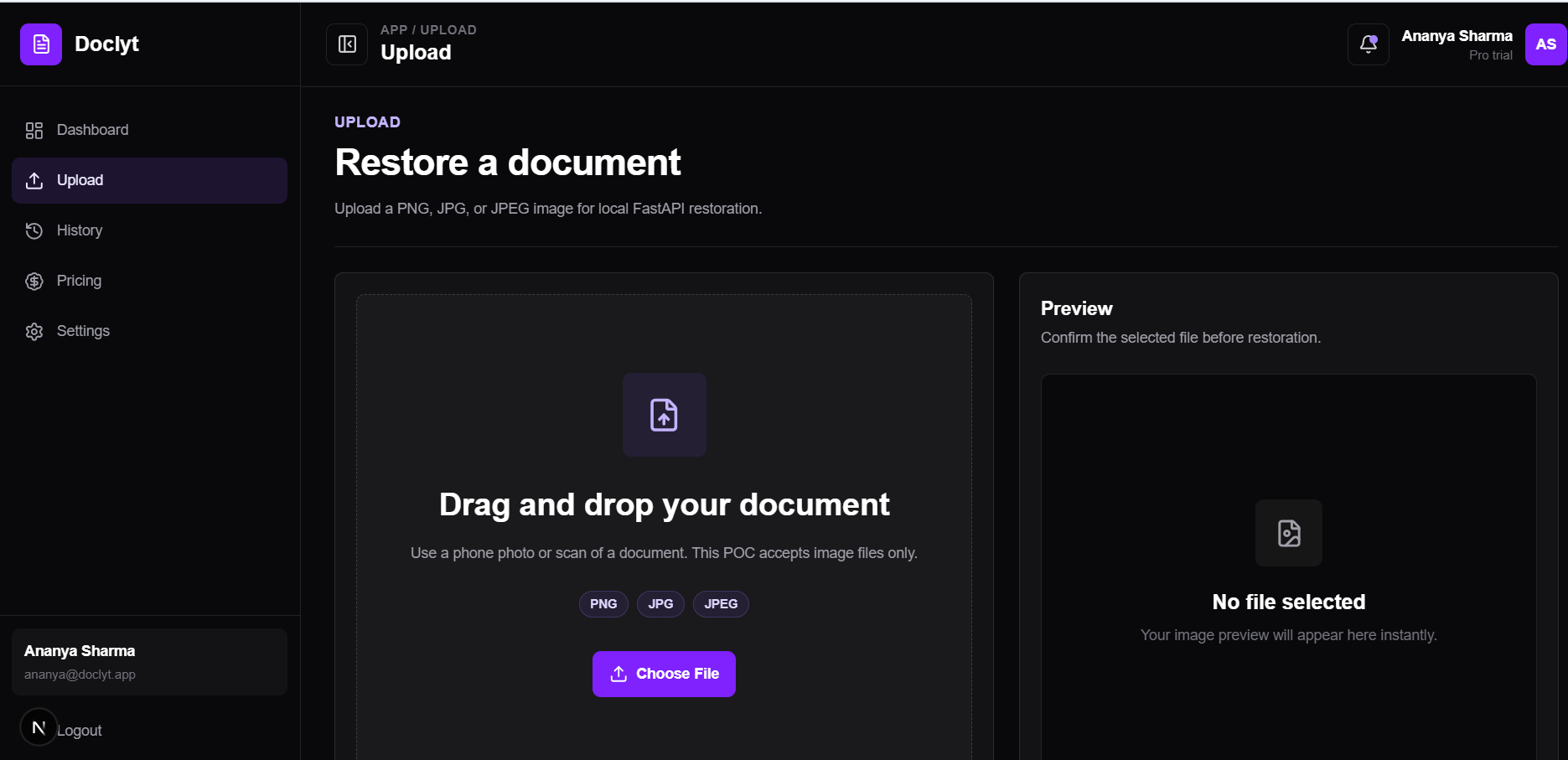
Upload Page
-
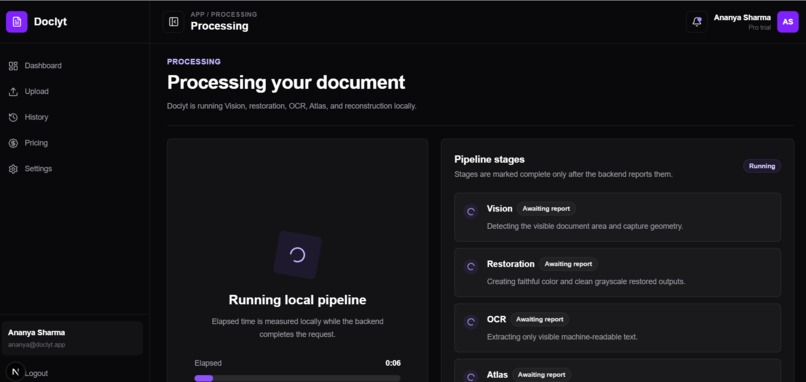
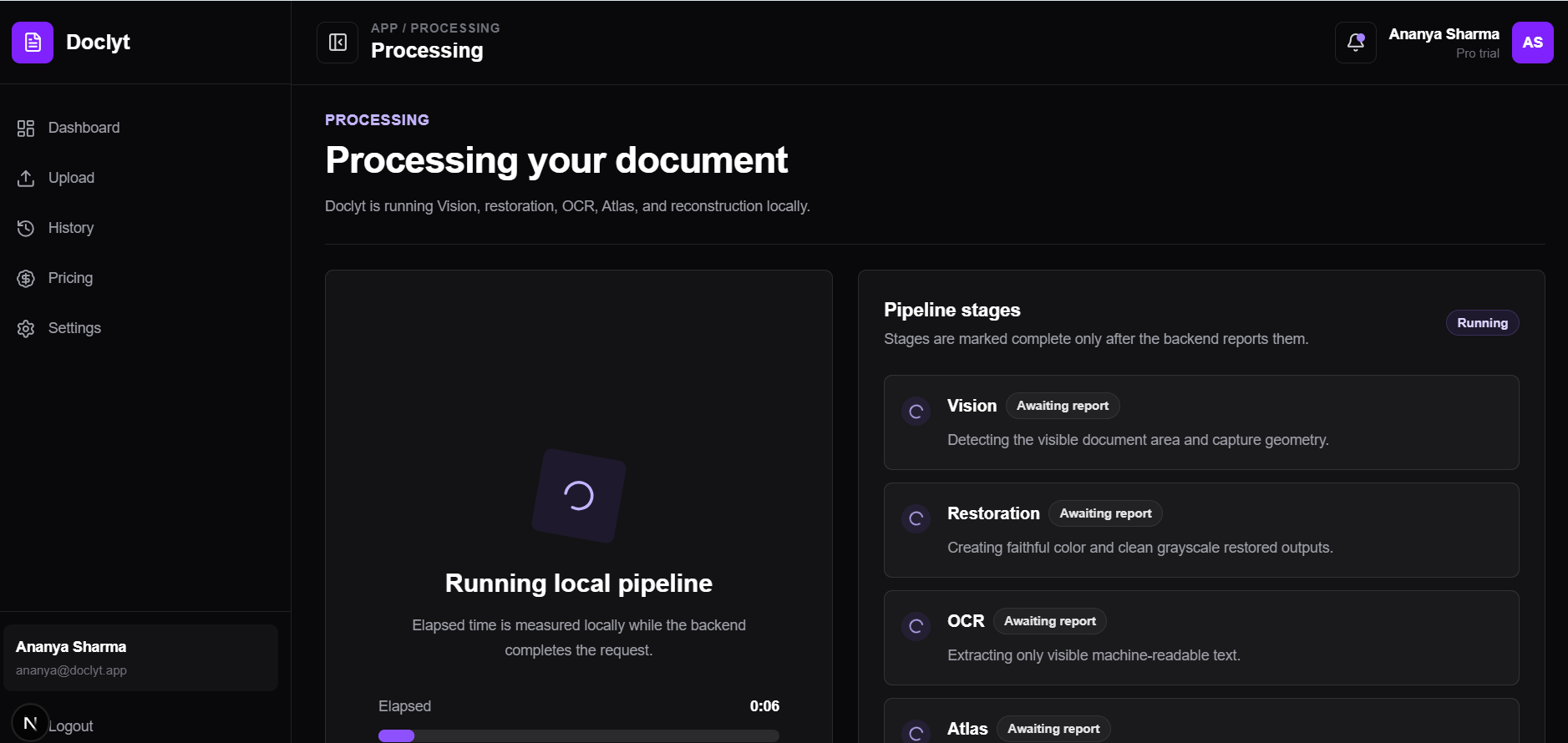
Processing Page
-
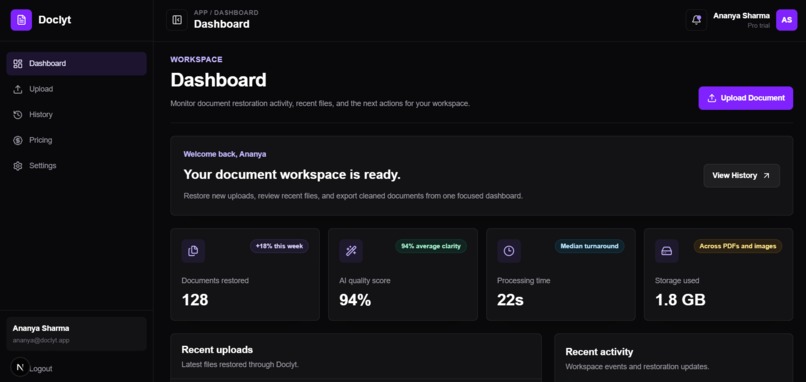
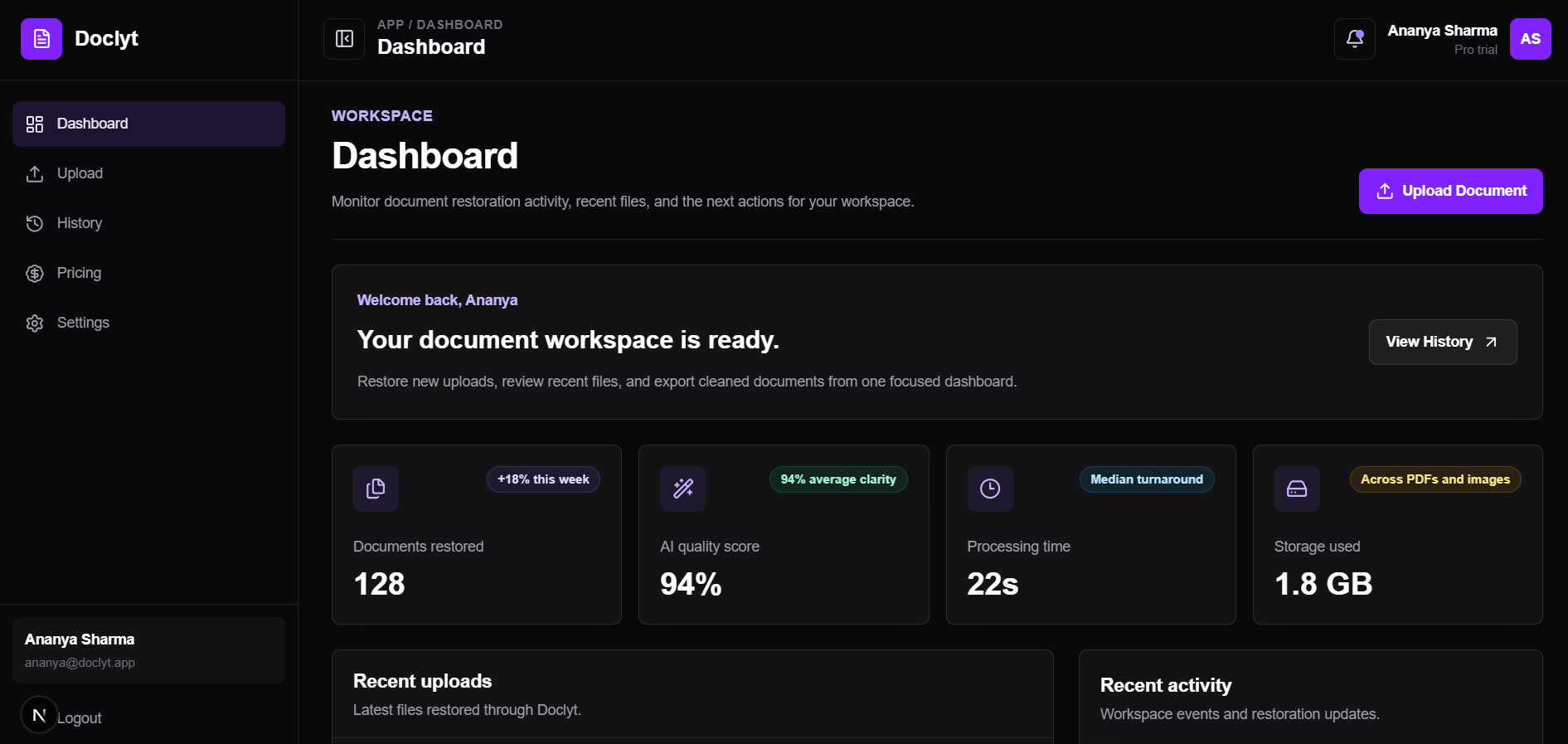
Dashboard
Doclyt – Restore Documents, Not Just Text
Inspiration
Anyone who has scanned an important document using a phone has experienced the same problems: perspective distortion, shadows, wrinkles, compression artifacts, and poor lighting. Existing OCR solutions can extract text, but they often lose the document's original appearance, structure, and visual identity.
We wanted to build a system that treats a document as more than text. A certificate, invoice, contract, or official record carries meaning in its layout, tables, signatures, stamps, logos, and typography. Our goal was to faithfully reconstruct the document—not simply perform OCR.
What it does
Doclyt transforms imperfect mobile photos into clean, structured digital documents while preserving:
- Document layout
- Tables
- Logos
- Signatures
- Stamps
- Reading order
- Visual hierarchy
Rather than generating missing content, Doclyt is designed to preserve what is actually observed in the source image, making the reconstruction more trustworthy.
How we built it
The system combines classical computer vision with AI-powered document understanding.
Our pipeline includes:
- Image preprocessing (perspective correction, illumination normalization, denoising)
- OCR and layout analysis
- Structural understanding of the document
- Appearance-aware reconstruction
- Asset preservation for signatures, stamps, and logos
- Faithful rendering into a clean digital document
The project is built with:
- FastAPI
- Next.js
- OpenCV
- PaddleOCR
- Python
Challenges we faced
The hardest challenge wasn't reading text—it was preserving the identity of the document.
Small changes in spacing, alignment, typography, or tables can make a reconstructed document feel noticeably different from the original. We spent significant time balancing enhancement with preservation while avoiding the temptation to "hallucinate" missing information.
Another major challenge was making the reconstruction pipeline robust across different document types and varying image quality.
What we learned
This project taught us that document reconstruction is fundamentally different from OCR.
Recovering a document's visual structure requires combining computer vision, layout reasoning, rendering, and careful engineering. We also learned the importance of designing systems that remain faithful to the evidence instead of inventing missing content.
What's next
We're continuing to improve visual fidelity by refining typography, spacing, tables, and asset restoration while keeping the system deterministic and trustworthy.
Our long-term vision is to build an AI-powered document restoration engine that helps businesses, governments, archives, and individuals digitize documents with significantly higher fidelity than traditional OCR workflows.
Built With
- api
- computervision
- css
- css3
- fastapi
- git
- github
- gpt5.6sol
- gpt5.6terra
- html5
- javascript
- next.js
- ocr
- opencv
- paddleocr
- python
- react
- rest
- tailwind
- typescript

Log in or sign up for Devpost to join the conversation.