Inspiration
Our idea came from a real problem experienced by one of our team members who works in logistics. As part of her daily workflow, she prepares multiple export documents using information from different sources, including sales contracts, booking information, emails and spreadsheets. Much of this information has to be transferred and checked manually. Even a small error in a contract number, quantity, price, vessel or shipping detail can be easy to miss and create problems later in the export process. We asked ourselves: what if her Mac could act as a second pair of eyes? That became Dock, an on-device document review tool designed to make checking logistics documents faster, simpler and less error-prone.
What it does
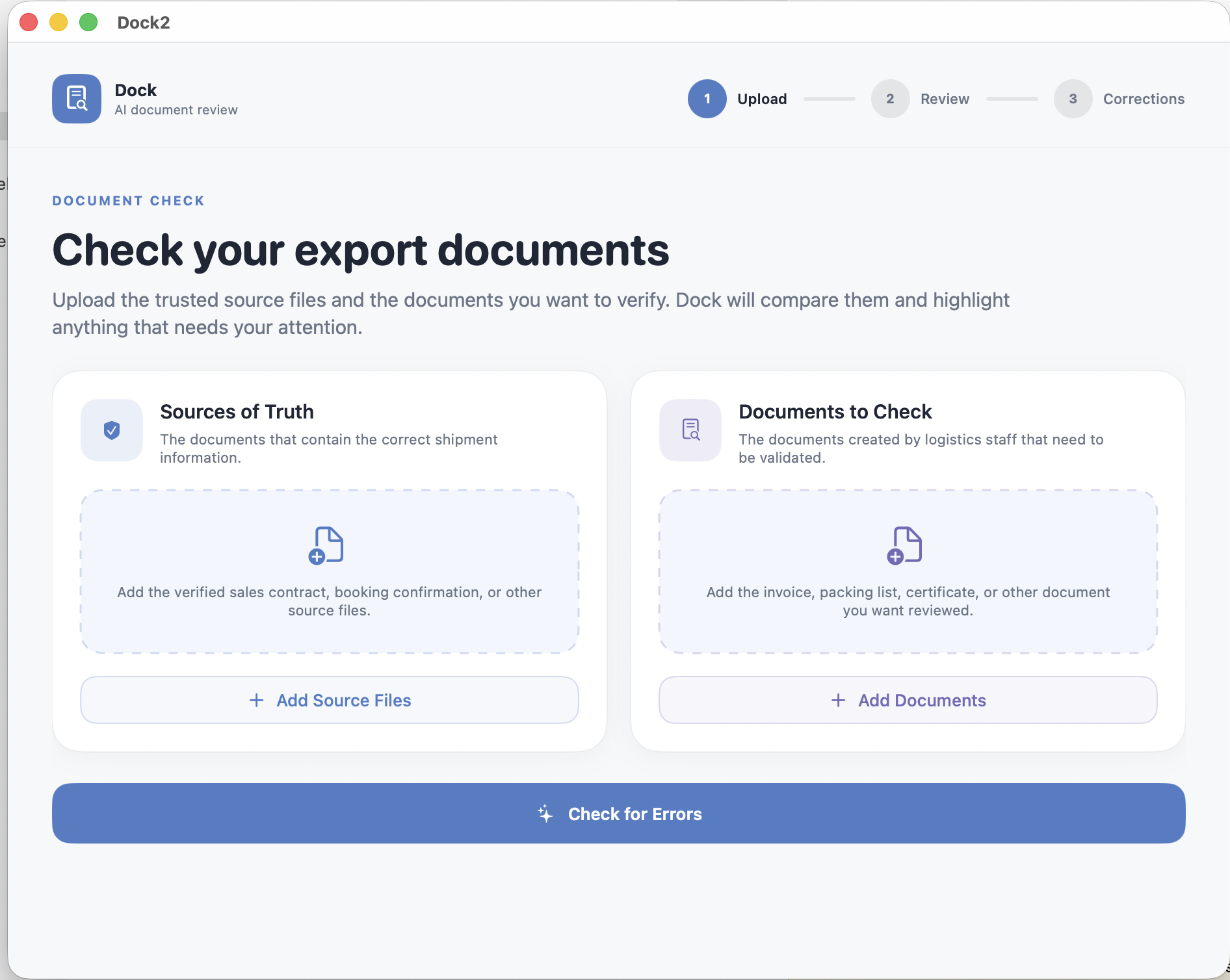
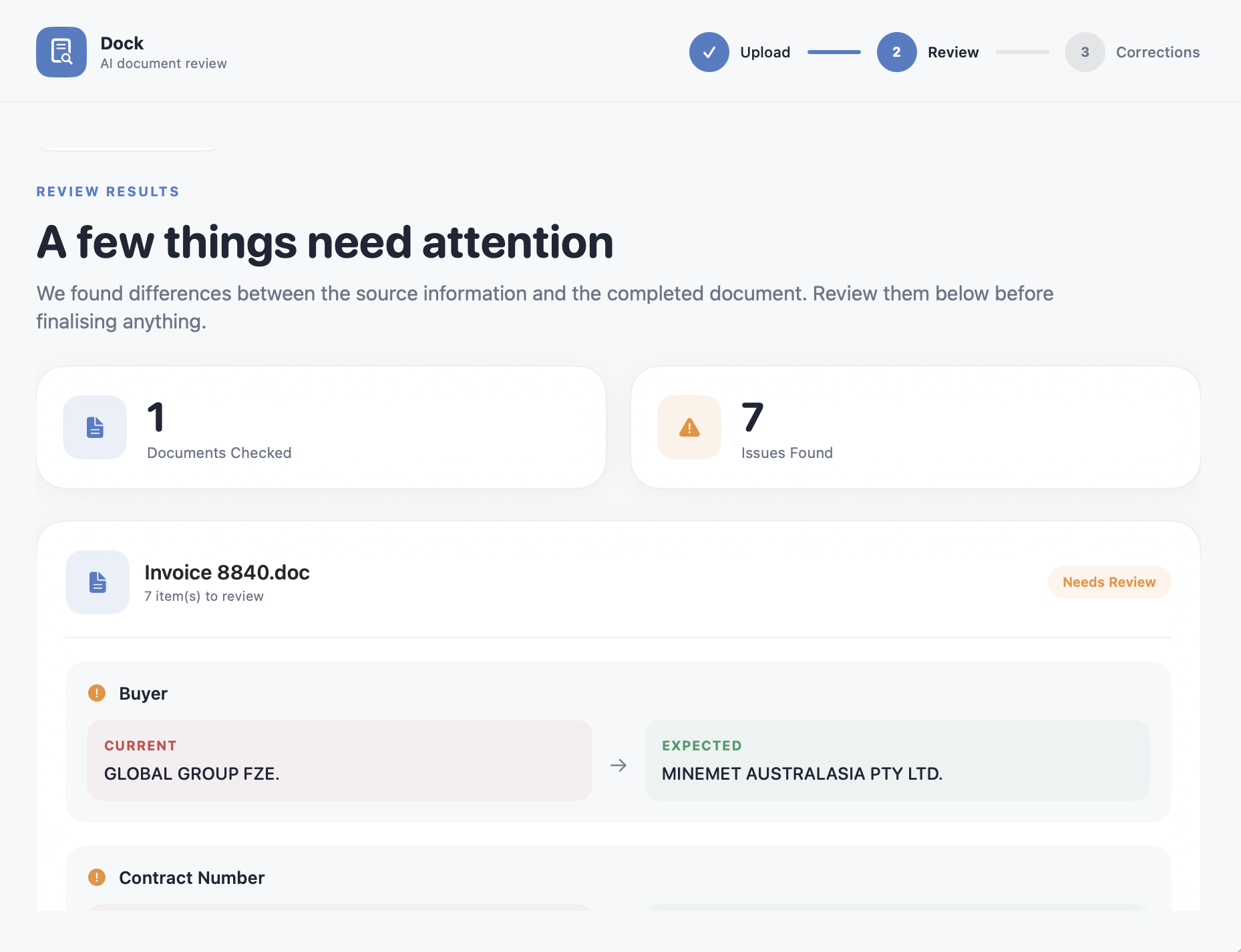
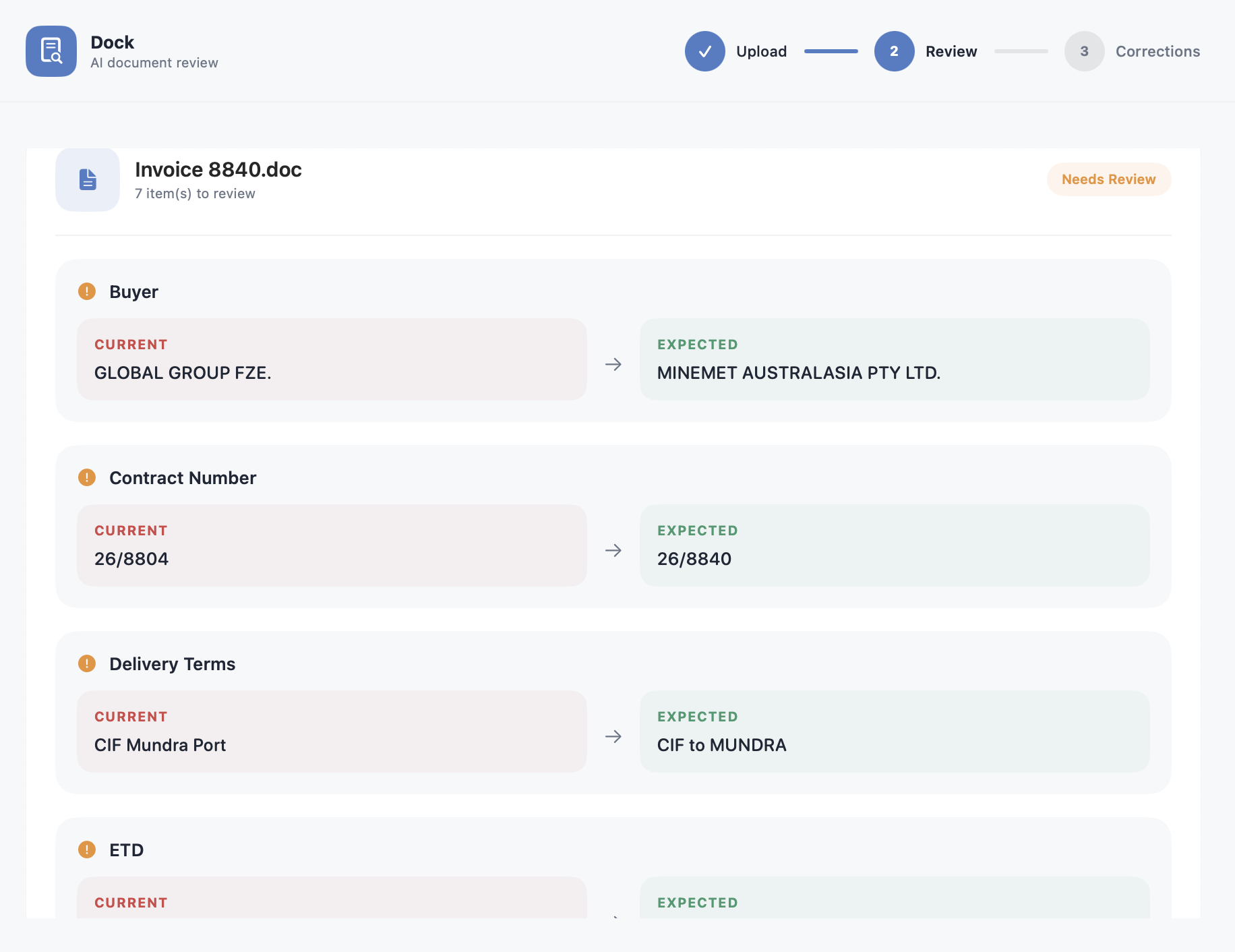
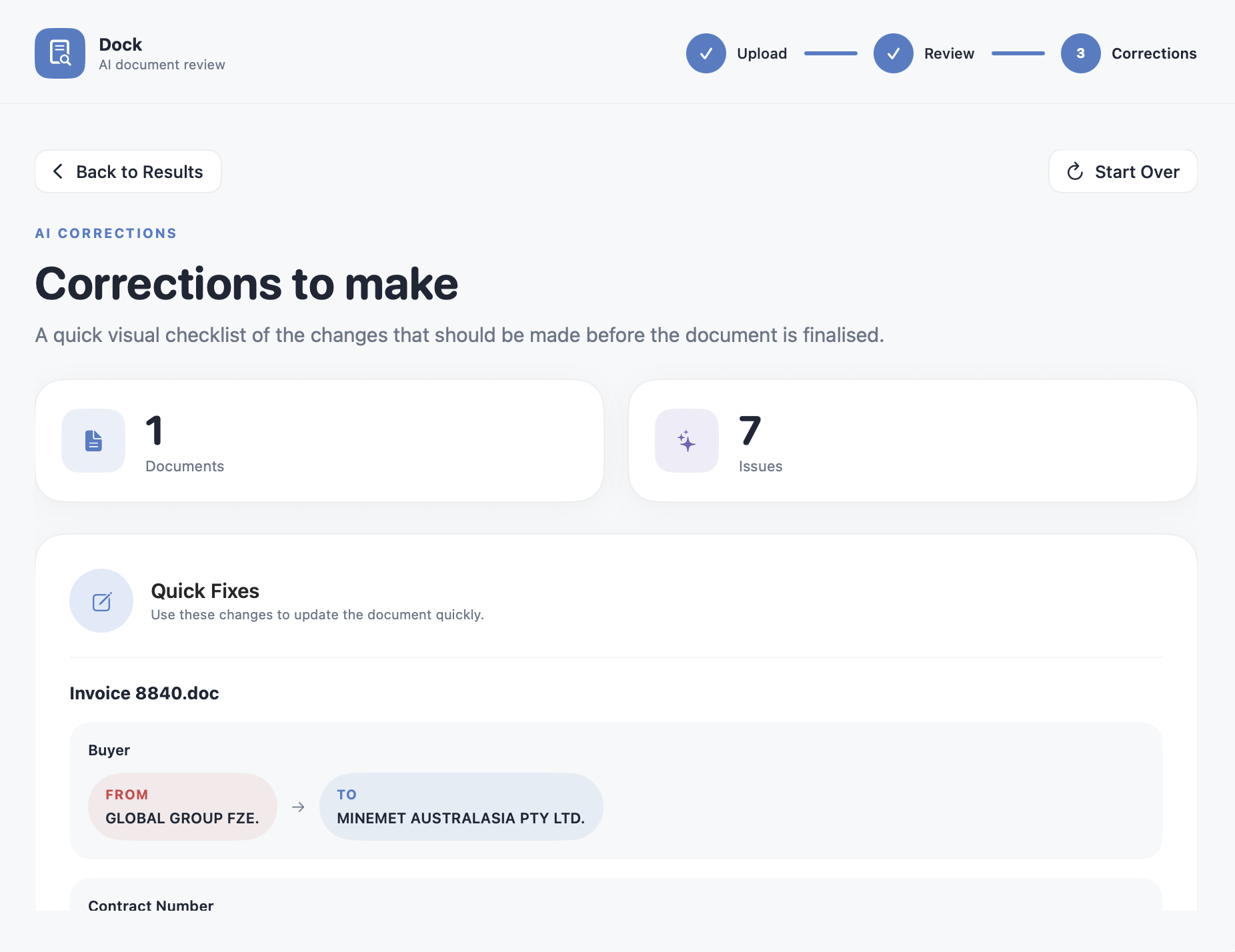
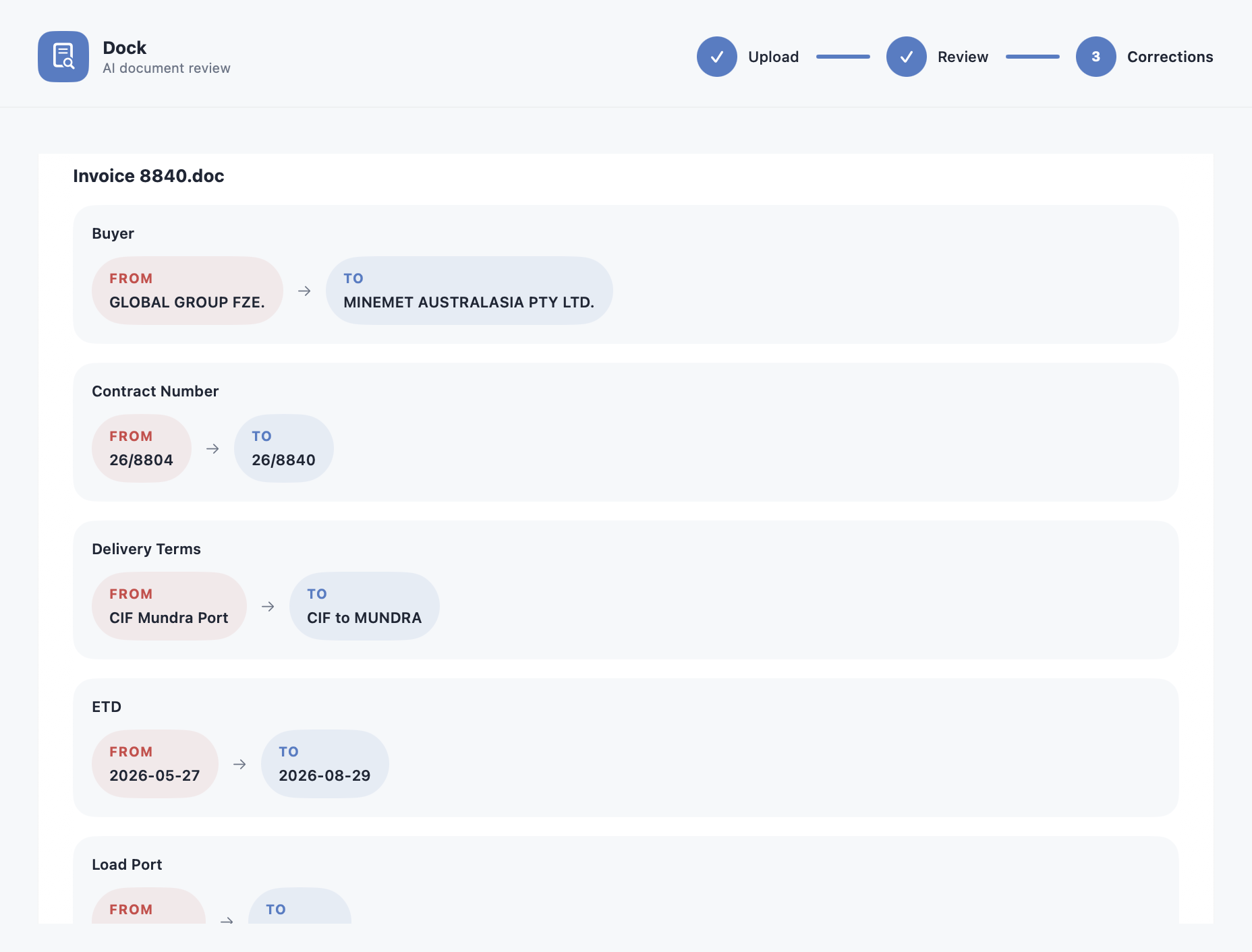
Dock compares completed logistics documents against trusted sources of truth. Users upload their source documents alongside the documents they have prepared. Dock identifies discrepancies between them and clearly shows the current value and expected value for each issue. Apple Intelligence then helps turn those discrepancies into concise, actionable corrections, so instead of reading through a lengthy report, the user can quickly see what needs to change and fix it. The goal isn't to replace the person preparing the documents, it's to give them a fast second check before anything is finalised.
How we built it
We built Dock as a native macOS application using Swift and SwiftUI, with a simple three-step workflow: Upload → Review → AI Corrections The user first uploads trusted source files and the documents they want to verify. Dock extracts relevant information from the files, compares the values and identifies discrepancies. For the AI component, we integrated Apple's Foundation Models framework and its on-device language model. Rather than asking AI to blindly determine whether an entire document is correct, Dock uses structured document comparison and then uses the model to turn the identified discrepancies into clear corrections. This approach also allows the AI processing to happen on-device, which is particularly valuable when working with documents containing sensitive commercial information.
Challenges we ran into
One of our biggest challenges was working with real logistics documents. Unlike our initial test data, real documents contain large amounts of information, inconsistent formatting and values represented differently across multiple sources. We also encountered the context-window limitations of the on-device model when processing too much document content at once. This pushed us to rethink our pipeline and reduce unnecessary information before passing relevant data to the model. Another challenge was deciding how the AI should communicate its results. Our first version generated detailed, conversational explanations. After getting feedback from our logistics team member, we realised that she didn't have time to read paragraphs. That feedback led us to redesign the experience around concise corrections and visual From → To comparisons.
Accomplishments that we're proud of
We're particularly proud that Dock was built around a real workflow and a real user, rather than starting with AI and searching for somewhere to use it. Within the hackathon, we were able to take that problem from an idea to a working native macOS prototype capable of processing real logistics documents, identifying discrepancies and using an on-device foundation model to help communicate the corrections. We're also proud that user feedback directly influenced the product. The final correction-focused interface is significantly different from our original AI-summary concept because we prioritised what would actually save our user time.
What we learned
One of our biggest lessons was that useful AI doesn't necessarily need to be the most visible part of a product. Initially, we focused heavily on what the AI could generate. As we developed Dock, we realised the better question was where AI could remove friction from an existing workflow. Working with an on-device foundation model also taught us to design around the capabilities and limitations of local AI rather than treating it like an unlimited cloud model. Most importantly, having teammate experiences this problem allowed us to continuously test our assumptions against a real use case.
What's next for Dock
Our prototype focuses on proving the core document-verification workflow, but the idea can go much further. Next, we'd like to expand support for more document formats and logistics templates, improve how Dock understands relationships between multiple sources of truth, and reduce false positives caused by harmless formatting differences. Longer term, Dock could integrate more closely with the tools logistics teams already use, automatically gather relevant source information, check multiple related export documents together and create a complete pre-submission verification workflow. The goal is simple: let people spend less time manually cross-checking documents and more time acting on the information that actually needs their attention.


Log in or sign up for Devpost to join the conversation.