-
-
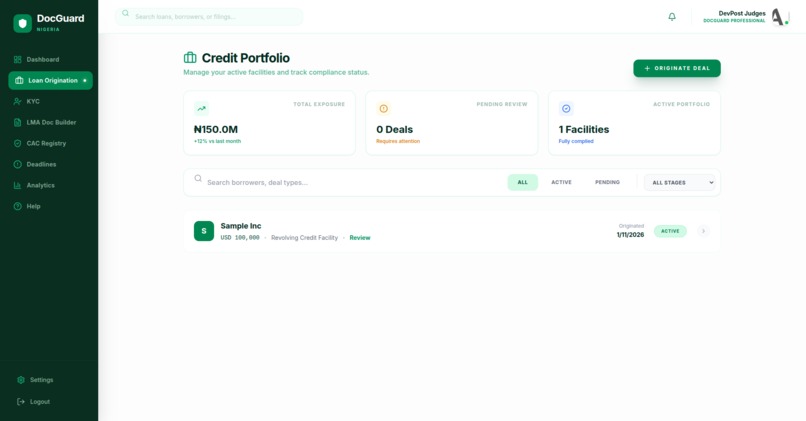
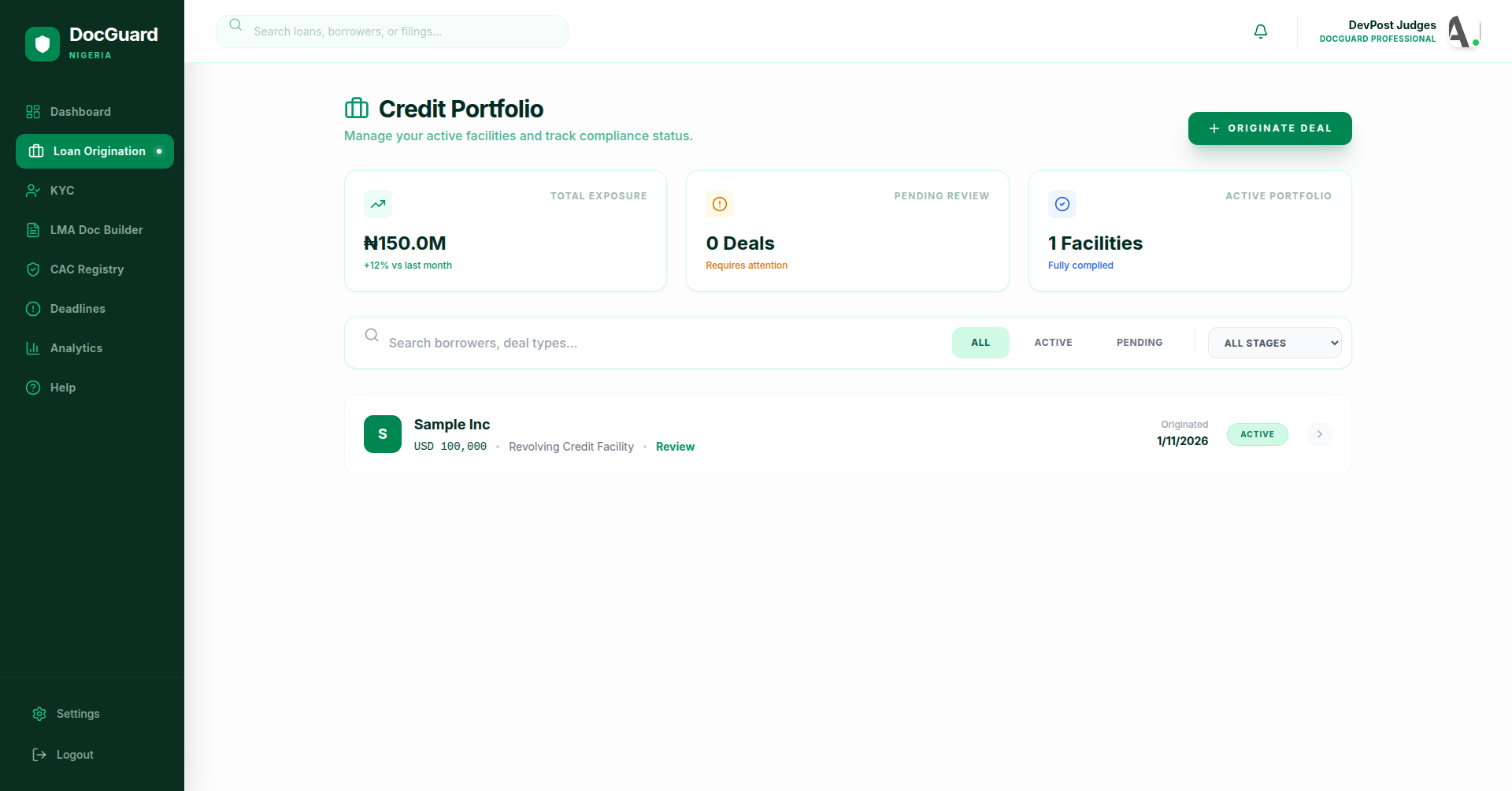
Loan Origination Dashboard
-
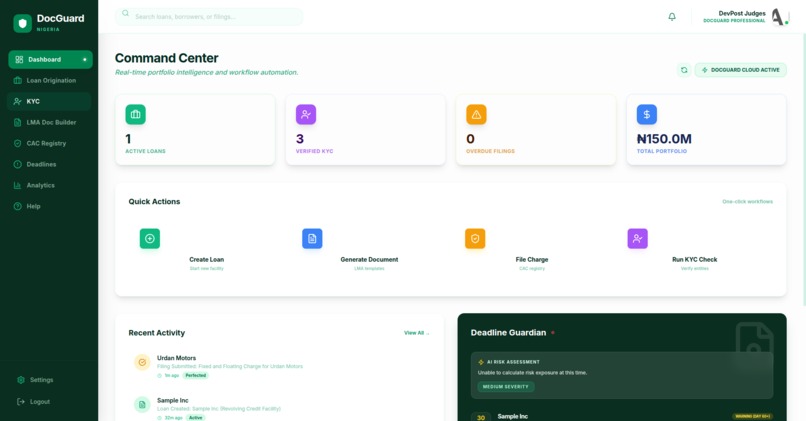
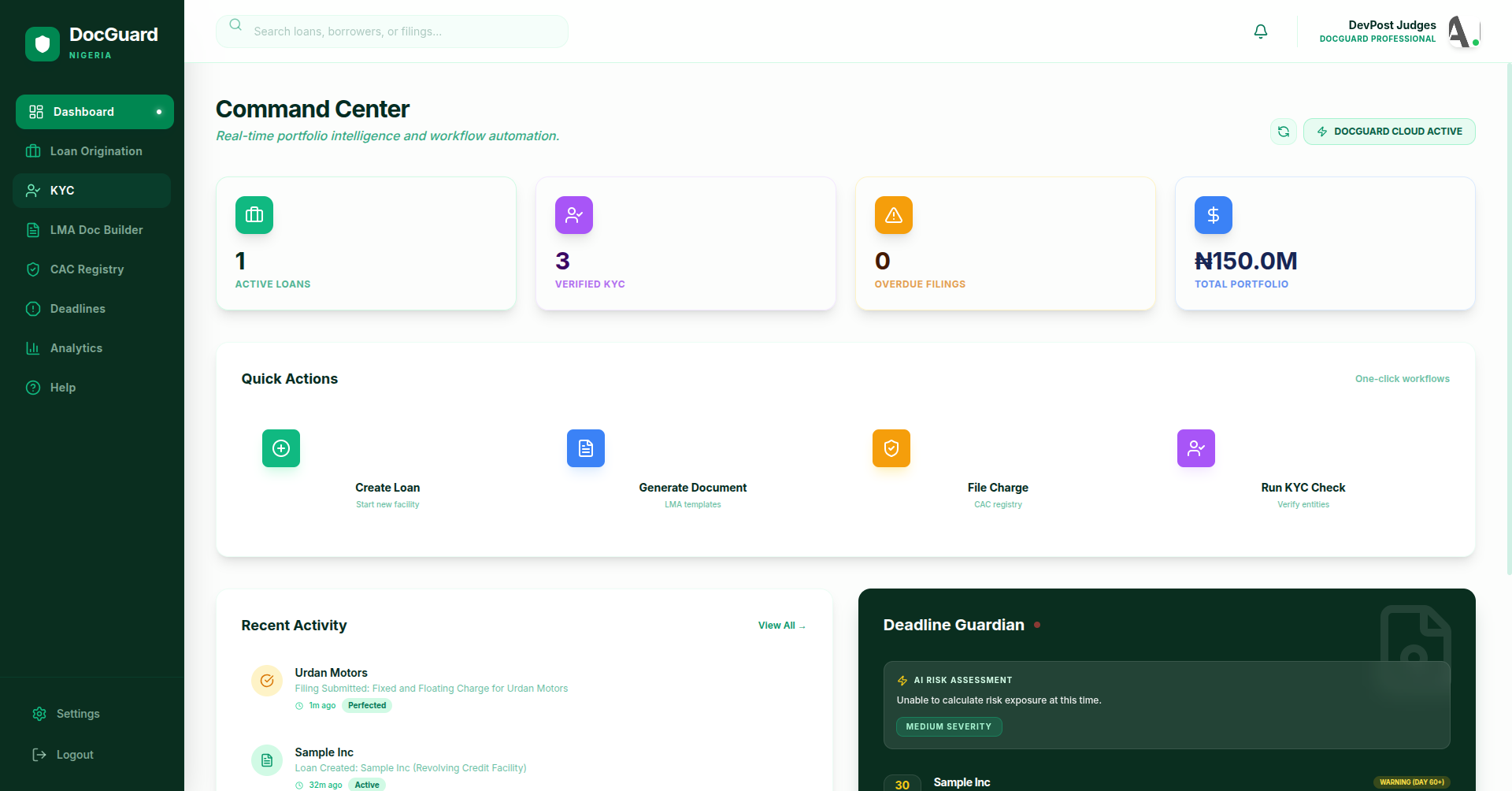
DocGuard Dashboard
-
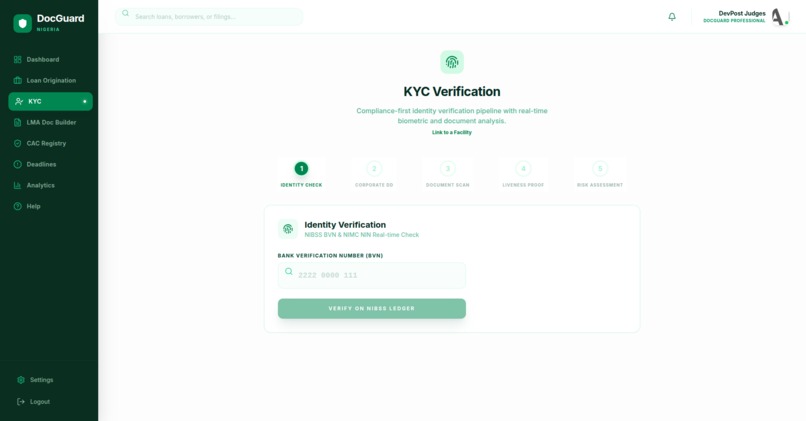
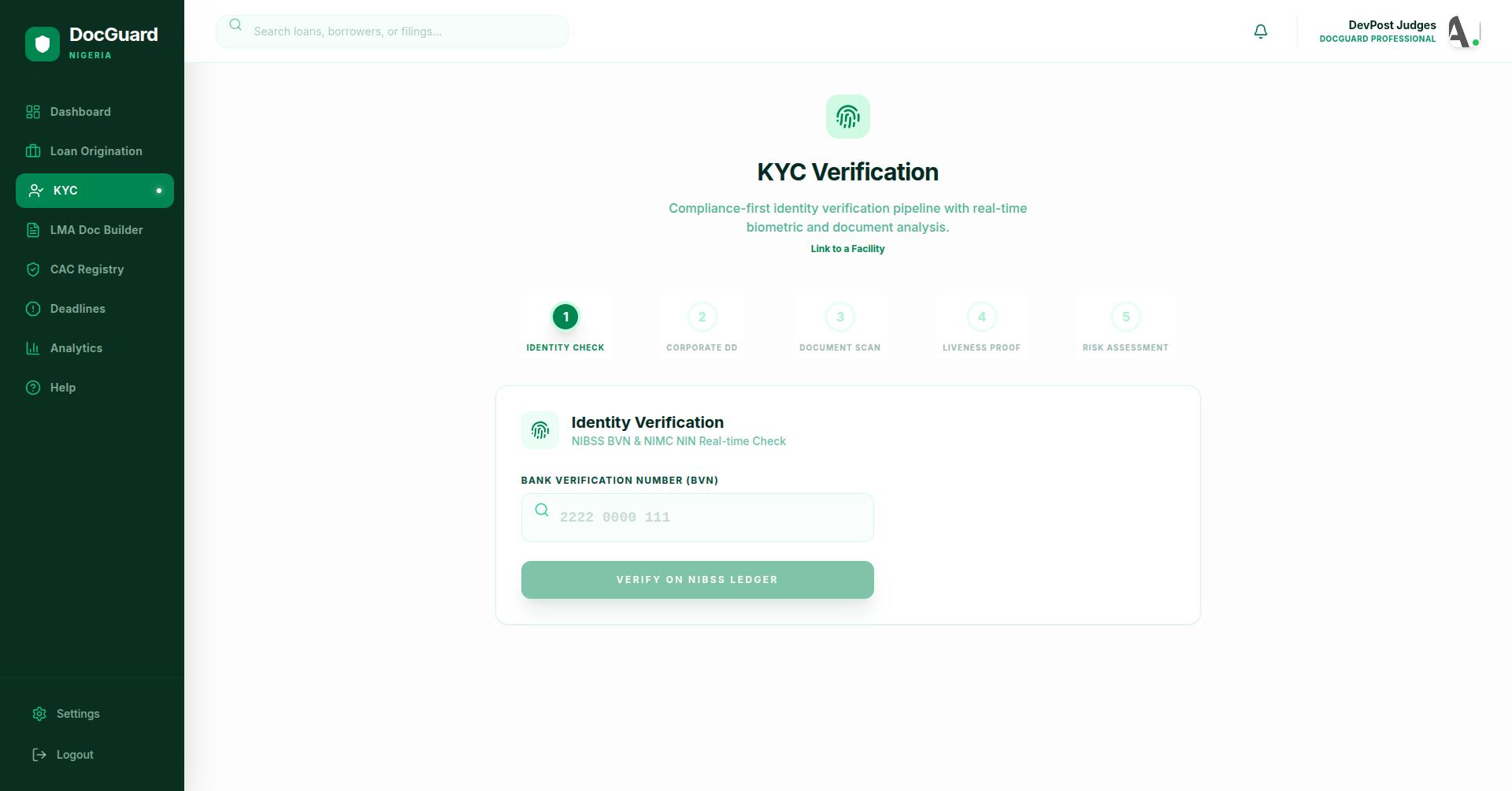
KYC Verification Dashboard
-
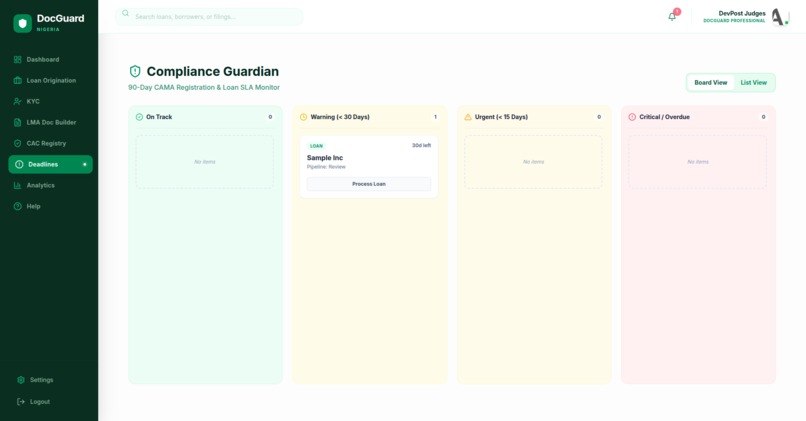
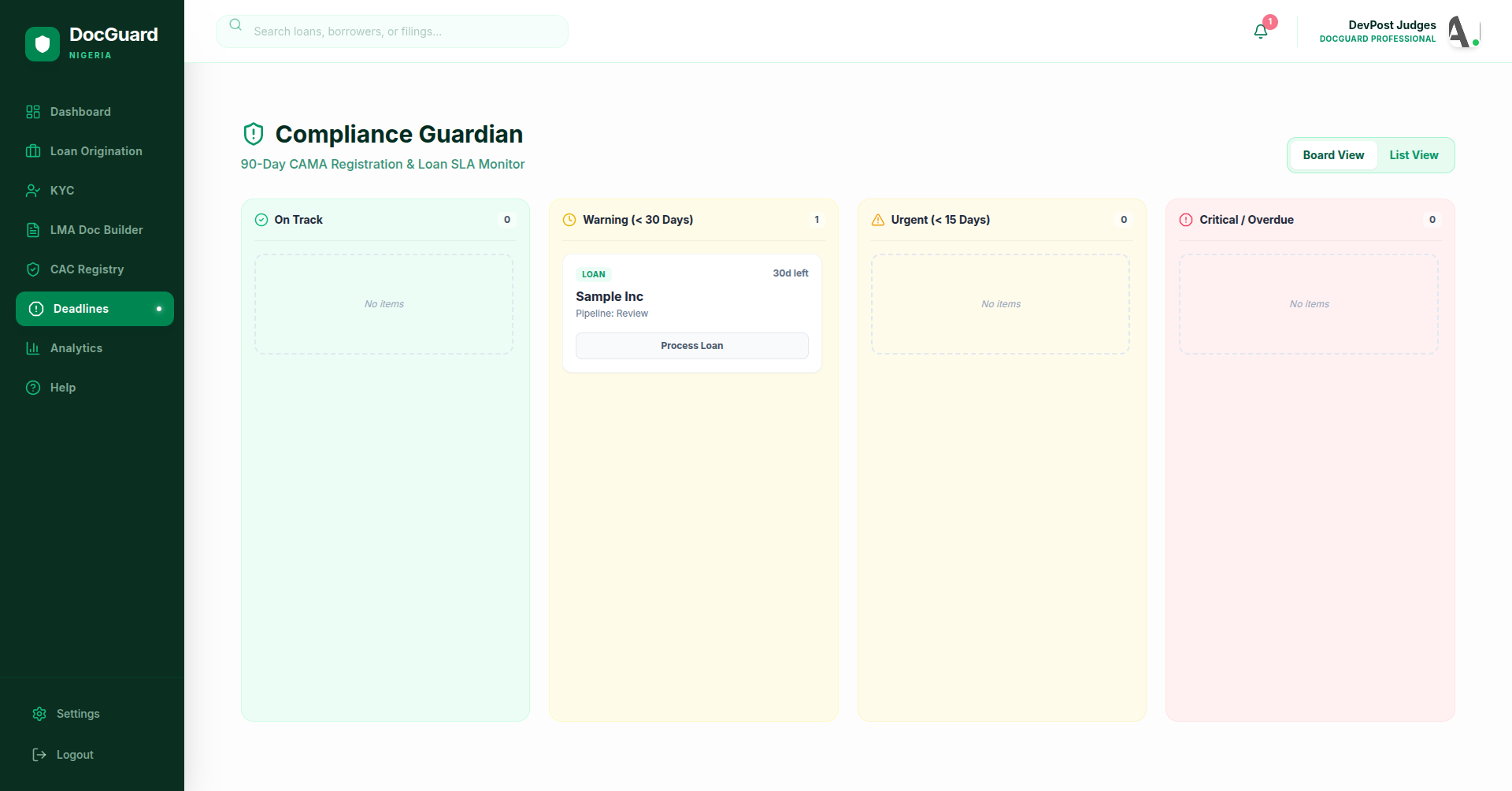
Dedicated Deadline Dashboard for Loan Deadline Tracking
-
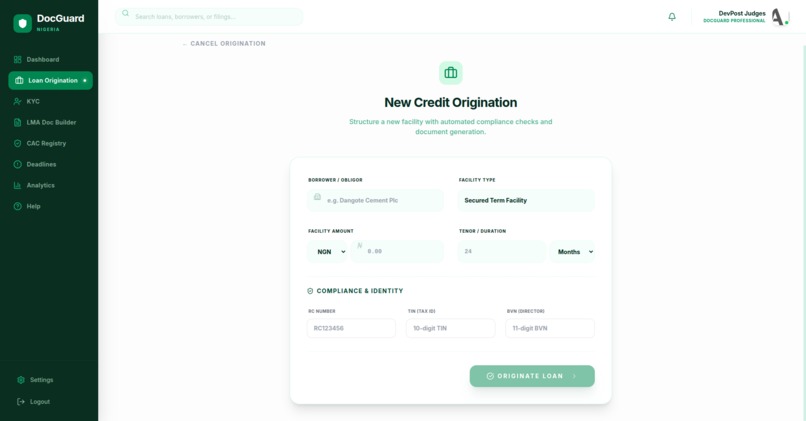
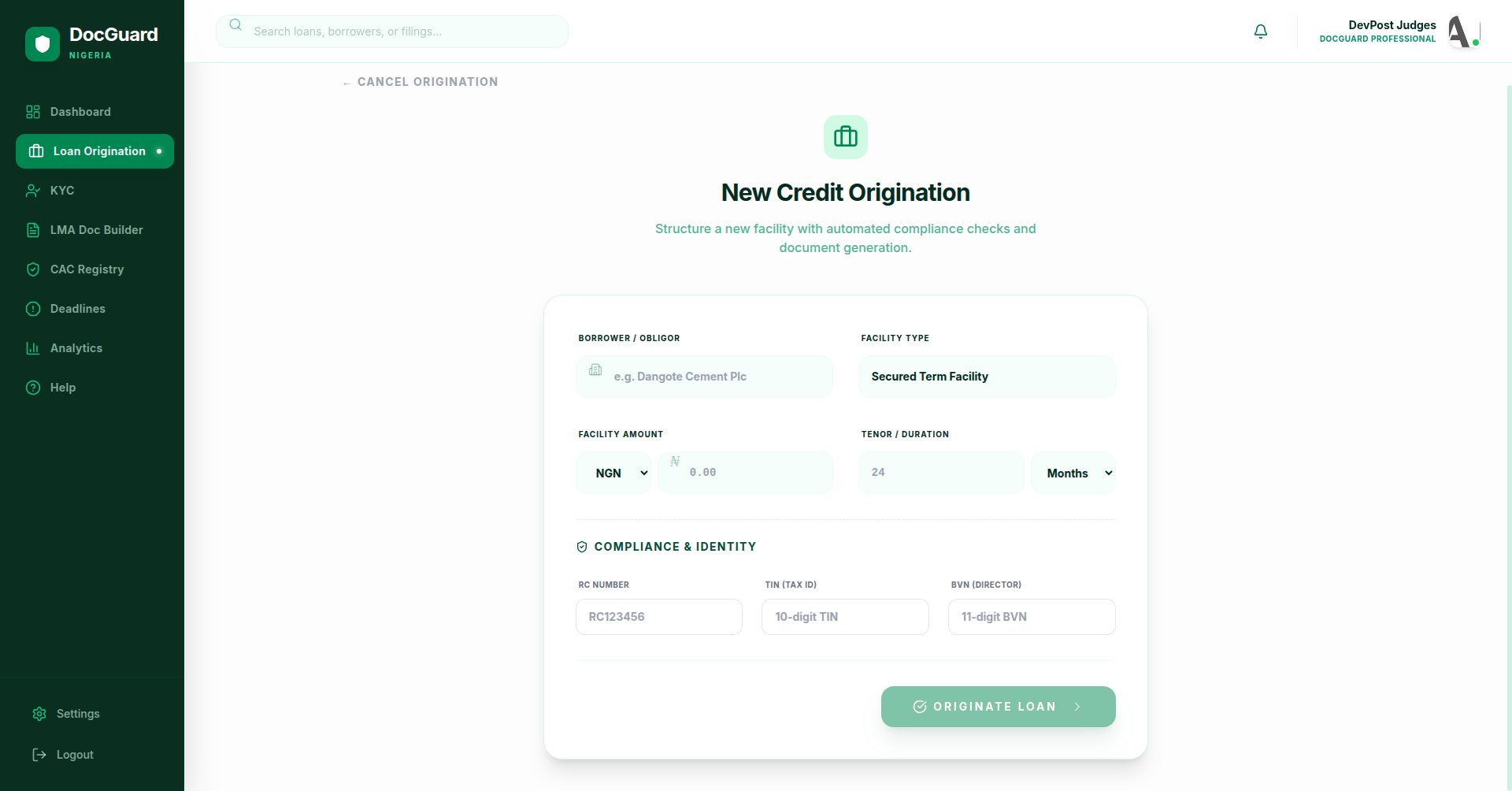
Orination Form
-
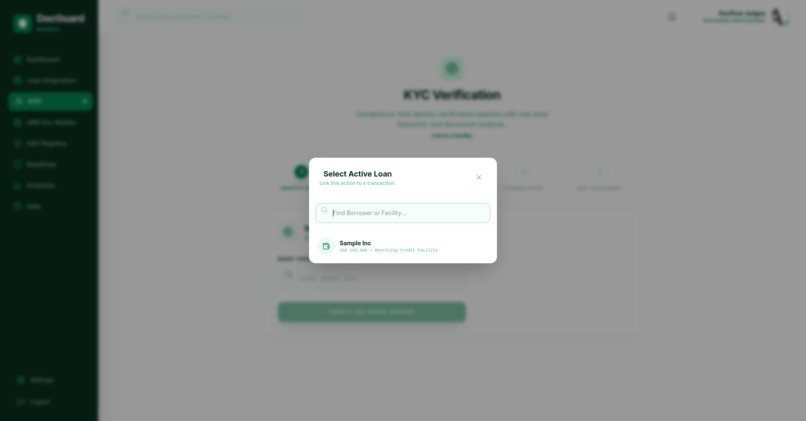
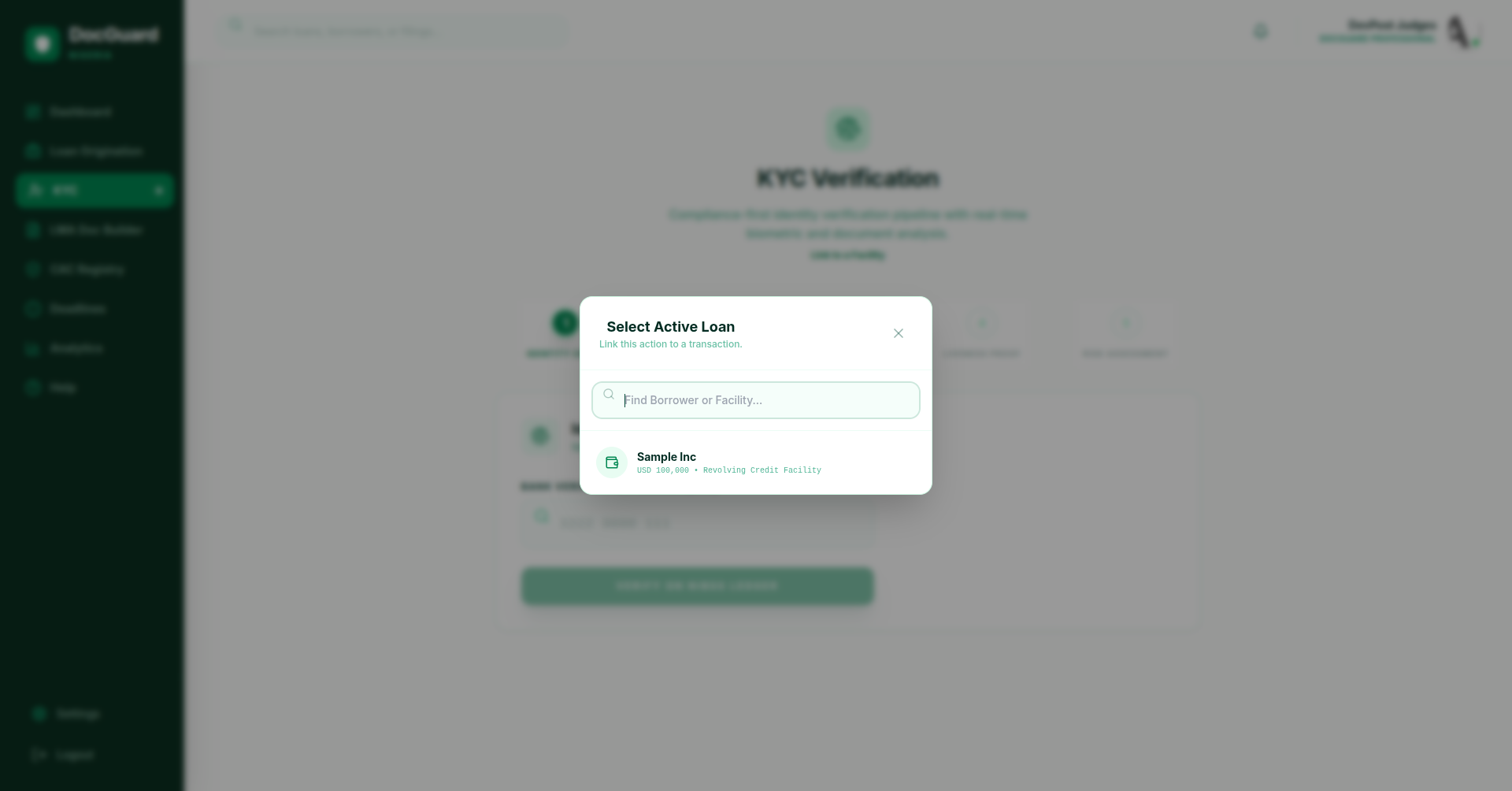
KYC Link Facility/Loan Modal
-
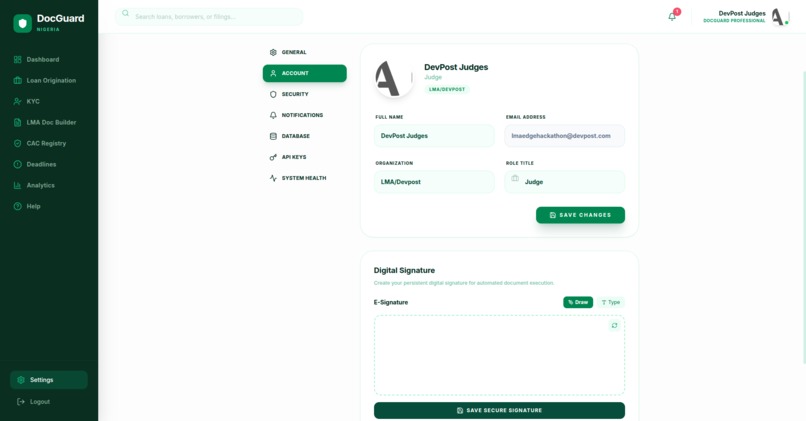
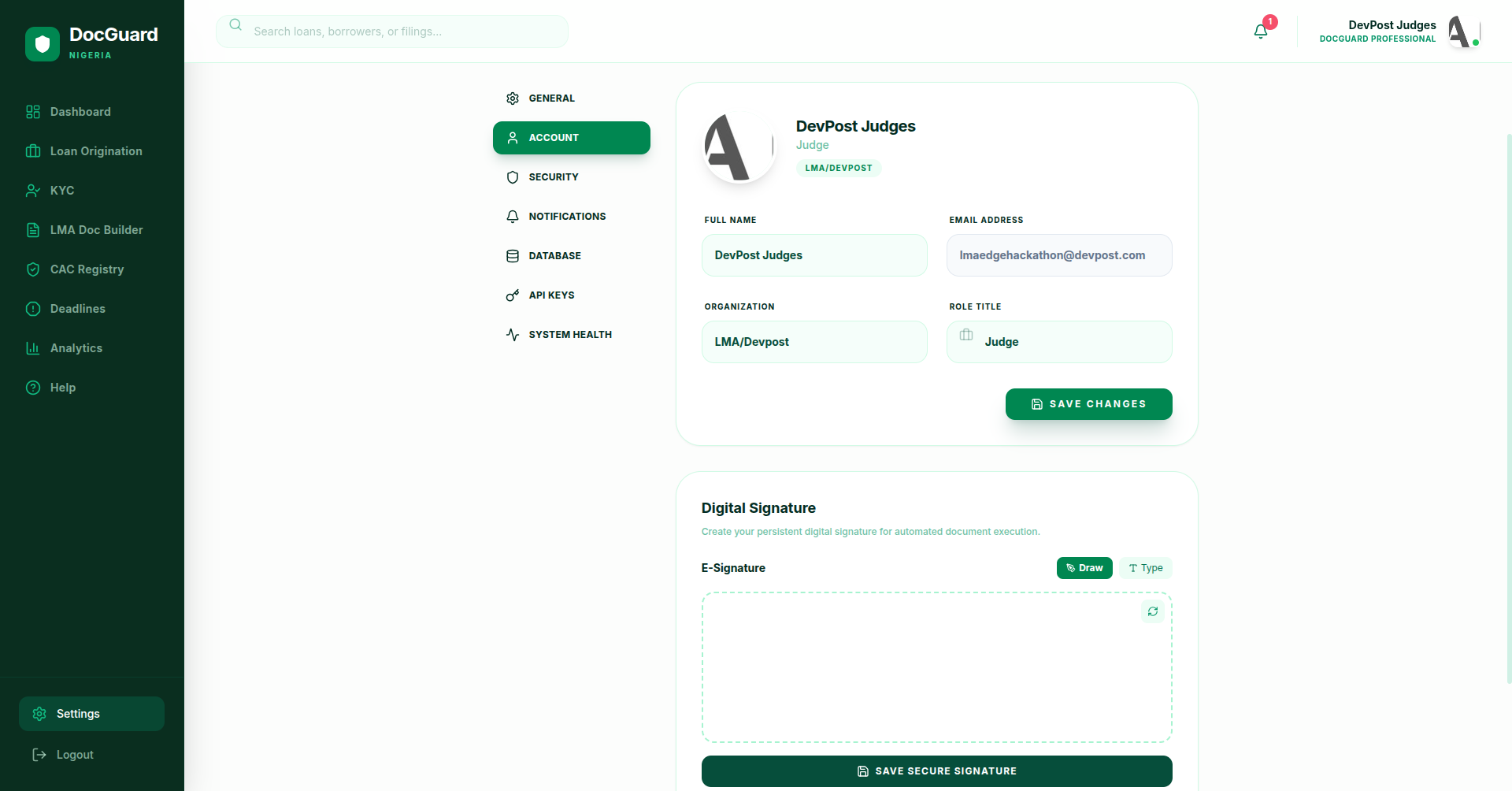
User Profile Setting
-
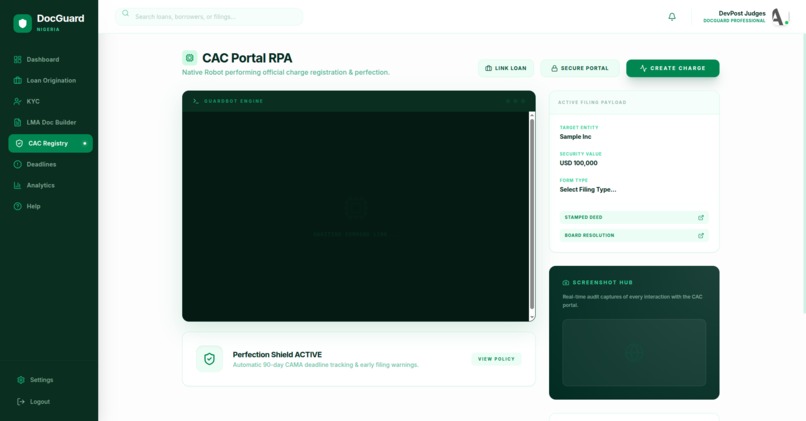
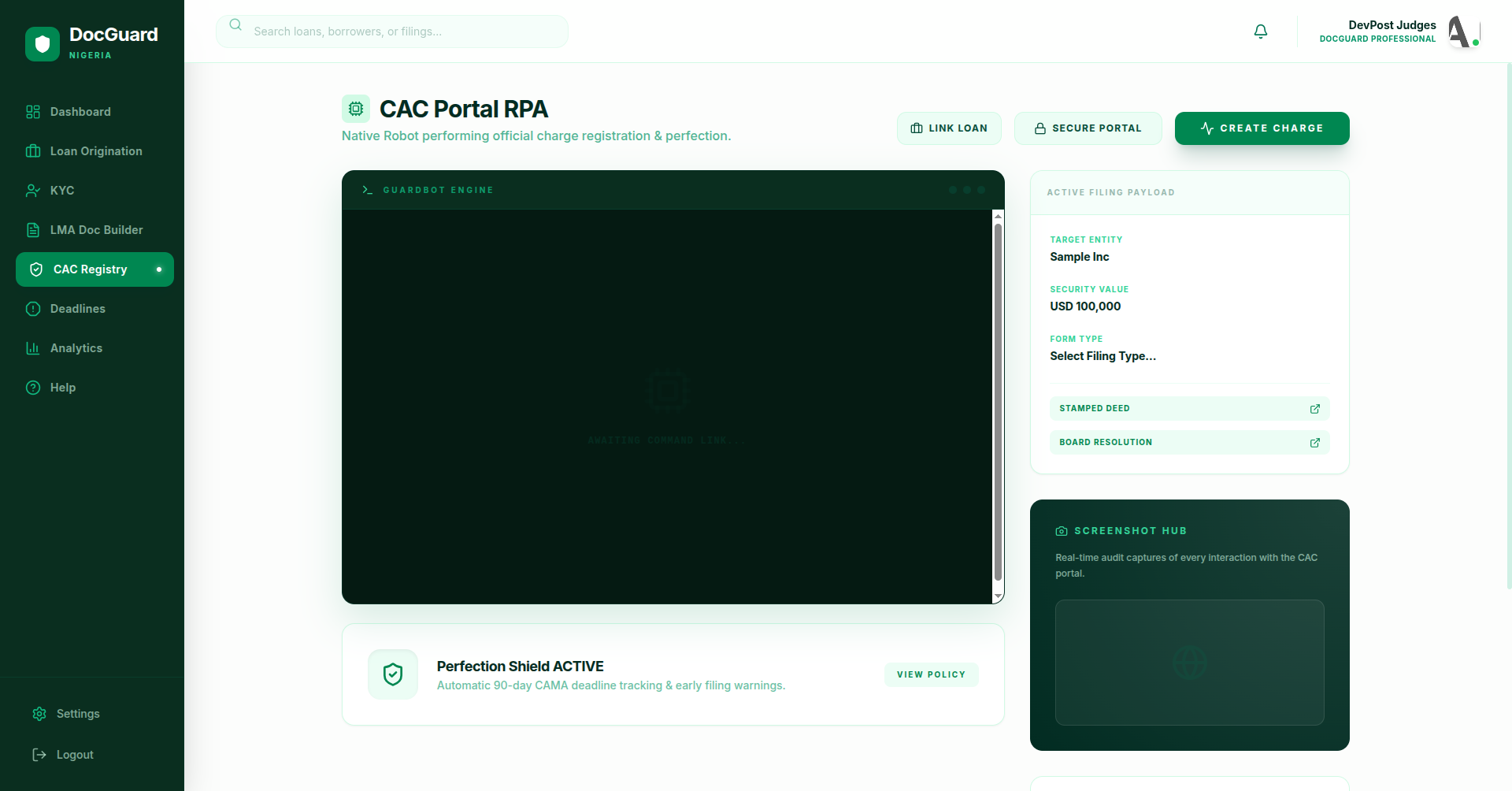
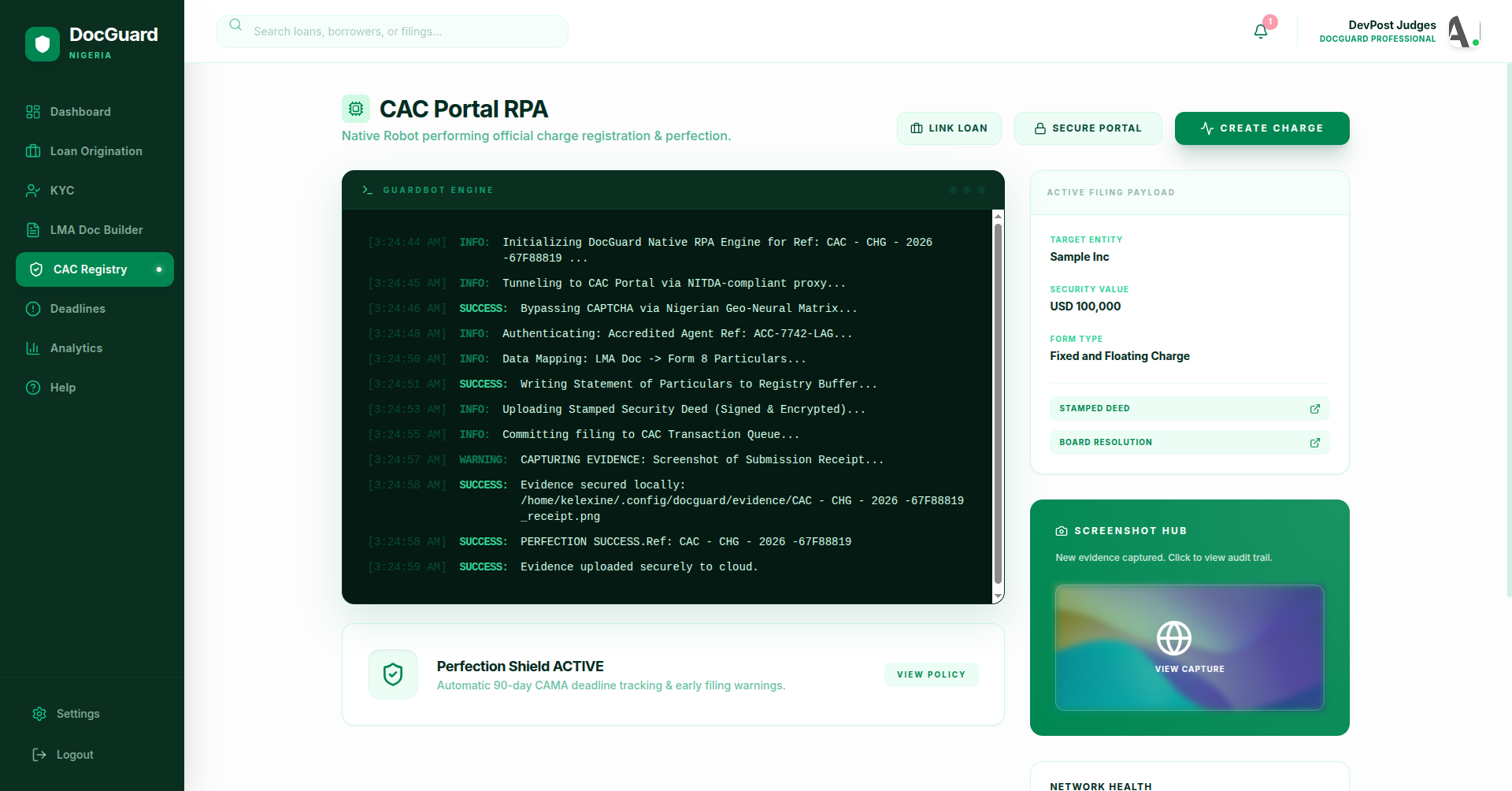
CAC Registration Portal with active Loan Linked
-
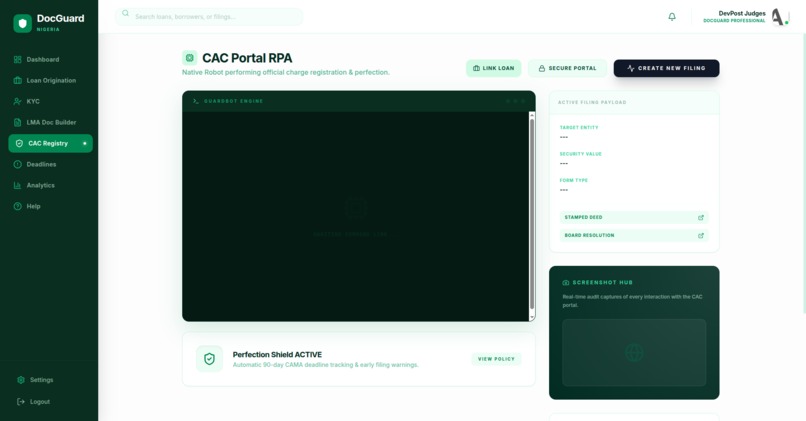
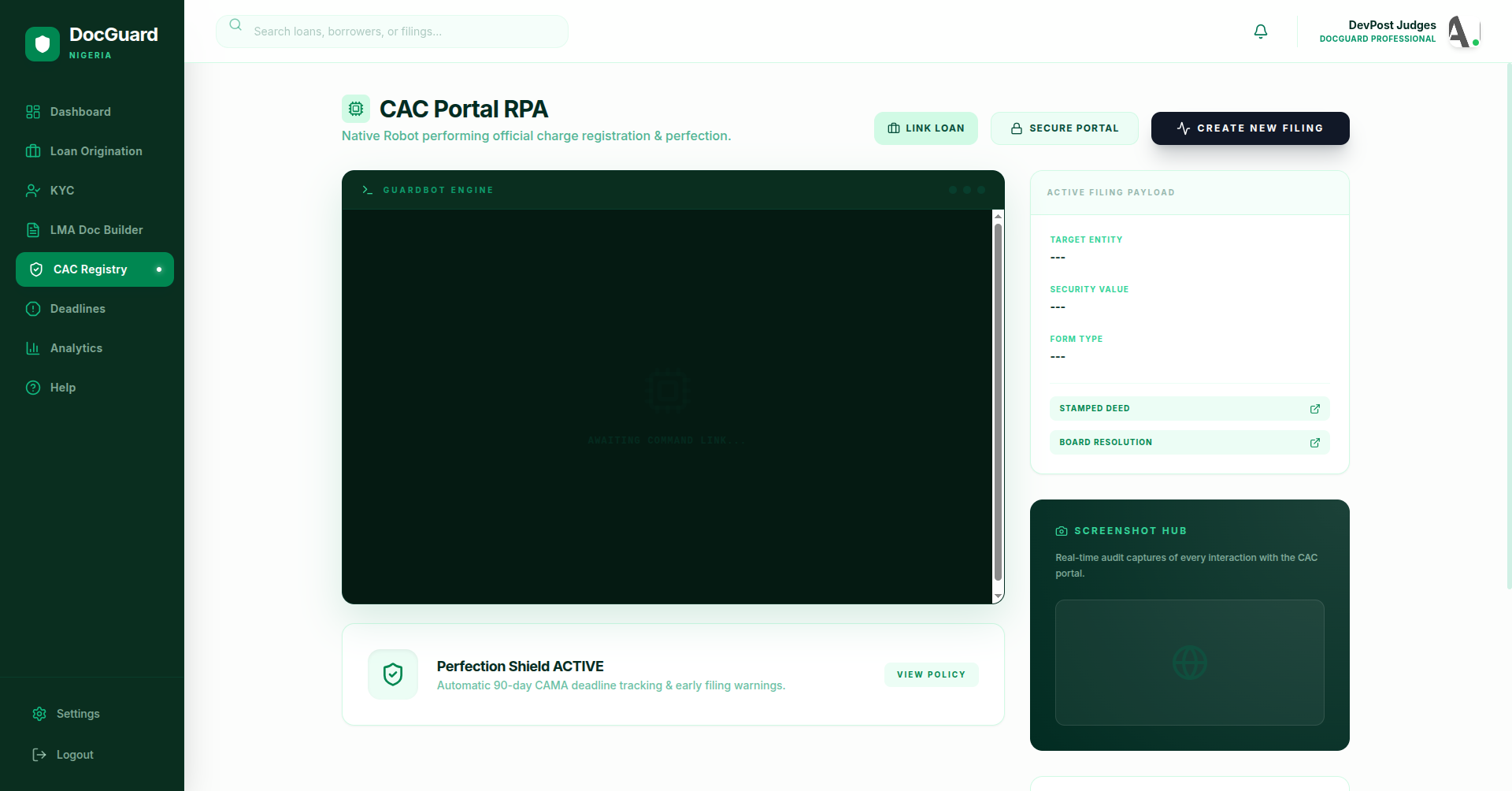
CAC Registration Portal
-
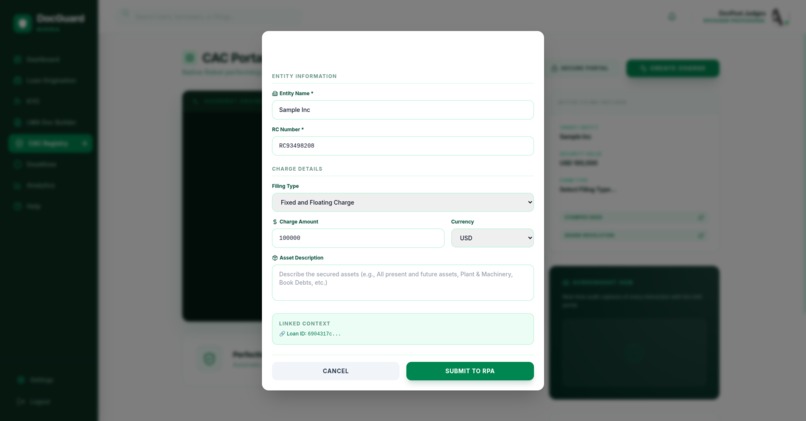
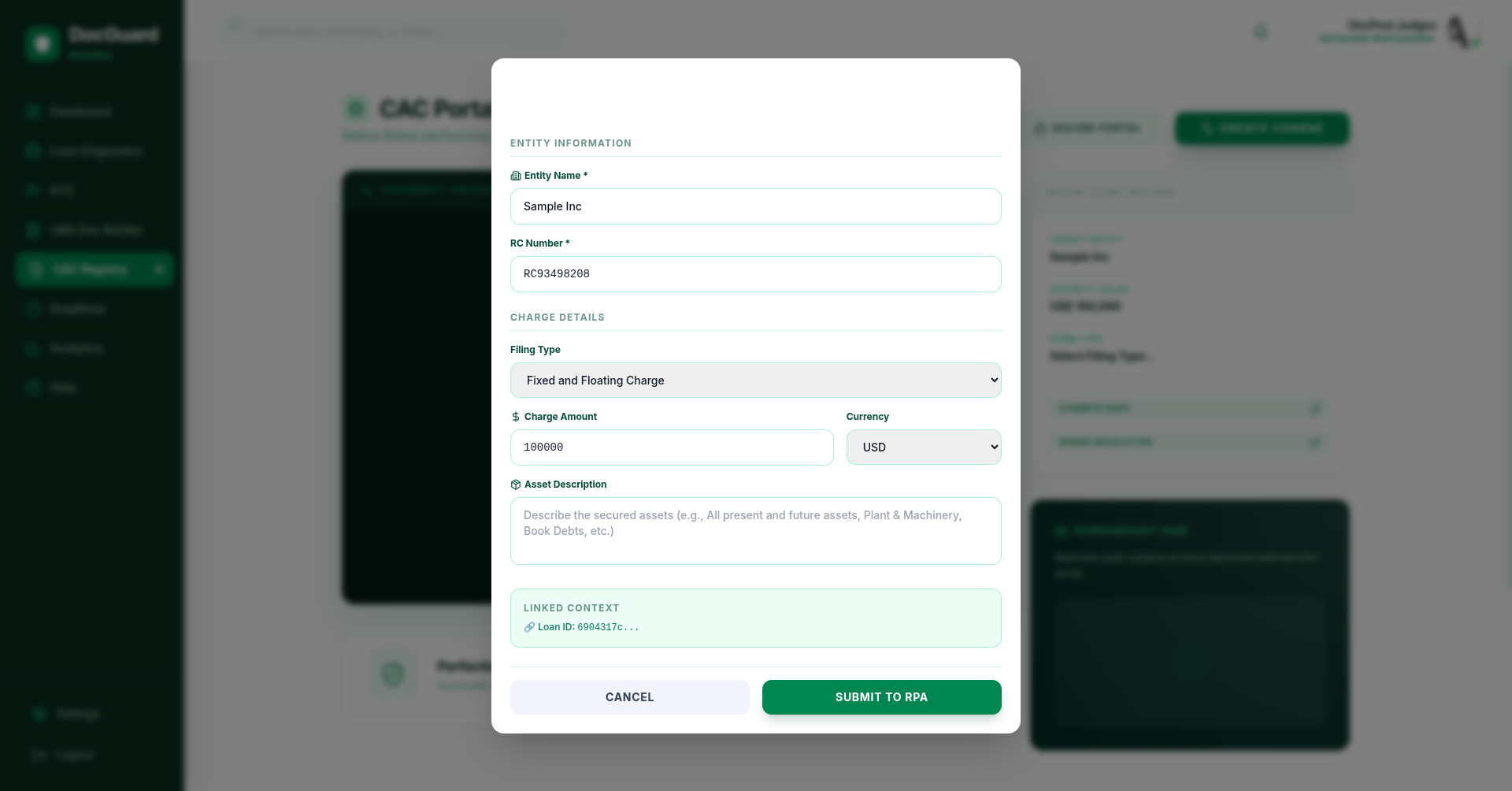
CAC Restry Form with auto Entity data fill via "Linked Loan"
-
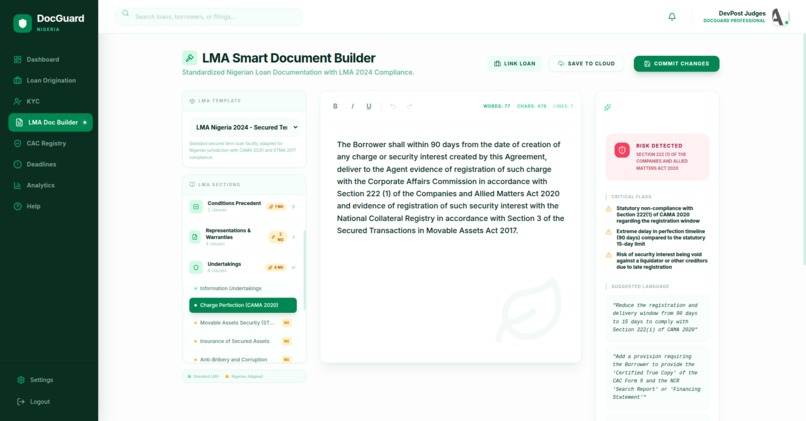
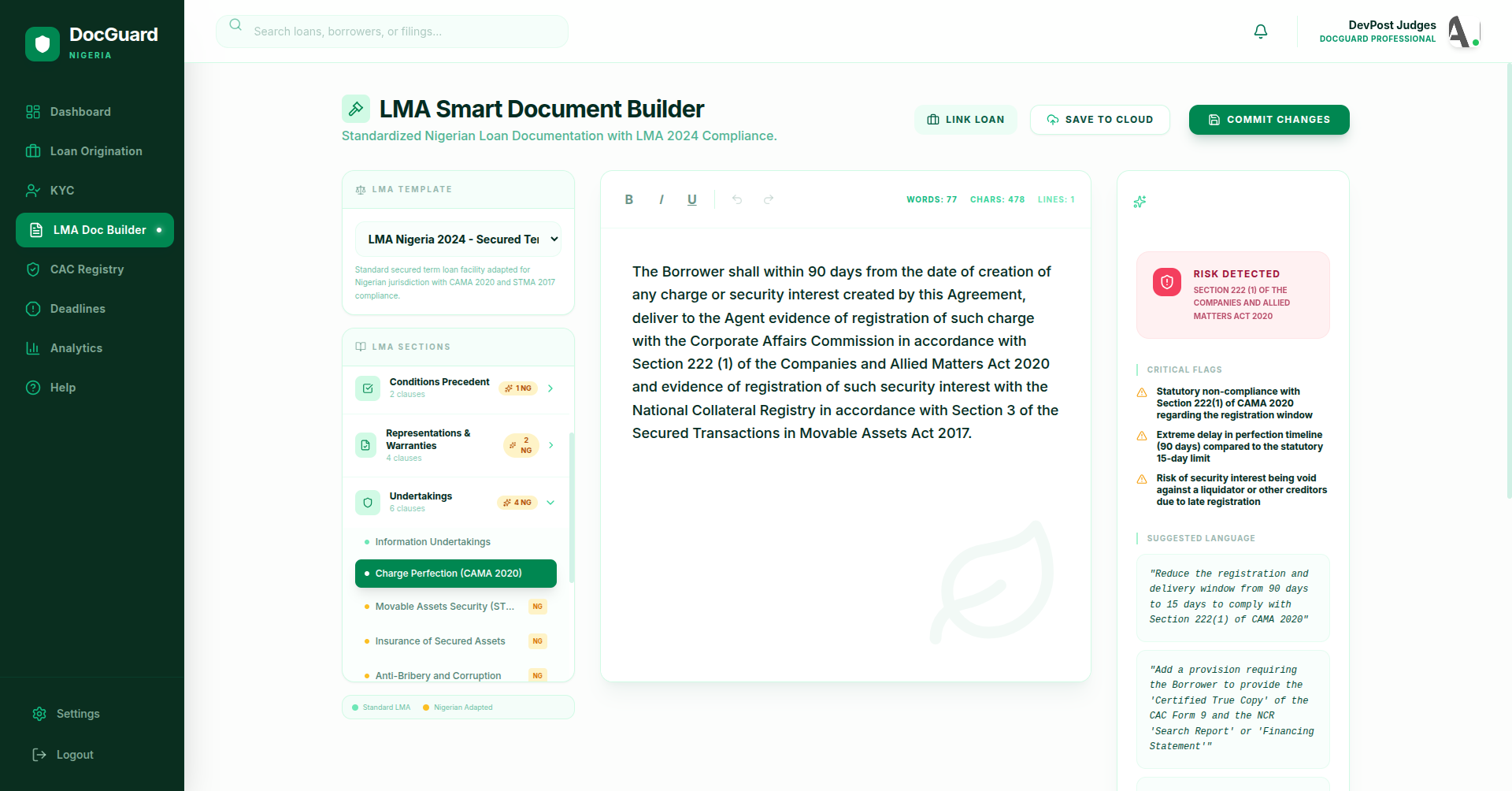
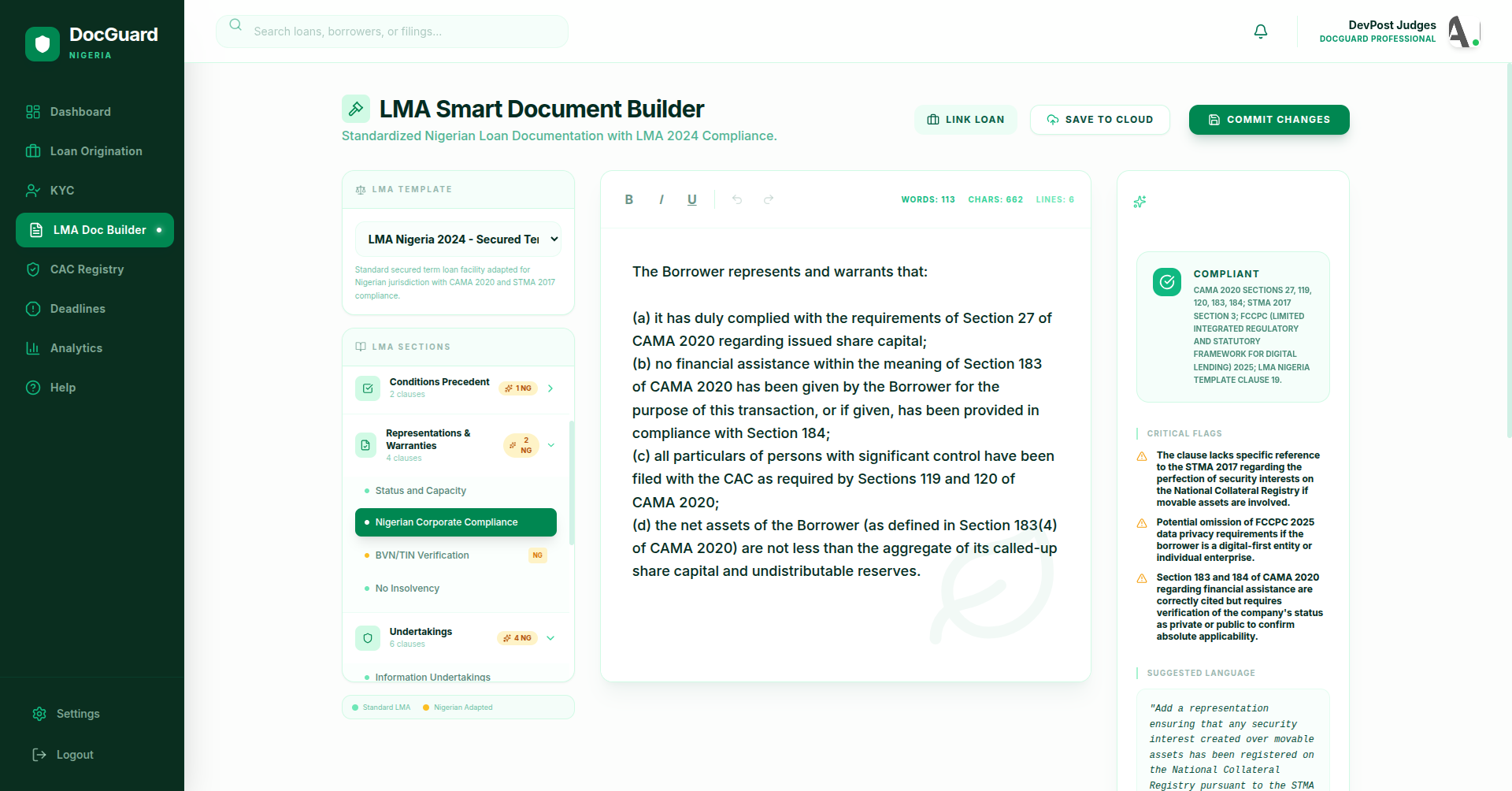
Smart Doc Builder showing Negative AI analysis
-
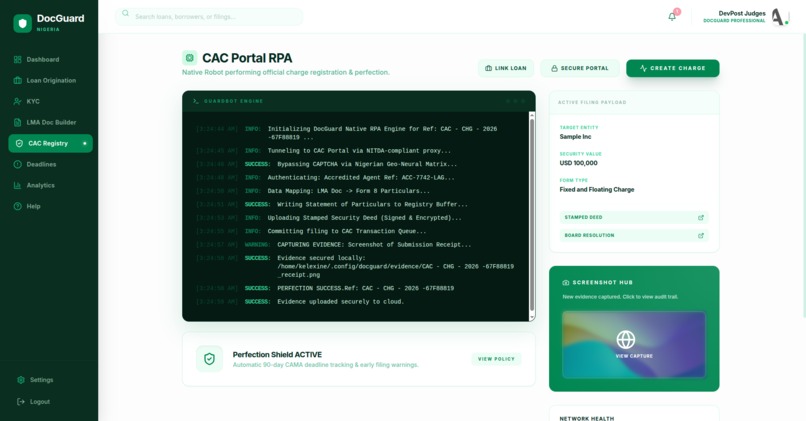
Successful CAC Restry
-
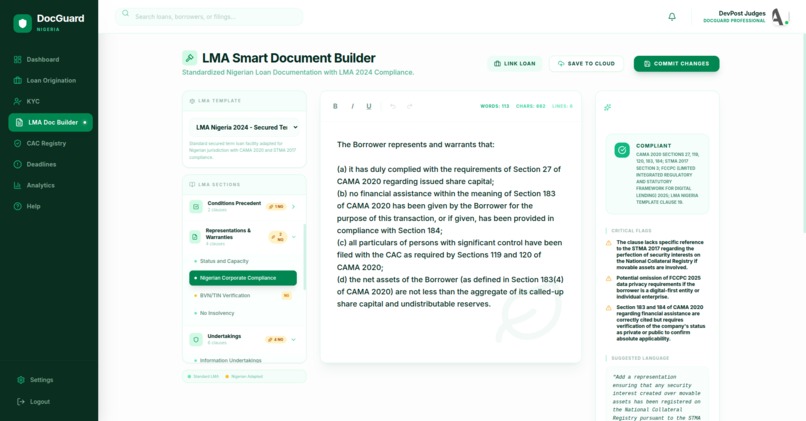
Smart Doc Builder showing Positive AI analysis
DocGuard (Nigeria)
Inspiration
In Nigeria's ₦15 trillion corporate lending market, time kills deals. A single syndicated loan involves 3+ weeks of LMA template adaptation, manual CAC charge registration delaying disbursement by 14-21 days, and siloed KYC checks across NIMC, NIBSS, and Credit Bureaus.
We witnessed banks lose millions in opportunity cost while lawyers manually perfected charges at the Corporate Affairs Commission. DocGuard was born from a simple question: "What if AI could draft, perfect, and verify a loan in hours, not weeks?"
What it does
DocGuard is a desktop-native command center for Nigerian loan officers that combines:
- LMA Smart Document Builder: AI-powered editor adapting international LMA templates to Nigerian law with Gemini-powered clause analysis, one-click lender-favorable rewrites, and smart variable detection
- CAC Registry Bot: Simulated RPA engine demonstrating automated charge perfection with real-time terminal logging and native OS notifications
- KYC Orchestrator: Modular identity verification pipeline with NIN/BVN verification, AI document scanning, liveness detection, and composite risk scoring
How we built it
| Layer | Technology |
|---|---|
| Frontend | React 19 + TypeScript + Tailwind CSS |
| Desktop Shell | Electron 39 with secure IPC |
| AI Engine | Google Gemini API (@google/genai) |
| Charts | Recharts for portfolio visualization |
| Build System | Vite + esbuild + electron-builder |
| Auth | Supabase (OAuth 2.0 ready) |
We chose desktop-first architecture because banks require local data sovereignty—Electron enables offline drafting and secure filesystem access.
Challenges we ran into
ESM vs CommonJS Hell: Electron's main process conflicted with
"type": "module". The bundler wrappedrequire("electron")incorrectly, causingapp.whenReady()to be undefined. Solution: Switched to esbuild with--format=cjsand.cjsfile extensions.Tailwind v4 @apply Opacity: Tailwind v4's new architecture broke
@applydirectives with opacity modifiers. Solution: Replaced with standard CSS for glassmorphism utilities.Packaged App Path Resolution:
__dirnamedidn't resolve correctly in packaged apps. Solution: Usedapp.getAppPath()for correct file paths.
Accomplishments that we're proud of
- Built a fully functional desktop app that launches and runs from an AppImage or Windows executable (.exe)
- Integrated Google Gemini AI for intelligent clause analysis and rewriting
- Created a beautiful glassmorphism UI that looks premium and professional
- Implemented native Electron features: system notifications, shell integration, PDF export
- Built a modular KYC pipeline ready for real API integration
What we learned
- Electron packaging is fragile: ESM/CJS interop, external modules, and asset paths require meticulous configuration
- AI can't replace lawyers (yet): Gemini excels at suggestions, but human review remains critical for legal documents
- Nigerian fintech has massive potential: The pain points we addressed are real—banks are hungry for automation
- Desktop apps still matter: For sensitive financial workflows, local processing and offline capability are crucial
What's next for DocGuard (Nigeria)
- Real CAC API integration (requires accreditation)
- NIBSS BVN/NIN verification sandbox integration
- Multi-party document collaboration (borrower/lender split view)
- Mobile companion app for KYC on the go
- Integration with Nigerian commercial banks' core banking systems
Built With
- electron
- gemini
- node.js
- react
- supabase
- tailwind
- typescript
- vite


Log in or sign up for Devpost to join the conversation.