-
-
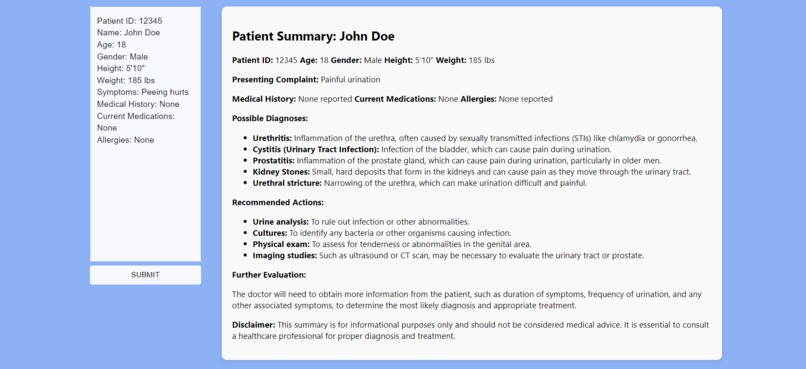
Final iteration of DocDoc interface
-
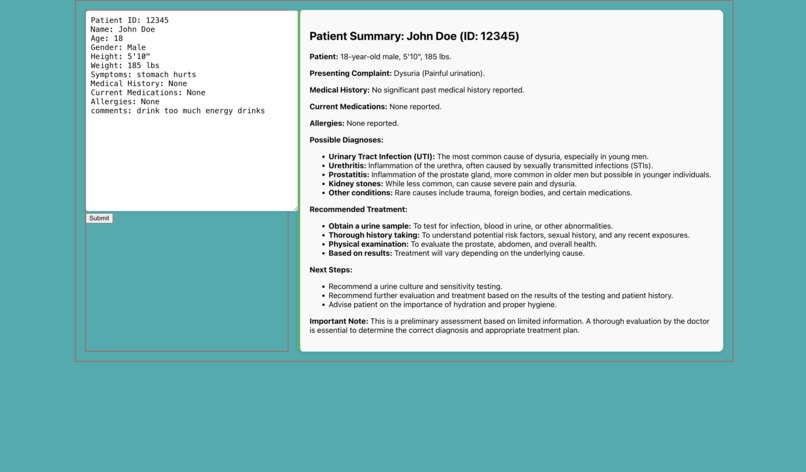
Iteration 1 of DocDoc Interface
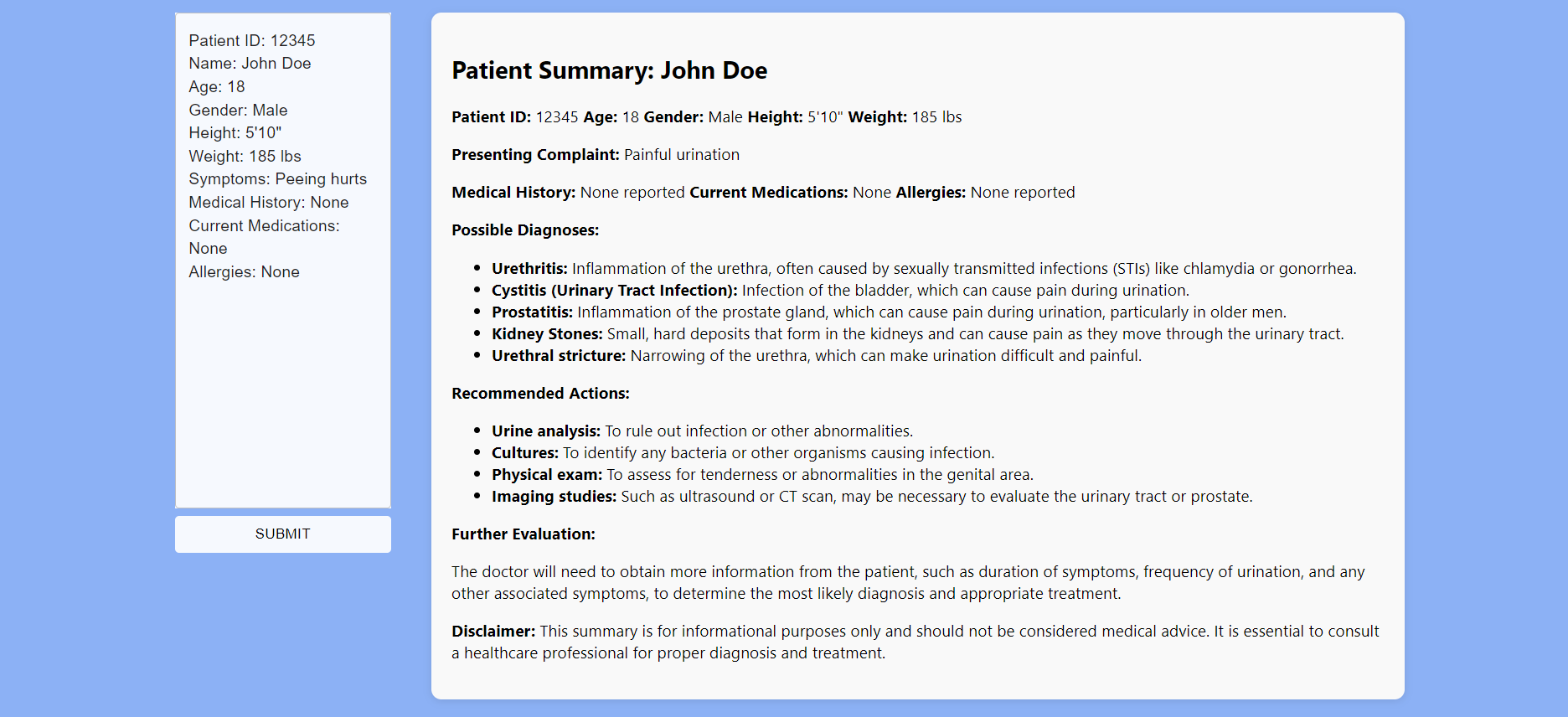
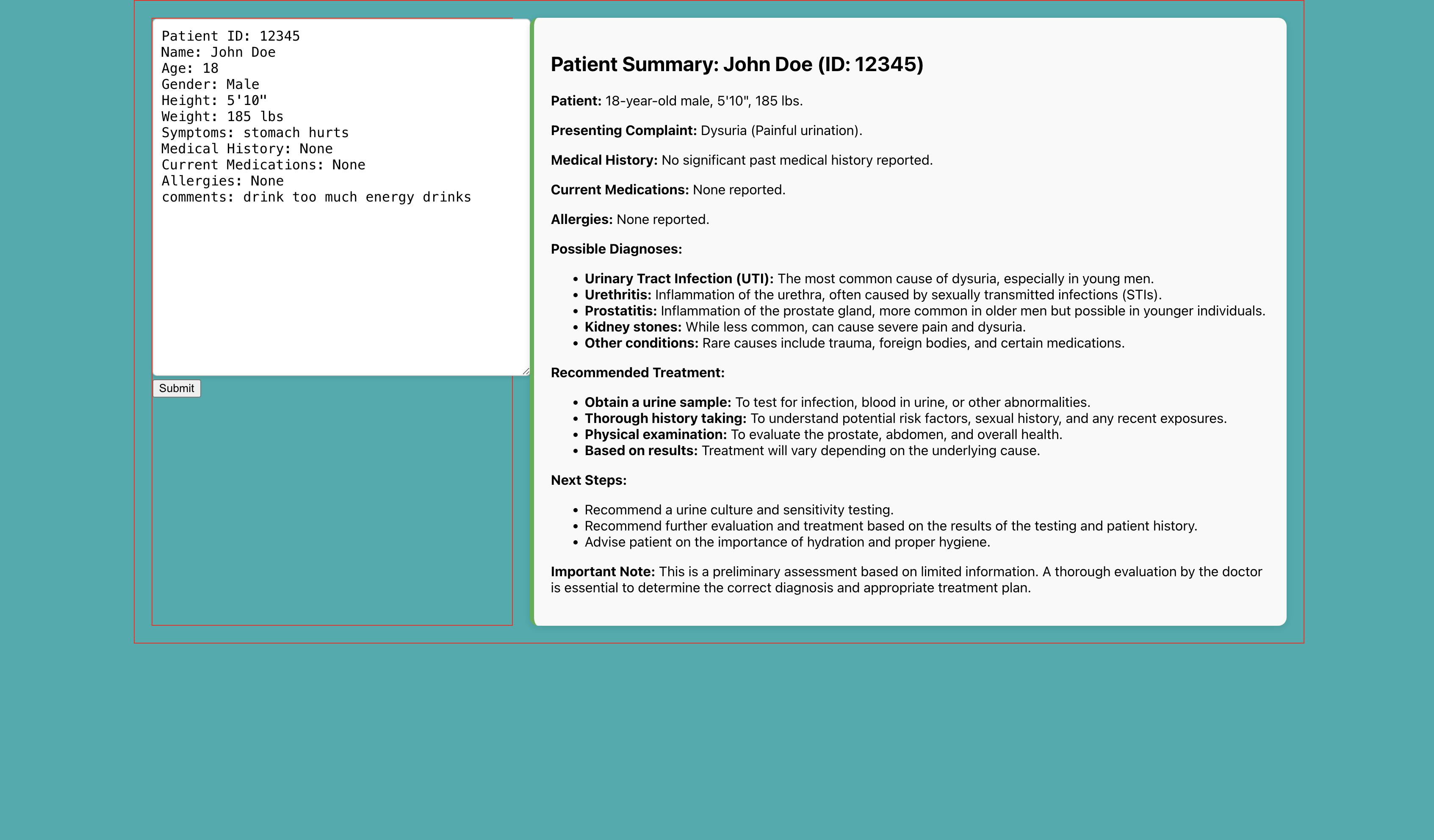
Inspiration
Since Jeron studied parts of pre-nursing, He came up with the idea of creating an AI assistant to provide doctors an easier time with paperwork and concluding patient's prescription and treatment.
What it does
DocDoc is an AI-powered assistant that helps doctors quickly review and analyze patient medical histories. By text medical history or audio recording of medical interactions, the AI provides a comprehensive summary that includes personal information, medical history, reason for the visit, and the AI can help doctors reach a conclusion.
How we built it
We built DocDoc using Python, Flask for the backend, and integrated Google’s Gemini API for natural language processing. The AI reads and interprets medical documents, then generates a summarized report. We used frontend tools, like React, to create a simple and intuitive interface for doctors to upload files and receive AI-generated insights. For secure key management, we utilized .env files and python-dotenv for environment variables.
Challenges we ran into
One of the biggest challenges was accurately extracting relevant data from medical documents with varying formats, especially when getting the front and back end to communicate with each other. We also faced difficulties with the initial API integration and ensuring the AI output was clear, concise, and medically relevant.
Accomplishments that we're proud of
We are proud to have successfully integrated AI technology to streamline a traditionally cumbersome process. The AI’s ability to accurately summarize patient data and provide useful suggestions is a significant achievement. We also created a user-friendly interface that is easy for medical professionals to navigate.
What we learned
Through this project, we learned how to work with AI APIs, manage API keys securely, and handle document processing in an efficient manner. We gained deeper insights into natural language processing, especially in the context of specialized fields like healthcare. Additionally, we learned the importance of iterative testing and proper prompts to fine-tune AI responses for accuracy.
What's next for DocDoc
In the future, we plan to enhance DocDoc by incorporating a wider range of AI capabilities, including voice-to-text integration for verbal doctor notes and more advanced diagnostic support. We also aim to implement machine learning models that improve based on doctor feedback, allowing the AI to adapt and become more effective over time. In addition, we hope to add user models and a database to save patient's information.

Log in or sign up for Devpost to join the conversation.