💡 Inspiration
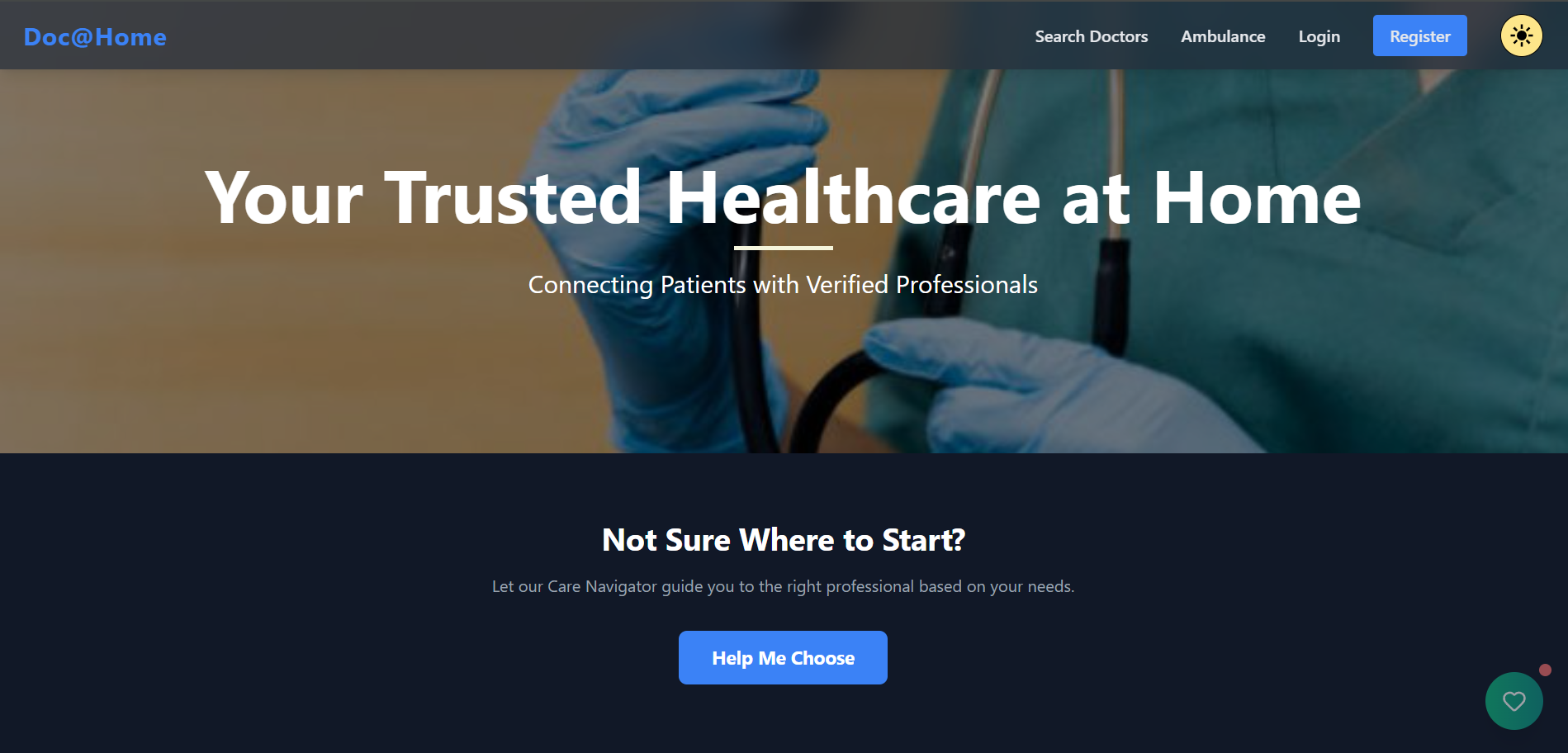
The inspiration for Doc@Home came from observing a significant, dual-sided problem in India's healthcare system. On one side, I saw family members and elders struggle with the stress and difficulty of traveling to clinics for non-emergency medical care. On the other, I learned about the vast number of skilled MBBS graduates, nurses, and technicians who are underemployed and looking for dignified, flexible work.
I realized there was no single, trusted platform to bridge this gap. My vision was to create more than just a booking app—I wanted to build an ecosystem that could empower this hidden workforce while delivering high-quality, accessible healthcare to patients in the comfort of their homes.
🚀 How I Built It
As a solo developer, I built Doc@Home as a full-stack MERN application. My process was methodical and feature-driven:
Backend First (The Foundation): I started by building the "engine" with Node.js and Express.js. My first major task was designing the Mongoose schemas, especially the flexible
Usermodel to handle different roles (Patient, Doctor, Nurse, Admin). I then implemented a secure, JWT-based authentication system from scratch to manage user sessions and protect API routes.Frontend (The Experience): With the core APIs in place, I moved to the frontend, building a responsive Single-Page Application (SPA) with React.js and Vite. I chose Tailwind CSS to create a custom, professional dark-themed UI without being limited by pre-made templates. I focused on building reusable components like dashboards and cards to keep the code clean and scalable.
Connecting the Stack: The most crucial phase was making the frontend and backend communicate seamlessly using Axios. I created a centralized API layer on the frontend to manage all data requests, which made debugging much easier.
Advanced Features: As the foundation became solid, I integrated more complex features, including a full booking and appointment management system, and planned for AI-powered enhancements like a "Smart Triage Navigator" to guide patients to the right specialist.
🧠 Challenges I Faced
Building a full-stack application solo was a tremendous challenge. The biggest hurdle was debugging issues that spanned the entire stack. A bug could be in the React state, the API call, the Express route, the controller logic, or the database query. I vividly remember the "CORS error" that blocked my live deployed site for days. Solving it taught me an invaluable lesson about how browsers, frontend servers (Netlify), and backend servers (Render) interact in a real-world production environment. Managing the complex state for the multi-step booking process was also a significant challenge that pushed my React skills.
🎓 What I Learned
This project was my first true deep dive into end-to-end web development. I learned not just what the MERN stack is, but how to use it to build a secure, scalable, and functional application. My key takeaways were:
- The importance of a well-designed API: A clean API makes frontend development much easier.
- The power of a component-based UI: Building with reusable React components is the key to managing complexity.
- Security is not an afterthought: From hashing passwords with
bcryptto protecting routes with JWT middleware, I learned to build security in from the start. - Resilience: The debugging process was often frustrating, but it taught me how to be a persistent and systematic problem-solver.
Doc@Home is the result of this journey—a testament to what can be built with modern web technologies to solve a real, human problem.
Built With
- axios
- bcrypt
- express.js
- git
- github
- javascript
- jwt-(json-web-tokens)
- mongodb
- mongoose
- netlify
- node.js
- react
- react.js
- render
- tailwind-css
- vite

Log in or sign up for Devpost to join the conversation.