Inspiration
In 2019, we all experienced the Covid-19 outbreak which left a devastating impact. People were searching the internet for answers, symptoms of the virus, and asking a lot of questions from Google which caused widespread of false information. Beyond Covid-19, digitised people have been studied to ask questions on Google rather than waiting to meet a trusted expert which poses great danger to mis information. This is why we decided to tackle the low literacy and poor health seeking behaviour problem. A survey by The Biostat Sp. z o.o. (Rybnik, Poland) shows this.
What it does
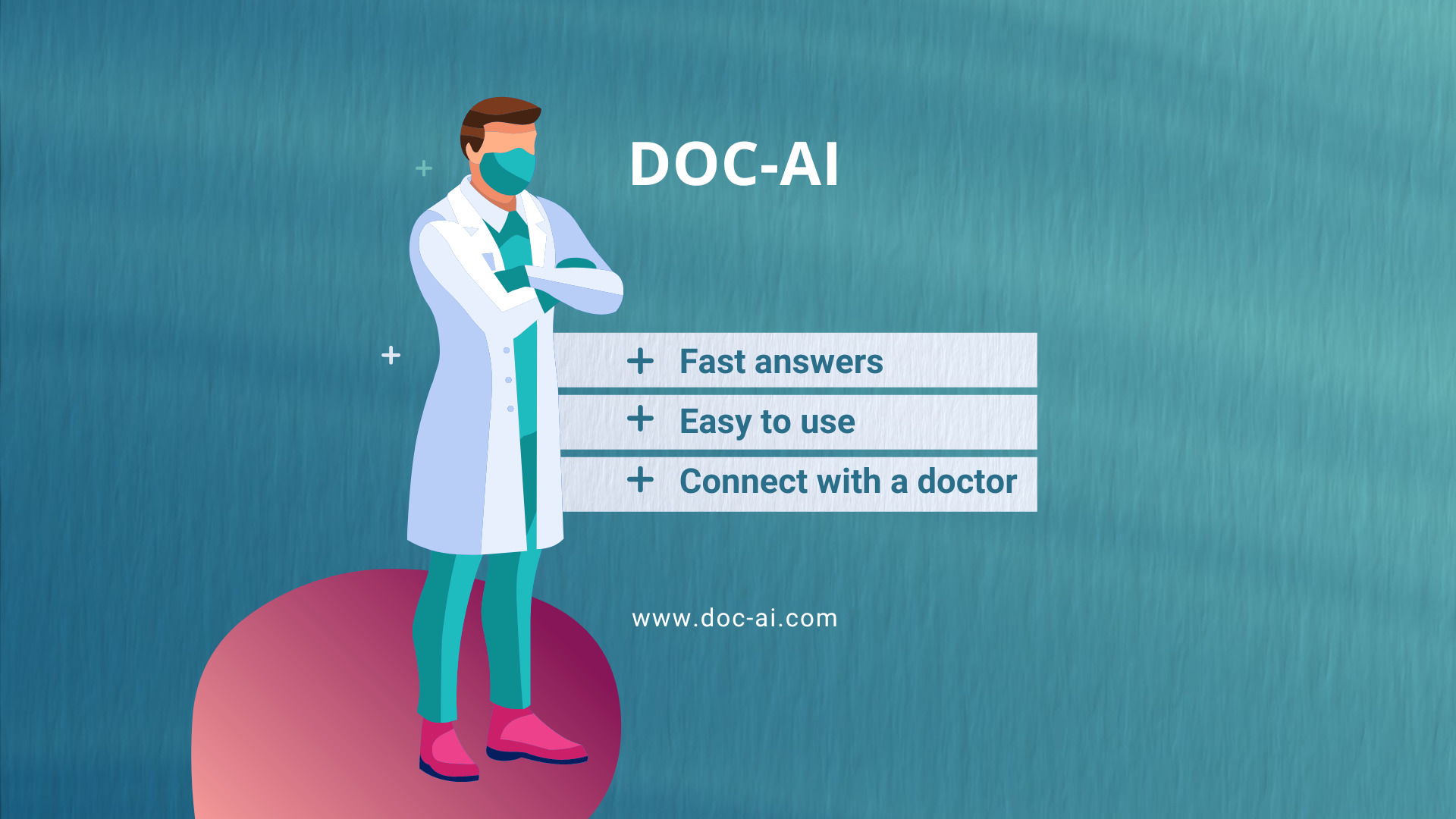
It allows you to ask your health questions to an interactive AI agent and recommends you to a health practitioner once it realizes that it has more complications. it then gives you the option to book a time with a doctor either virtuall or physically. This agent has been trained on common health questions and answers in collaboration with medical students.
How we built it
The app consists of 2 major sections, the user and the doctor. Each part has its own onboarding and setup. The user interfaces with the chatbot, while the doctor is first verified through OCR Screening and then onboarded to the platform.
We started by understanding the challenge statement and defining our scope or target area. Our target is people who are digitized and can use mobile phones at the very least. Then, we split into 4 teams. Research, Policies, and Market Analysis, User experience, App building and technicalities, and Security and Safety of Users.
For the Research, Policies, and Market Analysis, we found out that there were no existing policies against the use of AI in health care services. The major policies lie around data privacy and the security of personal information. We also investigated how our app will be accepted and why. We proved this by researching on Open AI's ChatGpt3 acceptance and this shows people's ready response to AI services.
For User experience, we conducted research with 4 people and questioned them about the idea behind our solution. This gave us an idea of those who will be interested in our solution and helped us to build with users in mind.
For App building and technicalities, we leverage an open-source package called Streamlit to build the login/signup, and chat interface with Python. We also used the Open-AI ChatGPT3 model as the AI agent and connected this to our web app over an API. The project is hosted on GitHub.
For Security and Safety of Users, we take the privacy and security of our user's data very important and investigated ways to make sure that from authentication to an appointment with doctors, cyber attacks and information leakage are reduced.
Challenges we ran into
One major challenge we faced was that we had no web or mobile developer on the team so we had to opt for open source and easy to build web interface. A team member also was inactive for 3 months and that affected us because he was incharge of User experience. Another challenge we faced was finding the right service to use in training our dataset for the chatbot model. We had to do a lot of research and experimentation.
Accomplishments that we're proud of
This is the first of it's kind AI health startup in the country. Despite the lack of skill set, and challenges, we were able to collaborate and bring our different skills and ideas together to create a functional and useful product. We were also excited to see our chatbot being used to help individuals get quick and accurate medical information.
What we learned
We learned a lot about tech in healthcare space and how important it is to ensure that we improve people's access and behaviour to healthcare services. We also learned the importance of effective communication within a team, timely delivery of tasks, and the value of experimentation and research in finding the right tools for a project.
What's next for Doc-AI
We want more collaborations with more medical students, and practicioners to expand and extend the dataset used to train the chatbot, including more complex medical questions and conditions to enable the chatbot to handle a wider range of issues.
We also aim to incorporate a subscription based model to sustain the AI model and a feedback system where users can rate the accuracy and helpfulness of the chatbot's responses. This will help us continuously improve the accuracy and usefulness of Doc-AI.


Log in or sign up for Devpost to join the conversation.