Inspiration
Healthcare data is often overwhelming and difficult to understand. Medical reports and scans are written for professionals, not patients, which creates confusion and fear. DocAI was inspired by the need to make healthcare information clear, accessible, and trustworthy—without replacing medical professionals.
What it does
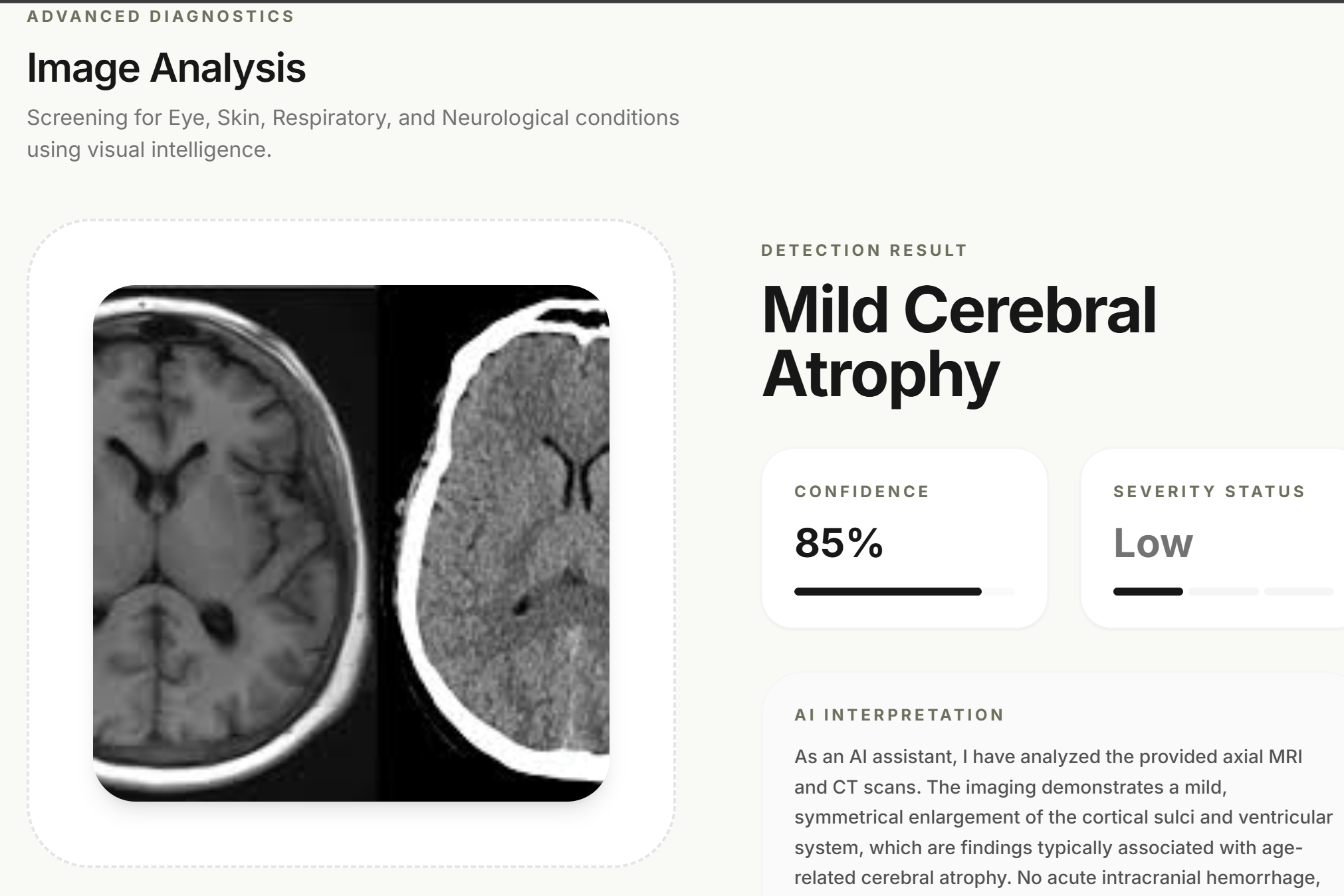
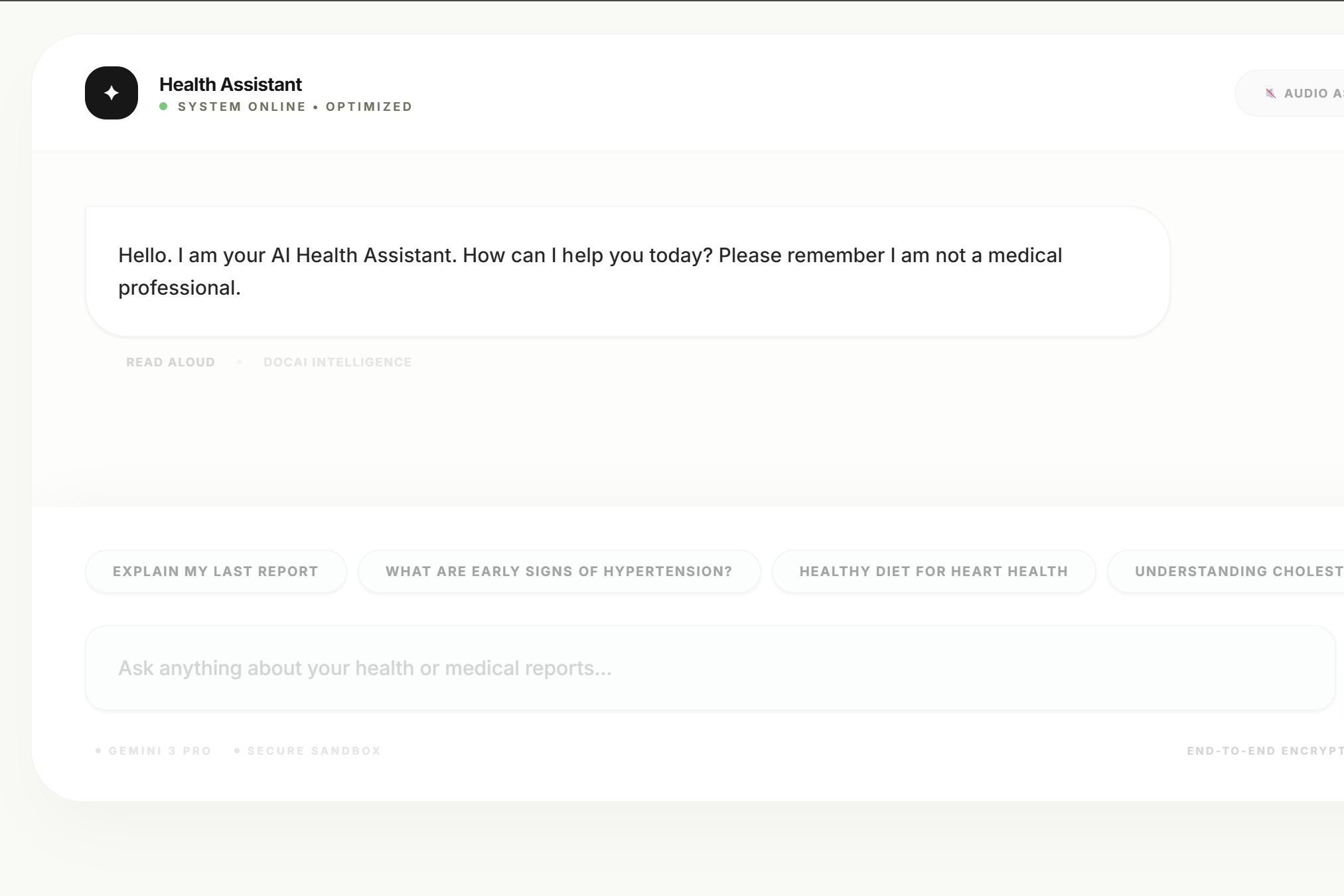
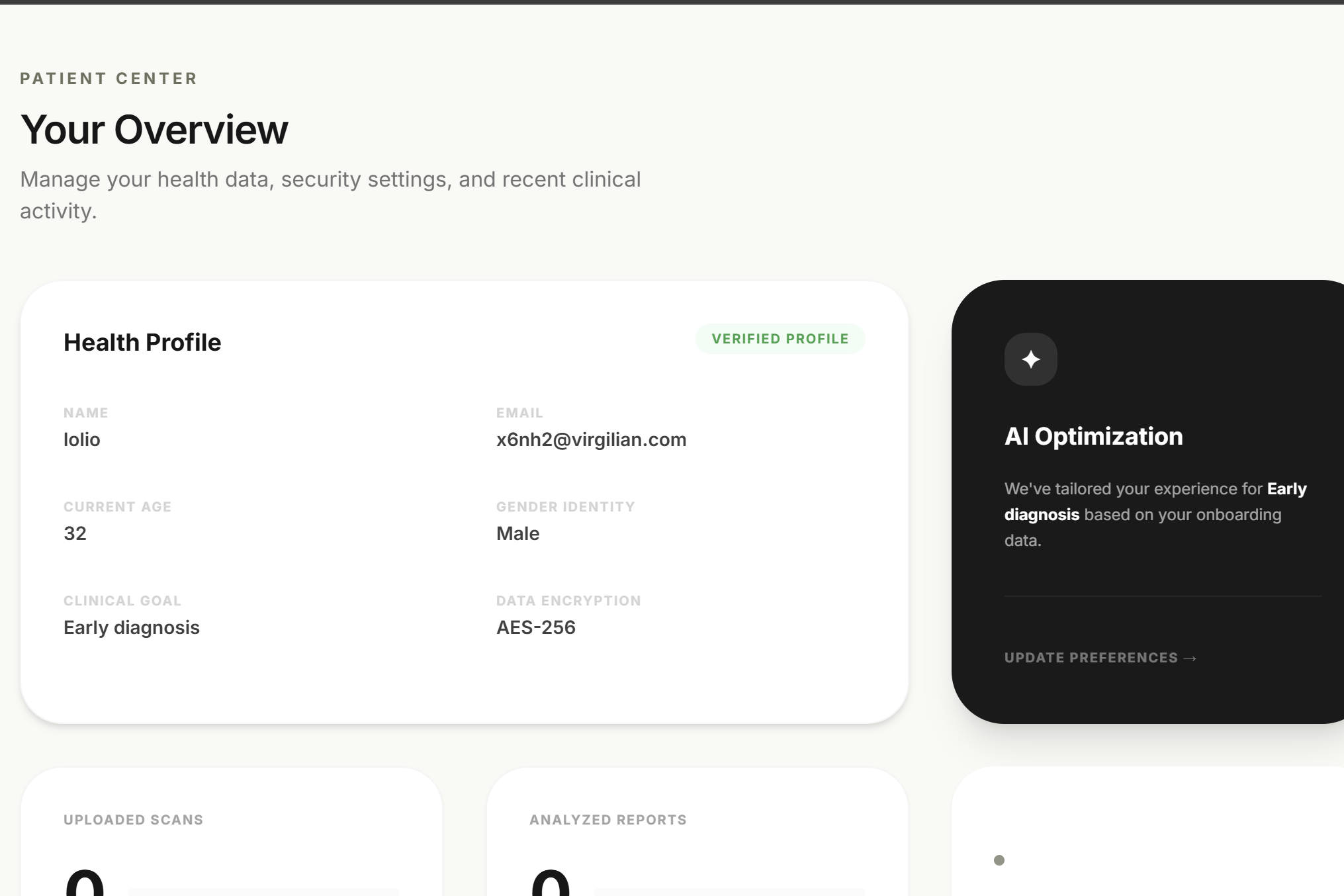
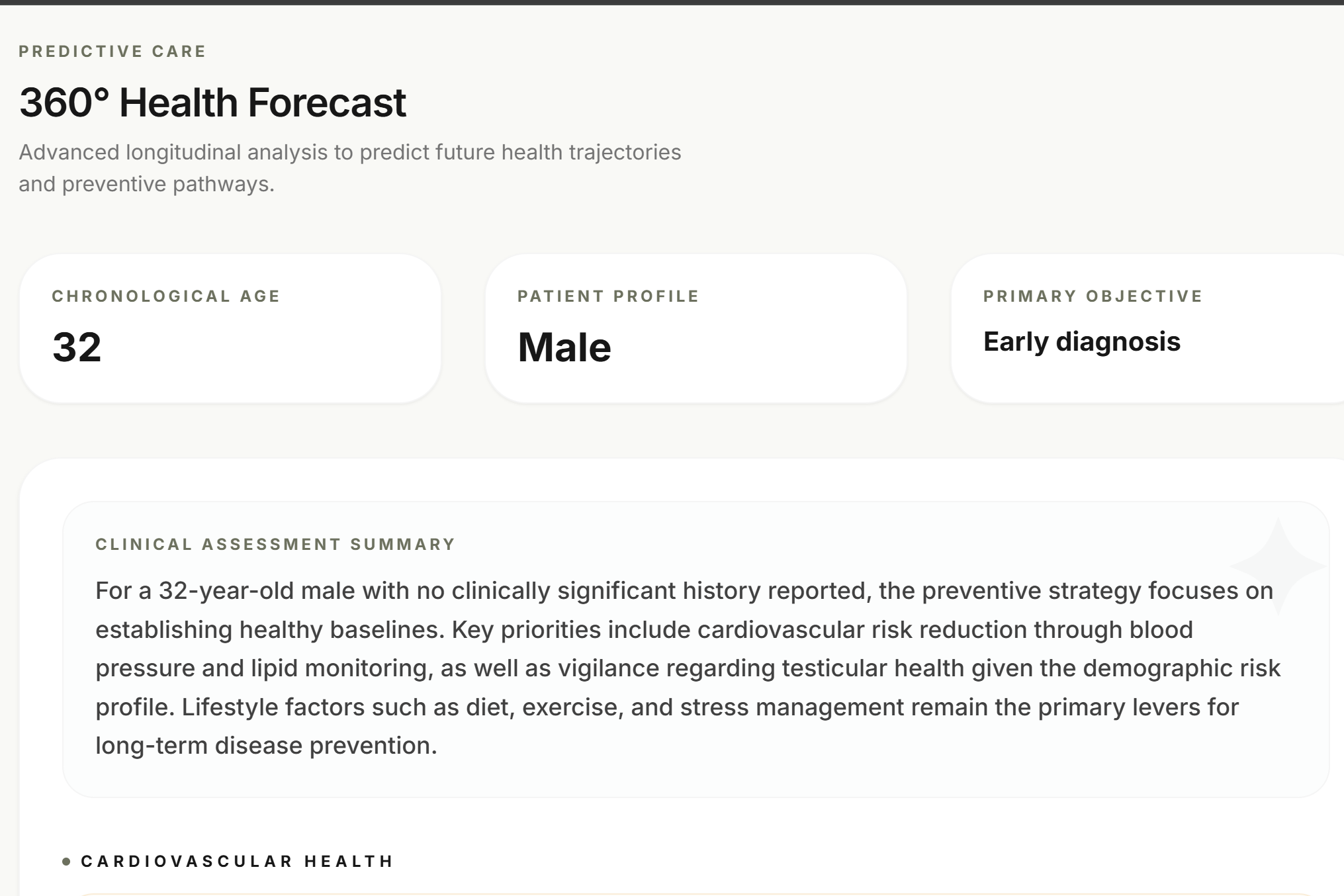
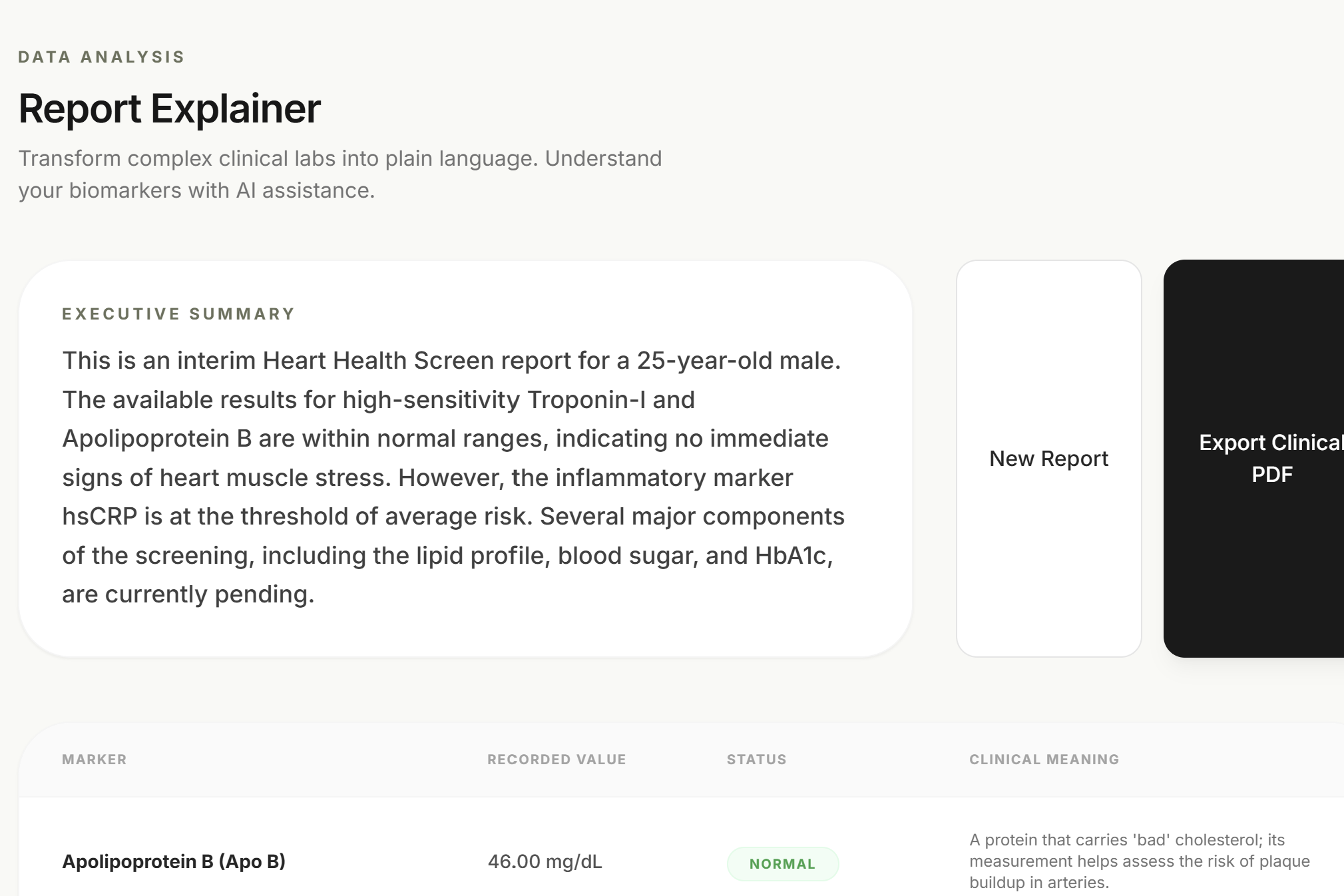
DocAI is an AI-powered health intelligence platform that transforms medical reports, scans, and health metrics into clear, human-readable insights. It helps users understand their health early and responsibly by explaining reports, analyzing medical images, and providing preventive insights—without making medical diagnoses.
How we built it
DocAI was built using a modern, privacy-first architecture. The frontend uses Next.js, React, and Tailwind CSS for a clean and accessible user experience. The backend is powered by Node.js with secure server-side API routes. Google Gemini handles multimodal intelligence such as medical image analysis, OCR, and reasoning, while Weights & Biases Weave ensures traceability, logging, and transparency across all AI decisions. The platform is deployed on Vercel.
Challenges we ran into
One major challenge was balancing clarity with responsibility—providing useful insights without alarming users or making clinical claims. Handling diverse medical images and reports while maintaining accuracy was also difficult. Ensuring privacy, secure API usage, and AI traceability added additional complexity but were essential for trust.
Accomplishments that we're proud of
We successfully built a fully functional AI platform that explains complex medical data in simple language. Integrating multimodal AI with end-to-end observability was a key achievement. Most importantly, DocAI delivers transparent, explainable insights while maintaining a strong focus on user privacy and ethical AI.
What we learned
We learned how to design multimodal AI systems for real-world healthcare use, the importance of observability and explainability in AI pipelines, and how thoughtful UX design can build trust. The project reinforced that responsible AI is critical, especially in sensitive domains like healthcare.
What's next for Doc-AI
Next, we plan to improve model evaluation, expand language support, and enhance accessibility features. We also aim to add deeper health trend analysis, improve explainability, and explore integrations with wearable health data—while continuing to prioritize privacy and responsible AI.
Built With
- css
- github
- google-gemini
- javascript
- next.js
- node.js
- react
- tailwind
- typescript
- vercel
- weights-biases

Log in or sign up for Devpost to join the conversation.