Inspiration
Reading and reviewing research papers is time-consuming and often overwhelming. Students, early researchers, and even professionals struggle to quickly assess the quality, novelty, and gaps in a paper. We wanted to build an AI assistant that could automate the first pass of research paper reviewing, helping users save time and focus on deeper analysis.
What it does
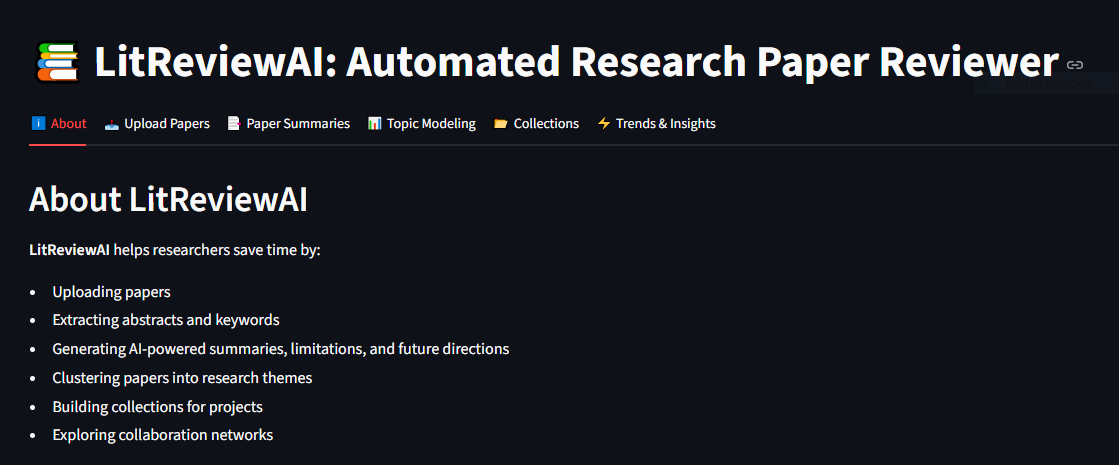
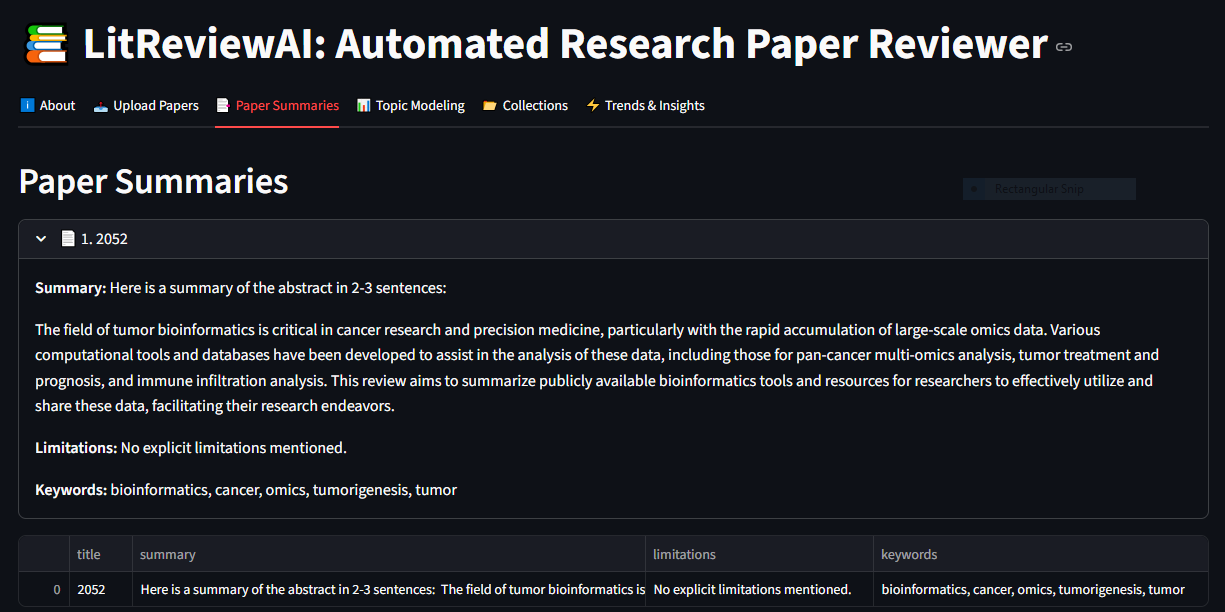
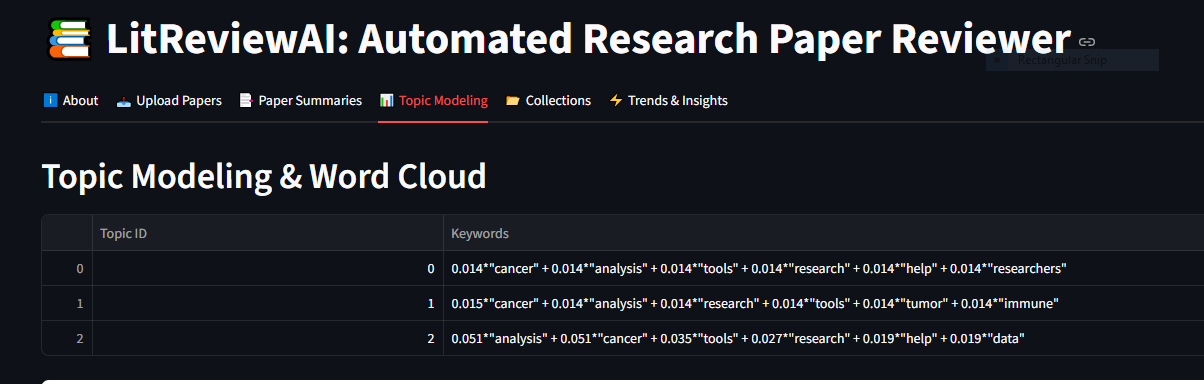
LitReviewAI automatically reviews uploaded research papers and provides: Summaries of key contributions. Strengths and weaknesses of the paper. Suggested improvements and missing perspectives. AI-generated review scores (e.g., clarity, novelty, relevance). Keyword extraction and related work suggestions. In short, it acts as a smart reviewer assistant for academics.
How we built it
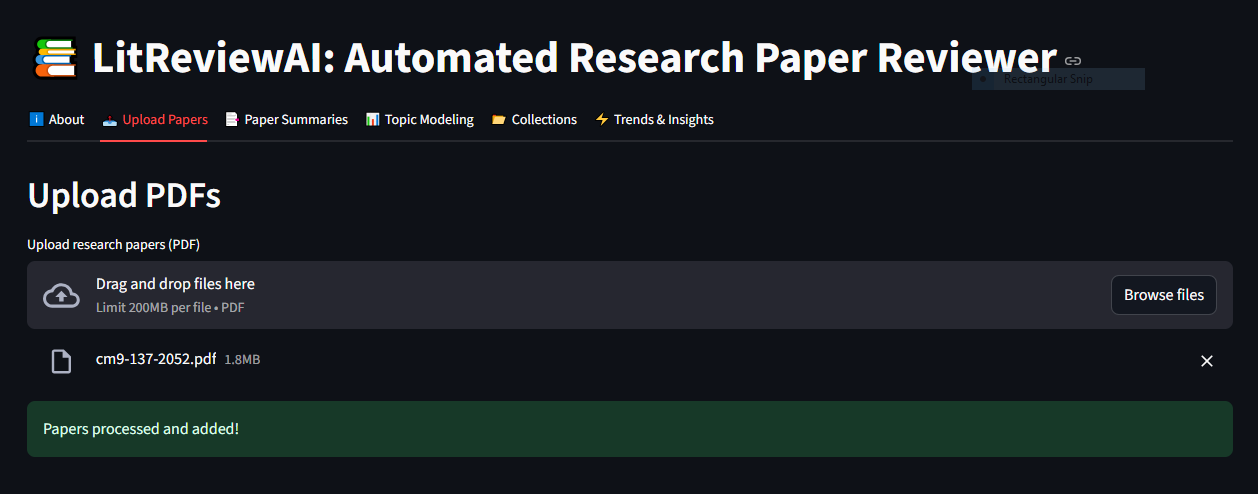
Streamlit for the user interface. PyMuPDF (fitz) to parse PDF research papers. GROQ API for summarization and review generation. KeyBERT for keyword extraction. Deep Translator API for multilingual paper support. Deployed on Hugging Face Spaces/Streamlit Cloud for easy access.
Challenges we ran into
Extracting clean text from PDFs with mathematical notations and references. Making AI feedback structured instead of overly generic. Handling large research papers without memory crashes. Integrating multiple NLP models in one streamlined workflow.
Accomplishments that we're proud of
Built a working AI reviewer prototype in limited time. Achieved multilingual support for reviewing papers in different languages. Designed a user-friendly interface that makes academic review assistance accessible to students and researchers. Combined summarization, keyword extraction, and critique generation in one platform.
What we learned
How to integrate NLP models for real-world academic use cases. Importance of structuring AI-generated text into clear, review-like feedback. Practical challenges of text cleaning and PDF parsing. The value of collaborative brainstorming when building an AI tool.
What's next for LitReviewAI: Automated Research Paper Reviewer
Adding plagiarism detection and similarity checking. Integrating with Google Scholar/ArXiv APIs to suggest related work automatically. Building a review score dashboard for multiple papers at once. Supporting custom review templates (conference-style, journal-style). Making the model fine-tuned on real peer review datasets for higher accuracy.


Log in or sign up for Devpost to join the conversation.