-
-
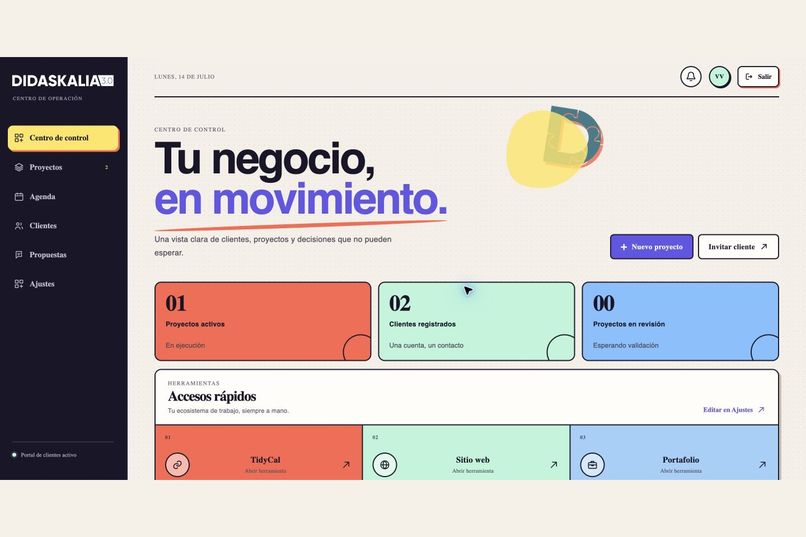
01-dashboard
-
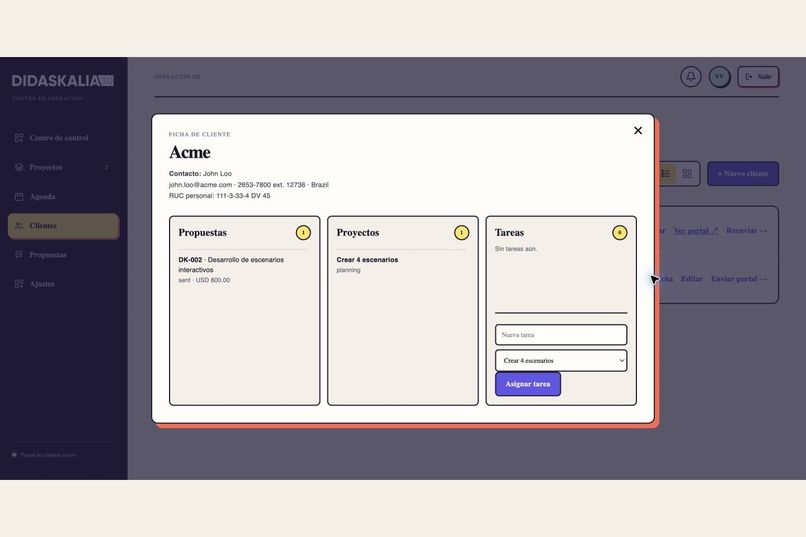
02-cliente-ficha
-
-
-
-
-
-
-
Inspiration
DK Control began with a very personal need.
As an independent professional and the founder of Didaskalia 3.0, I have spent years building relationships with clients, preparing proposals, managing projects, coordinating meetings, delivering work, and following up on approvals. As the business grew, that information became fragmented across documents, email threads, calendars, task managers, and messaging apps.
The problem was not simply having too many tools. It was that none of them truly reflected the way I work or the way I want to treat my clients.
I often had to adapt my processes to the limitations of existing software. Important context was lost between the moment a proposal was created and the moment the work was delivered. Clients had to search through emails for updates, while I had to reconstruct the history of a project across several platforms.
I wanted something different: a system designed around my real workflow, my visual language, and my relationship with my clients.
OpenAI Build Week gave me the opportunity to turn that need into a working product. For the first time, I felt I had the power to create my own operational tools, adapt them to the way my business actually works, and continuously improve them as I learn.
DK Control was born from that realization: I no longer had to force my business to fit someone else’s software. I could build software that fits my business.
What DK Control does
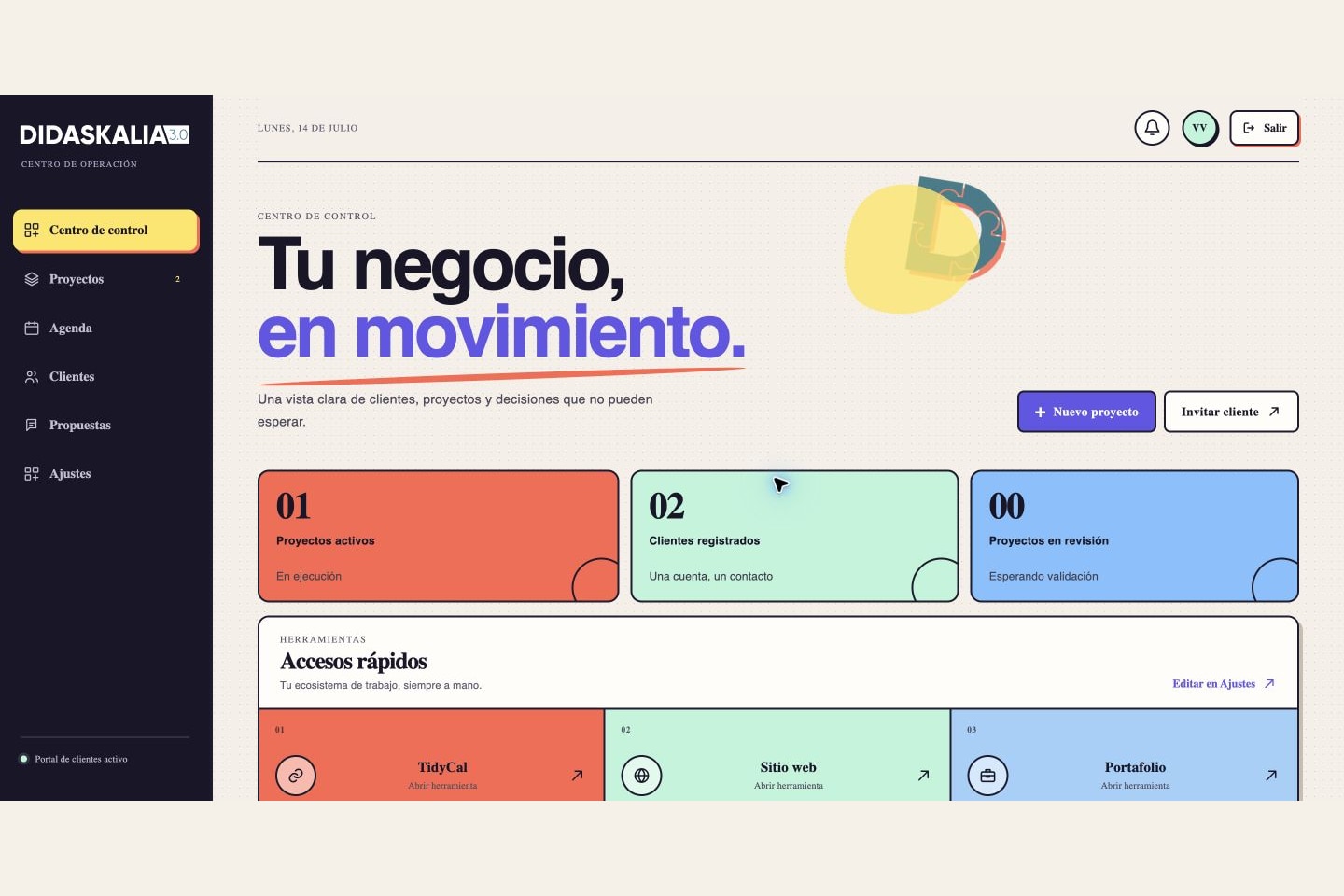
DK Control is a visual control center that connects the complete client journey:
Client → Proposal → Approval → Project → Tasks → Deliverables → Follow-up
Instead of treating proposals, projects, and client communication as separate processes, DK Control connects them into one continuous operational flow.
The platform currently allows me to:
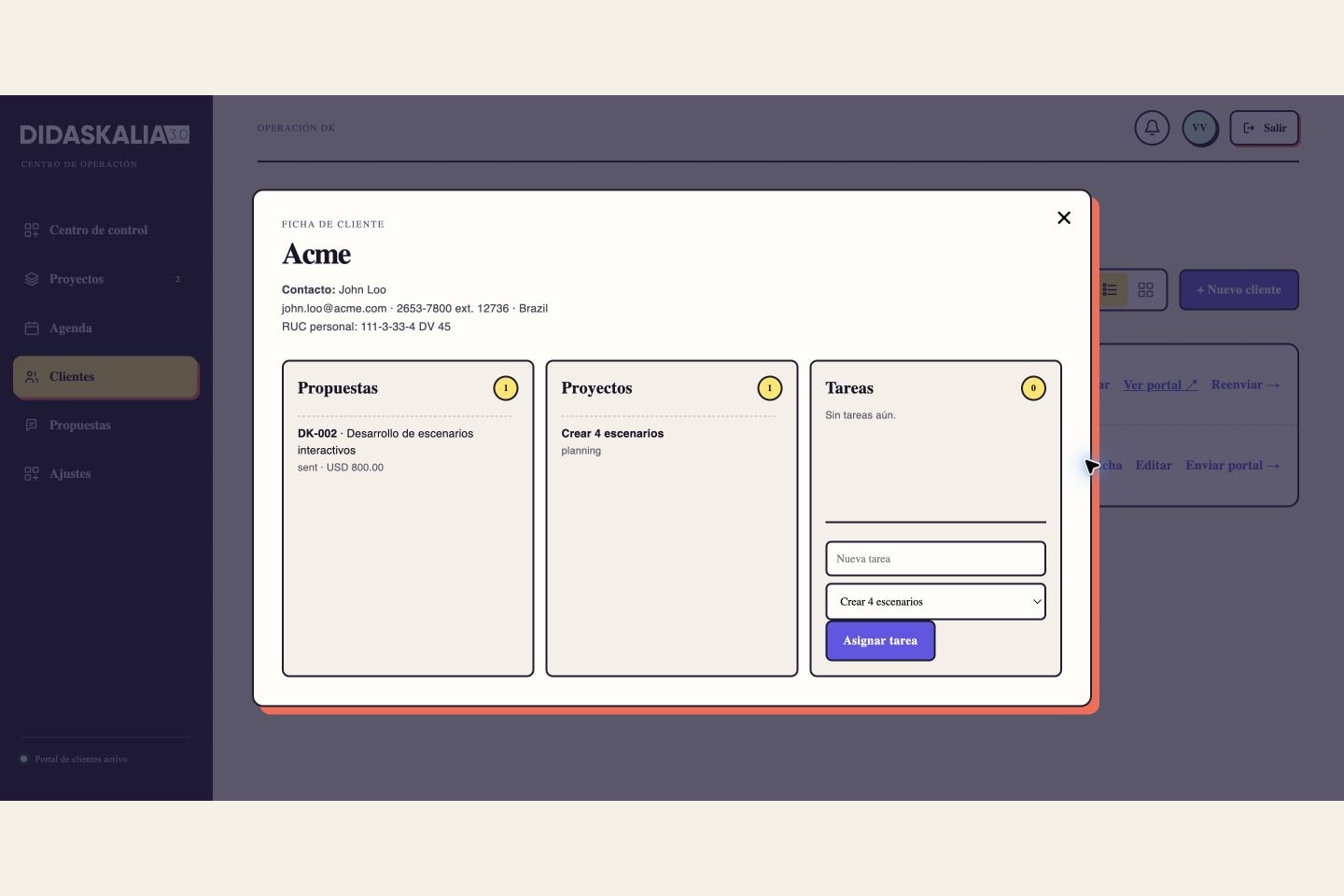
- Create and manage client records with their contact, company, tax, and relationship information.
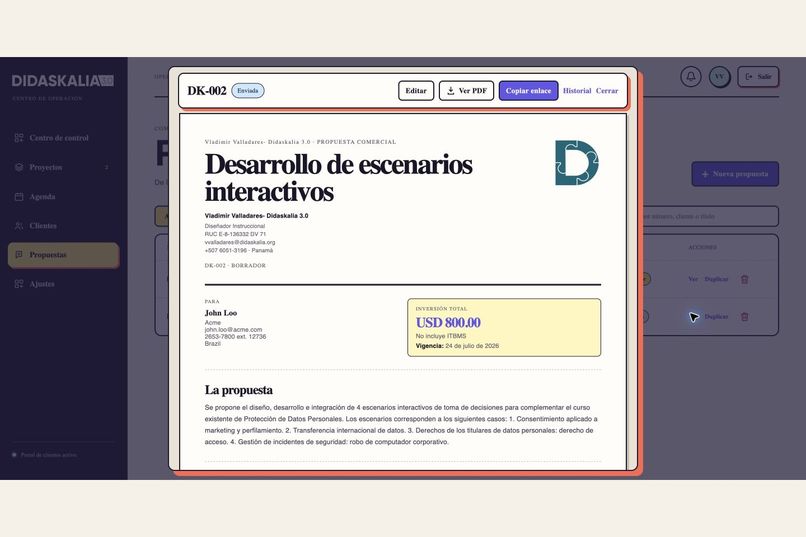
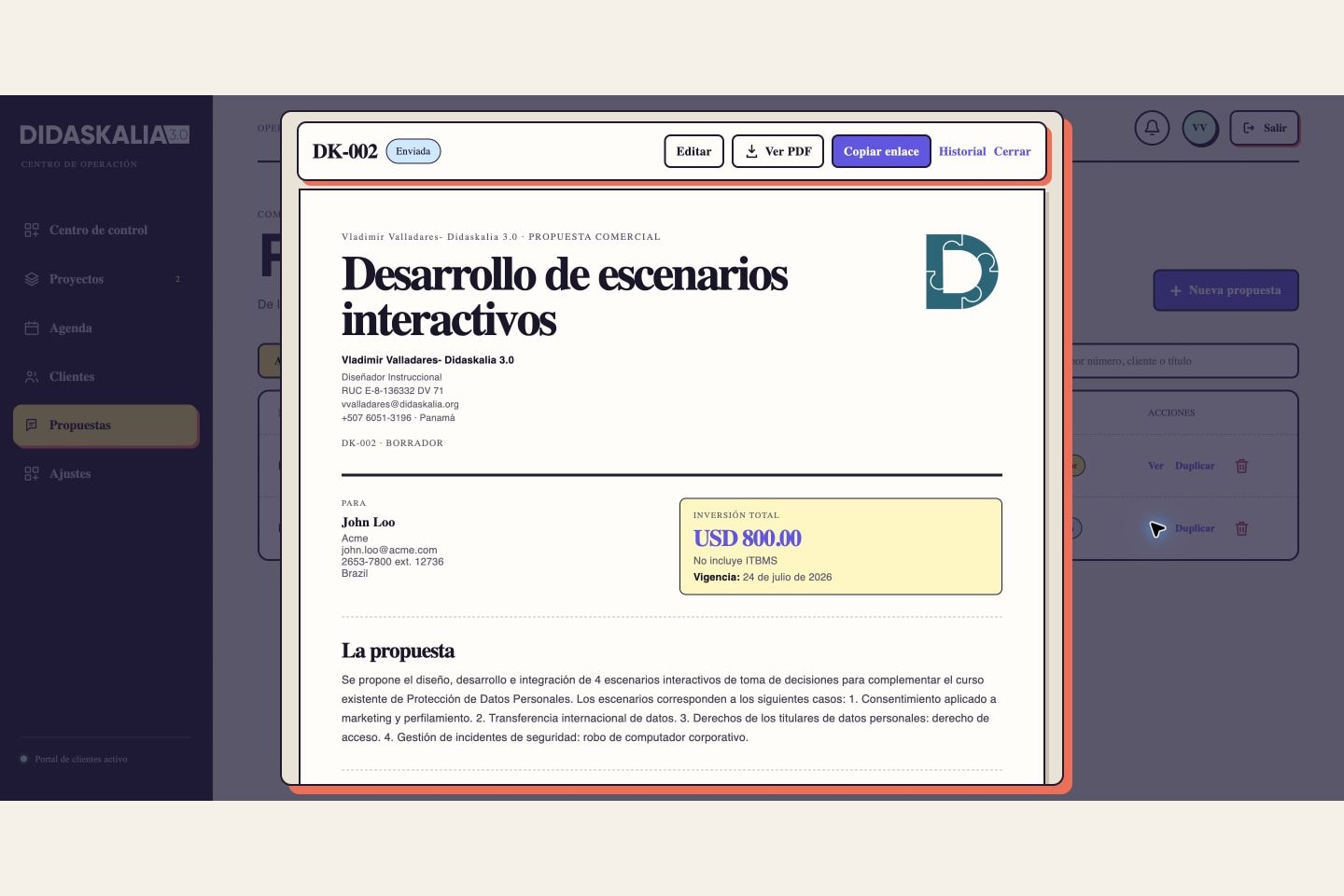
- Create detailed commercial proposals with configurable pricing, taxes, validity dates, scope, deliverables, timelines, and business information.
- Preview proposals exactly as clients will see them.
- Generate branded PDF versions.
- Share proposals through secure links without requiring clients to manage passwords.
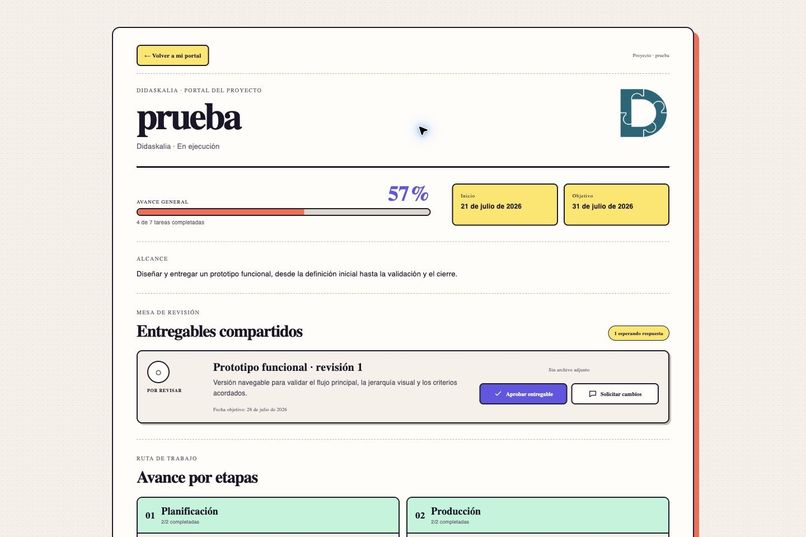
- Allow clients to accept a proposal or request changes from the public portal.
- Convert approved work into structured projects.
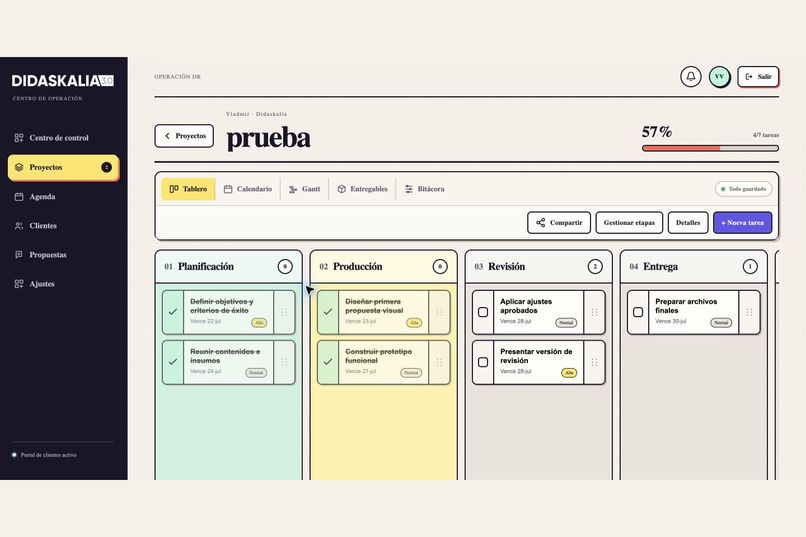
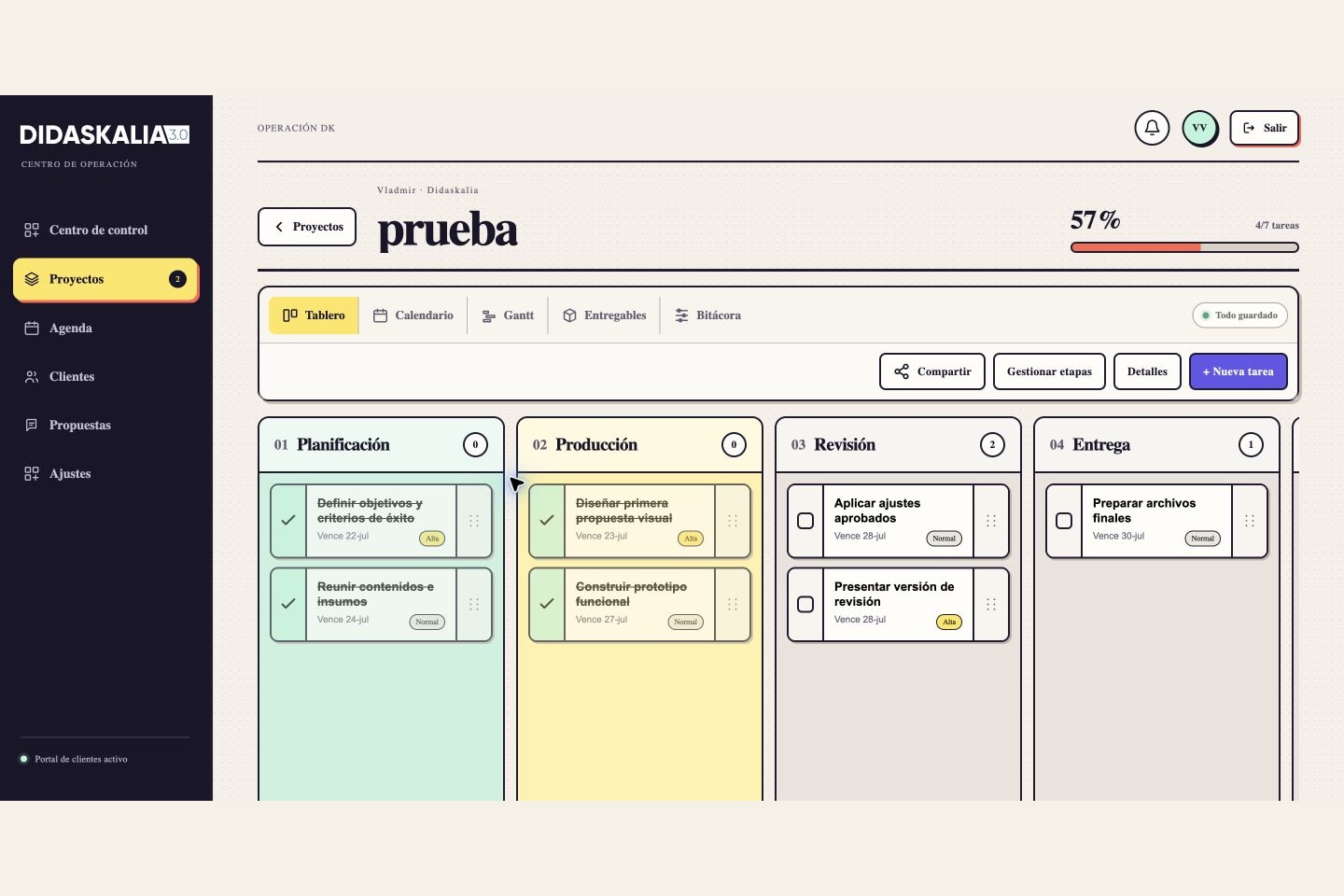
- Organize projects into customizable stages and tasks.
- Move tasks within and between stages using drag and drop.
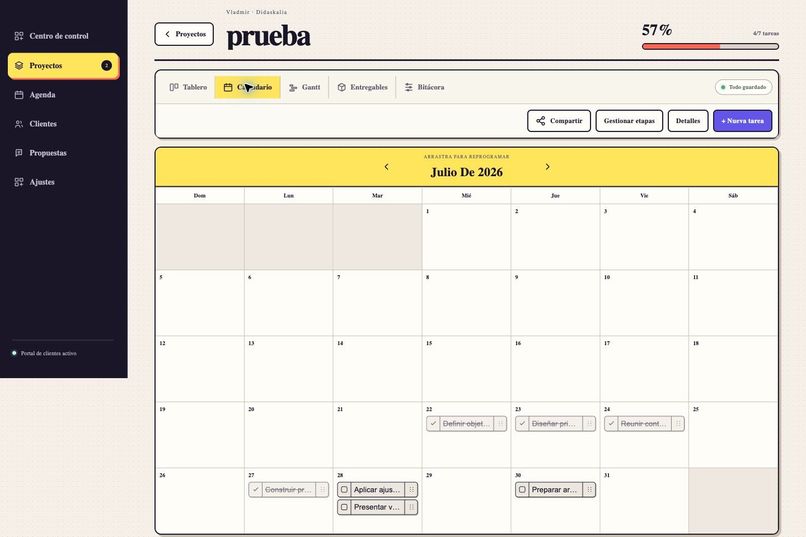
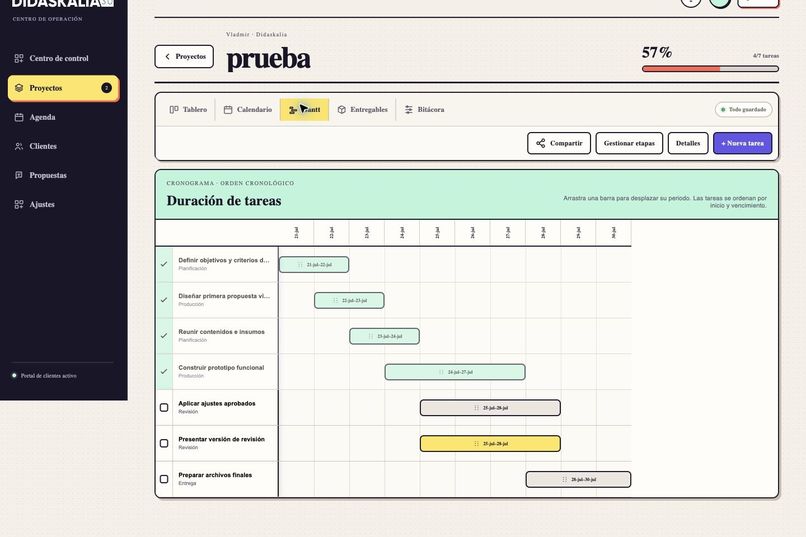
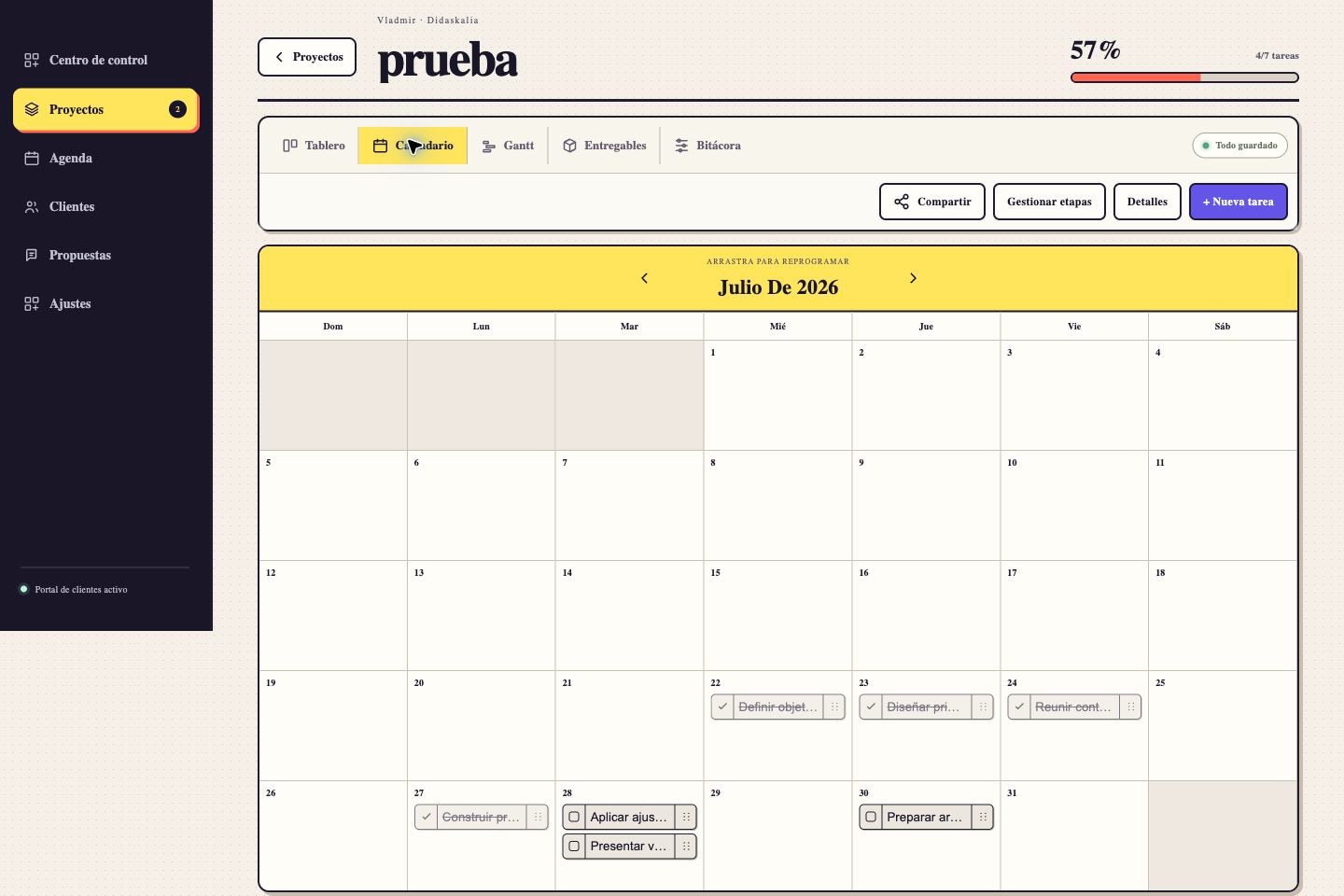
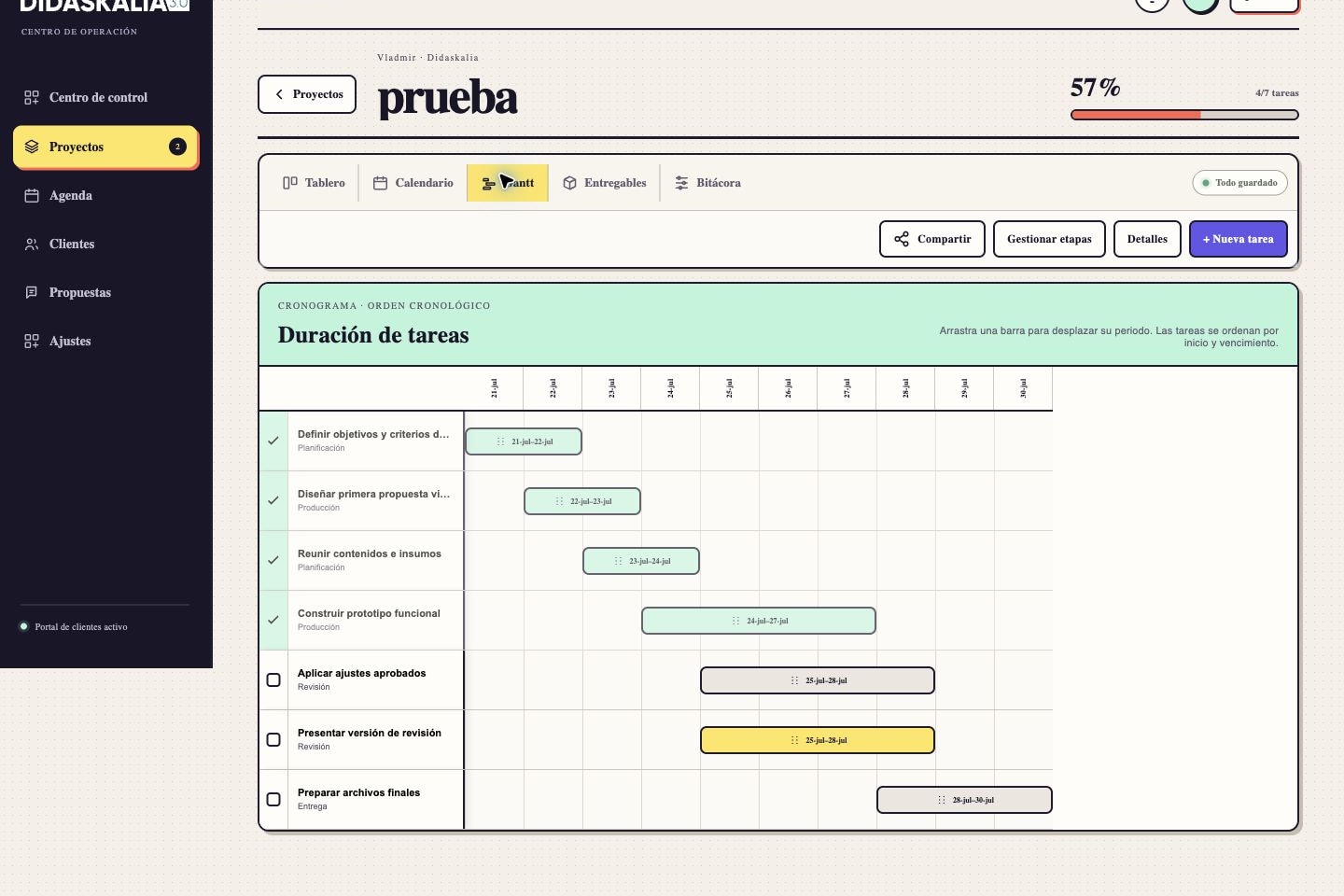
- Review the same project through board, calendar, and Gantt views.
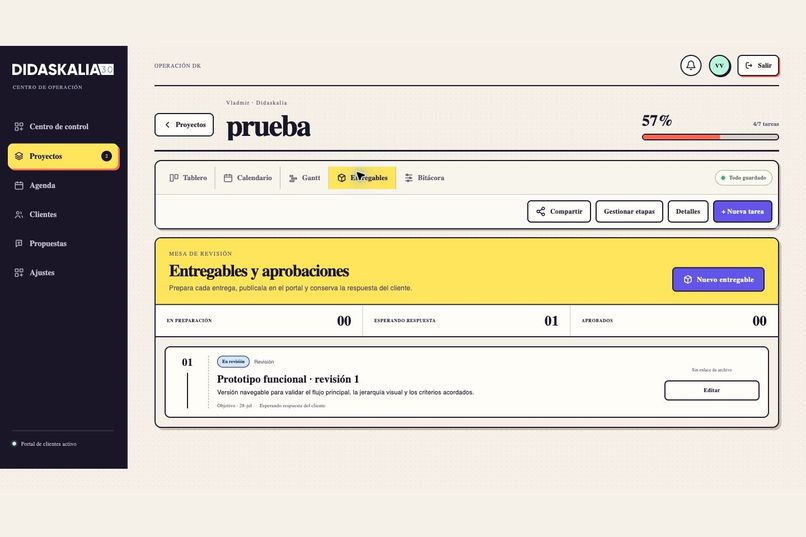
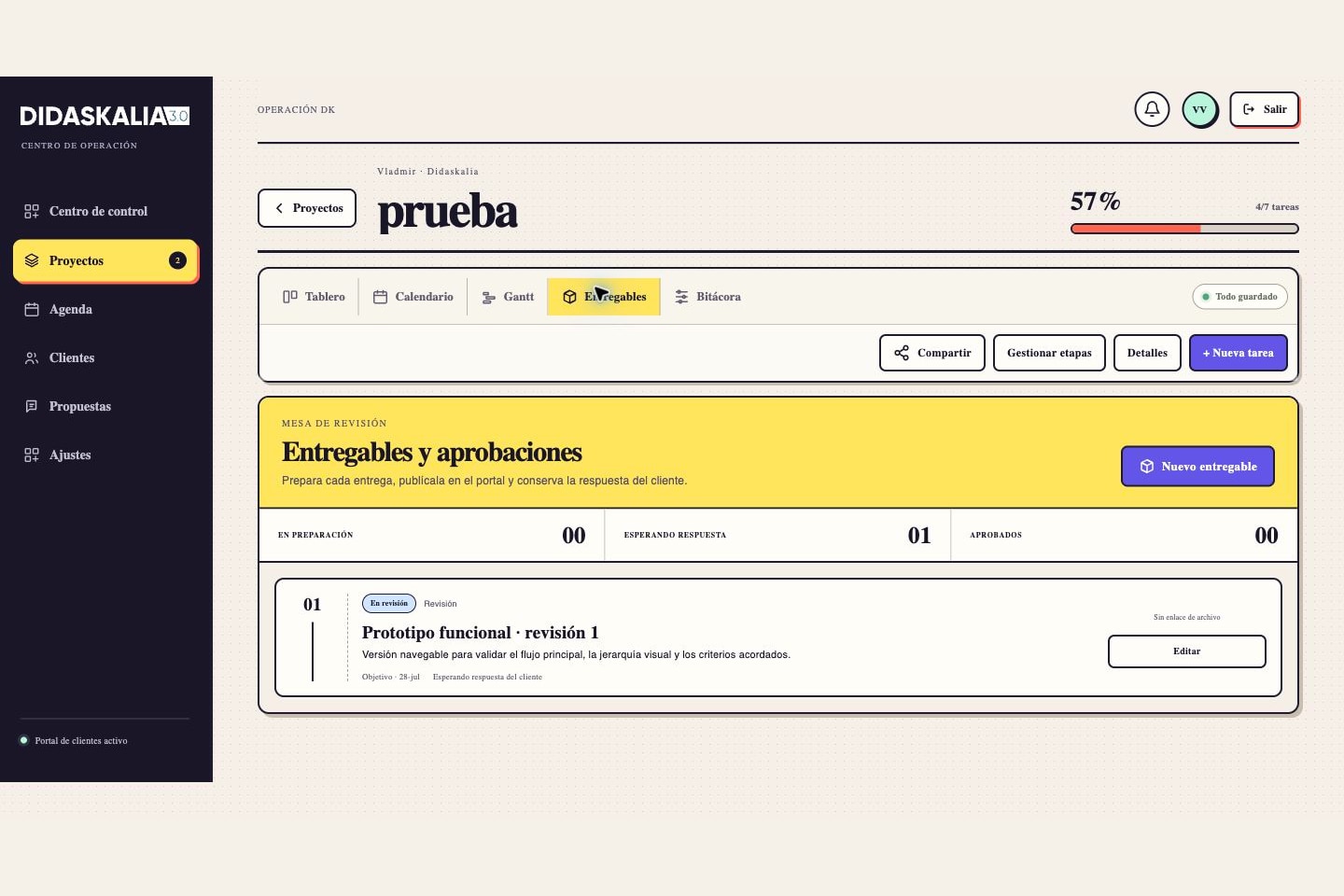
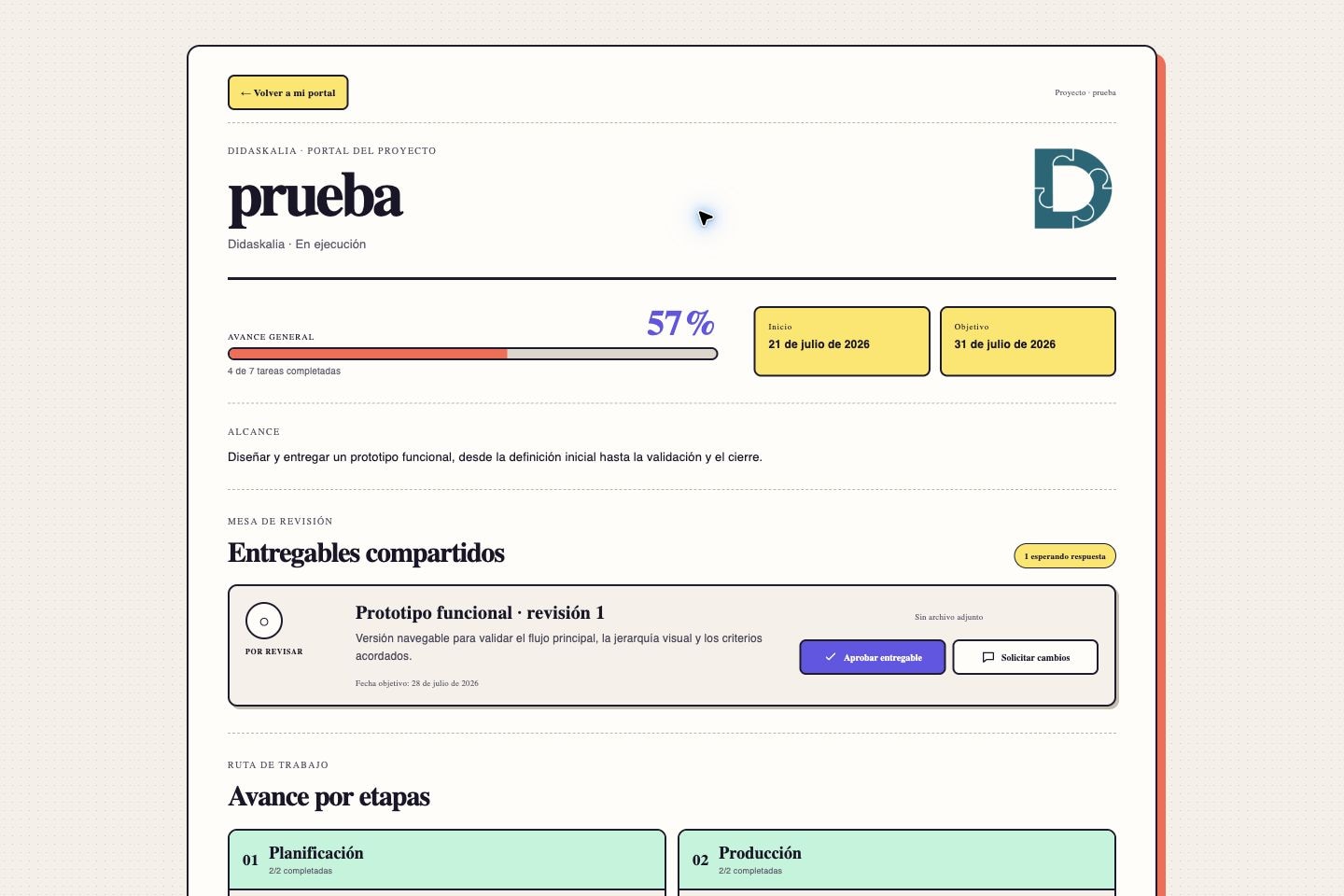
- Manage deliverables, meeting links, project activity, and client approvals.
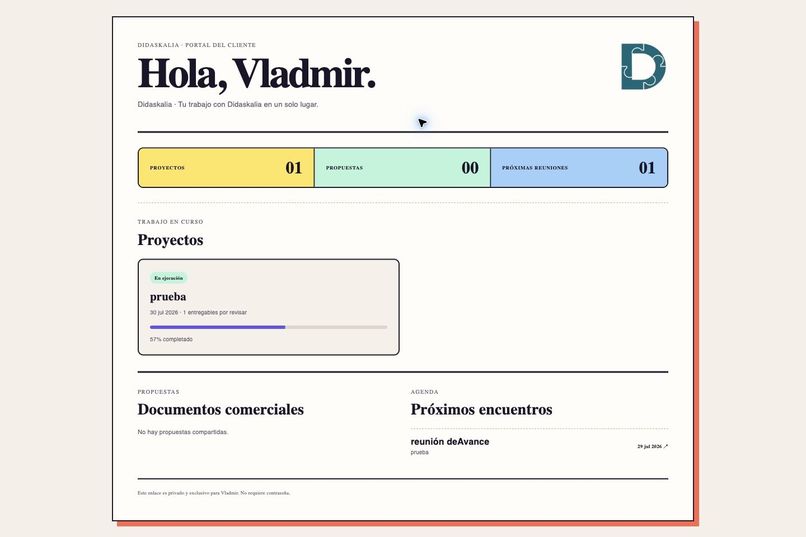
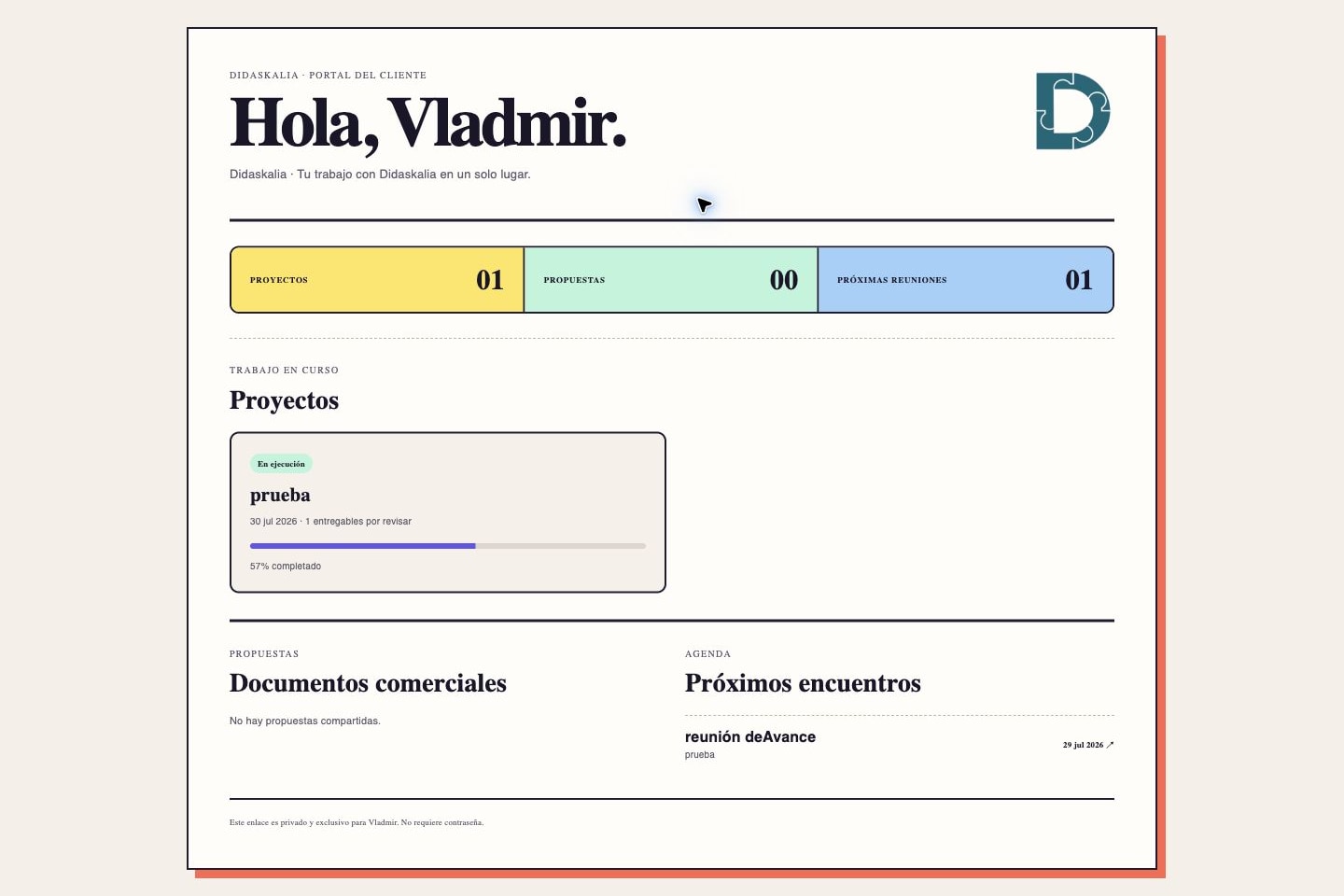
- Share secure project portals where clients can follow progress and review their work.
- Send transactional emails with a confirmation step before anything is sent.
- Centralize meetings through Google Calendar and provide access to TidyCal booking links.
- Maintain an activity log of important actions and client interactions.
The goal is not to create another generic CRM or task manager. The goal is to preserve the relationship and context that exist between winning a project and successfully delivering it.
How I built it
DK Control was conceived and built entirely during OpenAI Build Week, beginning on July 14, 2026.
Every part of the project was developed collaboratively with Codex and GPT-5.6: product definition, architecture, interface design, implementation, debugging, security decisions, deployment, and documentation.
I did not begin with a complete specification. The product evolved through a continuous conversation with Codex. I described how I currently work, tested each feature in the real application, added visual annotations directly to the interface, and refined the system based on what felt useful or confusing.
That process helped transform practical observations such as “this proposal should become a project,” “the client needs to see this without creating an account,” or “I need to know which stage owns this task” into implemented product workflows.
The application was built with:
- Next.js and React
- TypeScript
- PostgreSQL and Drizzle ORM
- Supabase Authentication with Google Workspace
- Resend for transactional email
- Google Calendar API
- React PDF
- Vercel for deployment
- pnpm for dependency management
Codex and GPT-5.6 acted as my engineering and product-design partners throughout the entire process. They helped translate business requirements into data models and components, investigate production issues, refine responsive layouts, implement secure public portals, and continuously verify the application with TypeScript, linting, production builds, and route testing.
AI was not added as a decorative feature after the product was built. It was the medium through which the entire product became possible.
Challenges I faced
One of the main challenges was preserving consistency across several representations of the same information.
A proposal, for example, exists as an editable form, an internal preview, a public client page, an email, and a downloadable PDF. All of them need to show the same client information, business identity, pricing, taxes, scope, validity, and visual hierarchy.
Projects introduced another level of complexity. Tasks needed to remain synchronized across board, calendar, and Gantt views while supporting drag and drop, completion states, stage changes, and automatic saving without disruptive page refreshes.
Authentication and external services were also challenging. The system combines administrative access through Google Workspace, secure token-based access for clients, Google Calendar authorization, Resend email delivery, and environment-specific configuration in Vercel. Each integration required careful handling of redirects, permissions, secrets, and production behavior.
The most important challenge, however, was deciding what the product should become. It was easy to keep adding features. The harder work was ensuring that every feature supported the same promise: helping me work with greater clarity while giving my clients a more organized and professional experience.
What I learned
The biggest lesson was that building software is not only about writing code. It is about making decisions visible.
When client information, proposals, approvals, tasks, deliverables, and conversations are connected, I can understand the real state of my business without reconstructing it from different tools.
I also learned that AI-assisted development can give small business owners and independent professionals a new kind of autonomy. Codex and GPT-5.6 allowed me to move from describing a problem to testing a real solution in hours instead of leaving it as an idea for the future.
This changed the way I see my own business. I am no longer limited to choosing the tool that comes closest to my workflow. I can create, adapt, and improve tools around the way I actually deliver value.
Most importantly, DK Control helped me think more intentionally about the experience I provide to my clients. Better internal organization is not only an operational benefit. It produces clearer communication, faster responses, more transparent projects, and stronger client relationships.
What I am proud of
I am proud that DK Control is not a prototype disconnected from my reality. It comes directly from my own entrepreneurship and is already shaped around real business processes.
In only a few days, an idea that had lived in documents, spreadsheets, emails, and disconnected routines became a functional, deployed system.
For me, that is the most meaningful result of Build Week: not simply building an application, but discovering that I now have the ability to create the tools my business needs—and to keep evolving them alongside the way I work and the way I care for my clients.
Built With
- autenticacion
- codex
- css3
- drizzle-orm
- google-calendar
- google-cloud
- gpt-5.6
- html5
- next.js
- postgresql
- react
- react-pdf
- resend
- supabase
- typescript
- vercel


Log in or sign up for Devpost to join the conversation.