Inspiration
Over 25% of our elderly population has difficult or is completely unable to do activities necessary for everyday life, like climbing up stairs. As you get older, your muscles weaken greatly to the point where, by your 80s, up to 50% of your muscle mass is gone.
We developed Strider to bring back the mobility and independence that being able to walk comfortably provides to those who might normally struggle.
What it does
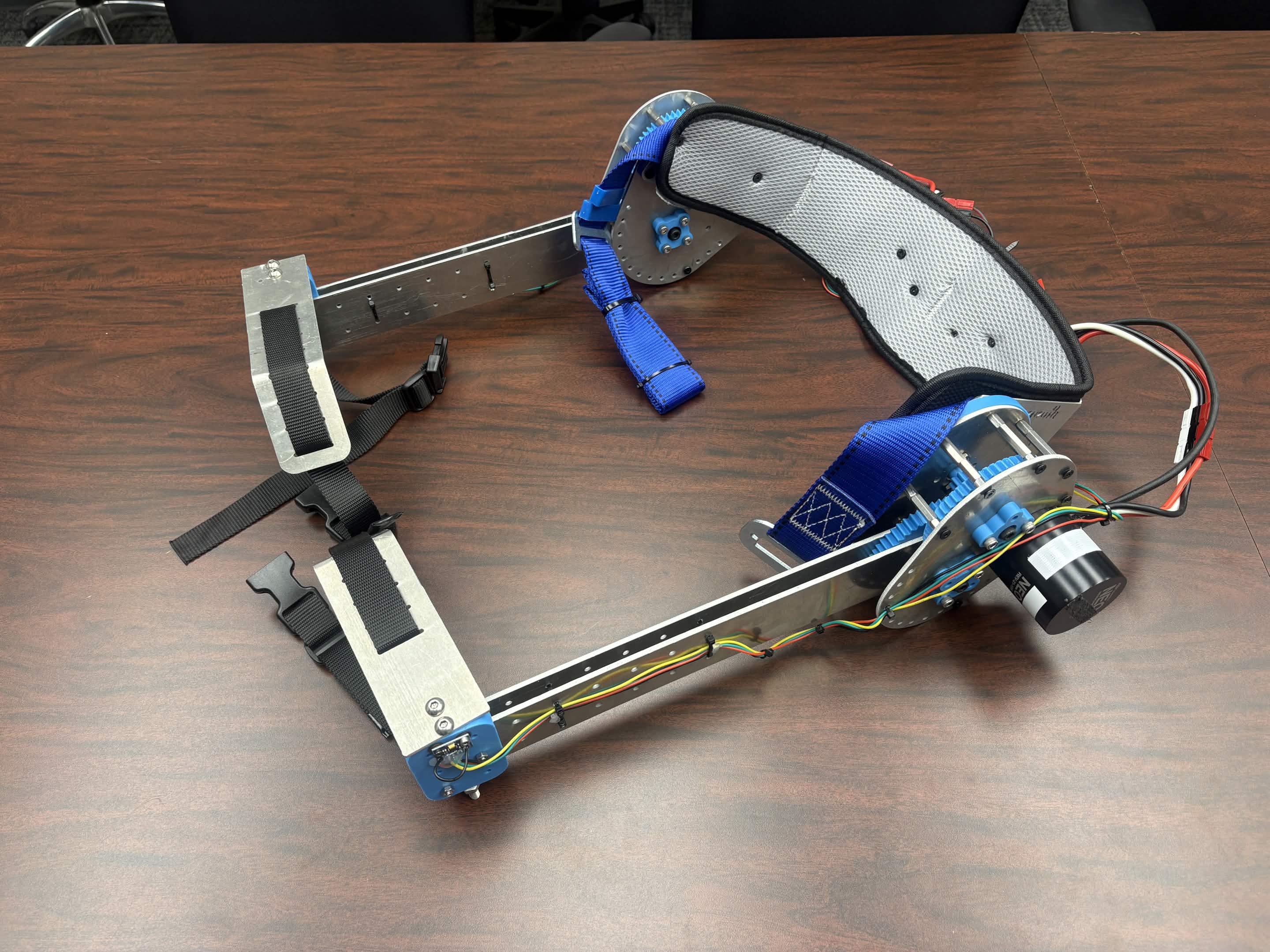
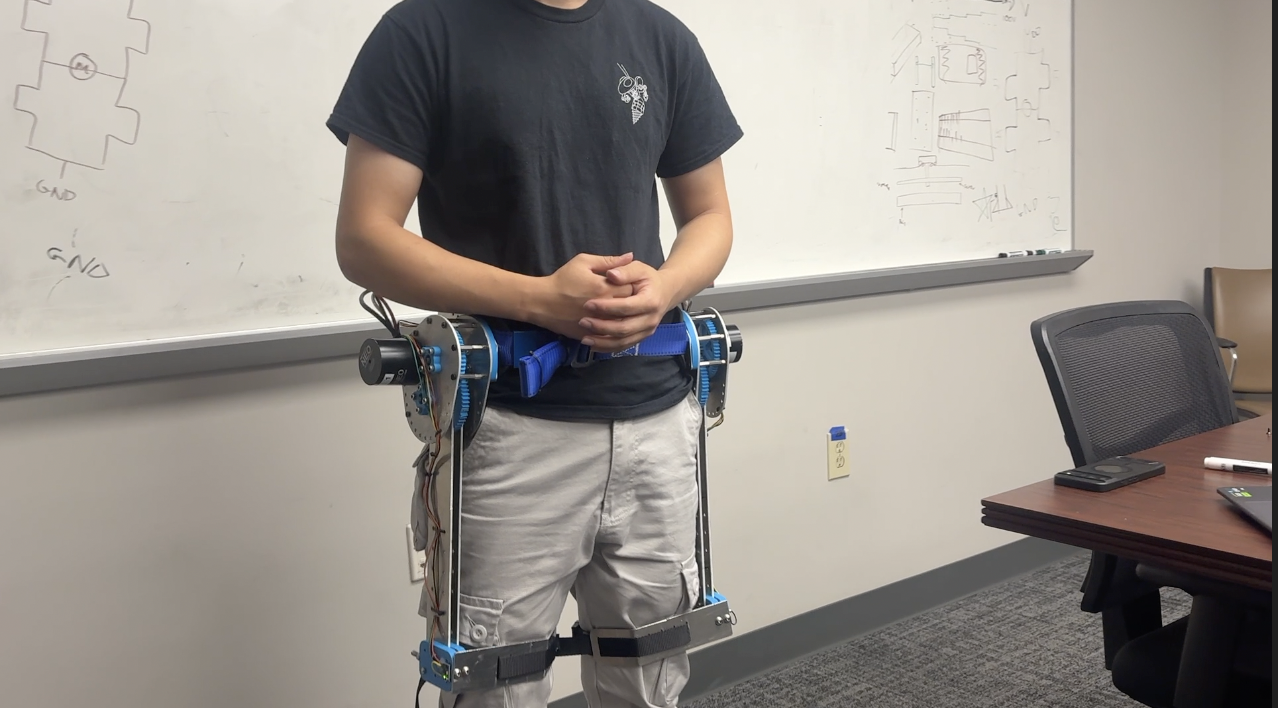
Strider uses IMUs to detect different stages of your gait cycle to determine when to apply motor aid. Using its two motors, it can alleviate up to 40 lbs of force in total. The level of assistance can be adjusted, even to negative values, to allow for "progressive overload" of walking, allowing users to become more comfortable walking without aid.
How we built it
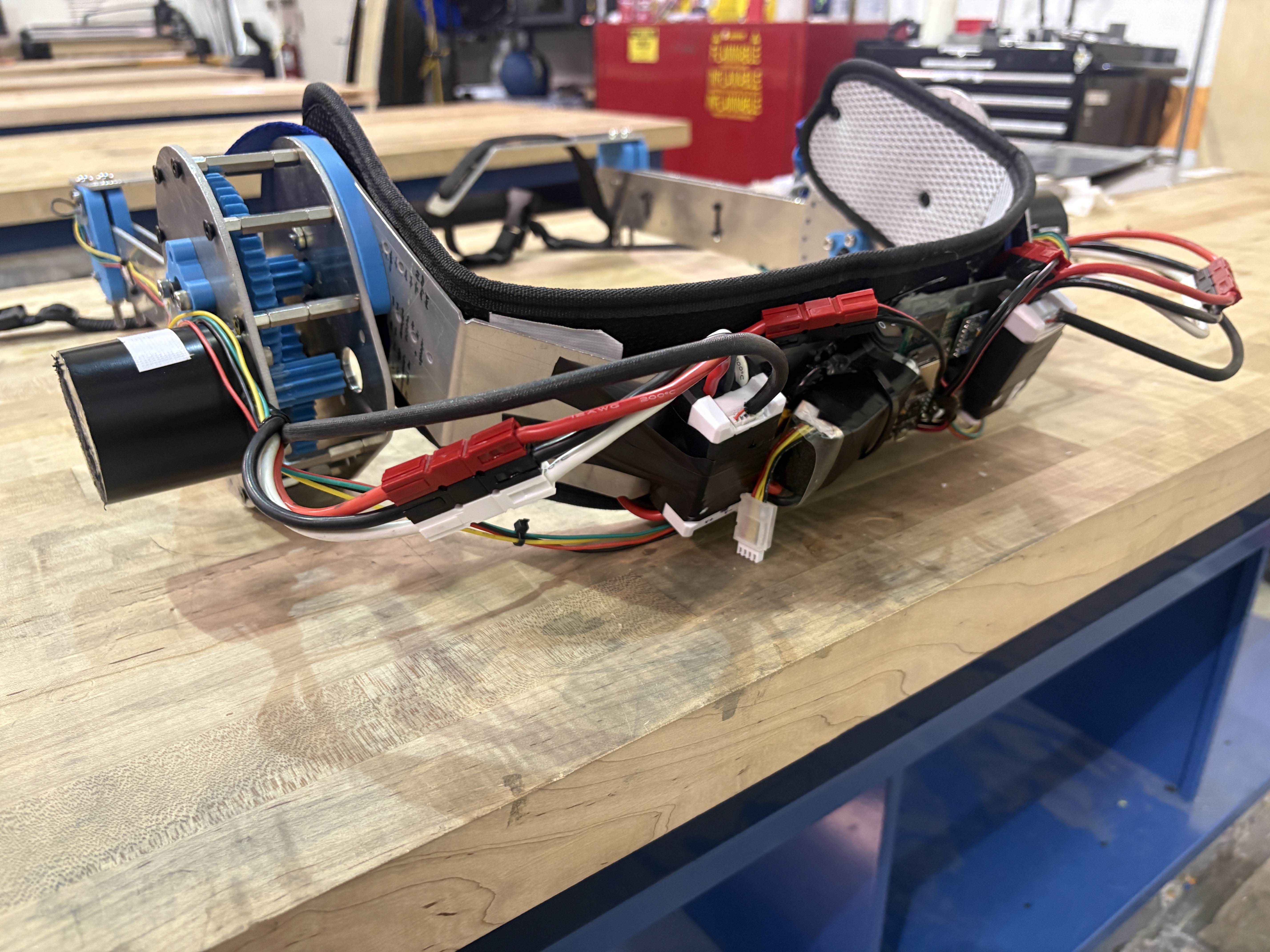
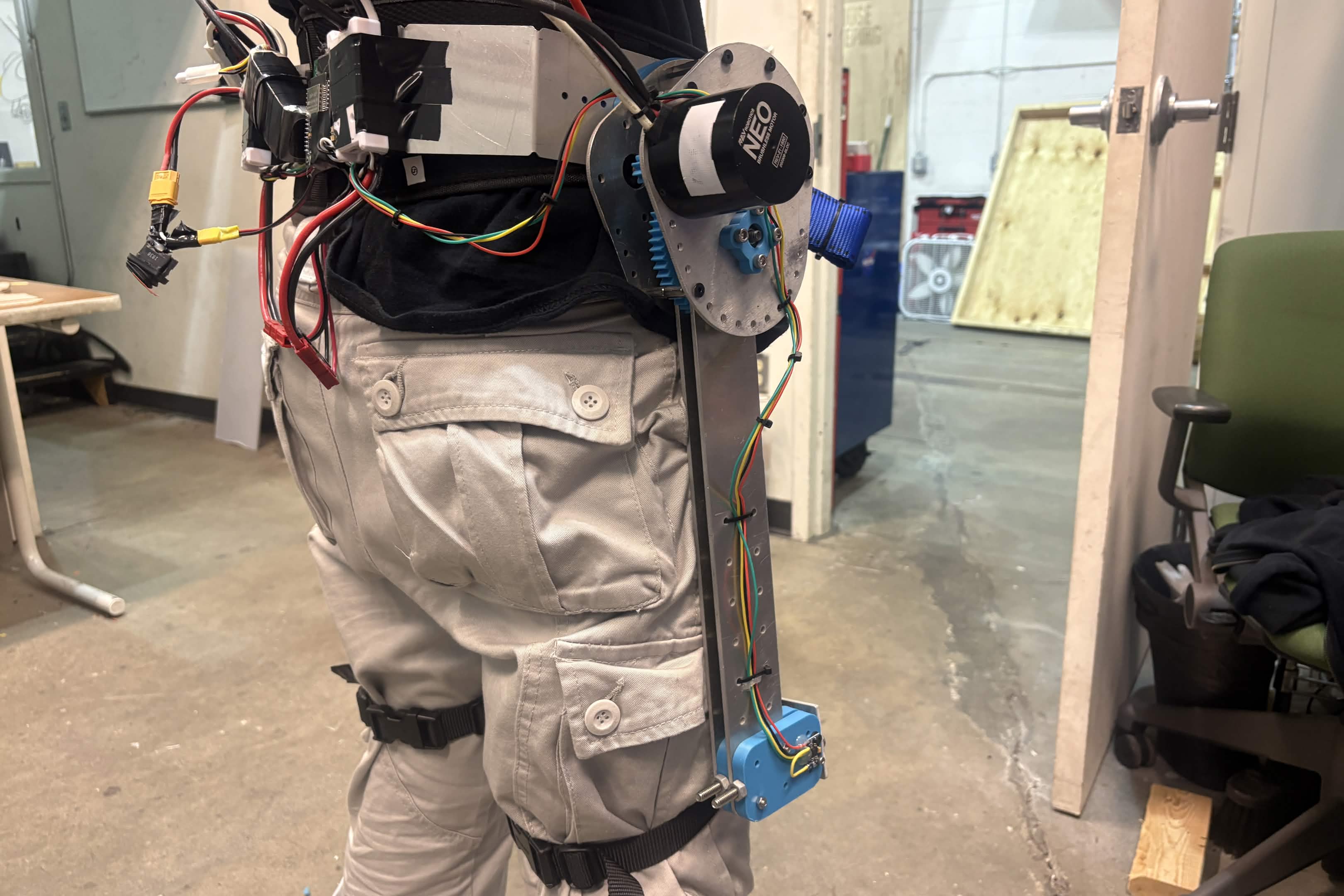
The electronics used include an ESP32, MPU6050 IMUs, REV ION Brushless Motors, SPARK MAX motor controllers, a 3S LiPo battery, and a BEC. Most electronics are mounted on the rear, but the motors are mounted on the sides.
The IMUs detect steps by comparing the angle and angular velocities. The ESP32 communicates with the motor controllers via PWM, which control the system's BLDC motors. The two motors are run through a 36:1 compound gearbox to increase the torque and decrease the maximum speed to a more reasonable speed relative to your leg's angular velocity. The battery directly powers the motor controllers and is run through the BEC to provide 5V to power the ESP32.
All parts are either cut using a waterjet or 3D printed, to allow for rapid prototyping.
Challenges we ran into
CAN would have been the communication protocol of choice to direct the motor controllers, but the modules we had refused to send or receive signals. Being able to use CAN and receive motor feedback (position, velocity) would have allowed us to achieve more accurate control over the motors' torque and speed, which would've smoothed the motion.
Tuning the motion in general was also so, so tedious.
Accomplishments that we're proud of
The system works! It does reduces the load when walking. Controlling it also doesn't need much getting used to, and does not require any external inputs besides swinging your legs.
What we learned
A lot about coding :) Neither of us are CS majors, so getting the system to work right probably took a lot more effort than it should've. It's also a very fine line between natural and unnatural motion, so getting it to feel good enough took a lot of trial and error to determine why it felt "off".
What's next for Strider
The biggest avenue for improvement is in the actuators. A greater reduction would be very helpful to allow the motors to be more efficient in the RPM range that a leg moves in (~50 RPM, vs our current max speed of 150 RPM), and a integrated gearbox would also improve the size of the system. Using CAN instead of pure PWM would also help by pulling data from the motors to read the current draw and control the outputted torque.
Implementing more robust electronics mounting would also help greatly.


Log in or sign up for Devpost to join the conversation.