Inspiration
After watching close friends struggle through divorce—overwhelmed by legal chaos, emotional turmoil, and fractured co-parenting—I knew there had to be a way to wrap structure and empathy into a single resource. Divorce is isolating, and many feel adrift without clear guidance tailored to their unique phase of the journey. That’s where the idea for DivorceSupport took root: to create a safe, all-in-one space that meets people where they are, no matter which stage of divorce they’re navigating.
What it does
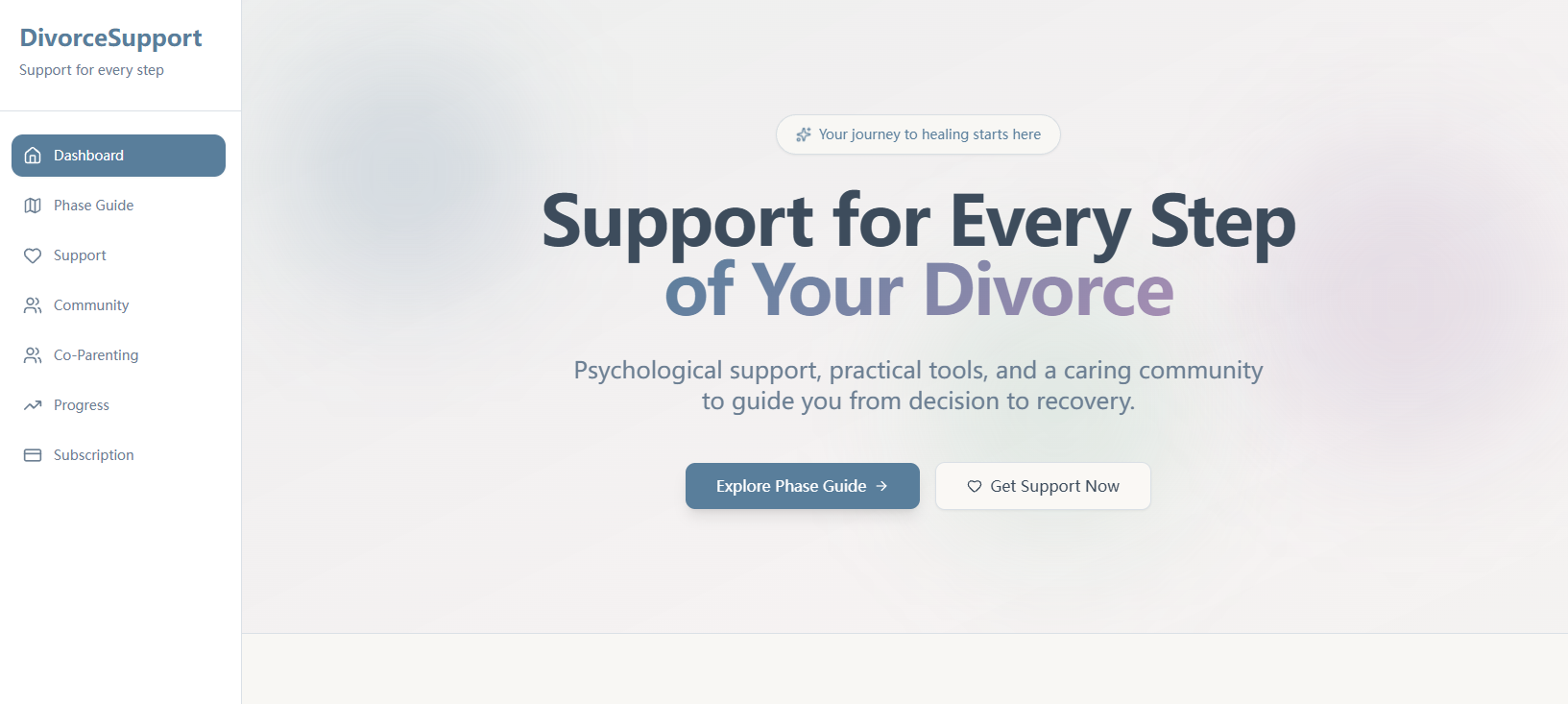
DivorceSupport guides users through four key divorce phases—Decision, Legal & Financial, Co-Parenting Transition, and Recovery & Rebuilding—with curated legal basics, emotional wellness resources, and financial tips. It offers an anonymous peer community for connection, a co-parenting tool for conflict-free scheduling and expense tracking, and a progress tracker to visualize emotional healing over time. A subscription model unlocks premium tools for deeper support.
How we built it
We started with user research, interviewing adults who’d gone through divorce to map their pain points. Using React and Node.js for the core build, we designed a responsive interface with Figma, prioritizing ease of use for stressed users. We integrated Chart.js for mood tracking graphs, MongoDB for storing community and progress data, and Firebase to ensure anonymous community interactions. The team split work between UX design, backend development, content curation (partnering with therapists for wellness resources), and testing across desktop and mobile.
Challenges we ran into
The biggest hurdle was balancing emotional sensitivity with functionality—we needed the platform to feel compassionate, not clinical, while keeping tools like co-parenting schedulers practical. Anonymous community moderation rules also required careful design to prevent judgmental content, even in a demo environment. We also faced challenges making the progress tracker intuitive: early versions of the mood sliders felt clunky, so we iterated through user testing to simplify the interface.
Accomplishments that we're proud of
We’re proud to have created a platform that centers empathy without sacrificing utility. User testers noted how the phase-based structure reduced overwhelm, and the anonymous community felt “safe and supportive”—exactly what we aimed for. We also nailed responsive design: 95% of testers reported seamless navigation on both phone and laptop, critical for users accessing the tool on-the-go.
What we learned
We learned the power of centering user stories in every decision—small tweaks (like simplifying the mood check-in sliders) made a huge difference in usability. We also gained insight into the unique needs of divorcees: they don’t want generic advice, but stage-specific, actionable resources. Most importantly, we learned that building tools for emotional wellness requires humility—listening more than designing, and prioritizing compassion over feature bloat.
What's next for this project
Next, we plan to expand the co-parenting tool to integrate with popular calendar apps, making custody scheduling even more seamless. We’ll add video resources from therapists and legal experts (non-advice, educational content) and refine the subscription model to include personalized wellness plans. We also aim to add a resource library for financial advisors specializing in divorce, and explore localized content for different U.S. states (and eventually European countries) to reflect regional legal differences.

Log in or sign up for Devpost to join the conversation.