-
-
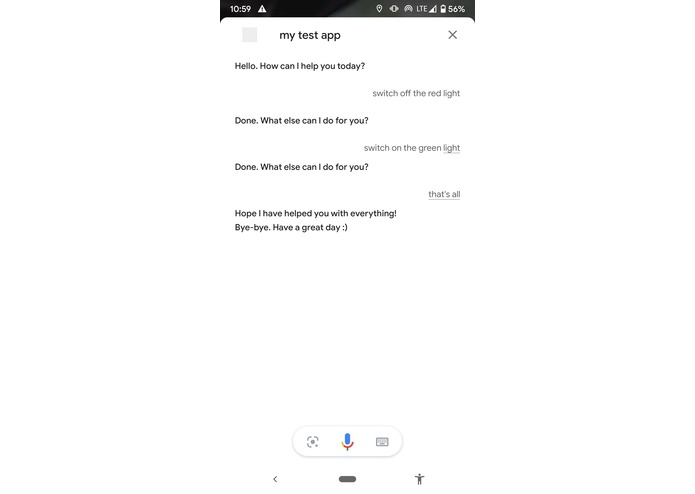
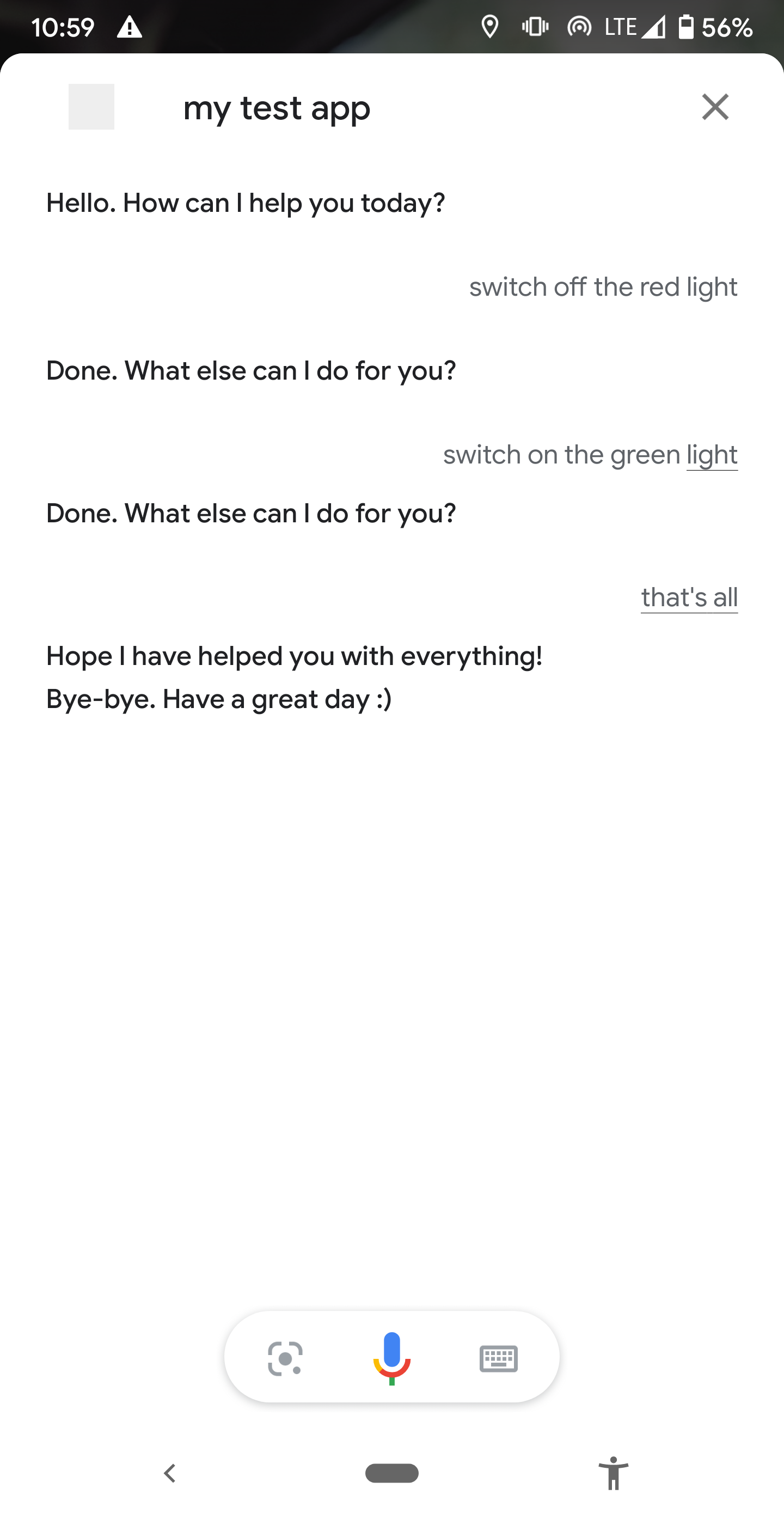
Interface of our Test App created using Google Assistant
-
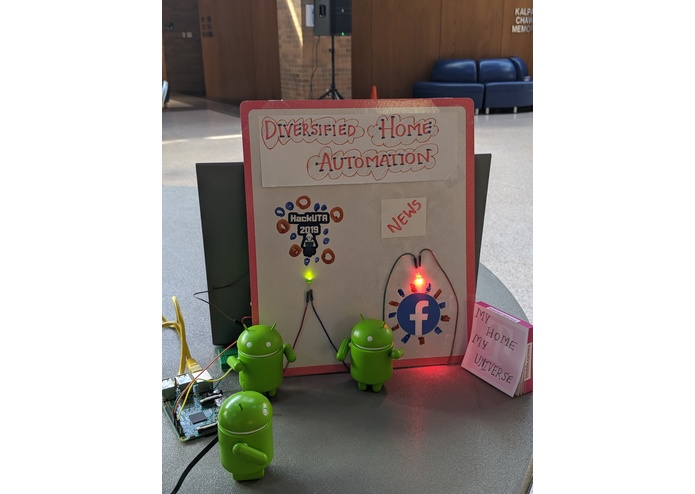
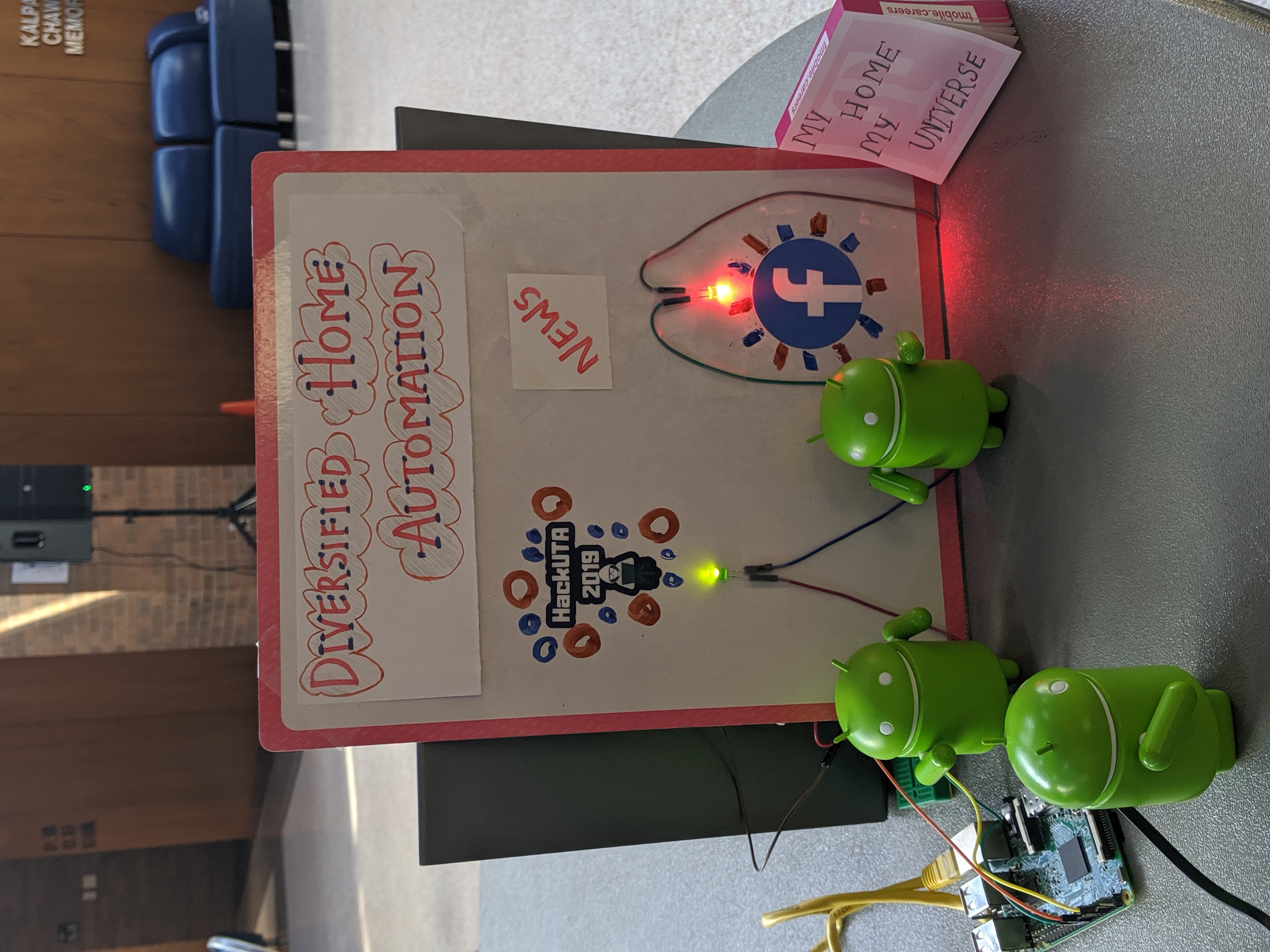
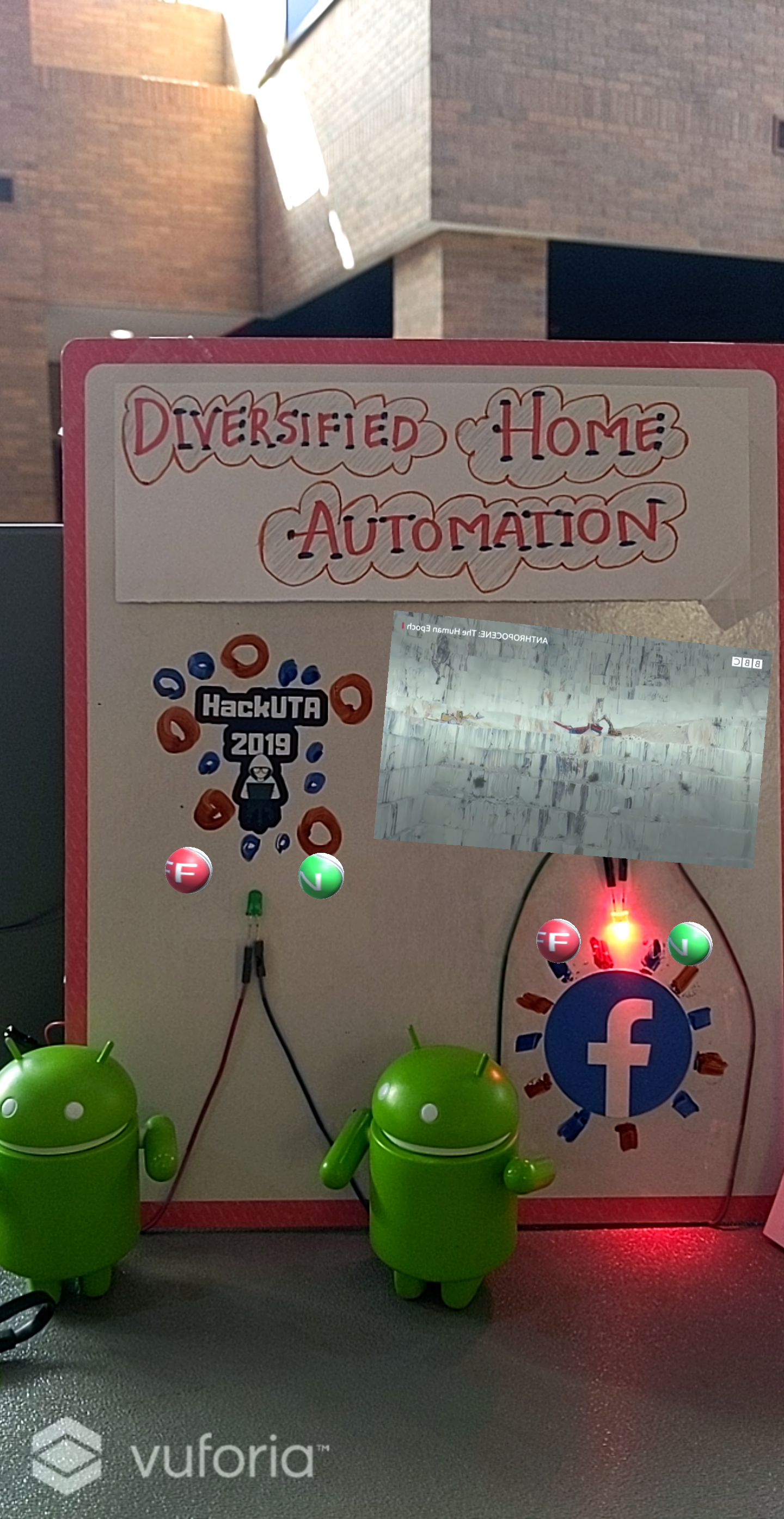
The prototype representing the house, which includes a bulb representation(Facebook symbol)other electronic devices and real time data(Time)
-
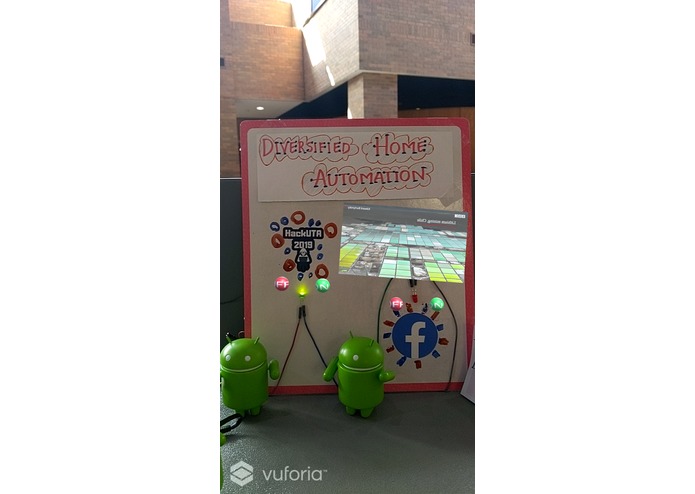
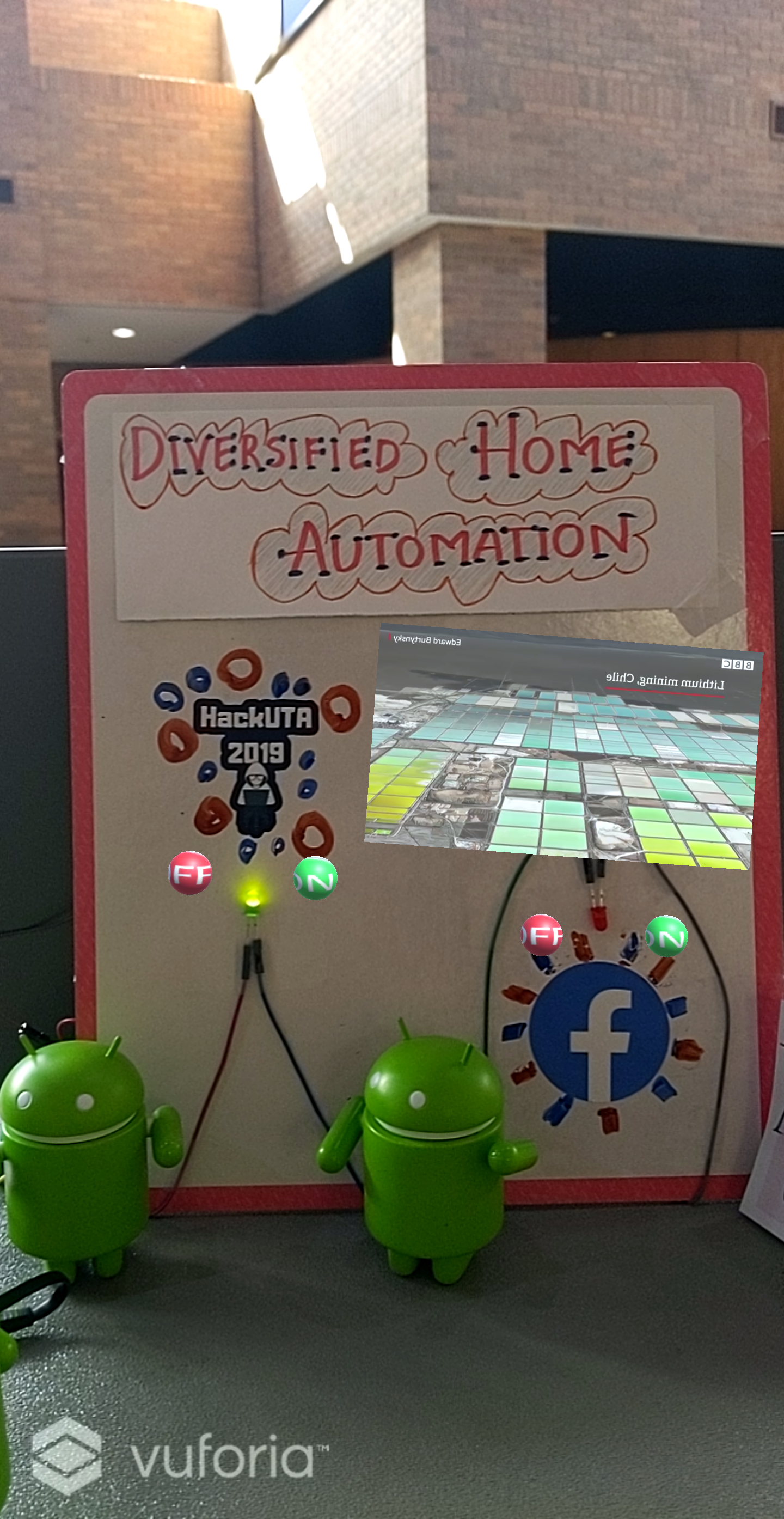
'HackUTA' app interface demonstration the lights on and real-time weather data
-
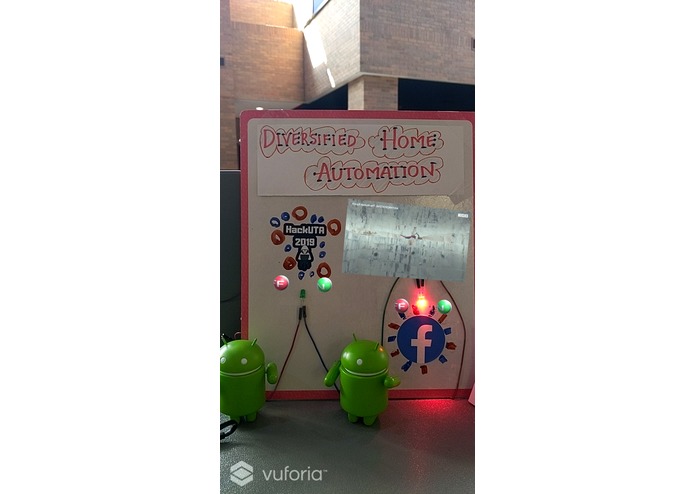
'HackUTA' app interface demonstration the lights on and real-time weather data
-
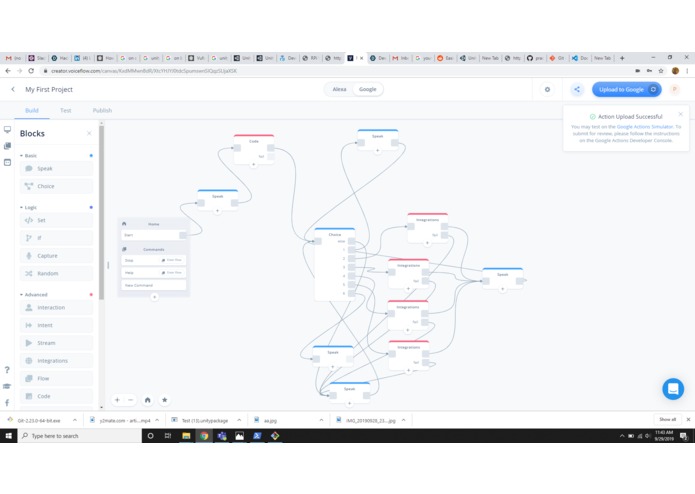
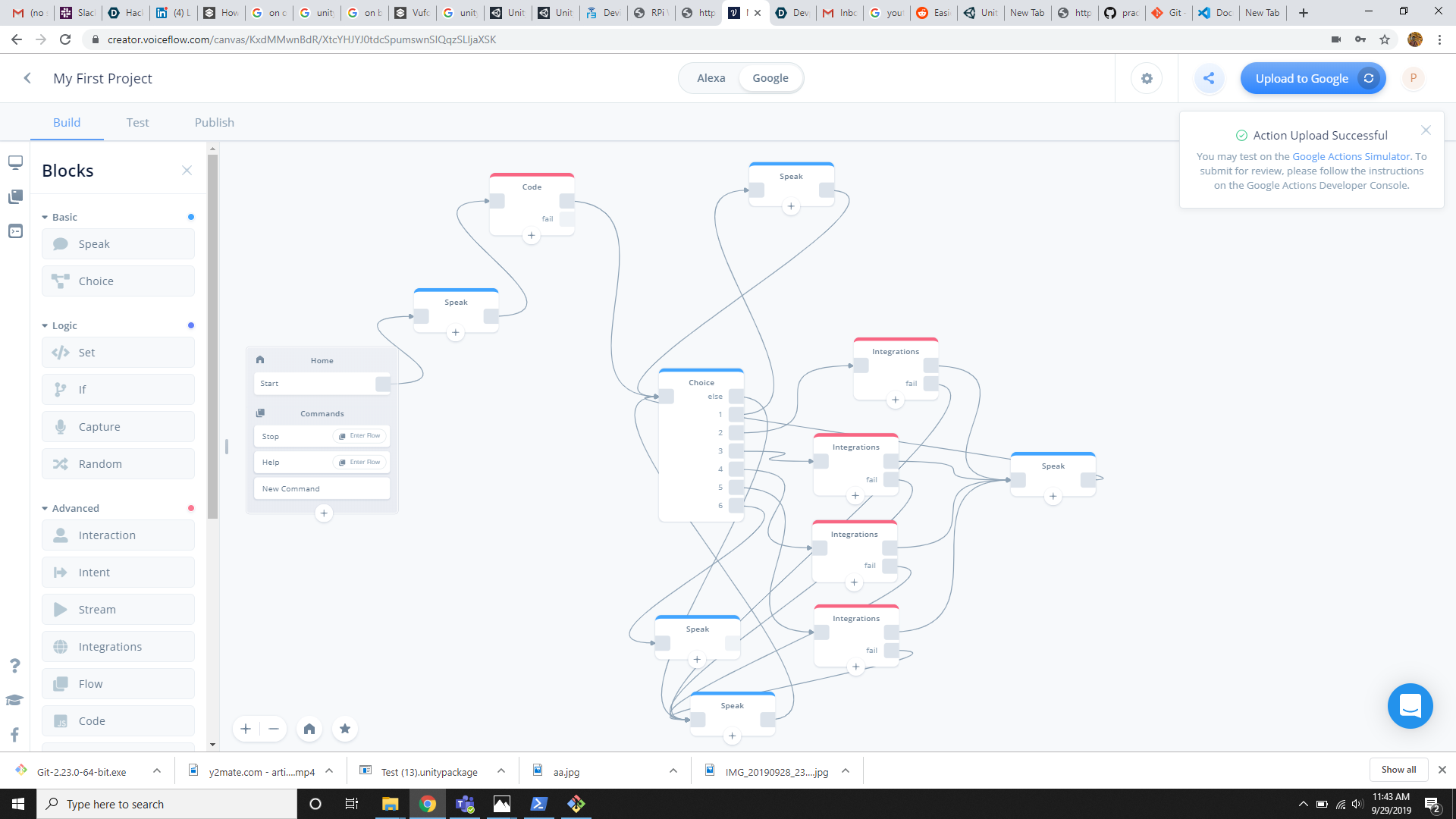
VoiceFlow application to control the appliance
Inspiration:
The system was automated to help a wide range of users in performing their daily activities in a more efficient and convenient way. However, the main focus was on the disabled and elderly group of the population. Taking this as a sample, an automation system was thought on to build a perfect companion for someone to be at a house and feel at home. The problem lies with the situation of the elderly or disabled people, who cannot usually help themselves to move around, and might require external assistance. People who live alone might also need a helping hand at home. Therefore a voice controlled home automation system is designed, so that the users can perform certain tasks by just the use of their voices, moreover, the system is designed work with any smart phone where an user can easily speak their commands, otherwise they would have to walk over to the microphone to speak. Integrating the system through mobile application for every cell phone makes our system more user-friendly and portable. Also, an application using AR technology was developed using both visual and auditory feedback that are developed specifically to assist people with low vision/blindness and elderly people. A gestural interface allows the user to explore nearby objects or the environment in a natural way by touching or pointing, or otherwise indicating a location or direction of interest. The reality augmentation comes in the form of additional information or annotation (whether audio, tactile, or visual enhancement) related to the location or direction indicated by the gesture.
What does our system do?
‘Diversified Home Automation System’ is computer-based system that can accepts voice to direct commands and processes them and also uses Augmented Reality for detecting and controlling appliances. The system provides us with switching any device ON/OFF. (a) Voice controlled wireless smart home system has been focused mainly for the elderly and disabled people; but can be used by any user. The proposed system has two main components, they are: • Voice Recognition System • Wireless System. The system is portable and constructed in a way that is easy to install, configure, run, and maintain (b) The application developed using AR technology uses both visual and auditory feedback that are developed specifically to assist people with low vision/blindness and elderly people. We emphasize that our AR technology is a powerful tool with the potential to remove or significantly reduce a range of accessibility barriers.
How we built it?
We have used RaspberryPi as a embedded device to automate appliances in the home. The Raspberry runs a Python Flask server that can control the LED devices and eventually the RaspberryPi is connected to the internet through which it is possible to access the REST API to control the devices. We built a Google Assistant / Alexa voice controlled app using VoiceFlow and depending on the commands that are given, it calls the rest API to control the LED. We have also built an Android App using Unity wherein it uses Vuforia as a Augmented Reality package to detect the nearby Electrical appliance and enables us to control them by a power of simple touch on the phone. The augmented reality app can also be used to play live news, real-time weather status etc streaming from YouTube.
Challenges we ran into:
- Getting a Global IP address for our RaspberryPi as we were not able to connect the RaspberryPi REST API using VoiceFlow.
- Using Unity Vuforia to detect the appliance in real-time and enabling a control mechanism for the device.
Accomplishments that we are proud of:
- Staying up for two days at a stretch to build something that we designed.
- Completing the prototype with a working demo before the deadline.
- Efficient team co-ordination
What we learnt:
- Unity(from the scratch)
- Dedication and positive attitude
What's next for Diversified Home Automation using Voice Control and AR?
Scalability, customization and better user interface.

Log in or sign up for Devpost to join the conversation.