-
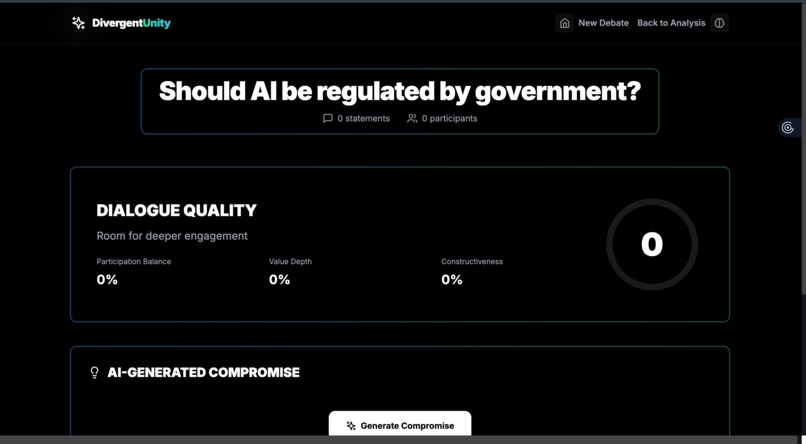
Summary
-
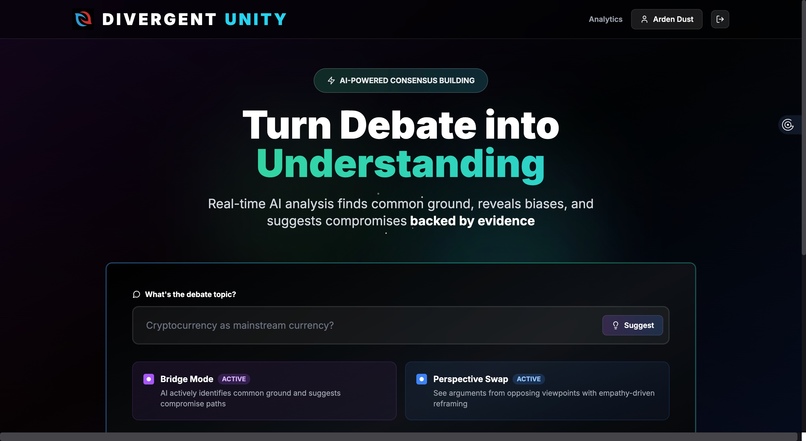
Mai
-
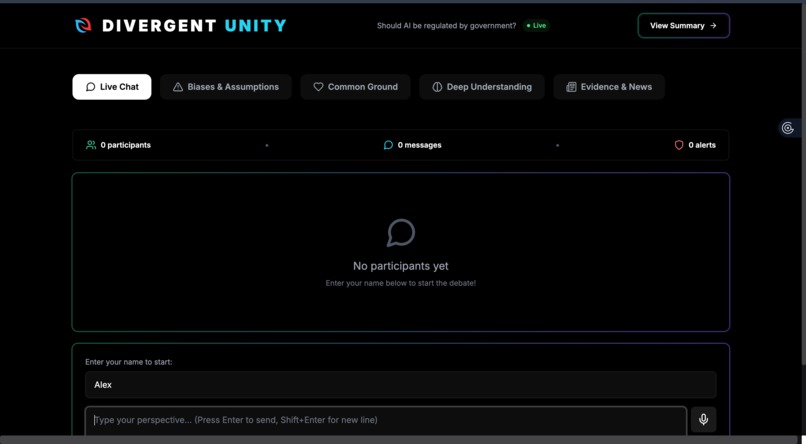
Chat
DivergentUnity - Project Story
Inspiration
In an era of increasing polarization, we noticed that online debates often devolve into echo chambers and hostile exchanges. People talk past each other, unable to find common ground even when shared values exist beneath the surface. We asked ourselves: What if AI could help people understand each other better instead of driving them further apart?
DivergentUnity was born from the belief that divergent perspectives can unite through deep understanding. We wanted to create a platform where:
- People could engage in meaningful debate without fear of toxicity
- An AI "judge" could provide real-time feedback on bias, facts, and civility
- Hidden common ground could be discovered through advanced value analysis
- Participants could see their perspectives visualized and mapped to find bridges between viewpoints
What We Built
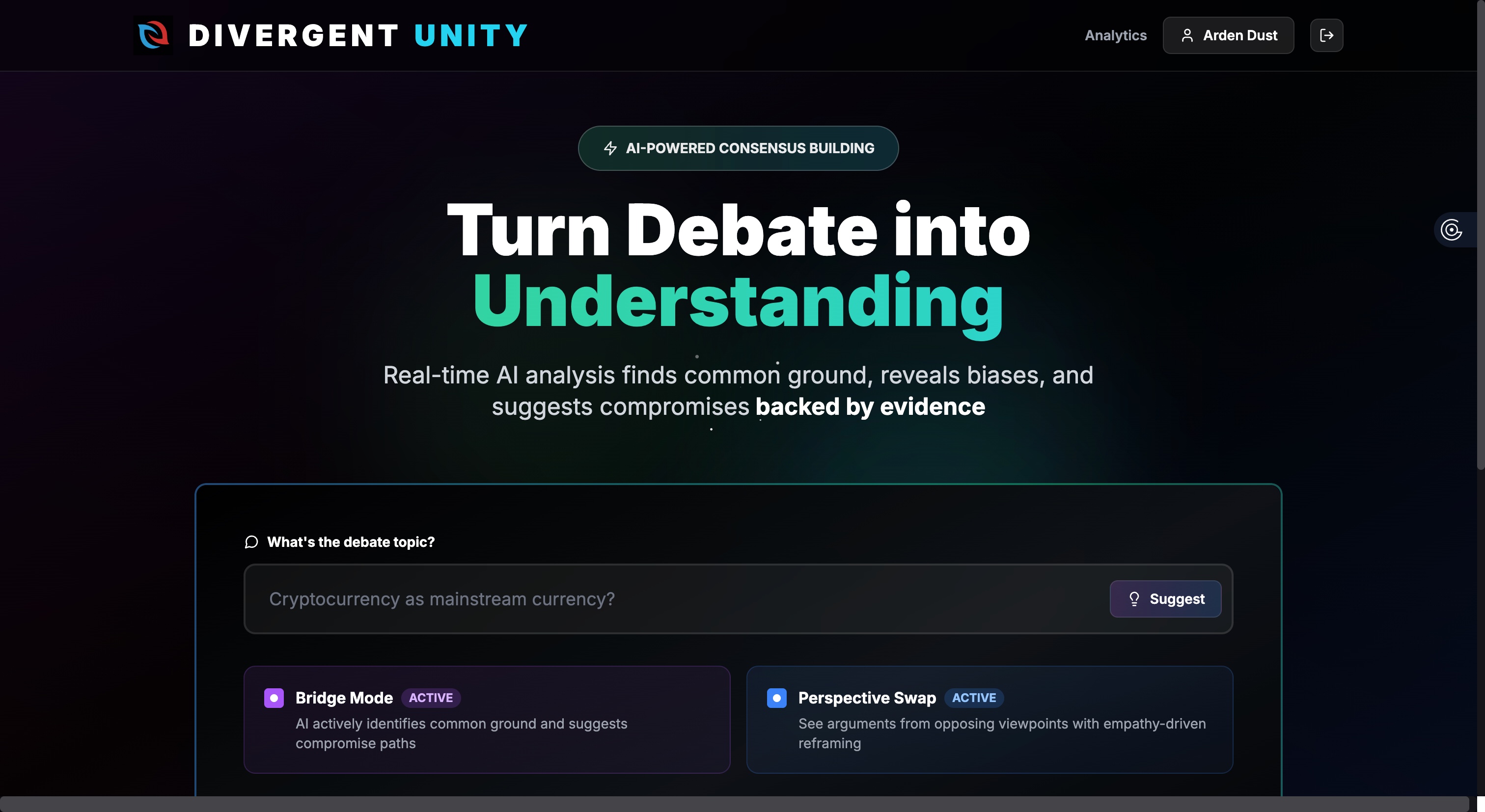
DivergentUnity is an AI-powered debate platform that transforms polarized conversations into opportunities for mutual understanding.
Core Features:
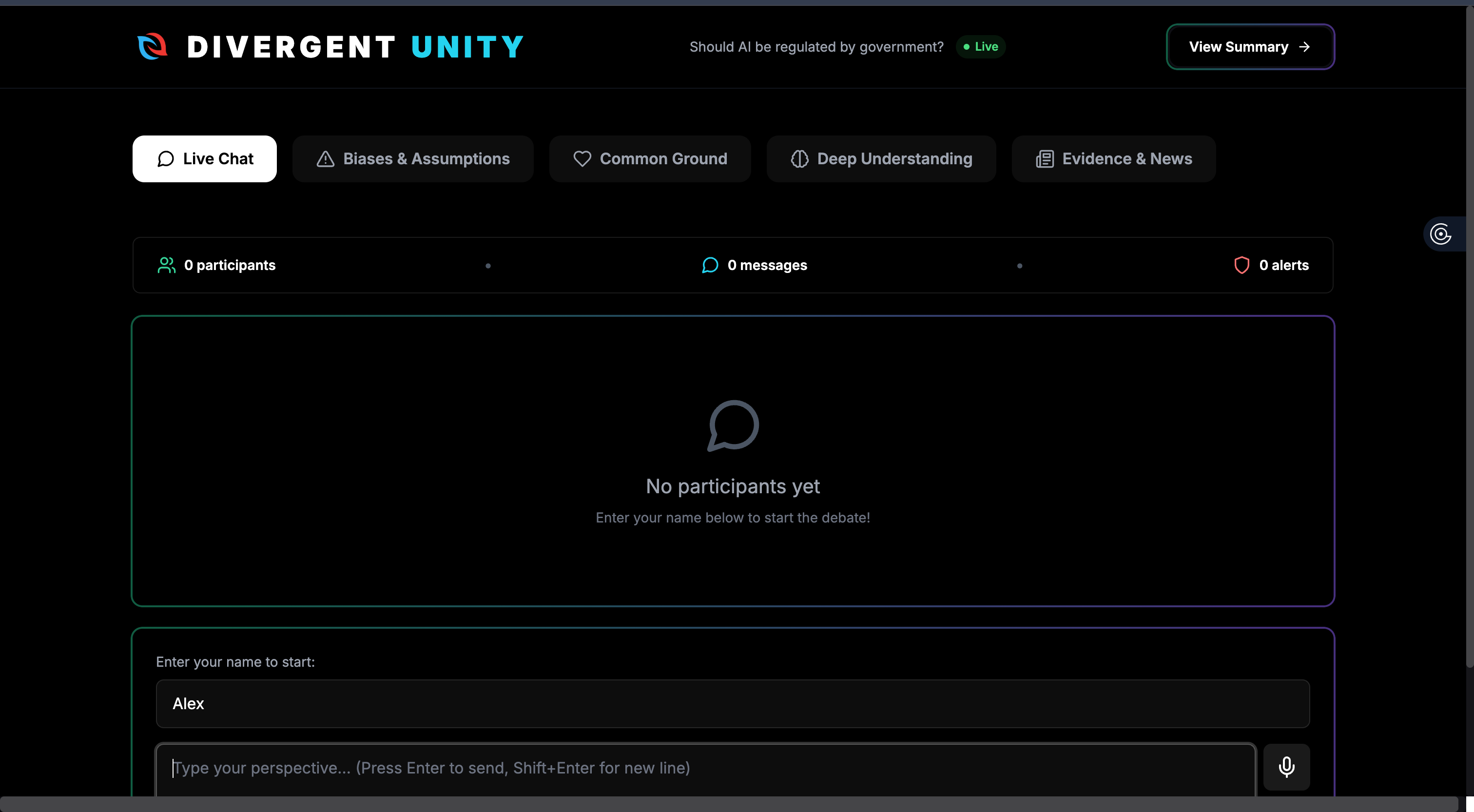
- Multi-Pane Live Chat
- Each participant gets their own dedicated chat pane
- Real-time updates showing all perspectives simultaneously
Color-coded participants with avatars for easy tracking
- AI Judge System
Monitors every message for cognitive biases (strawman, ad hominem, false dichotomies)
Fact-checks claims and identifies overgeneralizations
Ensures civility by flagging personal attacks and dismissive language
Provides constructive suggestions for rephrasing problematic statements
- Deep Value Analysis
Extracts core values from each participant's statements
Maps relationships between different values
Identifies shared values that might be hidden beneath disagreements
Calculates tension and empathy scores to track debate quality
- AI-Generated Insights
Biases & Assumptions: Pinpoints specific cognitive biases with direct quotes
Common Ground: Discovers shared values and potential bridges
Deep Understanding: Provides each participant's perspective in their own voice
Evidence & News: Aggregates real-world evidence and recent developments
AI Compromise: Generates balanced solutions honoring all viewpoints
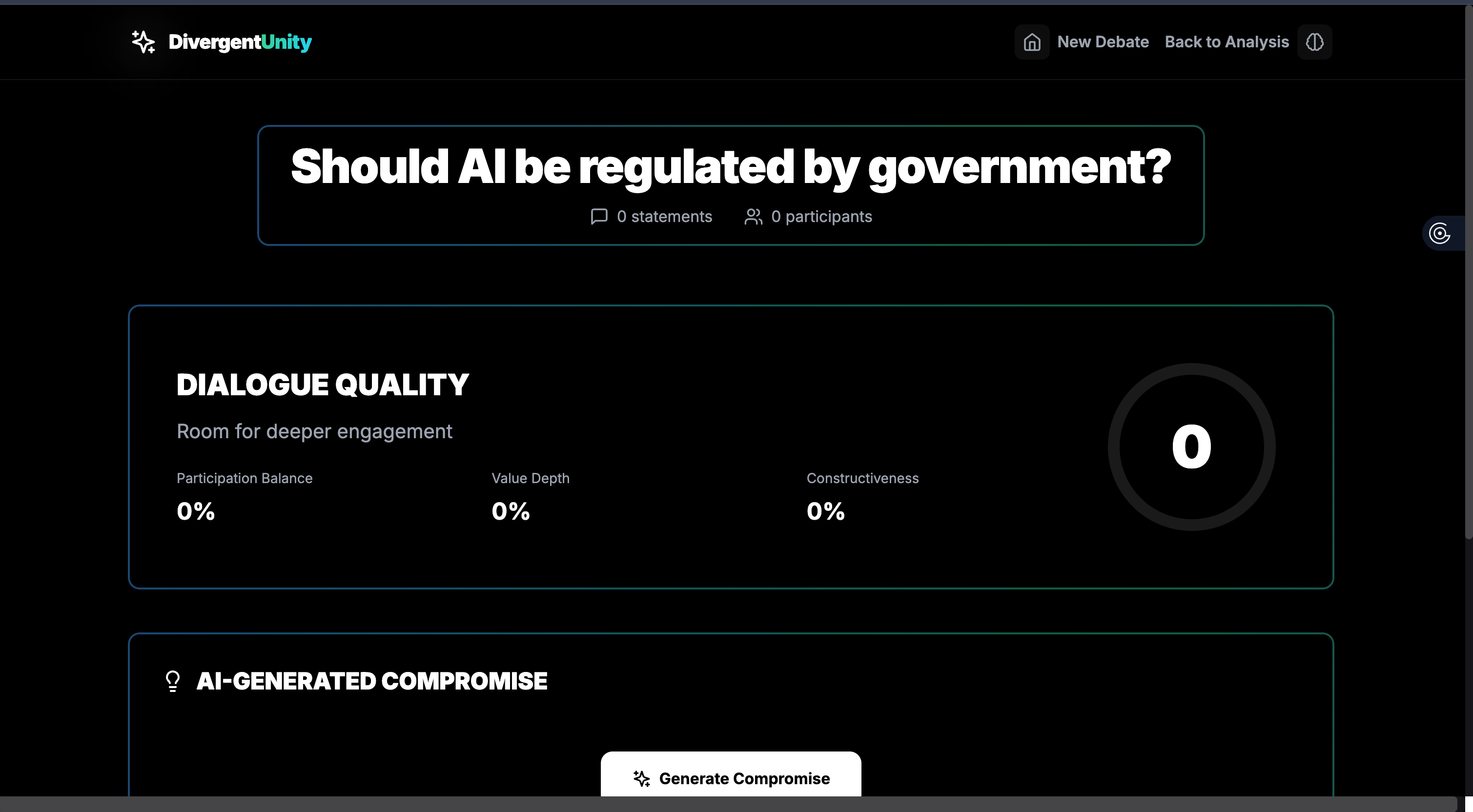
- Comprehensive Summary
Neutral summary of the entire conversation
Key points from each perspective
Visual tension/empathy timeline
Debate quality metrics (civility score, bias score, evidence-based score)
Final compromise proposal with rationale
How We Built It
Tech Stack:
Backend:
- FastAPI - High-performance Python web framework
- SQLModel - Type-safe database ORM combining SQLAlchemy with Pydantic
- SQLite - Lightweight database for storing conversations and value nodes
- Google Gemini 2.5 Flash Lite - Powers all AI analysis (judge, biases, common ground, compromise)
- Uvicorn - ASGI server for running the backend
Frontend:
- Next.js 14 - React framework with App Router for modern routing
- React 18 - Component-based UI with hooks
- TypeScript - Type safety throughout the frontend
- Tailwind CSS - Utility-first styling with custom animations
- TanStack Query (React Query) - Server state management with real-time polling
- Lucide React - Beautiful, consistent icons
Architecture:
- RESTful API with FastAPI endpoints
- Real-time polling (1-second intervals) for live chat updates
- Modular service layer for AI insights
- Persistent storage with SQLite database
- Value graph system with nodes and edges for relationship mapping
Key Implementation Details:
- AI Judge Pipeline:
- Analyzes each message before storage
- Passes conversation history for context
- Returns structured JSON with issues categorized by type
Stores analysis in database for later visualization
- Value Extraction:
Uses Gemini to extract core values from natural language
Creates value nodes (fairness, freedom, progress, etc.)
Builds relation edges showing how values support/contradict each other
Calculates importance scores and tension/empathy metrics
- Real-Time Updates:
Frontend polls every 1 second for new messages
Quality metrics refresh every 5 seconds
Memoized components prevent unnecessary re-renders
Optimistic updates for smooth UX
- Multi-Pane Layout:
Dynamic grid layout (2, 3, or 4 columns based on participant count)
Independent scroll for each participant's message history
Auto-scroll to bottom when new messages arrive
Typing indicators per participant
Challenges We Ran Into
1. AI Judge Reliability
Problem: The AI judge would sometimes timeout or fail due to DNS resolution issues with Google's API. Solution:
- Implemented graceful error handling that returns empty analysis on failure
- Added socket-level timeout configuration (30 seconds)
- Created fallback responses so the app continues working even if judge fails
- Added detailed logging to track issues:
✓ Judge analyzed messageor✗ Judge error

Log in or sign up for Devpost to join the conversation.