-
-
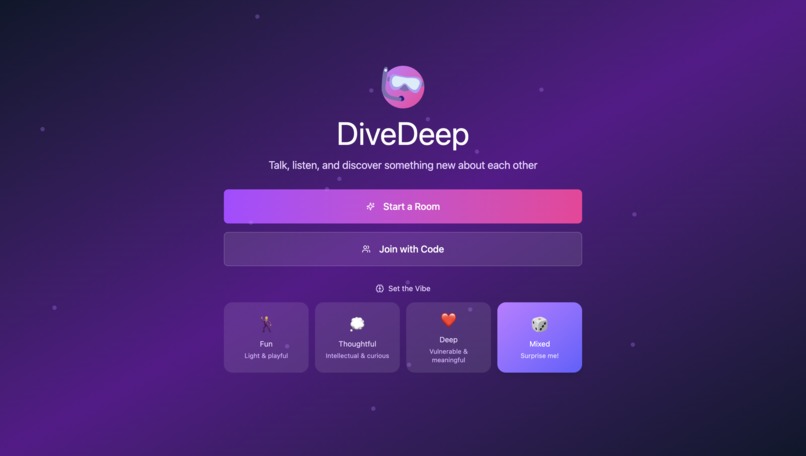
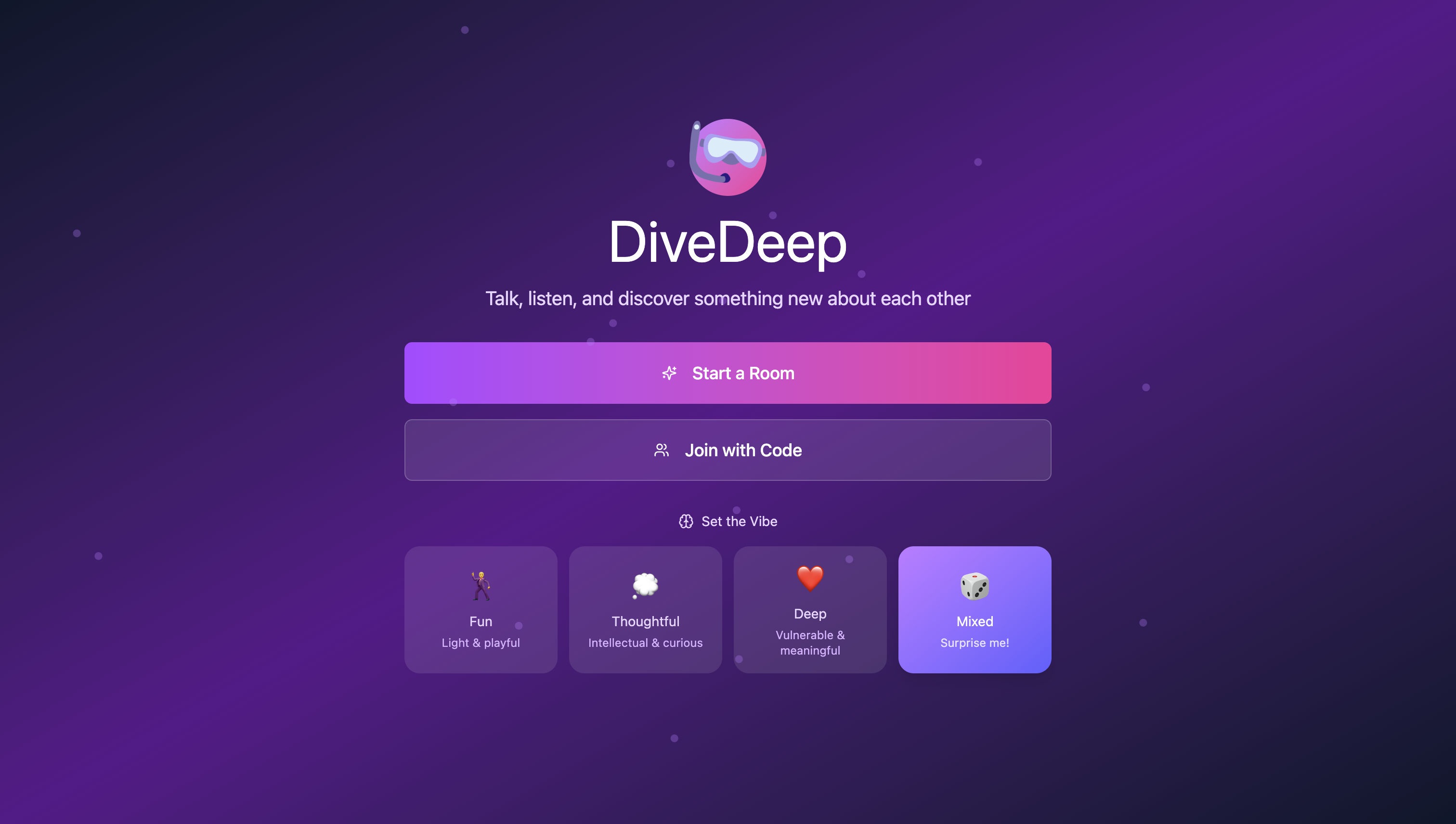
Main homepage, user can set "vibe" and began chat.
-
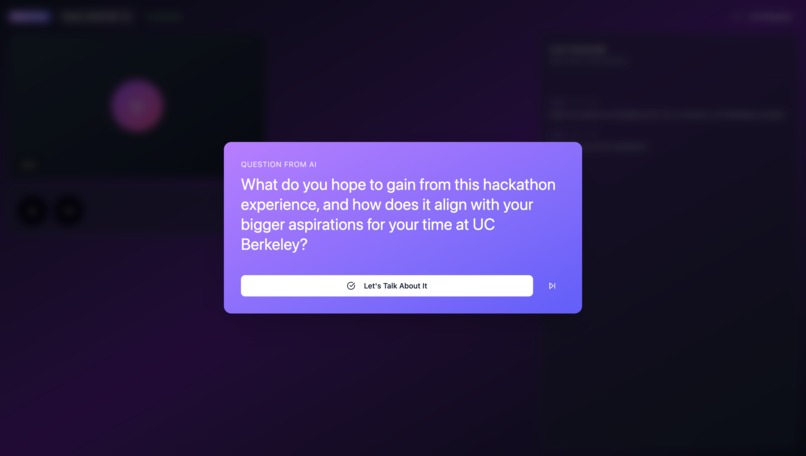
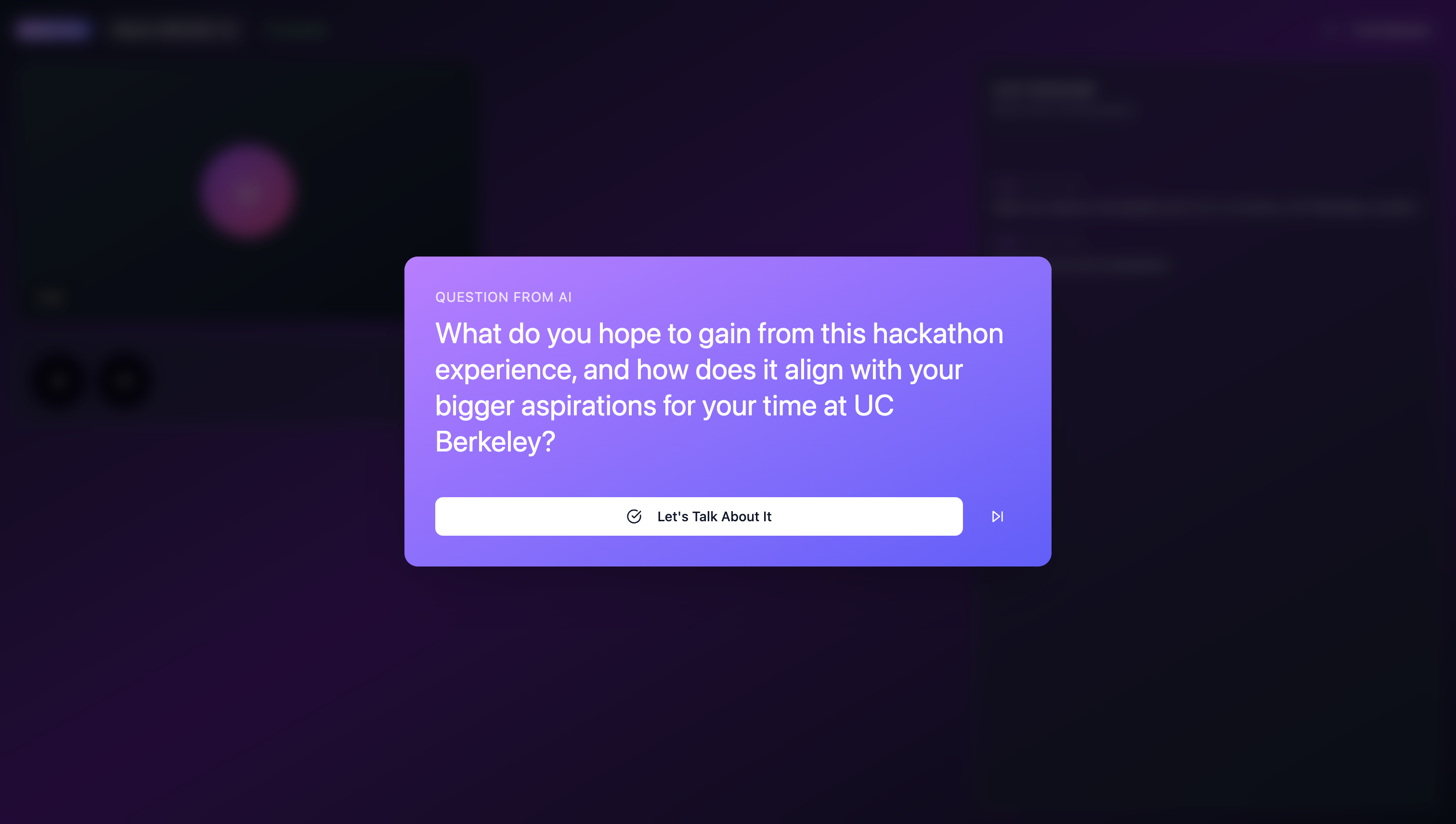
AI generated questions based on user responses.
-
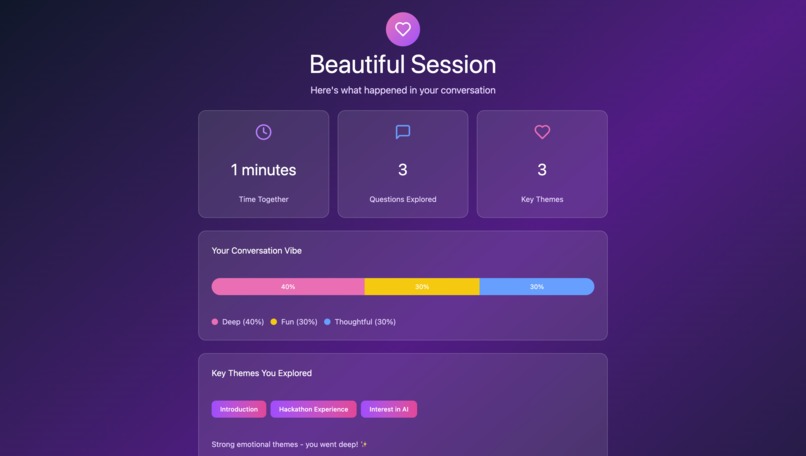
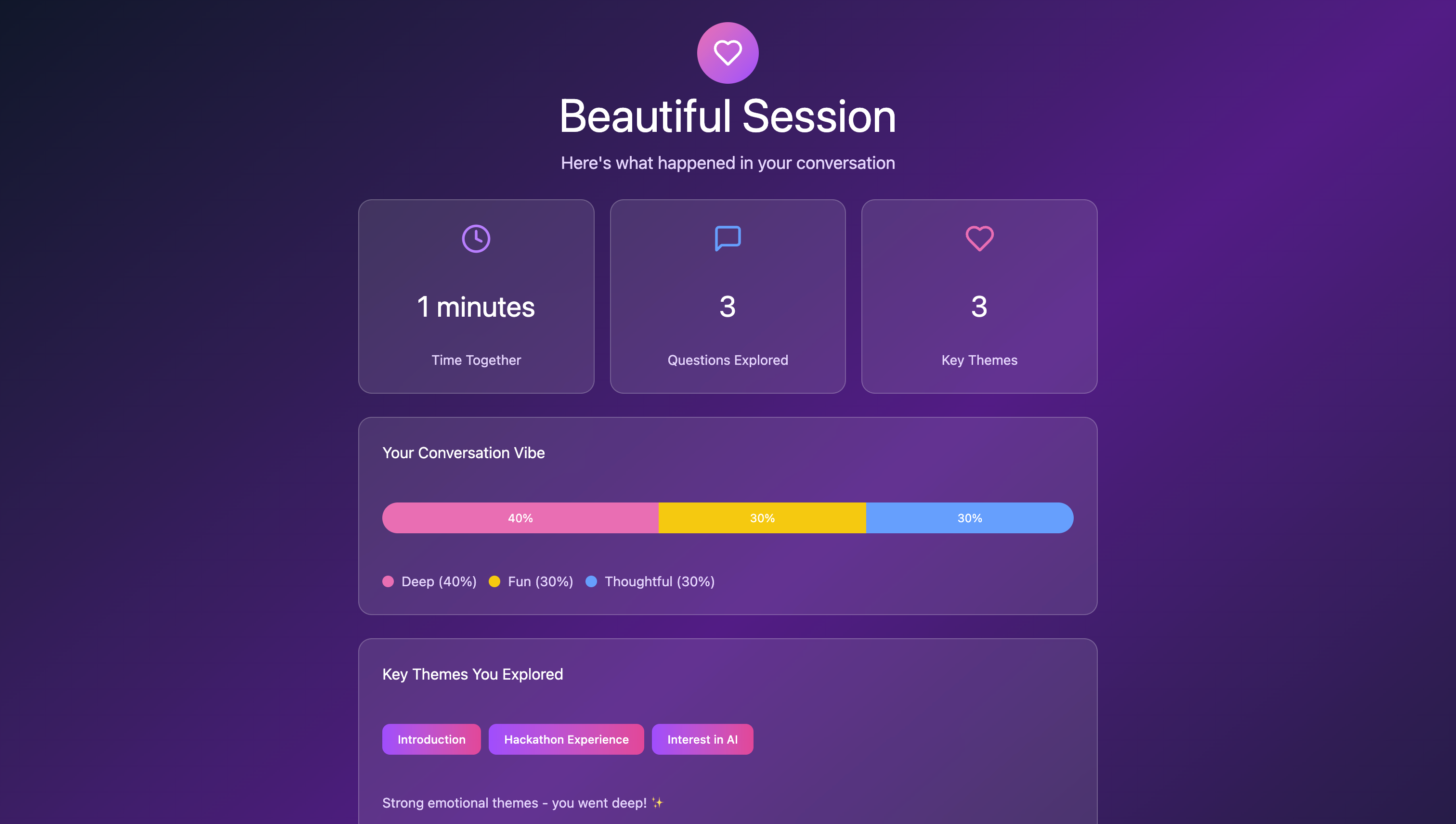
Reflection page summarizes conversation session.
-
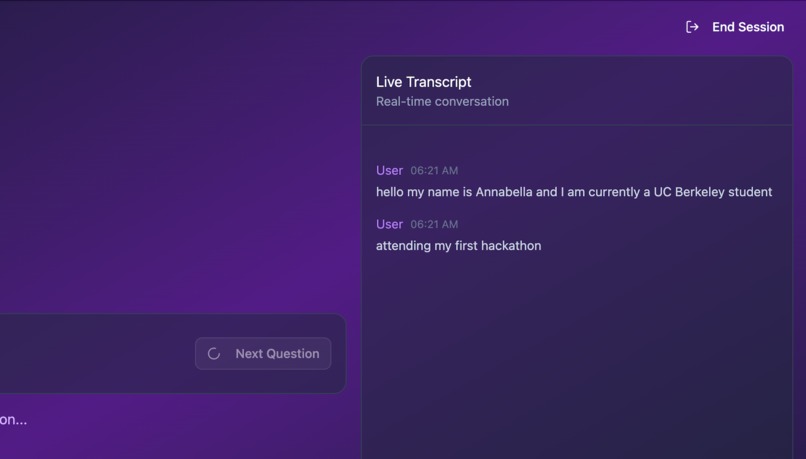
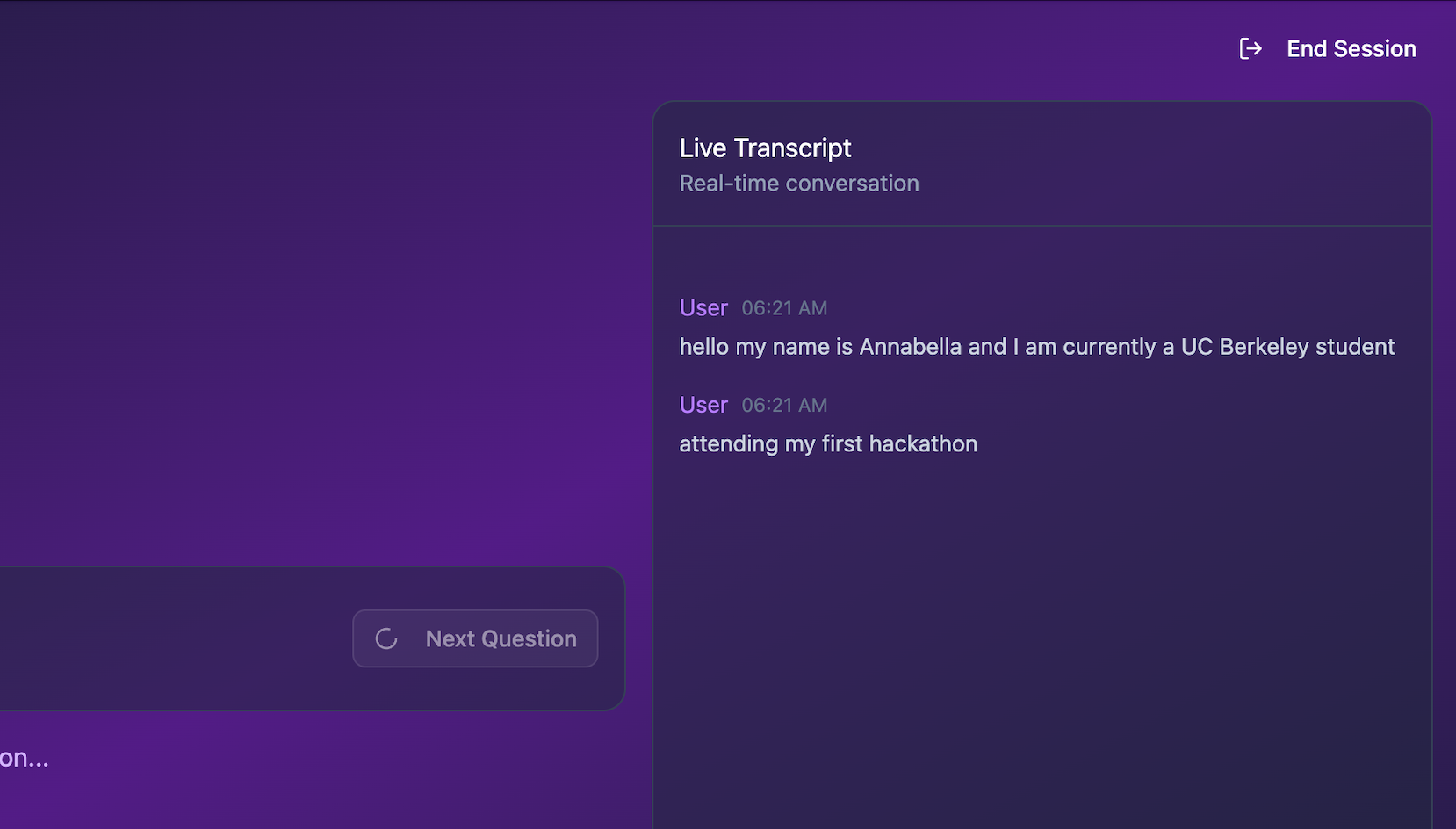
LiveKit transcribes voice input in real time.
Inspiration
Introducing DiveDeep: AI that helps people truly connect. In workplaces and at school, we talk constantly, whether in meetings, chats, and group projects, yet so many of us still feel isolated. Awkward small talk replaces real understanding, and team-building events rarely bridge the gap of true connection. As students and employees ourselves, we have seen how deep connection drives trust, creativity, and efficiency in team environments, yet it rarely happens naturally. That's why we build DiveDeep, an AI-powered tool grounded in psychology that listens, understands, and asks thoughtful questions to help people open up. By guiding authentic conversations, DiveDeep builds deeper connections, turning coworkers into friends and strangers into teammates.
What it does
DiveDeep listens to group conversations and helps people connect on a more personal level. Using LiveKit’s real-time audio streaming, it captures what participants are saying and transcribes the discussion in the background. As people talk, DiveDeep’s AI analyzes tone, sentiment, and topic to understand the mood of the group. Then, it gently injects thoughtful, context-aware prompts designed to deepen the conversation, specifically questions that help users reflect, share, and open up. DiveDeep’s core feature lies in its ability to sense emotional flow and respond naturally. It balances lighthearted, intellectual, and vulnerable prompts to guide groups through different levels of connection. DiveDeep turns casual conversations into a space for empathy and genuine human connection.
How we built it
Our team began by creating a mockup of DiveDeep on Figma, focusing on simple UI/UX design principles. From there we built the full stack using React + TypeScript on the frontend with Vite for iteration, and Tailwind for styling our application. The meat of our functionality is powered by LiveKit’s Client SDK, which handles both video streaming and voice transcription all in real-time. On the backend, we used Node.js + Express alongside LiveKit Server SDK to manage tokens, rooms, and session lifecycles. Our intelligence lies in the OpenAI GPT-4o-mini model that is trained on psychology principles. This model controls the conversational understanding of the transcription and generates appropriate follow-up questions. Every conversation flows through a tight analyze > generate > display > repeat loop.
Challenges we ran into
Since this was our first hackathon and first real project, we struggled with setting up Git and learning how to collaborate effectively on code. We also ran into challenges integrating LiveKit with our project and managing multiple services at once. Throughout the process, we learned a lot about debugging and working together under pressure. It took a lot of trial and error with prompting and brainstorming to generate meaningful, related questions that fit naturally into conversations.
Accomplishments that we're proud of
As a team of all first-time hackers, we are incredibly proud of what we built, not just because it works, but because none of us came into Cal Hacks with extensive experience in full-stack development, APIs, or AI systems. We spent hours ideating, learning new tools, covering new topics, pulling all-nighters to debug, and pushing far beyond what we were expecting. What started off as a simple application that made people feel closer evolved into a fully functional web application that utilizes AI, takes real-time voice inputs, accurately analyzes conversations, and generates insightful, personalized questions. More importantly, we are proud of the vision behind DiveDeep. We set out to tackle something deeply human—the feeling of loneliness and isolation, and managed to create a tool that genuinely helps people connect in a more meaningful way.
What we learned
We learned how to work as a team and divide tasks efficiently to stay organized throughout the project. This experience taught us the fundamentals of Git, integrating APIs, using tokens, and managing real-time systems. We realized how important committing consistently is, especially when we needed to backtrack or debug errors. Through building both the frontend and backend, we gained valuable full-stack experience and a stronger understanding of how different components connect. Beyond technical skills, we learned how to communicate ideas clearly, brainstorm effectively, adapt quickly when things broke, and support each other through challenges.
What's next for DiveDeep
While DiveDeep began as a tool to strengthen workplace culture and connection between coworkers, we anticipate its impact extending far beyond corporate boundaries. Imagine using this same application to bring families, friends, and even strangers closer together. Whether it’s a group of coworkers grabbing lunch, roommates getting to know each other better, or friends on a road trip looking to go beyond small talk, DiveDeep can turn any shared moment into a meaningful conversation. We envision that DiveDeep will evolve into a universal platform for human connection, adaptable to every environment where people come together and want to become more connected.
Built With
- css
- express.js
- html
- livekit
- node.js
- openai
- react
- tailwind
- typescript


Log in or sign up for Devpost to join the conversation.