Inspiration
Divebomb Motorsports was inspired by the mission of Print & Play Creative Manufacturing: to make engineering accessible. As engineering students, we wanted to bridge the gap between "toy" and "precision machine." We asked ourselves: Can we design a 3D-printable chassis that is simple enough for a beginner to assemble, but aerodynamically optimized enough to dominate the oval track? The result was a resounding YES.
What it does
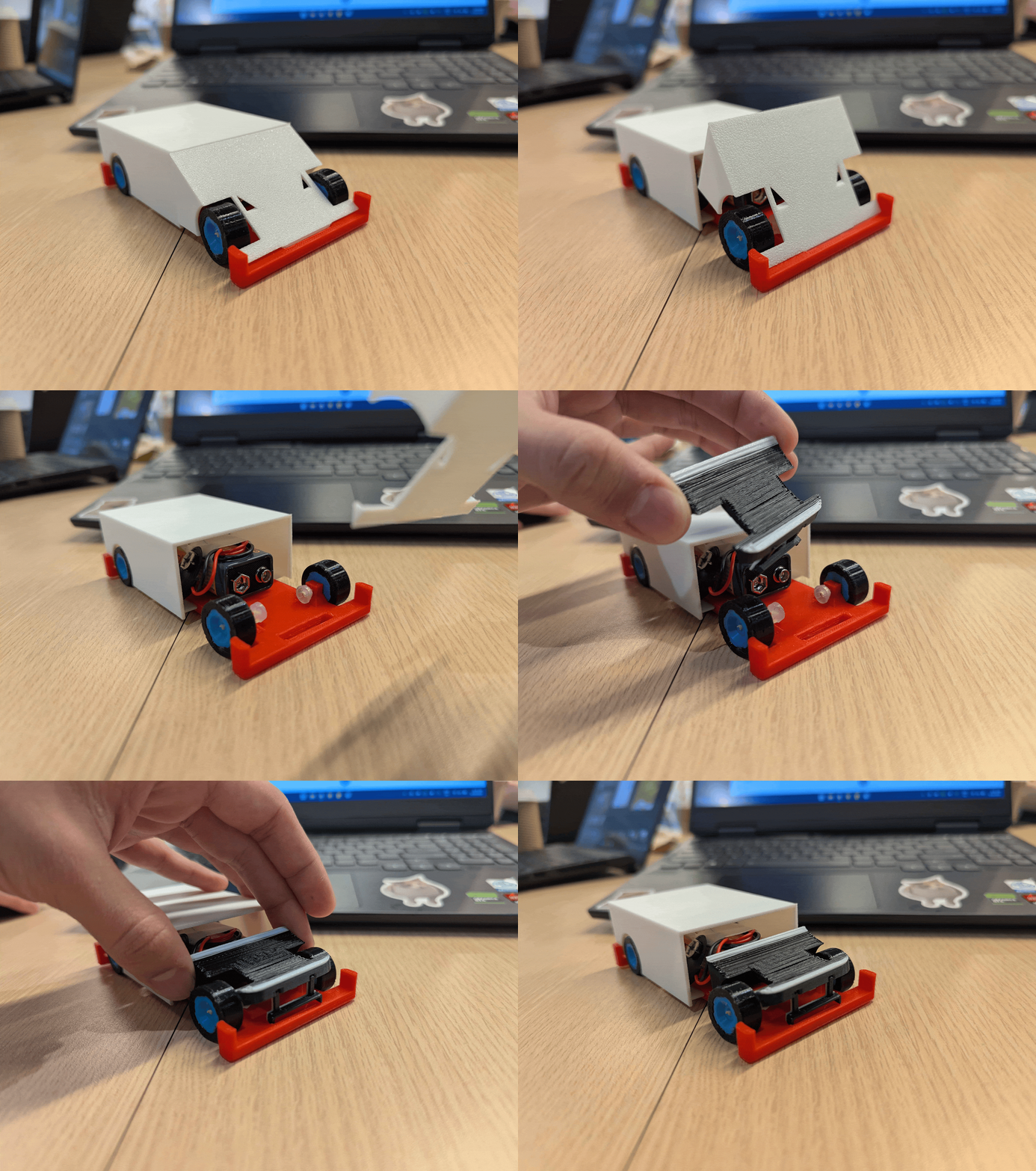
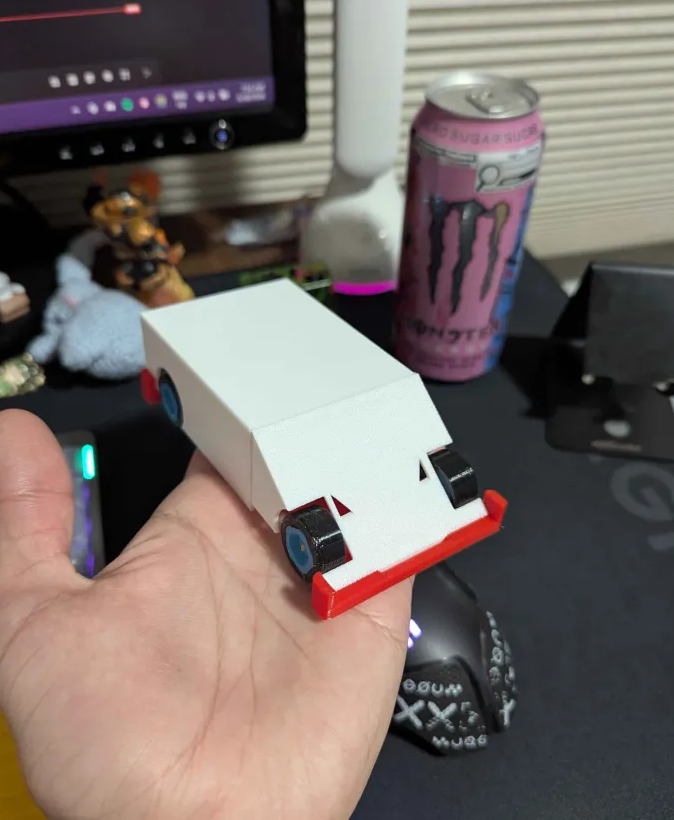
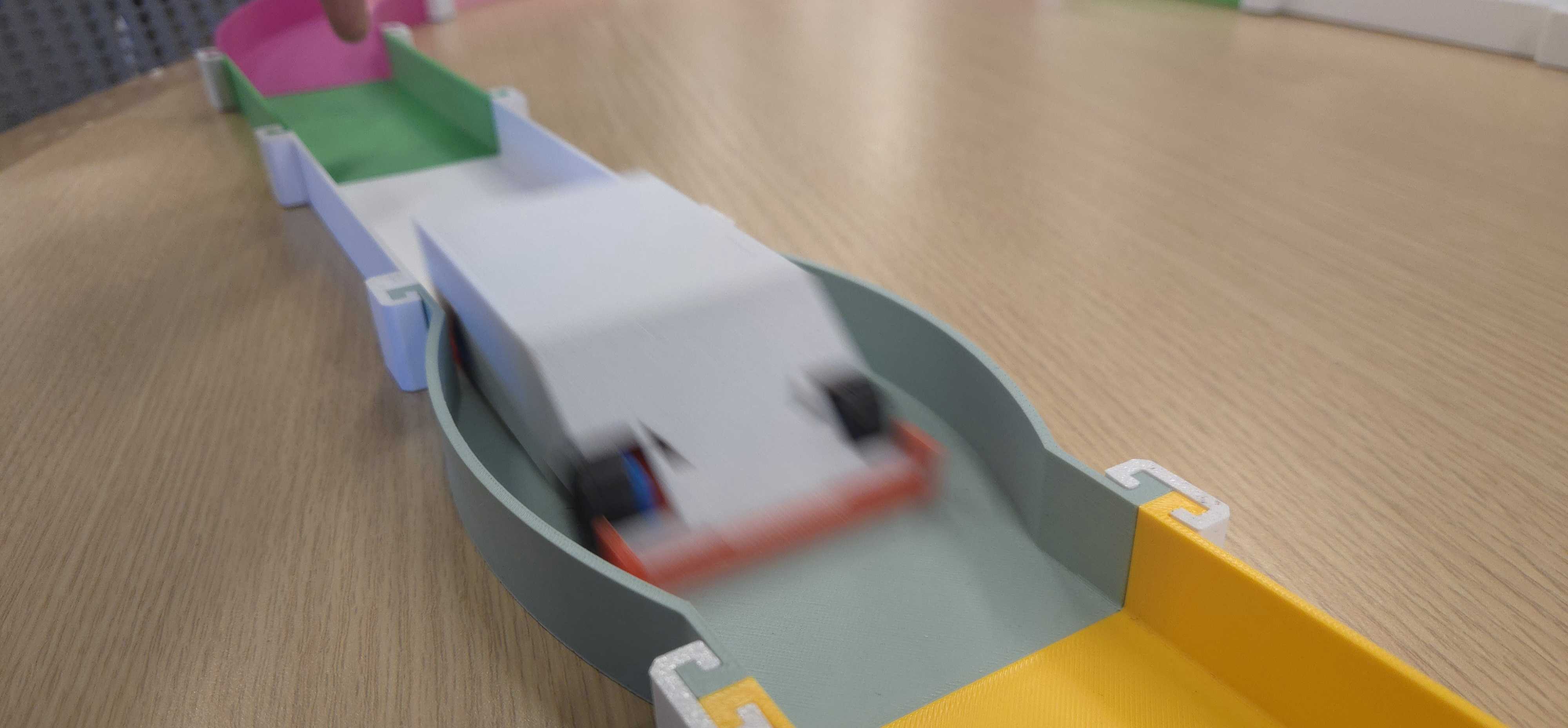
We designed a fully 3D-printable RC car chassis tailored for the "Rapid Racer" challenge as part of the MDL 2026 designathon. This challenge used standardized components (oval track, specific motor, and axles). Our design features a modular chassis structure that balances structural rigidity with aerodynamic efficiency, and also allowing for further customization at the discretion of those adept with 3D modelling tools.
How we built it
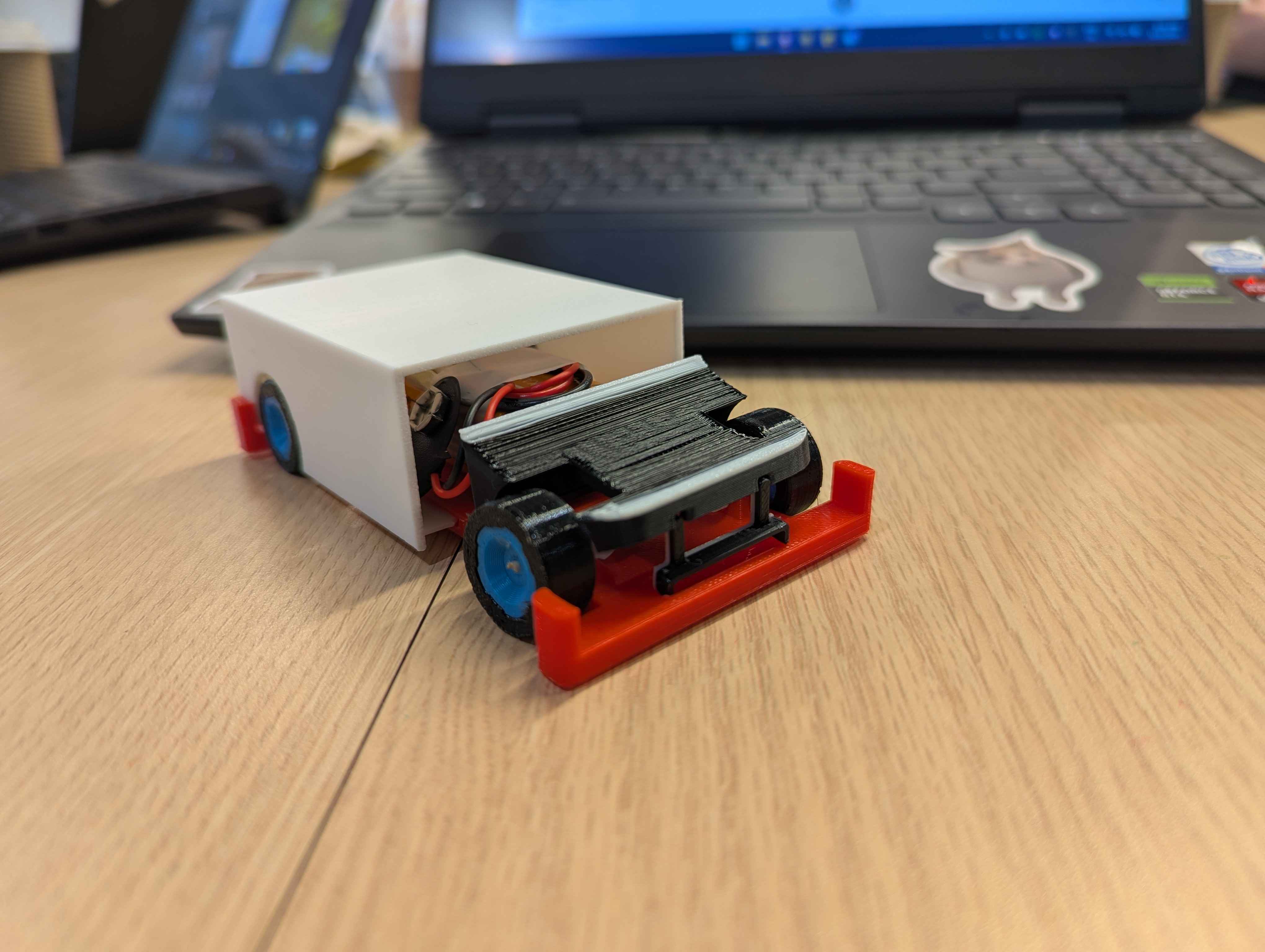
We used AutoCAD inventors to create all of the 3D models. The parts were printed on a Creality Ender 3 V3 SE and OrcaSlicer in order to reduce print time due to its efficient slicing engine. This design was divided into three main components consisting of the front wing, chassis, and roof panel. Each part was designed to be easy to assemble with the strategic concept of puzzle pieces. This was done by including ledges and slots that allow the parts to interlock securely. The body was designed to cover the rear tires while leaving the front tires exposed. This idea was created to allow airflow to move in the upwards direction and away from the back tires. This reduces the wheel generated turbulence and minimizes aerodynamic drag.
CFD with simscale
How we used it
The project started in Autodesk Inventor, where we modeled the car's geometry with a focus on reducing the frontal area, reducing turbulent flow, and adopting an in-washing philosophy all to reduce drag via reducing the wheel wake (turbulent air). To validate the design, we moved utilized Computational Fluid Dynamics (CFD). Furthermore, we adopted a dual axis front steering position to allow the front wheels to spin at different speeds which reduces tire slip significantly and allows for easier rotation. A rear engine RWD configuration was used, with the battery pack occupying the centre of the race car. Bumpers at the corners of the vehicle ensure that the vehicle doesn't get stuck on the walls, and instead smoothly glides along them.
We initially attempted a local OpenFOAM installation on Arch Linux to maximize hardware performance, and a WSL setup as backup. However, due to the tight hackathon timeline and the heavy compilation overhead of source-building OpenFOAM on our laptops, we pivoted to SimScale.
For the simulation, we treated the air as an incompressible fluid, setting up a virtual wind tunnel with a velocity inlet of 20m/s and a moving wall floor to simulate realistic ground effects.
Challenges we ran into
One of the main challenges we encountered was translating our initial digital chassis design into a functional prototype itself. After creating the first chassis in Inventor, it was printed early to better understand the real world constraints within the track dimensions, provided batteries and components, and packaging limitations, This initial prototype revealed several different areas of improvement mostly in the chassis length and width as they were too excessive causing other parts of the design such as the main body and the front mount. This caused the car to bind and become stuck during turns. Additionally, the design did not provide sufficient clearance for a direct drive 1:1 gear system which prevented the motor from freely rotating. These findings made us revise and re-design the chassis to help accommodate the constraints in a more efficient way.
Simscale issues
Challenges we faced The "Ghost Body" Dilemma: One of our biggest hurdles was a geometry assignment error where solid CAD entities were interfering with the fluid region. We had to perform a boolean "Delete Body" operation in the CAD editor to ensure we were simulating only the air volume.
Environment Setup: Setting up a professional-grade CFD suite like OpenFOAM on a rolling-release distro like Arch during a 24-hour sprint was a bold move that taught us a lot about dependency management and the value of cloud-based alternatives like SimScale, especially when time is the scarcest resource.
Selection Frustration: Selecting tiny faces inside a 3D "wind tunnel" box was a test of patience, eventually solved by using face-hiding techniques and selection filters.
Accomplishments that we're proud of
During this project, we achieved several key accomplishments. This includes validating aerodynamic performance by designing a system to produce low drag coefficient which was learned and confirmed through CFD(computational fluid dynamics). To show strong workflow, we transitioned to cloud native solutions and produced a solution that is both visually appealing and functionally simple to ensure its reliability and ease of repeated use in the retail setting.
What we learned
Through this project, practical challenges involved with computational fluid dynamics (CFDs) and rapid design iteration was learned to help understand the motion of the design more efficiently. The initial thought was to attempt to run OpenFOAM locally on Arch Linux to maximize hardware performance with a WSL setup as a backup. However, due to time constraints and suffering though several different complications of building the OpenFOAM from source, we ended up transitioning to SimScale. In our simulations, air was modeled as an incompressible fluid inside a virtual wind tunnel. Additionally, the importance of maintaining design progress through backups and adaptable design choices was learned. When a complex levitating front wing mount failed due to 3D printing limitations, the design was simplified to a more mounting solution while making sure there is structural integrity while still minimizing the aerodynamic drag. Overall, this experience gave us a deeper understanding of how high-pressure zones (indicated by red contours in our results) directly correlate to energy loss in electric vehicles, validating that simulation is just as critical as the physical build in achieving efficiency.
What's next for DiveBomb Motorsport
Moving forwards, our focus will be on improving the speed and overall performance of the car. We plan to source more efficient and ready-made kits to optimize both mechanical and aerodynamic performance. In addition, the goal is to aim to explore many different prototype options while carefully balancing cost, build time, and material availability. This can give us the opportunity to iterate quickly without compromising quality. Through these goals, we hope to refine the design, improve its reliability and speed while achieving a more competitive and higher performing vehicle for future iterations.
Built With
- autodesk
- inventor
- openfoam
- simscale

Log in or sign up for Devpost to join the conversation.