
💡 The Inspiration The idea came from the "Digital Fatigue" I saw everywhere. Most people feel like their technology is a second job—they are constantly managing notifications, drafting emails, and organizing schedules. I noticed that even with AI, you still have to explain who you are and what you want every single time.
I wanted to build something that didn't feel like a tool, but like an extension of the user. The goal was "Zero-Prompt Logic": an app that already knows your "vibe," your schedule, and your social boundaries so you don't have to explain them.
🧠 What I Learned Building this project taught me that context is more important than intelligence. A "super-smart" AI that doesn't know you hate morning meetings is less helpful than a "simple" AI that does. I learned a lot about:
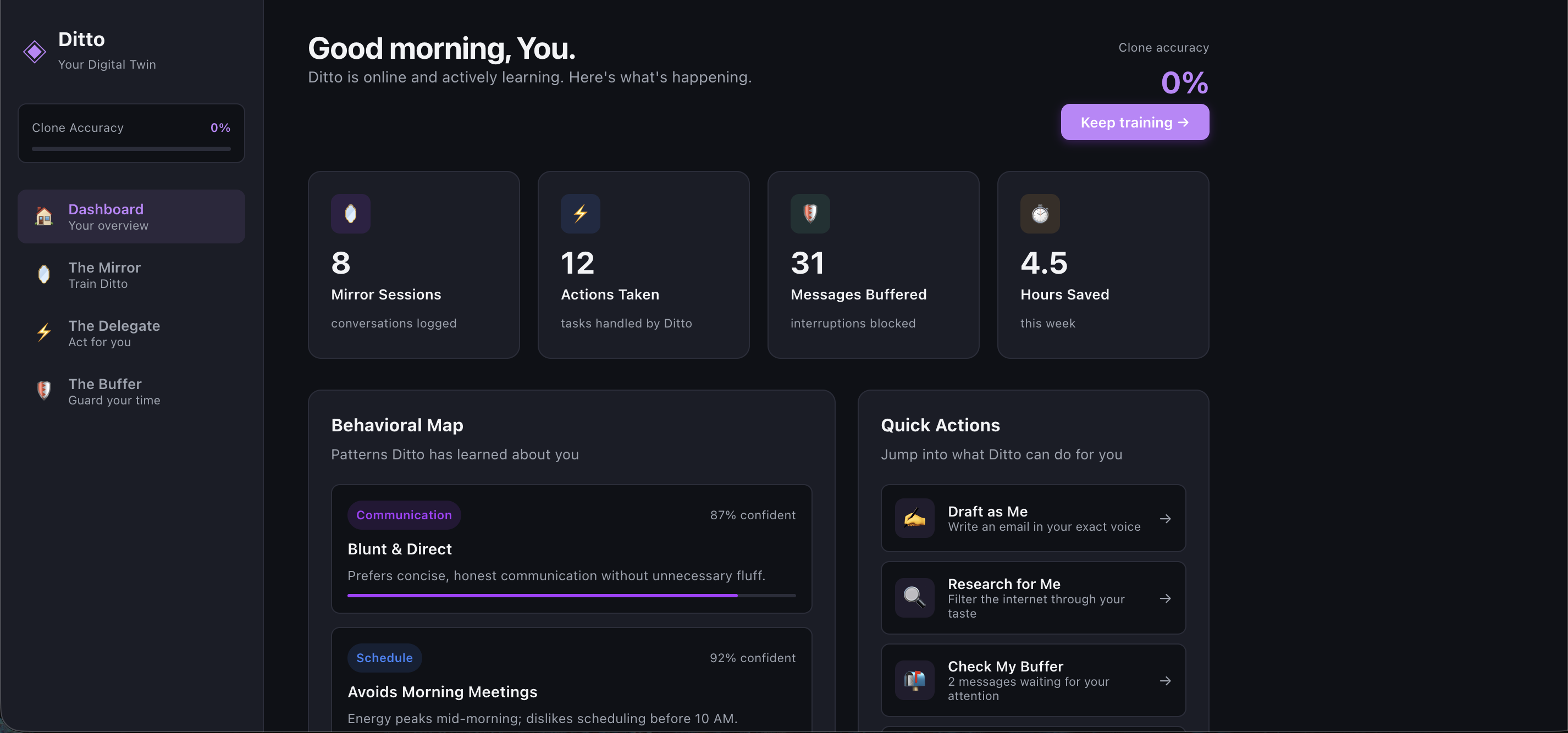
Behavioral Modeling: How to turn text and calendar data into a "personality profile."
Privacy-First Design: Learning that if you’re going to mirror someone's life, the data has to be incredibly secure and processed locally whenever possible.
The Nuance of "Voice": Discovering that what makes someone sound like "themselves" isn't just their vocabulary, but their sentence length, their use of emojis, and even how long they wait to reply to a message.
🛠️ How I Built It I approached the build in three main layers to ensure it felt seamless for a regular user:
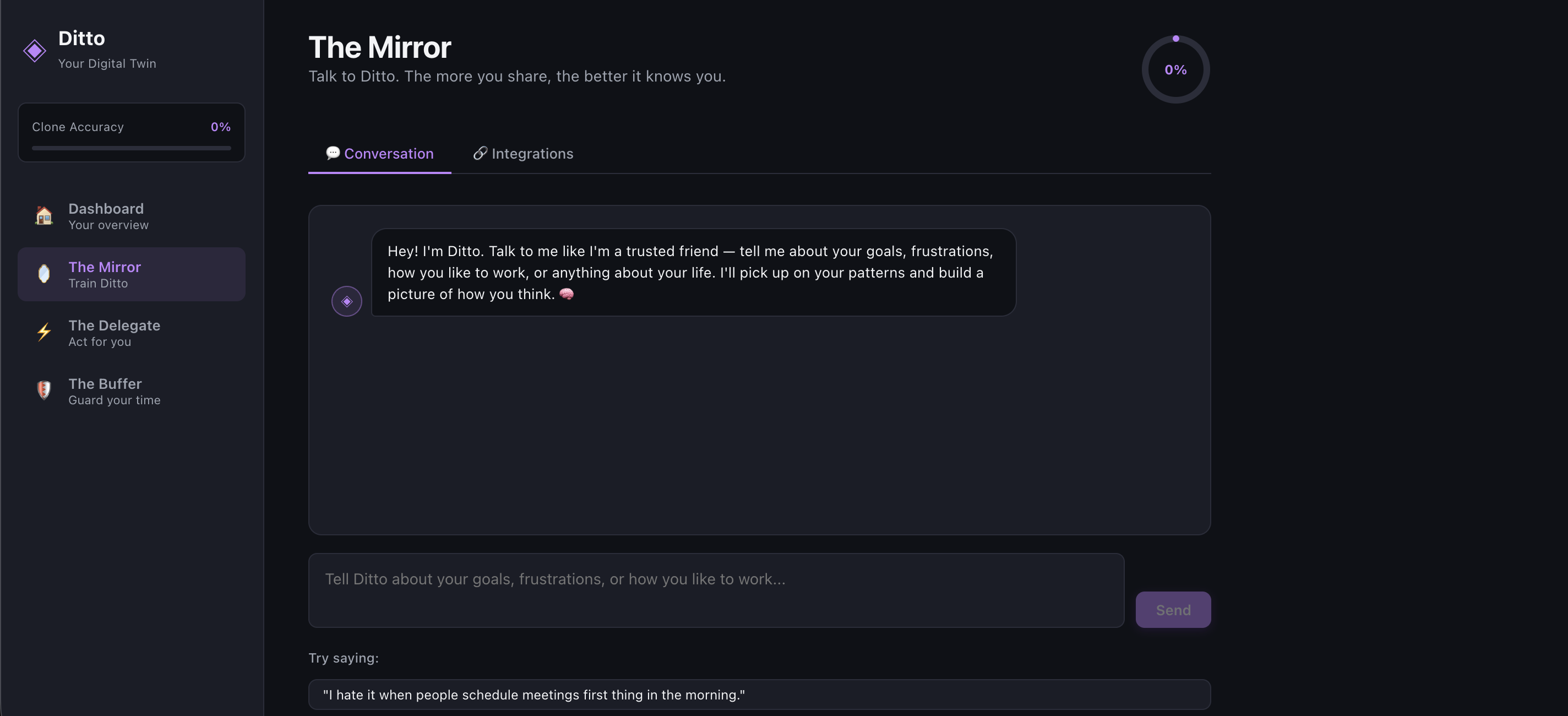
The "Ear" (Data Intake): I used APIs to connect to common services like Google Calendar, Canvas for school assignments, and email. I built a simple "Daily Journal" feature where users can talk for 60 seconds about their day to keep the profile fresh.
The "Brain" (The LLM Wrapper): I utilized a Large Language Model but applied a "Personality Overlay." Instead of a blank slate, the model is fed a "Style Guide" based on the user's past data before it generates any text.
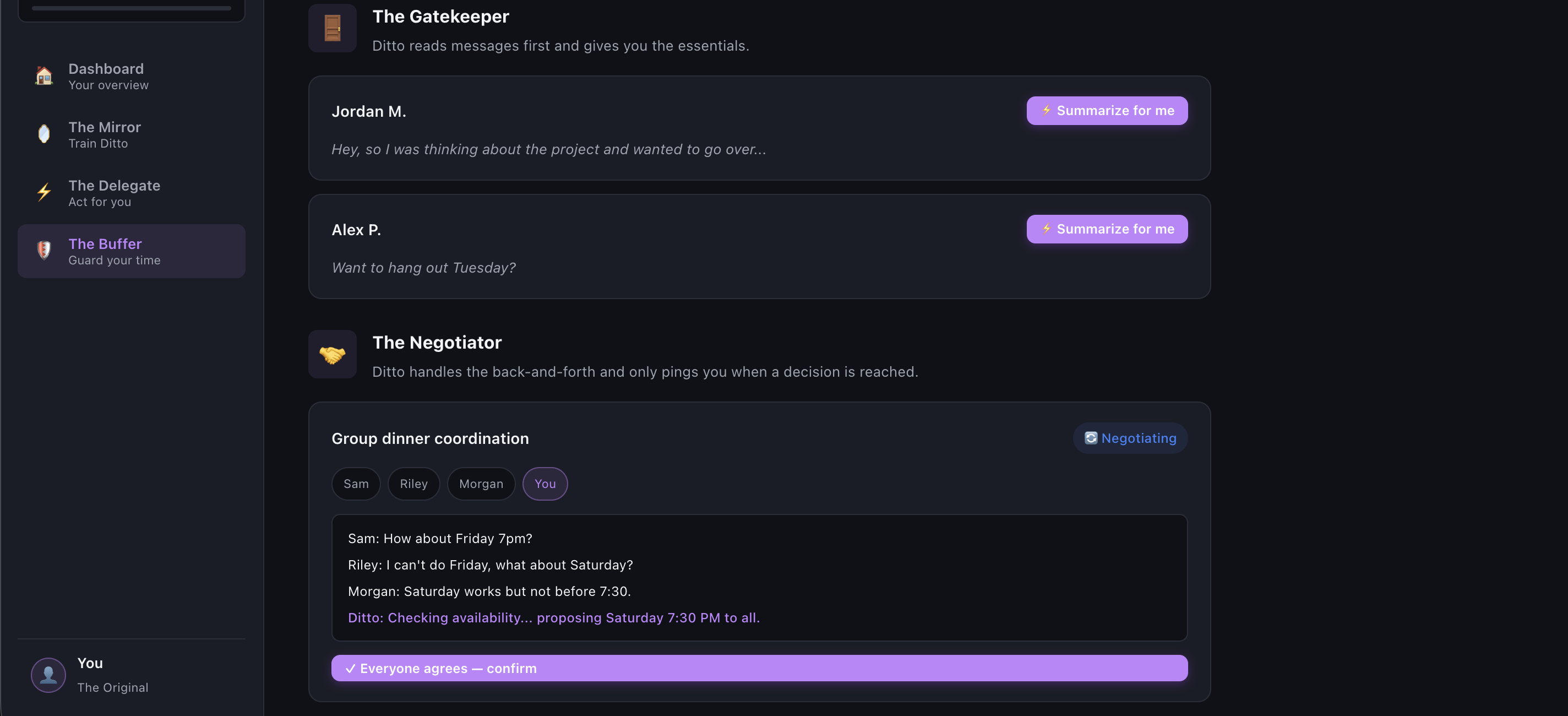
The Interface: I designed it to be a Mobile-First App with a very clean, "chat-like" UI. I focused on "One-Tap Actions"—where the app suggests a response or a plan, and the user just hits "Confirm" or "Tweak."
🚧 Challenges I Faced The "Uncanny Valley" Problem: Early versions of the "Clone" sounded almost like the user but slightly "off" or too formal. I had to refine the algorithms to pick up on slang and specific quirks to make the writing feel authentic.
Data Overload: At first, the app tried to remember everything, which made it slow. I had to build a "Relevance Filter" so it would prioritize important things (like a final exam or a girlfriend’s birthday) over trivial things (like a random spam email).
User Trust: Convincing people to let an app "learn" them is a big hurdle. I had to focus heavily on transparency—showing the user exactly what the app "knows" about them and giving them an "Instant Wipe" button to delete specific memories.
Built With
- css
- eslint
- html
- javascript
- plus-@types/node)-styling-/-ui-tech-pure-css
- react19
- reactdom
- typescript
- vite8

Log in or sign up for Devpost to join the conversation.