-
-
-
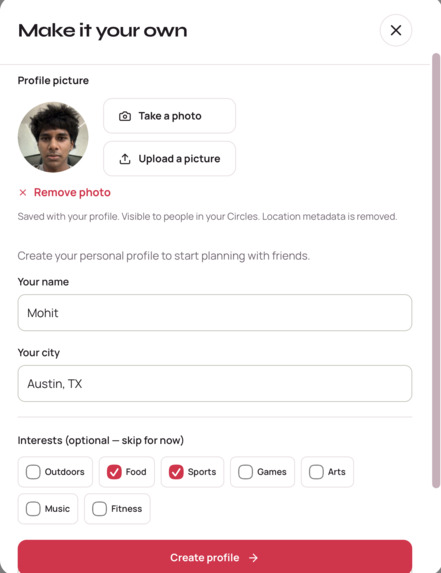
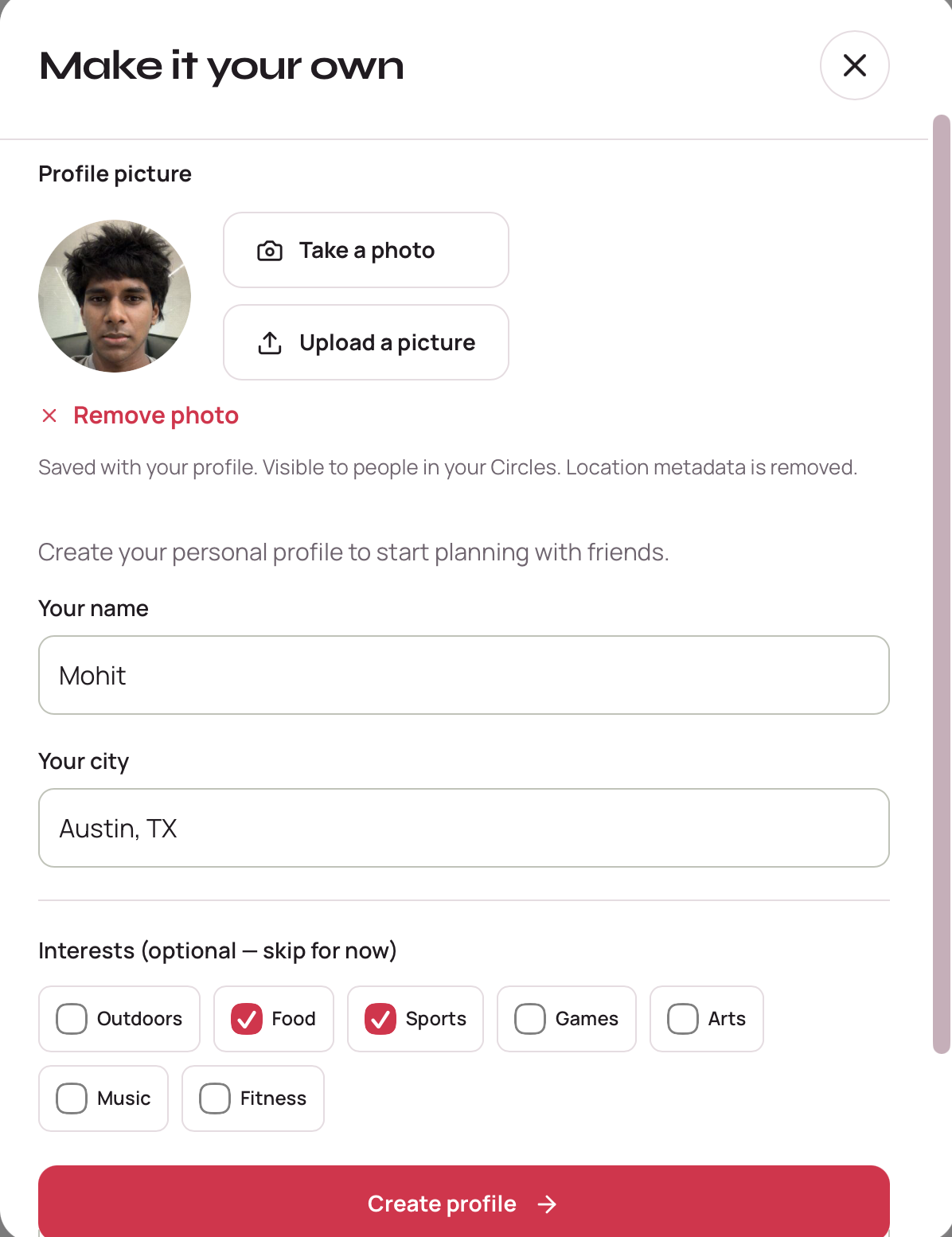
Account Profile Creation
-
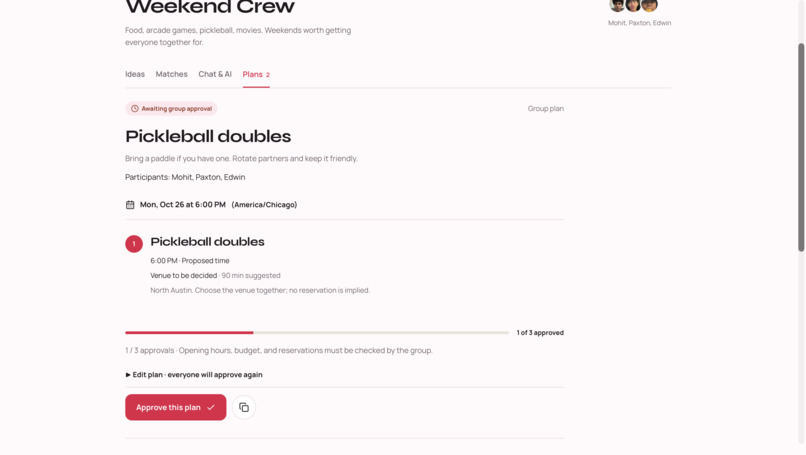
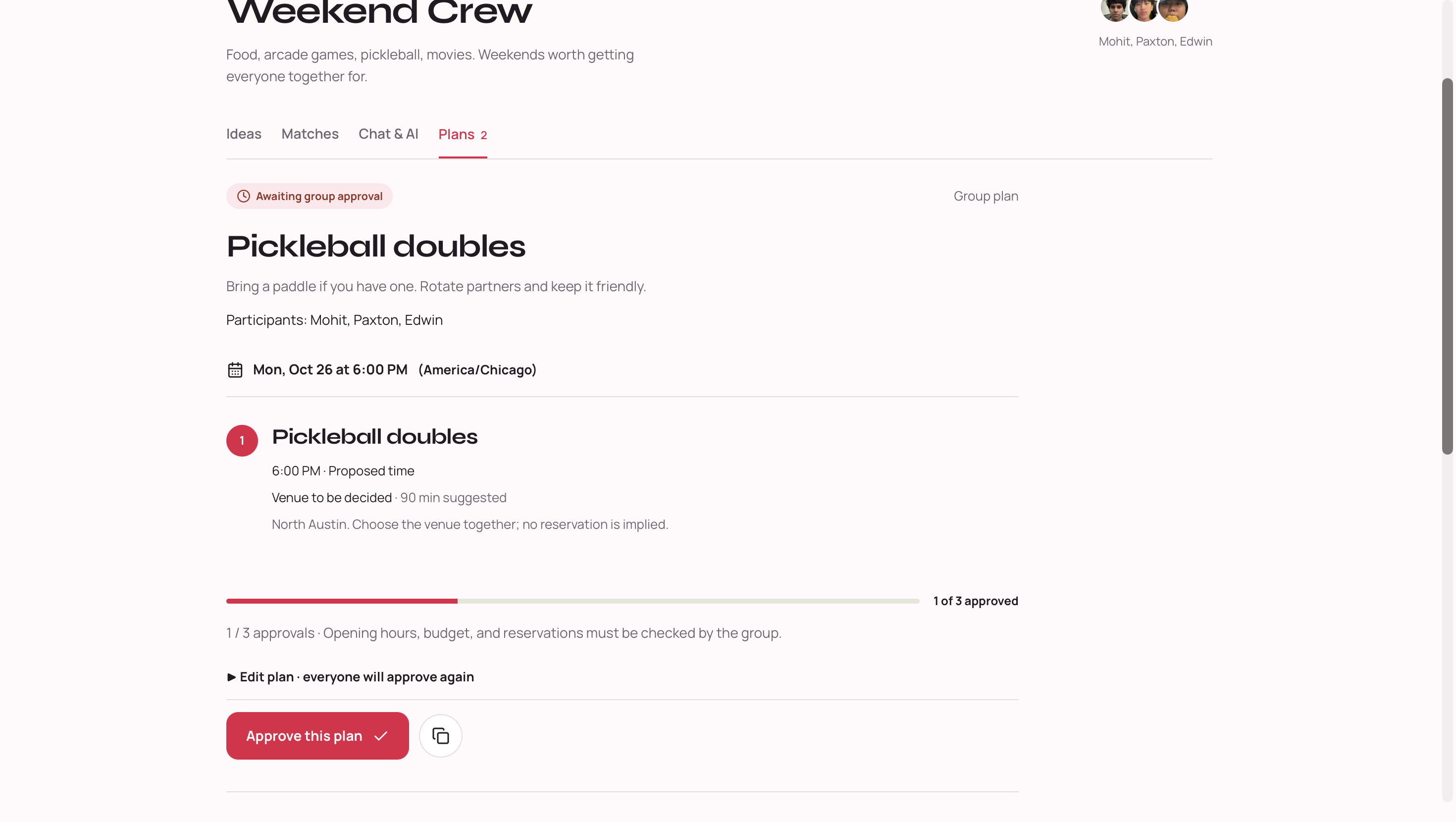
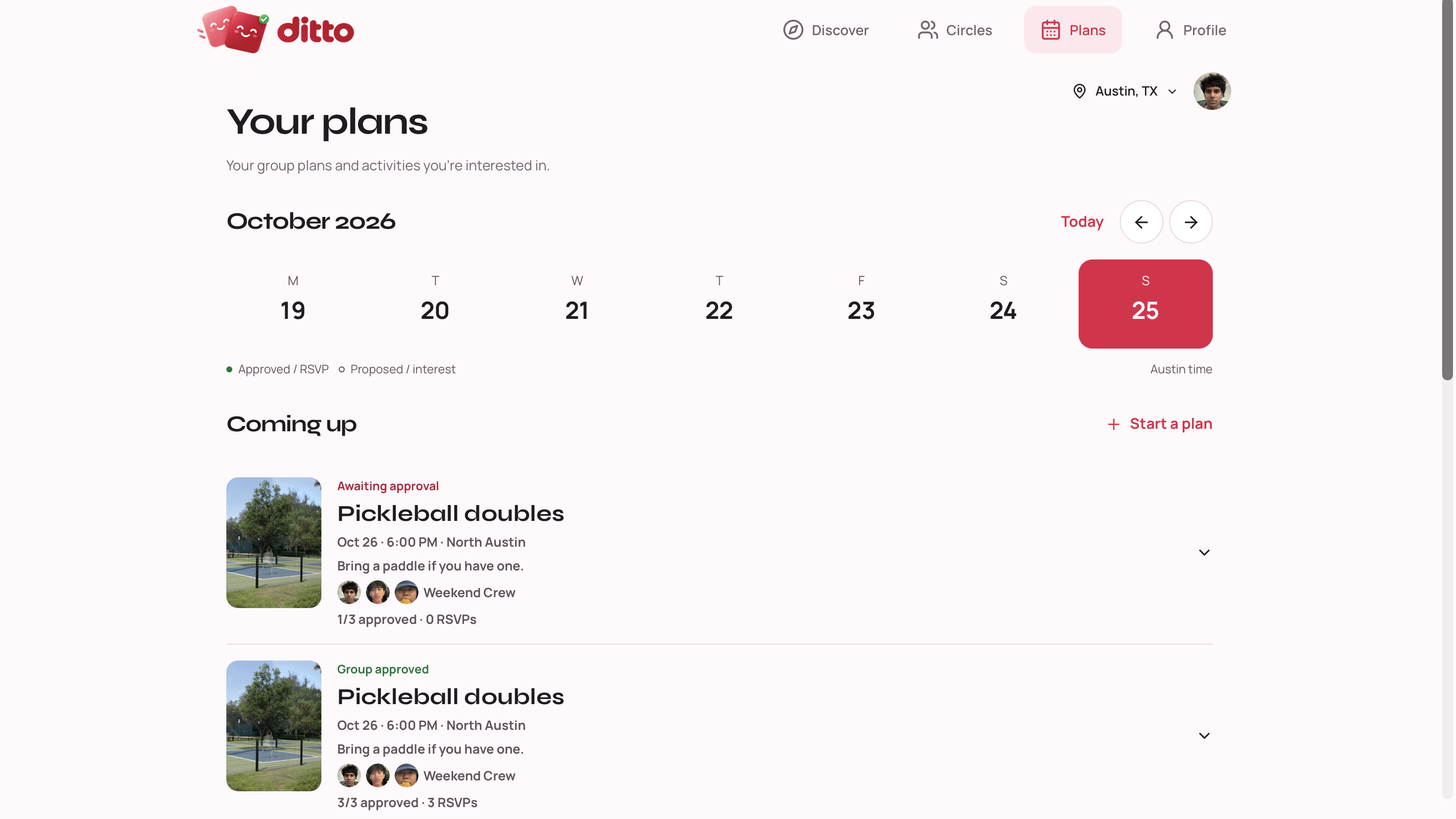
Plan Status and Approval
-
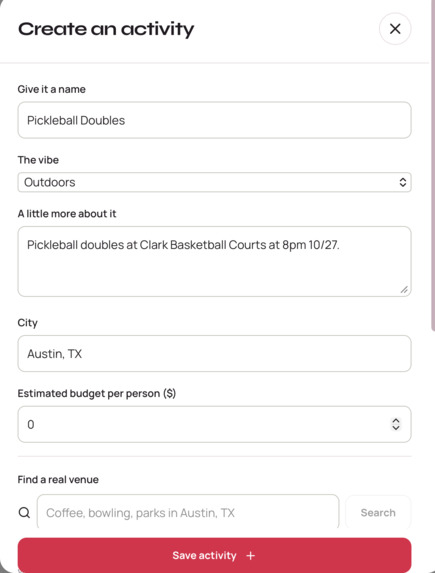
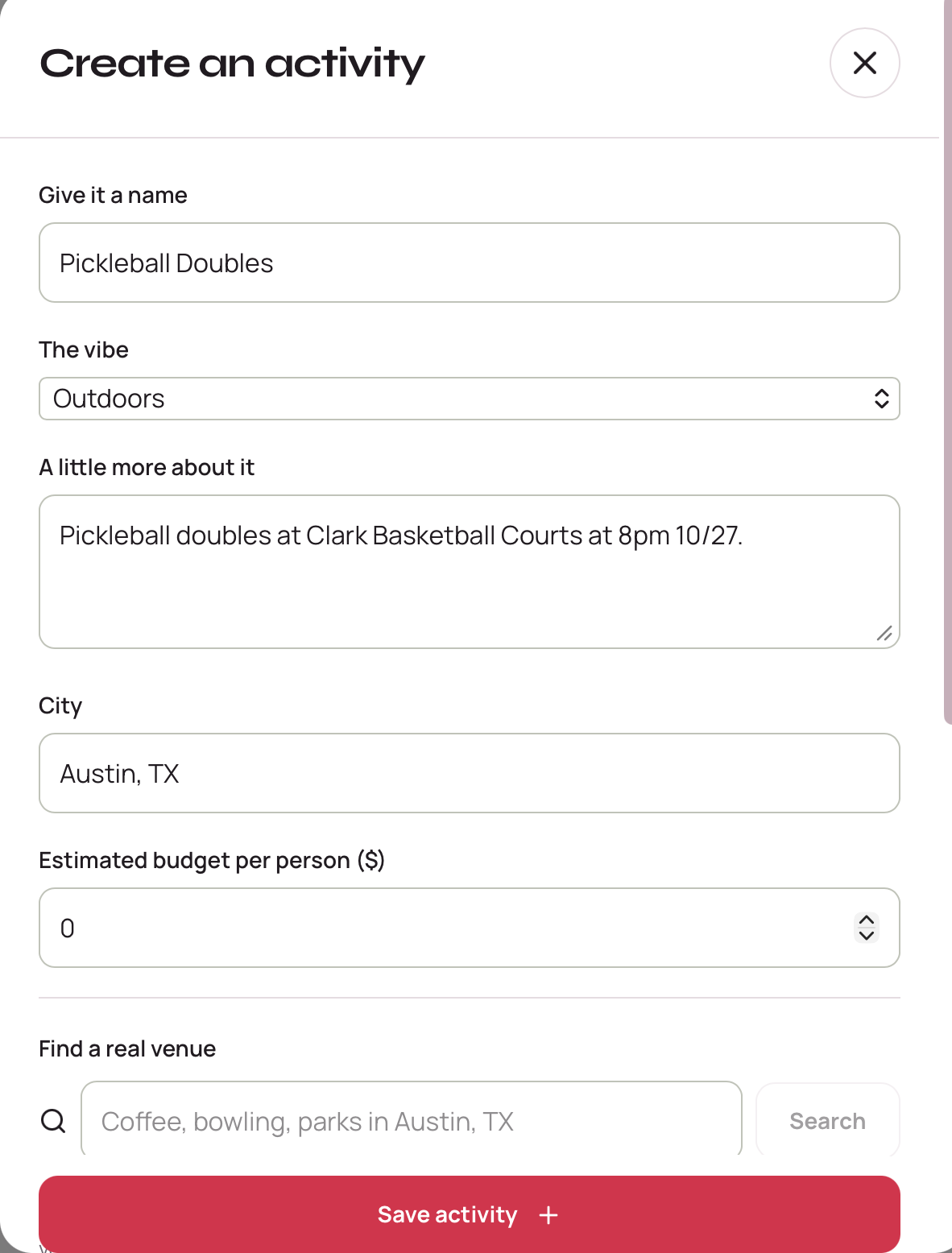
Creating an Activity Post
-
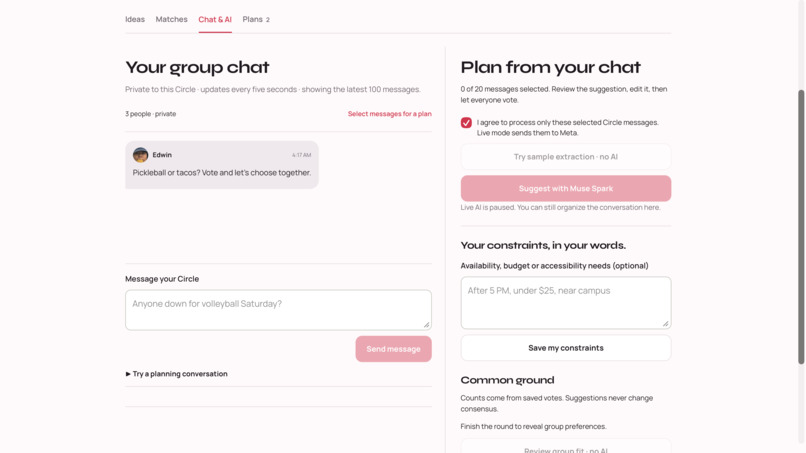
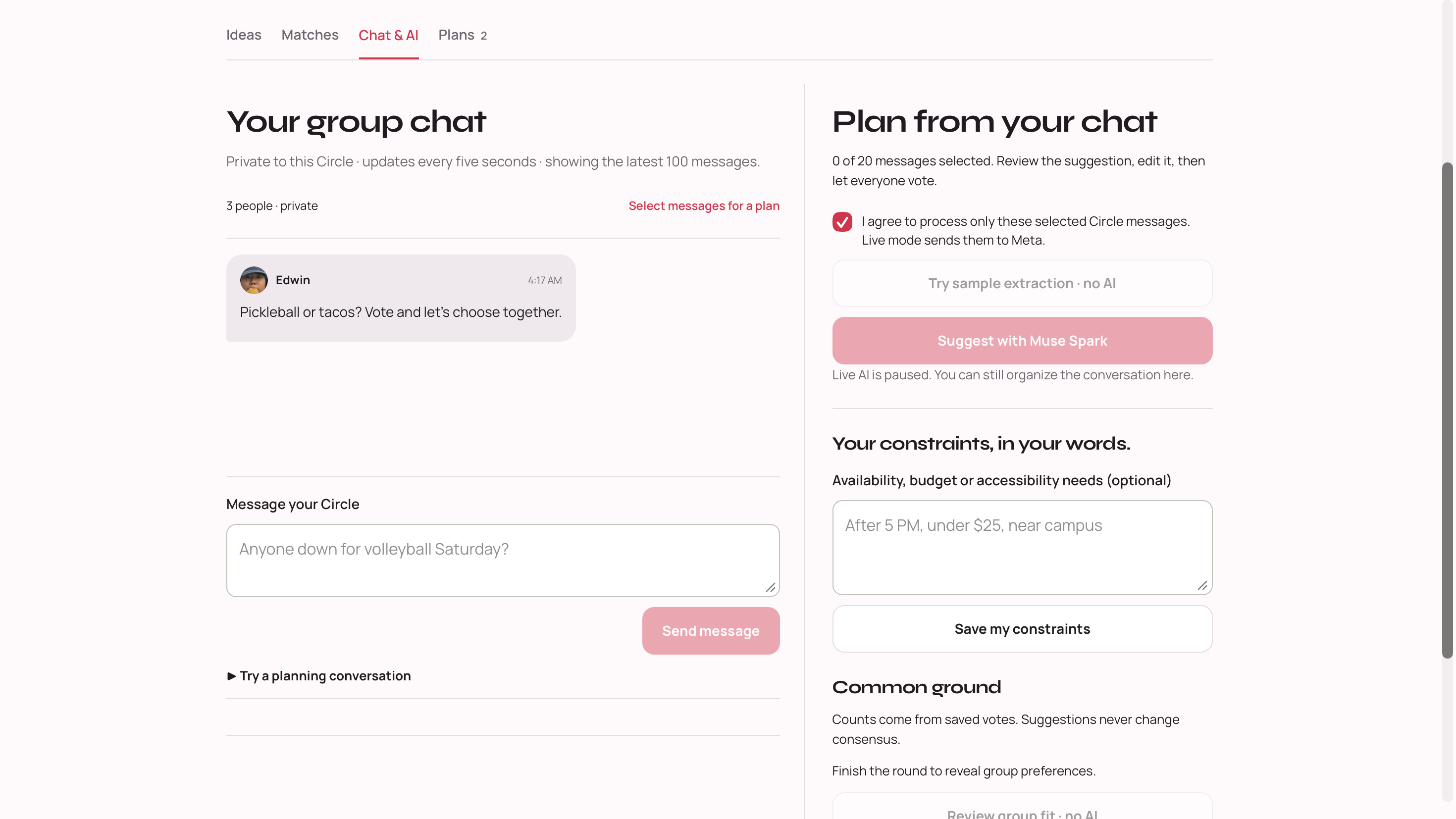
Circle Messaging/Planning
-
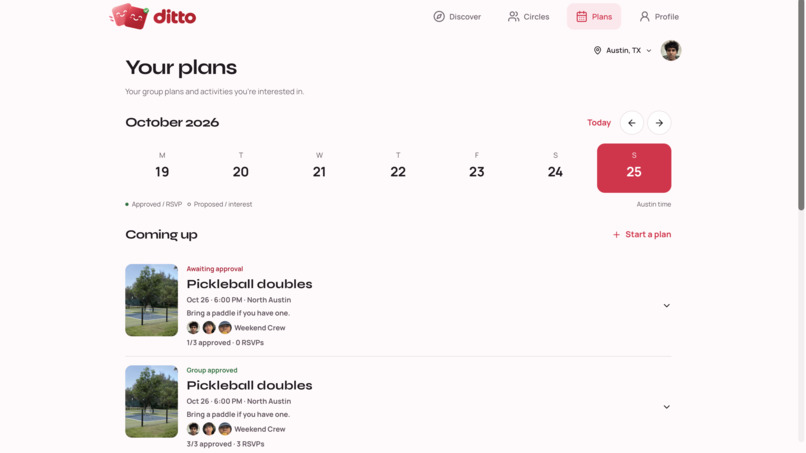
Upcoming Plans
-
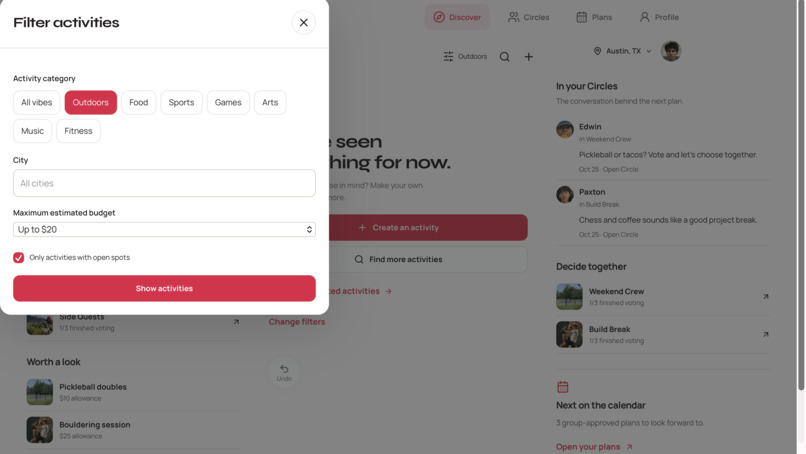
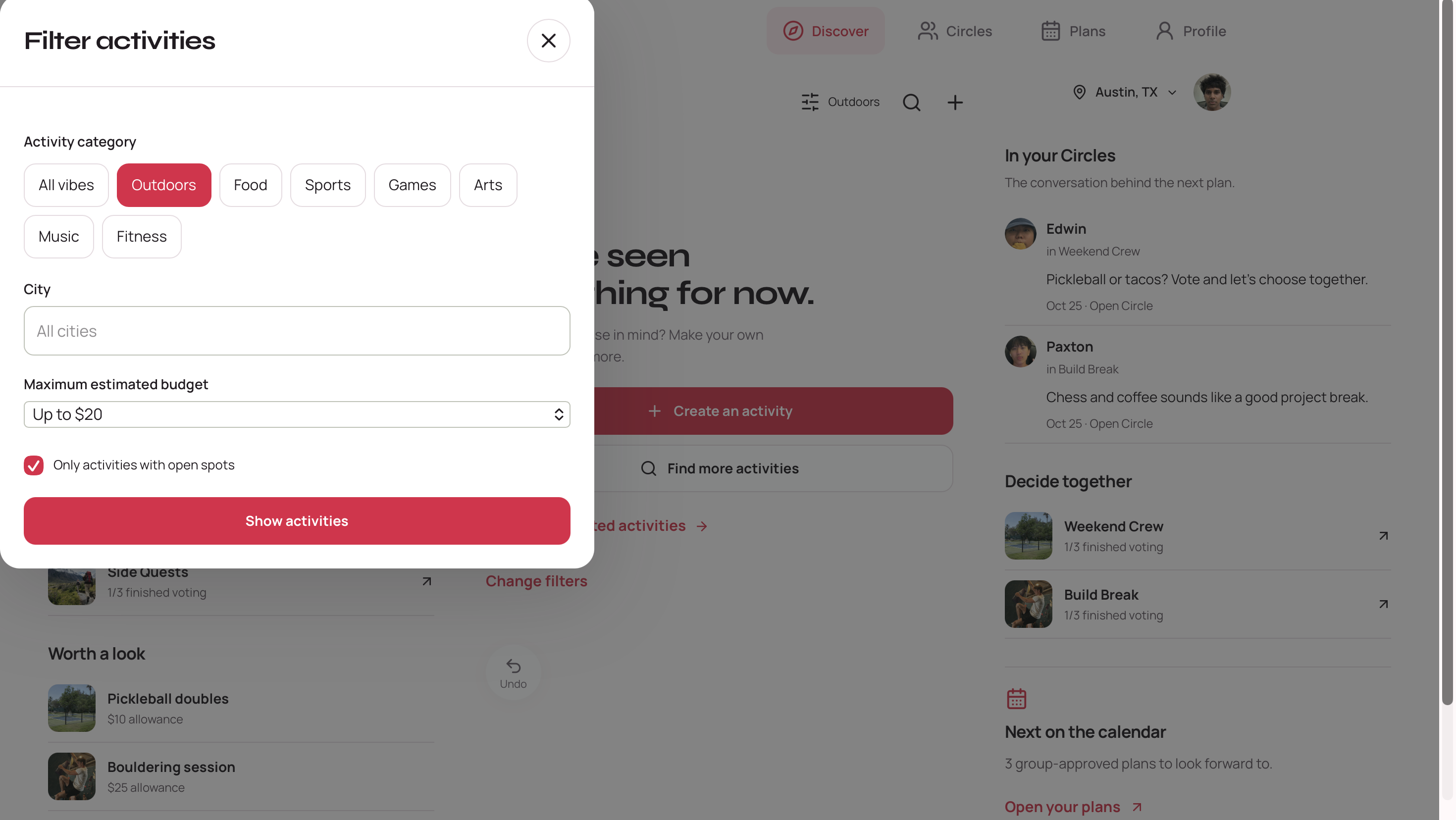
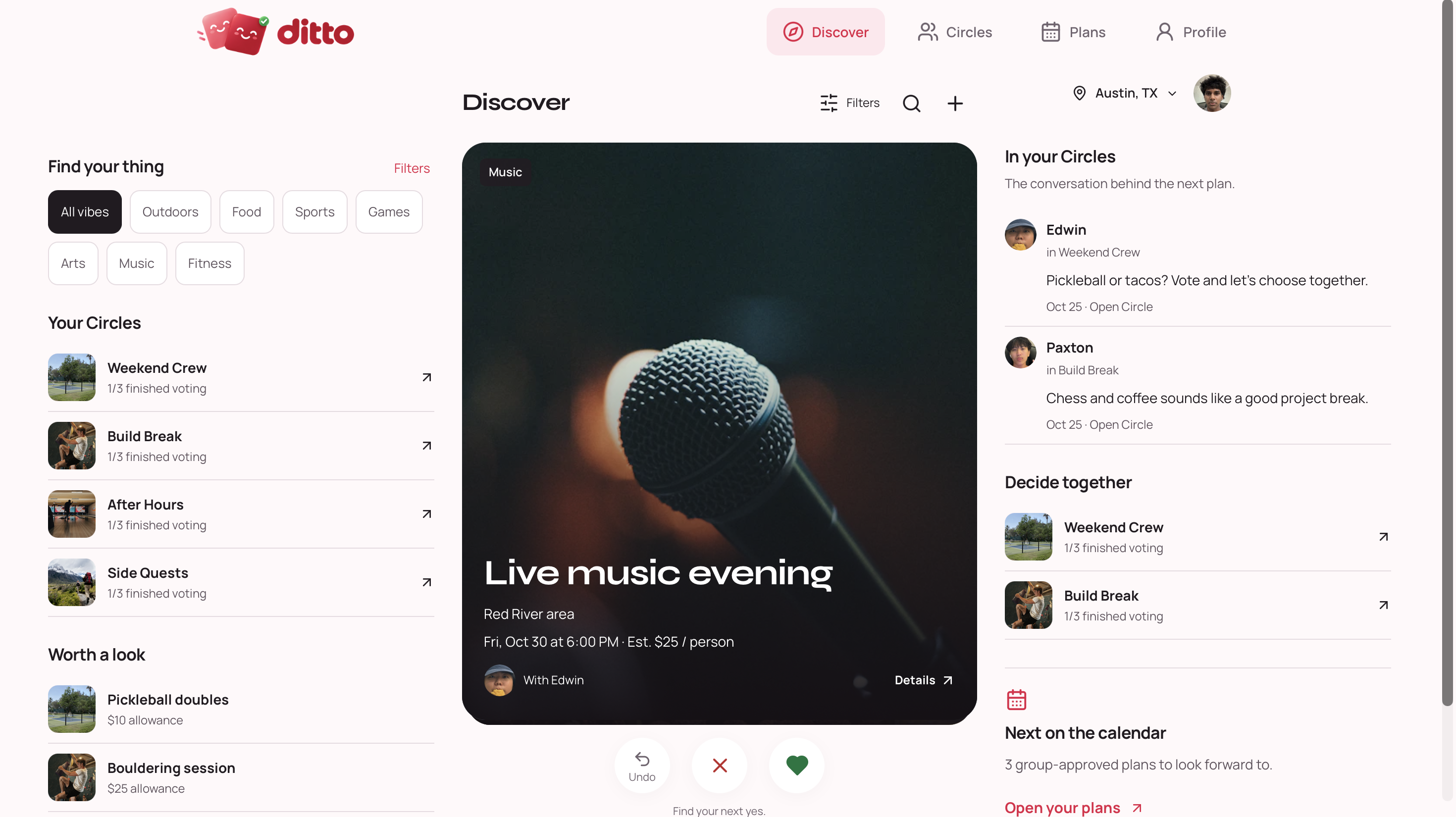
Filter Activities
-
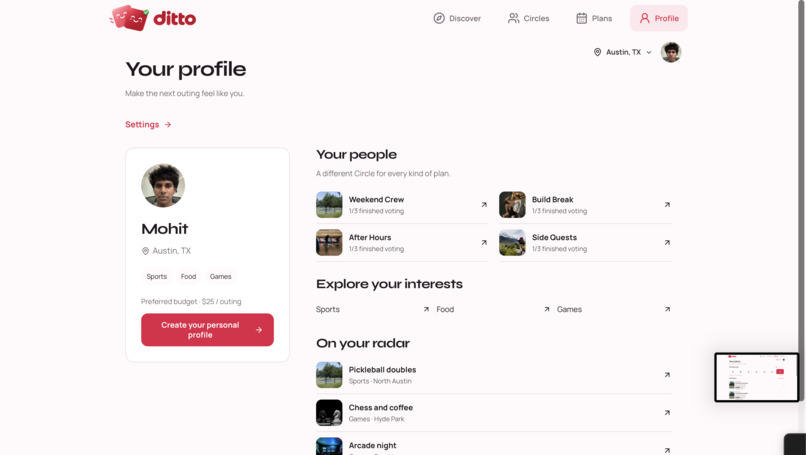
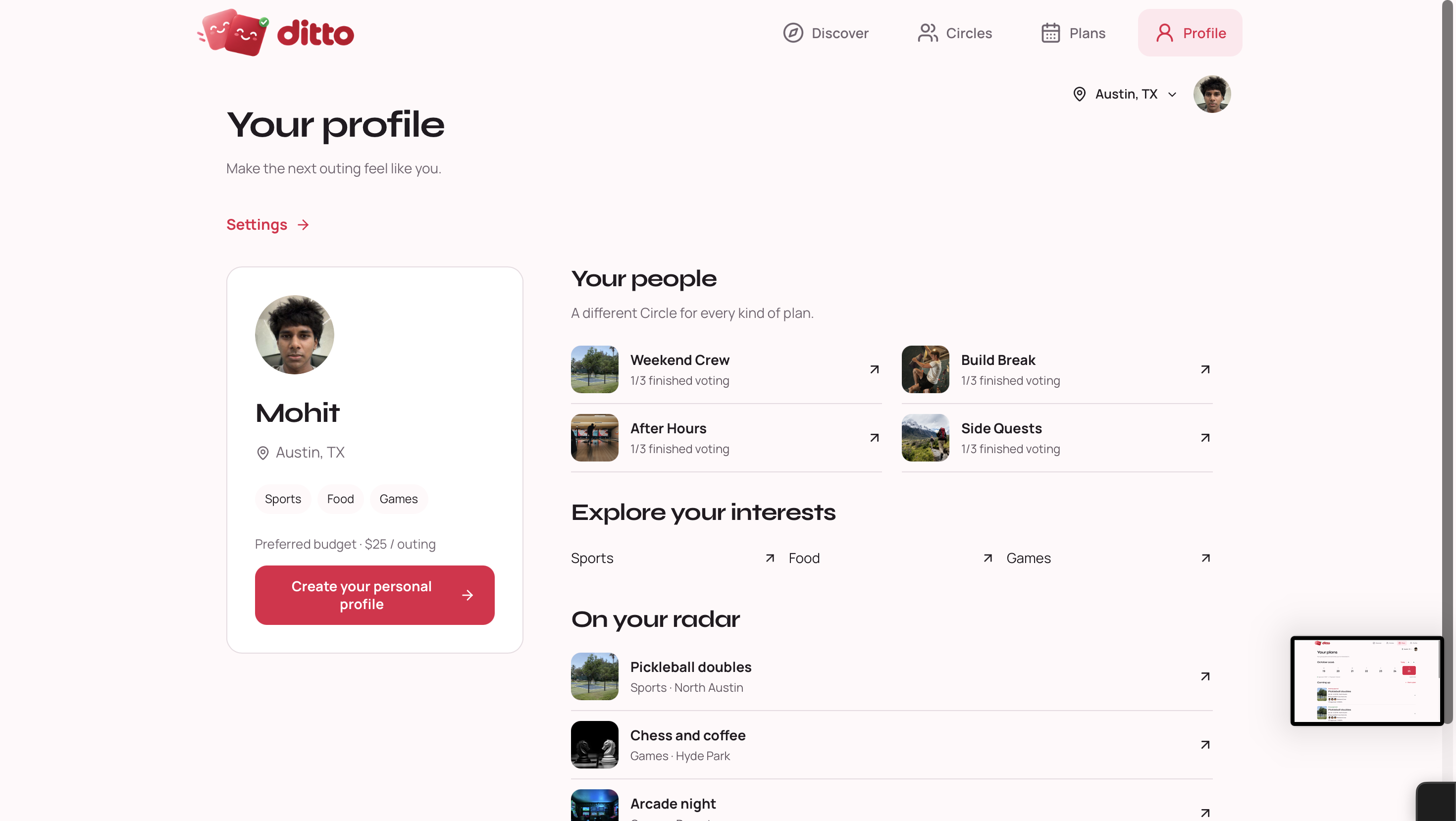
Profile Page
-
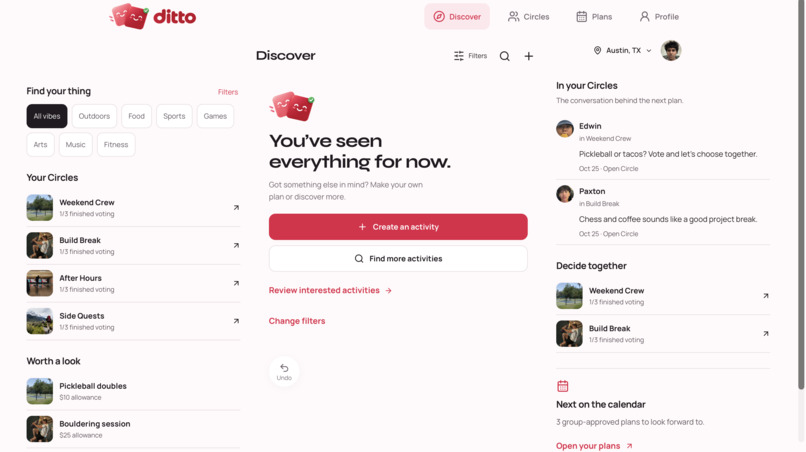
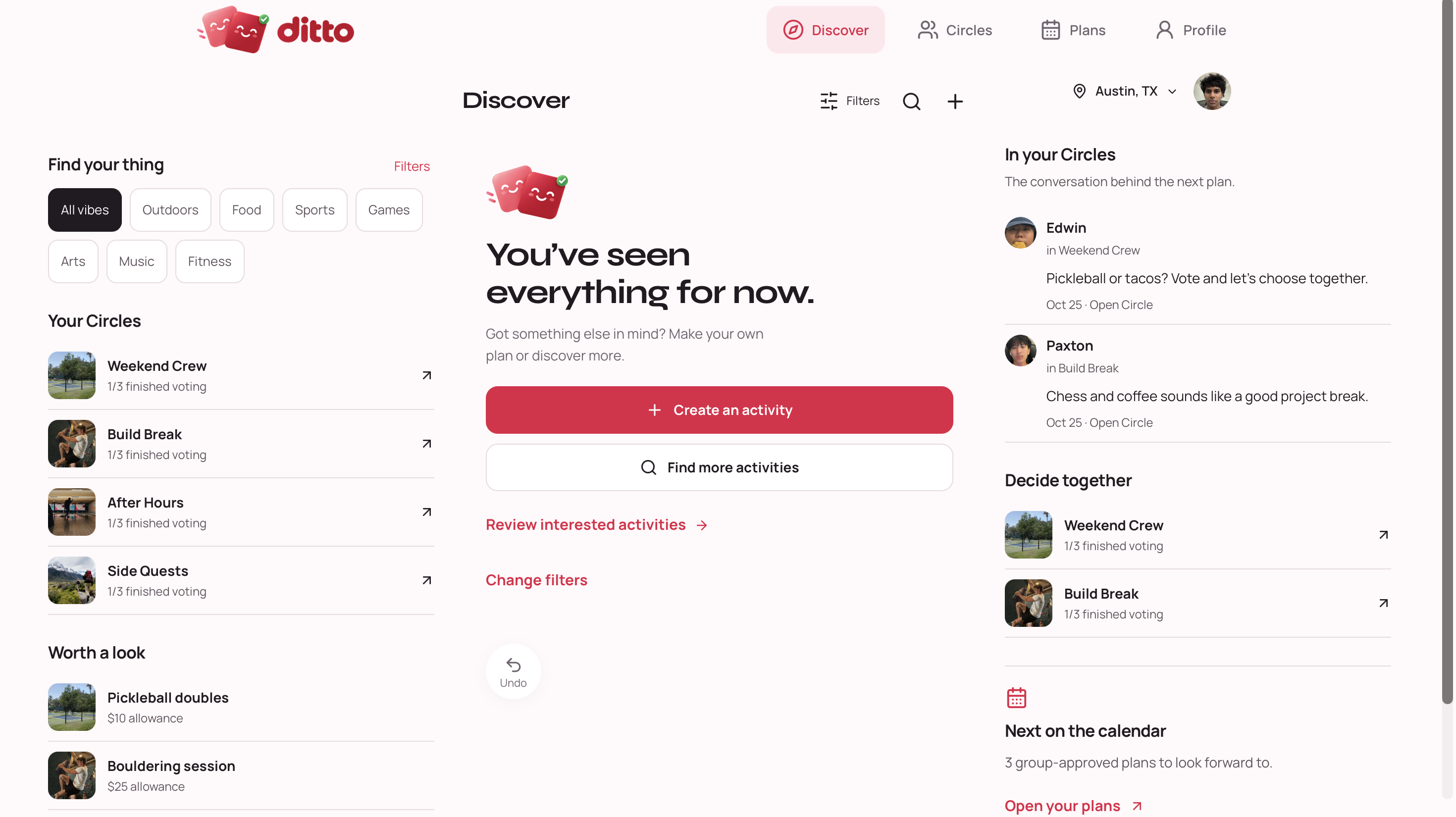
End of Discover Page
-
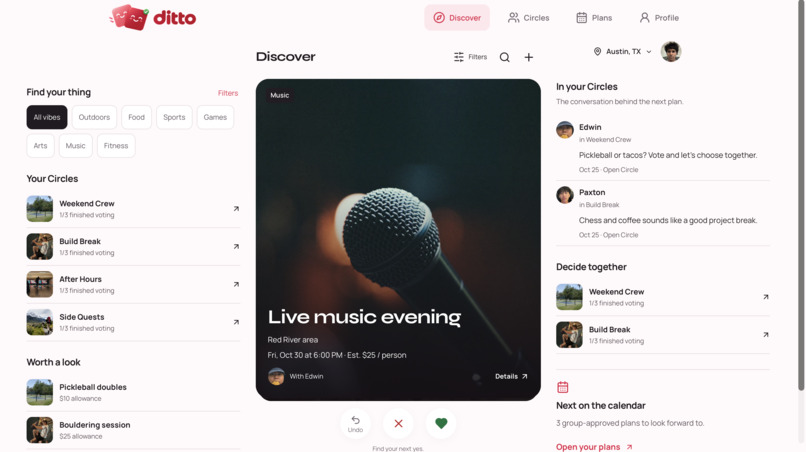
Discover Page
-
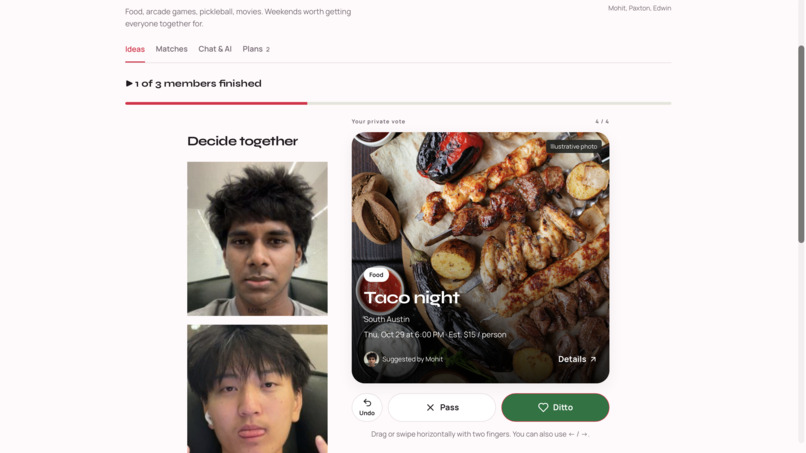
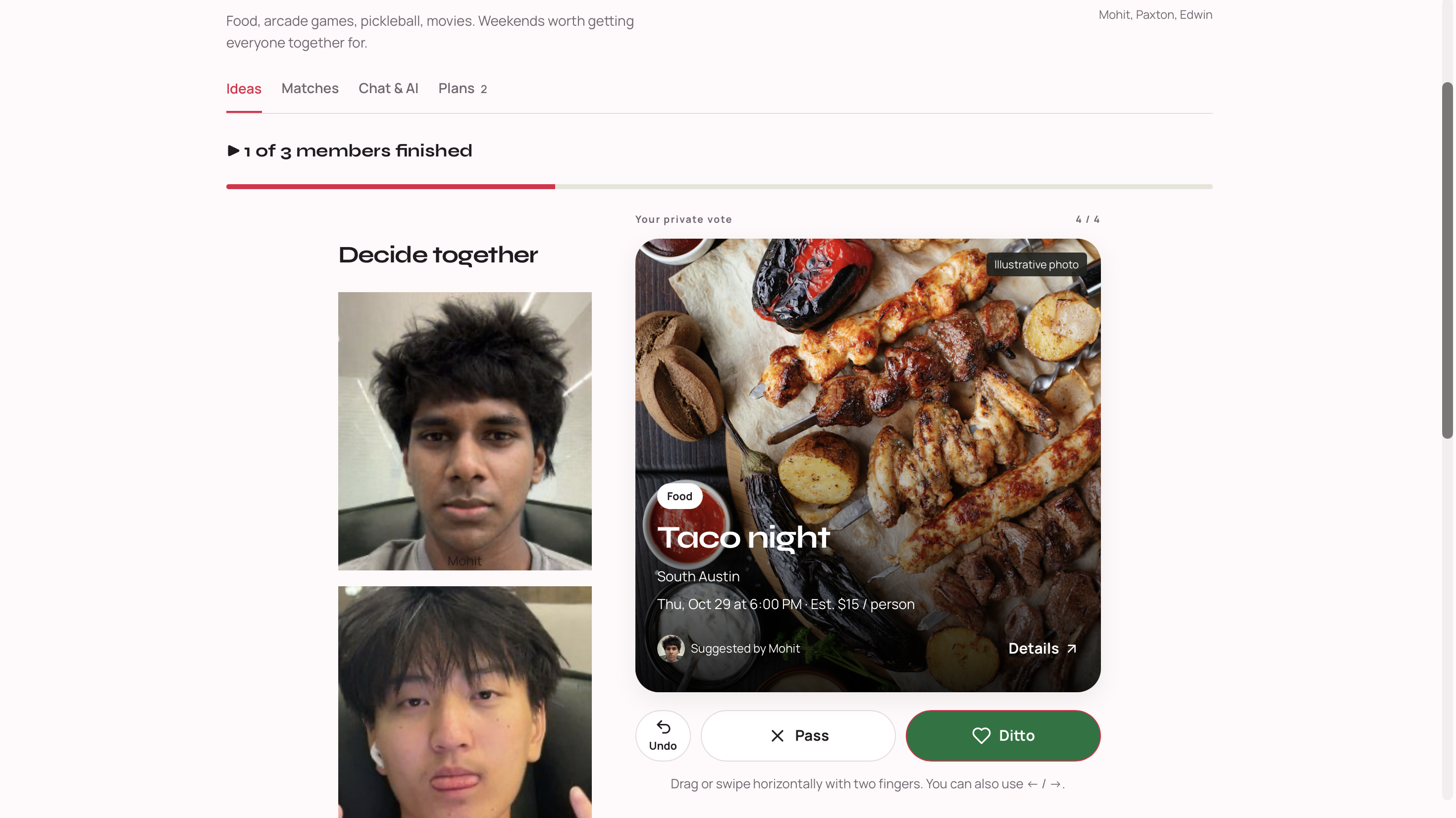
Voting on a Plan in our Circle
-
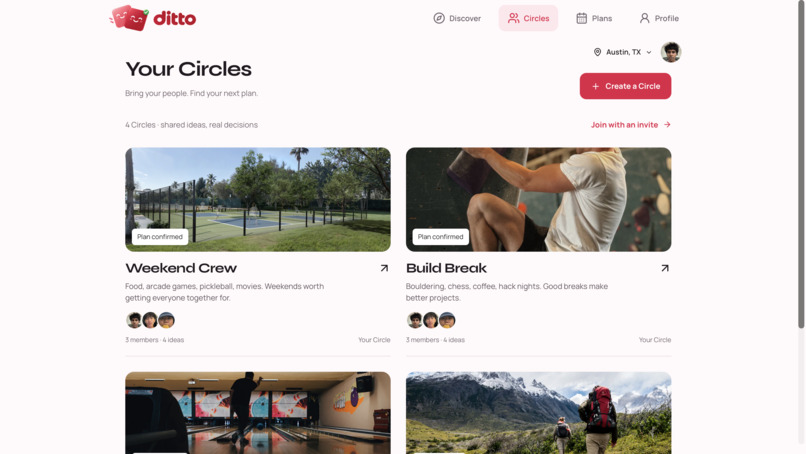
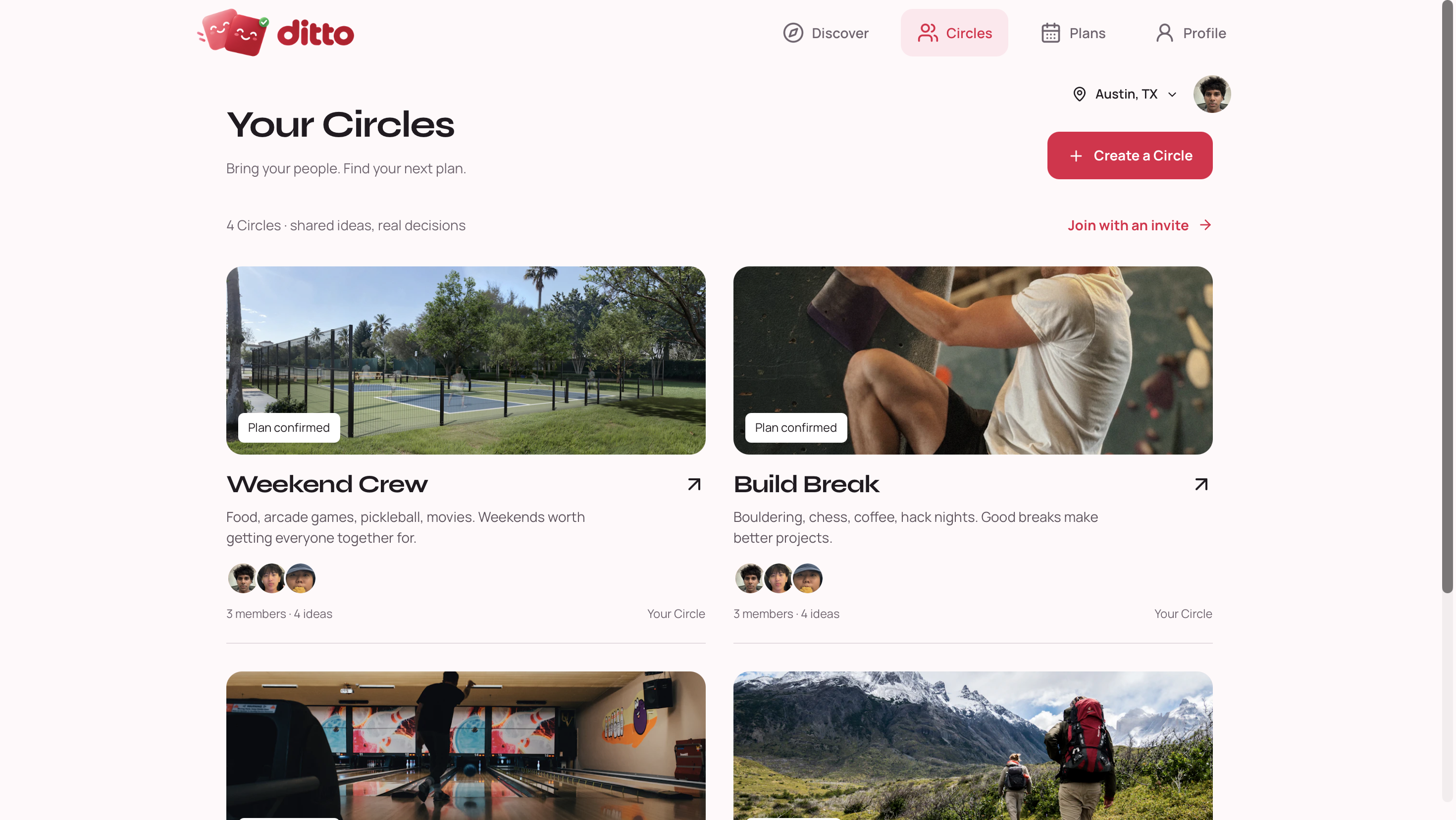
Circles Page
Ditto: Less Scrolling. More Doing.
Inspiration
We've all been in that group chat where everyone wants to hang out, but nobody can decide what to do. Someone suggests food, someone else wants to go bowling, and another person says they're down for anything. Thirty messages later, everyone's still saying "we should do something soon."
That's why we built Ditto, essentially Tinder for making plans with friends. Instead of swiping on people, you swipe on activities, find what your friends also like, and turn those matches into actual plans.
Our goal was to use AI to bring people together in real life, not keep them on their phones.
What It Does
Ditto makes discovering activities and coordinating group plans as simple as swiping right.
- AI-powered planning: Meta's Muse Spark understands group conversations, identifies shared interests, and suggests activities everyone might enjoy.
- Swipe to discover: Browse restaurants, pickleball, bouldering, arcade nights, and more. Swipe right to Ditto an activity or left to pass.
- Real-world recommendations: SerpApi helps discover actual venues and activities based on location and preferences.
- Group matching: Friends vote independently within their Circles, and Ditto identifies activities everyone agrees on.
- Collaborative planning: Turn matches into plans with group approvals, RSVPs, and a shared weekly calendar.
- Custom activities: Create your own suggestions and let friends vote on them.
Ditto works across mobile and desktop, with intuitive touch and trackpad gestures.
How We Built It
We built Ditto as a full-stack web application powered by Meta's Muse Spark and SerpApi.
Muse Spark processes natural conversations and group preferences to generate structured activity suggestions, while SerpApi retrieves location-based venue information to connect those recommendations to real places.
We developed a multiplayer planning system supporting persistent Circles, independent voting, group consensus, approvals, and RSVPs. The frontend features a mobile-first interface with animated swipe cards, gesture recognition, profile customization, and a seven-day calendar.
We deployed Ditto through Railway and built persistent storage so group decisions and plans remain available across sessions.
Challenges We Faced
One of our biggest challenges was making swiping feel natural across devices. Touch gestures on iPhone behaved differently from mouse interactions, while MacBook trackpad momentum sometimes caused cards to freeze halfway through an animation. We refined gesture handling, animation timing, and state transitions to make swiping smooth and responsive.
Maintaining consistent multiplayer state was another challenge. Users needed to vote independently, undo decisions, and reconnect without disrupting group results.
We also had to ensure AI recommendations were genuinely useful by connecting Muse Spark's understanding of conversations with real-world venue discovery and collaborative decision-making.
What We Learned
We learned how to integrate AI into a complete product workflow, combine conversational reasoning with external location data, and manage persistent multiplayer interactions.
We also realized how much small design decisions matter. Smooth animations, clear information hierarchy, and intuitive interactions can make the difference between an app that simply works and one people actually want to use.
Most importantly, we learned that AI can be most impactful when it helps people connect offline.
What's Next
We'd love to expand Ditto with smarter recommendations based on group preferences, deeper group-chat integrations, location-aware discovery, and optional reminders.
Eventually, we envision Ditto helping people discover not only activities with existing friends but also new communities built around shared interests.
Less planning. More doing. That's Ditto.

Log in or sign up for Devpost to join the conversation.