-
distill
-
-
-


inspiration
the modern web is an exercise in hostile design. we wanted to build a filter for the chaos—a way to reclaim information from the ad-networks, cookie banners, and seo-bloat that bury the things we actually care about. distill was born from the idea that the signal is always there, it’s just waiting to be isolated. What it does
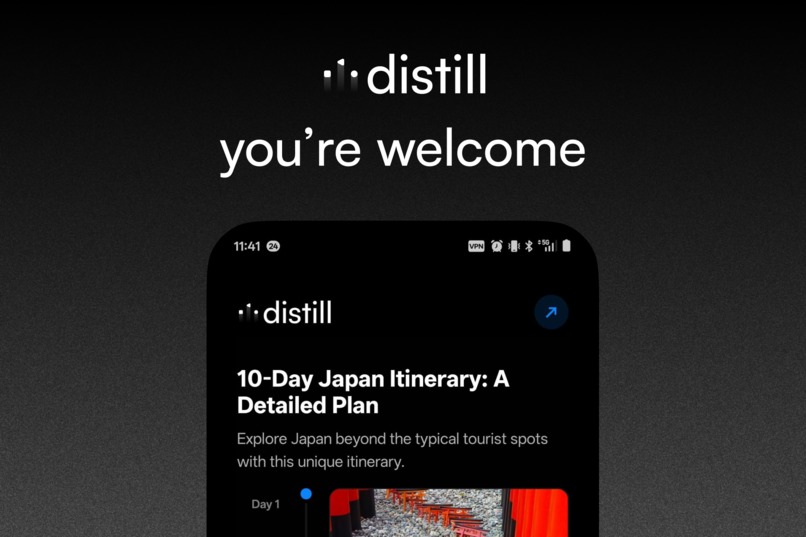
distill is a zero-ui utility. you don't browse with it; you give it a destination, and it returns the essence. by sharing any cluttered url to the app, distill inhales the raw html, strips away the noise, and manifests a minimal, actionable data card. whether it's an itinerary hidden in a travel blog or a formula buried in a research paper, the app understands the intent and provides the signal.
how we built it
we built distill using react native and expo for a fluid, native feel. the engine is a direct-to-intelligence pipeline:
extraction: we used a headless webview to bypass bot detection and capture raw domestic content.

intelligence: the core is powered by claude 3.5 sonnet, acting as a polymorphic parser that translates messy code into structured json.

motion: we used moti and reanimated to create a ui that feels like it’s growing out of the data, rather than just displaying it.

simplicity: we followed the principles of occam’s razor, removing every button and menu that wasn't strictly necessary.
challenges we ran into
cleaning raw html on-device without a backend is like trying to drink from a firehose. we had to develop custom regex patterns to strip heavy script and style tags to fit within context windows while maintaining the "soul" of the data. handling the diverse nature of the web—from legacy blogs to modern spsas—required a prompt that was resilient enough to handle absolute chaos. Accomplishments that we're proud of
we managed to build a tool that feels invisible. the most rewarding moment was seeing a 5,000-word travel blog with 40+ ads collapse into a single, beautiful map marker and a price prediction in under three seconds. achieving that level of "instant truth" was our goal from hour one.
what we learned
we learned that ai isn't just a chatbot; it's the ultimate interface. by treating an llm as a reasoning layer for the web, we realized we don't need to build specific tools for specific problems—we just need to build a better way for humans to perceive the information that already exists.
what's next for distill
offline distillation: using local edge-models to process data without an internet connection.

multimodal signal: the ability to "distill" photos of physical menus or signs into the same minimal data cards.

the protocol: turning distill into a system-level service that auto-cleans every link you click before it even reaches your eyes.

Log in or sign up for Devpost to join the conversation.