-
-
Thumbnail
-
How it works
-
Dispute queue
-
Verdicts
-
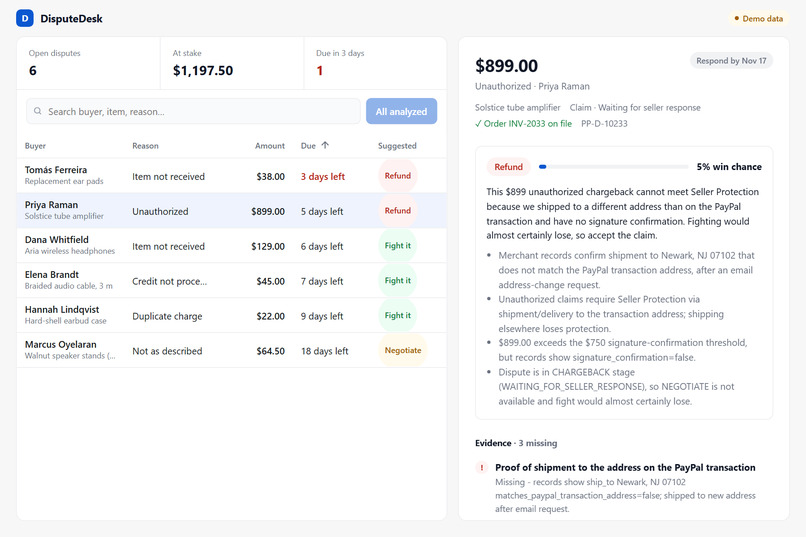
Refund Verdict
-
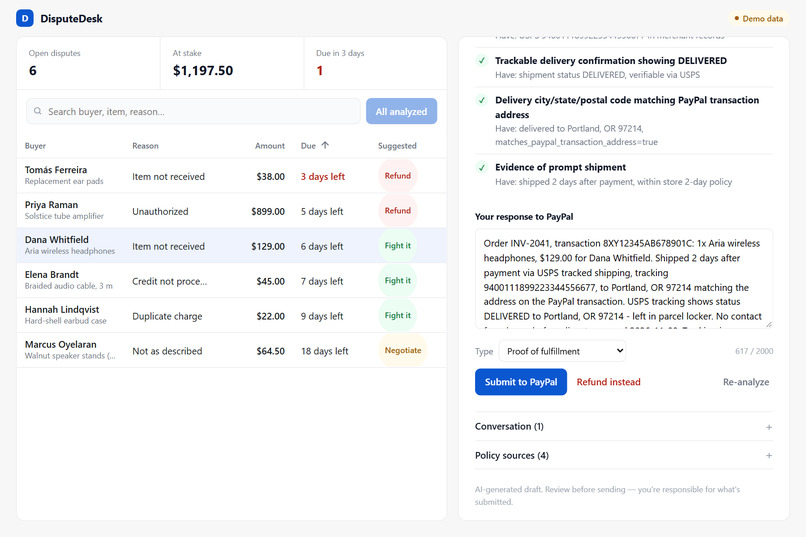
Fight Response
-
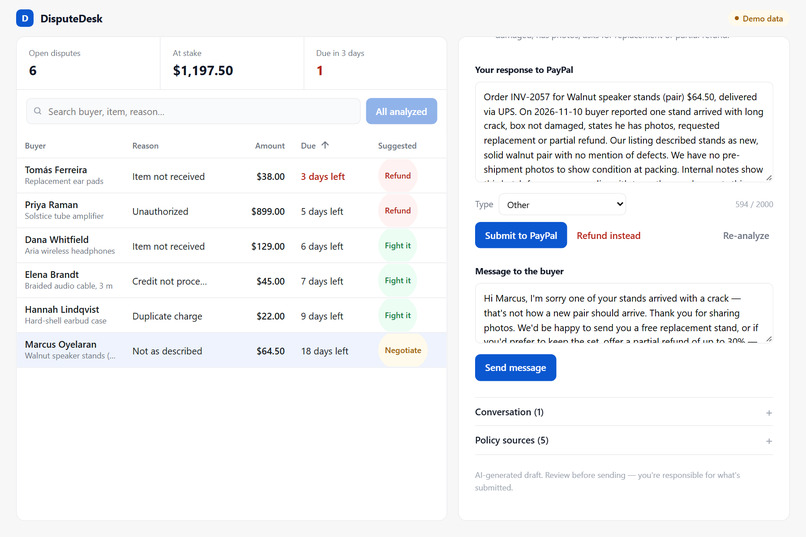
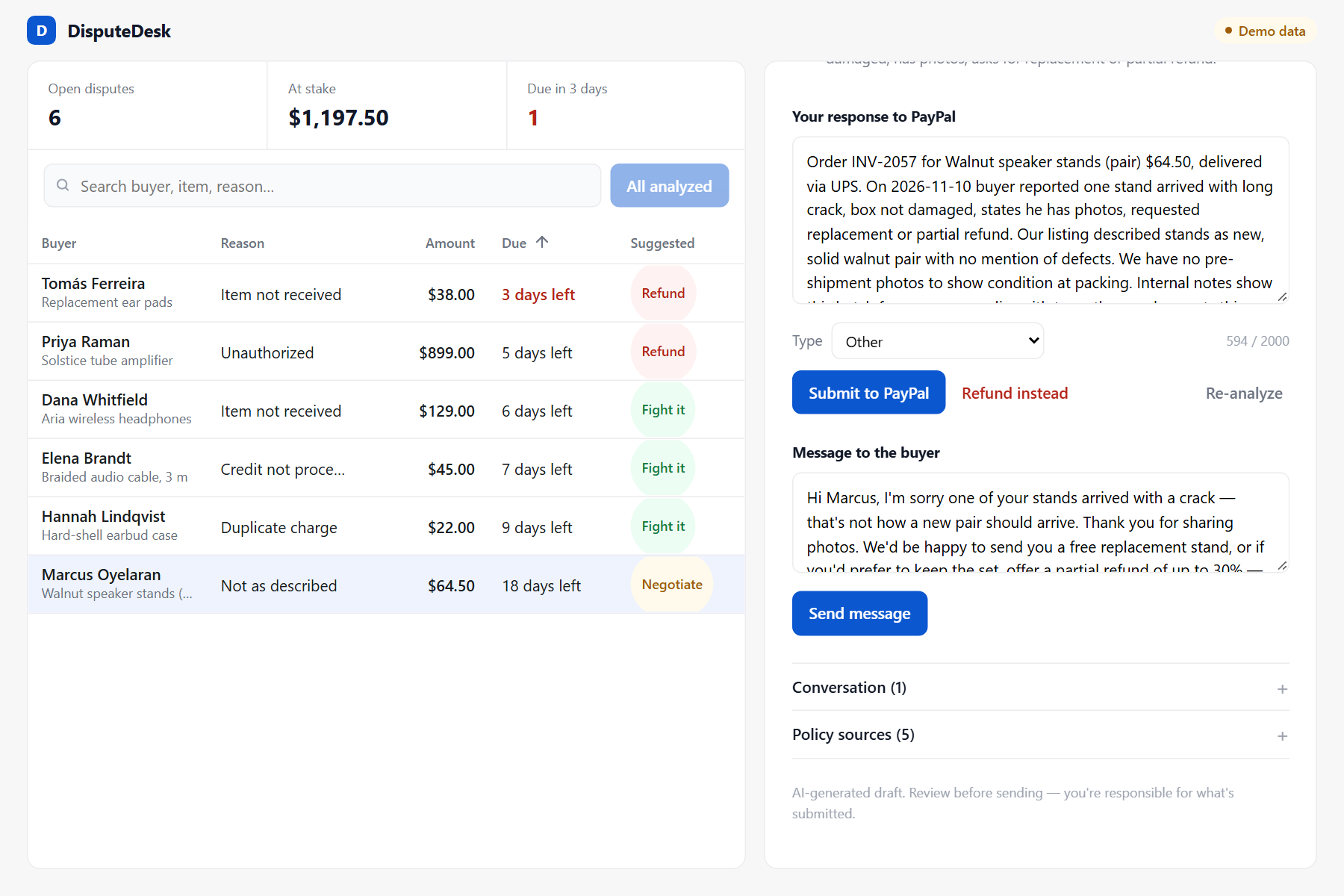
Negotiate Message
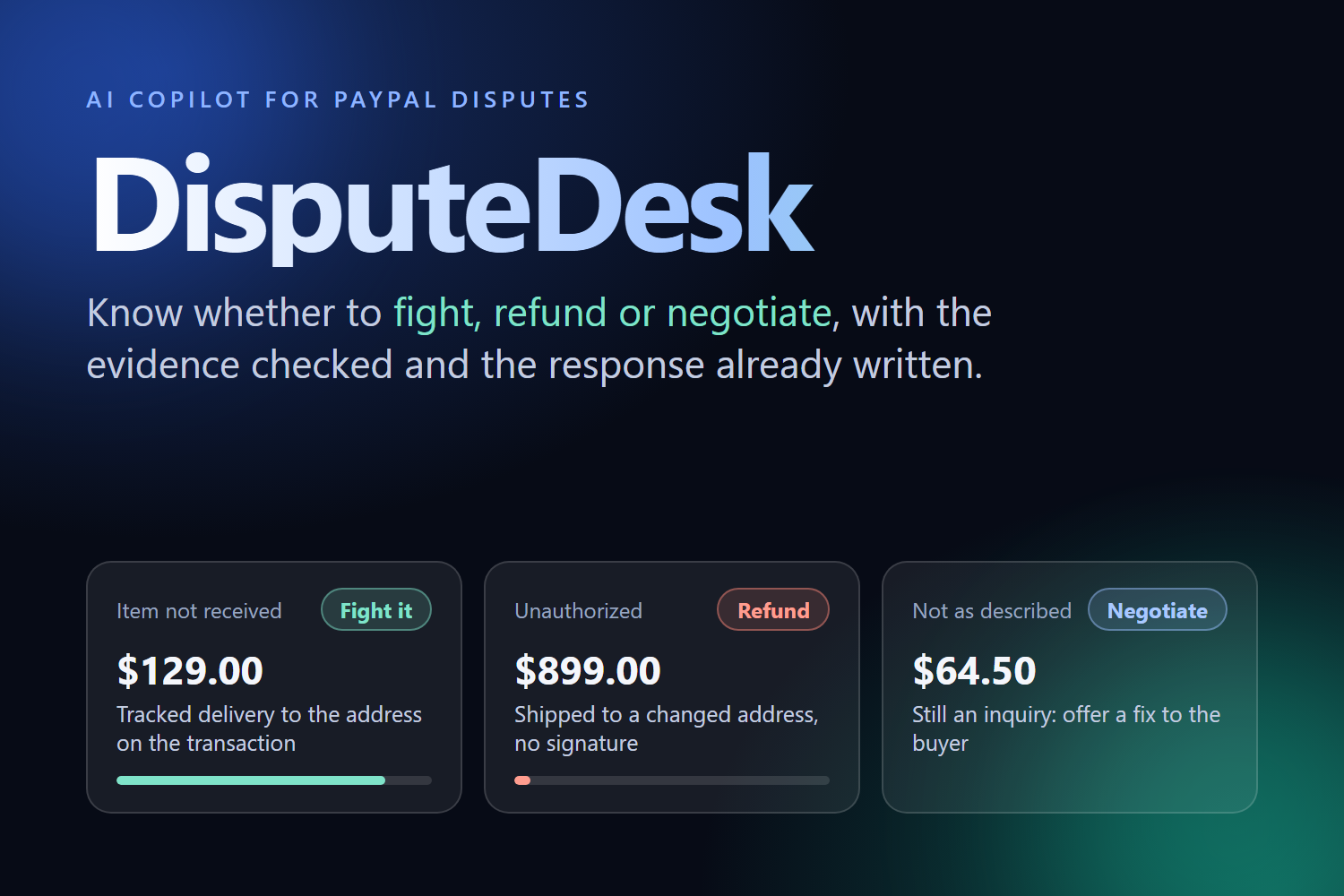
Inspiration
A dispute is the moment a small seller is most alone. A buyer says the parcel never came, PayPal asks for a response within days, and the seller has to work out what counts as proof, which rules apply, and whether the case is worth fighting at all. Large merchants have chargeback teams and paid tools for this. A one-person shop has a deadline and a blank text box.
We wanted to give that seller what a dispute analyst would give them: a straight answer on whether they can win, a list of what they have and what is missing, and a response they can send.
What it does
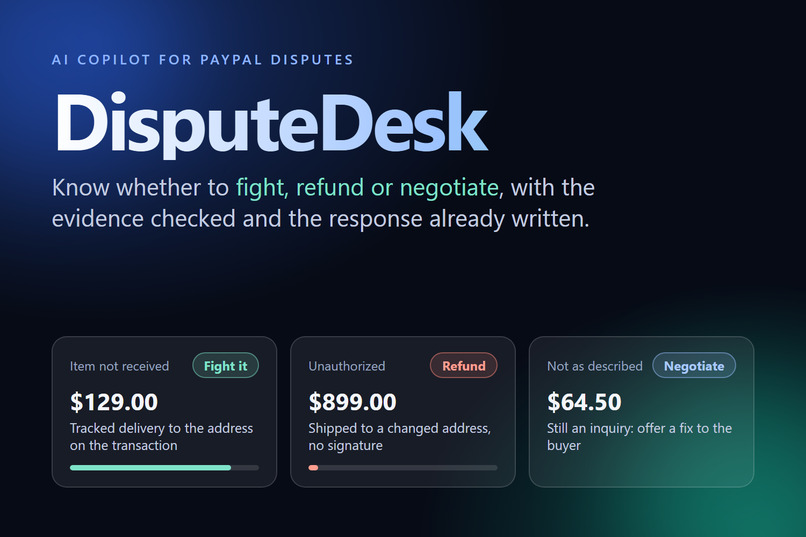
DisputeDesk is an AI copilot for PayPal disputes.
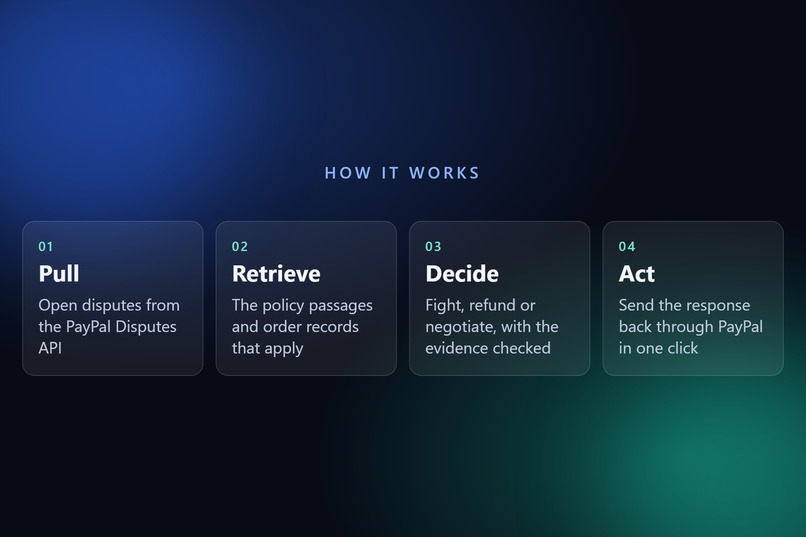
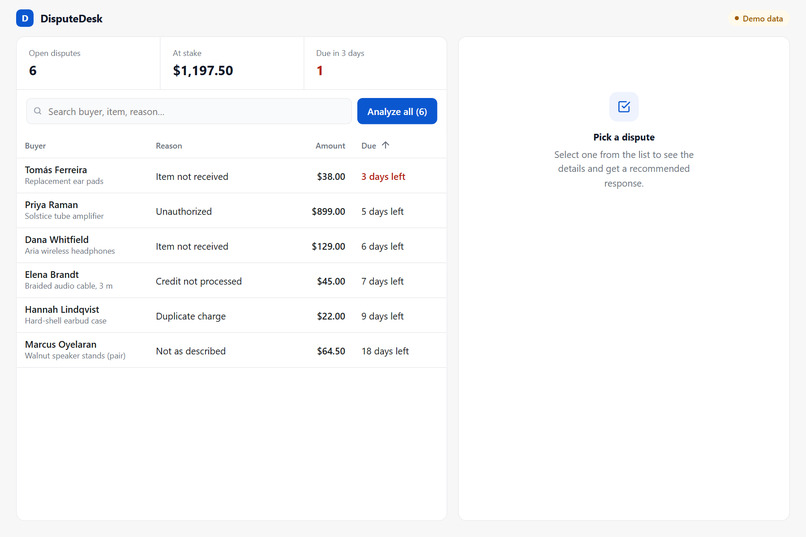
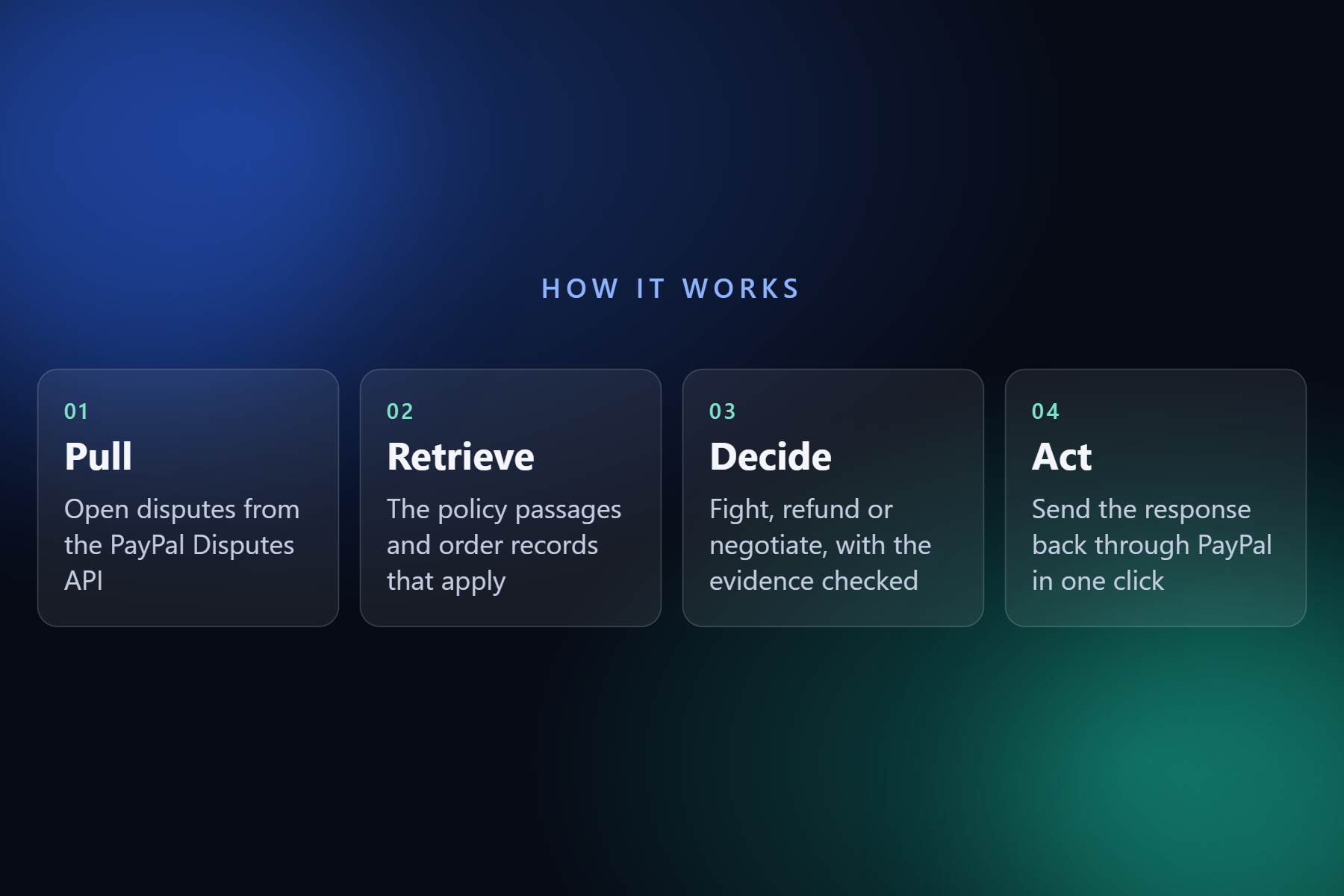
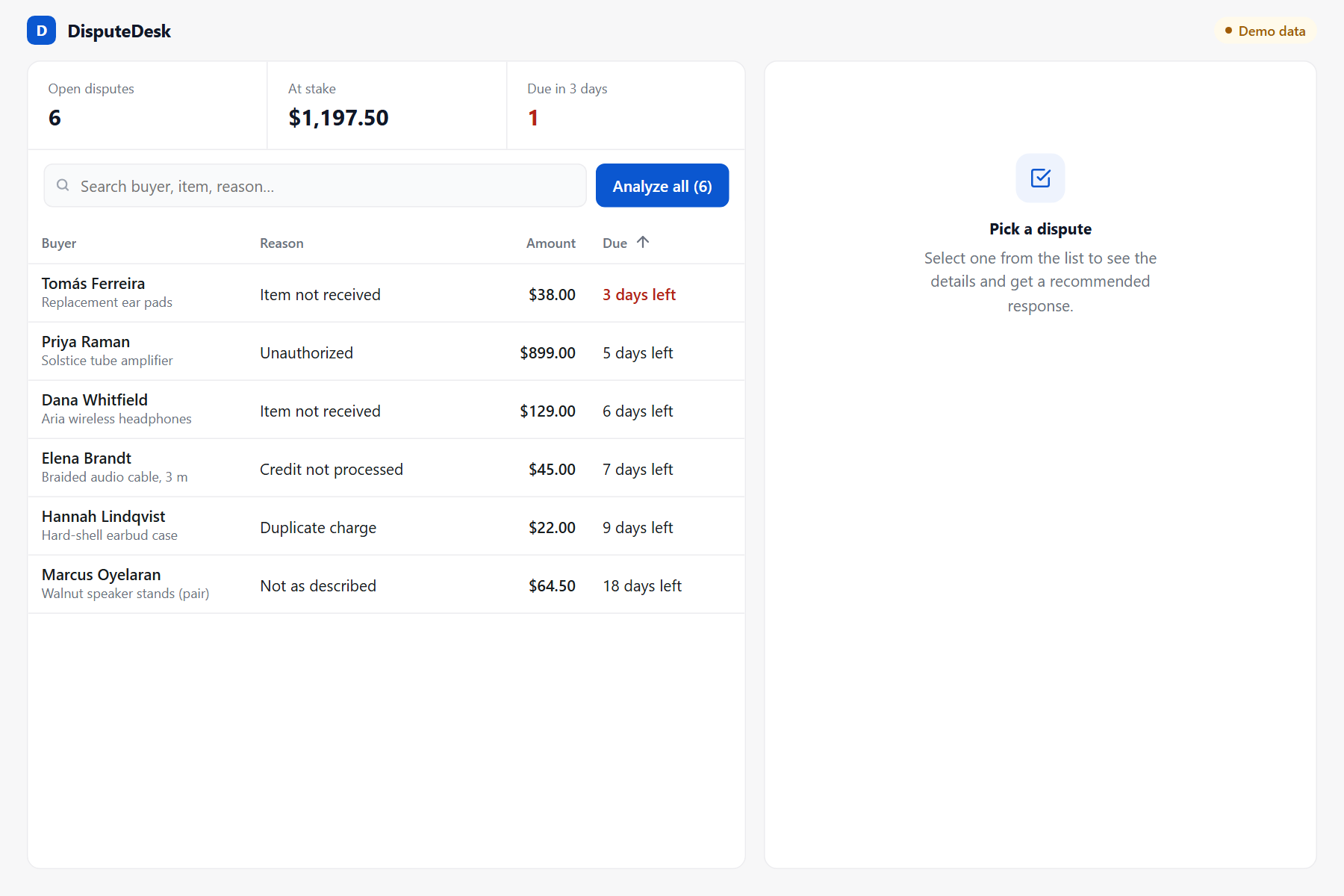
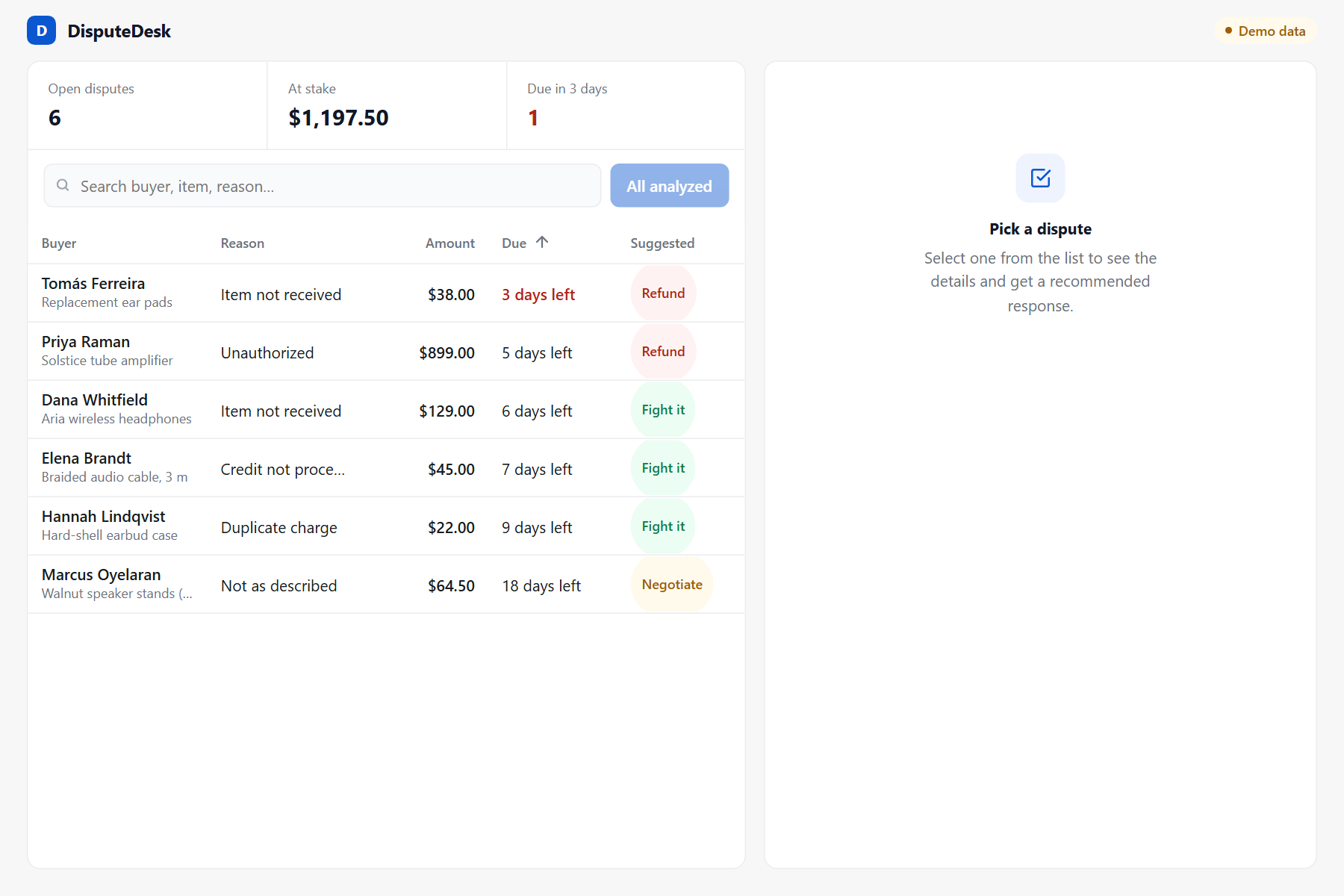
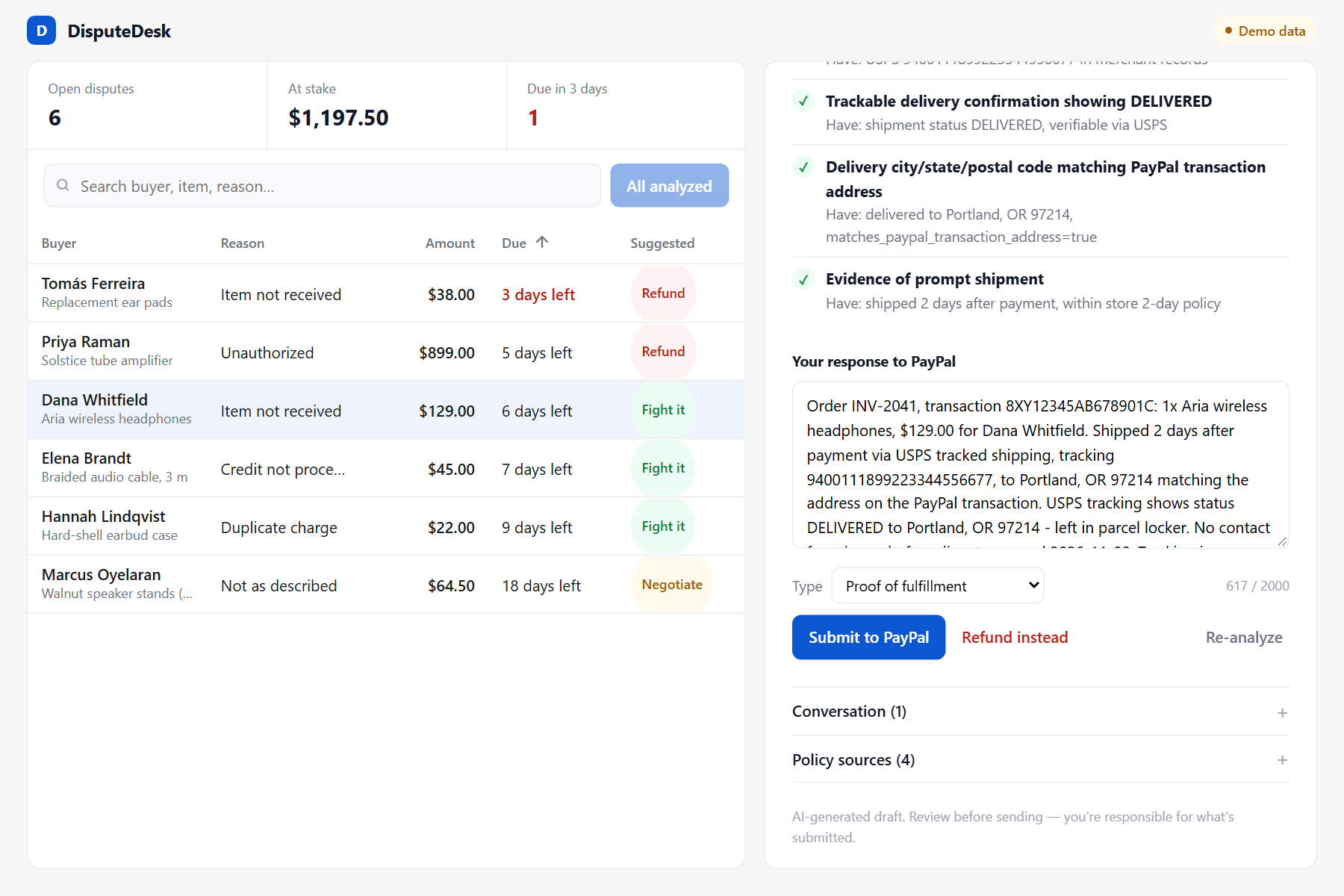
- Dispute queue. It pulls the merchant's disputes from the PayPal Disputes API into a sortable, filterable table ordered by response deadline, with the amount at stake and urgent cases visible at a glance.
- Grounded analysis. For each dispute it retrieves the relevant passages from a knowledge base (PayPal's dispute process, Seller Protection rules, evidence by reason code, the store's own policies) and matches the dispute to the merchant's order records: tracking, refunds, messages.
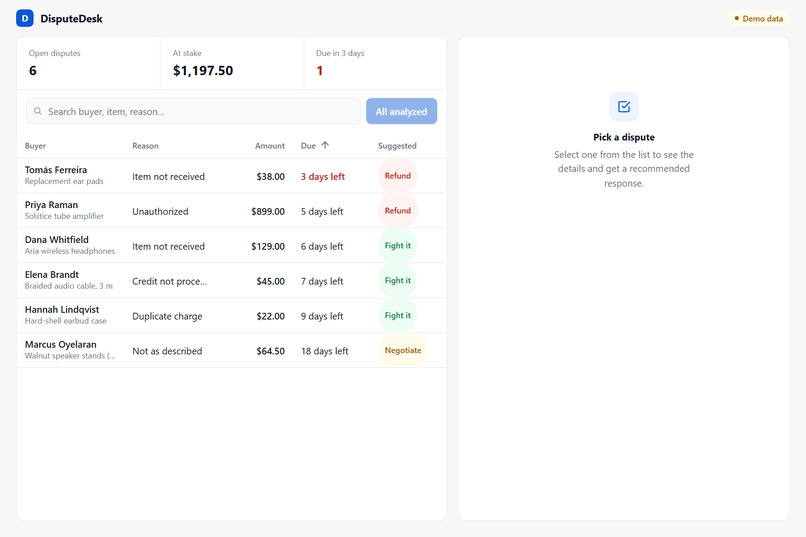
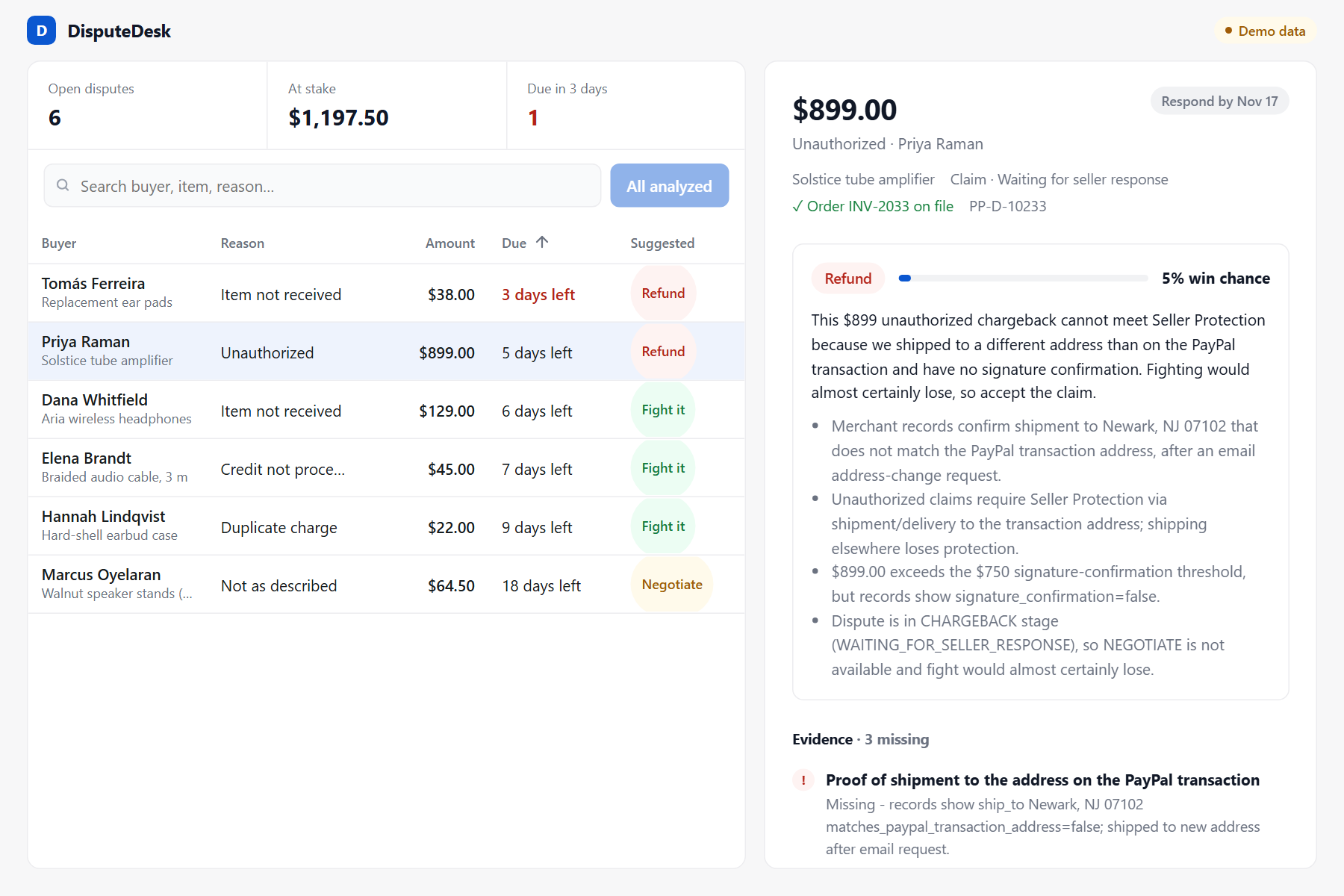
- A verdict, not just a summary. The model recommends fight, refund or negotiate, estimates the chance of winning, and marks each piece of required evidence as "have" or "missing". It cites the passages it relied on.
- Ready-to-send drafts. It writes the evidence notes for PayPal and a message to the buyer, both editable.
- One click back to PayPal. The merchant submits evidence, messages the buyer, or accepts the claim and refunds, through the PayPal API. Nothing is sent without the merchant pressing the button.
It is honest when the case is weak. In our demo, an $899 order shipped to an address the buyer changed after paying, with no signature, gets a "refund" verdict and a 5% win chance, with the Seller Protection rules that explain why.
How we built it
- PayPal Developer Platform: Disputes API v1 in sandbox with OAuth client credentials: list and show disputes, provide evidence, send message, accept claim.
- Meta Muse (Meta Model API): reads the dispute, the merchant's records and the retrieved passages, and returns the verdict, checklist, citations and drafts as strict JSON validated against a schema.
- Retrieval: the knowledge base is Markdown split into heading-level passages and ranked with BM25. There is no vector database and no embeddings key, so anyone can run it.
- AG Grid: the dispute queue, with sorting, column filters, quick filter and live row updates as analyses finish.
- FastAPI backend, a single-page vanilla JavaScript front end, and a Render config for deployment.
- Demo mode: without PayPal credentials the app serves seeded disputes shaped like PayPal's dispute schema, so judges can try the whole flow with only a model key. ## Challenges we ran into
- Keeping the model grounded. A dispute response with an invented tracking number is worse than no response. The prompt restricts the model to the dispute data and the merchant's records, and the server discards any citation that does not match a retrieved passage.
- PayPal's rules about when you can act. Evidence can only be submitted while PayPal is waiting on the seller, and messages only during the inquiry stage. The app enforces both and explains why a button is disabled.
- Making it runnable by anyone. Creating real disputes in sandbox takes several manual steps, so we built the demo mode to mirror PayPal's data shape. ## Accomplishments that we're proud of
- The assistant tells merchants to refund when the evidence is not there, instead of always drafting a fight.
- Every recommendation shows the policy passages behind it, so the merchant can check the reasoning.
- The whole loop, from PayPal dispute to submitted response, fits on one screen. ## What we learned Most of the value is in the decision, not the letter. Knowing in ten seconds that a case cannot be won saves more time than a well-written response to it. We also learned that simple keyword retrieval is enough when the knowledge base is small and well structured. ## What's next for DisputeDesk
- Exercise every action against live sandbox disputes; so far the end-to-end flow has been run in demo mode.
- Attach files (delivery receipts, photos) to evidence.
- Connect real order systems such as Shopify and WooCommerce in place of the sample order file.
- Use PayPal dispute webhooks to analyse new disputes as they arrive.
- Spot patterns across disputes, such as a product batch that keeps arriving damaged.
