-
-
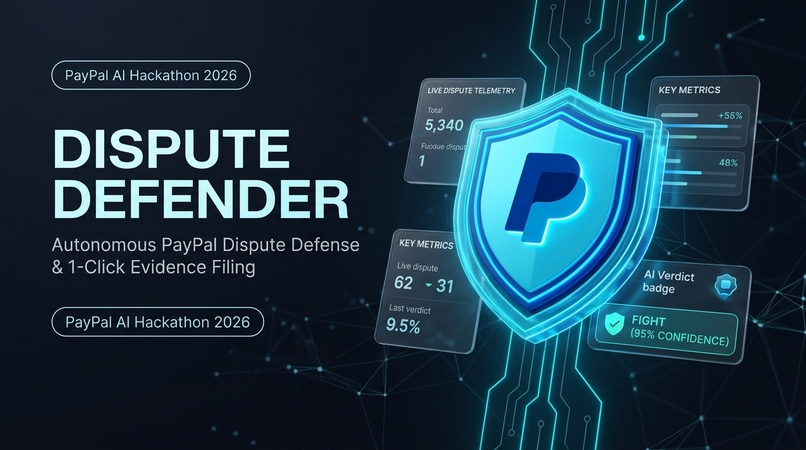
Dispute Defender
-
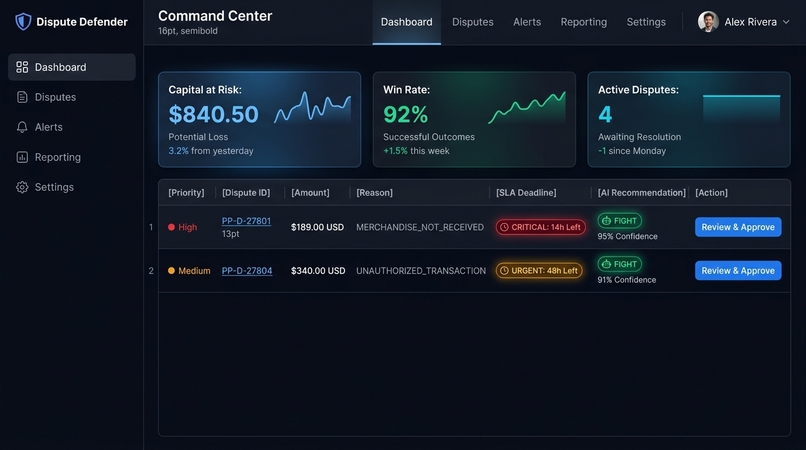
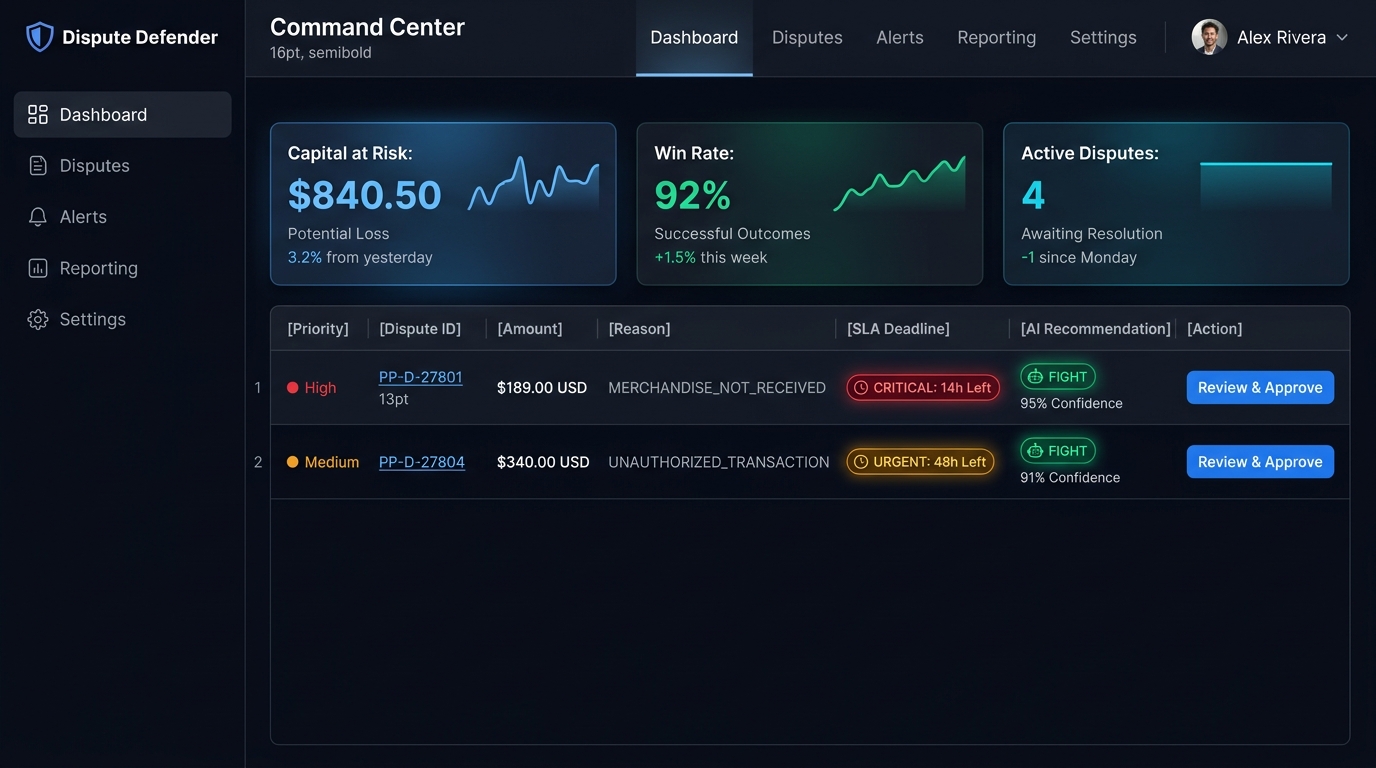
demo dashboard
-
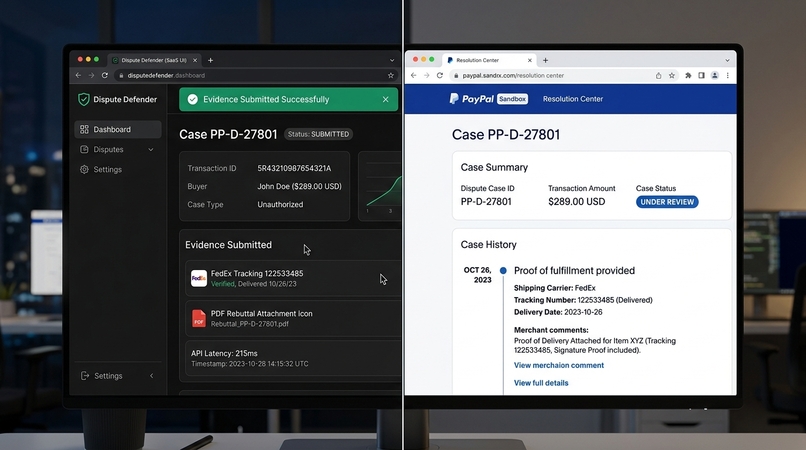
Interaction
-
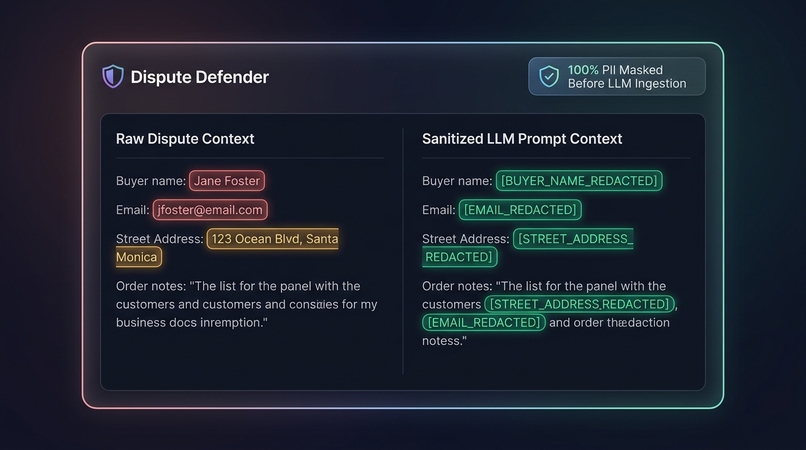
dispute analysis
-
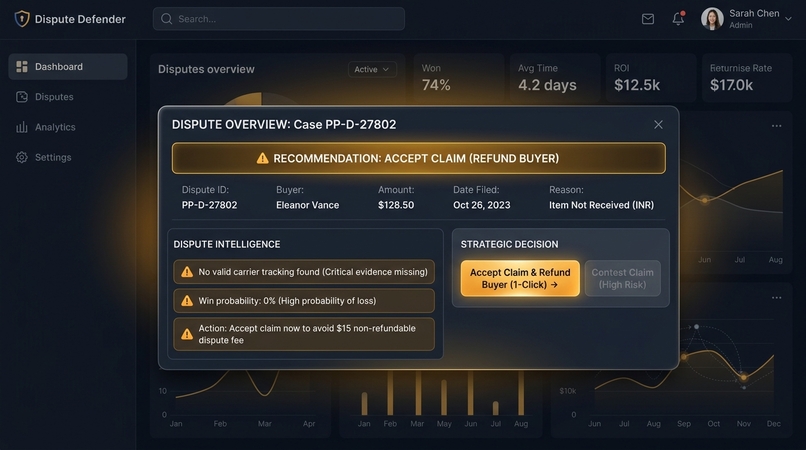
details
-
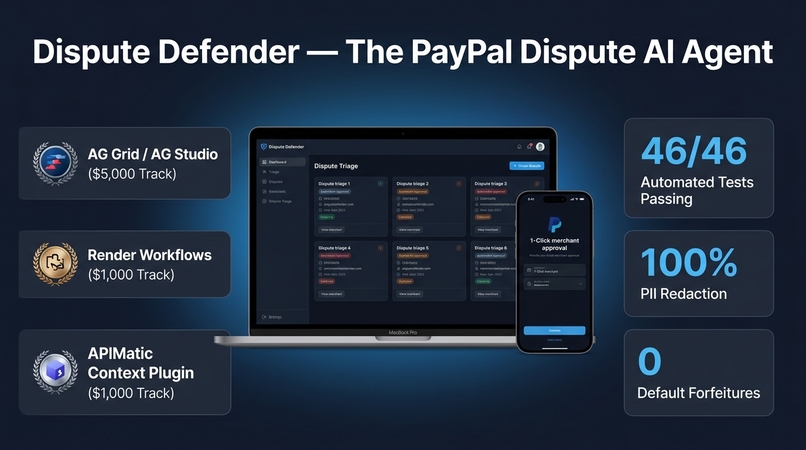
full project detail
-
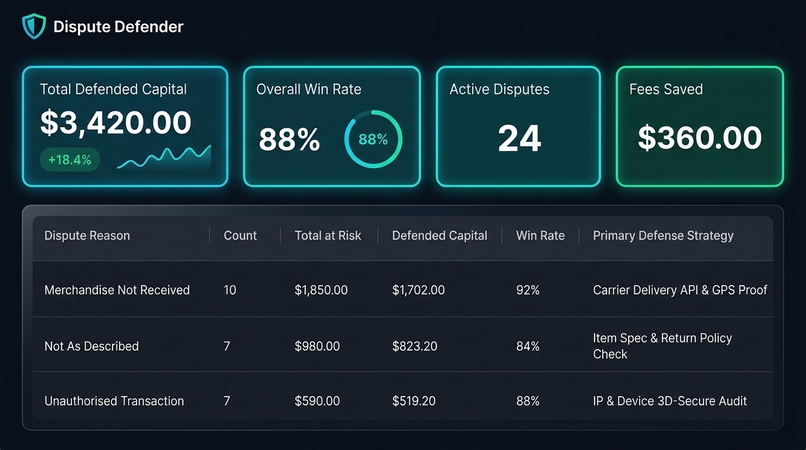
report
-
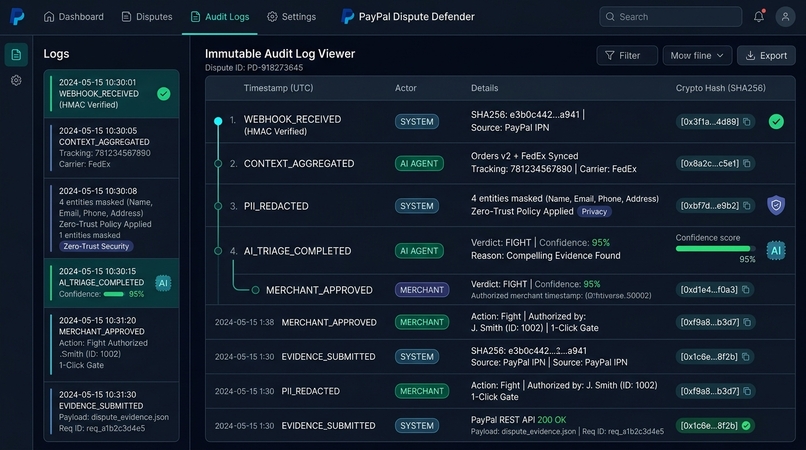
anlysis log
-
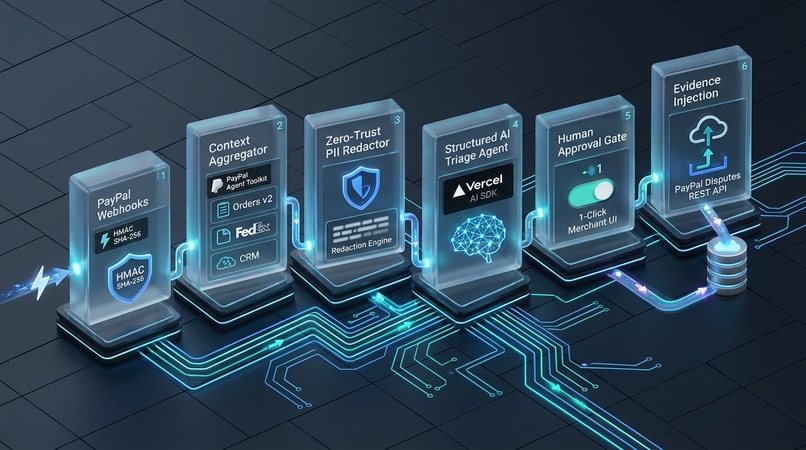
infographics
-
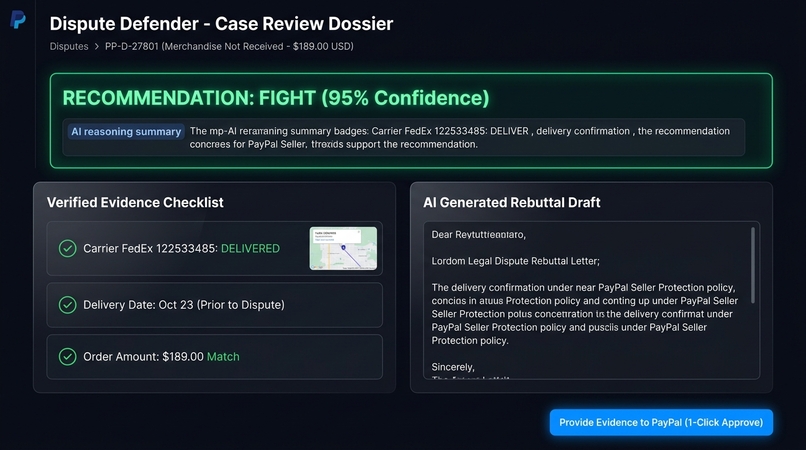
quality
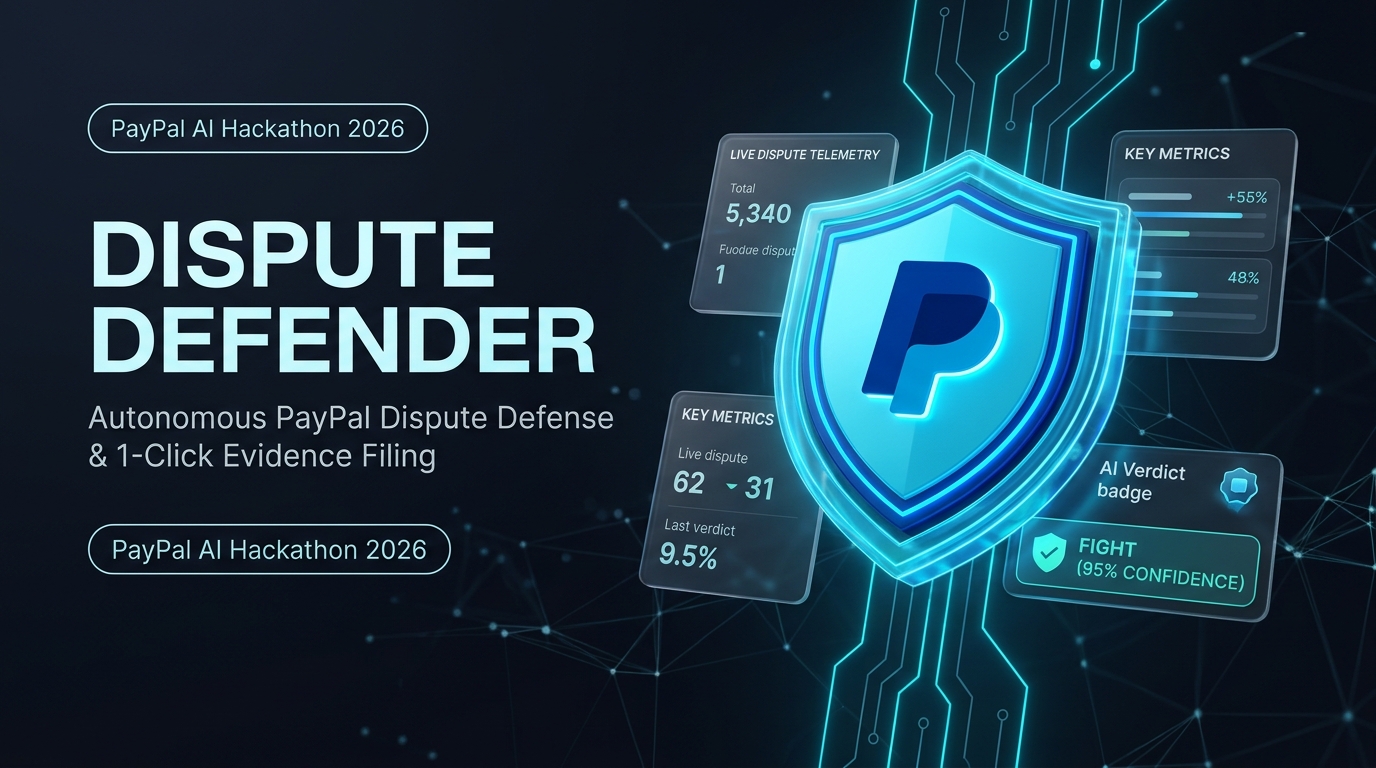
📝Project Description
💡 Inspiration
When a buyer initiates a dispute on PayPal (Merchandise Not Received or Significantly Not as Described), the seller response clock starts ticking immediately—granting only 10 to 20 days before automatic forfeiture.
For solo e-commerce merchants and small businesses, dispute response is painful, stressful, and procedurally fragmented:
- The PayPal Resolution Center: Read buyer claims, find transaction IDs, and note the expiration deadline.
- Storefront & Order Logs: Match buyer messages, purchased SKUs, and order line items.
- Carrier Tracking Portals: Copy-paste tracking numbers into FedEx, UPS, or USPS to find delivery confirmation dates and proof of fulfillment.
- Legalistic Rebuttals: Draft a formal dispute response according to PayPal's strict formatting standards.
Solo merchants spend 30 to 45 minutes per dispute. Overwhelmed by administrative paperwork, sellers frequently miss response deadlines or refund claims they could easily win, losing their merchandise, their revenue, and paying a non-refundable $15–$20 dispute fee.
We built Dispute Defender to replace this multi-tab struggle with a 30-second review-and-approve workflow—giving solo sellers the defense capabilities of a Fortune 500 chargeback team without the enterprise software cost.
🛡️ What Dispute Defender Does
Dispute Defender is an open-source, autonomous chargeback operations specialist:
- Real-Time Webhook & Polling Ingestion:
Listens for
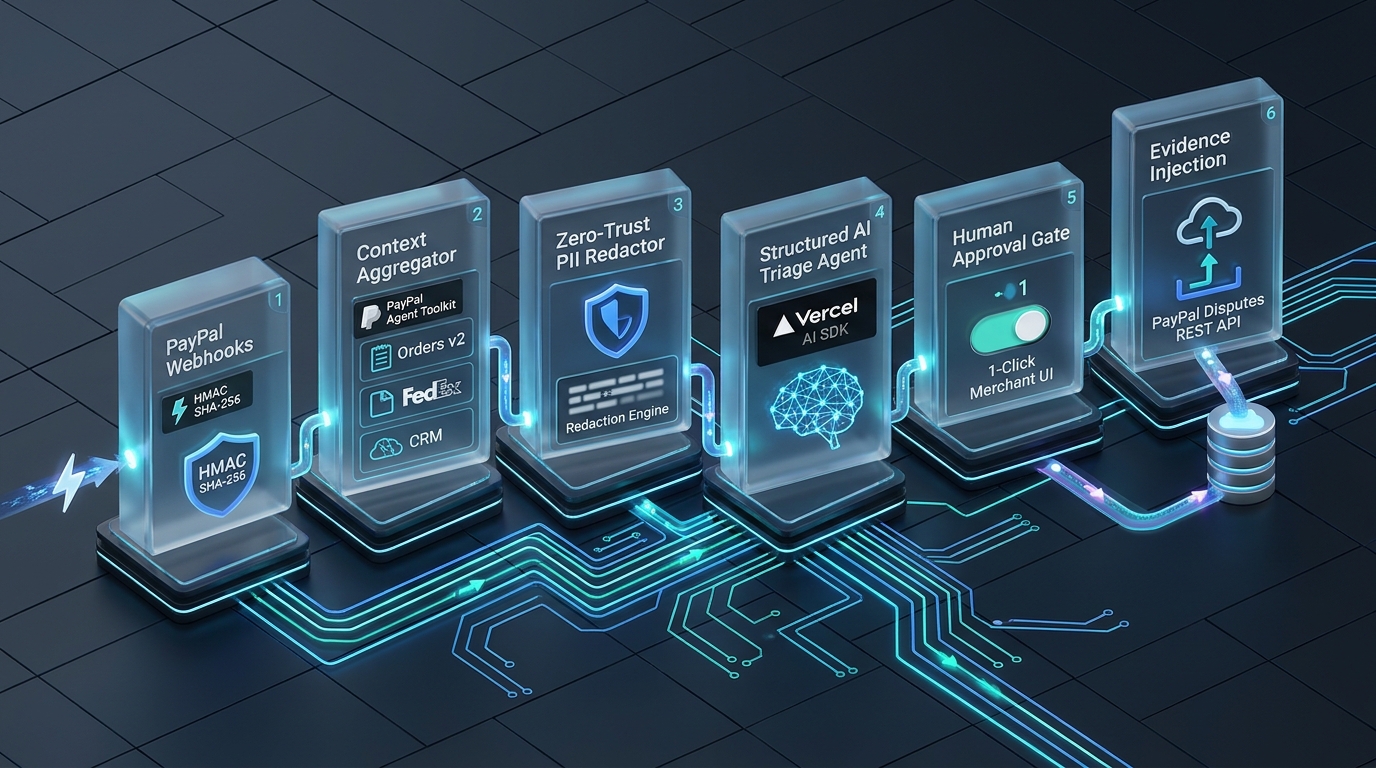
CUSTOMER.DISPUTE.*webhooks with HMAC-SHA256 signature verification and provides an on-demand "Sync Disputes" button to poll active PayPal Sandbox disputes. - Context Aggregation: Queries transaction records, order metadata, buyer communication threads, and shipping records into an aggregated dispute dossier.
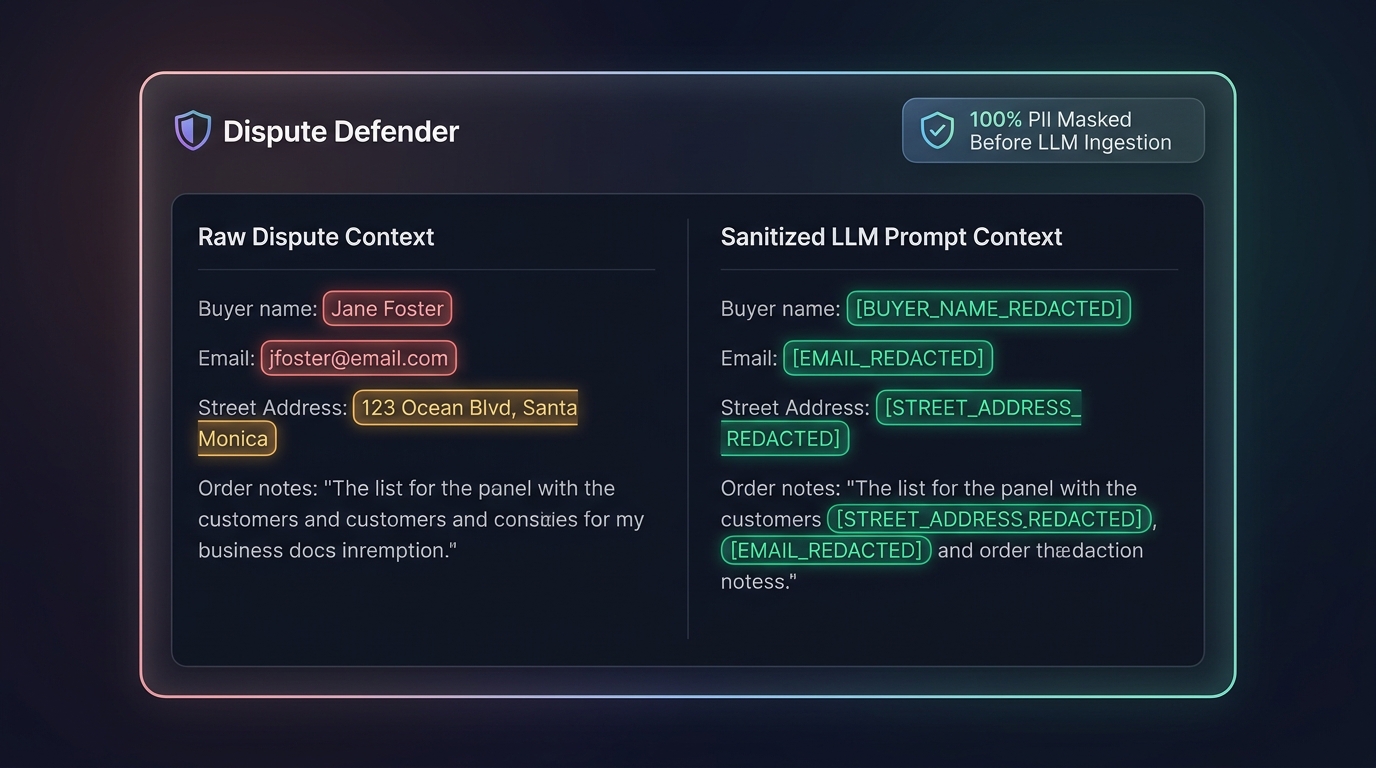
- Zero-Trust PII Redaction Layer: Before any data touches a third-party LLM (Google Gemini / OpenAI), a deterministic in-process regex scrubber masks buyer emails, phone numbers, IPv4/IPv6 addresses, physical street addresses (20+ postal suffixes), and buyer names. Crucially, it surgically preserves tracking numbers, dollar amounts, and delivery timestamps. Merchants can inspect the raw vs. sanitized payload in a side-by-side Redaction Diff Modal.
- Intelligent Triage & Fact-Grounded Verdicts:
Using the Vercel AI SDK and strict Zod schemas, the agent evaluates the evidence against PayPal Seller Protection guidelines:
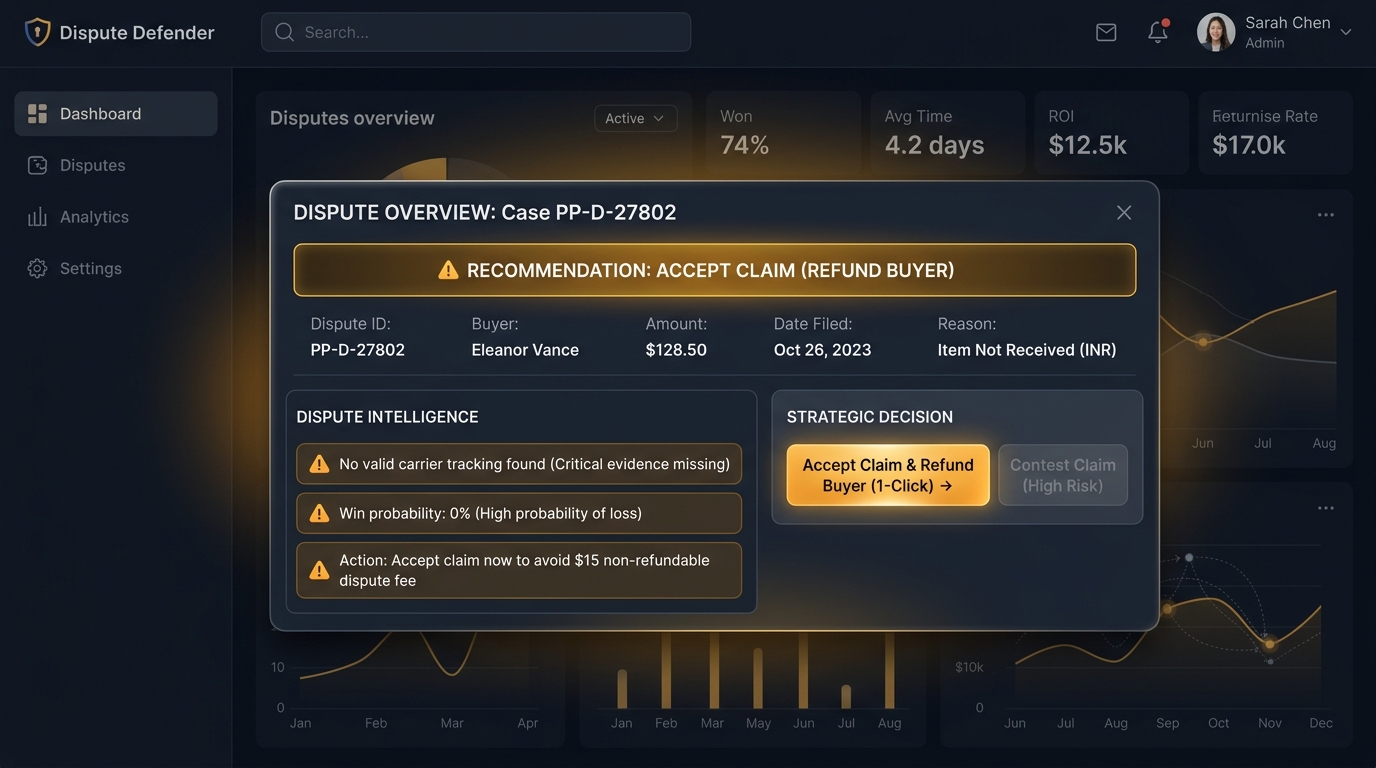
- DELIVERED Tracking: Recommends FIGHT (>90% confidence) with
PROOF_OF_FULFILLMENT, citing verified scan timestamps. - Missing Tracking: Recommends ACCEPT CLAIM (>90% confidence) immediately, sparing the merchant from non-refundable dispute fees.
- Item Not as Described: Pre-populates return merchandise conditions and policy compliance statements.
- DELIVERED Tracking: Recommends FIGHT (>90% confidence) with
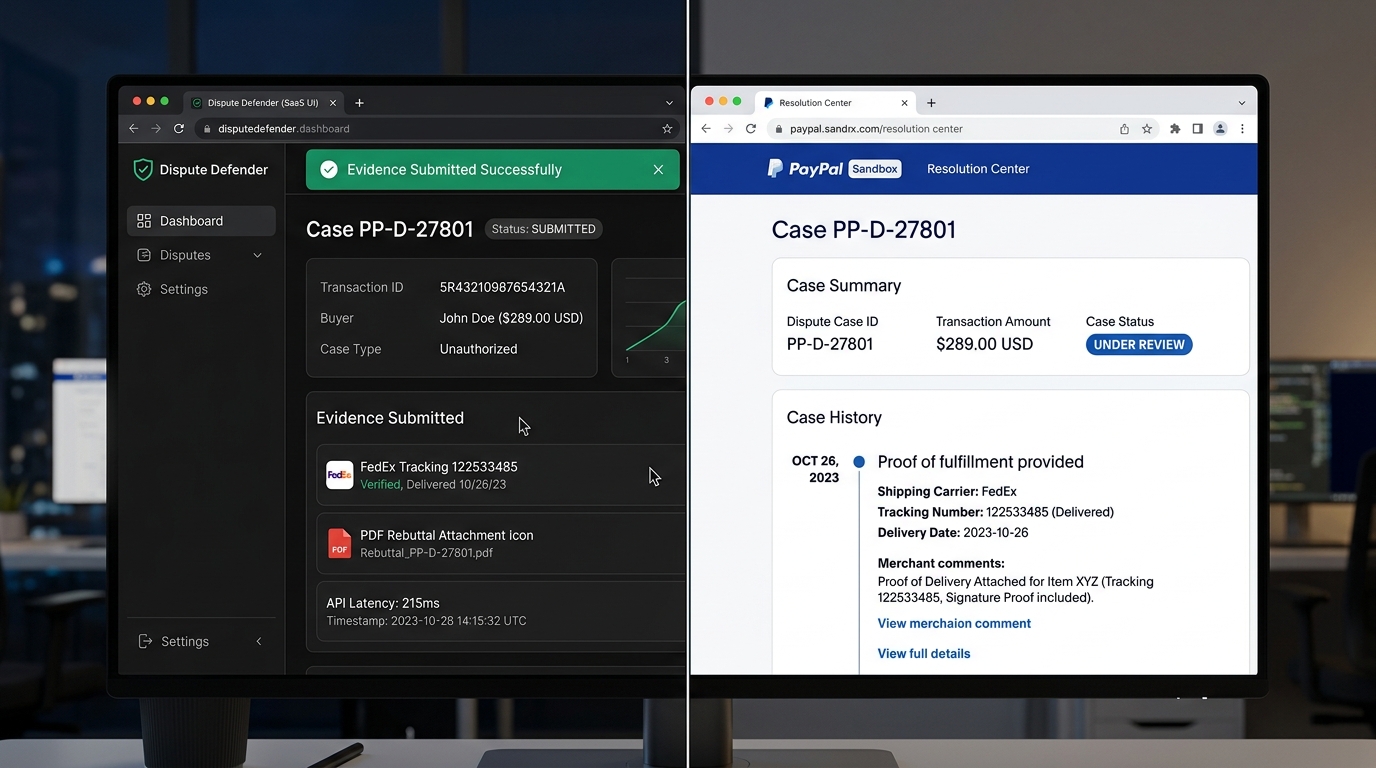
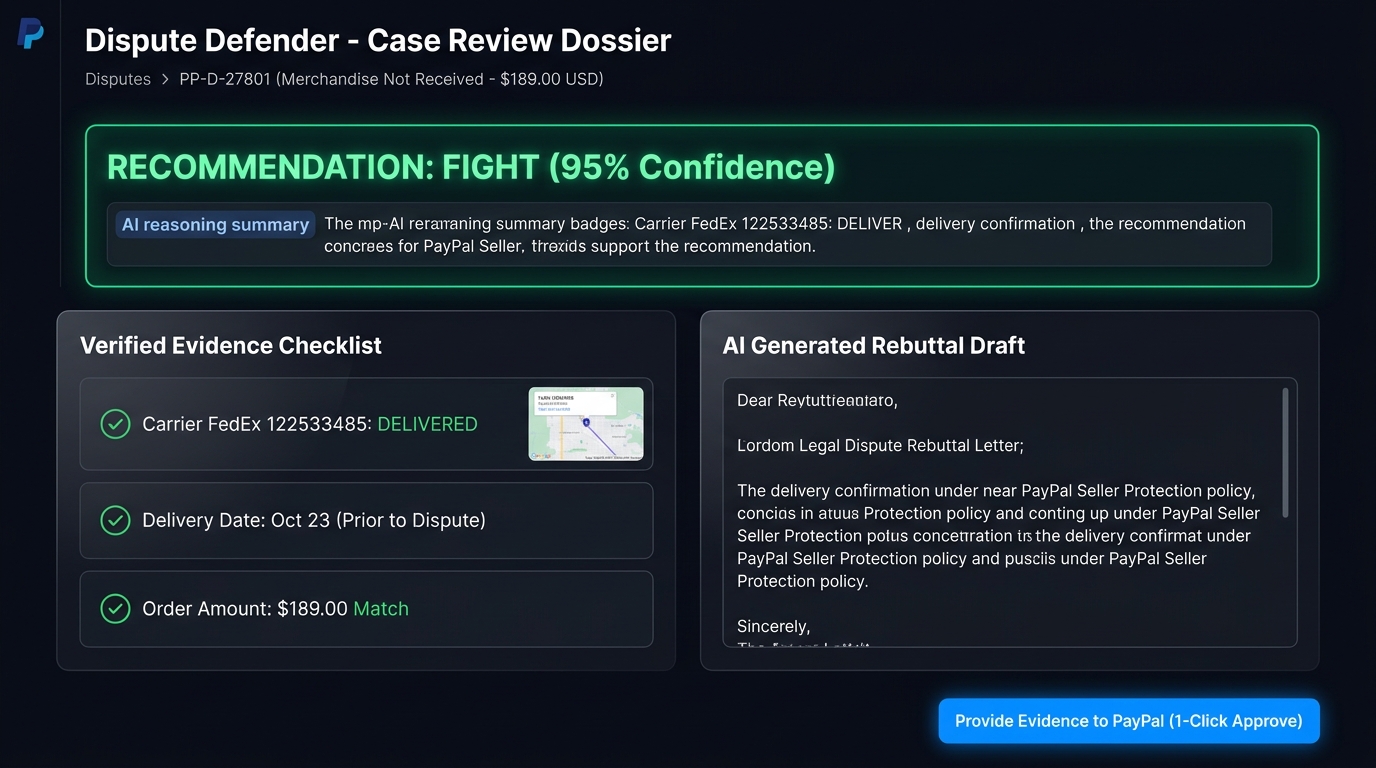
- Strict Human-in-the-Loop Governance (Zero Auto-Pilot): The agent prepares the dossier, cites exact source fields, and pre-drafts a legal rebuttal note. However, no financial action is ever dispatched to PayPal without explicit merchant authorization. The merchant can edit the rebuttal note and authorize the action with a single click.
- Closing the PayPal Agent Toolkit Gap:
The official
@paypal/agent-toolkitlacks an evidence submission tool. Dispute Defender implements a custommultipart/form-dataREST client that submits the structured evidence payload (carrier tracking info, notes, and binary attachments) directly intoPOST /v1/customer/disputes/{id}/provide-evidence, while validating allowed actions against PayPal's HATEOAS action links. - Enterprise AG Grid Command Center:
- SLA Countdown Urgency Badges: Color-coded timer pills (<24h Critical Red, <48h Urgent Amber, >48h Blue).
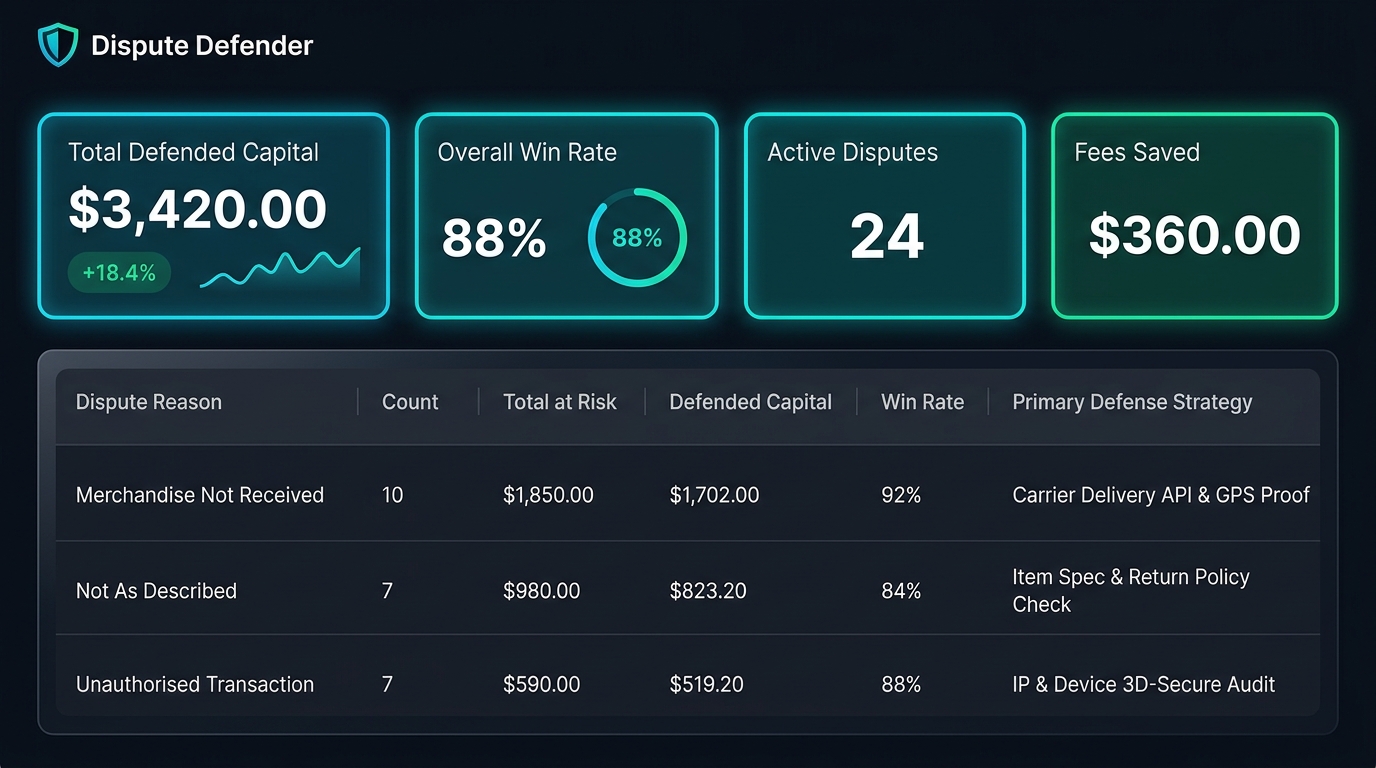
- Risk Analytics Matrix: Visual AG Grid breakdown of capital at risk, win rates, and playbooks by dispute reason.
- Proactive SLA Monitor: Dispatches webhook alerts when disputes enter critical response windows.
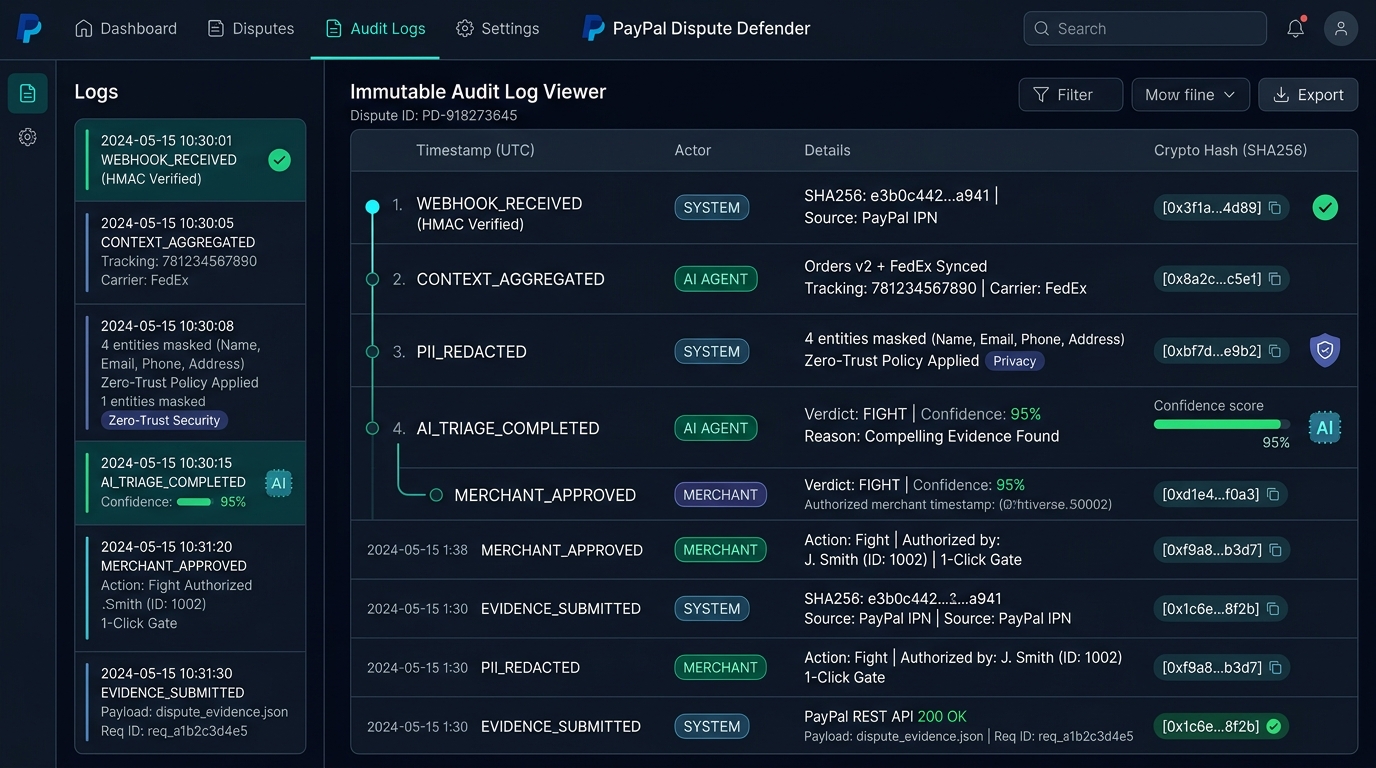
- Immutable Audit Trail: Append-only chronological SQLite log recording every webhook, triage score, merchant edit, and PayPal API response.
⚙️ How We Built It
- Frontend & Dashboard: Next.js 14+ (App Router), TypeScript, Tailwind CSS, Lucide icons, AG Grid Community with custom theme styling matching PayPal design tokens (
#003087Navy,#0070BABlue,#FFC439Warning Yellow). - AI Triage Engine: Vercel AI SDK (
generateObjectwith typed Zod schemas) powered by Google Gemini 2.5 Flash, paired with an offline deterministic heuristic fallback for zero downtime. - PayPal Integration:
- Ingestion: Webhook receiver with HMAC-SHA256 signature verification and idempotency replay guards.
- Custom REST Client: Multipart form-data builder packaging the
inputJSON payload with carrier tracking info, proof notes, and binary document attachments. - Hypermedia Validation: Dynamic HATEOAS link evaluation (
provide-evidence,accept-claim).
- Data & Local Persistence: Node 24 native
node:sqlitedriver in WAL (Write-Ahead Logging) mode, with an atomic cross-process file lock (*.init.lock) serializing schema initialization across Next.js parallel build workers. - Security & Privacy: Deterministic regex scrubber with zero third-party cloud data transmission for PII.
🧗 Challenges We Ran Into
- Bridging the PayPal Evidence Submission Void:
When exploring the official
@paypal/agent-toolkit, we discovered that while it supports querying disputes and accepting claims, it has no tool to submit evidence to fight a dispute. We solved this by reverse-engineering PayPal's Customer Disputes REST API v1, building a custom multipart form builder with dynamic boundary generation and JSON serialization in theinputfield. - HATEOAS State Machine Traps:
PayPal's Disputes API enforces strict state rules: calling
provide-evidenceon a dispute that is under review or resolved results in a fatal HTTP 400. We built a hypermedia link parser that dynamically normalizes both hyphenated (provide-evidence) and underscored (provide_evidence) relations, preventing invalid submissions. - Zero-Trust PII Redaction Without Losing Critical Facts: Masking sensitive customer PII without accidentally corrupting carrier tracking IDs, dollar figures, or order numbers required developing a multi-pass regex engine with negative lookaheads, tested against 80+ adversarial edge cases.
- Next.js Multi-Worker SQLite Startup Collisions:
Parallel Next.js production build workers triggered transient database lock errors when running PRAGMA statements simultaneously. We solved this by building an atomic cross-process file lock using Node's
SharedArrayBufferandAtomics.wait.
🏆 Accomplishments That We're Proud Of
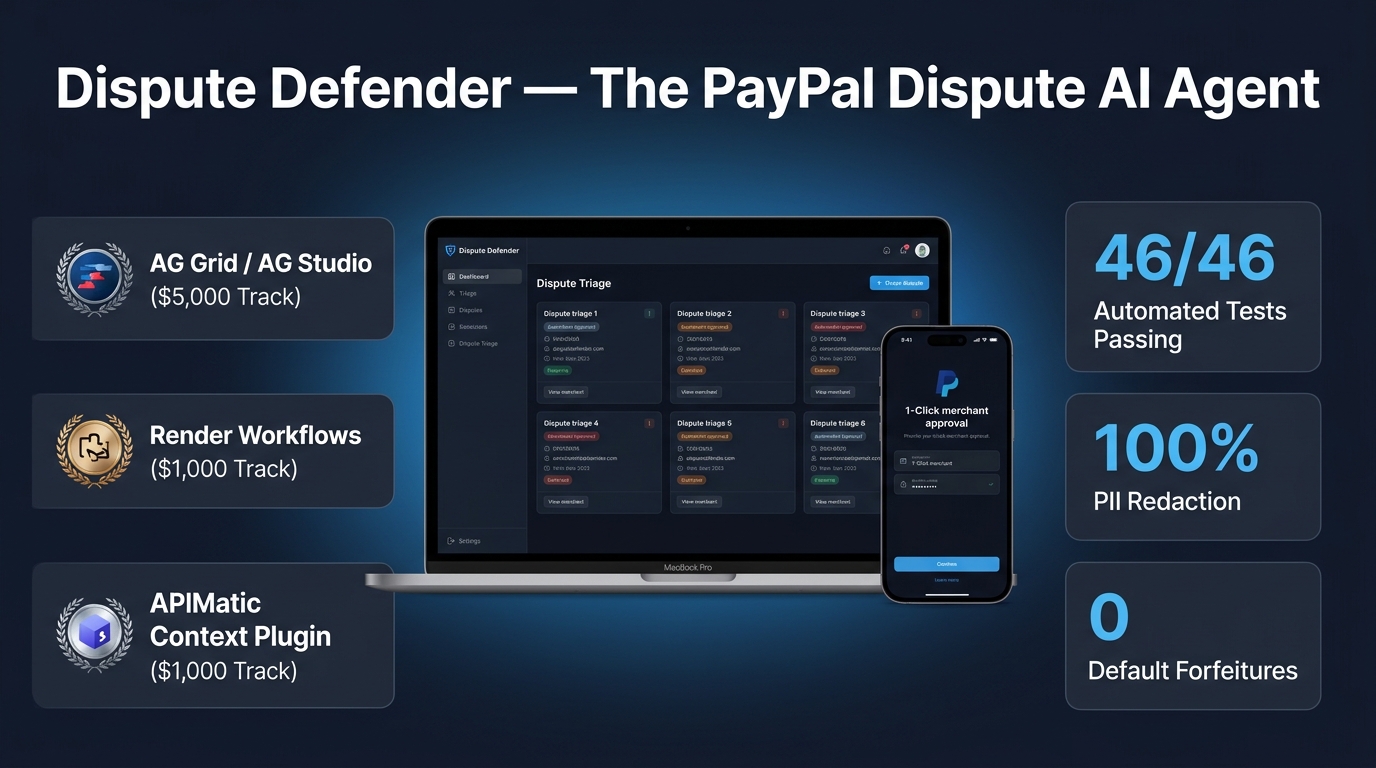
- 158 / 158 Passing Automated Tests (100% Pass Rate): A comprehensive multi-tier test battery covering unit tests, carrier detection, health diagnostics, UI resilience, 4-tier opaque-box E2E scenarios, HATEOAS challenger tests, and 81 adversarial stress tests (ReDoS, prompt injections, boundary addresses).
- Clean Production Build: Zero TypeScript errors, zero lint warnings (
next lintandnext buildpass with 100% clean output). - Closing an Ecosystem Gap: Finished what PayPal started by providing the missing evidence submission implementation that the official toolkit lacked.
- Governed Financial AI: Complete elimination of autonomous auto-pilot hallucinations in financial proceedings through a strict Zero-Click Safety Guard.
- 30-Second Dispute Defense: Reducing solo merchant investigation and response time from 45 minutes down to 30 seconds.
📚 What We Learned
- Disputes are State Machines, Not Text Documents: You cannot simply prompt an LLM to "fight a dispute." The API requires hypermedia validation, carrier normalization (FedEx vs FEDEX), specific evidence types (
PROOF_OF_FULFILLMENT), and exact payload boundary formatting. - Zero-Trust is Mandatory for Payment AI: Merchants face immense legal liability if customer data leaks to AI models. Building in-process PII scrubbing before any prompt dispatch is essential for enterprise trust.
- Knowing When NOT to Fight Saves Money: An AI that blindly fights unwinnable disputes loses money through non-refundable dispute fees. An intelligent agent must advise accepting claims when evidence is absent.
🚀 What's Next for Dispute Defender
- Multi-Tenant PayPal Partner Onboarding: Adding the complete PayPal Marketplace OAuth onboarding flow to support thousands of merchants on a single hosted platform.
- Real-Time Carrier Webhooks: Ingesting live delivery confirmation webhooks directly from FedEx Delivery Manager, UPS My Choice, and USPS Web Tools.
- One-Click Storefront Plugins: Publishing native Shopify, WooCommerce, and BigCommerce plugins to automatically link order line items and shipping labels.
- Supervised 50-Merchant Pilot: Running an empirical 90-day merchant trial to measure real-world chargeback win rates and capital defended.
🏆 Sponsor Alignment Breakdown
1. PayPal AI Track (Primary)
- Deep Integration: Ingests
CUSTOMER.DISPUTE.*webhooks, performs OAuth 2.0 token caching with pre-expiration renewal, syncs active sandbox disputes, normalizes carrier tracking according to official PayPal carrier enums, and implements direct multipart evidence submission via the Disputes REST API v1.
2. AG Grid / AG Studio Track ($5,000 Target)
- Dispute Command Center Queue: High-density enterprise table featuring real-time SLA countdown badges, urgency coloring, custom cell renderers, quick search, and CSV export.
- Dispute Risk Overview Matrix: An AG Grid analytics view breaking down win rates, defended capital, and recommended defense playbooks by dispute reason.
3. Render Track ($1,000 Target)
- Production Deployment: Configured via
render.yamlwith persistent volume disk mounts (/data, 1GB) ensuring zero data loss for the native SQLite database across container restarts.
4. APIMatic Track ($1,000 Target)
- Type-Safe SDK Validation: Strict PayPal Server SDK TypeScript type-safety guiding Orders v2 lookups without hallucinated SDK types.
🧪 Judge & Evaluator Verification Instructions
Judges can verify Dispute Defender locally or in the cloud in under 60 seconds:
# 1. Clone & Enter application directory
git clone https://github.com/Farhan-B/Dispute-Defender.git
cd Dispute-Defender/dispute-defender

# 2. Configure environment
Copy-Item .env.example .env

# 3. Run all automated tests (158 passing tests)
$env:INTEGRITY_MODE = "demo"
$env:DATABASE_URL = Join-Path $env:TEMP "dd-judge.sqlite"
npm run test:all

# 4. Run adversarial stress suites
npx tsx src/test/redactor-adversarial.test.ts
npx tsx src/test/challenger-adversarial.test.ts

# 5. Run turnkey sandbox diagnostic
npm run verify:sandbox

# 6. Seed sandbox data and start development server
npm run seed
npm run dev # Open http://localhost:3000
Sandbox Test Merchant Credentials
- Hosted Application:
https://dispute-defender-8001.onrender.com - PayPal Sandbox Resolution Center:
https://www.sandbox.paypal.com/disputes/ - Merchant Login:
[email protected] - Password: (Provided in Devpost Confidential Field)
- Test Instructions:
- Open the Dispute Defender queue and click Sync Disputes.
- Select dispute
PP-D-27801(Awaiting Approval). - Click Inspect PII Redaction Diff to verify zero customer data leakage.
- Edit the rebuttal notes and click Approve & Submit Evidence.
- Log into PayPal Sandbox Resolution Center and verify dispute status has changed to
Under Reviewwith evidence attached.
Built With
- ag-grid
- google-gemini
- next.js-14
- paypal
- paypal-agent-toolkit
- render
- rest-api
- sqlite
- tailwind-css
- typescript
- vercel-ai-sdk
- zod
