-
-
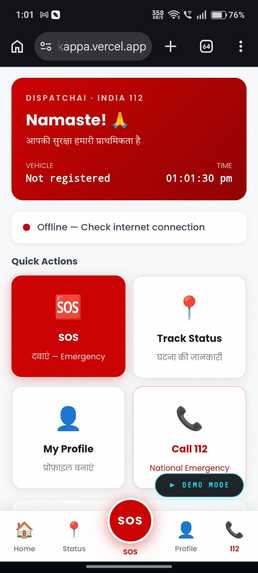
Dashboard
-
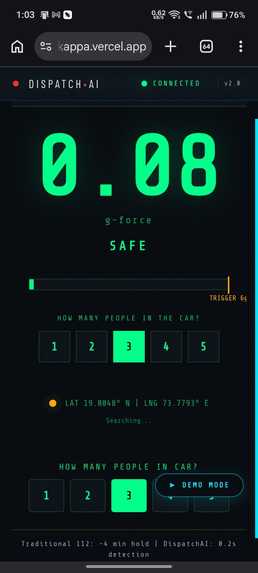
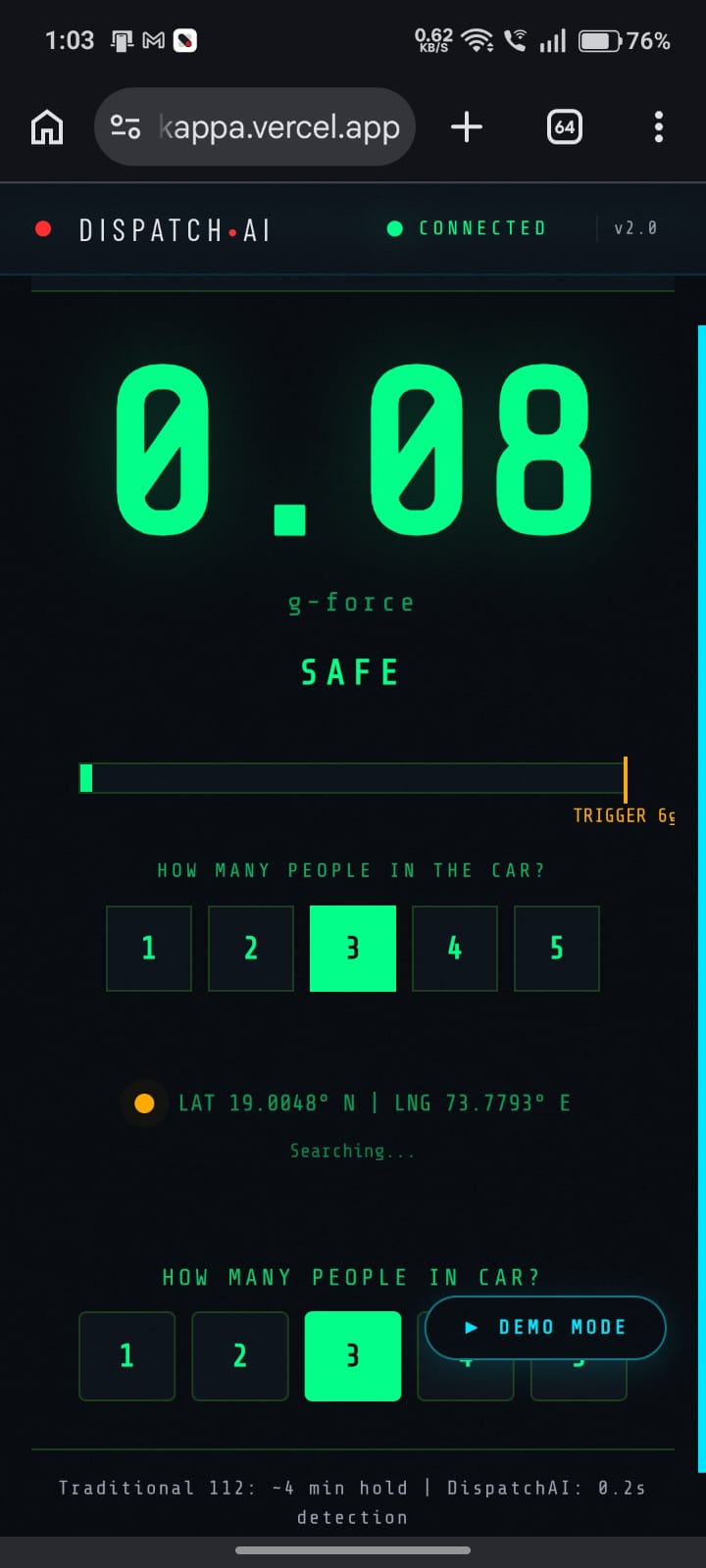
G-Force Visualizer
-

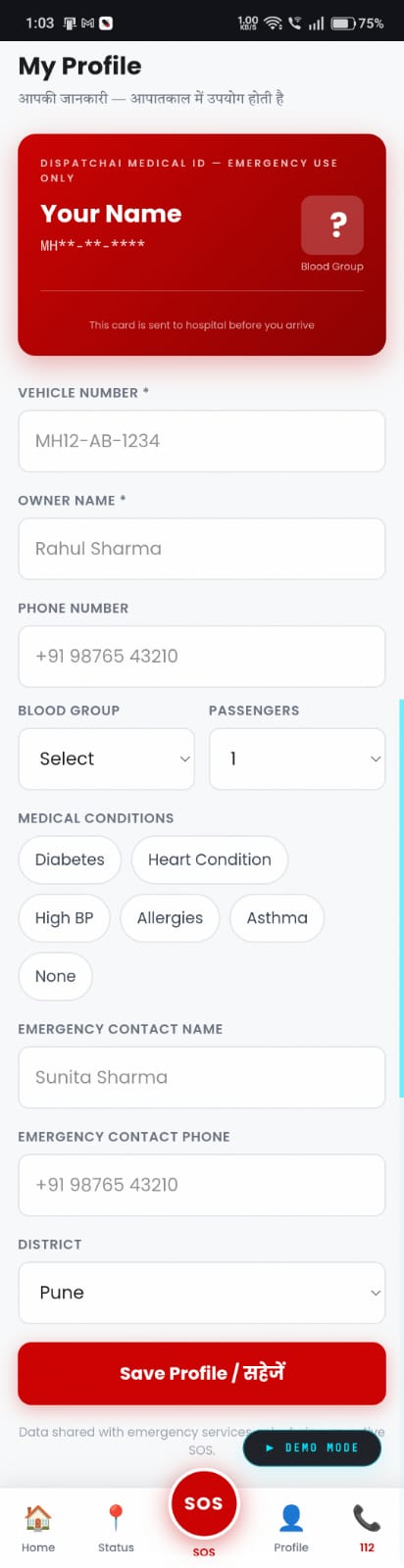
Profile section
-
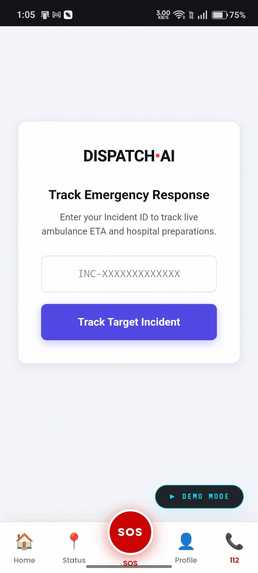
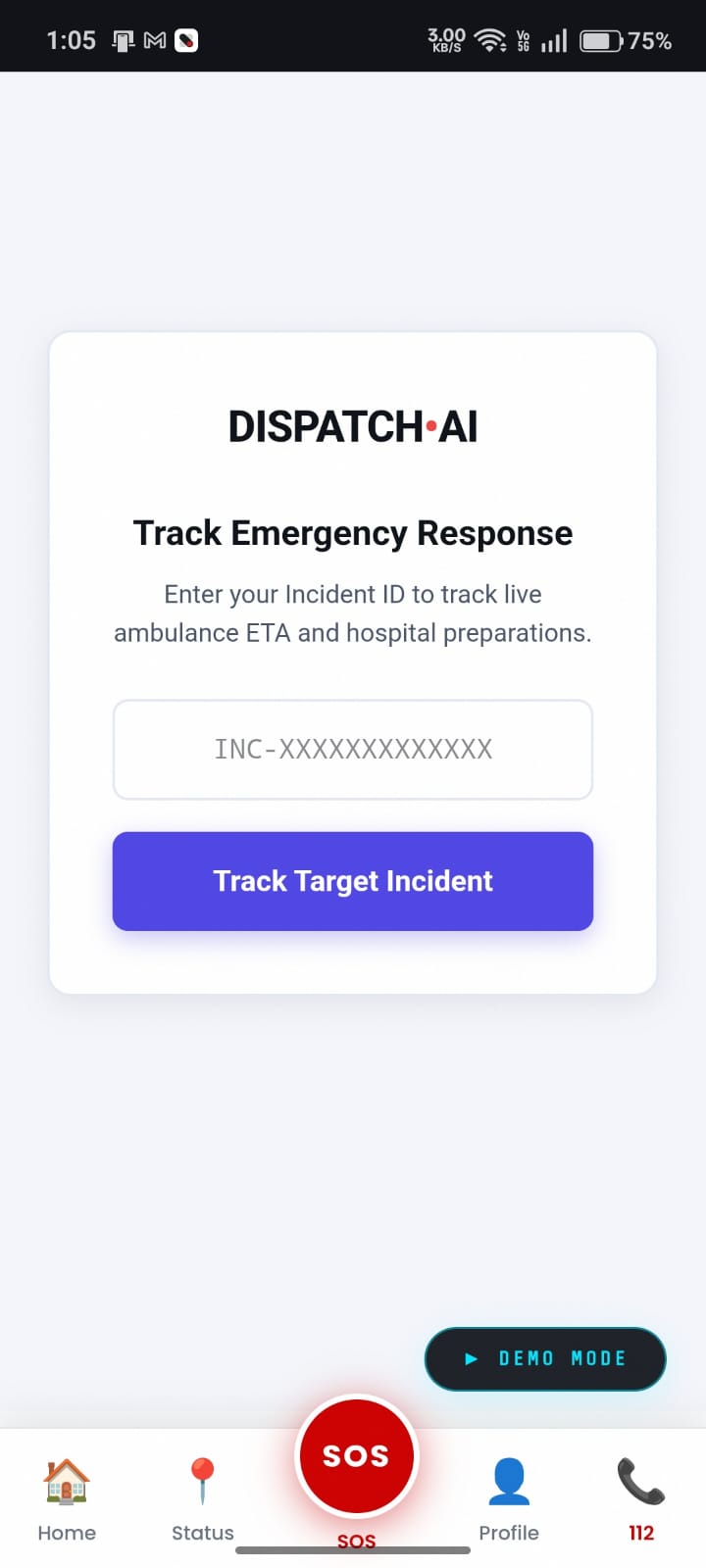
Application Tracker
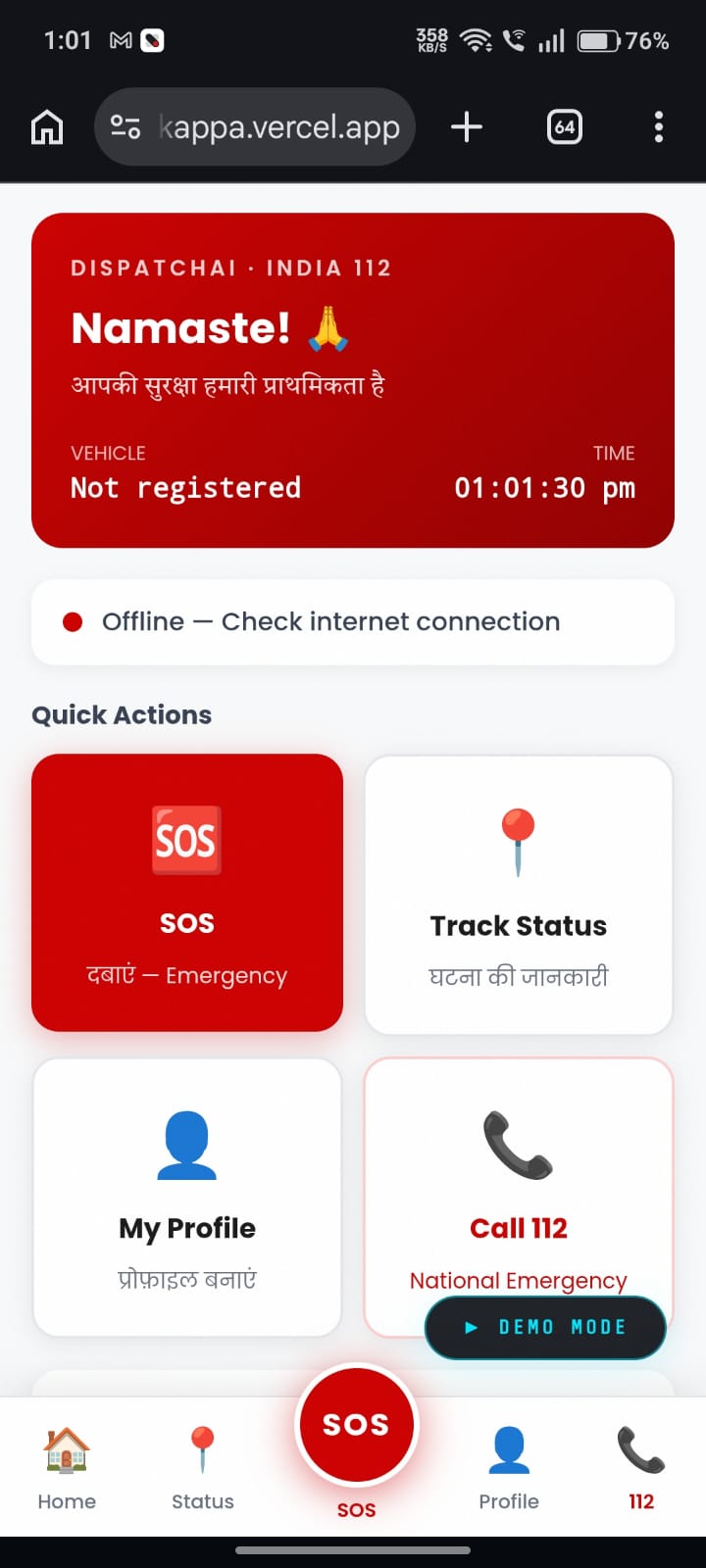
Inspiration The inspiration for DispatchAI came from observing the critical "information lag" in logistics and emergency coordination. While physical transport has become faster, the manual process of dispatching, tracking, and communicating remains a bottleneck. I wanted to leverage "vibe coding" to prove that natural language could be used to build high-stakes, automated infrastructure that responds as fast as a conversation. What it does DispatchAI is an agentic workflow engine that transforms natural language intent into coordinated action. It acts as an autonomous dispatcher that:Parses complex logistics requests via LLMs.Automates real-time status updates and notifications across platforms.Intelligently routes resources based on live data, removing the need for a human intermediary to manage every micro-task.How we built itThe project was developed using an AI-first approach, focusing on agentic architecture: The Logic: I used natural language prompts to define core workflows, allowing for rapid iteration. The Backend: Built with a modular structure to support API integrations for messaging and data tracking. Performance: Optimized to run efficiently on local hardware (like an i5-13420H), ensuring that the "brain" of the system remains responsive without heavy cloud dependency. Challenges we ran into The primary challenge was state persistence within an agentic loop. When an AI agent is responsible for multiple steps, ensuring it doesn't lose the "context" of a mission was difficult. I had to implement strict architectural guardrails to manage the context window, especially when the system was generating code or routing logic on the fly.Accomplishments that we're proud ofI am particularly proud of achieving a high degree of reliability in an autonomous system. Moving from a simple chatbot to a tool that can actually trigger real-world workflows—like sending automated dispatch alerts—was a major milestone. Additionally, successfully integrating this into a local development environment proved that high-level AI tools can be accessible and performant. What we learned This project taught me the mathematical reality of agentic probability. I learned that for a multi-step dispatch mission to succeed, the cumulative probability of success is defined by:$$P(\text{Success}{\text{Total}}) = \prod{i=1}^{n} P(\text{Step}_i \mid \text{Context})$$I realized that building with AI isn't just about the "vibe"; it’s about engineering the $P(\text{Step}_i)$ to be as close to $1$ as possible through robust error-handling loops and precise prompting. What's next for DispatchAI The next phase involves moving toward fully autonomous software generation. I plan to host larger models like DeepSeek-R1 or Qwen locally to allow DispatchAI to write its own sub-modules for new logistics challenges. I also aim to improve rural accessibility, ensuring the system can operate over low-bandwidth communication channels for broader impact.
Built With
- css
- cursor
- deepseek-r1
- fastapi
- gemini-3-pro
- html
- javascript
- mcp
- python
- supabase
- twilio
- typescript

Log in or sign up for Devpost to join the conversation.