-
-
VectorDBArchitecture
-
SystemArchitecture
-
MELReferencingArchitecture
Inspiration
At a major hub like DFW, a mechanic spends 20 minutes fixing a $5 reading light for a VIP. Boarding starts early; the mechanic gets trapped, the plane pushes 12 minutes late, and that delay cascades across the network—costing the airline over $1,200 in fuel and crew time. We just spent $1,200 to fix a $5 light. That is the professional failure we are solving.
What it does
Vector-Dispatch is a real-time “stop-loss” engine for airline operations. It creates a shared reality between the gate (boarding velocity) and the tarmac (maintenance latency) by quantifying the trade-off between fixing a minor issue and protecting on-time performance.
When the cost of staying exceeds the cost of leaving, we recommend “abandon repair” to protect the network’s margin.
How we built it
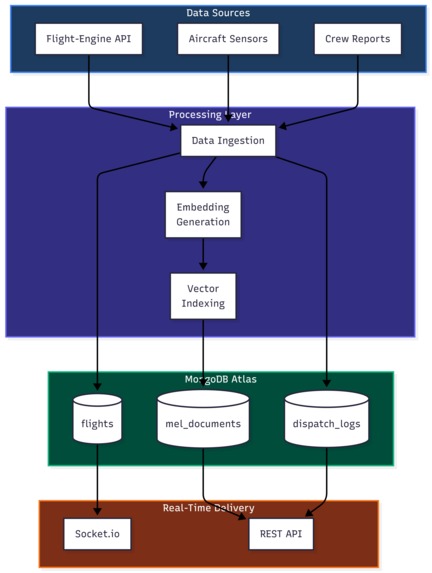
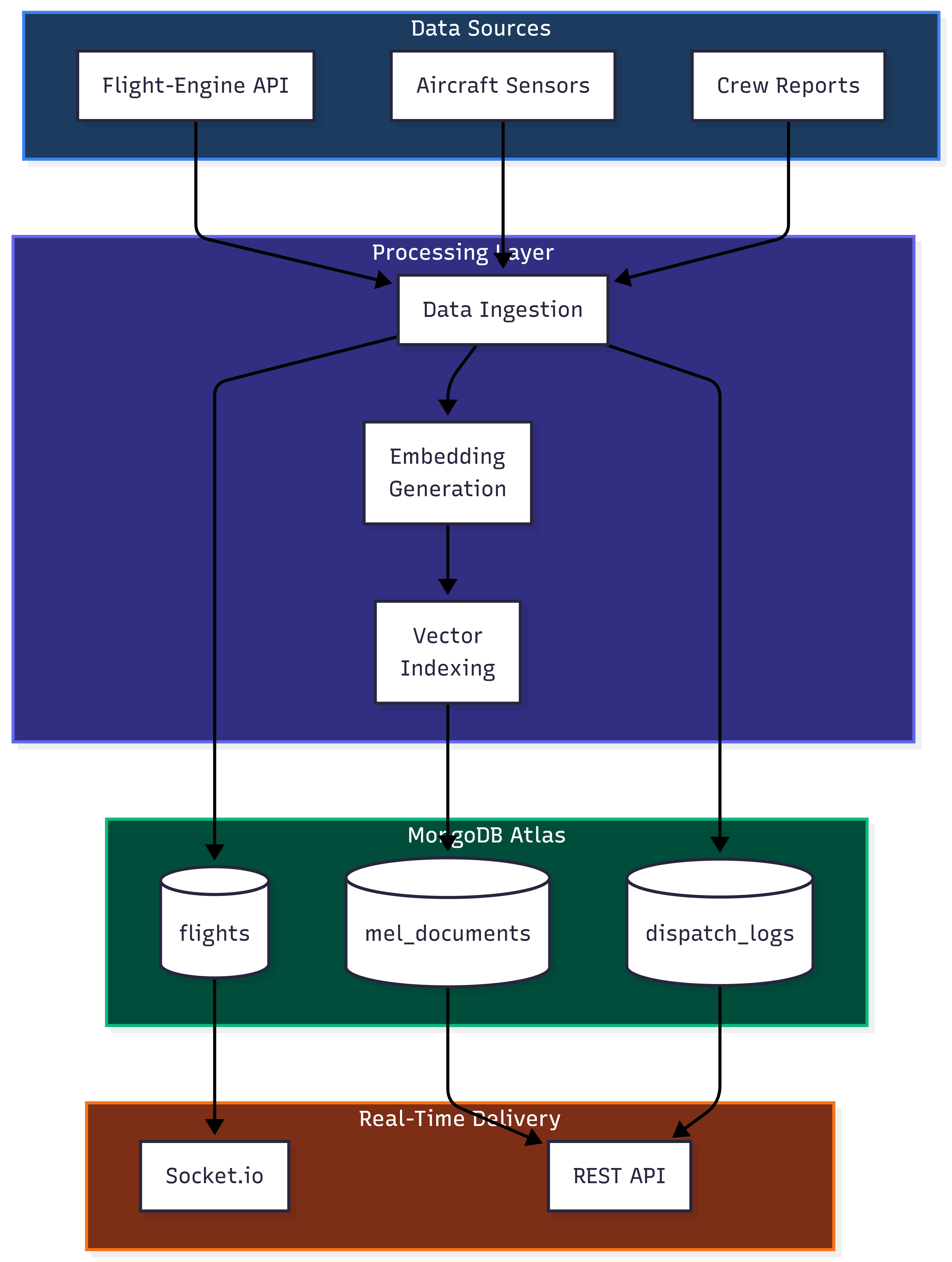
We built a high-density “Watchtower” dashboard using Next.js, Socket.io, and MongoDB Atlas. A Node.js WebSocket server pushes a heartbeat every 2 seconds to simulate live flight states.
The backend compares boarding progress against maintenance ETAs using the formula:
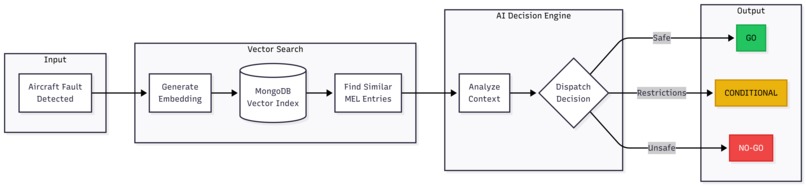
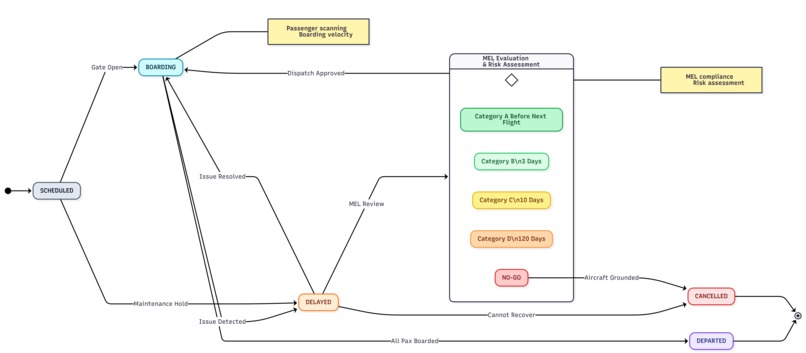
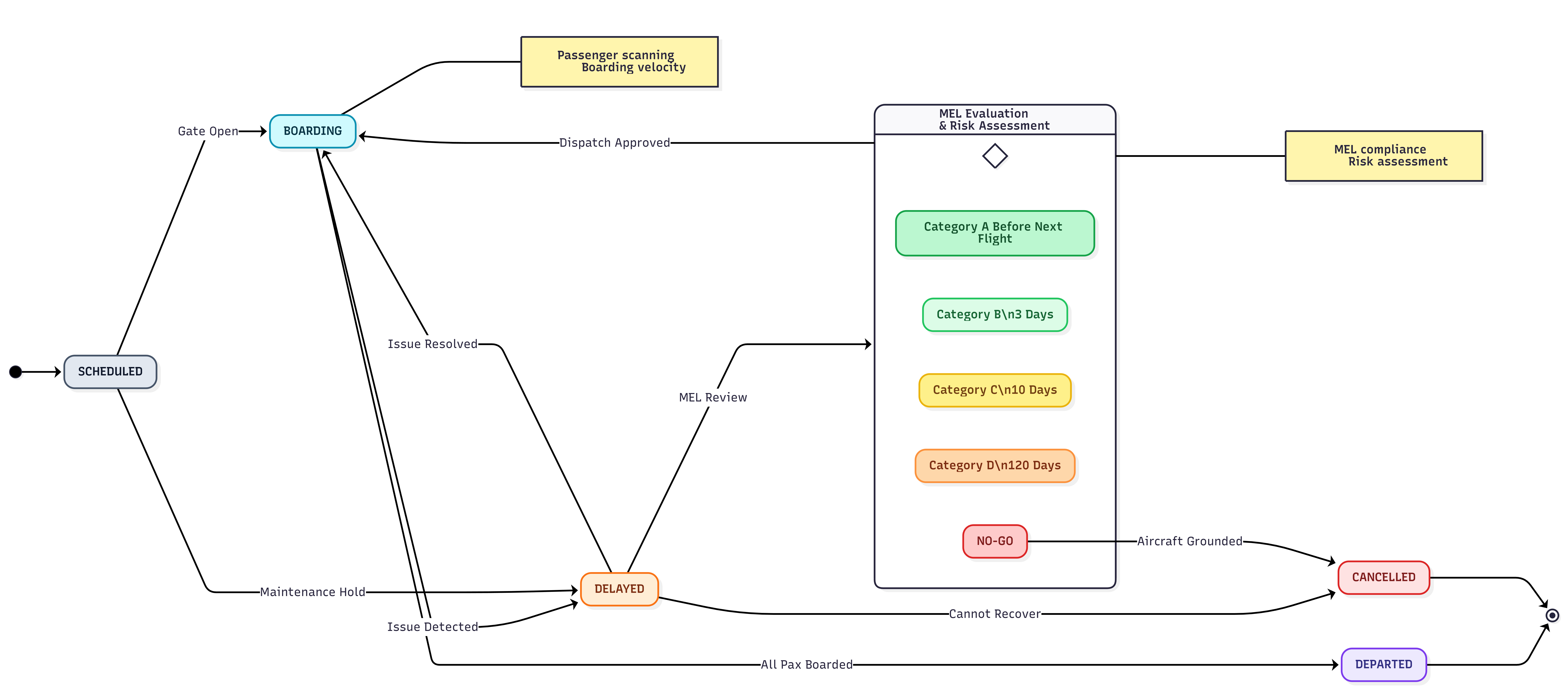
An AI Oracle (RAG pipeline over 1,000-page MEL/CDL manuals) answers “Is this plane legal to fly without this fix?” in strict JSON.
The UI visualizes each flight as a stochastic radial—a blue boarding ring versus an amber maintenance wedge—using Framer Motion to surface conflicts in real time.
Challenges we ran into
- Integrating live flight data from the Flight-Engine API while maintaining sub-second UI updates
- Building a vector search pipeline that could ingest dense MEL documents and return precise, legally compliant answers in milliseconds
- Designing a radial UI that scales to 50+ flights without visual clutter while still surfacing at-risk flights instantly
- Handling WebSocket reconnection and state sync across browser tabs without losing the dispatcher’s context
Accomplishments that we're proud of
- A working collision detector that flags when boarding will overrun maintenance time and automatically escalates those flights
- A GenAI Oracle that reliably returns GO / CONDITIONAL / NO-GO decisions with citations from the MEL, enabling auditable, legally defensible choices
- A A Bloomberg-like terminal UI that is as efficient as having multiple control monitors for flight ops
- Demonstrating $1,000 in margin protection in a single simulated scenario by choosing to abandon a low-priority repair
What we learned
- Real-time ops tools must prioritize speed over perfection; a 2-second heartbeat is more valuable than a 10-second batch sync
- Vector search is only as good as the chunking strategy; overlapping MEL sections dramatically improve relevance
- Dispatchers trust the system when it shows its work—citations and confidence scores are non-negotiable
- The “abandon repair” decision is emotionally counterintuitive; the UI must make the financial logic crystal clear
What's next for Dispatch
Phase 1: Connect live boarding feeds from airport scanners to replace simulated boarding velocity
Phase 2: Expand the Oracle to include crew legal limits, weather waivers, and gate availability
Phase 3: Add a margin ledger that tracks cumulative savings versus service recovery costs
Phase 4: Deploy to a pilot station and measure on-time performance impact
Built With
- next.js
- node.js
- python
- react
- typescript


Log in or sign up for Devpost to join the conversation.