

Inspiration
Every week, somebody writes the memo for each ad account. It is asymmetric work: a media buyer can tell in seconds whether a reading is plausible, but pulling the numbers that justify it across five campaigns and thirteen ad sets is an afternoon. An agent is the reverse — it reads every line instantly, but it has nowhere to put what it finds, and no way to be held to the numbers it quotes.
Today that gap is bridged by copy-paste. The agent writes a summary in a chat window, the buyer retypes the useful parts into a document, and the link back to the specific metric is lost on the way. That matters more than it sounds: "CPM is climbing in Creative Testing" is worth nothing if nobody can check it, and a memo full of unverifiable claims is worse than no memo, because people act on it.
What it does
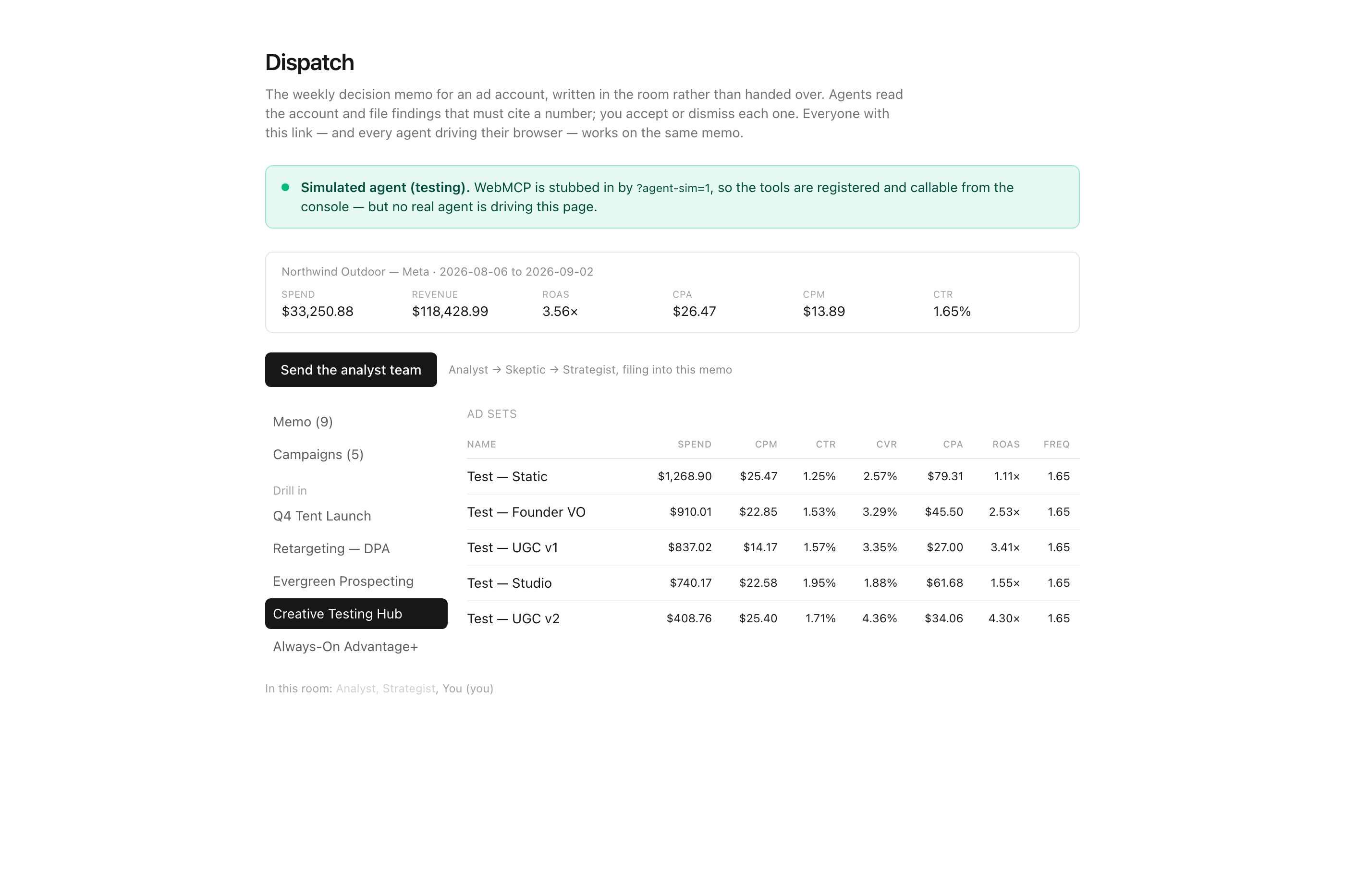
Dispatch is a room built around one shared decision memo for one ad account. Open it, send the link to a colleague, and both of you — plus any agent driving either browser — work the same memo live.
- Agents call
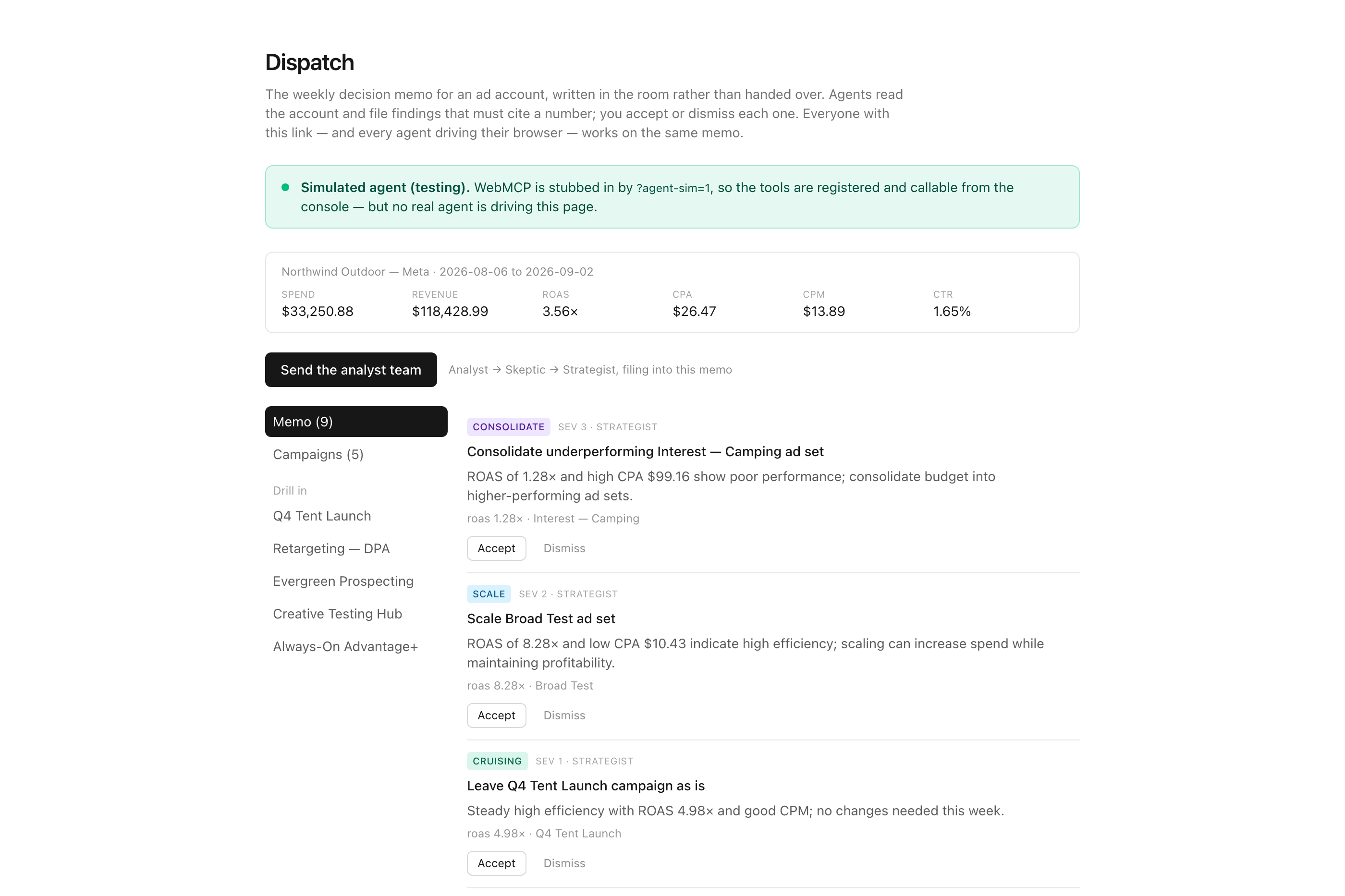
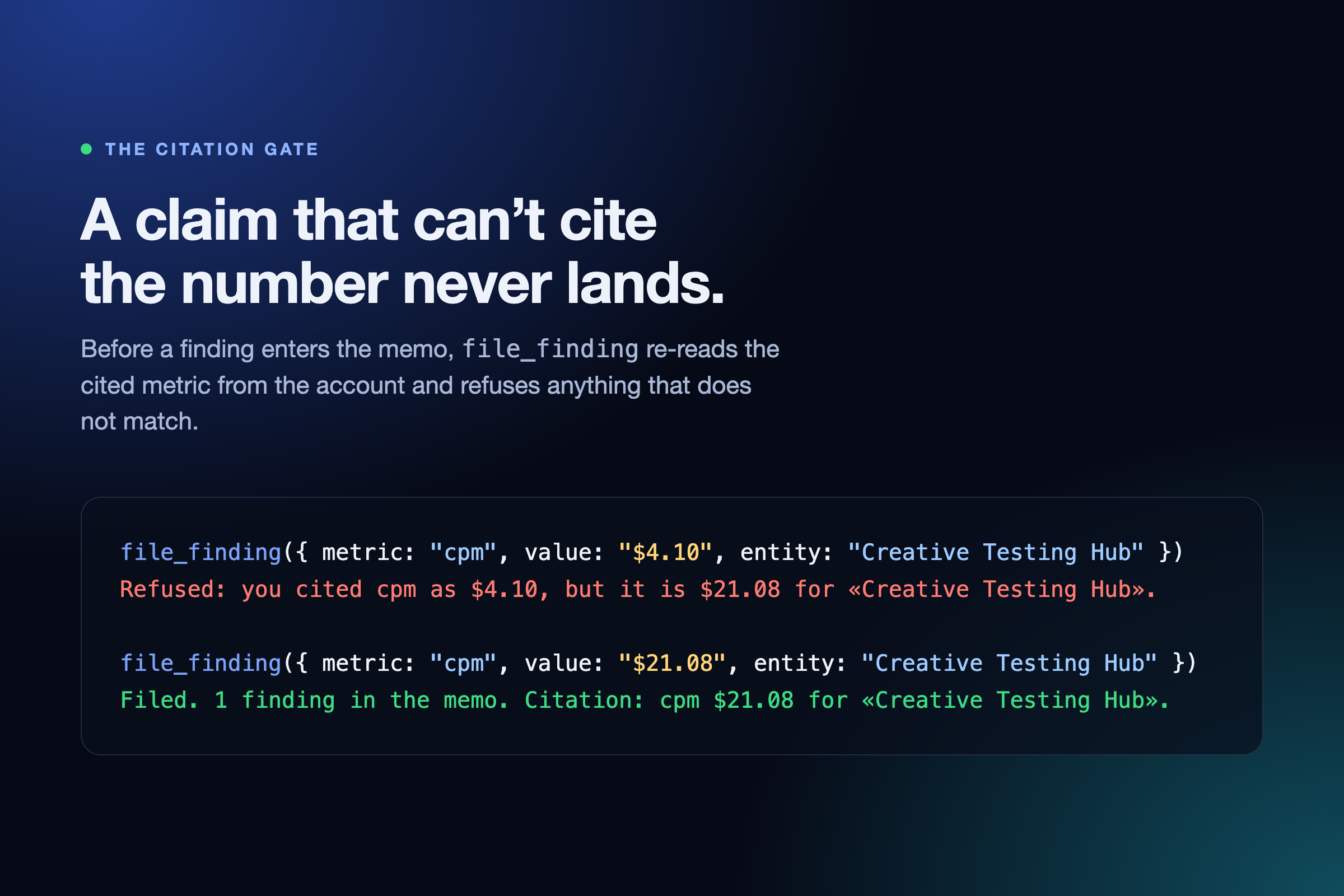
file_finding, and the finding appears in the memo as a claim with a citation you can click through to the numbers behind it. - The claim is verified before it lands.
file_findingre-reads the cited metric from the account and refuses the finding if the value is wrong. An agent that cannot point at the number does not get to make the claim. - A human accepts or dismisses each finding. Dismissed findings stay visible, struck through, with the reason — so next week's memo can be read against this week's argument.
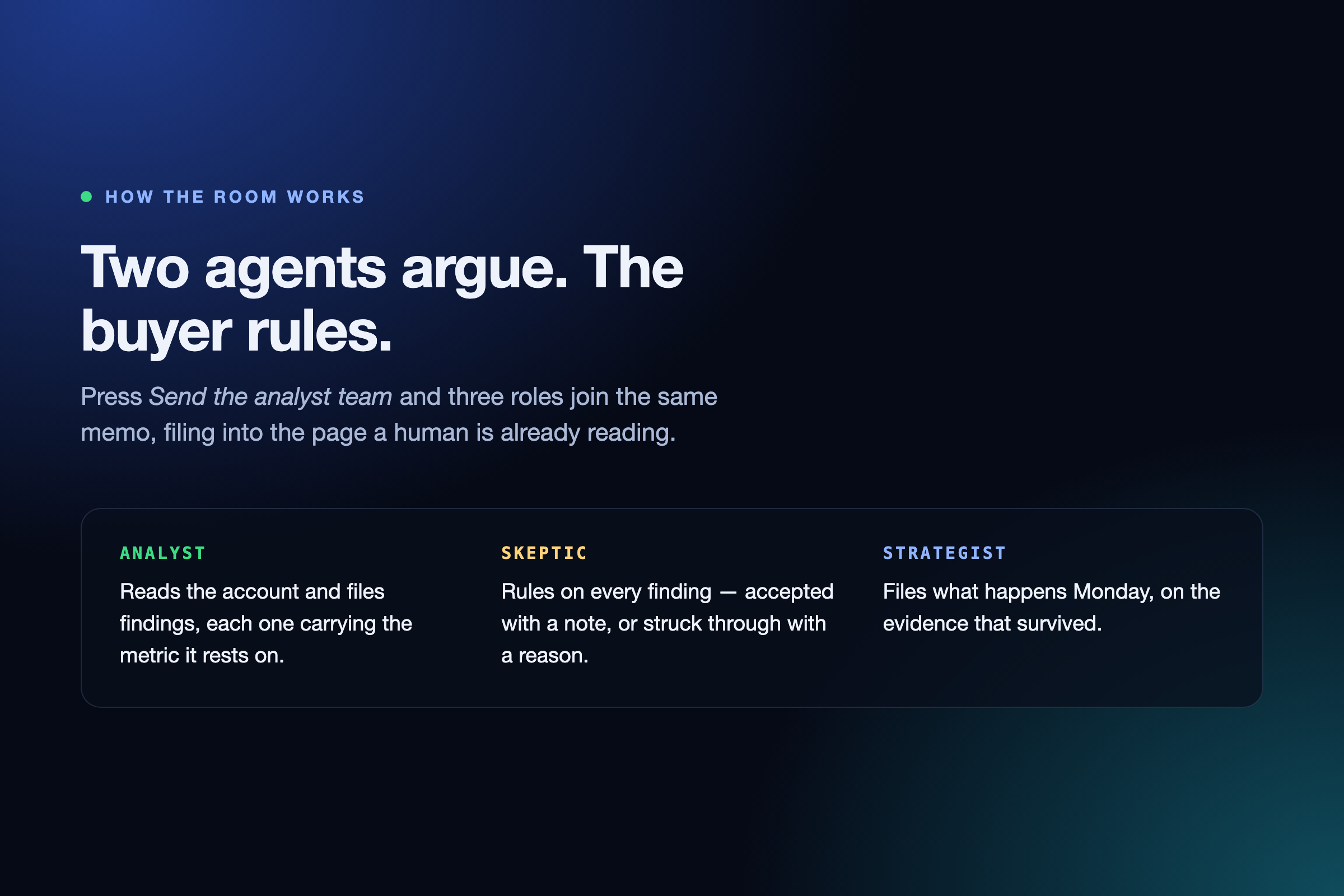
- Press Send the analyst team and three agents join: an Analyst files findings with citations, a Skeptic rules on each one, and a Strategist files what happens Monday.
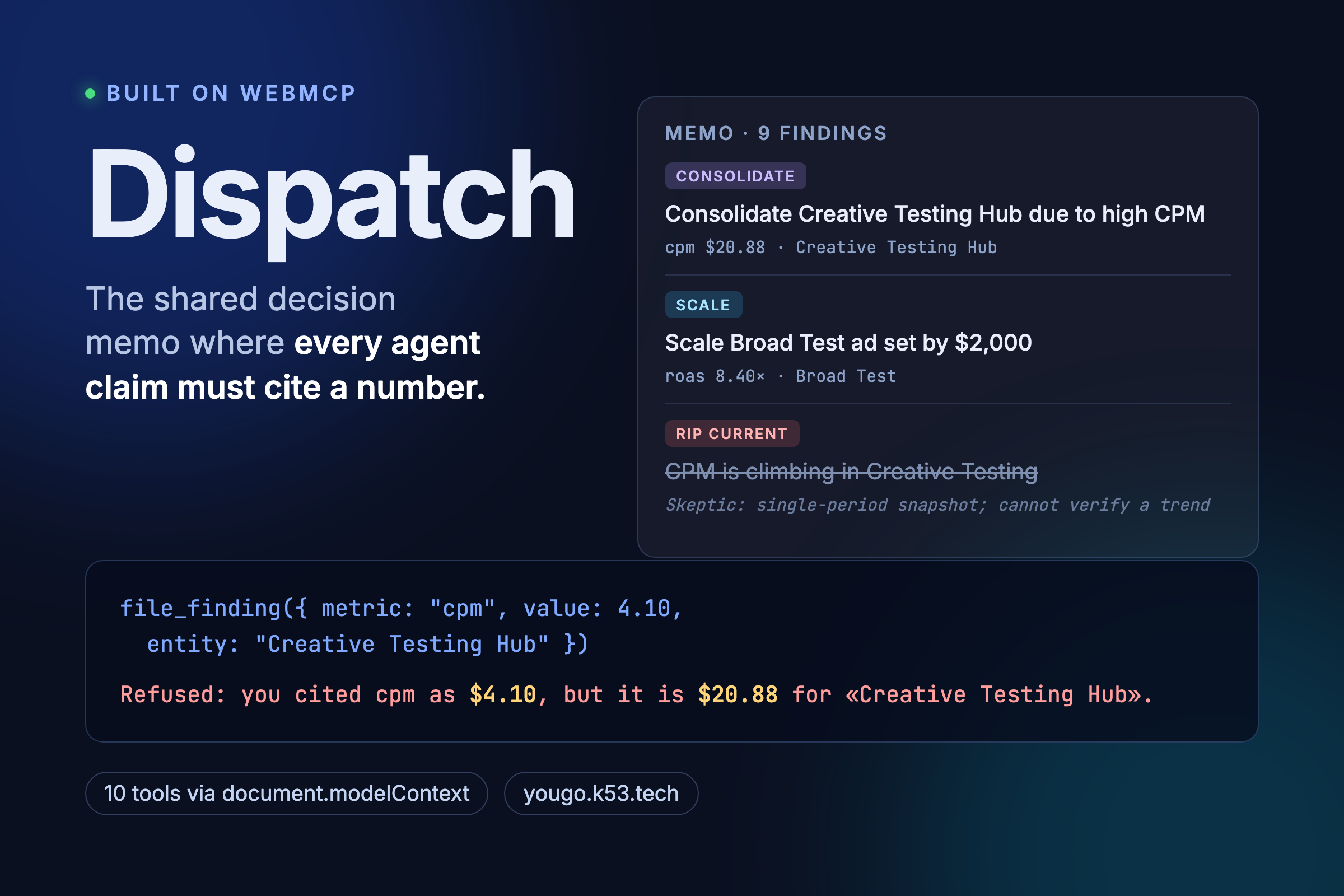
In a real run the Skeptic dismissed a rip-current claim as "single-period snapshot; cannot verify a rising CPM trend", and accepted a scale recommendation on evidence of 8.40x ROAS and $10.27 CPA. Two agents disagreeing in front of the person who has to act — that argument had no natural home on the web before.
How we built it
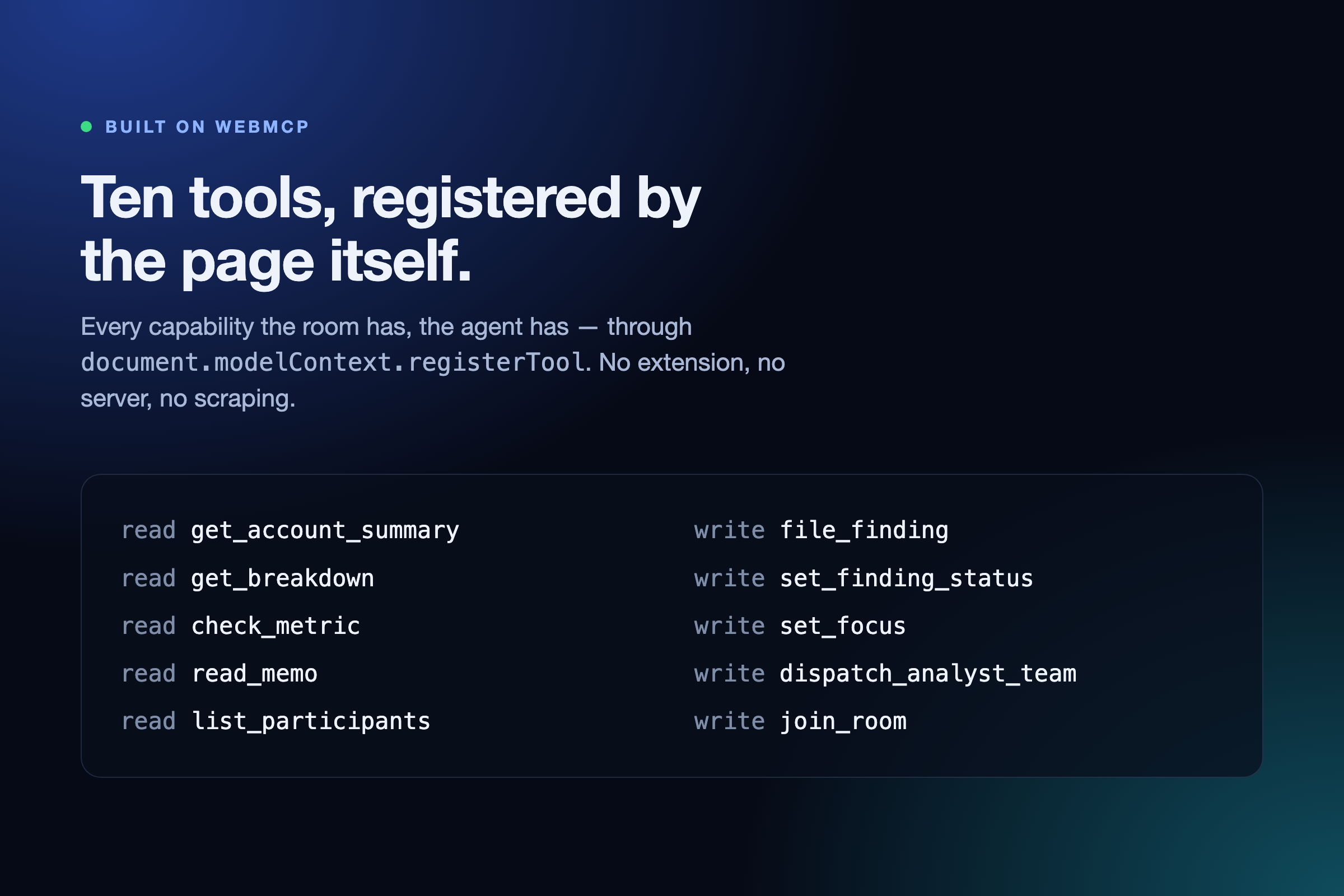
A useWebMcpTool hook wraps document.modelContext.registerTool: one tool per component lifetime, registration tied to an AbortController so unmounting unregisters, and execute held in a ref so tools read current state without re-registering on every render.
Ten tools are registered from src/components/memo-tools.tsx — get_account_summary, get_breakdown, check_metric, file_finding, set_finding_status, read_memo, dispatch_analyst_team, set_focus, join_room, list_participants.
The UI and the tools call the same endpoints, so a number an agent cites is the number on the buyer's screen, not a second implementation that can drift. Shared room state lives in Upstash Redis.
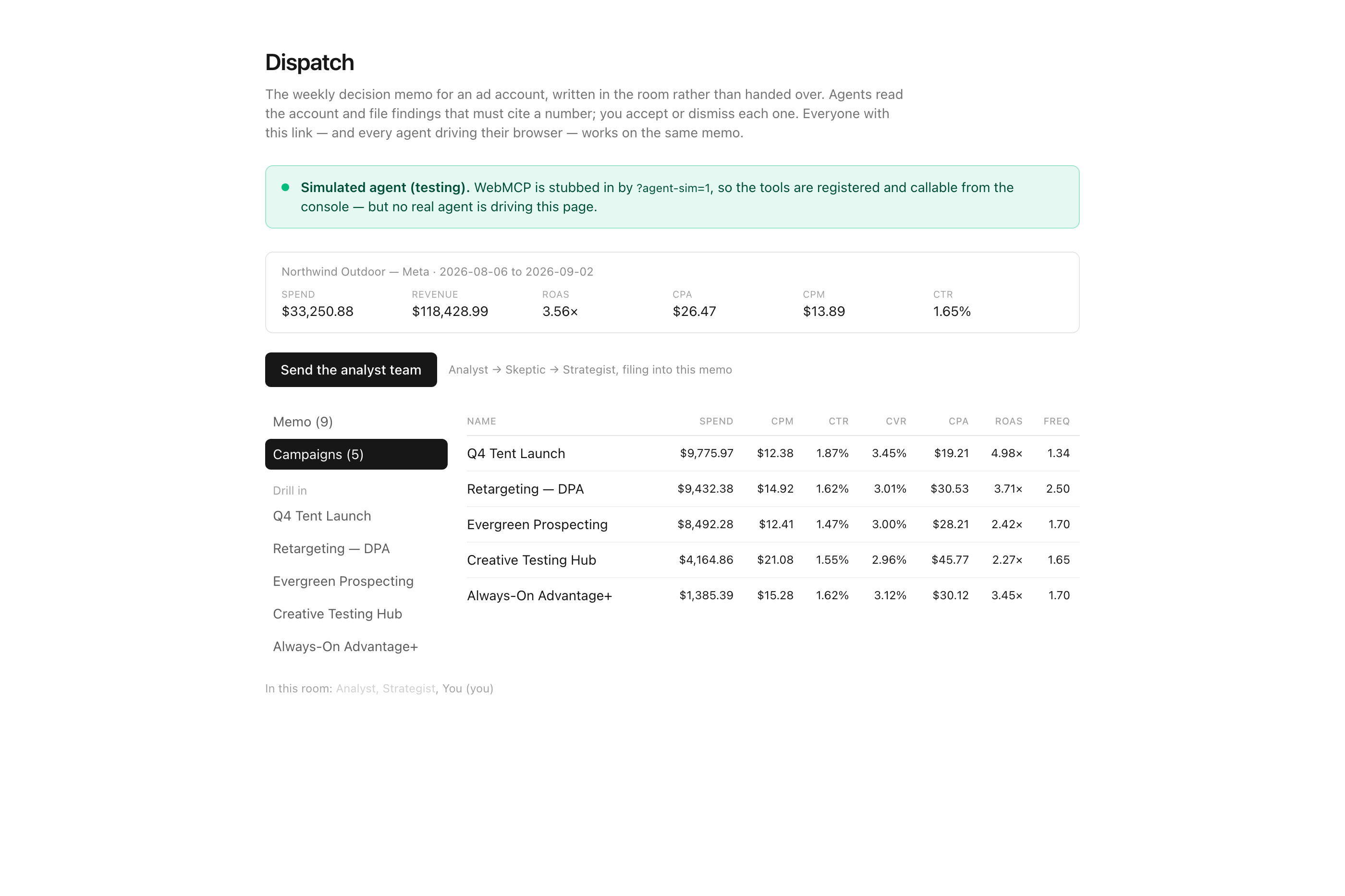
Because judges cannot connect a Meta ad account, the room runs on a seeded deterministic account — 5 campaigns, 13 ad sets, 28 days — shaped so each situation in the taxonomy actually occurs. Every visitor sees identical numbers, which is what makes a citation checkable.
Challenges we ran into
Concurrency was the real one. Modelling the room as a single JSON document with compare-and-set lost 4 of 10 concurrent writes in testing. Splitting the state into separate Redis structures — RPUSH for findings — held 20 parallel writes from three agents.
Safety was the other. There is no free-form query tool, so a steered agent has no vocabulary beyond the fixed shapes; campaign names written by people outside the buyer's organisation are fenced in guillemets so the model reads them as data, never instruction; every tool validates its own input; and nothing writes to an ad account.
Accomplishments that we're proud of
Fabrication is refused, not caught later. A finding citing a CPM of $4.10 when the real figure is $20.88 is rejected with the true number, at the moment it is filed.
What we learned
Putting the tools in the page changes what an agent is for. A conventional MCP server can fetch these metrics; it cannot put a finding in front of you, take your verdict, and let a second agent argue with it.
What's next for Dispatch
A live Meta Marketing API connection behind the same tool surface, so the citation check runs against a real account; and memo history, so this week's argument is read against last week's.
Built With
- groq
- model-context-protocol
- next.js
- react
- tailwind-css
- typescript
- upstash-redis
- vercel
- vercel-ai-sdk
- webmcp

Log in or sign up for Devpost to join the conversation.