-
-
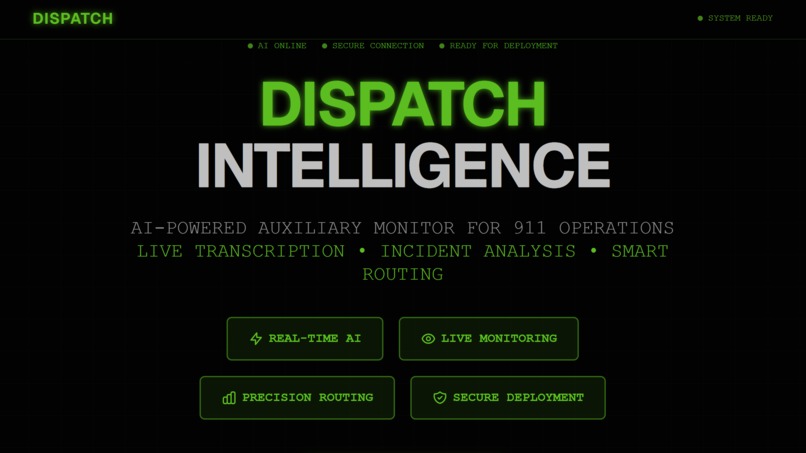
Dispatch Landing Page
-
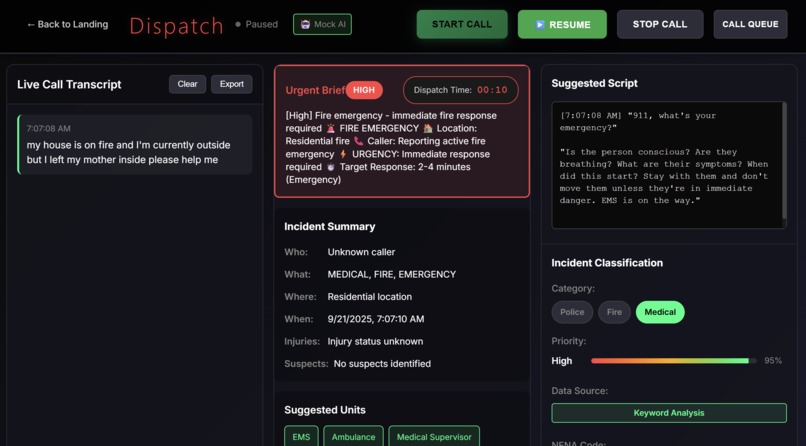
Dispatch Live Demo
-
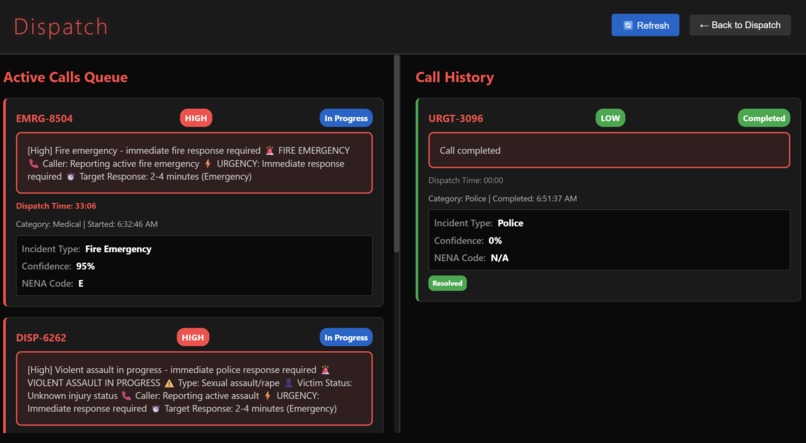
Dispatch Call Queue
When I was robbed in broad daylight, the police response was delayed because the 911 call process was slow and chaotic. That frustration inspired us to ask: what if dispatchers had an AI copilot to cut through the noise and prioritize what matters most?
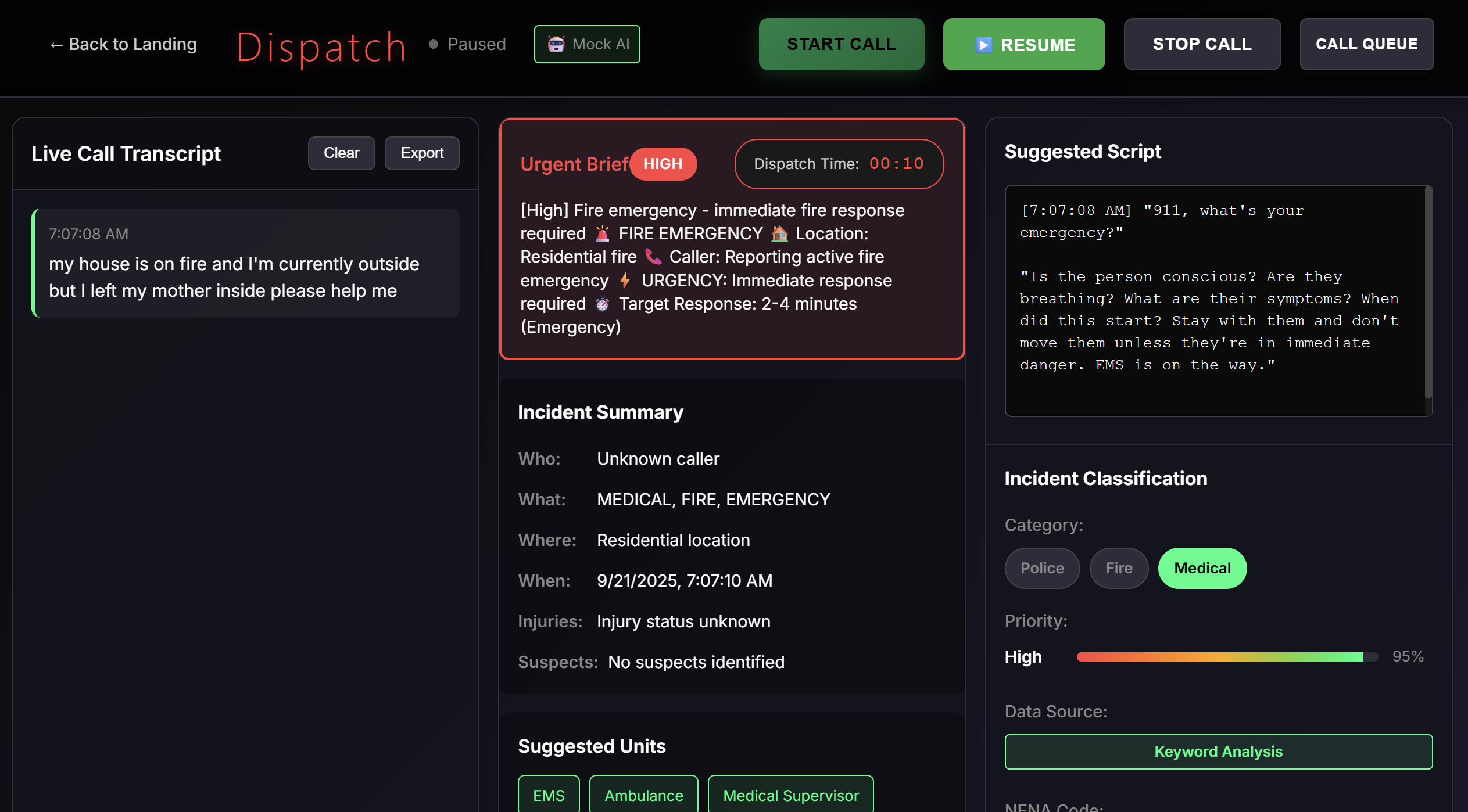
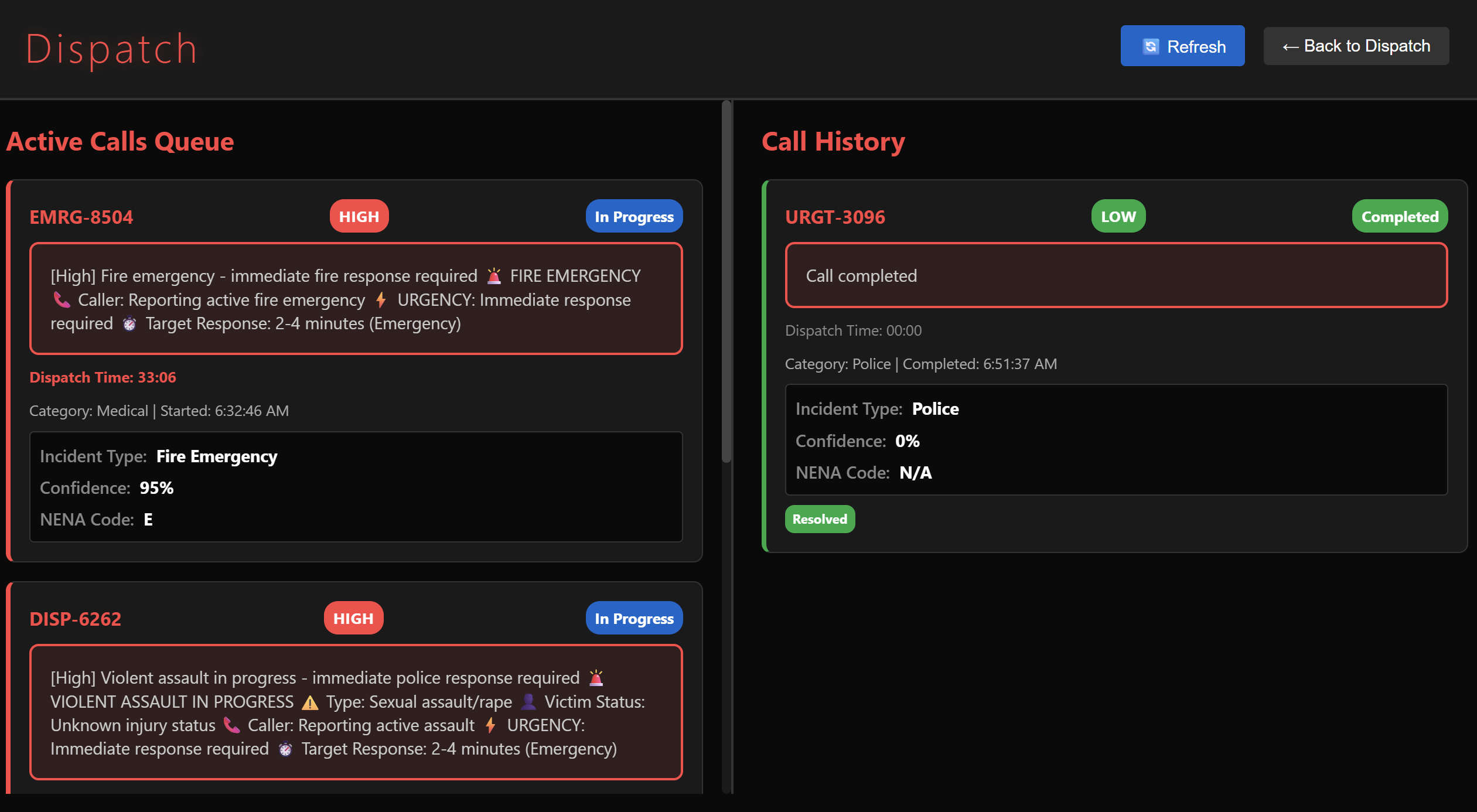
We built DispatchAI, a real-time assistant for emergency call centers. The system transcribes calls live, detects urgency, generates structured incident briefs, and suggests dispatcher questions based on national protocols. It also provides multilingual translation, stress detection, and a call triage queue that routes high-risk cases to the top - all displayed on a clean, modern interface.
We learned just how much of today’s bottleneck comes from human multitasking: dispatchers must listen, type, and recall protocols under immense stress. By automating transcription, classification, and prioritization, AI can free dispatchers to focus on empathy and clarity.
How we built it:
Designed a custom dashboard that displays live transcription, urgent briefs, call queue, and suggested scripts.
Used Ollama for local LLM inference to classify incidents and generate dispatcher prompts.
Integrated open 911 datasets (Seattle, NYC) to ground priority scoring and incident types in real-world data.
Developed multilingual support and stress detection modules to handle diverse, high-stakes scenarios.
Challenges we faced:
Translating real-world dispatcher protocols into a usable AI-driven script flow.
Making AI suggestions fast and reliable enough for life-or-death situations.
Designing a UI that feels intuitive and reduces overload rather than adding to it.
Through this project, we saw how seconds saved equal lives saved - and how AI can be the ultimate partner for public safety professionals.
Built With
- next.js
- ollama
- react
- tailwindcss


Log in or sign up for Devpost to join the conversation.