-
-

Dispatch Logo
-
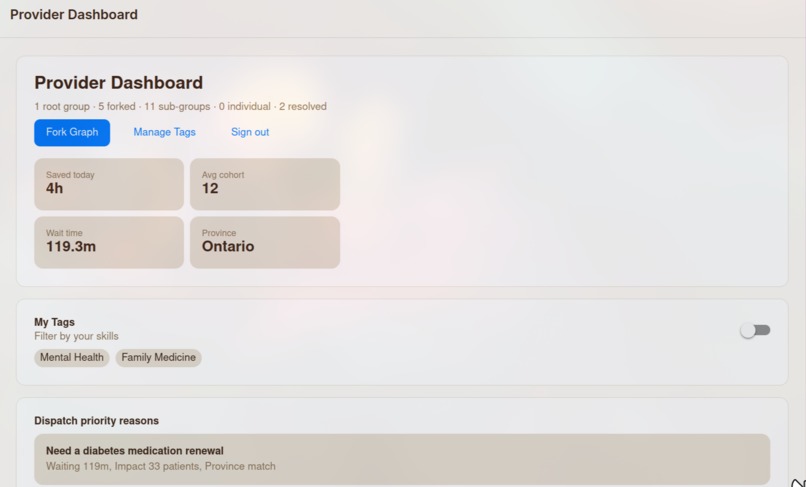
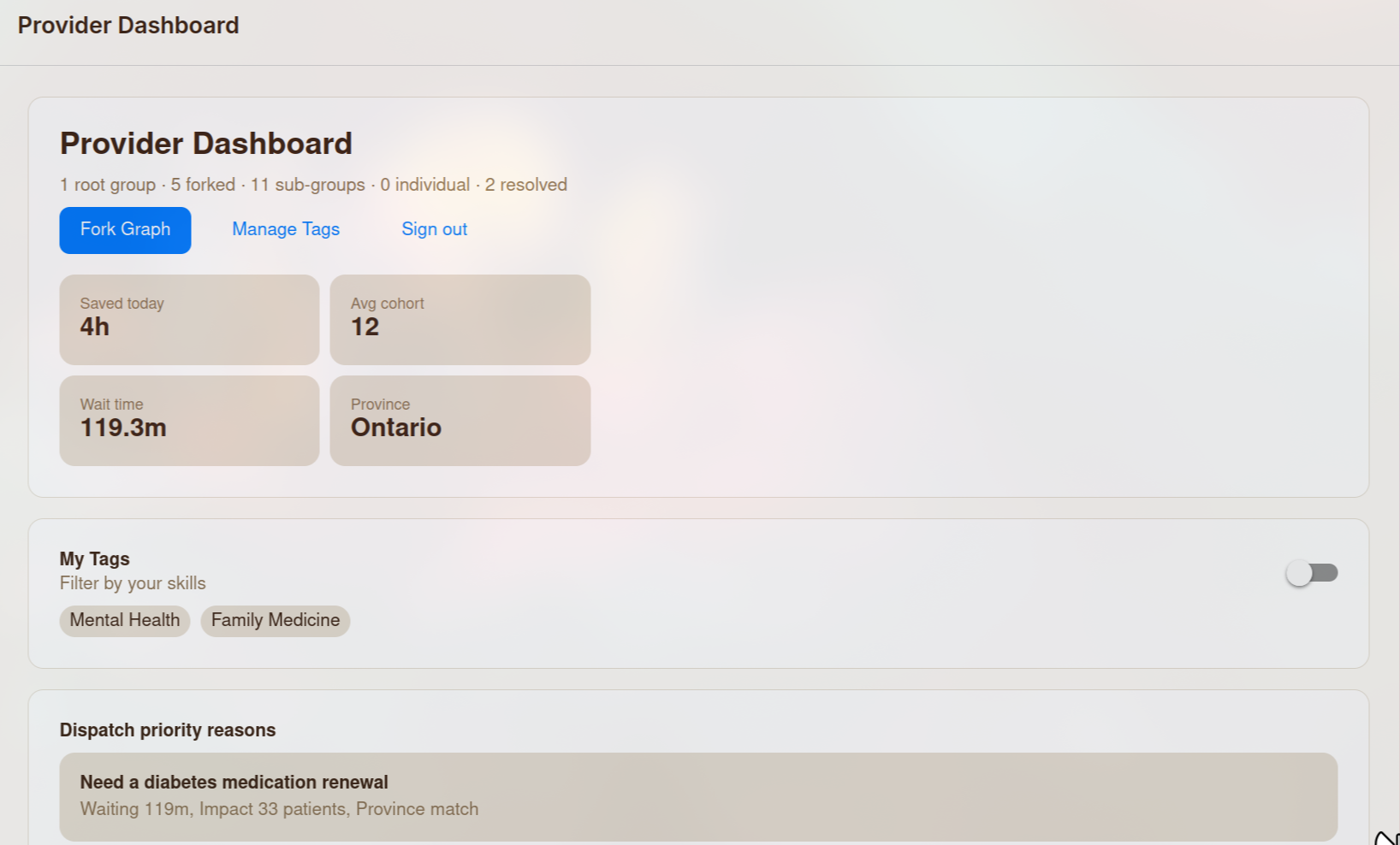
Provider Dashboard
-
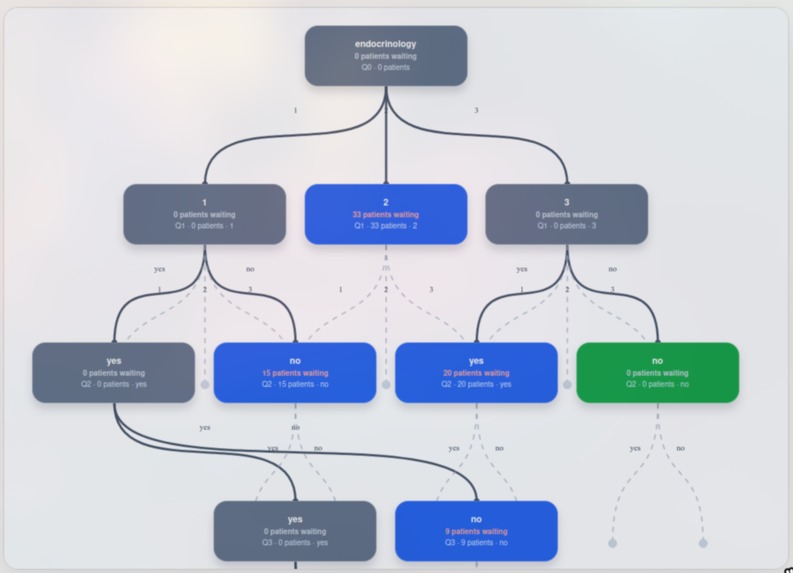
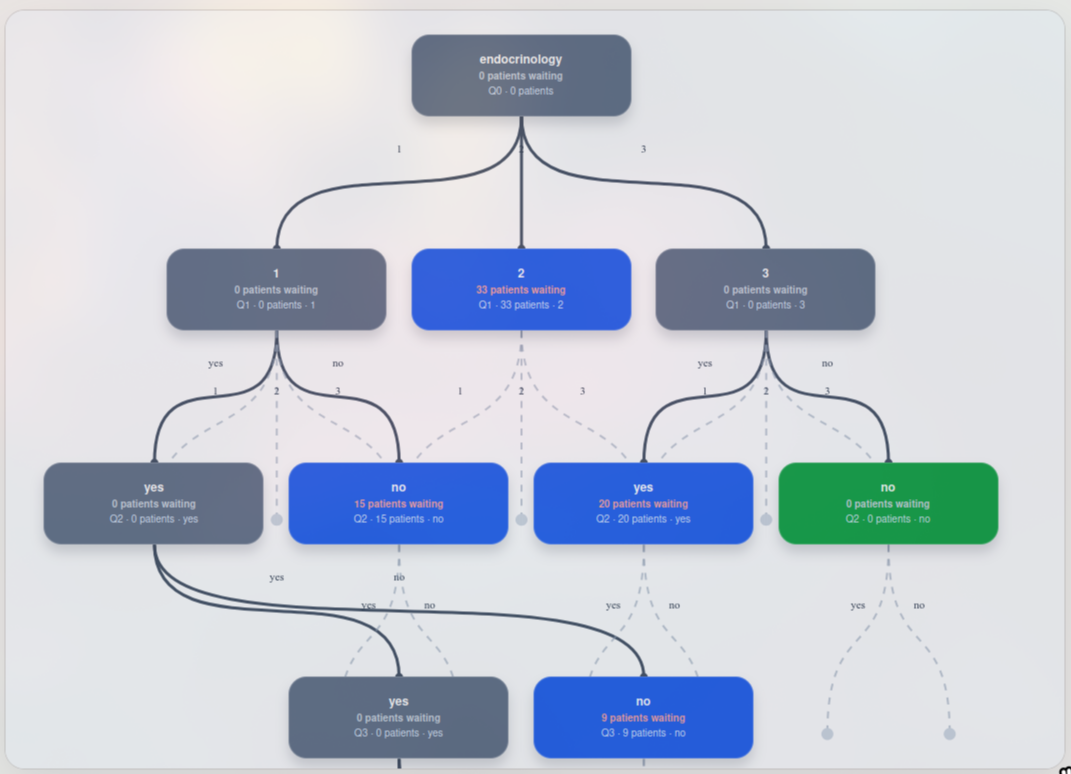
Choices Graph
-
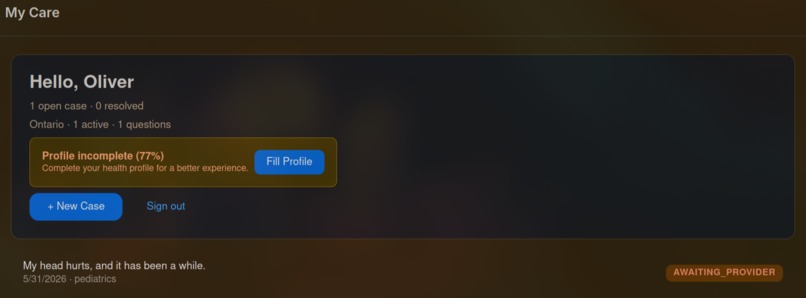
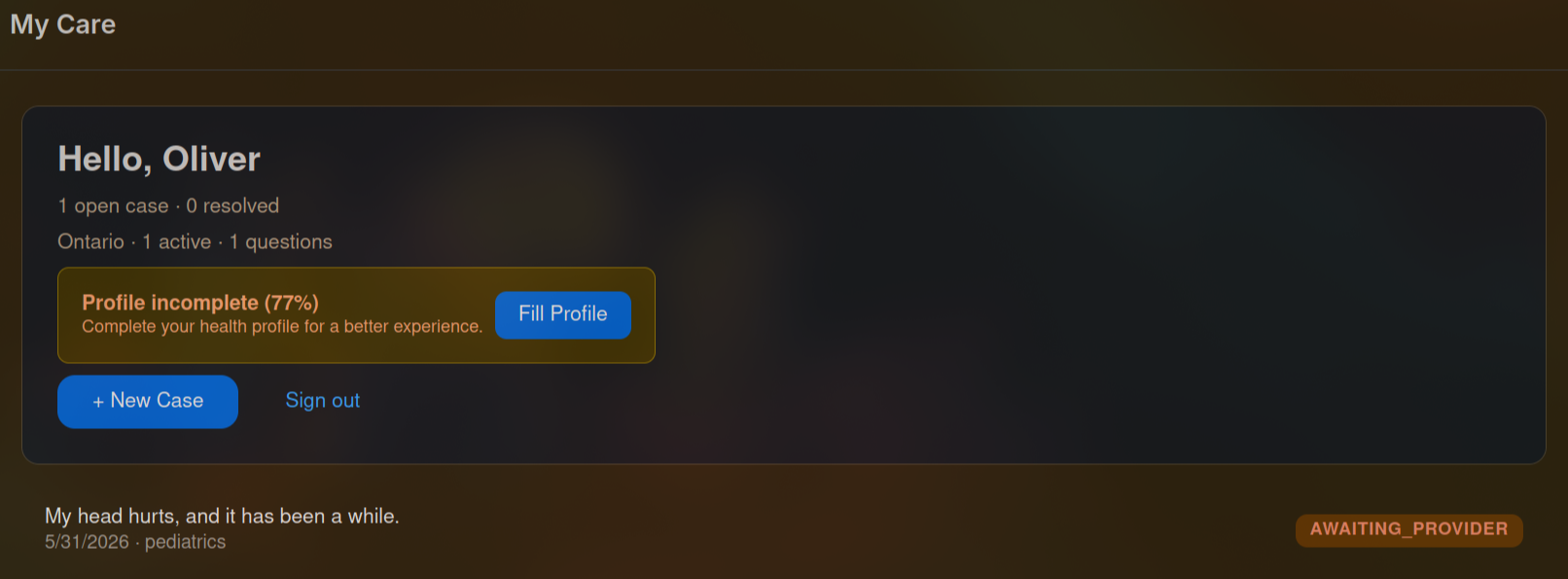
Patient Dashboard
-
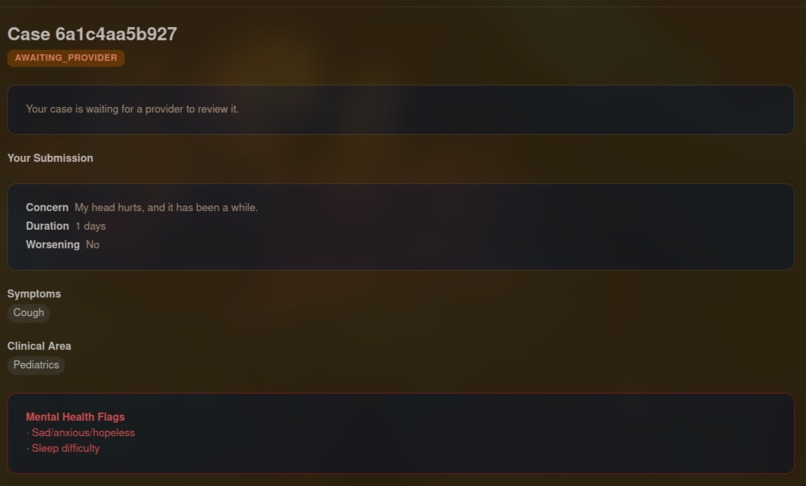
Patient Case
-
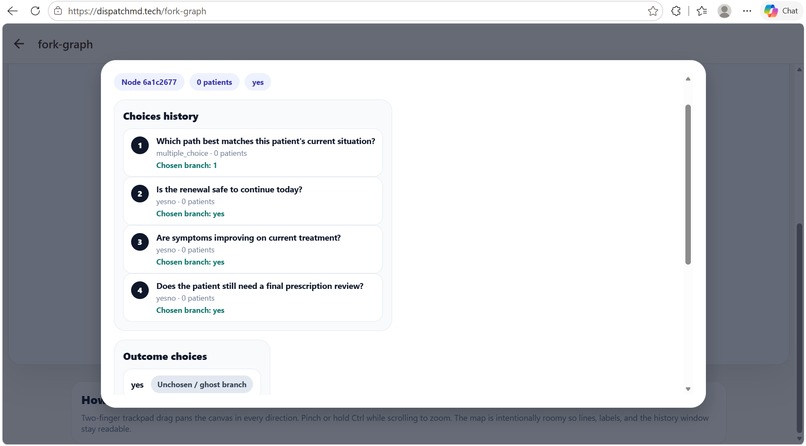
Questions history

Dispatch
Inspiration
Our inspiration comes from applying our concepts from web infrastructure to the healthcare system in a responsible and ethical manner. Our system allows handling a high volume of patients with limited resources and time.
What it does
- Batches similar patient intakes into cohorts so one clinician action can resolve many cases.
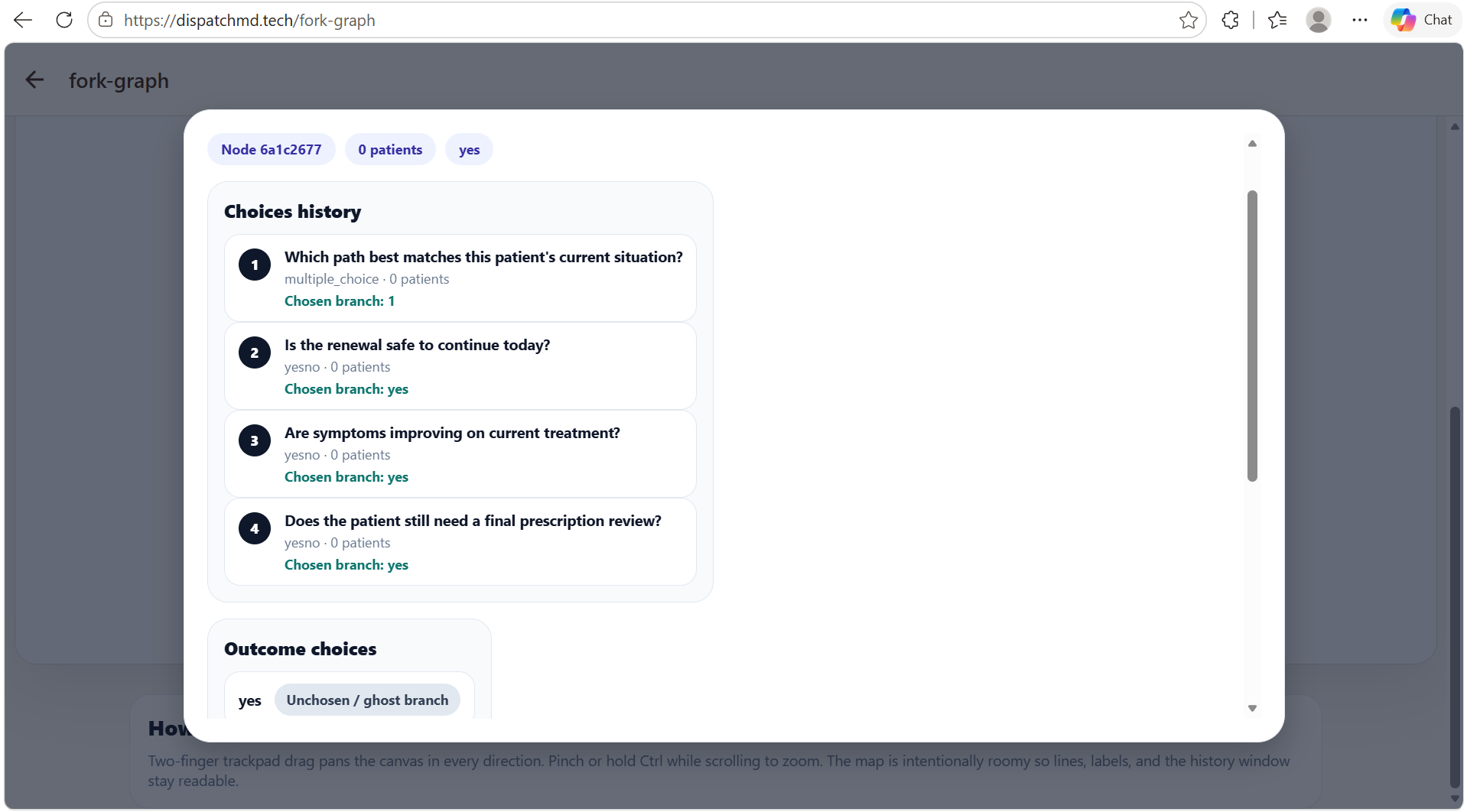
- Presents a live 2D decision graph for providers that visualizes forks, patient counts, and node state (open/resolved).
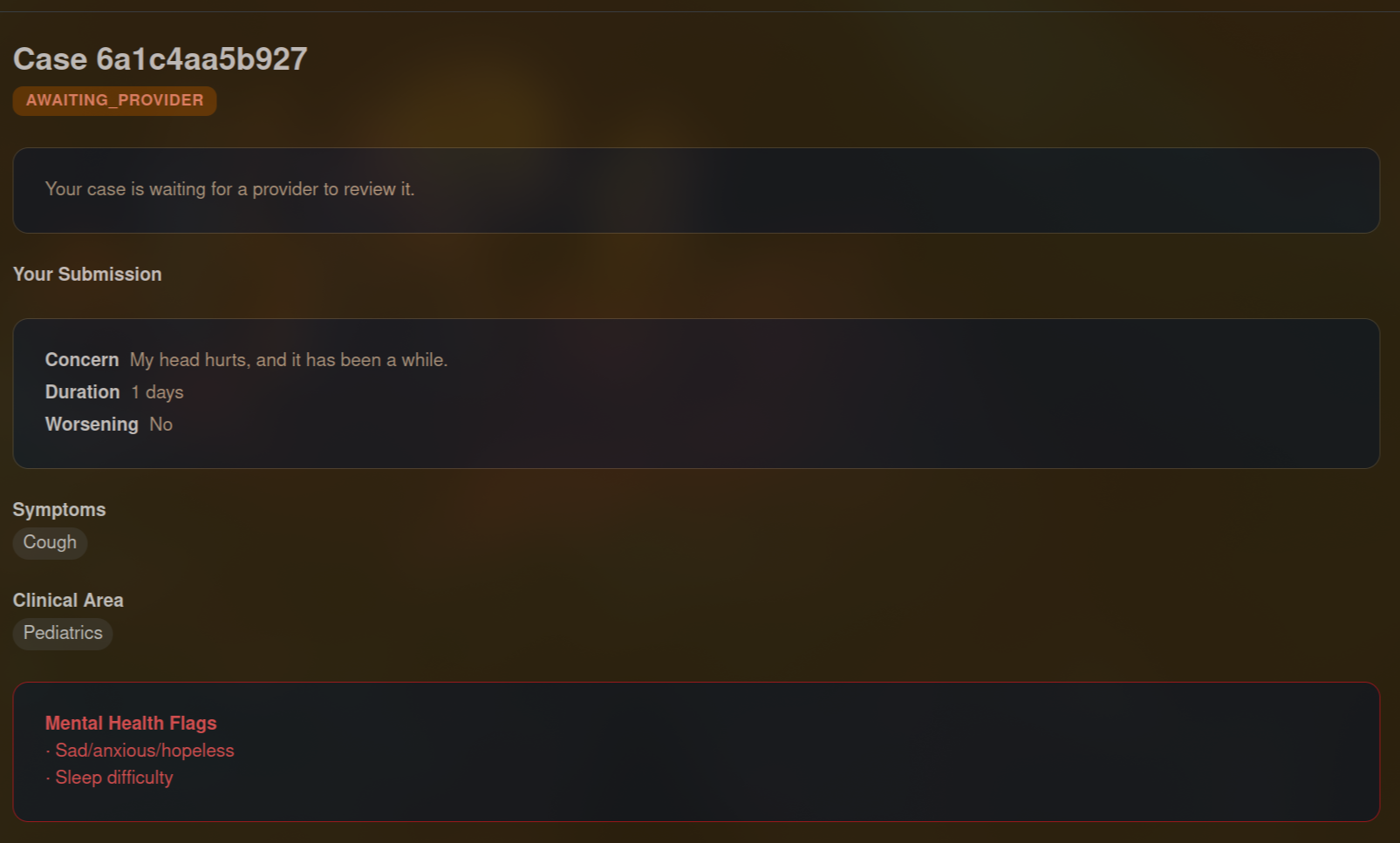
- Provides a patient mobile-focused intake flow, question answering, and status/history.
- Enforces province/tenant separation and audit logging for regulated actions.
How we built it
Stack and architecture
- Backend: FastAPI (Python) with MongoDB; entrypoint: backend/main.py
- Frontend: Expo (React Native + TypeScript) mobile-first UI in
dispatch/(file-based routing)
Challenges we ran into
- Designing safe cohorting rules that never batch unsafe or province-mismatched patients.
- Visualizing a large decision tree in a clear, interactive way on web/mobile.
Accomplishments we're proud of
- Built a full-stack prototype (backend + Expo app) in the existing repo that demonstrates cohorting, provider approval/signature, and patient-facing intake/history.
- Implemented a robust bulk seeder that generates realistic demo cohorts to stress-test the provider graph and queue UX.
- Added safety-first guardrails: emergency detection, province isolation, and explicit provider signature for regulated outputs.
What we learned
- Generative AI accelerates prototype iteration but needs strict schema validation and human review to be safe in healthcare flows.
- Good UX for providers requires carefully surfacing why an action is recommended (impact, confidence, tag match).
What's next
- Finish EasyPrescription PDF rendering and individualized batch-sign PDFs.
- Add more analytics dashboards for time-saved claims.
- Harden multi-provider claiming, optimistic locking, and audit trail for production-readiness.
- Expand AI safety classification and provider-style learning while preserving human-in-the-loop requirements.
Known limitations
- Some provider workflows (batch PDF generation, signature persistence) are not implemented for implementation.

Log in or sign up for Devpost to join the conversation.