Inspiration
Imagine being alone, scared, doing the one thing you’re told will always work: calling 911, and then waiting. What struck us wasn’t failure, but delay. Dispatchers weren’t doing anything wrong; they were overwhelmed by rising call volumes and limited resources. But in an emergency, even seconds can change everything. We realized the problem isn’t people, it’s systems that can’t scale with crisis. We built Dispatch so responders have backup when demand spikes, and so fewer people are left listening to silence when every second matters.
What it does
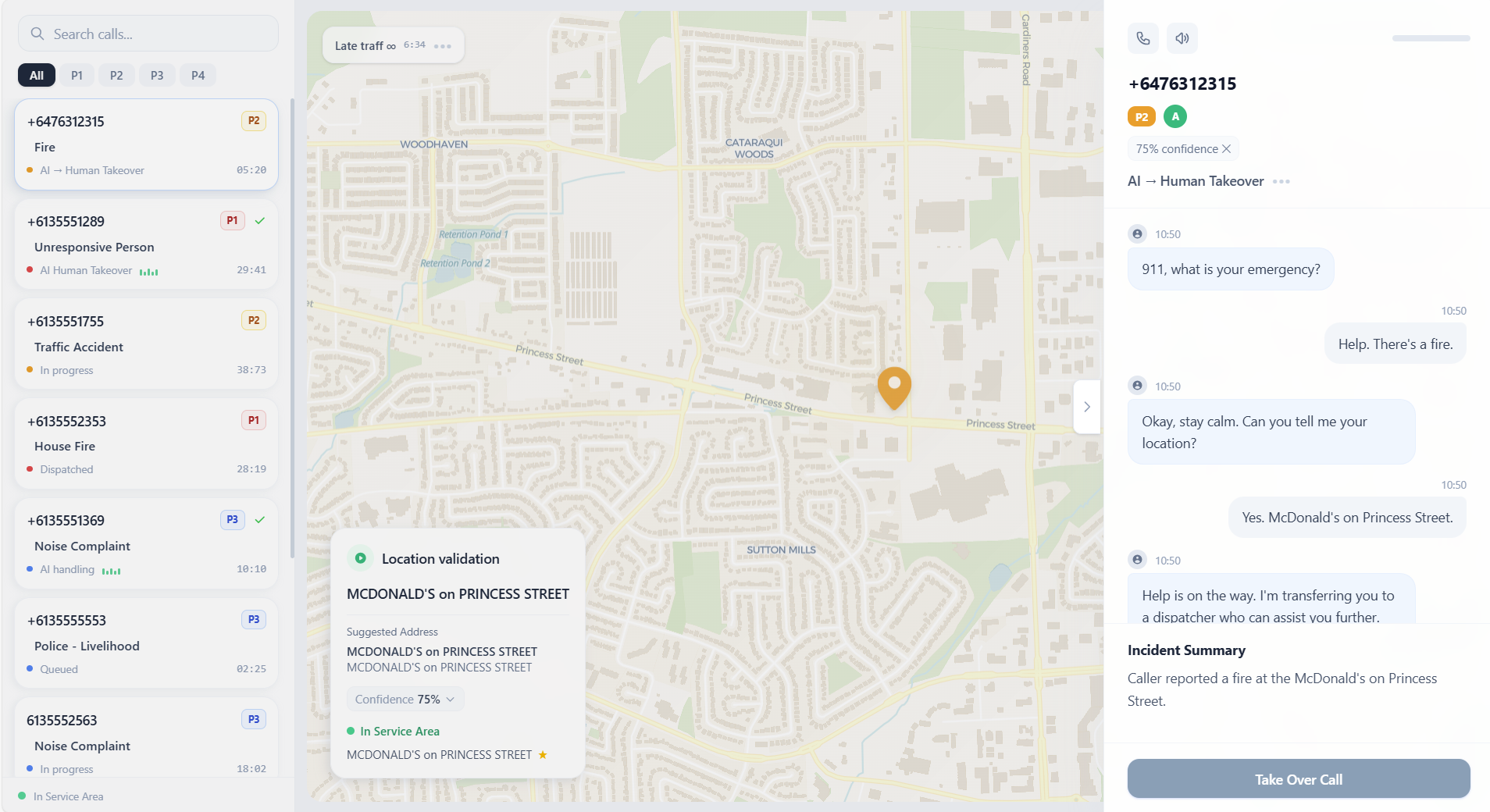
Dispatch is an AI-powered emergency response platform with a built in voice assistant that supports 911 dispatchers during high call volumes. As calls come in, Dispatch picks up the call, transcribes conversations in real time, assesses priority, and either routes urgent calls to human dispatchers or handles low-priority and overflow calls when agents are unavailable. It automatically extracts key details like location, incident type, and caller information, suggests follow-up questions, clusters repeat calls, and generates a clean incident summary for responders.
Dispatch keeps humans fully in control, reducing cognitive load, cutting response delays, and ensuring help reaches people faster when every second matters.
How we built it
We built the platform using React and Tailwind for the frontend and Flask for the backend. We integrated multiple APIs throughout the project, including Gemini for reasoning, Twilio for calling, Gradium for voice, and Hugging Face for model training. MongoDB was used as our database. We used the nominatim API for map info to pin point locations.
Challenges we ran into
Integrating Gradium's text-to-speech functionality was quite difficult since it was a new product that none of us had worked on. We primarily struggled with handling the delay that occurred between the callers input and our agents response as every second matters.
Accomplishments that we're proud of
We are proud of the building a product with real world impact which can help people all around the world save lives as well as reduce stress within high pressure job.
What we learned
We learned how with MangoDB as well as the Gradium API. Throughout the hackthon, we learned a lot of ideation and solving a problem with real world impact which can successfully scale.
What's next for Dispatch
Getting a fully deployed demo and reducing the latency for gradium. We’re excited to pitch Dispatch to the City of Kingston and validate our solution with professionals in the emergency response industry. Our goal is to iterate based on real feedback and work toward making Dispatch an industry standard for saving lives.
Built With
- flask
- gemni
- gradium
- huggingface
- mapquest-nominatim-search
- mongodb
- react
- tailwind

Log in or sign up for Devpost to join the conversation.