-
disk prices tools
Inspiration
Like many people who build or upgrade computers, I spent way too much time trying to figure out which storage drive was actually worth buying. Every shopping session followed the same pattern: open a dozen Amazon tabs, copy specs into a text file, pull out a calculator to divide price by capacity, and still walk away uncertain about whether I'd found the best deal.
The existing comparison tools weren't helping either. Most were cluttered with aggressive advertising, outdated listings, or so many features that they became overwhelming to navigate. I wanted something different — clean, fast, and focused solely on helping people compare storage without the noise.
So I decided to build it myself.
What It Does
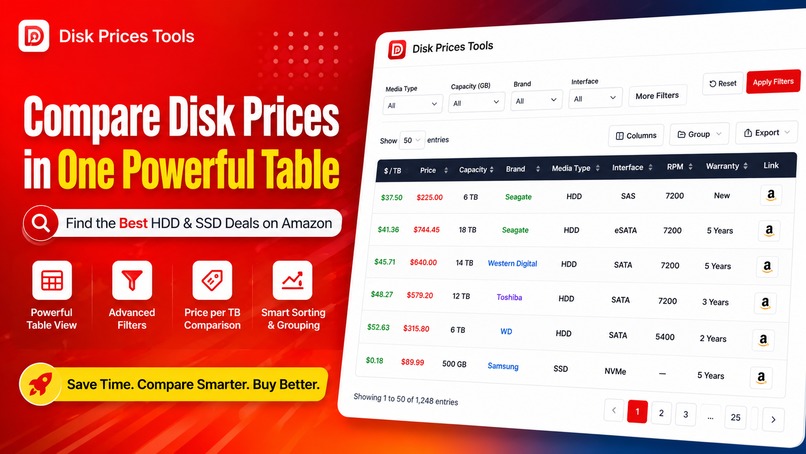
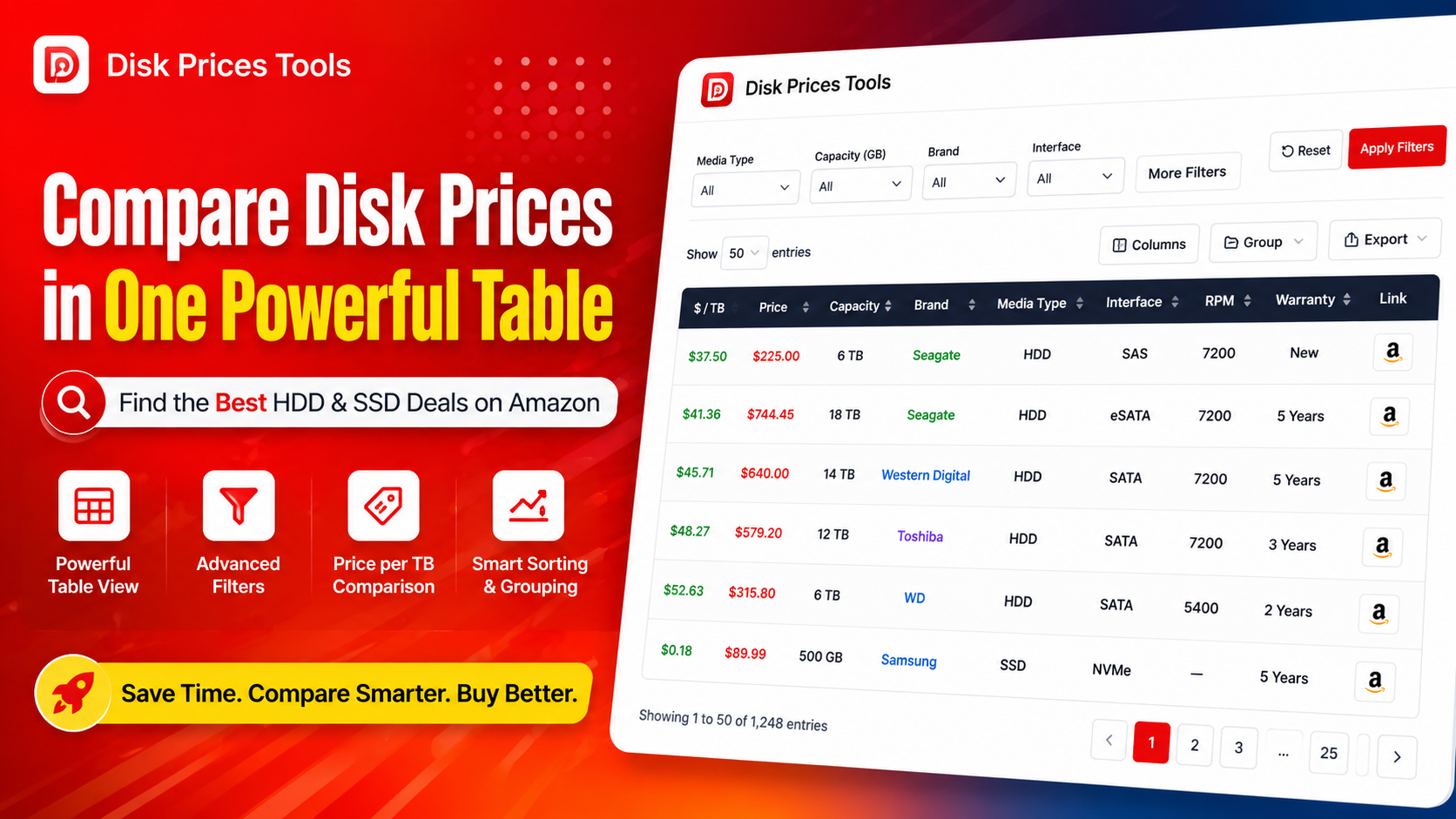
Disk Prices (diskprices.tools) is a free comparison platform that organizes every HDD, SSD, and NVMe drive into a single, sortable table. Every listing automatically shows price per terabyte and price per gigabyte, so users can finally compare a 500GB boot drive against a 20TB archive disk without doing any manual math.
The tool provides full technical specifications for each drive — capacity, interface, form factor, RPM, CMR versus SMR recording type, sequential read and write speeds, random IOPS, TBW endurance, MTBF, and warranty length. Users can customize which columns appear, apply advanced filters, and search live as they type.
Additional features include the ability to save filtered views as shareable groups, edit incorrect data directly in the table with community-approved corrections, and track product condition and seller ratings alongside pricing information.
👉 Try it here: https://diskprices.tools
How It Was Built
Frontend: Built with modern web technologies for fast loading and responsive design across all devices.
Design Philosophy: Minimalism was the guiding principle. No ads, no unnecessary features, no sign-up requirements — just a clean table that gets the job done.
Community Focus: Built-in editing allows users to correct missing or inaccurate data, with approved changes synced to everyone.
Challenges Encountered
Data normalization. Storage specifications are notoriously inconsistent. Some listings use terabytes, others use gigabytes. Recording types like CMR and SMR are often mislabeled or missing entirely. Ensuring every drive could be compared on equal footing required careful data cleaning.
Handling technical complexity. Storage buyers range from casual shoppers to IT professionals, and building an interface that serves both groups without alienating either was a delicate balance.
Maintaining accuracy. Automated data collection only goes so far. Manual verification and community editing were necessary to catch the errors that automated systems miss.
Accomplishments That Matter
Built a tool I actually use. The best validation is personal — this tool saves me time whenever I shop for storage, and knowing it does the same for others is genuinely rewarding.
Kept it simple. In a world of feature-bloated platforms, creating a lightweight, distraction-free tool that people can use in seconds feels like an achievement.
Proved minimalism works. The tool's popularity suggests that users value clarity and efficiency over endless features. Sometimes less really is more.
Lessons Learned
Focus solves problems. Stripping away everything except what's essential makes a product more usable, not less. Every unnecessary feature is a distraction.
Good tools don't need to be complicated. The most useful tools often do one thing well rather than many things poorly.
Community input improves everything. Allowing users to contribute corrections and feedback has made the platform better than it could have been through solo development alone.
What's Next
Additional marketplaces. Support for more Amazon regions and other retailers is in development.
Price history tracking. Visualizing how prices change over time will help users spot real deals versus temporary fluctuations.
Email alerts. Users will be able to set target price per terabyte thresholds and receive notifications when drives meet their criteria.
Mobile experience. Further improvements are planned for touch-based browsing.
Open-source plans. Making the frontend available for community contributions is under consideration.
Built With
Modern web framework, responsive UI design, cloud deployment, and automated data pipelines.
Try It
Compare storage the easy way at Disk Prices Tools.
Built With
- next.js
- react
- tailwind

Log in or sign up for Devpost to join the conversation.