Inspiration
The inspiration for Dishcovery stemmed from a common frustration: spending excessive time researching restaurants that fit everyone's needs. Whether it’s accommodating dietary restrictions, staying within a budget, or finding dishes that are actually worth ordering, the process often involves jumping between apps like Google Maps, Yelp, Reddit threads, and blog posts. We envisioned an intelligent, streamlined experience that could cut through this noise and deliver curated recommendations in seconds. By tapping into community-driven insights and AI’s filtering power, we aimed to create a tool that makes restaurant discovery effortless, personalized, and collaborative.
Research
Research shows that groups take 10–40 minutes to decide where or what to eat, significantly longer than individuals, due to choice paralysis and the need for consensus (Appetite Journal). Food delivery platforms like Uber Eats and DoorDash report that group orders take 20–50% longer to finalize compared to solo users, reflecting the “paradox of choice” in social settings. Even with tools like group polls and chats, it still takes an average of 10–15 minutes for friend groups to agree on meal choices, highlighting a persistent friction in group decision-making (Behavioral Economics & Industry Data).
What it does
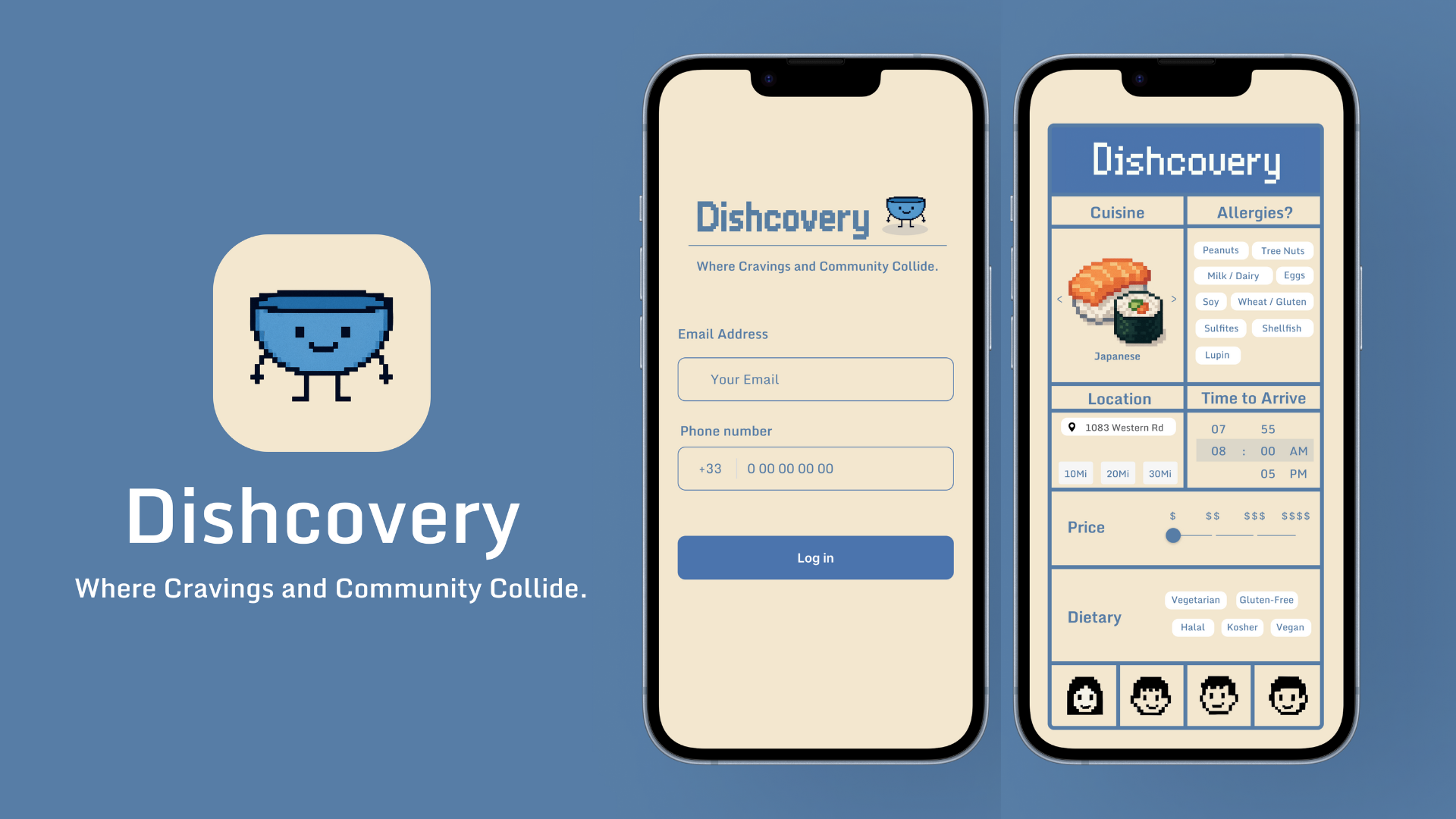
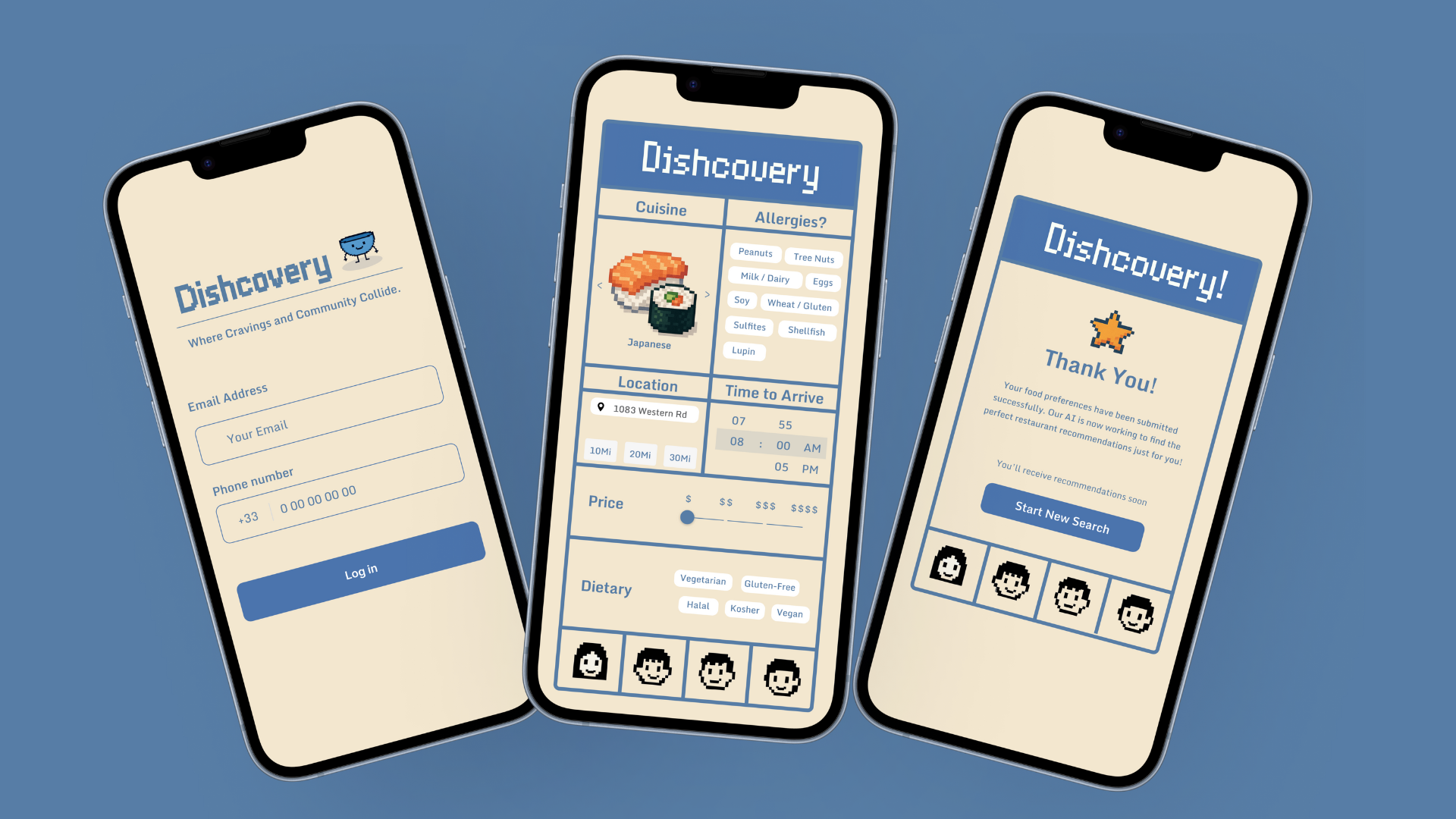
Dishcovery is an AI-powered mobile app that helps users find restaurants tailored to their specific preferences and needs. It saves user profiles (including allergies, dietary preferences, and favorite cuisines) and uses these inputs to recommend nearby restaurants with standout dishes. The app pulls in data from multiple platforms—Google Maps, Yelp, Beli, Reddit, and more—and synthesizes it through an AI agent that ranks and explains why certain places are a perfect fit. Through an intuitive interface, users can easily filter by distance, price, cuisine, and ambience, and instantly receive thoughtful suggestions vetted by crowd wisdom and AI reasoning.
How we built it
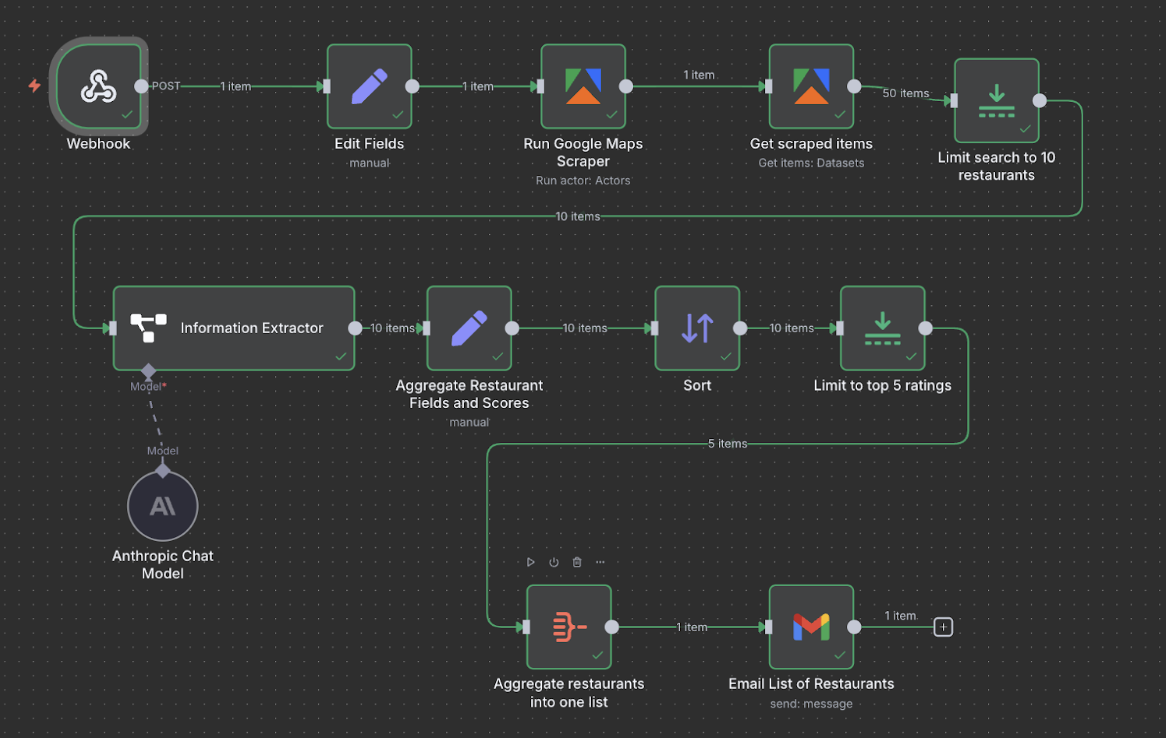
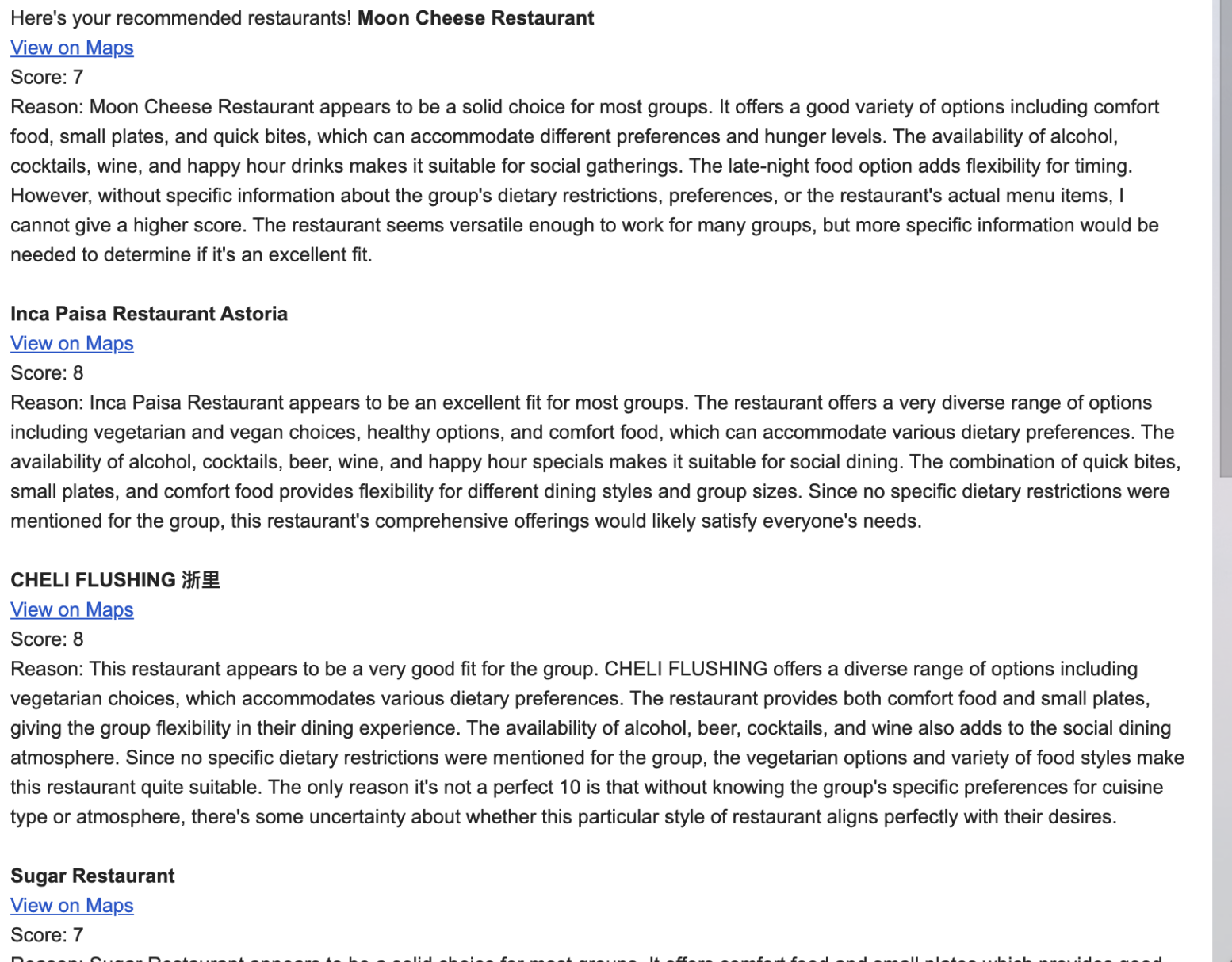
We built Dishcovery using React Native for a fast, cross-platform mobile app, enabling rapid iteration for both iOS and Android. On the backend, we used n8n, a powerful workflow automation tool, to orchestrate API calls across services like Google Places, Yelp, and even web scrapers for Beli’s curated lists. This allowed us to avoid building complex infrastructure from scratch while still connecting diverse data sources. For intelligent recommendations, we integrated Anthropic’s LLM (Claude) directly into the workflow. The AI processes compiled restaurant data, applies user-specific filters, and generates ranked recommendations with clear explanations.
Challenges we ran into
Using n8n came with a learning curve, as getting comfortable with its interface and configuring workflows took some time. Initially, we aimed to integrate multiple APIs to enrich our data sources, but given time constraints, we focused on Google Maps as our primary provider. Designing the frontend was also challenging within the limited timeframe, as balancing functionality with a clean user experience required prioritizing core features. Additionally, while we wanted to evaluate multiple restaurants simultaneously, parallelism isn’t natively supported in n8n, which slowed down the workflow execution more than we anticipated.
Accomplishments that we're proud of
We are proud of how we were able to stitch together multiple complex services into a cohesive, functioning prototype in a limited timeframe. Successfully integrating Google Places and Yelp APIs, while also pulling in Beli’s curated data, demonstrated the flexibility and scalability of our architecture. Another major win was the intelligent AI-driven recommendation flow. The LLM not only selected restaurants that fit user preferences but also provided meaningful reasoning, showcasing the app’s potential to deliver highly personalized and trustworthy suggestions. The intuitive UI that made inputting filters and preferences seamless was also a highlight of the project.
What we learned
We learned that no-code platforms, while powerful, can still be quite complex to navigate, especially when orchestrating multiple data sources. Working with AI also introduced more factors than we initially expected. It’s not just about giving it data — crafting effective prompts, properly filtering information, and ensuring the AI provides structured, meaningful responses all require careful attention and iteration.
What's next for Dishcovery
Next for Dishcovery, we aim to significantly improve the response time, ensuring that users get recommendations almost instantly. We also plan to expand the app’s coverage to include a wider variety of cuisines, especially niche or underrepresented ones that might not appear in standard lists. Additionally, with more time, we want to refine the user interface to fully align with our original design vision, creating a more polished and intuitive experience.
Built With
- figma
- google-maps
- n8n
- react
- typescript

Log in or sign up for Devpost to join the conversation.