## Inspiration

The first inspiration for Dishcourse came from simply cooking at home. I noticed that I was throwing random food items into dishes, experimenting freely, and creating some of my greatest meals - but I wasn't taking notes of measurements or writing anything down during the creative process. My best dishes came from these experiments, but they were being lost because documenting them would have interrupted the flow of cooking.

As we developed this idea as a team, we realized this created a much bigger opportunity. Using voice for recipes was just the beginning - with technology, we could do this in so many languages. This allows us to share and spread recipes across language barriers naturally. Dishcourse can use its technology to spread food and the love of food naturally through the app, without additional steps for users.

---

## What it does

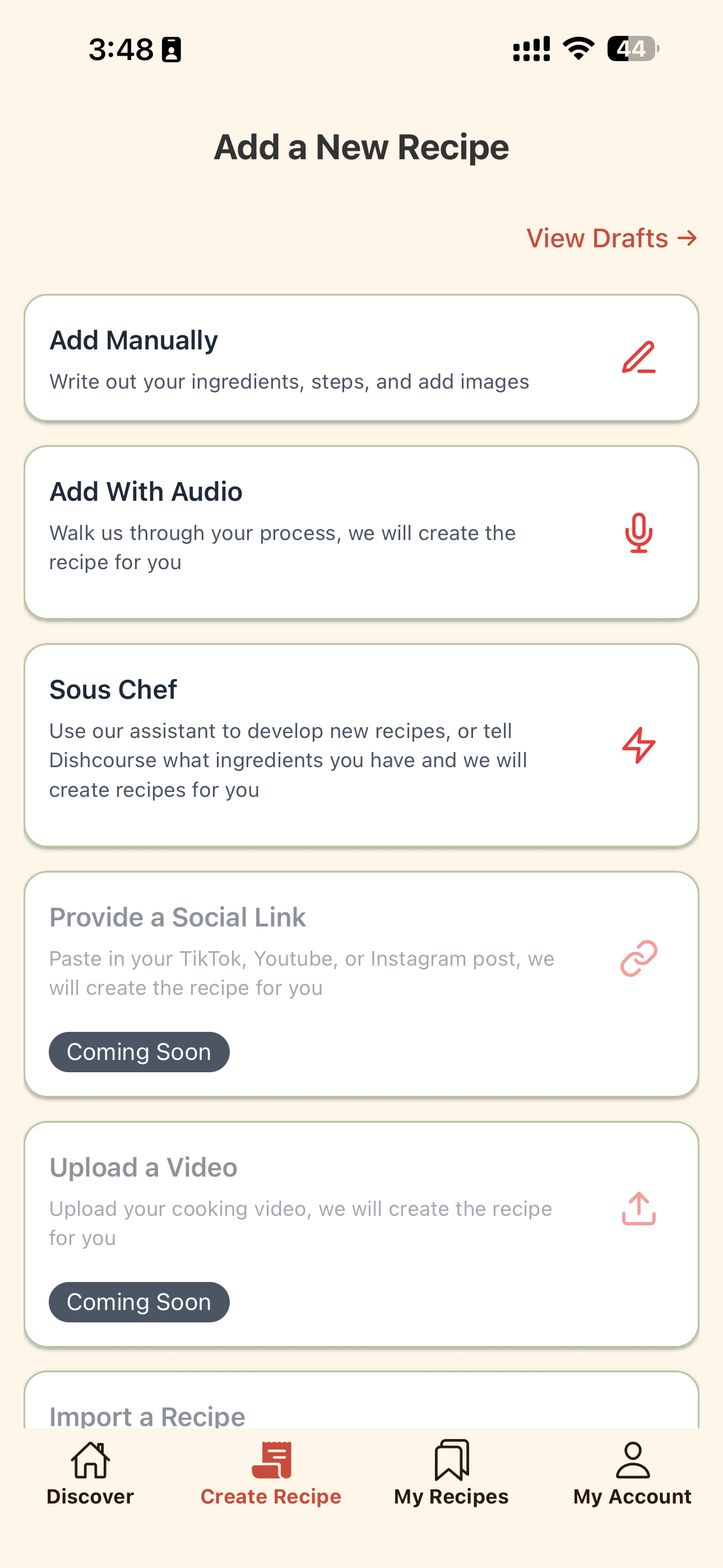
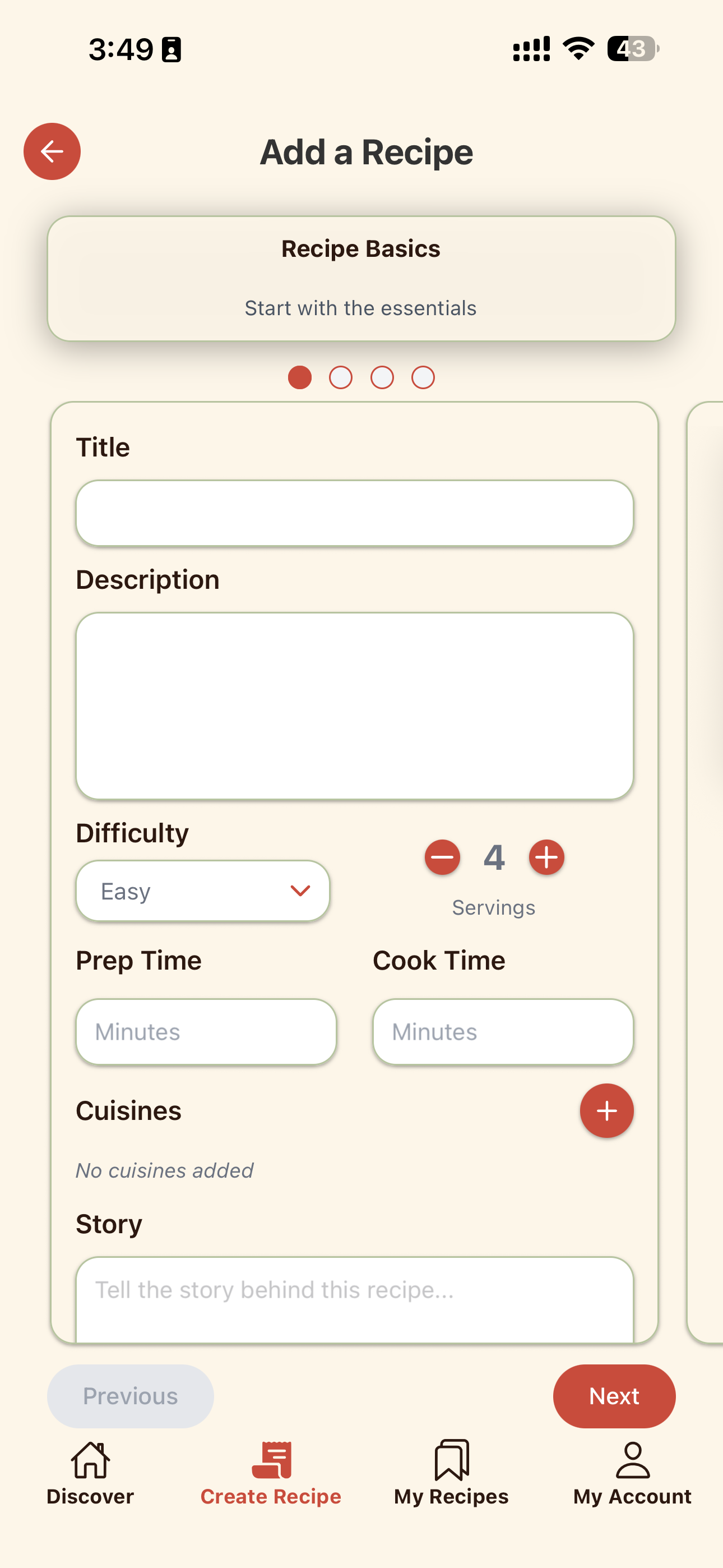
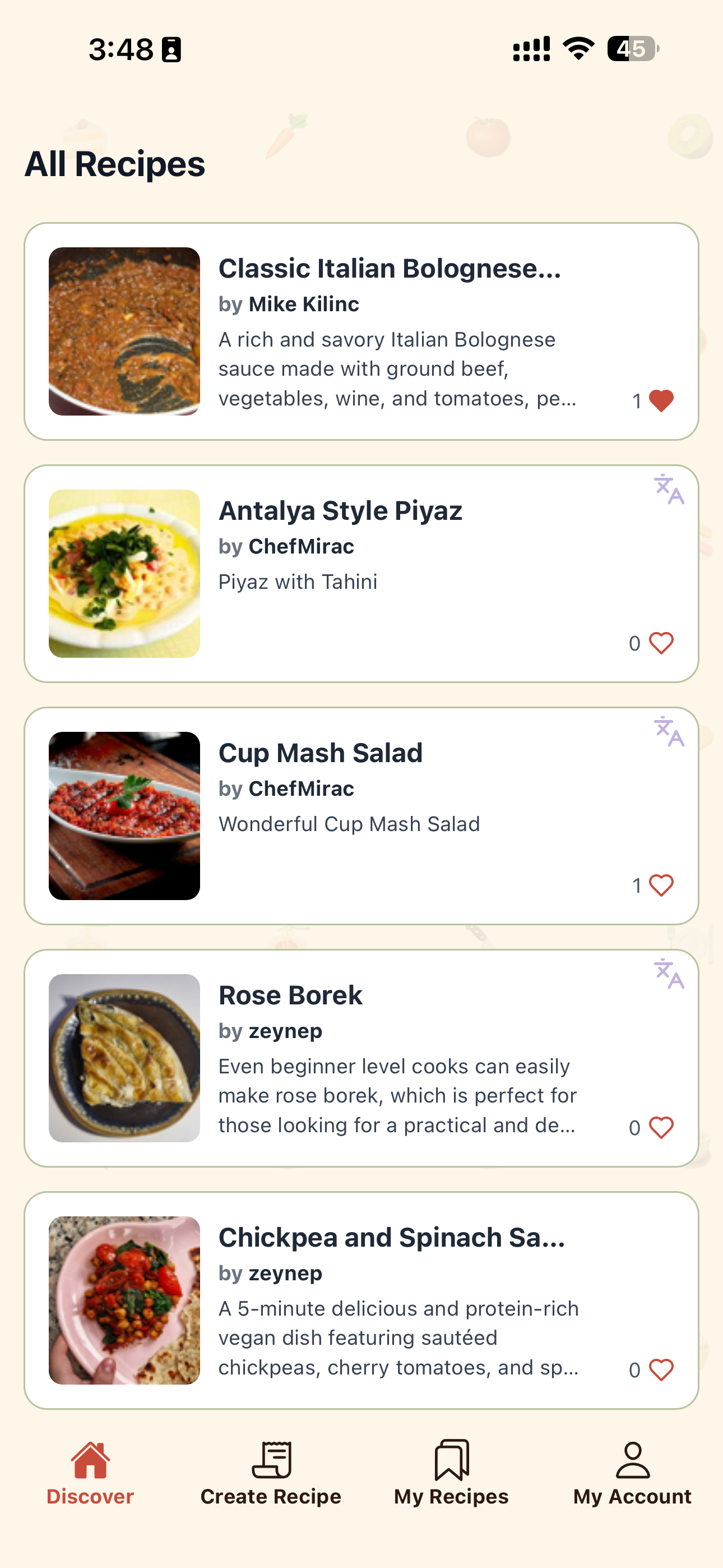
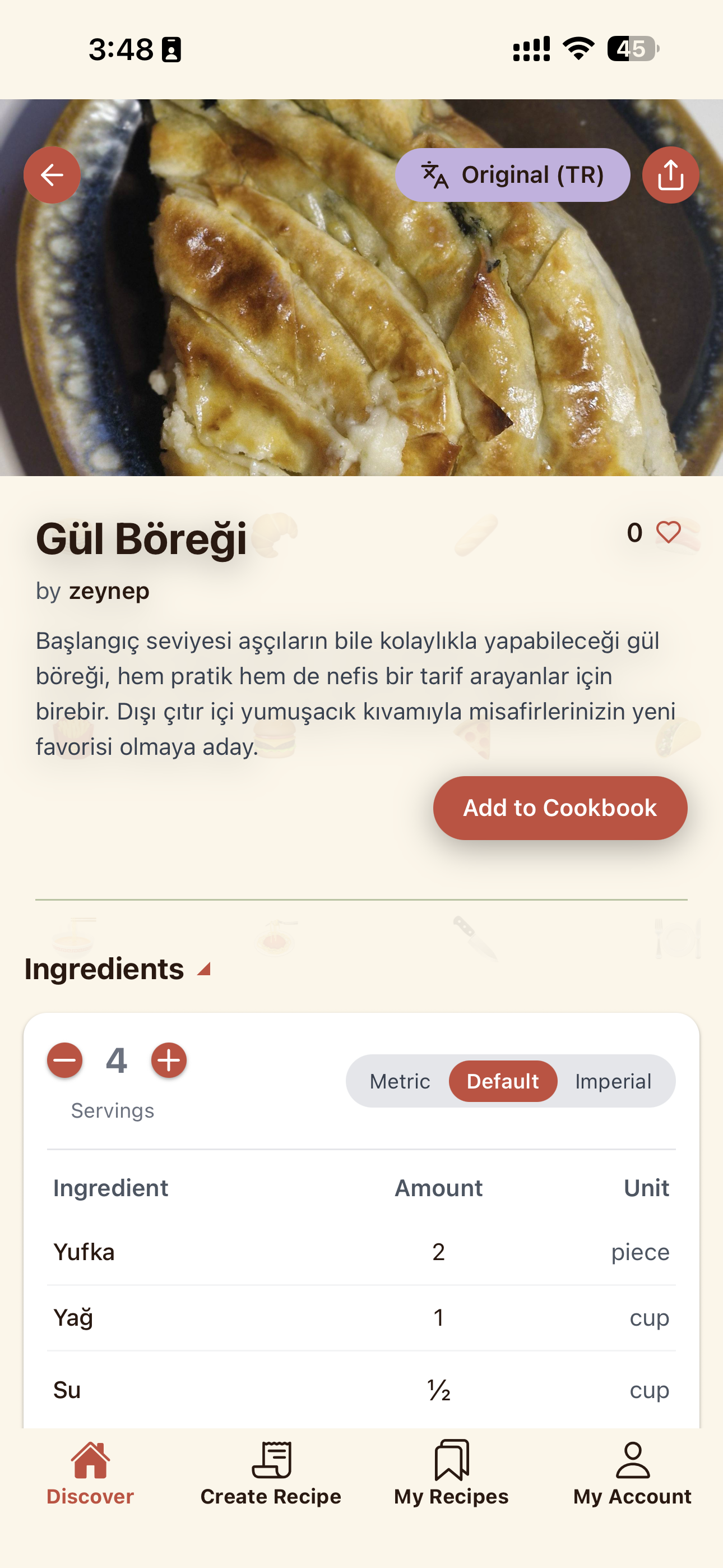
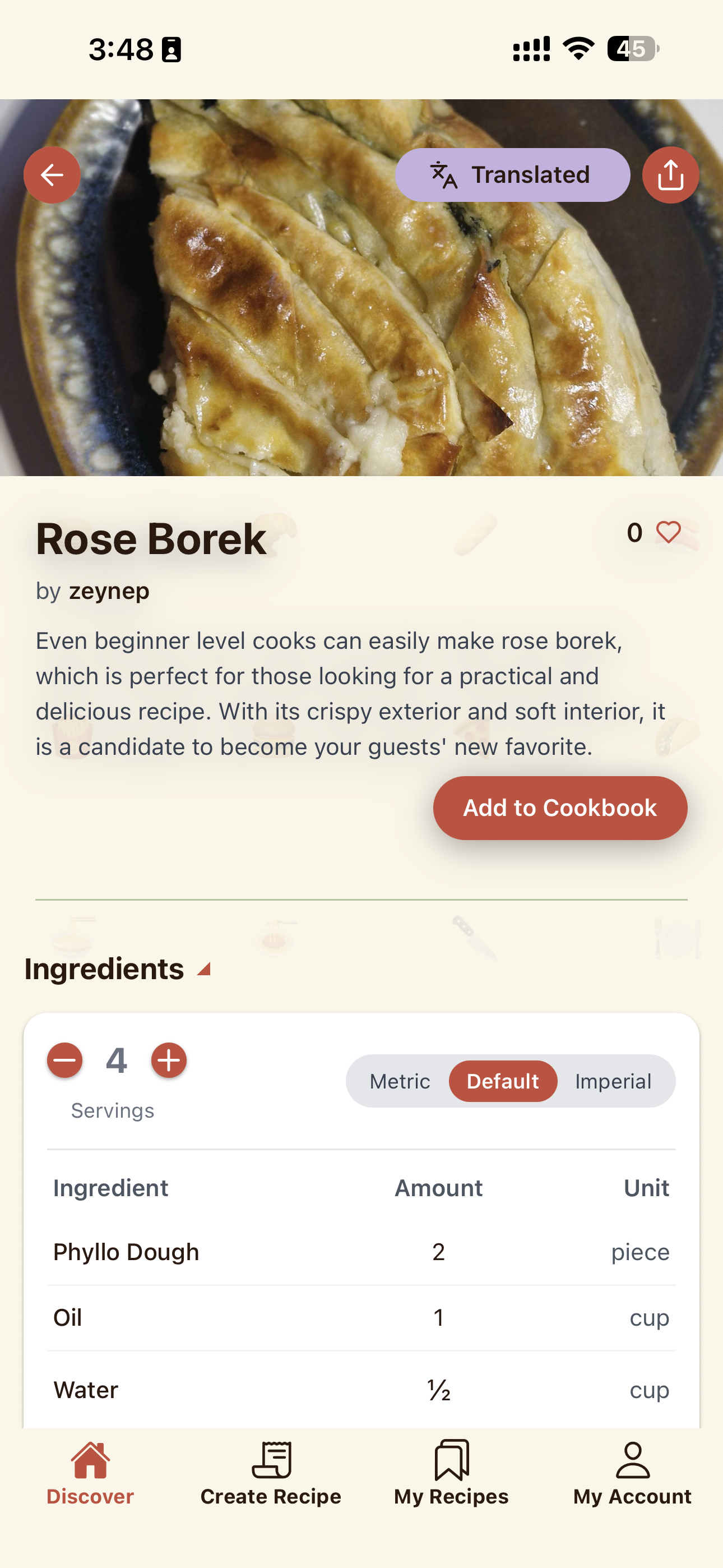
For absolutely free, any user can log in and create recipes manually. Even though the app currently supports English and Turkish as interface languages, users can enter recipes in any language they want. They can save recipes privately or share them publicly. When shared, recipes are automatically translated to English, Turkish, and more languages coming in the future, so any user with any supported language will view that recipe in their preferred language, no matter what language it was originally created in.

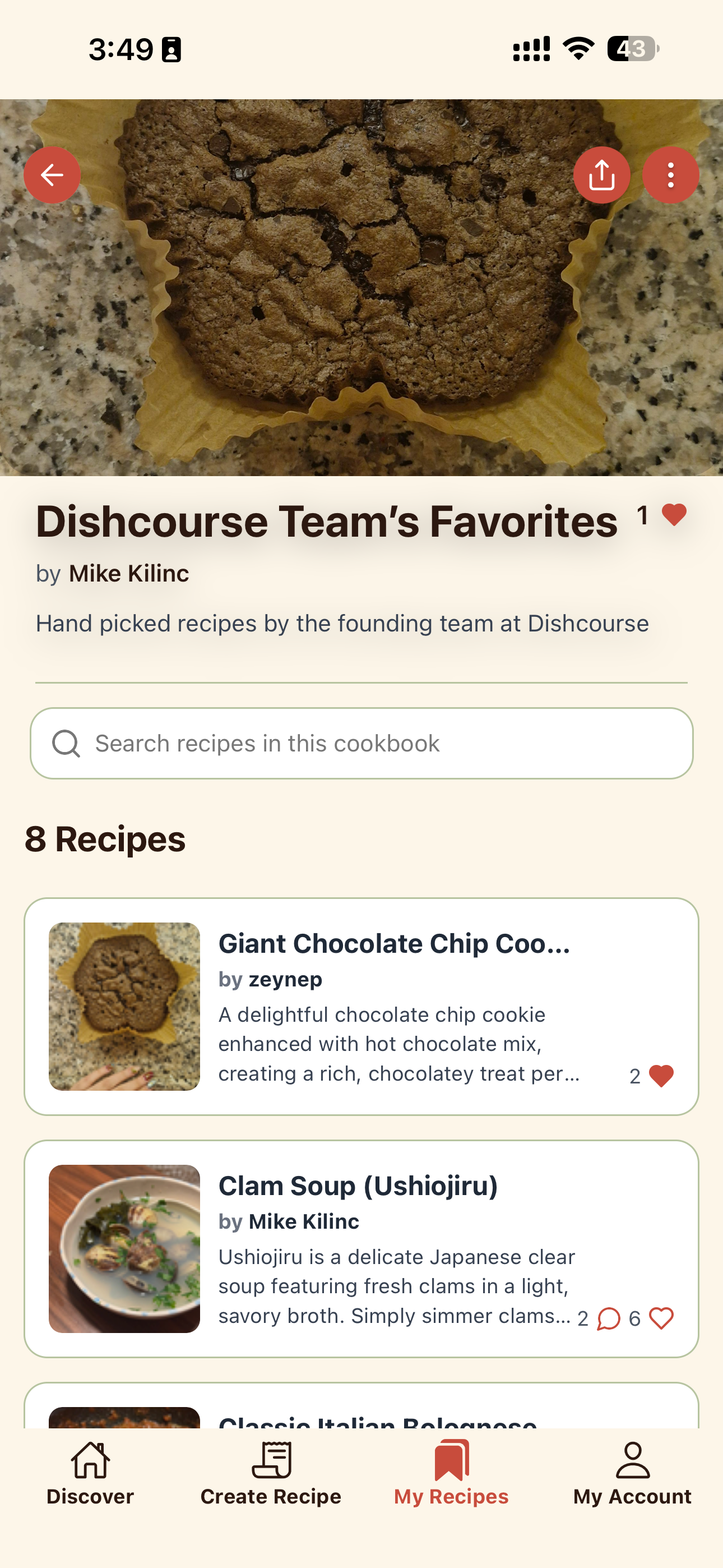
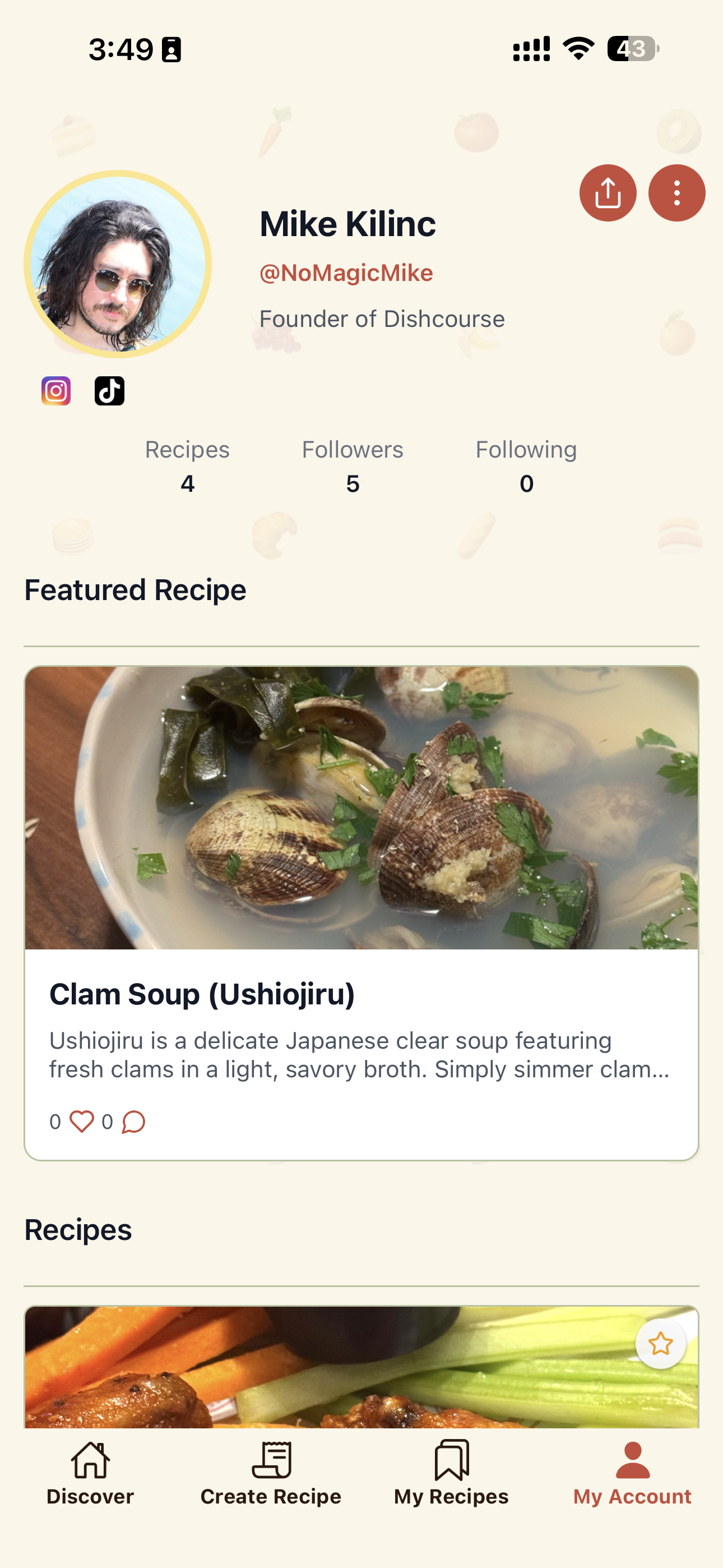
Users can also create cookbooks, save and share collections, and have profile pages they can share with others. Even users who don't log in can browse and discover recipes on the platform.

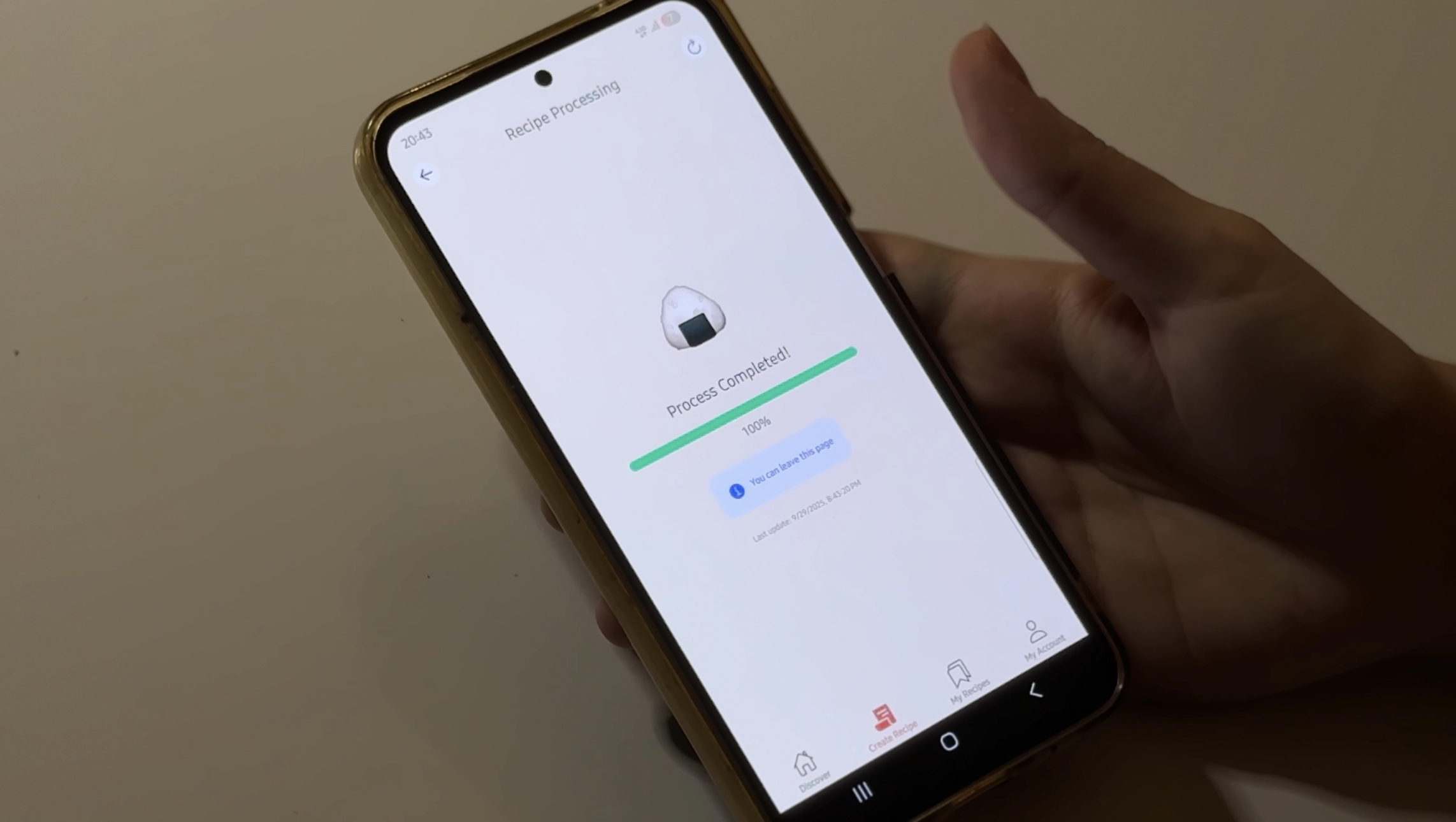
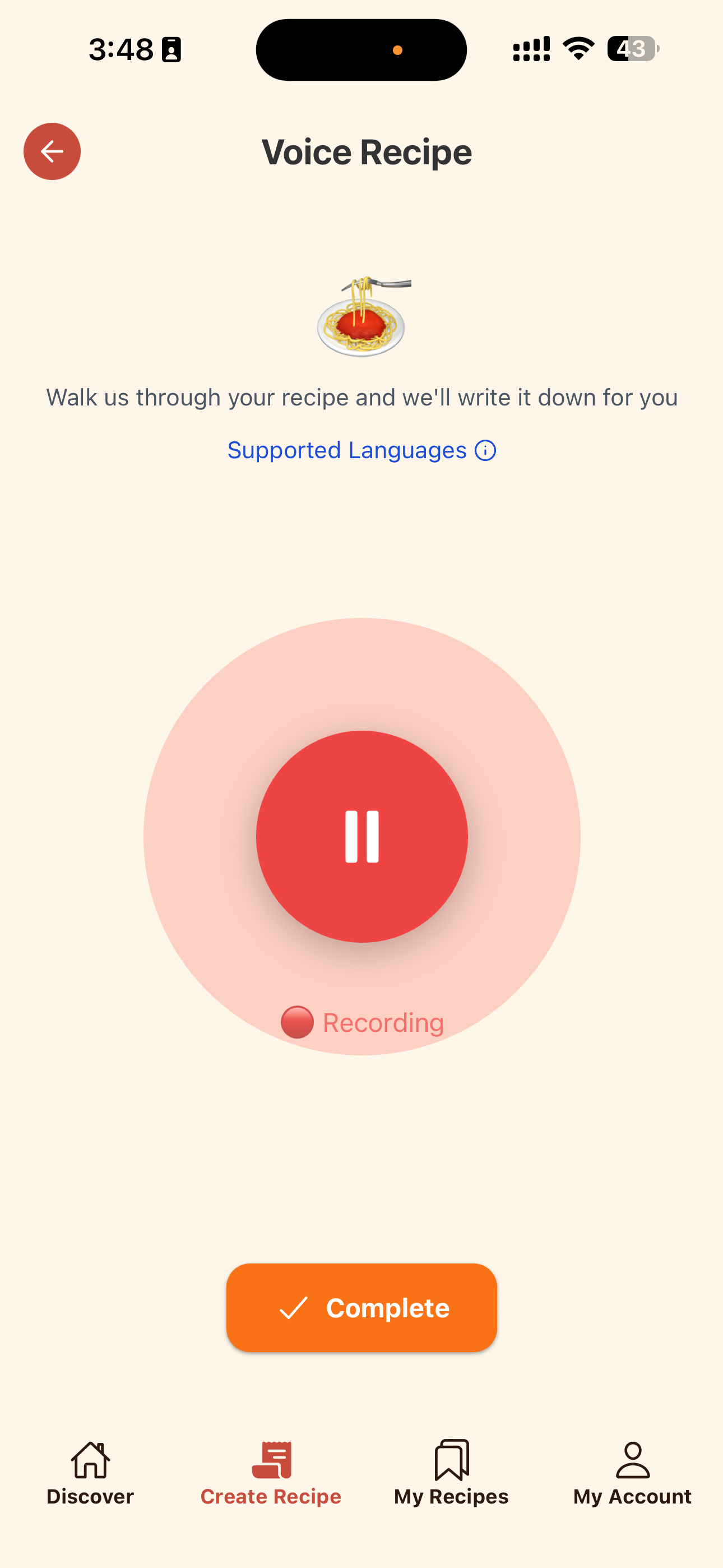
On the paid side, with Dishcourse Pro, users unlock voice-to-recipe functionality where they can speak naturally while cooking. Their conversation gets formatted into a well-structured recipe that they can then share on Dishcourse. The AI handles the intelligent structuring and organization automatically.

---

## How we built it

We started with React Native and Expo so we could develop cross-platform for both iPhone and Android. We use Supabase as our database, authentication, and image storage solution. We also use Render.com with a Node.js backend running all our API services.

For transcriptions and translations, we use OpenAI's APIs (Whisper and GPT-4) for speech processing and intelligent structuring of recipe data. RevenueCat handles our subscription management.

We wanted to build mobile-first, recognizing that recipe documentation happens in real-time during cooking. Our architecture prioritizes the mobile experience while maintaining development velocity across platforms.

---

## Challenges we ran into

The biggest challenge was conversational speech parsing. Even in just English, it's difficult to determine what part of someone's speech is the actual recipe, what part is storytelling, and what part is just background noise. We had to really engineer our prompts to understand culinary terms and figures of speech related to food.

This becomes even more complex across multiple languages. We're constantly fine-tuning to ensure food context is translated appropriately - literal translation doesn't work. The AI has to take in the entire context of a recipe to fully understand and properly translate it.

We didn't set out to build an AI app - we set out to build a food app that happens to use AI. You won't see the word "AI" a single time in our application because we're not advertising it as an AI product. We want to provide a service that does what our users need it to do.

Of course, anything AI-related has costs, so we implemented caching techniques and optimization strategies to ensure our translations and processing don't break the bank.

---

## Accomplishments that we're proud of

First, we built the app with multiple languages in mind from the ground up. We're not just running everything through AI to translate - we want official translations for the app interface itself, while AI handles user-generated content. We're slowly adding more languages to the app itself based on user needs.

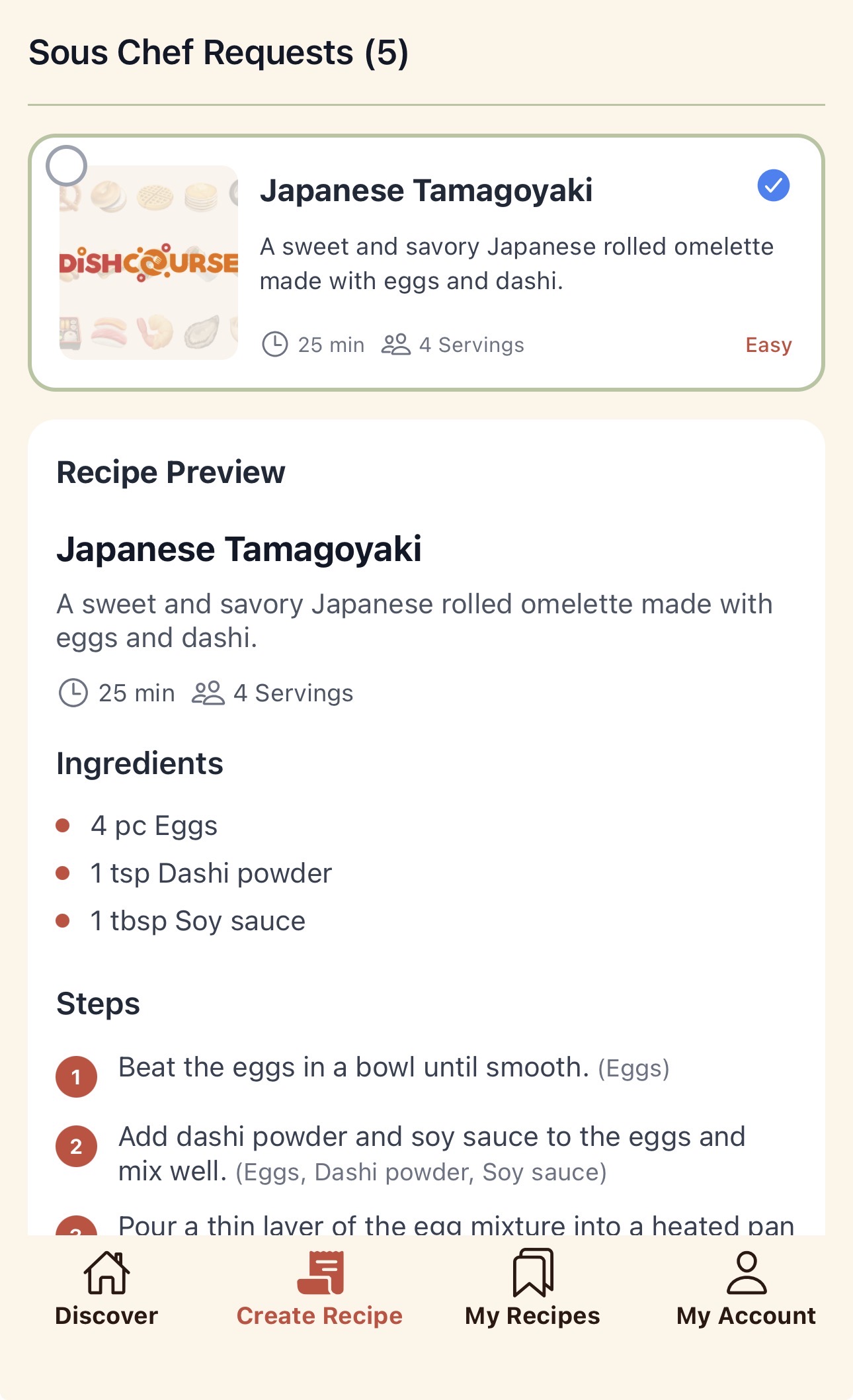
We've also achieved intelligent recipe structuring where our AI does an excellent job parsing exactly what we need for recipes. It takes the context we provide, ensures it understands the food context, and structures chaotic speech into usable, organized recipes while maintaining the authentic voice of the creator.

We've successfully built a system that preserves the natural cooking experience while making recipes accessible across language barriers - solving the fundamental problem of cultural knowledge preservation without sacrificing authenticity.

---

## What we learned

The most important thing we learned is that we really needed to speak to our users. Understanding what users actually want has been crucial. We've been lucky to have a few dedicated users actively providing feedback every time they use the app. They've helped us find bugs, add new features, and prioritize future development.

Building in public meant immediate user feedback became one of the most important resources we had. These users have helped us test on multiple devices and guided our development decisions.

From a technical perspective, we learned about preparing for scale without over-focusing on it. We wanted to be ready for small scalability bumps, so we built everything as if we'd be transcribing 100-200 recipes at the same time. We added queues and even rebuilt our entire API halfway through development because we decided a different structure would be better.

This whole experience has been a learning process. We're a pretty fresh team, so discovering what we're capable of and what we can accomplish has been invaluable.

---

## What's next for Dishcourse

We're going to push marketing efforts to solve our classic chicken-and-egg problem: an app like this needs users to create content, but without existing content, it's hard to attract and retain new users. We're working with friends and early users to add as many recipes as possible so we can expand our user base and give new users plenty of content to explore.

We have exciting new features incoming: uploading videos that convert to recipes, providing links to websites with recipes that we can import, and eventually Instagram and TikTok recipe importing. There's a lot in our pipeline.

We also plan to add way more languages - as many as possible based on user needs. Our goal is to make Dishcourse truly global, supporting any language community that wants to preserve and share their culinary traditions.

The ultimate vision is building a platform where food stories travel freely across all language barriers, and every kitchen has a voice worth hearing.


Log in or sign up for Devpost to join the conversation.