Inspiration
Nepal's youth unemployment rate has been sitting around 20 percent for years, and it's even worse for university graduates. This hits IT and tech students especially hard. A lot of IT students spend four years learning C++ and theory, then go looking for a job and find every posting wants GIT, Kubernetes, SWE Practices, or cloud skills nobody actually taught them. And if you're not in a network to tell you what's actually in demand, you're just guessing. We wanted to build something that fixes that.
What it does
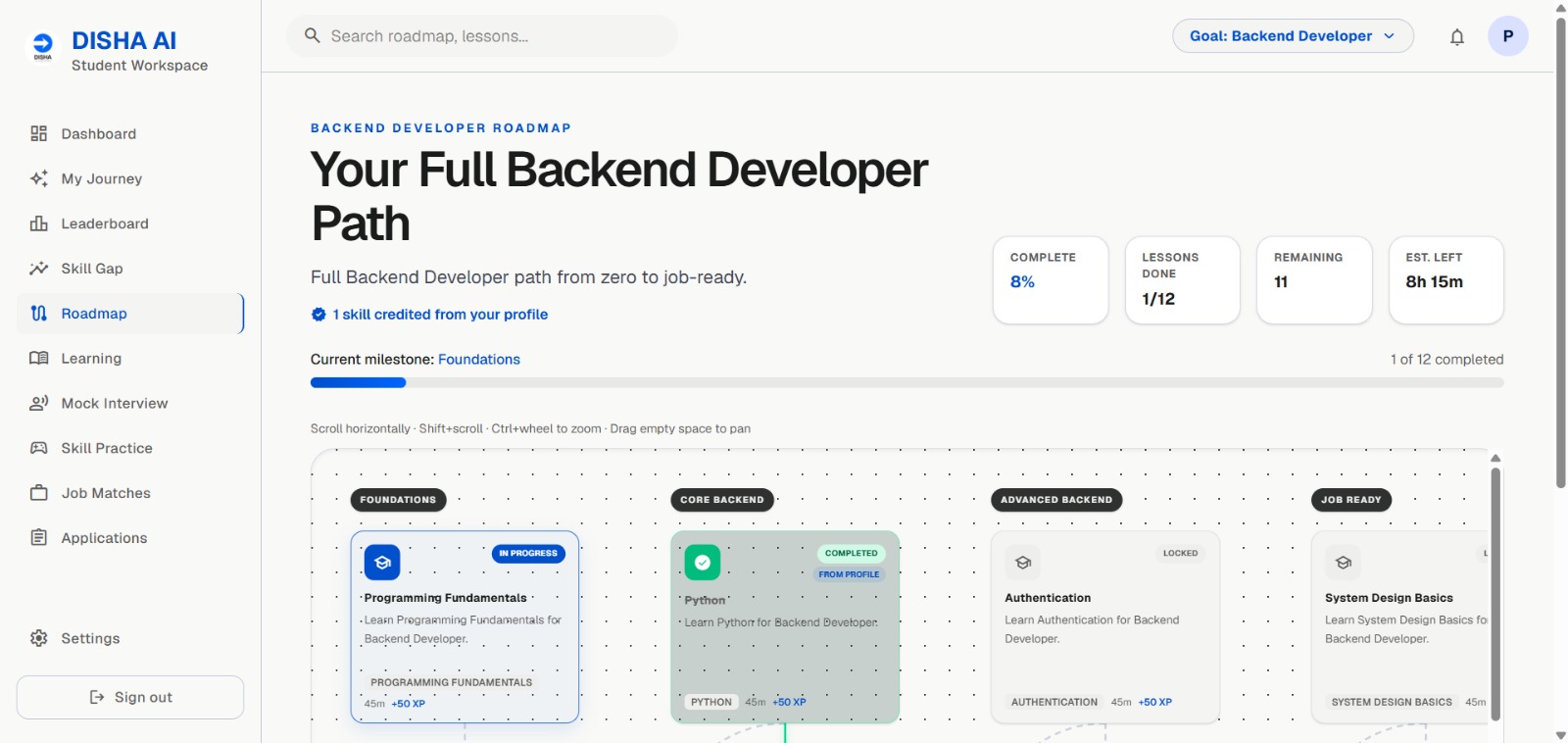
You tell DISHA what job you want, and it looks at real job postings from Nepal's job market right now and figures out what skills you're missing. Then it builds you a week by week plan to close that gap, based on your time and current profile. Once you're ready, it runs you through mock interviews and connects you to real employers who are actually hiring. And it doesn't just hand you a plan once and forget about it, it checks in on you and adjusts things as you go.
How we built it
We split the work across a few different AI agents instead of one big chatbot trying to do everything, and used LangGraph to orchestrate them together. We scrape Nepal job sites every day so the system is always working with something current, not job postings from months ago. One agent figures out your skill gap, another builds your roadmap, another runs your interviews, another handles job matching. The part that took us the longest was making sure the AI doesn't just make things up or hallucinate. So if it tells you a job needs React, it actually has to show us where that's written in the real posting.
Challenges we ran into
Getting the AI to sound confident was easy. Getting it to actually be right was the hard part. Early on it would sometimes tell us a job needed a skill that wasn't even mentioned in the posting, so we had to build a whole extra step just to catch that kind of thing. We also ran into a messier question we weren't expecting, whether it's even okay to scrape these job sites in the first place, since a lot of them have terms that say you can't reuse their listings like this. That's not really a coding problem, more of a "we need to actually think about this" problem.
Accomplishments that we're proud of
We didn't just make a nice looking demo, we got the whole thing working end to end on real job data. Skill gap analysis, roadmap, mock interviews, job matching, all of it running for real. We also tested how accurate our AI actually is against a set of postings we labeled by hand ourselves, and we're being upfront about the number, even though it's not perfect. Most people at this stage don't even bother checking.
What we learned
The AI part turned out to be the easy part, honestly. Anyone can hook up an LLM and get something that sounds smart. What actually took work was making sure what it says is true, and building the habit of checking that instead of just trusting it.
What's next for DISHA
We want to run a pilot with a couple of colleges, and move away from scraping and toward actual partnerships with job sites and employers so the data is on solid ground. Mostly though, we want real numbers on whether using DISHA actually helps someone get hired. That's the thing that would really tell us if this works.
Built With
- beautiful-soup
- chromadb
- claude
- crawl4ai
- fastapi
- groq
- json
- langchain
- langgraph
- mcp
- mistral
- openai
- playwright
- postgresql
- pydantic
- python
- rag
- react
- tailwind-css


Log in or sign up for Devpost to join the conversation.