Inspiration
Health is perhaps the most important part of one’s life.However, because of modern lifestyle, people tend to ignore it. This has led to an exponential rise in diseases like diabetes, blood pressure, liver issues etc. It is often observed that affordable healthcare services are becoming scarce. There are also many pseudo science promoters, following such advice can do more harm than good. So, a website to routinely check on your health would be extremely beneficial to the society.
What it does
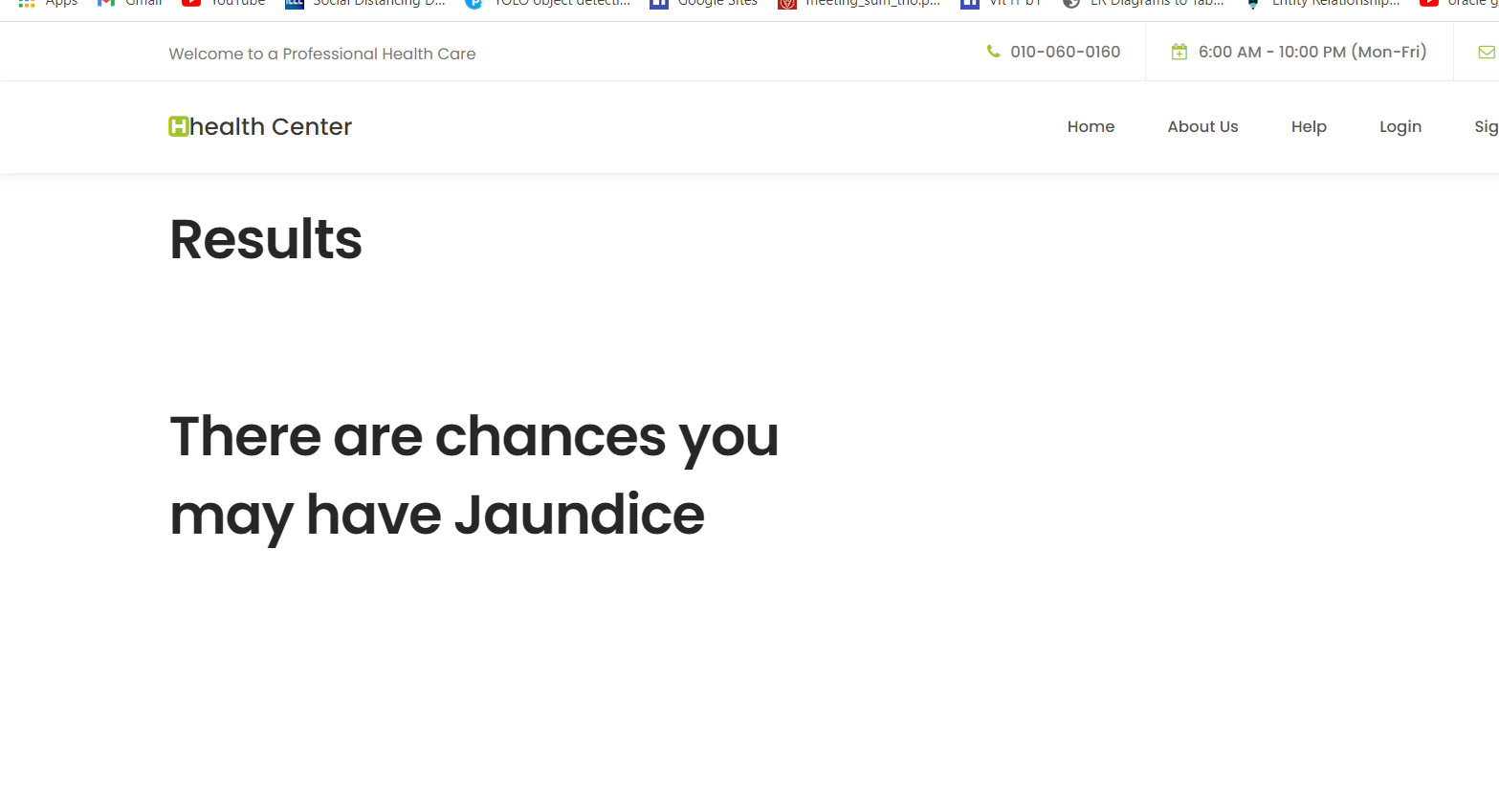
Our project predicts the disease based on the given inputs from users.
How we built it
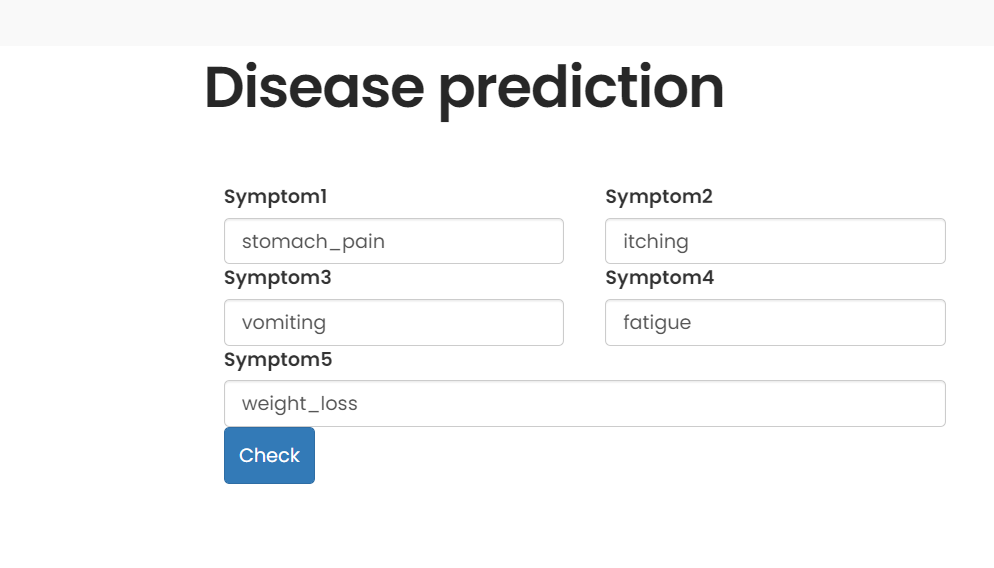
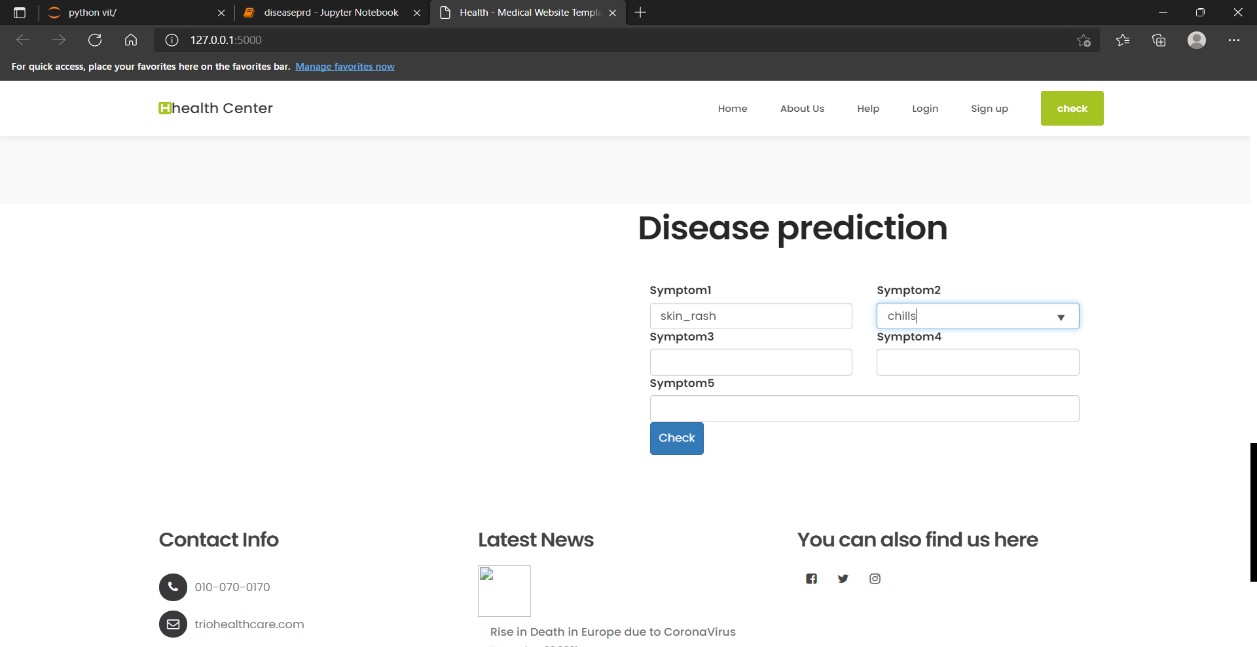
A machine learning based disease prediction model has been created to counter this issue. The prediction system can be separated in two categories. First one takes symptoms of common diseases as input, and predicts the illness the user is suffering from. Input parameters are basic symptoms which can be easily identified by any person. The second part consists of separate models created for five specific diseases. The input parameters for this part are slightly advanced and the user may need to undergo some primary tests to get the input parameters.
Part A) In our project users can add signals and get results in seconds and disease forecasts should be clear and should not confuse the user. Our aim was to ensure that the information we collected came from accurate and literary sources and was accurate. Therefore, we rely on a team of medical researchers to search for verified online information and diseases were collected and categorized into different categories. We also sent journals such as A-Z for lung diseases, Oxford's book General Medicine etc. Classification and classification of acquired data All medical information collected was divided into separate comma-separated file sheets. Diseases were classified based on location or organ affected by the disease. After this isolation and isolation, the symptoms of such diseases and the actions used to confirm a particular disease are added to the sheet. The doctor's recommendations and the recommended medications were filed. A data set of such files with the underlying disease cover under a separate organ and area of infection was established. The complete database was converted to hot text format where the symptoms and diseases were separated by column format and the symptoms associated with that disease in the file were marked '1' with the incompatible ones such as '0'. This is done so that the model is adjusted in a way that makes it easier to train the model. The model is trained using links obtained from classification of diseases and symptoms and this is done using dedicated python libraries to test data by dividing the same members into random train and sub-test sets given that number of test samples added to the code. 3 algorithms were used in the model, Random Forests, SVM and Naive Bayes. Because of the uniform nature of the data, all algorithms achieved great results. A combined model was then created using all 3 algorithms. After labeling the predicted data, the user will discover the output (in the form of a disruption or disease) which can be said about something that can affect the high level of accuracy as it comes after further training of the model and method of separation used.
Part B) 5 separate specialized models were created for Breast Cancer, Heart disease, Liver disease, kidney disease and diabetes. The breast cancer prediction dataset was taken from Wisconsin university. The dataset was vast and certain parameters did not affect the output. Certain attributes with low correlation to output were discarded.
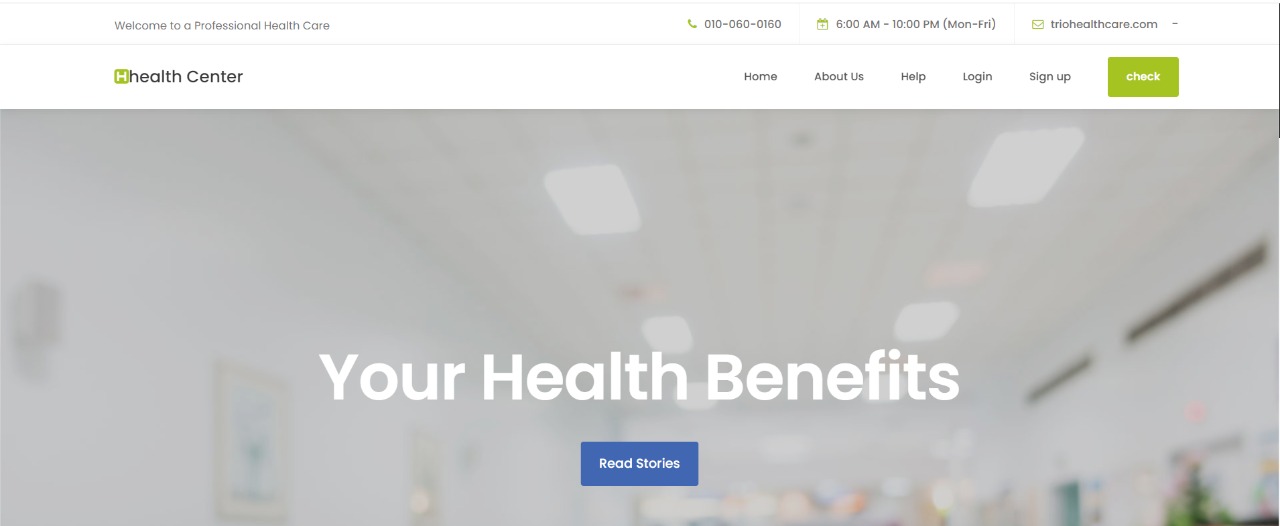
After preprocessing, four algorithms were used to make predictions. Decision Tree Classifier, SVM, Gaussian Naive Bayes and KNN. SVM had the highest accuracy with accuracy score 0.9714.So, the final model was created using SVM. Data sets for other diseases were more uniform and did not require much preprocessing. Random Forest Classifier was used for Diabetes, Liver, Kidney and Heart assessment. The accuracy score was above 0.9 for all of them. The models were then converted into web applications using flask framework. The user will need to create account and login to access the specialized models. However, the general symptom checker is accessible to all. A information section has also been created to create awareness about the diseases
Challenges we ran into
Currently the we have implemented a basic login system, which can be made more secure.
Accomplishments that we're proud of
We were successfully able to decide which algorithm to use for the model based on the accuracy scores of different algorithms. We were able to use Flask to integrate our model with the website
What we learned
We learned use of machine learning in the healthcare domain. How disease prediction can be used successfully in the day to day life.
What's next for Disease Prediction Healthcare Site
We wish to implement more secure login system and implement drug recommendation model inside the website.

Log in or sign up for Devpost to join the conversation.