-
-
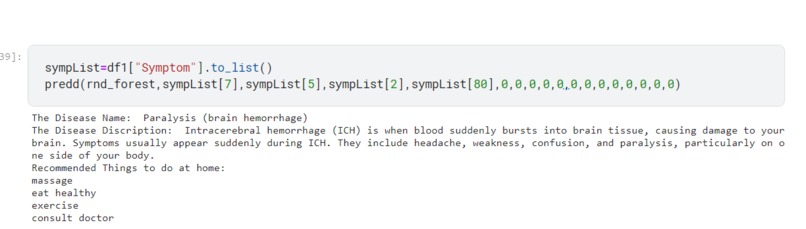
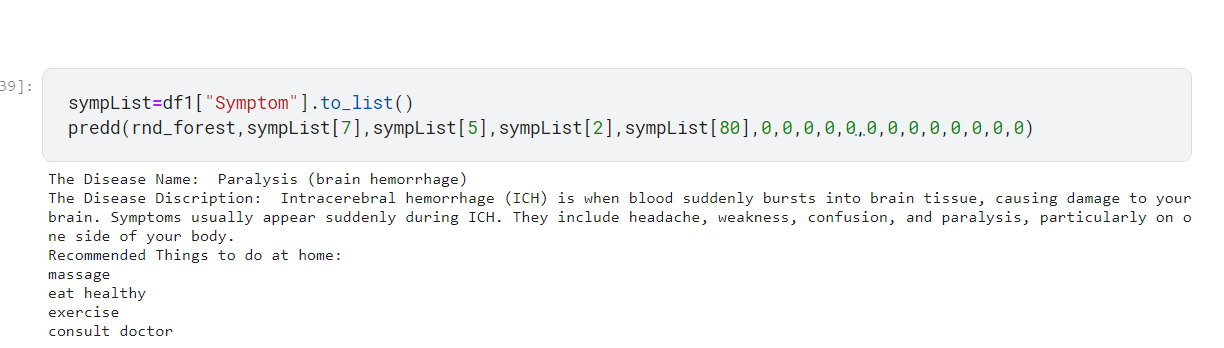
This is an example result of our project
-
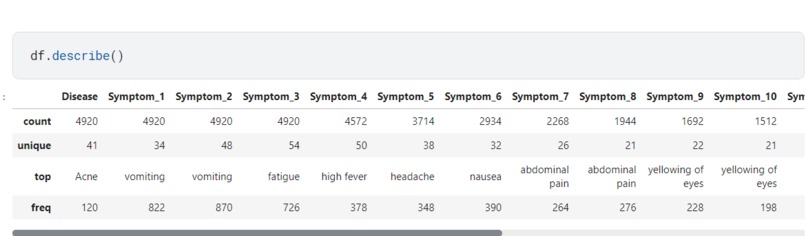
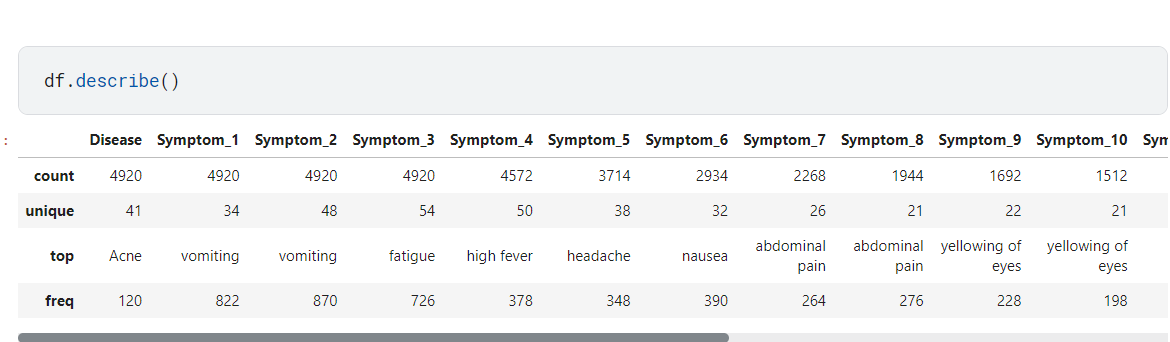
example dataset
Disease prediction involves using data, typically from various sources, to forecast the likelihood of an individual or a population developing a specific disease or health condition in the future. The primary goal of disease prediction is to identify high-risk individuals or groups early, allowing for preventive measures, timely interventions, and improved healthcare management. Here's what disease prediction can achieve:
Early Detection: Disease prediction models can identify individuals at risk of developing a particular disease before symptoms appear. This enables early intervention and treatment, potentially improving patient outcomes.
Preventive Measures: Predictive models can recommend lifestyle changes, screenings, or vaccinations for individuals at risk. For example, predicting the risk of heart disease can lead to recommendations for healthier living and regular check-ups.
Resource Allocation: Healthcare providers can use disease prediction models to allocate resources more efficiently. By identifying high-risk populations, they can focus on prevention and treatment where it is most needed.
Reduced Healthcare Costs: Early intervention and prevention can lead to reduced healthcare costs. Treating diseases in their advanced stages is often more expensive than preventing or managing them in their early stages.
Built With
- python
- scikit-learn
- tensorflow


Log in or sign up for Devpost to join the conversation.