-
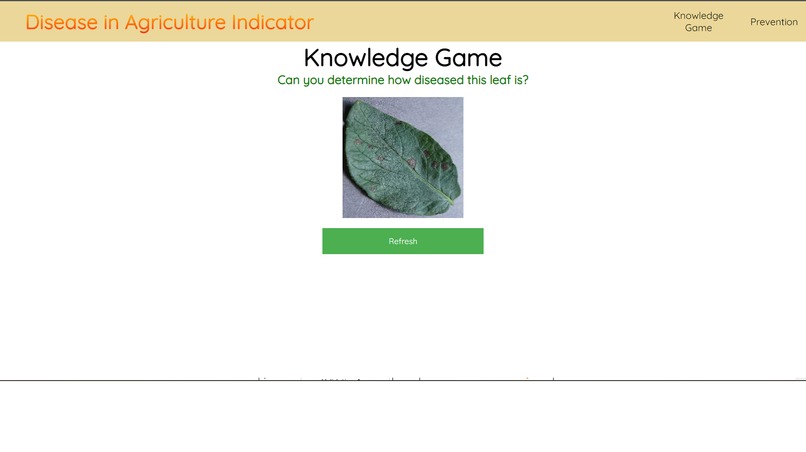
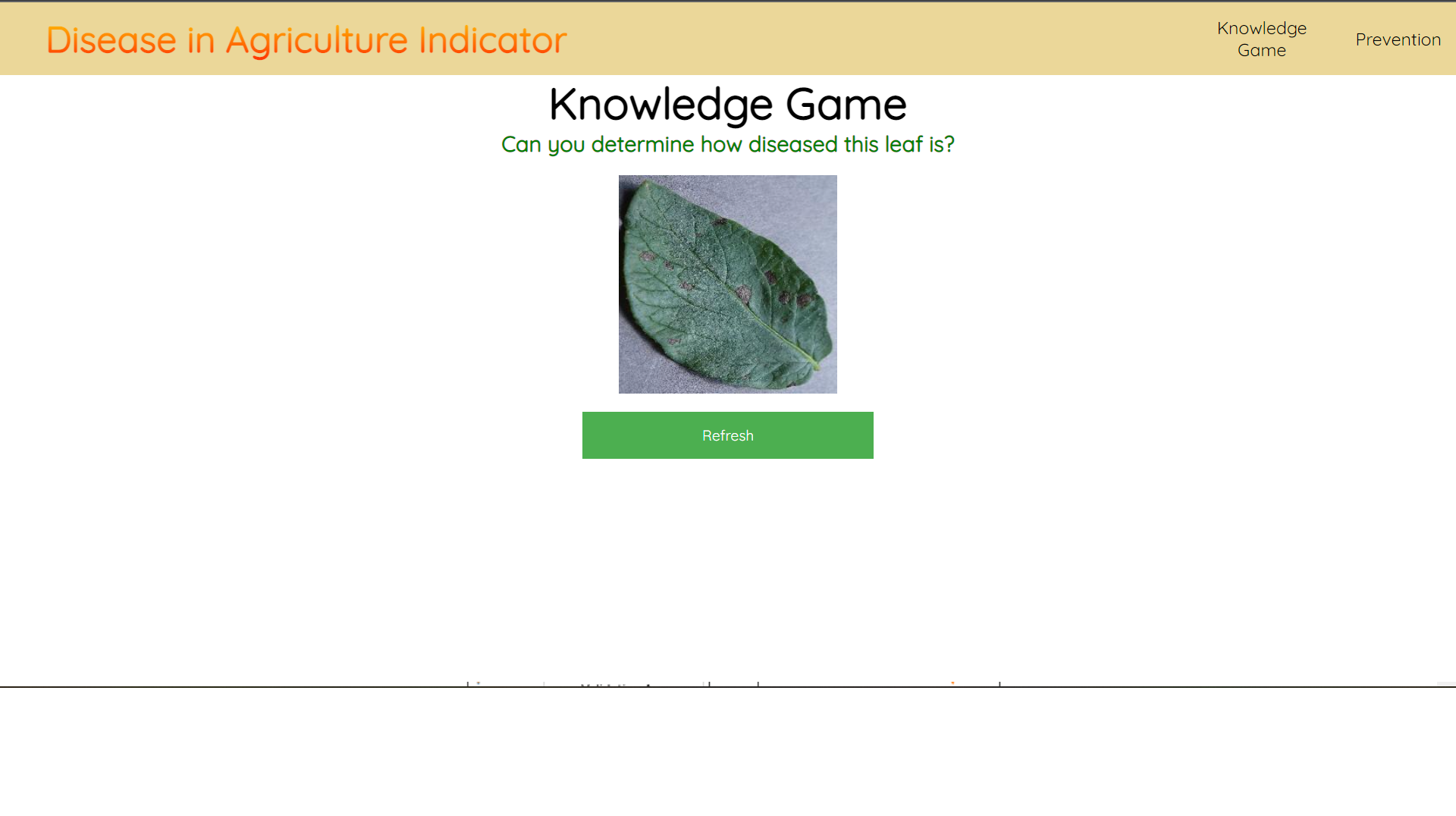
Educational Game for Disease in Plant Leaves
-
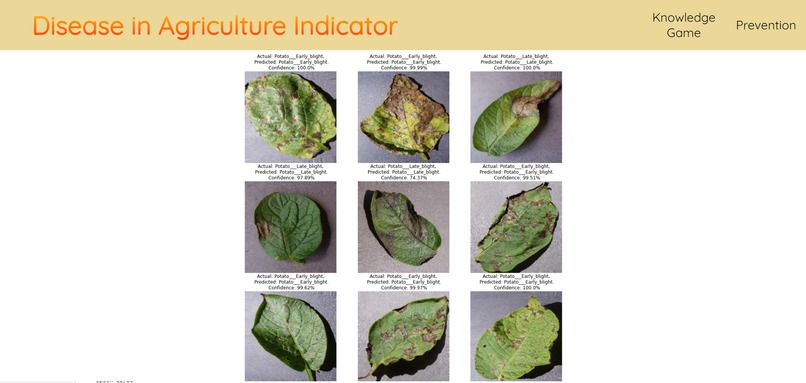
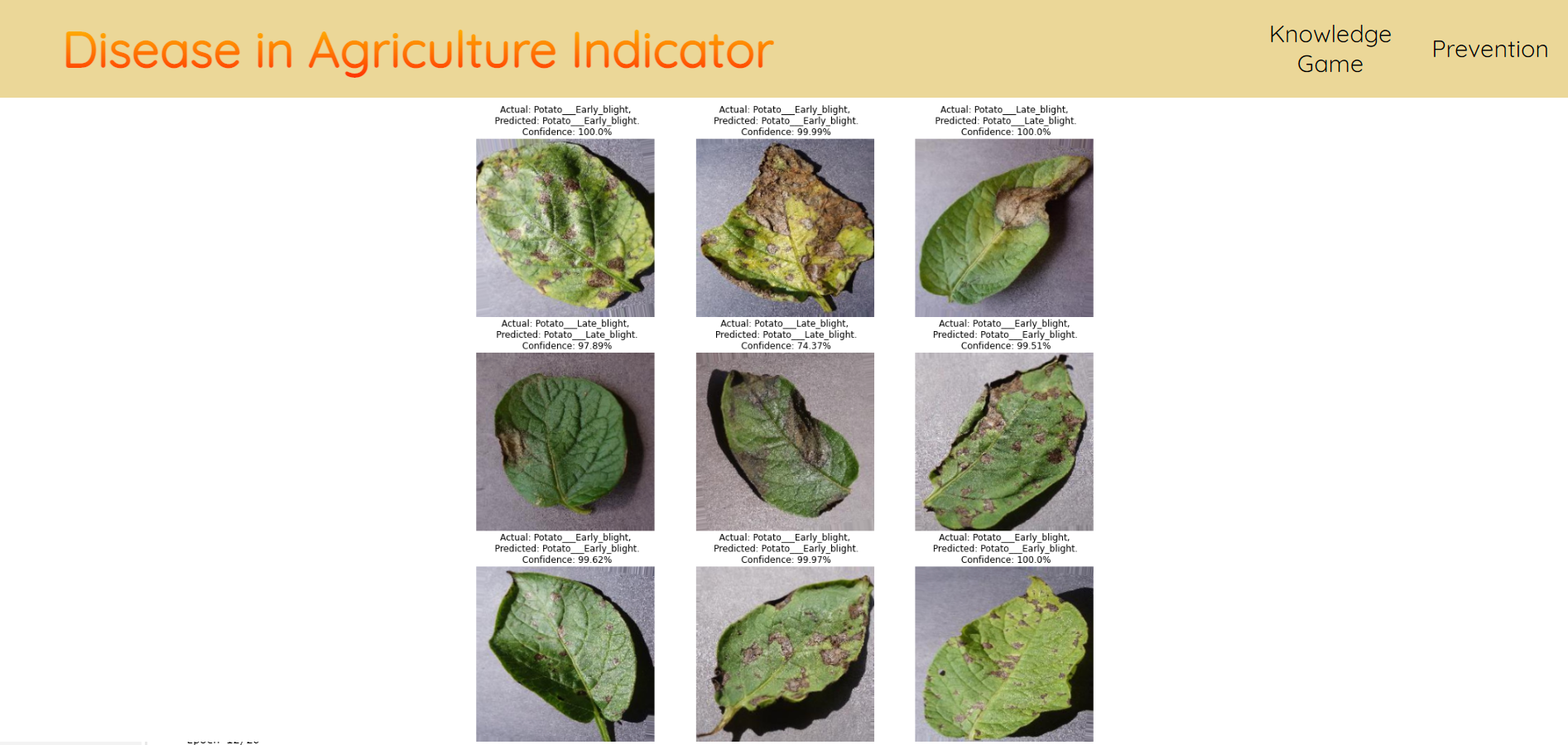
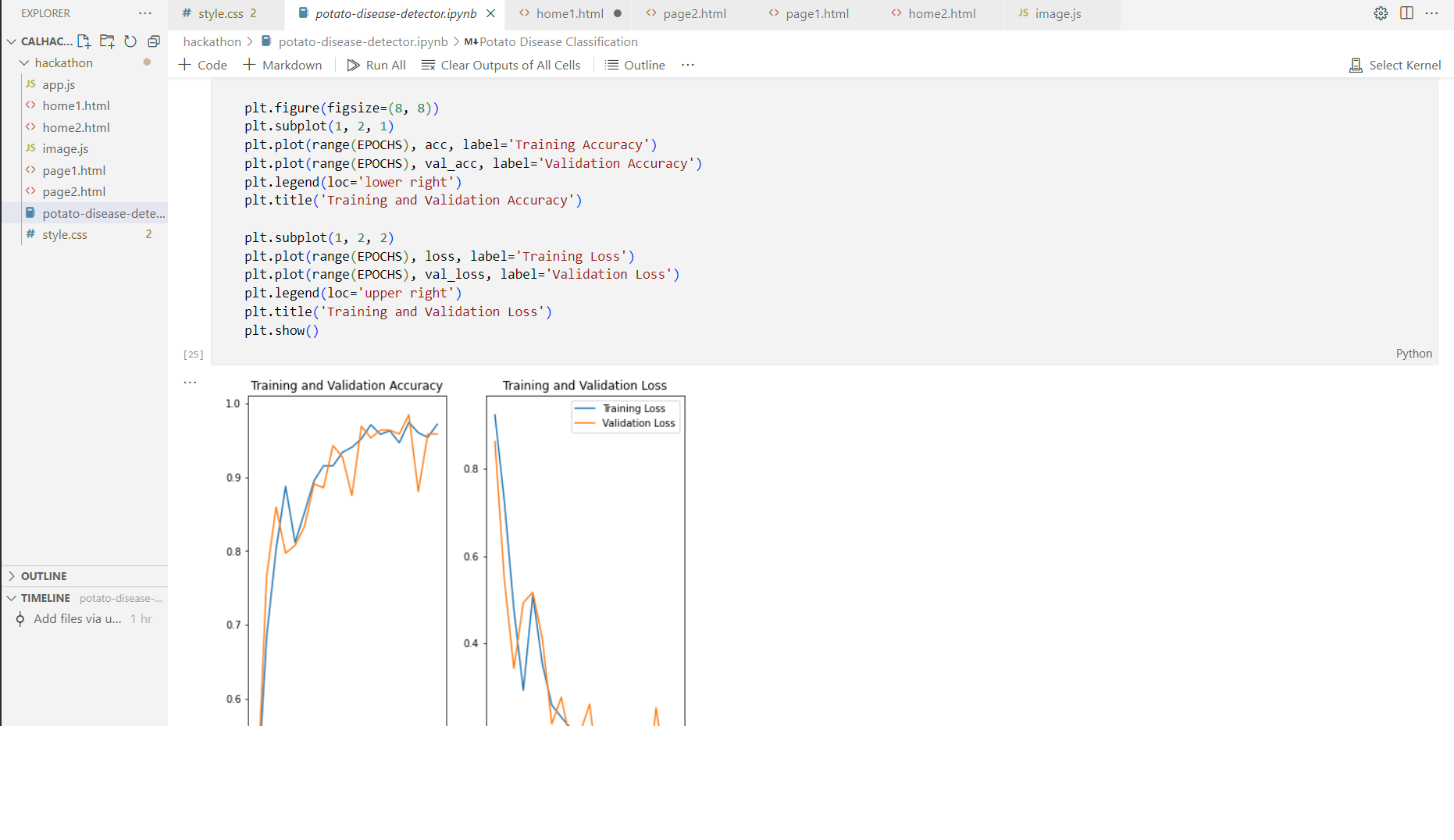
Visualizations of disease predictions in leaves
-
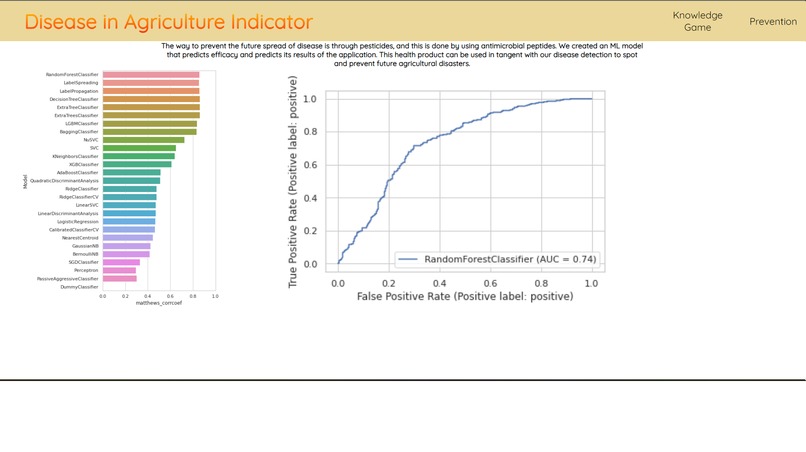
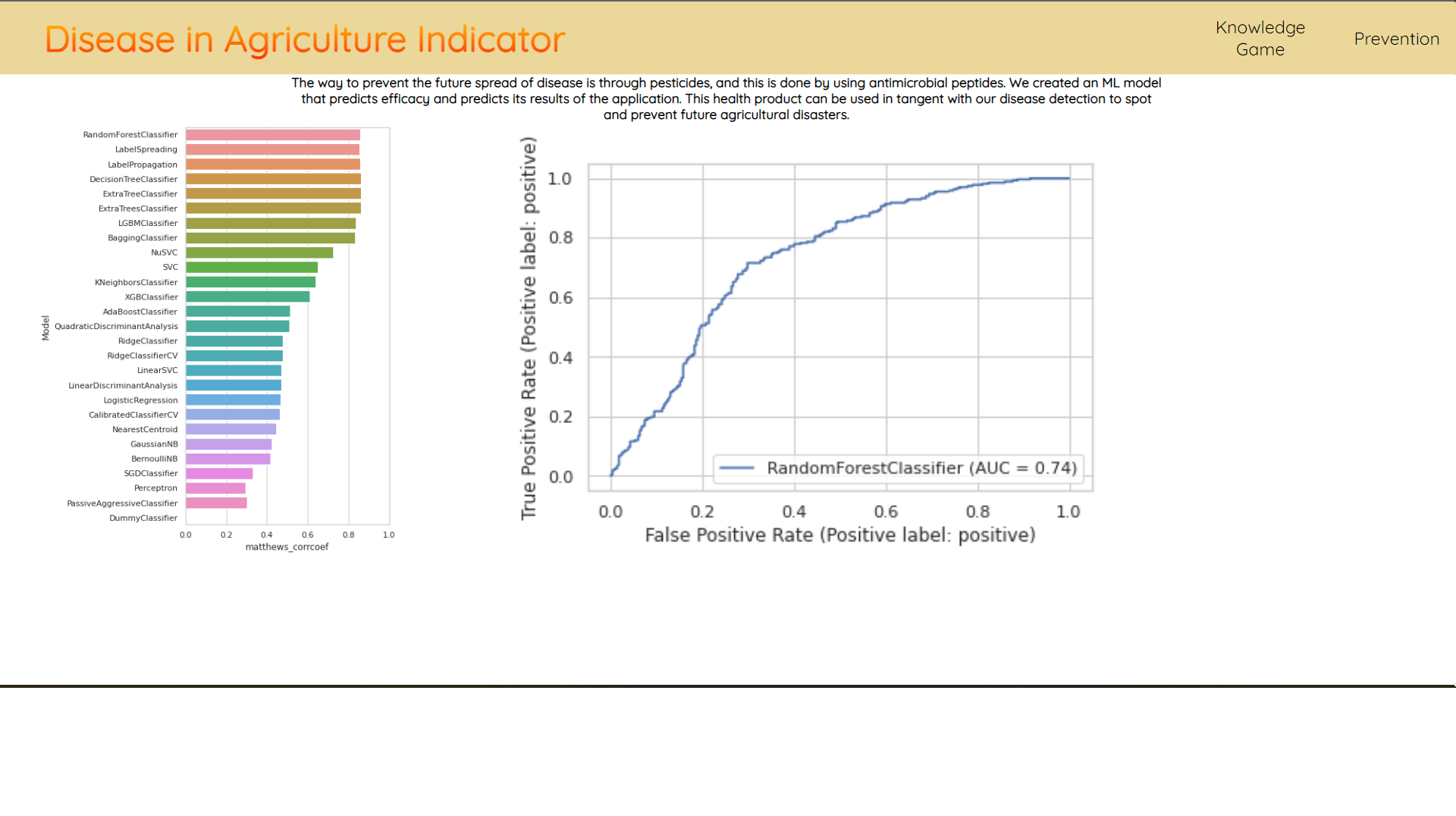
Antimicrobial Peptide Data
-
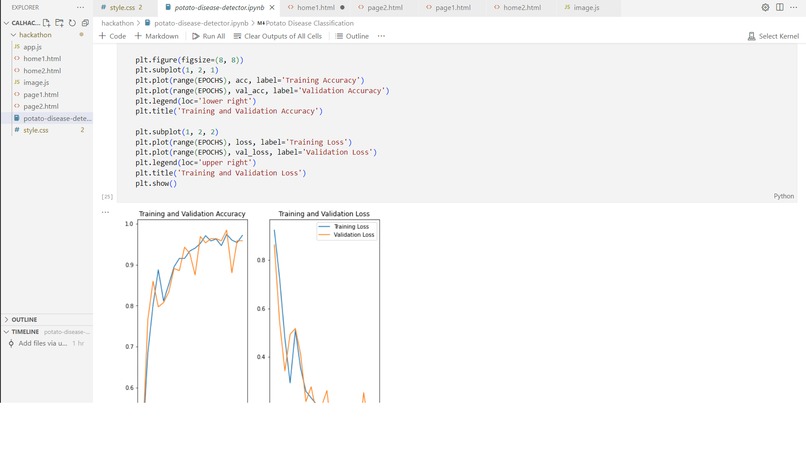
Code for Validation Testing
-
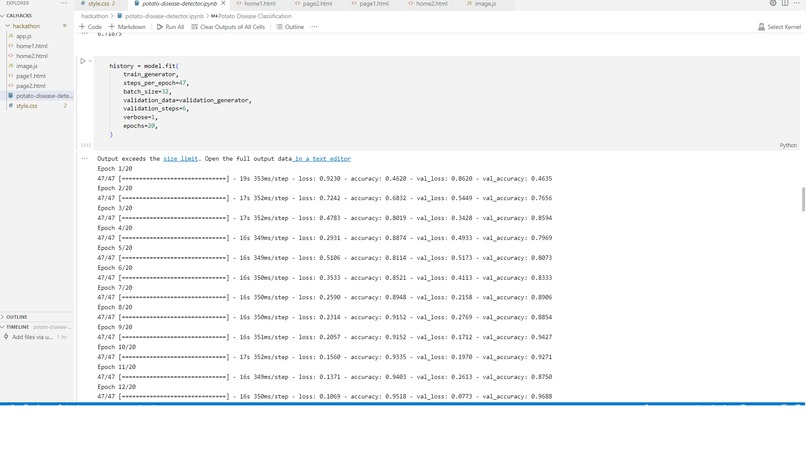
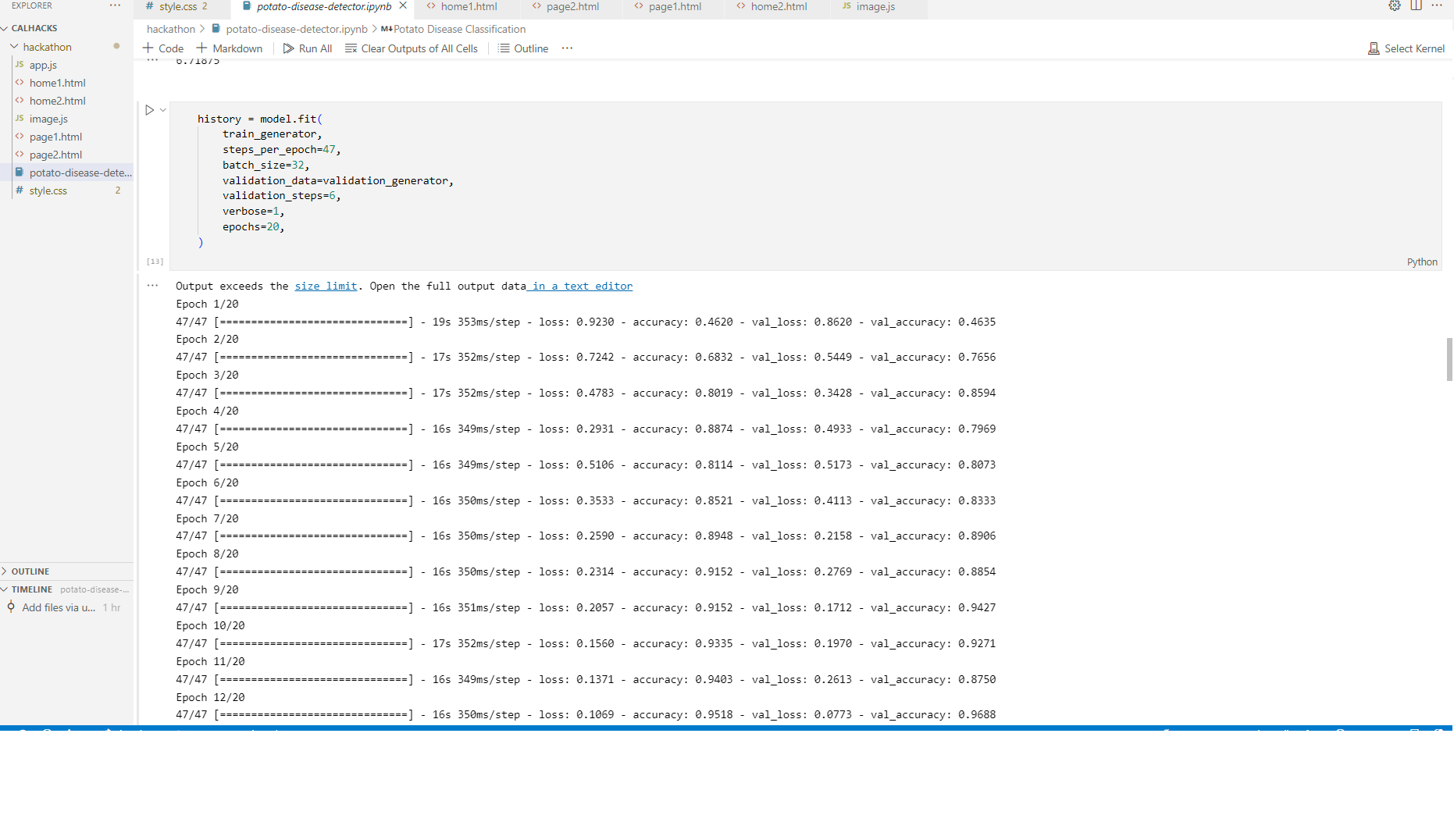
Code for Deep Learning Testing
Inspiration
Countries around the world suffer from famines due to irregular crop yields, and third-world countries are the most susceptible. Poor farming practices, including having low genetic variation, makes them susceptible to disease and widespread wipeouts of farms. We wanted to create a solution.
What it does
We simulated randomly generated images that will be used to train the model for higher accuracy. It can detect if a potato leaf has blight(disease). Furthermore, it displays predictions for efficacy of antimicrobial peptides(cure) using bioinformatics.
How we built it
We incorporated deep-learning classification and RFC algorithms to support our analytics and visualizations of our models.
Challenges we ran into
This is everyone's first hackathon in our group, so we were very clueless in the beginning. Trying to connect our models into a flask server to embed into our website was deemed very difficult.
Accomplishments that we're proud of
The technologies are stuff we had to learn and implement in the past 24 hours. We're very proud of, we combined all of our past experiences to make something unique and interesting.
What we learned
Bill - I was introduced to and learned how to make a website using html, javascript, and css. Lee - I learned how to incorporate bio with data science to create analytics while having no prior coding experience. Arvin - I learned deep-learning algorithms and how to classify images with AI.
What's next for Disease in Plant Leaves / Antimicrobial Peptides
We plan to scale our application to include other plant leaves. Our algorithm can be tried with different plant data sets and should work the same. Therefore our prediction in antimicrobial peptides will be accurate for all cases.
Built With
- bioinformatics
- css
- deep-learning
- html
- javascript
- jupytr
- random-forest-algorithm


Log in or sign up for Devpost to join the conversation.