Inspiration
Living in a bustling urban area, I grew frustrated with never knowing where to find calm spaces—whether for remote work, family outings, or rest. I saw friends struggle with noisy rentals and sleepless nights, so I set out to build a tool that turns chaotic noise data into actionable insights for city dwellers.
What it does
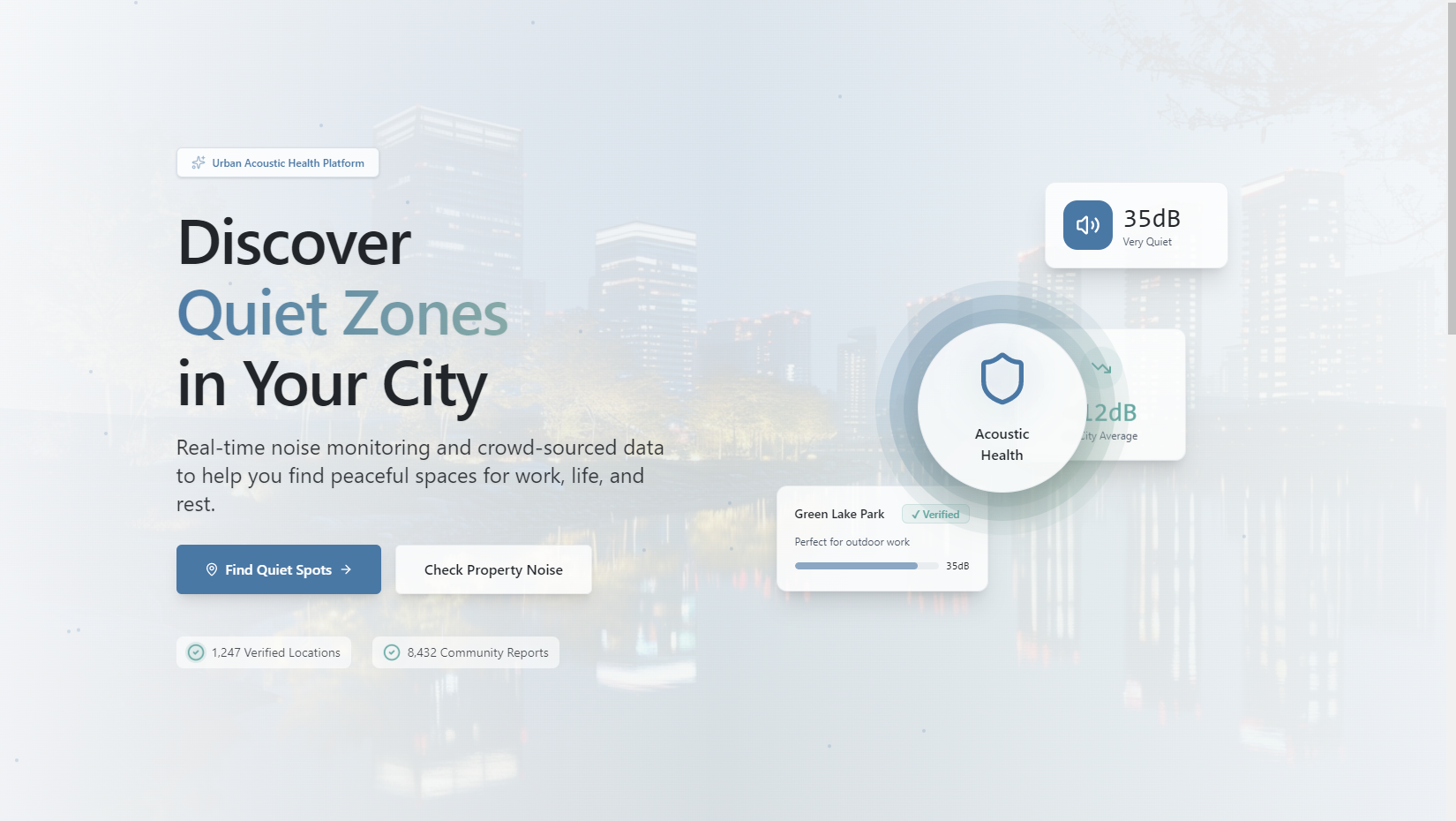
NoisePollution Map visualizes real-time crowd-sourced noise levels across cities. Users find quiet work/family spots, check property noise scores, track nighttime disturbances, report violations, and access premium analytics for deeper insights.
How we built it
We started by mapping core user needs (remote workers, families, renters) and designing a heatmap-focused UI. We integrated Google Maps API for spatial visualization, built a backend with Node.js to aggregate crowd-sourced data, and used Stripe for premium subscription processing. We tested iteratively with local urban dwellers to refine filters and report workflows.
Challenges we ran into
Aggregating real-time crowd data without gaps in coverage was tough—we had to design incentives for users to submit ratings. Enforcing free-tier limits (3 property checks/month) while keeping the UX smooth also required careful logic to avoid frustration. Additionally, aligning the color-coded heatmap with accessibility standards took multiple iterations.
Accomplishments that we're proud of
We created a tool that solves a tangible urban pain point—early testers reported finding quiet cafes and better rental properties using the app. The sleep mode dashboard has helped users identify nightly noise triggers, and local councils have praised the streamlined violation reporting feature.
What we learned
We learned the importance of centering user behavior in data aggregation—crowd-sourced tools only work if the UX for contributing is seamless. We also gained insight into balancing free/premium features to keep the app accessible while sustaining development.
What's next for this project
We plan to add predictive noise forecasting using historical data, integrate push notifications for custom quiet zone alerts, and expand multi-city support. We’re also exploring partnerships with local governments to link violation reports directly to municipal noise enforcement systems.
Built With
- amazon-web-services
- chart.js
- firebase
- geolocationapi
- postgresql
- stripe

Log in or sign up for Devpost to join the conversation.