-
-
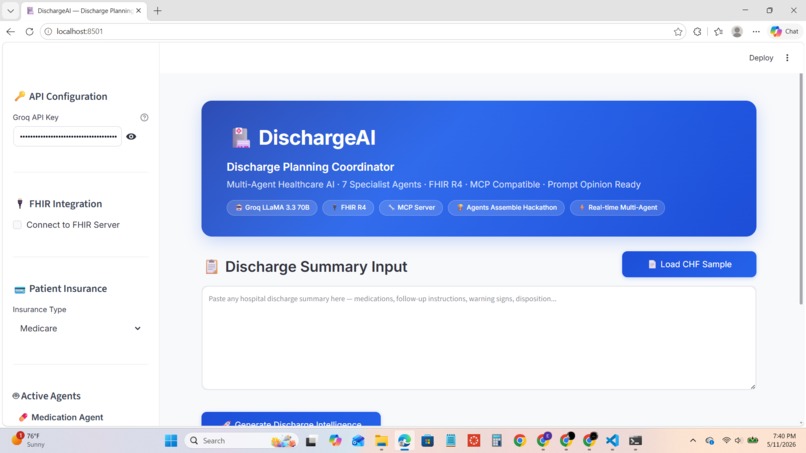
Dashboard
-
-
-
-
-
Inspiration
This project was inspired by my research work involving PICU (Pediatric Intensive Care Unit) clinical datasets and healthcare machine learning workflows. While working with critical care patient data, I became interested in the challenges surrounding hospital discharge planning, readmission risk, fragmented care coordination and post discharge patient safety.
Discharge planning is one of the most operationally complex workflows in healthcare. Clinicians must coordinate medications, follow up appointments, caregiver education, rehabilitation placement, insurance considerations, warning signs and long term recovery planning under significant time pressure.
I wanted to explore how interoperable multi-agent AI systems could support safer and more structured care transitions using modern healthcare interoperability standards such as MCP, A2A concepts and FHIR aware workflows.
What it does
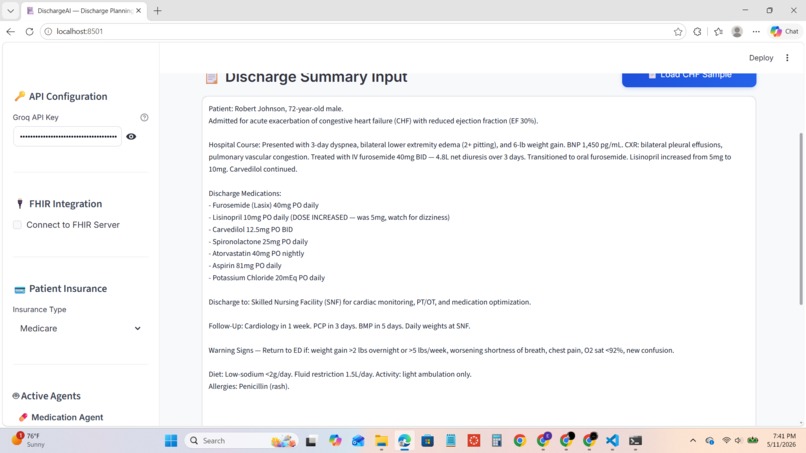
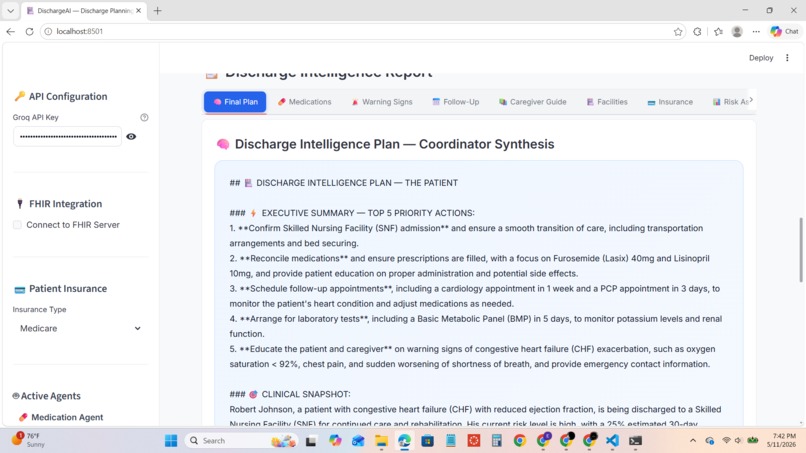
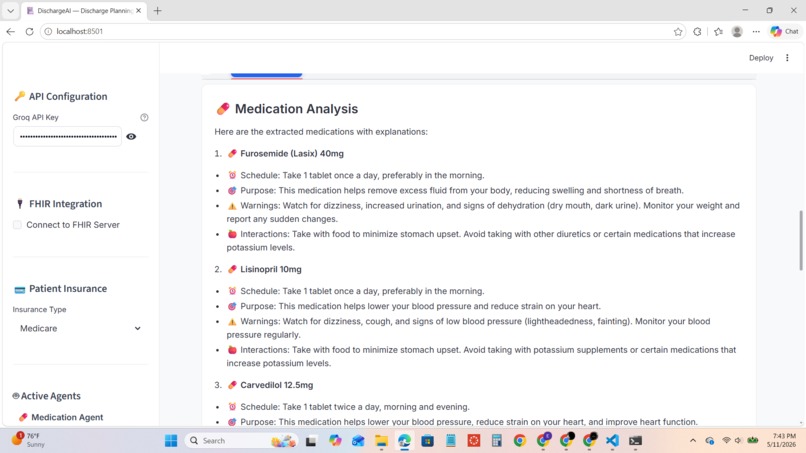
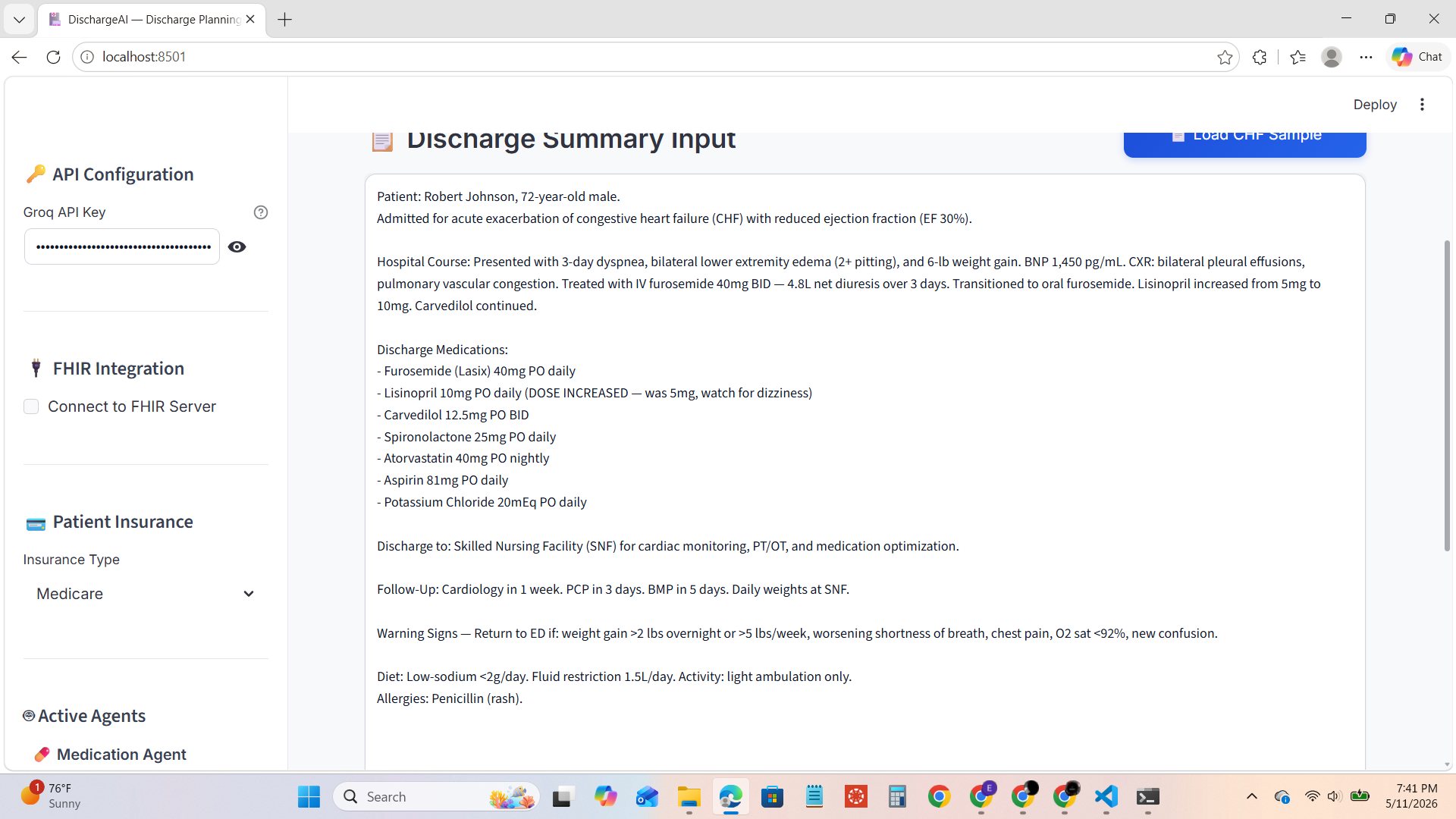
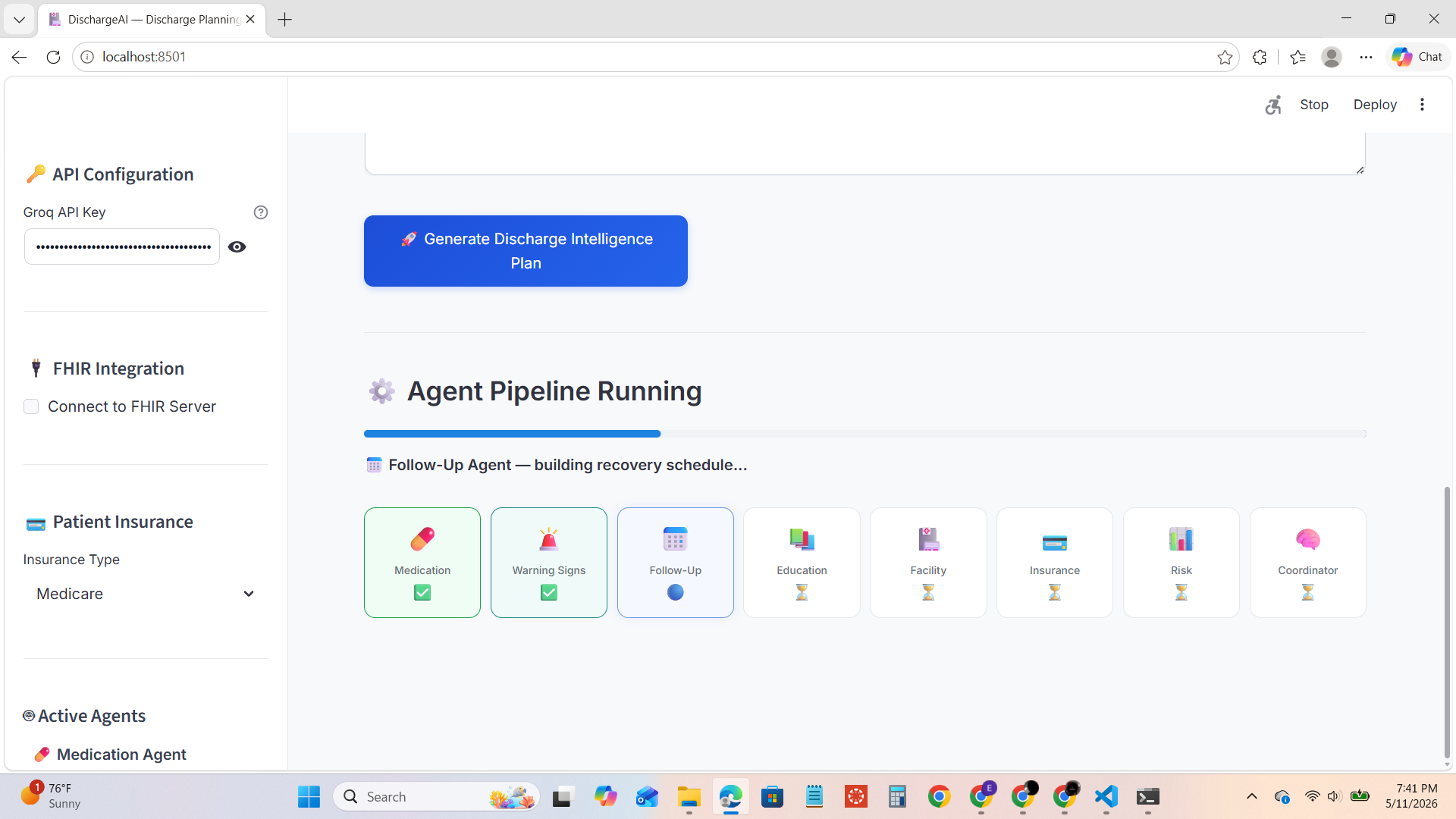
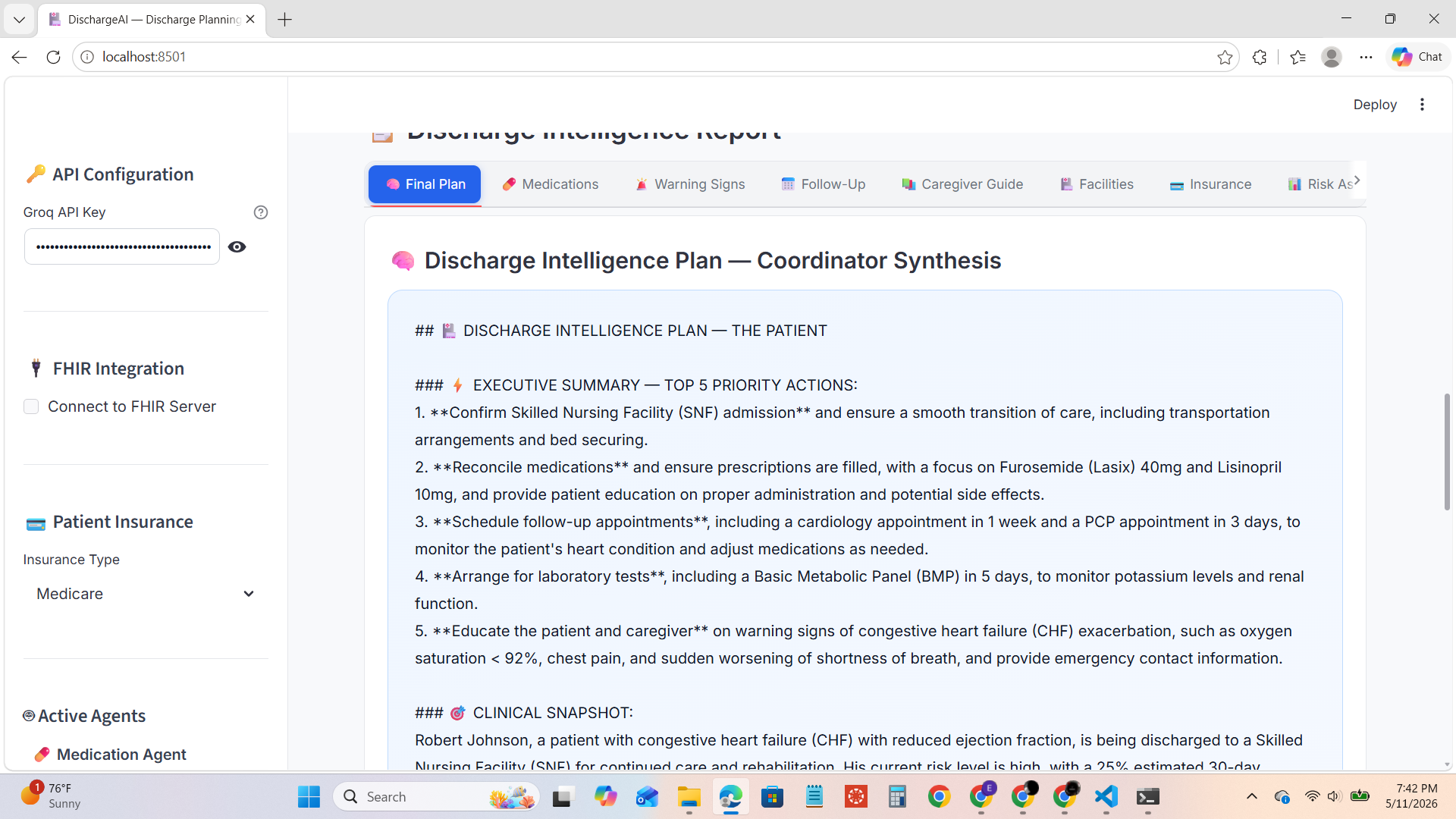
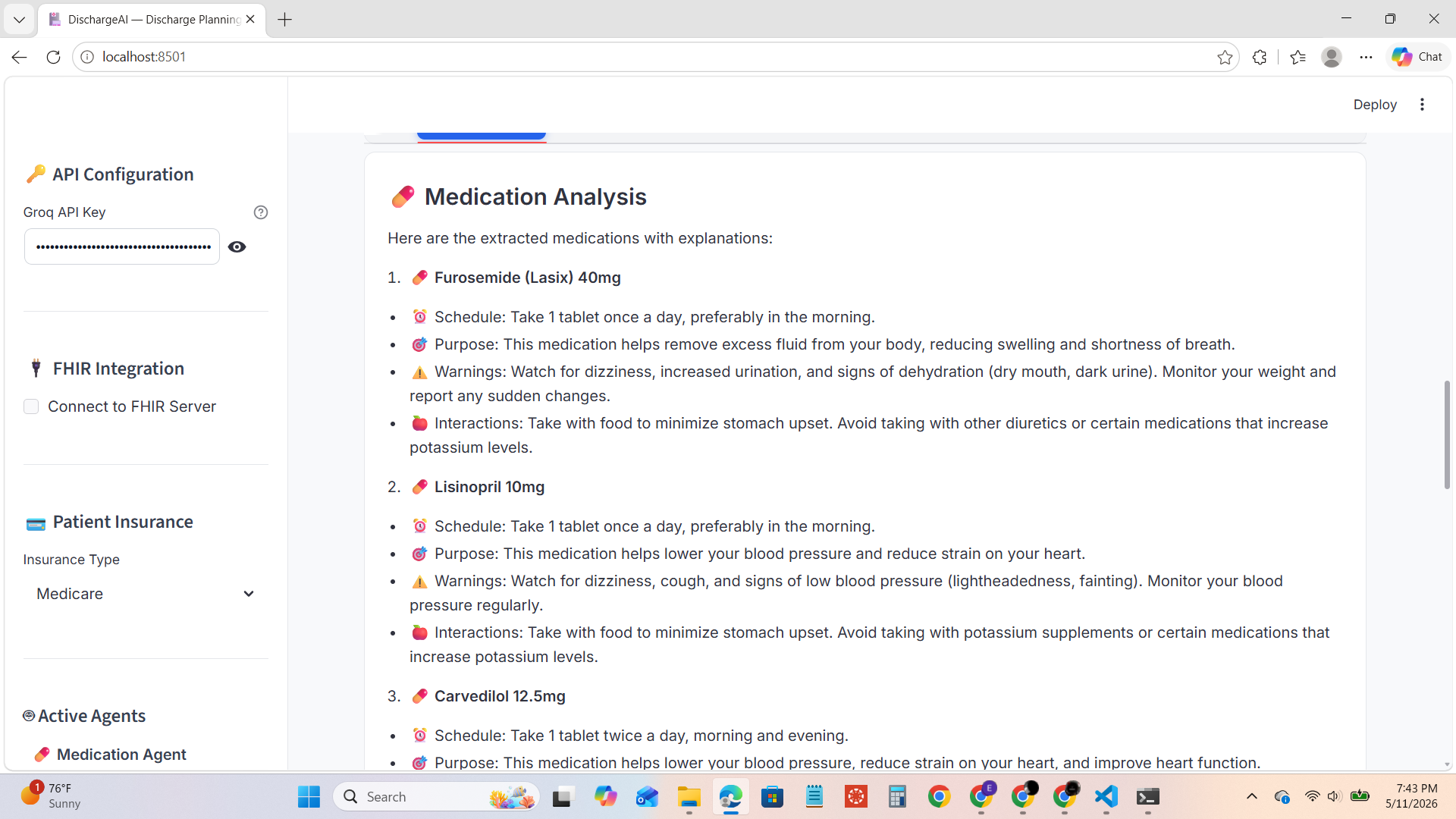
DischargeAI is a multi agent healthcare AI orchestration system that generates a comprehensive “Discharge Intelligence Plan” from hospital discharge summaries.
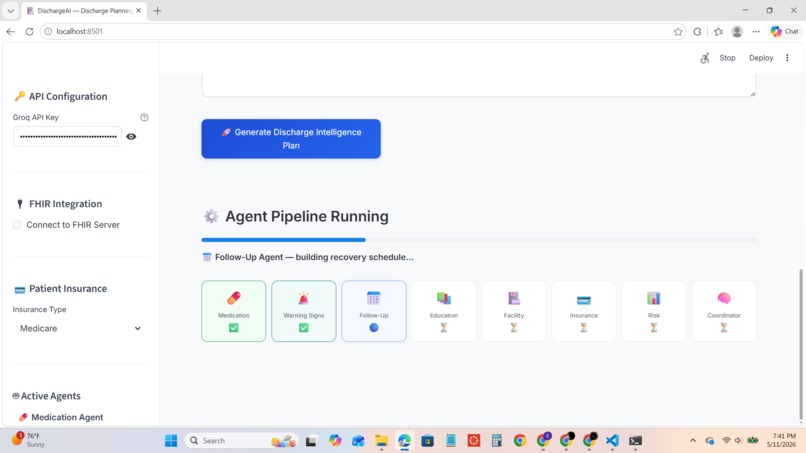
The platform includes multiple specialized healthcare agents that collaborate together, including:
- Medication reconciliation and patient-friendly medication explanations
- Readmission risk assessment
- Follow up scheduling and recovery timelines
- Caregiver education
- Warning sign and safety monitoring
- Insurance guidance
- Post acute facility recommendations
A coordinator agent orchestrates all specialist agents and synthesizes their outputs into one unified discharge planning report.
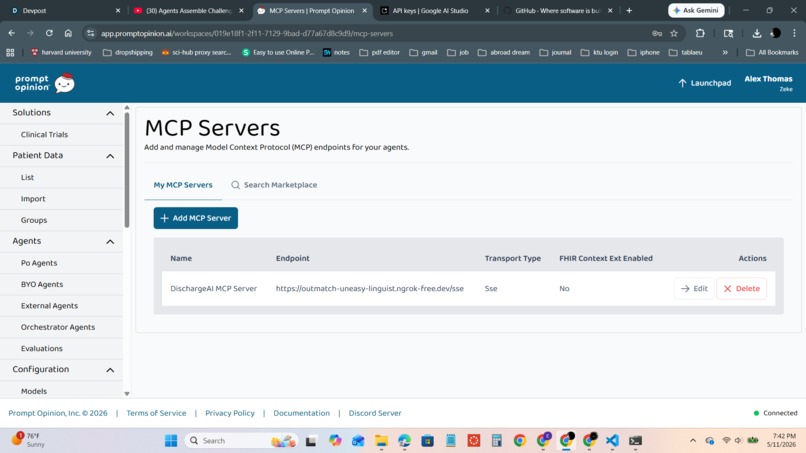
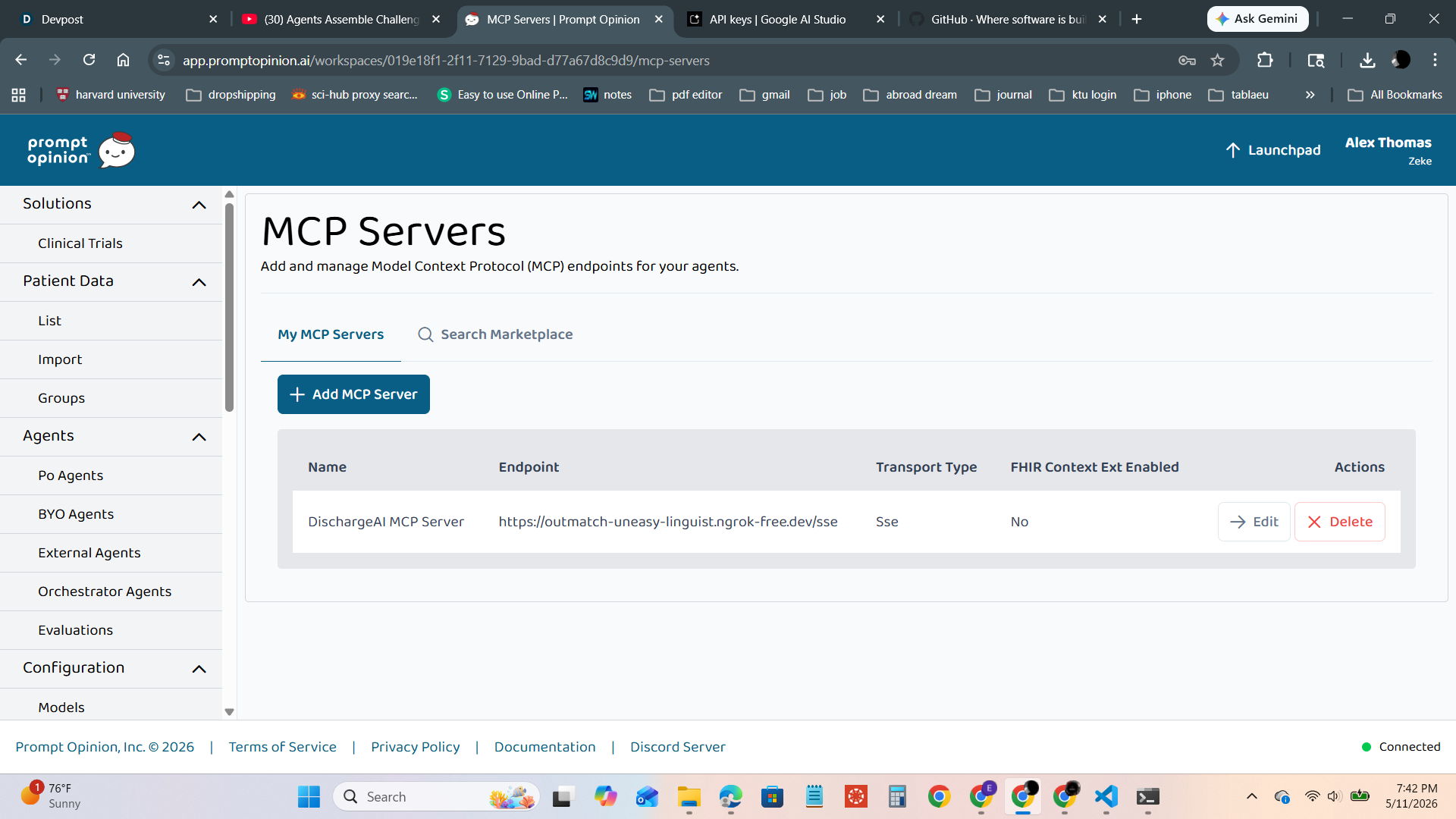
The system also exposes interoperable healthcare workflow capabilities through an MCP-compatible server integrated with Prompt Opinion.
How we built it
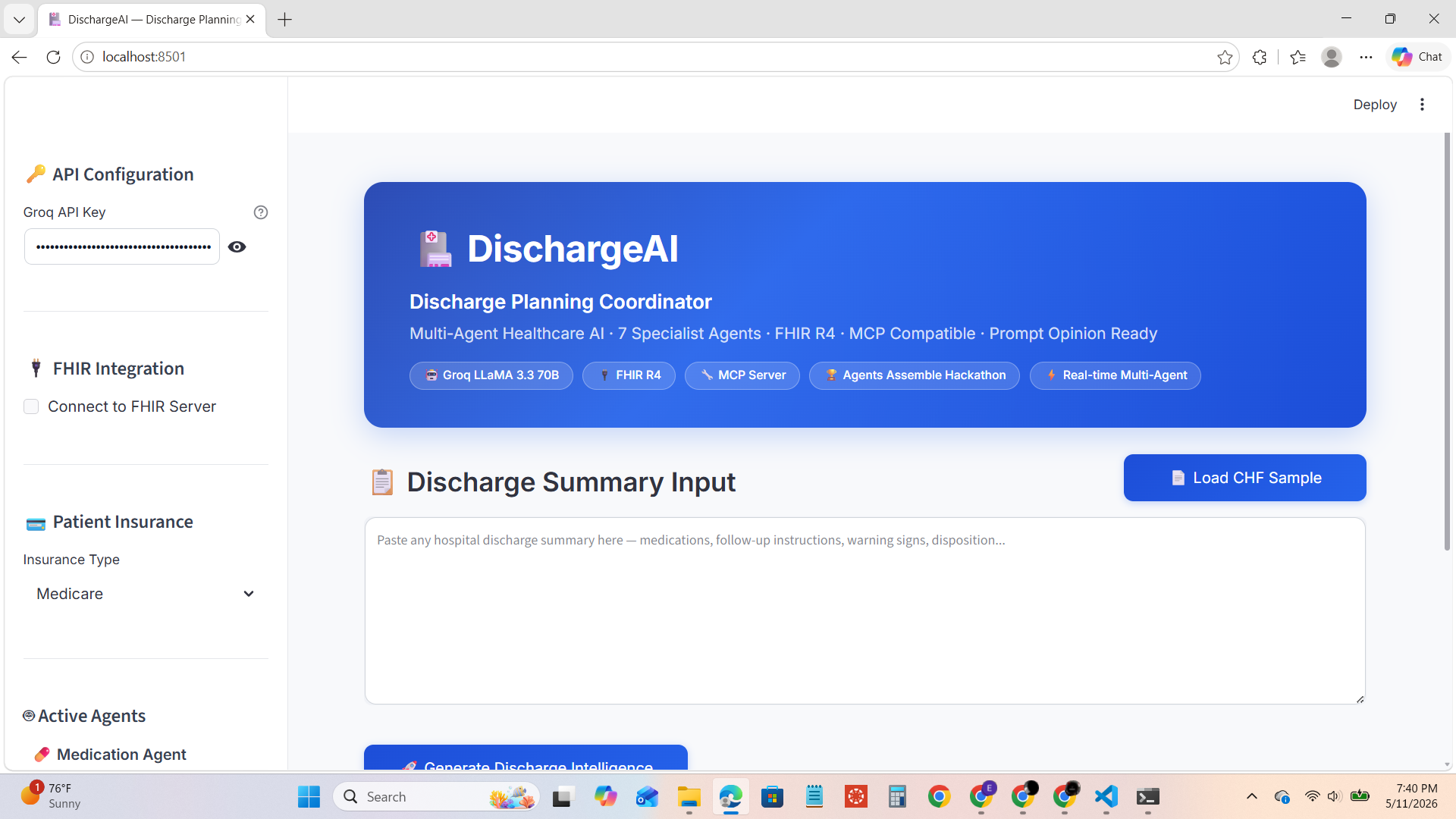
The frontend was built using Streamlit to create an interactive healthcare workflow dashboard.
The backend was developed in Python using a multi-agent orchestration architecture. Each specialist agent was designed to focus on a specific discharge planning workflow.
We used:
- Groq API with Llama 3.3 70B
- Python
- Streamlit
- FastMCP
- SSE transport
- Prompt Opinion integration
- HAPI FHIR-compatible patient context handling
- ngrok for external endpoint exposure
The project also includes:
- FHIR-aware patient context support
- MCP compatible external endpoints
- coordinator-agent orchestration logic
- structured discharge intelligence generation
Challenges we ran into
One of the biggest challenges was balancing interoperability, healthcare workflow realism, and rapid prototyping within the hackathon timeline.
We also faced challenges involving:
- coordinating outputs across multiple agents
- grounding AI outputs to clinical discharge summaries
- integrating MCP compatible infrastructure
- exposing external interoperable healthcare workflow endpoints
- designing realistic healthcare workflows while keeping the system lightweight enough for experimentation
Another major challenge was integrating external MCP-compatible endpoints into Prompt Opinion and configuring public interoperability using ngrok and SSE transport.
Accomplishments that we're proud of
We are proud that DischargeAI evolved beyond a simple healthcare chatbot into a genuinely orchestrated multi agent healthcare workflow system.
Some accomplishments include:
- building a functioning multi-agent healthcare orchestration pipeline
- implementing MCP compatible interoperability
- integrating Prompt Opinion connectivity
- exposing public interoperable healthcare endpoints
- creating a structured discharge intelligence workflow
- adding FHIR aware patient context support
- building a polished interactive Streamlit interface
We are also proud that the project combines healthcare AI reasoning with interoperability-focused architecture rather than focusing only on standalone LLM outputs.
What we learned
This project taught us how important interoperability is for real-world healthcare AI systems.
We learned about:
- MCP compatible architectures
- multi agent orchestration
- healthcare workflow decomposition
- FHIR aware context propagation
- external agent connectivity
- SSE transport workflows
- the challenges of grounding healthcare AI outputs safely
We also learned how collaborative agent systems can be significantly more useful for healthcare workflows than single general purpose chat interfaces.
What's next for DischargeAI Multi Agent FHIR Discharge Coordinator
Future directions for DischargeAI include:
- deeper EHR integration
- stronger FHIR interoperability
- clinician in the loop review workflows
- longitudinal patient context tracking
- improved grounding and hallucination reduction
- SHARP context propagation support
- deployment into operational care coordination workflows
- real-time care transition collaboration tools
We also want to expand the platform into broader healthcare coordination workflows beyond discharge planning, including chronic disease management, rehabilitation coordination, and post-acute care optimization.


Log in or sign up for Devpost to join the conversation.