-
-
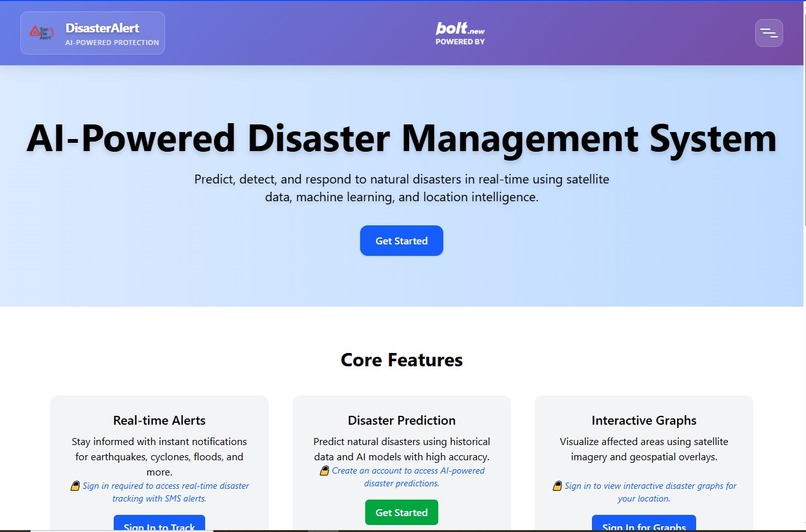
Website Interface
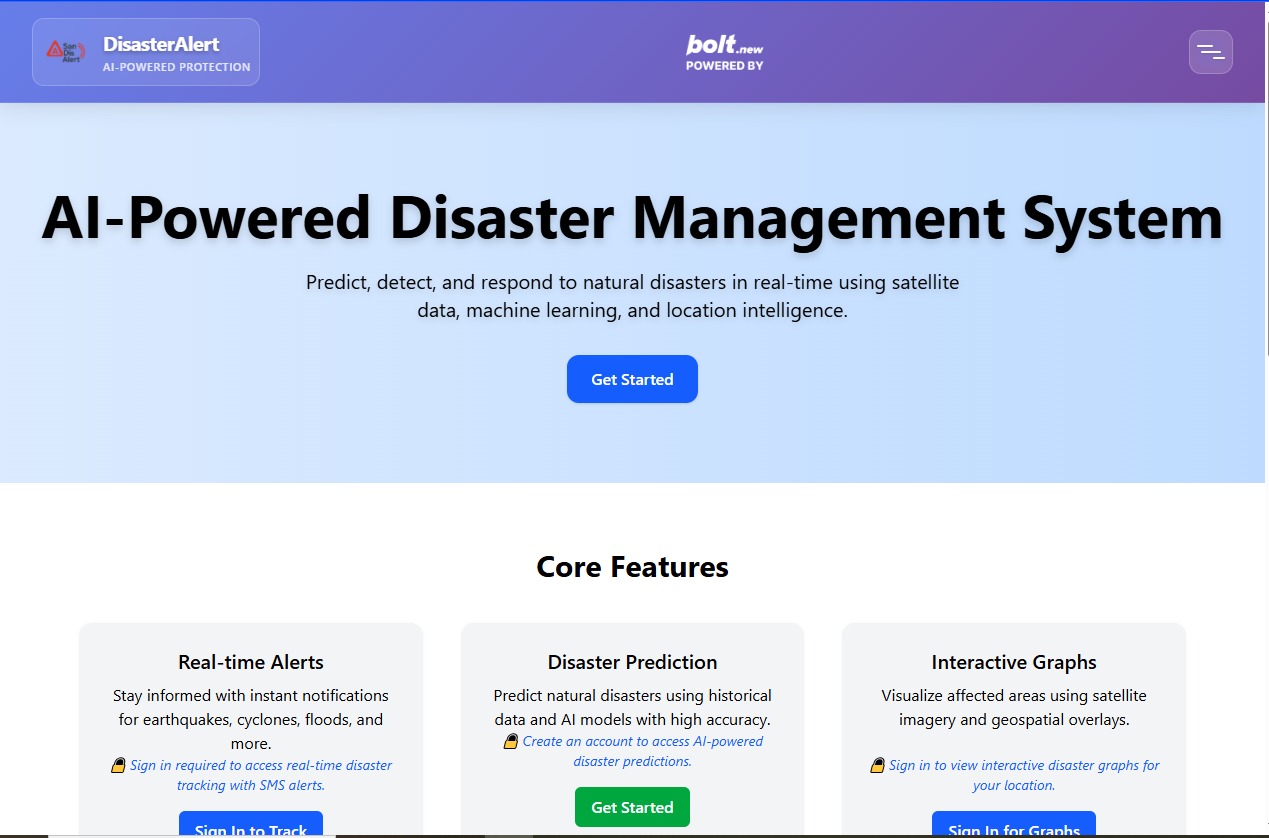
Disastra (derived from the Sanskrit word for "Disaster") is a web-based application designed to help predict natural calamities like cyclones and earthquakes, leveraging the power of Machine Learning (ML) and Artificial Intelligence (AI). It was built using Python for backend intelligence, React.js for the frontend interface, and integrated ML models to process and analyze environmental data.
The inspiration came from the increasing frequency and severity of climate-related disasters. Often, the lack of timely prediction or awareness leads to loss of life and property. With Disastra, we wanted to build something meaningful, A tool that provides early insights and real-time risk alerts to help communities stay prepared.
What I Learned from the Project:
Machine Learning Implementation: Learned how to preprocess meteorological and seismic datasets, train models to classify disaster risk levels, and make predictions based on geolocation. React.js Frontend Development: Built a responsive UI that adjusts seamlessly across desktop and mobile devices. Geolocation & API Integration: Integrated location-based services and real-time data fetching using APIs for accurate predictions. User Authentication Flow: Implemented secure user registration and login with location access permissions.
How its build:
Frontend: Built using React.js, designed to be clean and responsive. Backend: Developed with Python and Django REST Framework, handling data collection, ML predictions, and user authentication. Machine Learning: Used historical cyclone and earthquake data to train classification models (like Random Forest and Logistic Regression). APIs: Connected to open datasets and APIs for real-time weather/seismic data. Charts & Visualization: Displayed prediction trends and alerts using libraries like Chart.js.
Challenged Faced:
Data Collection & Cleaning: Obtaining reliable and high-quality disaster data was difficult. Many sources had inconsistencies or missing values that needed extensive cleaning. Model Accuracy: Fine-tuning the ML model to avoid false alarms while maintaining sensitivity to real risks was a major hurdle. Geolocation Handling: Ensuring the system smoothly requested and used user location data securely across browsers and devices. Deployment Issues: Integrating backend APIs and ensuring cross-origin requests worked properly when converting the project into a mobile-friendly APK.
Disastra helps users:
- Stay informed with real-time disaster risk alerts.
- View dynamic graphs and risk charts based on their location.
- Benefit from a seamless experience that combines AI, open data, and intuitive design.


Log in or sign up for Devpost to join the conversation.